
Research article · 2024 · Full text
International Journal of Advanced Biochemistry ResearchBiochemical and biophysical responses against Helicoverpa armigera Hub. (Noctuidae: Lepidoptera) in chickpea
Volume 8(4) · Pages 525–532 · DOI: 10.33545/26174693.2024.v8.i4g.1002 ↗
Research areasAgricultural pest management studiesInsect Resistance and GeneticsInsect Pest Control Strategies
Abstract
Author-writtenIn the rabi season of 2021-22, the experiment was conducted at Department of Agricultural Entomology's Experimental Research Farm at VNMKV, Parbhani aiming at investigating the potential of various chickpea traits and biochemical factors to resist the gram pod borer (Helicoverpa armigera Hub.). The study sought to establish positive results concerning chickpeas' ability to resist this pest, a significant challenge to chickpea cultivation. The experiment measured chickpea traits such as pod length-width-wall thickness and pod trichome density-length, as well as biochemical factors like malic acid and oxalic acid. The highest pod length was recorded on BDNG 797 (1.79 cm), which was at par with ICC 506 (1.79 cm), ICCV 10 (1.71), KAK 2 (1.70 cm), and ICCL 86111 (1.69). The highest percentage of malic acid content was observed in ICCL 86111 (1.362%), while ICC 3137 had the lowest oxalic acid level, which was substantially lower than all other genotypes examined. The research found an exceptionally substantial correlation with the amount of malic acid in the chickpea genotypes and the mean pod damage (r = -0.736) and the mean larval population (r = -0.680). Similarly, oxalic acid exudates on the chickpea genotypes showed a potent and negative association with the mean larval population (r = -0.692). In summary, the study findings suggest that malic or oxalic acid content in chickpea genotypes could be potential factors in chickpea resistance to the (H. armigera) gram pod borer.
Summary
Source-checkedPlain-language reading of the full paper, prepared with AI and checked against the text. Each point links to the authors' own words.
Why it matters
- Chickpea, also known as Bengal gram, is the most important pulse crop within the Fabaceae family. View evidence ↗
- The gram pod borer (Helicoverpa armigera) is a severe pest that can reduce chickpea production by 80–90% by feeding on leaves, flowers, and pods. View evidence ↗
- Because this pest is difficult to eliminate, host plant resistance is viewed as an efficient alternative for reducing crop losses. View evidence ↗
The question
- The study aimed to investigate how different biochemical factors and physical traits of chickpea genotypes contribute to resistance against the gram pod borer. View evidence ↗
What they did
- Ten different chickpea genotypes were selected and screened for their responses to H. armigera. View evidence ↗
- The experiment was conducted during the Rabi 2021-22 season at the VNMKV experimental farm using a randomized block design with three replications. View evidence ↗
- Researchers measured pod dimensions (length, width, wall thickness), pod trichome characteristics (density and length), and the levels of malic and oxalic acids. View evidence ↗
- Scanning electron microscopy (SEM) was used to examine and measure the density and length of pod trichomes. View evidence ↗
What they found
- Pod length across genotypes ranged from 14.5 to 17.9 mm, with BDNG 798 exhibiting the longest pods. View evidence ↗
- Pod trichome density varied significantly, with KAK 2 having the highest density (26.62/mm²) and ICC 3137 the lowest (10.52/mm²). View evidence ↗
- Malic acid content on leaves ranged from a high of 1.362% in ICCL 86111 to a low of 0.705% in ICC 3137. View evidence ↗
- Oxalic acid content ranged from 8.05 to 17.20 mg/g, with ICC 506 recording the highest level. View evidence ↗
- Oxalic acid exudates showed a strong negative correlation with larval population (r = -0.692) and pod damage (r = -0.782). View evidence ↗
- Pod trichome density was negatively and significantly correlated with egg population (r = -0.723) and larval population (r = -0.693). View evidence ↗
What it means
- The authors concluded that biochemical and biophysical traits significantly influence chickpea resistance to pod borers, with the exception of pod width. View evidence ↗
Visual summary
3 visualsIllustrations explain the paper; charts are replotted from the paper's own table values.
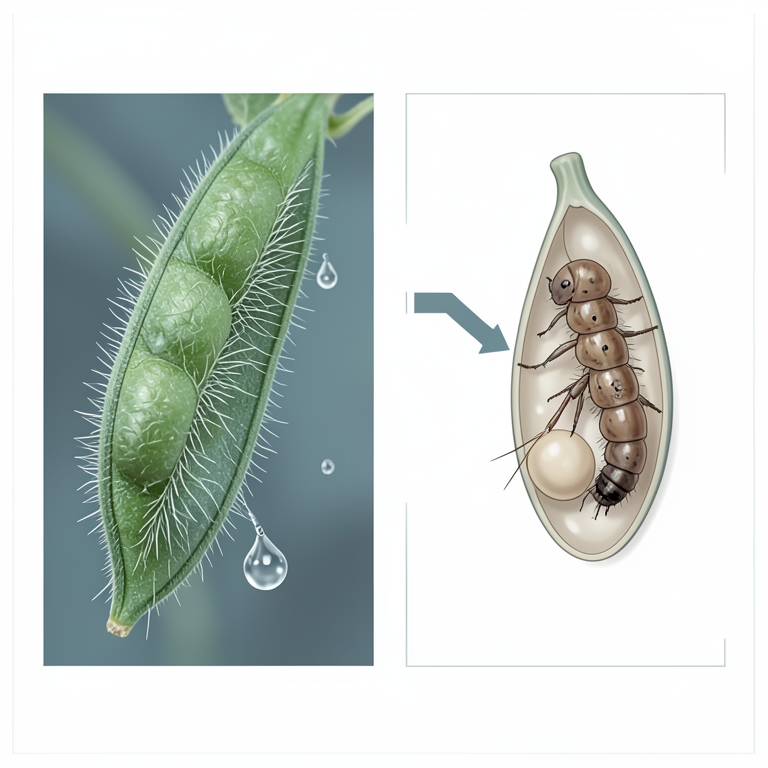
Factors of Resistance
AI-generated conceptual illustration (Chickpea plants (Cicer arietinum) and Helicoverpa armigera larvae). It explains the idea and does not show study data.
View source evidence ↗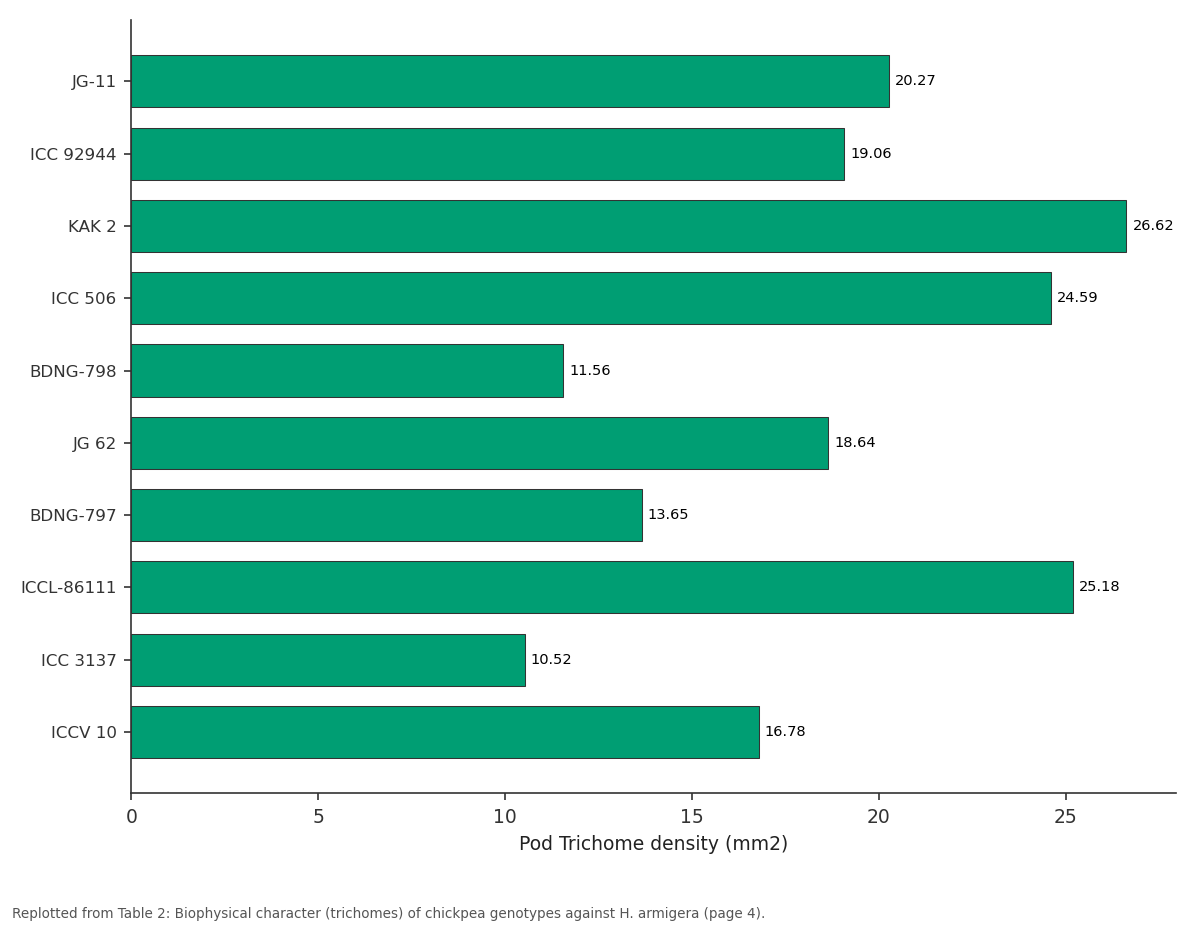
Trichome Dimensions / Pod Trichome density...: JG-11 vs ICC 92944 vs KAK 2 vs ICC 506 vs BDNG-798
Replotted from Table 2 (page 4) of the original paper. Every bar is the paper's own table value.
View source evidence ↗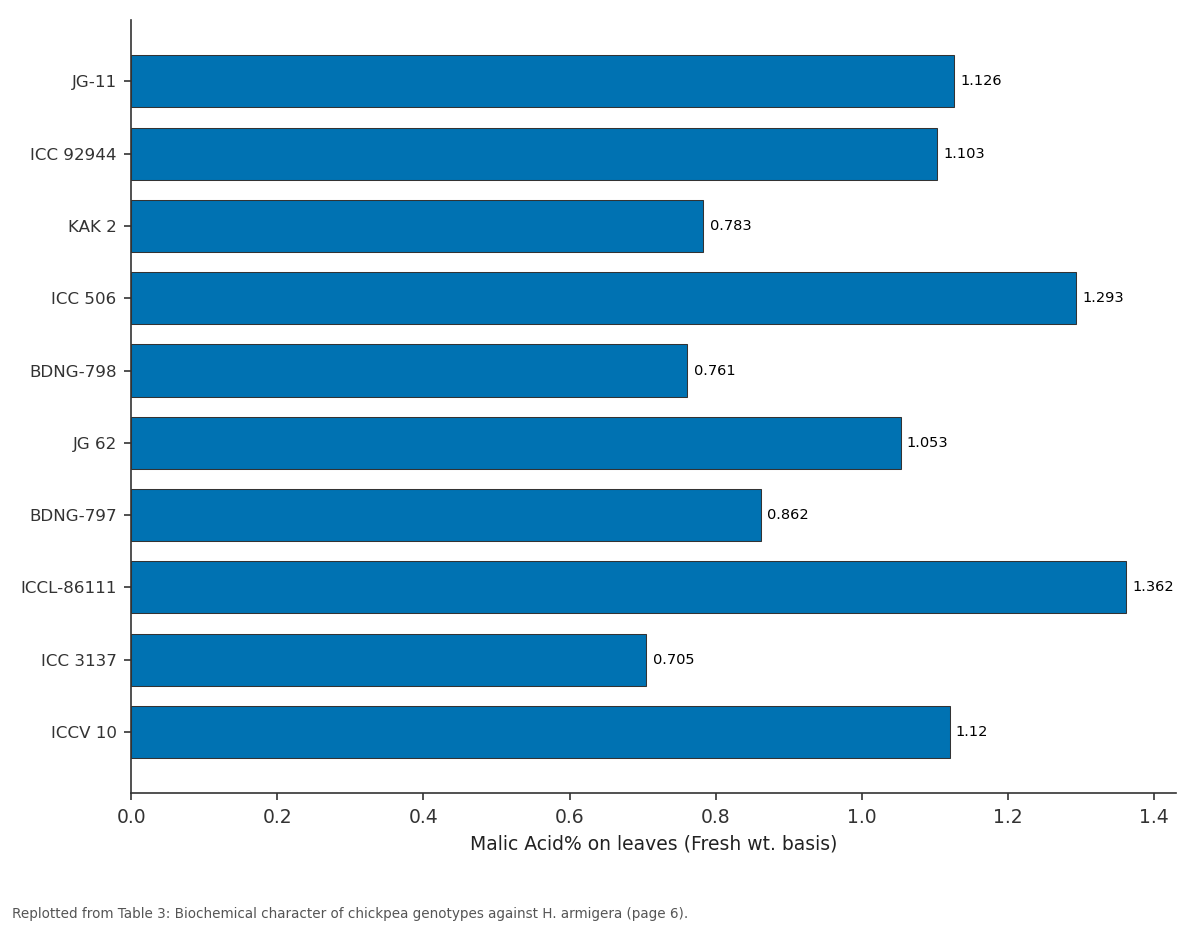
Malic Acid% on leaves / (Fresh wt. basis): JG-11 vs ICC 92944 vs KAK 2 vs ICC 506 vs BDNG-798
Replotted from Table 3 (page 6) of the original paper. Every bar is the paper's own table value.
View source evidence ↗Figures & tables
From the original paper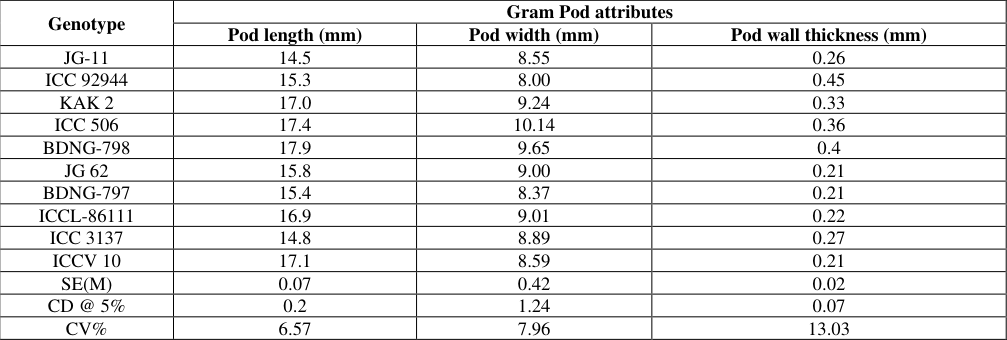 Table 1
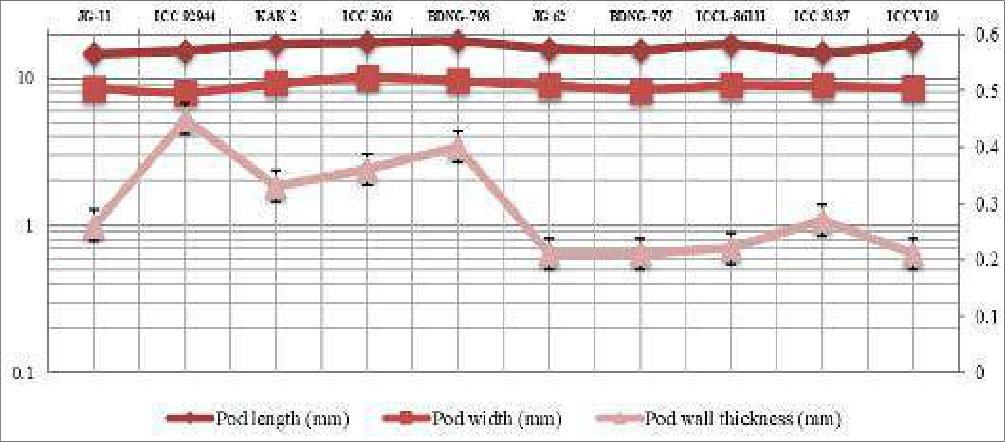 Figure 1
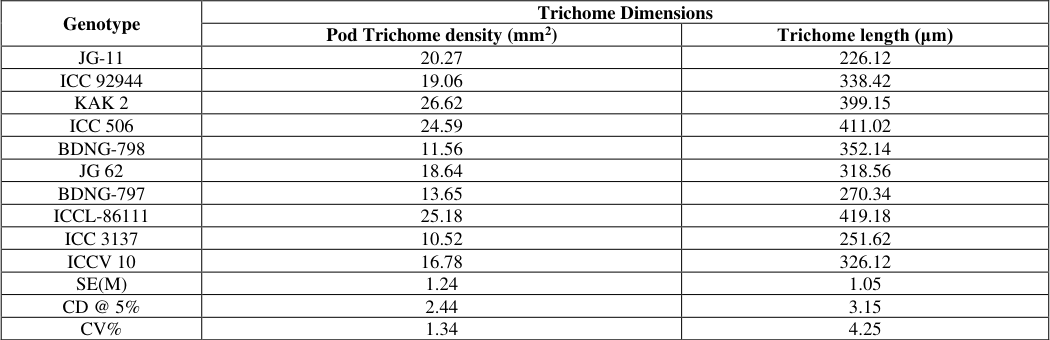 Table 2
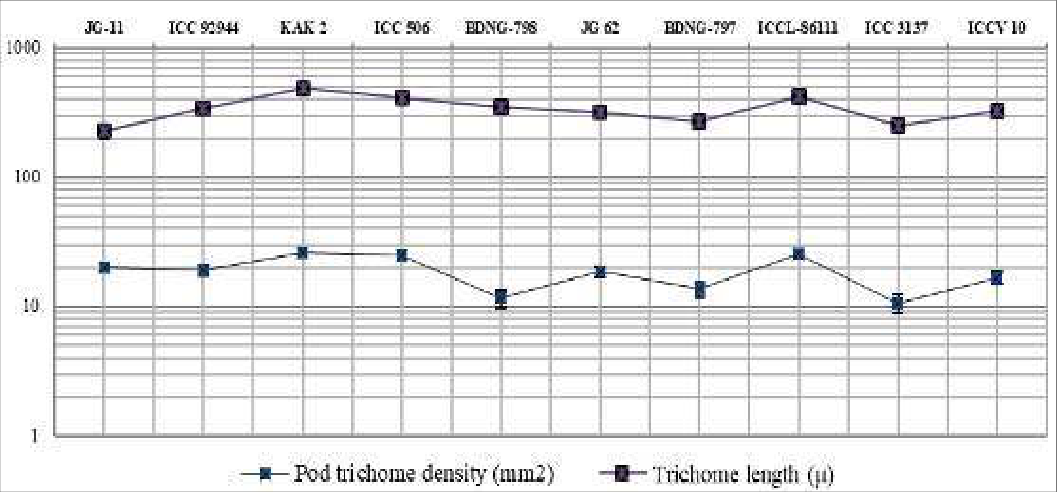 Figure 2
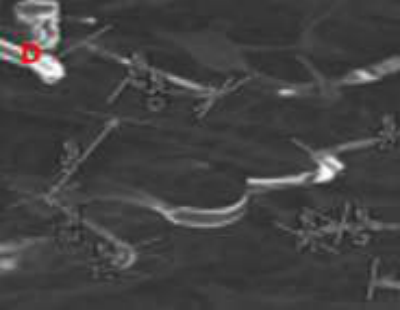 Figure 3
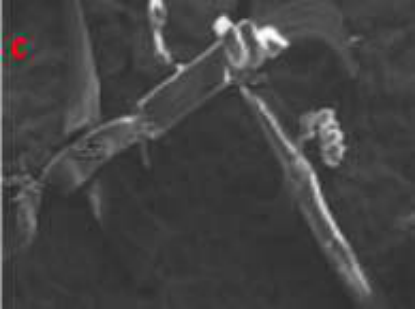 Figure 3
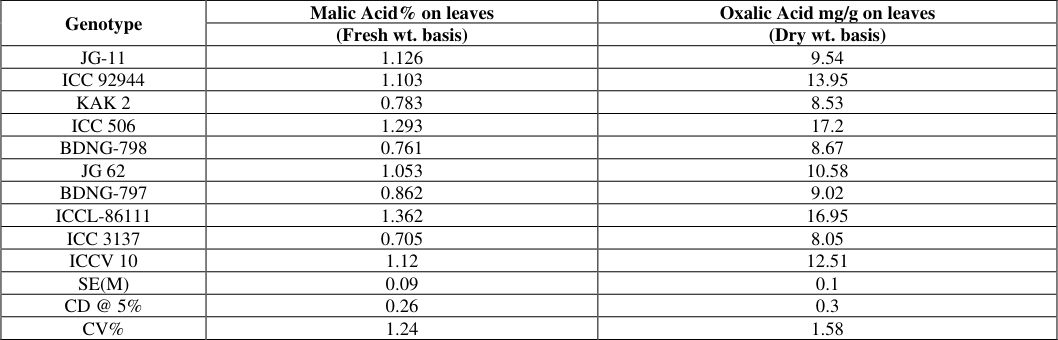 Table 3
 Table 4
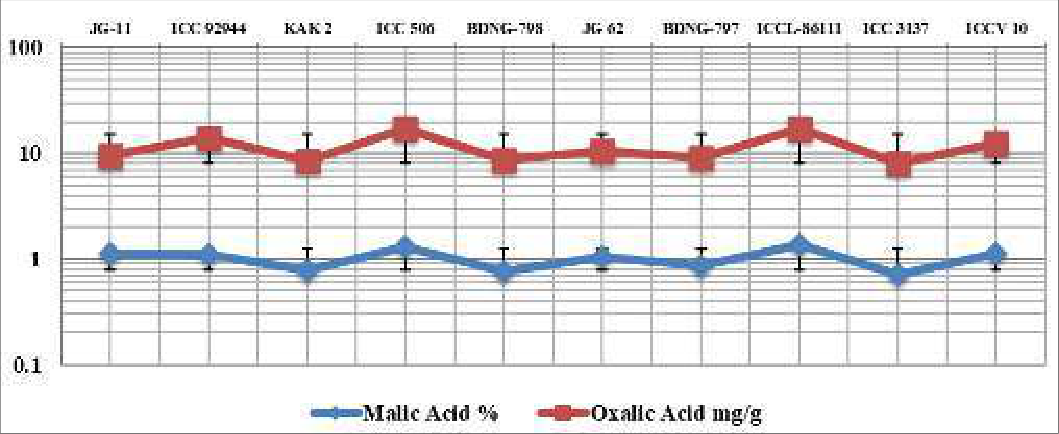 Figure 4
Introduction
The chickpea, commonly referred to as Bengal gram (Cicer arietinum L.)., is the most significant pulse crop of the Fabaceae family and is colloquially called "chana." The chickpea crop is world's daily need (FAO STAT 2016) [4] . A superior and less expensive source of protein than meat, chickpea is often referred to as "poor man's meat." In Maharashtra, (Indian State) chickpeas were cultivated over an area of 16.94 lac/ha over the 2020-2021 season of cultivation, producing 13.97 lakh tons and 824 kg/ha of production. Production and productivity in the Marathwada region are 10.59 lakh/ha, 7.76 lakh tones, and 707 kg/ha, respectively (Anonymous, 2020) [1] . Early H. armigera larvae feed on chickpea leaves, however later instars switch to feeding on flowers and developing pods and can result in production reductions of 80-90% despite repeated use of pesticides (Banu et al., 2005) [2] . This pest has high fertility, several generations, polyphagous feeding behavior, long distance migration, and capacity to acquire resistance to pesticides (Sharma, 2001; Kranthi et al., 2002) [21,11] . This pest is quite difficult to eliminate. As a result, alternative pest control tactics are required, and host plant resistance is capable of doing so in a way that efficiently decreases crop losses. Helicoverpa armigera affects chickpeas from the early vegetative forward through a podding stage, causing 60-80% of crop losses in Maharashtra (Patil et al. 2007) [15] . Kanchana et al. (2005) [9] discovered that increasing pod length, breadth, The quantity of protein, and larval population all demonstrated beneficial significant connections with pod damage, in contrast to the amount of trichomes on leaves and pods, which indicated a substantially negative correlation with pod damage. Trichomes and trichomal exudates on leaves and pods have been reported to repel H. armigera from the plant surface and to considerably impede walking behavior (Romeis and Shanower 1996) [18] .
There are biophysical factors that influence chickpea pod borer protection, including chickpea trichome length and density, pod wall thickness, pod length, number of pods per plant as well as pod width, and area. Along with those defences, it has been also interpreted that malic acid and oxalic acid, which have antifeedant consequences for H. armigera and cause oviposition non-preference. This study focused on the defence mechanisms of several chickpea cultivars against Helicoverpa armigera using their morphological and biochemical characteristics.
Materials and Methods
Materials and Methods
Details of genotypes
In the screening experiments, ten distinct genotypes of chickpeas were chosen for their responses to H. armigera. The genotypes were received from the Badnapur Agriculture Research Station, VNMKV, Parbhani., viz., JG-11, JG 62, ICC 92944, BDNG-797, KAK 2 (Kabuli), ICCL-86111(R), ICC 506, ICCV 3137 (S), BDNGK-798 (Kabuli) and ICCV 10. The investigation was carried out at VNMKV's experimental farm of agricultural entomology department during Rabi 2021-22 under randomized block design (RBD) with three replications. Each genotype was sown in a three -row plot, with each row measuring 2 m. A three-row plot with a row length of 3 m was used to sow each genotype. The seeds were scarified at one end with a scalpel to improve water absorption, soaked in water for 24 hours, and treated with thiram (3 g / kg seed) before sown.
Biophysical attributes of chickpea against H. armigera infestation Pod dimensions
A systematic experimental approach was used in this work to analyse the morphological properties of pods from different genotypes (Uday et al., 2013) [23] . To this end, hundreds of pods were randomly selected from each replication, and length and breadth measurements were taken using a screw gauge. The resulting data were then used to compute the means for each genotype (Zaman et al., 2020) [26] . Additionally, pod husk wall thickness was measured using a similar approach, with ten random pods per genotype selected for analysis. (Girija et al., 2008) [5] . In order to ensure accuracy, three measurements were acquired for each pod and averaged to yield a representative value. These findings contribute to the knowledge of the genetic and external factors that affect the morphology of legume pods and may have important implications for crop improvement strategies (Kuzbakova et al., 2022) [13] .
Trichome Dimensions
Observations were made from fully developed, green pods to investigate the density and length of trichomes on the chickpea genotypes. According to Bozzola & Russell (1999) [3] , the plant material was preserved and examined using a scanning electron microscope (SEM). For primary fixation, fresh pods of every single genotype were picked, immediately placed in separate vials containing a glutaraldehyde (2.5% OCH (CH2)3CHO) solution, and then left over night at a temperature of 4°-5°C. After that, the leaf samples were washed three times with distilled water. To aid in secondary fixation, the specimens were immersed in Osmium Tetroxide (4% OsO4) solution for 3 to 4 hours at 4° to 5 °C. Following post-fixation, the specimens underwent three further washings using distilled water, each lasting 4 to 8 minutes. For a total of 20 minutes, the specimen was dehydrated using different ethanol concentrations viz., 25, 50, 70, 95, and 100%. Using 100% ethanol, the total dehydration completed over the period of 30 minutes. After the samples had dried to a critical point in CO2 at 5 °C, they were mounted on aluminium stubs using two-sided carbon tape (Muzira et al., 2018) [14] . The samples were then analysed and captured using a scanning electron microscope with a secondary electron detector operating at a 15 kV increasing voltage. The trichome density was calculated by counting the number of trichomes per millimetre squared. Utilizing the images acquired after length sealing was performed three times using software, the length of the trichomes was also measured. The least significant difference (LSD) was used to compare treatment means, and the F test was employed to establish the significance of treatment differences at P=0.05. ANOVA was used to analyse the data on several biophysical variables and see if there were any significant genetic differences. After this, a correlation analysis was used to link the biophysical parameters with Egg infestation, larval weight and percent pod damage (Hadi et al., 2017) [18] .
Biochemical attributes of chickpea against H. armigera infestation
Biochemical constituents in chickpea genotypes were studied in order to know any significant difference in chemical Constituents viz., malic acid and oxalic acid in leaf of different chickpea genotypes as per standard method.
Estimation of malic acid
The quantity of malic acid discharged on the leaves was quantified by measuring the titrable acidity of washings of leaf tissues (500 mg in each instance) in accordance with Koundal & Sinha's (1981) [10] recommendations, and using phenolphthalein indicator. The leaf sample for each genotype weighed 500 mg and was macerated before being cleaned with Whatman No. 1 filter paper and rinsed with distilled water. Filtrate collected, and a volume of 25 ml was created. The phenolphthalein an indicator was used to titrate ten ml portion of this washing against 0.01 N NaOH until a pink colour developed (Satoshi et al. 1997) [20] . Malic acid is equivalent to 0.67 mg/ml of NaOH. In terms of fresh tissue, the findings were represented as mg malic acid/g. percent Malic acid = TV × E × N × 100/1000 × W. Where, T. V = Titre value E = Equivalent weight of malic acid, N = Normality of NaOH, W = Weight of sample. (Goering &Vansoest, 1975) [6] .
Oxalic acid estimation
The quantification of oxalic acid in leaf samples was executed in accordance with the procedure recommended by Yoshida et al. (1995) [24] . The leaf tissue was subjected to a hot air oven at a temperature of 80℃ until a consistent weight was achieved; following which it was ground into a fine powder. A sample of the dried tissue weighing 500 mg was combined with 1.5 ml of sulfuric acid (4N H2SO4) and 1 g of asbestos. Resulting mixture was then transferred to a Whatman filter paper thimble and placed in a Soxhlet extraction apparatus. The extraction process was carried out using diethyl ether as the solvent for a duration of 48 hours. Subsequent to extraction, 5 ml of sodium hydroxide (NaOH 1 N) and distilled water (7 ml) were added to the extract, followed by the rotary evaporation of the ether layer. The remaining water phase was moved to a centrifuge tube and calcium chloride-acetate (Cacl2CH3COOH -) buffer (4 ml) was added, allowing the tube to stand overnight for further processing. For the estimation of oxalic acid, the supernatant was discarded after centrifugation of the centrifuge tube. Before undergoing a second cycle of centrifugation, the pellet was washed in 5 ml of 5% acetic acid that had been saturated with calcium oxalate (CaC2O4). The residue that was left over was dissolved in 4-5 ml of sulfuric acid (4N H2SO4) and heated in a water bath between 80 and 90 °C. Following filtering, the extract was titrated against a common 0.02N potassium permanganate (KMnO4) solution. Oxalic acid in the sample was calculated using the conversion factor: 1 ml KMnO4 (0.02N) is equivalent to 1.265 mg oxalic acid. This calculation allowed the determination of the oxalic acid content in the sample, expressed as milligrams per 100 grams of the original sample weight.
Results
Results
Biophysical attributes of chickpea against H. armigera
In this study, we investigated pod morphological characteristics of different chickpea genotypes.
Our results (Table 1, depicted in Figure 1) showed that pod length varied from 14.5 to 17.9 mm with the highest pod length was recorded on BDNG 798 (17.9 mm) which found at level par with ICC 506 (17.4 mm), ICCV 10 (17.1 mm), KAK 2 (17.0 mm) and ICCL 86111 (16.9 mm). The shortest pod length was recorded on JG 11 (14.5 mm). The next genotype of shorter pod length were ICC 3137 (14.8 mm) and ICC 92944 (15.3 mm). Pod width of different genotypes varied from 8.00 mm to 10.14 mm. A narrow pod width was recorded in genotype ICC 92944 (8.00 mm). The other genotypes with narrow pod width were BDNG 797 (8.37 mm) followed by JG 11 (8.55 mm), ICCV 10 (8.59 cm) and ICC 3137 (8.89 cm). The broader pod width was recorded in ICC 506 (10.14 mm) which was at par with BDNG 797 (9.65 mm) followed by KAK 2 (9.24 mm), ICCL 3137 (9.01 mm) and JG 62 (9.0 mm).
| Genotype | Gram Pod attributes | — | — |
|---|---|---|---|
| Pod length (mm) | Pod width (mm) | Pod wall thickness (mm) | |
| JG-11 | 14.5 | 8.55 | 0.26 |
| ICC 92944 | 15.3 | 8.00 | 0.45 |
| KAK 2 | 17.0 | 9.24 | 0.33 |
| ICC 506 | 17.4 | 10.14 | 0.36 |
| BDNG-798 | 17.9 | 9.65 | 0.4 |
| JG 62 | 15.8 | 9.00 | 0.21 |
| BDNG-797 | 15.4 | 8.37 | 0.21 |
| ICCL-86111 | 16.9 | 9.01 | 0.22 |
| ICC 3137 | 14.8 | 8.89 | 0.27 |
| ICCV 10 | 17.1 | 8.59 | 0.21 |
| SE(M) | 0.07 | 0.42 | 0.02 |
| CD @ 5% | 0.2 | 1.24 | 0.07 |
| CV% | 6.57 | 7.96 | 13.03 |
Table text extracted from the original PDF; superscript letters are shown inline. The original table image is below.
View original table image
Pod wall thickness of different genotypes varied from 0.21 to 0.45 mm (Table 1, depicted in Figure 1). The thickest pod wall was recorded in ICC 92944 (0.45 mm) which was at par with BDNG 798 (0.40 mm). The thinnest pod wall was recorded in JG 62, BDNG 797 (0.21 mm) and was followed by ICCL 86111 (0.22 mm), JG 11 (0.26 mm), ICC 3137 (0.27 mm), KAK 2 (0.33 mm) and ICC 506 (0.36 mm) were at par with each other.
Trichome length on pods (μm)
Trichome length on pods of different genotypes ranged from 226.12 to 419.18 μm (Table 2; Figure 2). The highest trichome length on pods was recorded in ICCL 86111 (419.18 μm) (Figure 3C) which was at par with ICC 92944 (413.42 μm) followed by KAK 2 (412.15 μm), ICC 506 (411.02 μm). The lowest trichome length was recorded in JG 11 (226.12 μm) (Figure 3D) which was followed by ICC 3137 (251.22 μm), BDNG 797 (270.34 μm), JG 62 (318.56 μm), ICCV 10 (326.12), BDNG 798 (352.14 μm).
| Genotype | Trichome Dimensions | — |
|---|---|---|
| Pod Trichome density (mm2) | Trichome length (μm) | |
| JG-11 | 20.27 | 226.12 |
| ICC 92944 | 19.06 | 338.42 |
| KAK 2 | 26.62 | 399.15 |
| ICC 506 | 24.59 | 411.02 |
| BDNG-798 | 11.56 | 352.14 |
| JG 62 | 18.64 | 318.56 |
| BDNG-797 | 13.65 | 270.34 |
| ICCL-86111 | 25.18 | 419.18 |
| ICC 3137 | 10.52 | 251.62 |
| ICCV 10 | 16.78 | 326.12 |
| SE(M) | 1.24 | 1.05 |
| CD @ 5% | 2.44 | 3.15 |
| CV% | 1.34 | 4.25 |
Table text extracted from the original PDF; superscript letters are shown inline. The original table image is below.
View original table image
The pod trichome density was suggested to be one of the effective morphological defenses against the pod sucking bug attack (Krisnawati et al., 2022) [12] . Trichome length on pods varied from 226.12 to 425. 18
Biochemical attributes of chickpea against H. armigera
The data on the biochemical basis of resistance is presented in Table 3 and Figure 4.
| Genotype | Malic Acid% on leaves | Oxalic Acid mg/g on leaves |
|---|---|---|
| (Fresh wt. basis) | (Dry wt. basis) | |
| JG-11 | 1.126 | 9.54 |
| ICC 92944 | 1.103 | 13.95 |
| KAK 2 | 0.783 | 8.53 |
| ICC 506 | 1.293 | 17.2 |
| BDNG-798 | 0.761 | 8.67 |
| JG 62 | 1.053 | 10.58 |
| BDNG-797 | 0.862 | 9.02 |
| ICCL-86111 | 1.362 | 16.95 |
| ICC 3137 | 0.705 | 8.05 |
| ICCV 10 | 1.12 | 12.51 |
| SE(M) | 0.09 | 0.1 |
| CD @ 5% | 0.26 | 0.3 |
| CV% | 1.24 | 1.58 |
Table text extracted from the original PDF; superscript letters are shown inline. The original table image is below.
View original table image
Malic acid on leaves
In this study, the malic acid content on leaves of various chickpea genotypes was analyzed to investigate the correlation between malic acid secretion and resistance to insect pests, specifically H. armigera. The results revealed significant differences in malic acid content among the tested genotypes. The highest percentage of malic acid was observed in ICCL 86111 (1.362%), followed by ICC 506 (1.293%), JG 11 (1.126%), and ICCV 10 (1.120%), which were significantly superior to all remaining genotypes. The next higher percentage of malic acid content was observed in ICC 92944 (1.101%), which was at par with JG 62 (1.053%), while the lowest percentage was observed in ICC 3137 (0.705%). The Kabuli type genotypes, i.e., BDNG 798 and KAK 2, exhibited 0.761% and 0.789% malic acid, respectively.
Oxalic acid on leaves
The leaves of different chickpea genotypes put forth a bewildering variety in their oxalic acid content. The oxalic acid content spanned a range of 8.05 to 17.20 mg/g across the tested genotypes, as shown in Table 3 and Figure 4. The ICC 506 genotype was a clear winner in the oxalic acid content race, boasting a magnificent 17.20 mg/g, towering over all the other genotypes in the competition. The ICCL 86111 genotype held its own with an impressive 16.95 mg/g, neck to neck with the ICC 506. In contrast, the ICC 3137 genotype was a clear loser with a measly 8.05 mg/g, lagging far behind the rest of the pack. Among the Kabuli genotypes, BDNG 798 and KAK 2 were found to have 8.67% and 8.53% oxalic acid respectively. These results (Table 3) Senapati (1995) [16] ; Lateef (1985), which hypothesized that low levels of leaf exudate acidity and malic acid concentration were related to sensitivity to H. armigera. Despite the comparatively low frequency of insects on this plant, Koundal & Sinha (1981) [10] suggested that malic acid formation in chickpea be examined in relation to insect pests. Overall, our findings point to the potential of malic acid as a chemical factor influencing the frequency of insect pests in chickpea plants and imply that malic acid concentration may be a helpful criterion for separating relatively resistant genotypes from vulnerable ones. These results are following the findings of Surekha Devi et al. (2011) [22] , who documented oxalic acid content from leaf exudates at the flowering stage. They reported that ICC 506 had 17.70 mg/g of oxalic acid on a dry weight basis, while ICCV 10 had 10.05 mg/g. Yoshida et al., (1997) [25] delved into the both proposed acids content of trichome exudates on chickpea leaves. They discovered that different genotypes had significantly different malic and oxalic acid content. It was also noted that genotypes of H. armigera that were resistant accumulated higher levels of oxalic acid on the foliage than susceptible genotypes. The development of H. armigera larvae was significantly inhibited when oxalic acid was added to a semi-synthetic diet, suggesting that the substance may be beneficial as a defense against the pest. The suppression of larval development by oxalic acid was most likely related to antibiosis rather than antifeedant effects. 4.
The mean eggs population and pod trichome density both showed a negative and significant relation (r = -0.723 and r = -0.693, respectively). These results suggest that chickpea genotypes exhibiting higher pod trichome density were additional conducive for oviposition, resulting in a higher larval population and ultimately, a higher percent pod damage. This finding highlights the importance of pod trichome density as a determining factor for H. armigera infestation in chickpea crops and may aid in the development of targeted pest management strategies. The present study investigated the relationship between malic acid and oxalic acid content in chickpea genotypes and their impact on the pest population and pod damage caused by Helicoverpa armigera. The results revealed a significant and negative relationship between the amount of malic acid and the average pod damage, mean larval population, and average egg population (r = -0.736 and -0.680 respectively). In addition, high malic acid content was found to reduce larval weight, pupal weight, larval survival, and adult emergence. Oxalic acid exudates also had a very substantial and negative relationship to the mean larval population and mean pod damage (r = -0.692 and 0.782 resp.) showing that high oxalic acid concentration decreased larval weight and pod damage. [7] . Insect herbivores' ovipositional behaviours and host selection process were shown to be significantly influenced by the presence of trichomes and associated exudates on the pod wall surface (Rupakula et al., 2005) [19] . Although trichome density and length had a detrimental effect on larval survival, growth, and development, trichomes were also shown to provide protection against insect pests (Peter & Shanower, 1998) [17] . The findings of the current research were comparable to those of other studies that looked at how key biochemical characteristics of certain chickpea types affected H. armigera resistance. While sensitive genotypes with lower trichome density and thinner pod husk thickness demonstrated more pod damage, tolerant genotypes featuring higher trichome density and broader pod husks had less pod damage. (Girija et al., 2008) [5] . As reported by Kanchana et al. (2005) [9] , increasing protein content showed a substantially negative link with pod damage, while crude had a negative correlation with the pest population. Overall, these results suggest that the content of malic acid and oxalic acid, as well as the presence of trichomes and crude fibers, can significantly reduce the damage caused by H. armigera in chickpea crops.
Conclusion
Present investigation has provided valuable insights into the factors influencing the susceptibility or resistance of chickpea genotypes to pod borer infestation. The study has revealed that biochemical and biophysical bases have a significant impact on the susceptibility or resistance of chickpea genotypes, except for pod width. These findings suggest that potential genotypes with desirable biochemical and biophysical traits can be selected for hybridization programs to develop high-yielding, pod borer-resistant ortolerant chickpea varieties. Such varieties could be used as one of the elements of integrated pest control strategies. Furthermore, the study indicates that the infestation of H. armigera, a common pest of legumes, is likely to have a minor to moderate level effect on net yield. This finding is important for farmers and policymakers in developing strategies to manage pest infestations and improve crop productivity. This investigation shows the value of integrated pest management strategies in sustainable agriculture and lays the groundwork for future research into the creation of chickpea cultivars that are resistant to pod borer infestation. Attracting researcher attention to identifying chickpea germplasm that has resistance to pod borers and other natal and corporal challenges to generate high-yielding cultivars with acceptable grain quality as a result of the resistance results.
Acknowledgement
AcknowledgmentAuthors are grateful to the Department of Agricultural Entomology, VNMKV Parbhani, MH, India and Badnapur Pulses Research Station, Badnapur for providing the on time resources and support needed to complete this research. We would also like to thank our colleague and supporting staff for their help whenever needed.
Figures and tables from the paper
| Sr. No. | Biophysical attributes | Eggs population of H. armigera/plant# | larval population of H. armigera/plant# | Pod damage$ |
|---|---|---|---|---|
| 1 | Pod Length | -0.020 | 0.035 | 0.014 |
| 2 | Pod Width | -0.212 | -0.116 | -0.116 |
| 3 | Pod wall thickness (mm) | 0.116 | 0.070 | 0.060 |
| 4 | Pod trichome density (mm2) | -0.723* | -0.693* | -0.533 |
| 5 | Trichome length (μm) | -0.497 | -0.536 | -0.359 |
| 6 | Malic Acid% on leaves (Fresh wt. basis) | -0.690* | -0.680* | -0.736* |
| 7 | Oxalic Acid mg/g on leaves (Dry wt. basis) | -0.624 | -0.692* | -0.782* |
Table text extracted from the original PDF; superscript letters are shown inline. The original table image is below.
View original table image
References
22 in the original paper- Banu MR, Muthiah AR, Ashok S. Evaluation of pigeonpea (Cajanus cajan L.) genotypes against grampod borer (Helicoverpa armigera). Abstract in: 4th International Food Legume Research Conference on Food Legumes for Nutritional Security and Sustainable Agriculture, New Delhi, India. 2005. p. 317.
- FAO STAT. Food and Agriculture Organization of the United Nations 2002. IOP Publishing FAO. [Internet]. Available from: https://apps.fao.org. Accessed 10 Feb 2021.
- Girija PM, Salimath SA, Patil CL, Gowda L, Sharma HC. Biophysical and biochemical basis of host plant resistance to pod borer (Helicoverpa armigera Hubner) in chickpea (Cicer arietinum L.). Indian Journal of Genetics. 2008;68(3):320-323.
- Green PW, Stevenson PC, Simmonds MS, Sharma HC. Phenolic compounds on the pod surface of pigeonpea Cajanus cajan mediate feeding behaviour of larvae of Helicoverpa armigera. Journal of Chemical Ecology. 2003;29:811-821.
- Hadi S, Al-Salim F, Saleh M, Al-Bourky R, Ajmi H, Abdulrahman A. Correlation and regression analysis in sorghum under different levels of nitrogen. Journal of Scientific Agriculture. 2017:69-78. DOI: 10.25081/jsa.2017.v1i0.31.
- Kanchana R, Lakshmi KV, Sekhar PR. Morphological and biochemical bases of host plant resistance to Helicoverpa armigera (Hubner) in chickpea. Journal of Plant Protection & Environment. 2005;2(1):12-17.
- Koundal KK, Sinha SK. Malic acid exudation and photosynthetic characteristics in Cicer arietinum. Phytochemistry. 1981;20:1251-1252.
- Kranthi KR, Jadhav DR, Kranthi S, Wanjari RR, Ali SS, Russel DA. Insecticide resistance in five major insect pests of cotton in India. Crop Protection. 2002;21:449-460.
- Krisnawati A, Noerwijati K, Indiati ST, Yusnawan E, Adie M. Assessment of Soybean Resistance Level to Pod Sucking Bug Riptortus linearis F. (Hemiptera: Coreidae) based on No-choice, Free-choice Tests. Legume Research International Journal. 2022;21:22-35.
- Kuzbakova M, Khassanova G, Oshergina I, Ten E, Jatayev S, Yerzhebayeva R, Bulatova K, Khalbayeva S, Schramm C, Anderson P, Sweetman C, Jenkins CLD, Soole KL, Shavrukov Y. Height to first pod: A review of genetic and breeding approaches to improve combine harvesting in legume crops. Frontiers of Plant Science. 2022;13:948099. DOI: 10.3389/fpls.2022.948099.
- Muzira R, Kankwatsa P, Byenkya S. Yield Performance of Improved Chickpea (Cicer arietinum) Varieties under Pure Stand and Banana Intercrop Methods in Semi-Arid Agroecological Zone of South Western Uganda. Open Access Library Journal. 2018;5:e4089. DOI: 10.4236/oalib.1104089.
- Patil SK, Shinde GP, Jamadagni BM. Reaction of short duration chickpea genotypes for resistance to gram pod borer Helicoverpa armigera in Maharashtra, India. Journal of Scientific Agriculture Research. 2007;5(1):12.
- Patnaik HP, Senapati B. Comparative tolerance of chickpea cultivars against Helicoverpa armigera. Annals of Plant Protection Science. 2001;9(2):324-325.
- Peter AJ, Shanower TG. Plant Glandular Trichomes Chemical Factories with Many Potential Uses. Resonance General article. 1998;41-45.
- Romeis J, Shanower TG. Arthropod Natural Enemies of Helicoverpa armigera (Hubner) (Lepidoptera: Noctuidae) in India. Biocontrol Science and Technology. 1996;6:481-508.
- Rupakula A, Rao DM, Reddy LJ, Upadhyaya HD, Sharma HC. Inheritance of trichomes and resistance to pod borer (H. armigera) and their association in interspecific crosses between cultivated pigeonpea (Cajanus cajan) and its wild relative (C. scarabaeoides). Euphytica. 2005;145:247-257.
- Satoshi Kubota, Tamotsu Hisamatsu, Masaji Koshioka. Estimation of malic acid metabolism by measuring pH of hot water extracts of Phalaenopsis leaves. Scientia Horticulturae. 1997;71(3-4):251-255. DOI: 10.1016/S0304-4238(97)00063-0.
- Surekha Devi, Sharma HC, Rao PA. Interaction between host plant resistance and biological activity of Bacillus thuringiensis in managing the pod borer Helicoverpa armigera in chickpea. Crop Protection. 2011;30(8):962-969.
- Uday J, Singh D, Paul PJ, Lavanya G. Metroglyph Analysis for Morphological Variation in Chickpea (Cicer arietinum L.). Madras Agricultural Journal. 2013;98:121-123. DOI: 10.29321/MAJ.10.100257.
- Yoshida M, Cowgill SE, Wightman JA. Mechanism of resistance to Helicoverpa armigera (Lepidoptera: Noctuidae) in chickpea -Role of oxalic acid in leaf exudates as an antibiotic factor. Journal of Economic Entomology. 1995;88(6):1783-1786.
- Yoshida M, Cowgill SE, Wightman J. Role of oxalic and malic acids in chickpea trichome exudates in hostplant resistance to H. armigera. Journal of Chemical Ecology. 1997;23(4):1195-1210.
- Zaman Md, Kamal M, Alam A, Rafiqul M, Zaman, Mohammad MH, et al. Characterization of Chickpea Germplasm. Agriculture Conspectus Scientificus. 2020;85:19-35.
Cited by 1
From OpenAlex, OpenCitations and reference lists read by Scinovex
- Screening of chickpea genotypes for resistance to Helicoverpa armigera with emphasis on biophysical and biochemical traits
PG Andhale, MS Bharati, SA Landge, UK Kadam, PK Lokhande · International Journal of Advanced Biochemistry Research · 2026
A field experiment was conducted at the Pulses Improvement Project, Mahatma Phule Krishi Vidyapeeth, Rahuri, Maharashtra during Rabi 2025–26 to screen 36 chickpea genotypes comprising 29 desi and 7 kabuli types for resistance to H. armigera. Results revealed that Phule G-1703-6-6 recorded the lowest larval population (0.10 larvae/plant), minimum pod damage (4.38%) and highest yield (23.10 q/ha), whereas Phule G-1801-5-5 recorded the highest larval population (2.90 larvae/plant) and high pod damage (21.06%). Trichome length exhibited significant negative correlations with larval population (r =