
Research article · 2024 · Full text
International Journal of Advanced Biochemistry ResearchAn overview on production constraints, strategies and innovative production technologies of fruit crops
Volume 8(4) · Pages 501–507 · DOI: 10.33545/26174693.2024.v8.i4g.998 ↗
Research areasBanana Cultivation and ResearchAgricultural Science and FertilizationPlant Physiology and Cultivation Studies
Abstract
Author-writtenIndia ranks second in the world fruit production rankings, producing 13% of total fruit production. It is a leading producer of mango, banana, papaya, Sapota, and acid lime. Fruits are essential for human diets and are being researched under ICAR, leading to over 108 million tons of fruit production. The plant improvement programme has developed various fruit crops, including mango, banana, citrus, pineapple, papaya, guava, Sapota, jackfruit, litchi, grape, apple, peach, pear, plum, apricot, almond, walnut, Aonla, Ber, pomegranate, Annona, Phalsa, regular bearing mango hybrids, and export quality grape varieties. Improved propagation techniques have increased production and standardized agro-techniques for large-scale adoption. India has made significant progress in producing lesser-known fruits like Aonla, Ber, bael, Sapota, and pomegranate. The corporate sector is showing interest in fruit crops, and there has been a shift in consumption patterns. Recent fruit production techniques are expensive but profitable for large commercial growers, but most are still in the experimentation stage. Fruit crop management is crucial for producing high-quality fruits, with innovative techniques reducing time and labour requirements, increasing yield, and achieving sustainability goals. This review describes various production methods of fresh fruit. Modern technology related equipment is very expensive but very useful for growers who have a large business. Many of the technologies that benefit the fruit industry are still in the experimental phase. Management of fruit crops is an important factor affecting the time it takes to produce quality fruit for the market. New technologies for different processes in fruit production machines can help growers reduce time and labour, thereby increasing yields by achieving precise targets.
Summary
Source-checkedPlain-language reading of the full paper, prepared with AI and checked against the text. Each point links to the authors' own words.
Why it matters
- India is a global leader in fruit and vegetable production, ranking second worldwide because of its diverse agro-climatic regions. View evidence ↗
- During 2022-23, India's production of fruits (108.34 million tonnes) and vegetables (over 212.91 million tonnes) each represented nearly 10% of the global total. View evidence ↗
- Significant economic losses occur in the sector, with over 20% of production wasted, totaling an estimated 10.6 billion USD in value loss. View evidence ↗
The question
- The objective of this review is to identify research regarding innovative fruit production methods, such as aeroponics, soilless culture, high-density planting, and intelligent information systems. View evidence ↗
What they did
- The authors conducted a review of existing literature to describe various production methods for fresh fruit. View evidence ↗
What they found
- Research on strawberries showed that dry air aeroponics significantly increased fruit Brix and the number of inflorescences compared to control groups, though stolon growth decreased. View evidence ↗
- Guava yields in prairie orchard systems are reported to be 40-60 tonnes/ha, which is higher than yields from traditional systems. View evidence ↗
- Using a spacing of 1.0 m x 2.0 m allows for a high-density planting of 5000 trees per hectare. View evidence ↗
- The use of irrigation and plastic mulch treatment positively impacted saporta plants, with biometric results increasing from 7.62% to 41%. View evidence ↗
- In guava production, drip irrigation at 100% ETc resulted in the highest yield (18.7 t/ha), whereas 60% ETc resulted in the lowest (11.0 t/ha). View evidence ↗
- The application of 500 ppm CCC was found to accelerate fruit ripening and flowering by about 10 days in red raspberries. View evidence ↗
- Pruning 60% of guava trees led to more flowers compared to control groups or those pruned by only 30%. View evidence ↗
What it means
- The authors conclude that integrating innovative production technologies can improve the efficiency of input use, lower costs, and reduce the environmental footprint of fruit farming. View evidence ↗
- The authors note that many recent production techniques are still in the experimental phase and are expensive, making them primarily accessible to large commercial growers. View evidence ↗
Visual summary
3 visualsIllustrations explain the paper; charts are replotted from the paper's own table values.
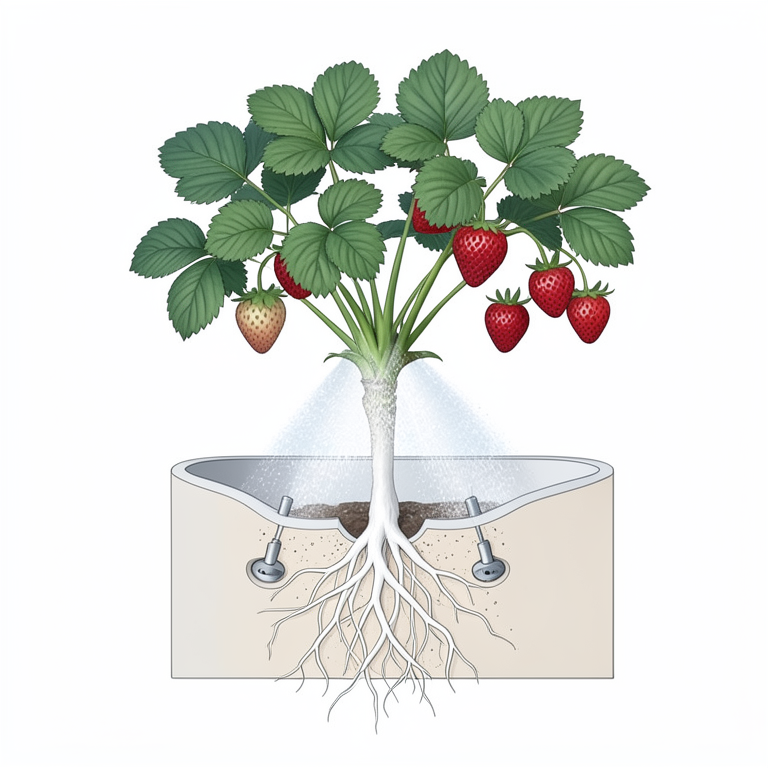
Aeroponic System Concept
AI-generated conceptual illustration (strawberry plants in an aeroponic system). It explains the idea and does not show study data.
View source evidence ↗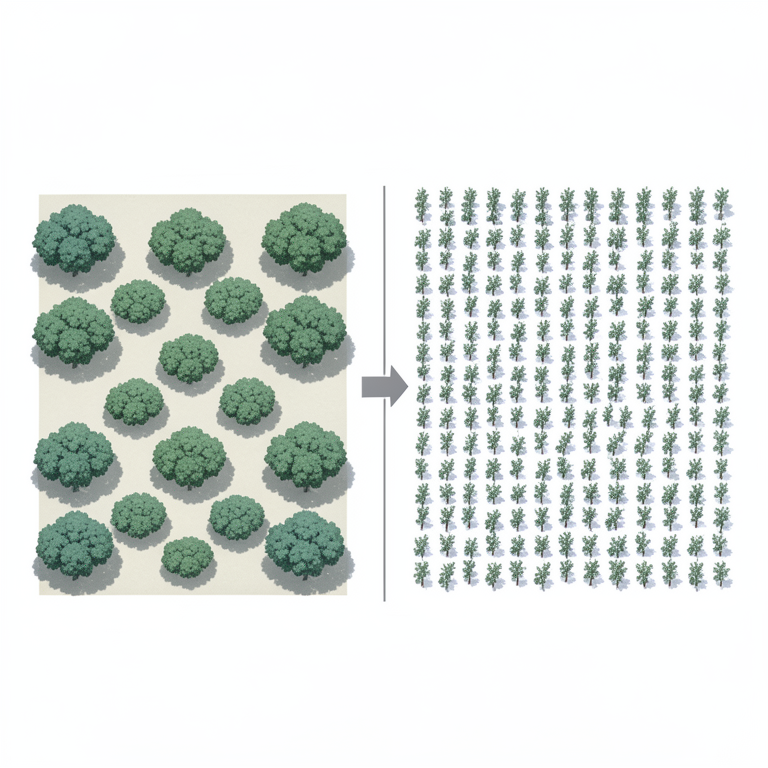
High Density Planting Layout
AI-generated conceptual illustration (Apple trees in an orchard). It explains the idea and does not show study data.
View source evidence ↗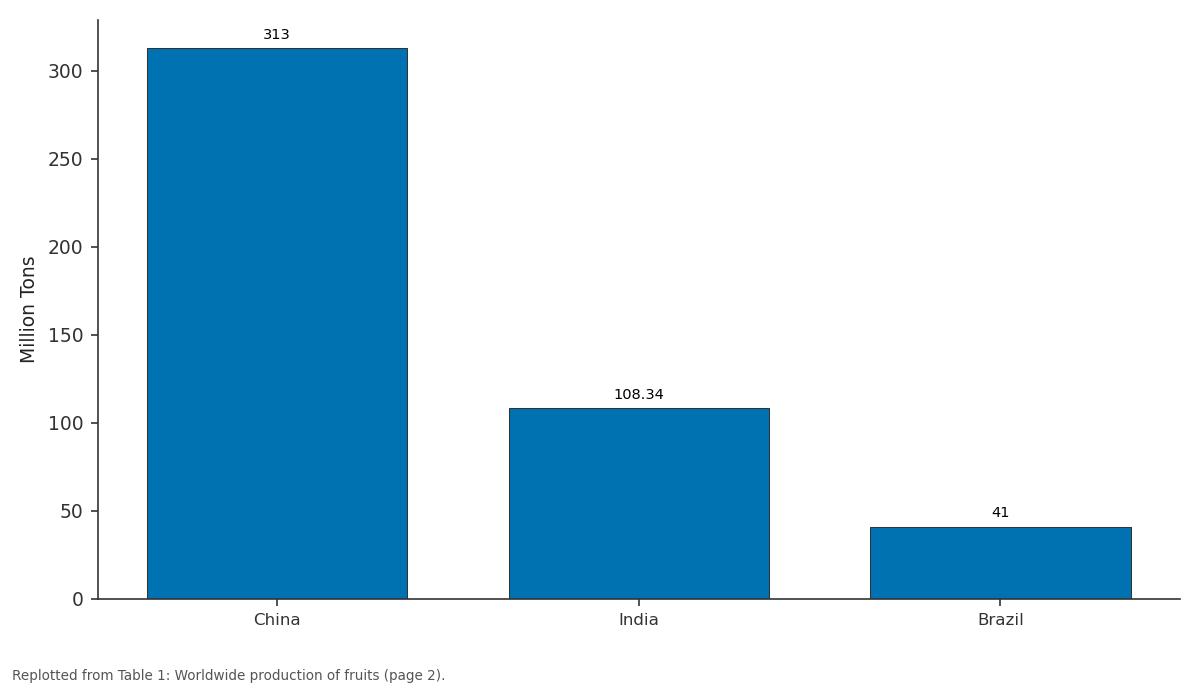
Million Tons: China vs India vs Brazil
Replotted from Table 1 (page 2) of the original paper. Every bar is the paper's own table value.
View source evidence ↗Figures & tables
From the original paper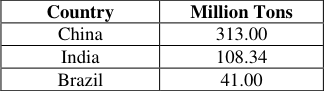 Table 1
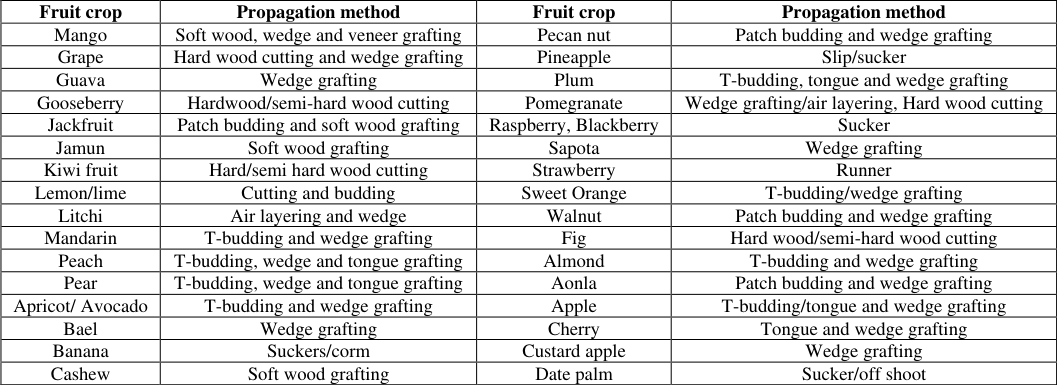 Table 2
Introduction
India ranks second globally in terms of fruit and vegetable production due to its diversified agro-climatic areas. In 2022-23, India produced 108. 34
million tonnes of fruits and over
The amount of fresh fruit produced worldwide increased from 576.65 million metric tons in 2000 to around 933.1 million metric tons in 2022. (OECD-FAO, 2023) [25] . India is the world's top producer of bananas and mangoes, with the domestic market being the primary destination for most of its fruit and vegetable production. Over three-quarters of consumption comes from the domestic market. Only 1% of fruits and vegetables are exported, and 2% are further processed. Waste or value loss accounts for over 20% of production, with estimated losses of 12 and 21 million tons, resulting in a total food value loss and waste output of 10.6 billion USD. (National Academy of Agricultural Sciences, 2019) [24] .
Indian scenario in fruit production
India's 2022-23 fruit production is dominated by Andhra Pradesh with a production of 19 million tonnes, followed by Maharashtra with a production of over 12.4 million tonnes. The country's export market is dominated by low-value fruits and vegetables such as onions, mango pulp, fresh mangoes, dried walnuts and berries. India exported 674,291.70 tonnes of fresh fruits worth US$ 339 million to the world in 2022-23, with major exporters like United Arab Emirates, Bangladesh, Iran, Iraq and Nepal. (APEDA, 2023) [2] .
Production limitation in fruit crops in India
Studies have shown that the productivity and quality of crop s are below their potential due to various factors such as: 1. Crop production is poor due to low quality of plant material, low genetic quality, poor management, lack of evaluation mechanism, risk of infection, need for renewal of old vineyard, small area, lack of rain, high diseases. Lack of technology awareness and investment capacity, insufficient financing, infrastructure problems and lack of knowledge on seasonal products for export needs. 2. Poor postharvest management, lack of infrastructure, poor marketing, poor workforce, poor standards and high capital investment affect the utilization of equipme nt, deteriorating the raw product. 3. Due to the initial cost of planting or orchards, it is very difficult to plant new orchards and improve old orchard s for a variety of garden crops, 4. In the absence of proper and improved storage space, lo ngterm planning for horticultural development will be d ifficult and impossible. 5. Major diseases such as mango whorls, spongy tissue an d deformations, guava blight, citrus blight and Phytopht hora blight create longterm production problems in man y crops, and there are still many pests and diseases that remain unresolved. 6. There is no technology to improve the land and landsca pe, which is a promising area for future expansion. Ther e is no better way to grow poor crops on a large scale, a nd this method works best on barren lands and poor or i mpoverished soils.
Future planning for fruit crop production in India
Innovative production technologies of fruit crops Advance techniques for propagation in fruit production
Fruit planting is crucial for the growth of the fruit sector, but choosing the right planting material and technologies for mass replication is essential. Mistakes in early stages can lead to significant financial losses. Commercial fruit production relies on high-quality, true-to-type planting material. Fruit plants often produce non-identical offspring due to cross-pollination, so they are propagated vegetatively through methods like grafting, cutting, budding, and special vegetative structures. Before planting, plants are kept in a nursery until they reach a mature stage for orchard planting.
Increasing the amount of healthy planting material for new, high-yielding cultivars will significantly boost India's fruit production. Induction of roots in cuttings and layers has been successful with mist propagation, fogging method, bottom heat, growth regulators, etiolation, and invigoration. The banana micro propagation protocol has been standardized. Robinson (2004) Vegetative propagation is a crucial agricultural method for developing high-quality and quantity fruit crops and strengthening a country's economy. However, it also increases the susceptibility of some plant species to viruses that could destroy all crops. In India, most fruit trees were budded or grafted onto seedlings from various sources. Recently, clonal rootstocks with specific characteristics are being used to overcome adaptation-related problems. These rootstocks have advantageous traits such as tolerance to pests and diseases, tolerance to heavy clay or saline soils, winter cold or high temperatures, and poorly drained soils. There is no genetic difference between parent rootstock clones. (Choudhary et al., 2015) [6] .
Advance techniques for Soilless culture in fruit production
In today's agriculture, aeroponics is a method of growing crops without soil. Lakkireddy et al., (2018) [17] define aeroponics as a modern soilless growing method used in the food industry. In the 21st century, soilless culture technology plays an important role in aeroponic food production. In this innovation, plants are grown using natural environments. The most important change to ensure the delivery of products to the roots is the use of sprays, atomizers and atomizers to create small bubbles (Christie and Nichols, 2003) [5] . By promoting growth and preventing diseases, the use of misters in aeroponics helps increase productivity by improving plant nutrition. Aeroponics can produce high plant yields because it properly supplies oxygen and water, two factors traditionally used to determine the limits of plant growth. Jun et al. (2008) [8] conducted an experiment to examine the effect of reduced root zone temperature on root and shoot growth in aeroponics. For the purpose of the experiment, strawberries were grown by aeroponic method in the cold season. They found that loss of root zone temperature caused a reduction in root growth, especially strawberry roots. The greatest principle elongation occurs in the central region of 18 0 C, while the lowest number and length of lateral origins occur in the central region of 8 0 C. Strawberry leaf area, length, width, and leaves all decrease with temperature. roots and the weight of roots and shoots. Kanechi et al. (2015) [13] developed a new aeroponic mechanism using water spray and fertilization to grow strawberries in late spring using the dry air method. Using this technique, the solution is sprayed from a very fine point at a distance of approximately 10 µm to the root area. Researchers use dry air aeroponics to grow strawberry plants to compare flower growth, fruit quality, photosynthesis rate, chlorophyll content, and solvent content in leaves of plants fertilized with drip irrigation, using palm bark media as a control. In dry air aeroponics, the number of inflorescences and fruit Brix increased significantly compared to the control, while the number and growth of stolon decreased. Based on their research, they concluded that strawberries can be produced using modern methods without the need for soil. Treftz, (2015) [39] evaluated the perception and nutrition of raspberries and strawberries grown in soil and soilless systems. Hydroponics seems to be a solution for sustainable food production because the food produced is both delicious and healthy. Results from hydroponics show greater value, better or equal to similar nutrients, and preference or better compared to soil-grown raspberries and strawberries. According to a study by Lee et al. (2015) 19] stated that differences in nutrients affect the growth and yield of summer strawberry varieties grown in soilless systems. Mattner et al. (2017) [23] examined and analyzed the use of soilless systems in strawberry cultivation and found that although these systems are more expensive than mature systems, there is no need to use pesticides in the soil to control pests. In addition, these improvements are often used in the early stages of a runner's appearance, helping to reduce the number of generations required to be able to run.
Advance techniques for orchard management in fruit production
Orchard soil management includes many ways to keep soil healthy and protect it from wind and rain. These include tall planting, mulching, crop rotation, turf culture, mixed cropping, cover crops, and seeding. Intercrops are recommended in orchards with drained or eroded soil because they provide organic matter, improve the biological complexity of the soil, and reduce erosion. Cover crops such as beans are better at fixing nitrogen and reducing weeds during the rainy season. Good agricultural practices, including tillage and weed management, help maintain plant range and prevent pests and diseases. However, it also has disadvantages such as increased nutrient leaching, soil erosion and loss of organic matter. Mulching is another technique used by orchards to improve growth and retain soil moisture. Common materials include hay, straw, crop residue, leaves, sawdust and plastic. Biological mulch materials such as dry leaves, straw and coconut leaves can control plant growth, reduce evaporative loss and create a microclimate. Loose straw acts as a barrier, inhibiting plant growth and reducing competition for nutrients. Plastic sheeting is used as mulch due to its cost and ability to control soil moisture, keep soil warm, reduce plant growth, and improve moisture. In general, mulching can improve the quality and yield of horticultural crops, improve plant health and insect resistance, and promote soil microbial activity and aeration. On top of the mulch strips it is necessary to put sawdust, coconut coir dust, straw or rice husk; However, to avoid disease, mulch should be 20-30 cm away from the trunk of the tree. Sapota cv. Kalipatti's greatest yield under 200 gauge black polythene film was reported by Singh et al., (2015) [30] . Tiwari et al. (2014) [40] investigated the effects of drainage and plastic mulching on Sapota fruit tree yield. They found that soil treated with plastic mulch increased organic carbon, organic matter, humic acid, microbial community, potassium, phosphorus, total nitrogen content, and carbon/nitrogen ratio. However, soil covered with plastic mulch has lower pH and less nitrogen. Biometric data shows that plastic mulch treatment and irrigation had a positive effect on saporta plants, with results increasing from 7.62% to 41%. Weed control is crucial to maintaining a healthy vineyard and includes mulch, hand weeding, and chemicals. Mulching the body reduces weeds and improves the soil around the body. Spraying glyphosate is recommended for weed control. Intermediate tillage is recommended for improved aeration and good plant management. Young orchards need a strong wind to protect them from frost, drought and extreme heat. Guo et al. (2015) [11] used hyperspectral imaging technique to distinguish disease-affected and healthy leaves, including citrus tristeza. Leaves were photographed in the visible and near-infrared spectrum. Surface enhanced Raman spectroscopy analysis was used. Liu et al. (2015) [20] found imidephosphorus residues on the surface of orange peel. In their search for the insecticide imidophos, they used materials such as Clarite and colloidal silver. The results of the study show that the Raman signal of imide phosphorus increases in a constant range from 5 to 30 mg/L. To determine the nitrogen content of plantation jujube tree, Wu et al. (2015) [42] developed a spectroscopy-based nitrogen parameter detector. A control unit and several measuring instruments are mounted on the instrument panel. The sensor core was used to measure the effects of the jujube plant at different wavelengths, ensuring that nitrogen elements in the orchards were not damaged. The partial least squares model best fits the data of Wang et al. (2015) [41] for the determination of chlorophyll content in unripe fruits using hyperspectral methods. Zhang et al. (2015) [43] proposed an optical method for rapid measurement of nitrogen and chlorophyll concentrations in fruit juice. They found that four wavelength groups (550 nm, 640 nm, 680 nm, and 780 nm) were responsible for the nitrogen and chlorophyll content of the leaves during photoreaction. Liu et al. (2015) [20] developed a method using spectroscopy to estimate the soluble content in Newhall oranges from seven sources. They used the true recurrence model (PLS) halfway through and found that the predictive model based on the initial analysis was valid. Sun et al. (2015) [35] developed a machine vision using time-flight 3D imaging technology and image processing techniques using interference and adaptive filters. The system achieved 81.8% detection, with only one operation yielding erroneous results.
Advance techniques for HPD and Meadow orcharding planting in fruit production
High-density planting is a soil management strategy that maximizes land use and fruit yield. It is used successfully in many fruits such as apple, pear, banana, pineapple, mango, guava, tangerine, tangerine and pomegranate. Traits such as dwarf genotypes, rootstocks, pruning, training, inhibitors, plant geometry modification and disease control can be used to achieve high yields. HDP also increases the value of hot weather and dried fruits. Recent experiments at the Central Institute of Subtropical Horticulture in Lucknow have shown that guava can be grown closer together according to HDP. Singh, 2008 [32] . The average yield of guava grown in prairie orchard systems is reported to be 40-60 tonnes/ha compared to traditional systems. The first reports of weeds for fruit crops can be traced back to many scientists. Modern improvements in this way have been made thanks to the widespread use of fertilization and advances in machineassisted pruning and training methods. Robinson (2004) [28] suggested that the development of quality management techniques has led to an increase in the cultivation of plums, apples, peaches, peaches, cherries, apricots and apricot trees. Creating four trees, improving branching methods and reducing pruning techniques are important developments that enable more trees to be obtained Singh (2010) [29] in 1.0 m x 2.0 m spacing. This results in a density of 5000 trees per hectare. The system is designed to bear fruit from the first year and is managed to create a simple framework. Kaushik et al. (2013) [15] found effective fertilizer use, nutrition, yield and quality in guava varieties. 'Shweta' in lawn garden requires 75% irrigation of water system and application of 75% water soluble fertilizer through drip irrigation technology. Choudary et al., (2015) [6] Claims to produce new fruit, replacement of trees and best driving work. Singh et al., (2015) [15] conducted a study on the production and characteristics of guavas grown in grassland using drip irrigation and polyethylene mulching. Allahabad Safeda was grown and tested at four irrigation levels with tray evaporation supplement. When the evaporation table is less than 80%, fruit weight (107.3 g), yield (16.92 kg•m3) and number of fruits (27.3) are higher. Hariom and Shant (2015) [12] studied the effects of branch pruning on guava flowering, fruit growth and yield in prairie orchards and found that when the limb was halved, the reduced vegetative growth produced new branches in 50% of cases to be new. branches. April buds bear fruit better throughout the winter.
Canopy management practices for flower induction in HDP: Advanced planting techniques include training and pruning techniques, which are important components. Pruning a guava tree when plant density is high can increase yields. Guava responds well to pruning as it controls shoot growth and prominence by limiting content expansion and restoring the balance between the shoots and the root system. Many studies have shown that pruning will inevitably increase the number of flowers, demonstrating the importance of this strategy in high cultivation. Singh et al. (2001) [31] reported higher yields for five consecutive years in Sardar and Allahabad Safeda guava varieties when pruned between April and June. According to Jadhav et al. (2002) [9] , 60% of guava trees produced more flowers than control and lightly pruned (30%) plants. (2002) [9] . Mohammed et al. (2006) [21] found the maximum number of flowers per flower when pruned to 60 cm during winter. Mehta et al. (2012) [22] found that pruning 3 times per year produced the highest number of flowers per plant (20.13), but pruning 80% of October in the winter of October 2009 was most productive. minimum number of flowers per plant (7.72). An experiment by Kumar and Rattanpal (2010) [14] showed that pruning 1/2 of the plant's growth yielded a maximum of 544 fruits per tree and 55.1 kg per tree, with an estimated yield of 54.4 tonnes/ha. 6m x 4m.
Water management and root treatment
When trees are not watered from February to mid-May, they lose their flowers and enter a dormant state because nutrients are stored in their branches (Sachin et al., 2015) [33] . The tree enters the dormant phase by carefully removing the top 40-60 cm of soil around the trunk, exposing the roots to the sun and reducing moisture upwards. That's why leaves started falling from the trees. In order to achieve harvest Sachin et al., 2015 [33] , Suresh et al., 2016) [36] ), after the first three to four weeks, the roots need to be covered again with a mixture of soil and fertilizer (Jun et al., 2008) [8] .
Fertilizer management in HDP
Fertigation is a method of applying fertilizers in a way that aligns with crop needs, maximizing their nutrient content, and ensuring precise timing and distribution of water and nutrients, thereby reducing fertilizer costs and reducing leaching losses. (Kumar et al., 2007) [16] . As with regular watering, optimal split fertilizer treatments will enhance crop output both in terms of quantity and quality compared to the traditional approach. Sharma et al., (2011) [34] found that drip irrigation at 100% ETc yielded the highest guava fruit yield (18.7 t/ha), while the lowest yield (11.0 t/ha) was achieved at 60% ETc. The maximum fruit yield and water productivity were achieved under drip irrigation at 100% ETc with 120% of the recommended N dose. The Lucknow-49 guava cultivar produced an average of 4.60 kg fruits per plant, with the highest estimated yield of 10.22 tonnes/ha at a 50% RDF fertigation dose during HDP fertilization schedule, compared to 6.73 tonnes/ha in the control (Auxcilia et al., 2019) [3] . In comparison to basin irrigation, Sharma et al., (2011) [34] found that fertigation produces a better yield in guava. According to Kaushik et al., (2013) [15] study on guava development and yield in a meadow orchard system found that when 100% water soluble fertilizers were combined with water irrigation and cumulative pan evaporation, the maximum fruit diameter and weight were measured. However, the optimal treatment achieved a maximum benefit:cost ratio of 2.91 by irrigating 75% of cumulative pan evaporation and 75% of water soluble fertilizers, making this treatment the optimal choice. Jeyabal et al., (2000) [34] obderved fertigation at 75% recommended NK level with urea and multi-K produced a 12.3% greater yield than soil treatment at 100% NK level, suggesting a 25% reduction in NK in addition to an increase in productivity in a three-year-old guava plantation.
Application of growth regulators and chemicals on fruit production under HDP
Chemicals such as maleic acid hydrazide can affect the structure of plants by inhibiting bud growth, maintaining the same number of internodes and leaves, and improving green leaf pigmentation. They also control or slightly encourage root growth with a root-to-shoot ratio that supports the roots. A study comparing three male acid hydrazide (MH) herbicides to a control group found that application of 2chloroethyltrimethylammonium chloride (CCC) did not shorten the shoot length of Thompson seedless male fruits but was more effective at increasing sugar diameter. Lichev et al., (2001) [18] found that paclobutrazol application significantly inhibited annual bud growth and increased photosynthetic activity, potentially increasing cherry yield. Application of paclobutrazol in mango reduces tree height, volume and shoot length due to the inhibitory effect of paclobutrazol. According to the research conducted by Albuquerque et al., (2000) [1] an increase in grape buds was observed after the application of 1500 ppm CCC. Cont. "Autumn Blessings" of Red Raspberries Ghora et al., [10] investigated the effects of growth inhibitors (CCC, butyrohydrazine and paclobutrazol) on growth and development in plastic greenhouses. They found that application of 500 ppm CCC accelerated flowering and fruit ripening by approximately 10 days. Brahmachari et al. (1995) [4] by treating ethylene at 25 or 50 ppm, the fruit yield, weight and quality of guava increased, while the seed quantity and weight decreased. Absorption of Ethephon in pineapple and the reason for failure to form flowers. They also found that ethylene-releasing chemicals such as ethephon are often used to promote bromeliad flowering Turn bull et al. (1999) [38] . According to Ramburn (2001) [27] foliar spraying of 0.5 g PBZ + 0.4 g ethephon/litre increased the flowering of irregularly flowering lychees. Onaha et al. (2001) [26] found that bromeliad flower induction rate was higher. Because growth inhibitors reduce tree height, canopy size and spread, they can have a significant impact on fruit production by allowing more trees to grow in land area.
Conclusion
The review paper discusses the importance of efficient utilization of inputs in fruit crop production, focusing on innovative technologies that enhance the effectiveness and targeted delivery of these inputs. Fertilization methods like fustigation, foliar fertilization, and nano fertilizer have been identified as effective in improving nutrient availability, reducing wastage, and enhancing plant absorption efficiency. Water-efficient technologies like drip irrigation, micro sprinklers, and partial root zone drying have been developed to minimize water loss and optimize plant water uptake. Plant bio regulators and growth enhancers have shown promise in improving fruit quality, yield, and postharvest characteristics. Integrated pest management approaches, biological control agents, and pheromone-based monitoring systems have been implemented to promote natural pest suppression, minimize pesticide usage, and protect beneficial organisms. The integration of these innovative approaches in fruit crop production systems offers opportunities to enhance input utilization efficiency, reduce production costs, and minimize environmental impact.
Figures and tables from the paper
| Country | Million Tons |
|---|---|
| China | 313.00 |
| India | 108.34 |
| Brazil | 41.00 |
Table text extracted from the original PDF; superscript letters are shown inline. The original table image is below.
View original table image
| Fruit crop | Propagation method | Fruit crop | Propagation method |
|---|---|---|---|
| Mango | Soft wood, wedge and veneer grafting | Pecan nut | Patch budding and wedge grafting |
| Grape | Hard wood cutting and wedge grafting | Pineapple | Slip/sucker |
| Guava | Wedge grafting | Plum | T-budding, tongue and wedge grafting |
| Gooseberry | Hardwood/semi-hard wood cutting | Pomegranate | Wedge grafting/air layering, Hard wood cutting |
| Jackfruit | Patch budding and soft wood grafting | Raspberry, Blackberry | Sucker |
| Jamun | Soft wood grafting | Sapota | Wedge grafting |
| Kiwi fruit | Hard/semi hard wood cutting | Strawberry | Runner |
| Lemon/lime | Cutting and budding | Sweet Orange | T-budding/wedge grafting |
| Litchi | Air layering and wedge | Walnut | Patch budding and wedge grafting |
| Mandarin | T-budding and wedge grafting | Fig | Hard wood/semi-hard wood cutting |
| Peach | T-budding, wedge and tongue grafting | Almond | T-budding and wedge grafting |
| Pear | T-budding, wedge and tongue grafting | Aonla | Patch budding and wedge grafting |
| Apricot/ Avocado | T-budding and wedge grafting | Apple | T-budding/tongue and wedge grafting |
| Bael | Wedge grafting | Cherry | Tongue and wedge grafting |
| Banana | Suckers/corm | Custard apple | Wedge grafting |
| Cashew | Soft wood grafting | Date palm | Sucker/off shoot |
Table text extracted from the original PDF; superscript letters are shown inline. The original table image is below.
View original table image
References
43 in the original paper- Albuquerque TCS De, Dechen AR, Camargo EC, De PR. Growth retardants and nutritional characteristics on the grape cultivar 'Thompson seedless' and 'Italia'. Scientia Agricola. 2000;57(11):45-53.
- APEDA. https://www.apeda.gov.in.Statistical report, 2023.
- Auxcilia J, Parthiban S, Santhi VP, Nithyadevi A, Janaki P, Indurani I. Studies on fertigation scheduling for guava Cv. Lucknow 49 in sodic soil conditions under High Density Planting Systems. Paper presented on National conference Climate smart agriculture for livelihood security: challenges and opportunities 13-14, September 2019 held at Anbil Dharmalingam Agricultural College and Research Institute. Souvenier. 2019, p. 57.
- Brahmchari VS, Mandal AK, Kumar R, Rani R, Kumar R, Rani R. Effect of growth substance on fruit-set andphysico-chemical characteristics of 'Sardar' guava (Psidium guajava L.). Recent Hort. 1995;2(2):127-131.
- Christie CB, Nichols MA. Aeroponics-a production system and research tool. In South Pacific Soilless Culture Conference-SPSCC 2003, 648185-190
- Choudhary HD, Khandelwal SK, Choudhary MK, Gadawal OP, Choudhary MR. High density and meadow orchard planting system in fruit crops. Horticulture Research Report of SKN College of Agriculture, Jobner, 2015, 1-5.
- FAO. World Food and Agriculture-Statistical Yearbook Rome, 2023. https://doi.org/10.4060/cc8166en.
- Jun HJ, Hwang JG, Son MJ, Choi DJ. Effect of root zone temperature on root and shoot growth of strawberry. Protected Horticulture and Plant Factory. 2008;17(1):14-19.
- Jadhav BJ, Mahurkar VK, Kale VS. Effect of time and severity of pruning on growth and yield of guava (Psidium guajava L.) cv. Sardar. Orissa J Hort. 2002;30(2):83-86
- Ghora Y, Vasilakakis M, Stavroulakis G. Effect of growth retardants (CCC, daminozide & Paclobutrazol) on growth and development of red raspberries cv. 'Autumn Bliss'cultivated under plastic green house condition in China-crete, Greece. Acta Horticulturae. 2000;5(13):453-458.
- Guo D, Xie R, Qian C, Yang F, Zhou Y, Deng L. Diagnosis of ctv-infected leaves using hyperspectral imaging. Intelligent Automation and Soft Computing 2015;21(3):269-283.
- Hariom S, Shant L. Effect of shoot pruning on growth, flowering and yield in meadow orchard of guava cv Pant Prabhat. International Journal of Basic and Applied Agricultural Research. 2015;13(3):395-399.
- Kanechi M, Hikosaka Y, Fukuda C, Uno Y. Everbearing strawberry culture using a new aeroponic system with dry-fog spray fertigation during the summer. ICESC2015: Hydroponics and Aquaponics at the Gold Coast. 2015;1176:37-44.
- Kumar Y, Rattanpal HS. Effect of pruning in guava planted at different spacing under Punjab conditions. Indian J Hort. 2010;67:115-119.
- Kaushik RA, Pareek S, Sarolia DK, Singh V. Effect of drip fertigation scheduling on fertilizer use efficiency, leaf nutrient status, yield and quality of 'Shweta' guava (Psidium guajava L.) under meadow orcharding. National Academy Science Letters. 2013;36(5):483488.
- Kumar A, Singh RK, Sinha AK, Singh HK, Mishra AP. Effect of fertigation on banana through drip irrigation in North Bihar. J. Res. Birsa Agric. Univ. 2007;19:81-86.
- Lakkireddy KKR, Kasturi K, KRS SR. Role of hydroponics and aeroponics in soilless culture in commercial food production. Research and Reviews: Journal of Agricultural Science and Technology. 2018;1(3):1-8.
- Lichev V, Berova M, Zlatev Z. Effect of cultar on then photosynthetic apparatus and growth of cherry tree. Bulgarian Journal of Agricultural Science. 2001;7(1):29-33.
- Lee YH, Yoon CS, Park NI, Yeoung YR. Influence of various nutrient concentrations on the growth and yield of summer strawberry cultivars cultivated in a hydroponic system. Horticulture, Environment, and Biotechnology. 2015;56(4):421-426
- Lyu Q, Liao Q, Liu Y, Lan Y. Feasibility of SSC prediction for navel orange based on origin recognition using NIR spectroscopy. Intelligent Automation and Soft Computing. 2015;21(3):305-317
- Mohammed S, Sharma JR, Kumar R, Gupta RB, Singh S. Effect of pruning on growth and cropping pattern in guava cv. Lucknow-49. Haryana J Hort. Sci. 2006;35(3&4):211-212
- Mehta S, Singh SK, Das B, Jana BR, Mali S. Effect of pruning on guava cv. Sardar under ultra high density orcharding system. Indian Journal. 2012;25(2):192-195.
- Mattner SW, Horstra CB, Milinkovic M, Merriman PR, Greenhalgh FC. Evaluation of soil-less systems for strawberry transplant production in Australia. Acta horticulturae. 2017;1176:53-64.
- National Academy of Agricultural Sciences. Saving the Harvest: Reducing the Food Loss and Waste. National Academy of Agricultural Sciences; New Delhi, India, 2019. [(Accessed on 8 October 2019)]. Available online: http://naasindia.org/documents/Saving%20the% 20Harvest.pdf [Google Scholar]
- OECD/FAO. 'OECD-FAO Agricultural Outlook', OECD Agriculture statistics (database), 2023: https://doi.org/10.1787/agr-outl-data-en.
- Onaha A, Higa M, Naksone F, Ikemiya H. Effect of ambient temperature and defoliation on flower bud induction with chemical in pineapple plants. Japanese Journal of Tropical Agriculture. 2001;45(1):1-7.
- Ramburn N. Effect of girdling and growth retardants on flowering and fruiting of litchi in Mauritius. 2001;558:229-232.
- Robinson TL. Recent advances and future directions in orchard planting systems. In VIII International Symposium on Canopy, Rootstocks and Environmental Physiology in Orchard Systems. 2004;732:367-381.
- Singh G. Development of meadow orchard in guava for higher production. Progressive Horticulture. 2010;42(2):129-133.
- Singh VK, Soni MK, Singh A. Effect of drip irrigation and polyethylene mulching on fruit yield and quality of guava cv. Allahabad Safeda under meadow orcharding. Indian Journal of Horticulture. 2015;72(4):479-484.
- Singh G, Singh AK, Rajan S. Influence of pruning date on fruit yield of guava (Psidium guajava L.) under subtropics. J Appl. Hort. 2001;3(1):37-40.
- Singh G. High density and meadow orcharding in guava. A Technical Bulletin Published by Central Institute for Subtropical Horticulture, Lucknow. 2008, 1-20.
- Sachin AJ, Ramteke V, Bharath KR.. Flower Regulation in Guava and Pomegranate. Prop. Kheti. 2015;3(4):53-54.
- Sharma S, Patra SK, Ray R. Effect of drip fertigation on growth and yield of guava cv. Khaja. Environ. Eco. 2011;29:34-38.
- Sun L, Cai JR, Zhao JW. A vision system based on TOF 3D imaging technology applied to robotic citrus harvesting. Intelligent Automation and Soft Computing. 2015;21(3):345-354.
- Suresh M, Kumar S, Swaminathan V. Crop Regulation in Guava (Psidium guajava L.) A Review. Agric. Sci. 2016;5(12):458-459.
- Vijaylakshmi D, Srinivasan PS. Induction of floweringinoff year mango cv. 'Alphonso' as influenced by chemical and growth regulators. Annual of Plant Physiology. 1998;12(2):93-97.
- Turnbull CGN, Sinclair ER, Anderson KL, Nissen RJ, Shorter AJ, Lanham TE. Routes of ethephon uptake in pineapple (Ananas comosus) and reasons for failure of flowering induction. Journal of Plant growth regulators. 1999;18(4):145-152.
- Treftz C. Comparison of nutritional and sensory qualities between hydroponic and soil-grown strawberries and raspberries. (Doctoral dissertation, submitted to University of Nevada, Reno, 2015.
- Tiwari KN, Mukesh Kumar, Santosh DT, Vikas Kumar Singh, Maji MK, Karan AK. Influence of Drip Irrigation and Plastic Mulch on Yield of Sapota (Achras zapota) and Soil Nutrients. Irrigation & Drainage Systems Engineering. 2014;3(1):1-8.
- Wang Z, Zhu X, Fang X, Wang YA. Hyper spectral Models for Estimating Chlorophyll Content of Young Apple Tree Leaves. Intelligent Automation and Soft Computing. 2015;21(3):383-393.
- Wu L, Sun H, Li M, Wen Y, Zhao Y. Development of Nitrogen Parameter Detector for Orchard Monitoring Based on Spectroscopy. Intelligent Automation and Soft Computing. 2015;21(3):335-344.
- Zhang Y, Zheng L, Li M, Deng X, Ji R. Predicting apple sugar content based on spectral characteristics of apple tree leaf in different phenological phases. Computers and Electronics in Agriculture. 2015;112:20-27.
Cited by 1
From OpenAlex, OpenCitations and reference lists read by Scinovex
- AI-Driven Precision Farming for Mangoes ↗
S. Abinaya, S. Nivetha, Hemanth E B, M. Pushparajan · Lecture notes in networks and systems · 2026
❝ 0