
Research article · 2024 · Full text
International Journal of Biology SciencesVaccines against COVID-19 disease
Volume 6(1) · Pages 211–215 · DOI: 10.33545/26649926.2024.v6.i1c.208 ↗
Research areasSARS-CoV-2 and COVID-19 Research
Abstract
Author-writtenAt the end of 2019, symptoms of a new respiratory disease of viral origin, suspected to be a new type of influenza, were discovered in Wuhan Province in China. Global efforts and research centers around the world, in cooperation with the World Health Organization, to discover the pathogen of this disease, which has become known as an acute respiratory syndrome - Corona Virus-2 (SARS-CoV-2), where the Coronavirus 2 was discovered responsible for these symptoms, given the rapid increase in the number of infections and its transformation into a global pandemic, and several deaths were recorded around the world. The world has imposed a global quarantine to limit the spread of the disease, and clinical research has begun to obtain treatment or vaccine that prevents the disease or reduces the severity of its spread. Among the first vaccines that appeared were the Oxford - AstraZeneca vaccine with the viral vector technology and Sinopharma with the weakened and inactivated virus technology; the world has witnessed a new promising technology in vaccines mRNA technology by Pfizer and other vaccines; In conclusion, the vaccine increases the body's ability to resist the Coronavirus and prevents the risk of complications, disease, and death.
Summary
Source-checkedPlain-language reading of the full paper, prepared with AI and checked against the text. Each point links to the authors' own words.
Why it matters
- The declaration of COVID-19 as a pandemic created a global health emergency that required the rapid development of effective countermeasures. View evidence ↗
- Developing vaccines specifically for SARS-CoV-2 is considered of paramount importance because this virus is the cause of COVID-19. View evidence ↗
- Vaccination is regarded as one of the most significant achievements in global health and the safest, most effective way to prevent infectious diseases. View evidence ↗
The question
- The primary aim of clinical research following the pandemic's start was to find treatments or vaccines that could prevent COVID-19 or reduce how severely it spreads. View evidence ↗
What they did
- The review examines several vaccine modalities, including mRNA, DNA, protein subunit, viral vector, and inactivated virus technologies. View evidence ↗
- Vaccine development follows a hierarchical process: Phase I tests safety and dose in small groups, Phase II optimizes formulas in hundreds to thousands of people, and Phase III assesses efficacy and safety in many thousands. View evidence ↗
What they found
- By January 6, 2021, the EU had licensed two vaccines that demonstrated 90% or higher efficiency in reducing the likelihood of symptomatic infection. View evidence ↗
- Anaphylaxis was rare following Pfizer/BioNTech and Moderna vaccines, with Moderna specifically recording 4.5 cases per million doses. View evidence ↗
- In some mRNA vaccine trials (for rabies and influenza), immunological protection decreased after 12 months and no cellular immune response was found. View evidence ↗
- Although DNA vaccines have been used in animals, none have been authorized for human sale. View evidence ↗
- Inactivated vaccines, including those for MERS and SARS, are noted for their inability to effectively trigger cellular (T-cell) immune responses. View evidence ↗
- Live attenuated vaccines are not recommended for COVID-19 because SARS vaccines showed a risk of regaining virulence in cells or mice. View evidence ↗
- The BCG tuberculosis vaccine is being clinically assessed for its ability to generate trained immunity against COVID-19. View evidence ↗
What it means
- The authors conclude that vaccines enhance the body's resistance to the coronavirus, thereby preventing death, disease, and complications. View evidence ↗
- The authors state that collaborative research into immune reactions and immunogenicity is essential for improving future vaccine outcomes. View evidence ↗
- A limitation of using the BCG vaccine is that production standards vary by country, making it unclear which quality criteria are necessary for COVID-19 protection. View evidence ↗
Visual summary
1 visualsIllustrations explain the paper; they do not show study data.
Vaccine Development Pipeline
AI-generated conceptual illustration (human volunteers). It explains the idea and does not show study data.
View source evidence ↗Figures & tables
From the original paper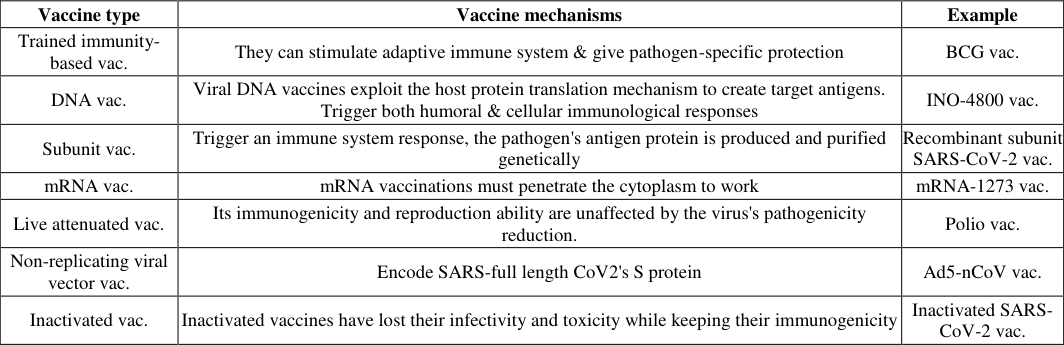 Table 1
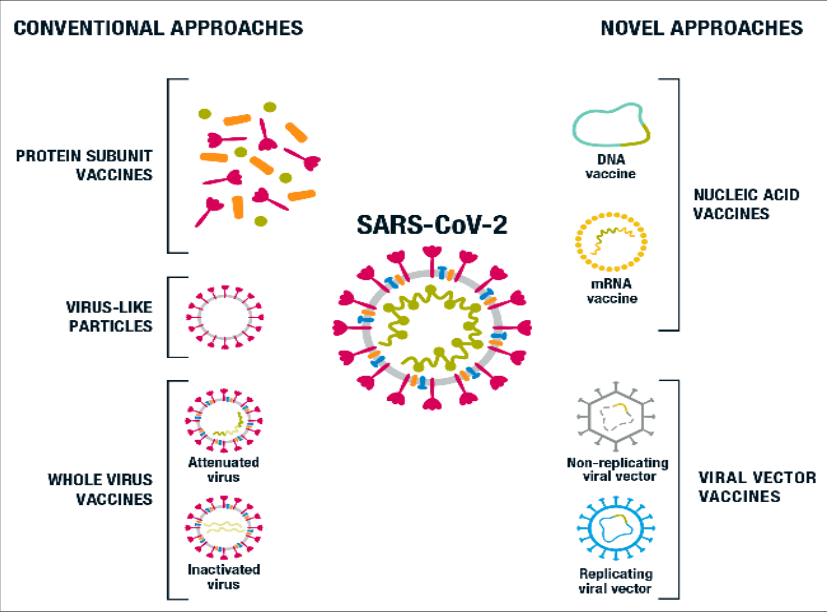 Figure 1
Introduction
COVID-19 has been declared a pandemic and has triggered a global health emergency, which necessitates swift, effective countermeasures. As a public health measure, vaccination is among the most cost-effective and successful. Because SARS-CoV-2 causes COVID-19, developing effective vaccines for this virus is of paramount importance [1] . Immunizations are a pillar of public health policy. Immunologists are uniquely positioned to contribute to the development of the next generation of potent immunogens now that disease outbreaks and the elderly are being recognized as major threats and opportunities for vaccines. Even though immunology hasn't contributed much to vaccine development thus far, it is transparent that there are significant issues ahead in building innovative vaccines for difficult-to-target pathogenic organisms, for that we pressingly need a more reasonable knowledge of the protective immunity mechanisms. As an introduction to immunization, vaccines, and related topics, it strives to educate a wide scientific crowed about the concepts of fundamental immunology [2] . In recent times, the first COVID-19 vaccinations were approved, marking the beginning of a large vaccination campaign around the globe. The COVID-19 vaccines that have been approved or are currently being tested employ a variety of various action modalities, including DNA vaccine, mRNA, protein subunit, viral vector, and virus inactivated vaccines [3] . Vaccine manufacturing is a lengthened and timeconsuming procedure for a good reason. Most vaccines are administered to huge groups of healthy individuals to prevent illness, not to sick people to recover from one. Hence, the protection threshold for a new vaccination must be supreme and apply to the whole target people, regardless of gender, age, and ethnicity [4] . It is possible to limit the transmission of COVID-19 by using preventive measures such as lockdowns and social isolation. But vaccination remains the safest and most effective method of preventing infectious diseases, and it is frequently cited as one of the greatest achievements in global health. As of January 6, 2021, the EU has licensed two COVID-19 vaccines with 90% or more efficiency in lowering the probability of symptomatic infection. For it to be effective, people must be willing to get vaccinated. COVID-19 reluctance may be a major impediment to the development of vaccination immunity. Improving vaccine adoption necessitates a better grasp of the sociodemographic factors influencing vaccine choice [5] . To protect themselves from infection, people would not take a vaccination because of its side effects. The rigorous and intentional vaccine production and examining procedure is guided by this core priority of protecting the public from disease. A safety of vaccine (how well it works in the real world) and rare adverse effects focus on phase four trials that contain a huge number of participants. These trials take place after the vaccine has been licensed [6] . Depending on data collected from autopsy reports, death certificates of death, psychiatric histories, VAERS reports, and clinical descriptions provided by healthcare providers, there was no proof of a link between COVID-19 vaccinations and death. Only a few occurrences of anaphylaxis have been documented following the administration of the Pfizer/BioNTech and Moderna vaccines, with 4.5 documented cases per million doses delivered in the case of the Moderna vaccination [7] .
Vaccine, Vaccination, and Types of Vaccines
Vaccines are immunological-biological substances intended to create specific protection against disease or an inactivated/attenuated pathogen and a pathogen component protein or nucleic acid that when delivered to the host, triggers a protective response of immune cells in the host [8] .
When a vaccine is administered, it is known as a vaccination. To put it another way, vaccination is the procedure of issuing a living or modified agent like a suspension of dead organisms as in pertussis, oral polio vaccine, or an inactivated toxin to protect susceptible persons from infections (As in tetanus). "Artificial induction of active immunity by introducing the particular antigen of a harmful organism into a vulnerable host" is what vaccination means. Immunization and vaccination, on the other hand, are commonly used interchangeably. Combining the principles of immunology with those from microbiology and epidemiology and pharmacy and public health are some of the many disciplines that make up vaccination [8] . Attenuated or weaker viruses were initially used in the development of human vaccines verses viruses. A pox virus which was comparable to smallpox to defend versus it but didn't usually because severe disease was employed in the smallpox vaccine. For the first time, a lab-grown vaccine for rabies has been developed for human use. More than one method is used to create a vaccine. There are many different types of attenuated viruses, such as those that have been weakened so that they really do not cause illness; those that were inactivated or killed; those that have been inactivated or killed toxins; or those that contain only segments of the pathogen, this includes both subunit and conjugate vaccines [9] . In Table 1, we listed the vaccines types and their mechanisms with some examples.
| Vaccine type | Vaccine mechanisms | Example |
|---|---|---|
| Trained immunity- based vac. | They can stimulate adaptive immune system & give pathogen-specific protection | BCG vac. |
| DNA vac. | Viral DNA vaccines exploit the host protein translation mechanism to create target antigens. Trigger both humoral & cellular immunological responses | INO-4800 vac. |
| Subunit vac. | Trigger an immune system response, the pathogen's antigen protein is produced and purified genetically | Recombinant subunit SARS-CoV-2 vac. |
| mRNA vac. | mRNA vaccinations must penetrate the cytoplasm to work | mRNA-1273 vac. |
| Live attenuated vac. | Its immunogenicity and reproduction ability are unaffected by the virus's pathogenicity reduction. | Polio vac. |
| Non-replicating viral vector vac. | Encode SARS-full length CoV2's S protein | Ad5-nCoV vac. |
| Inactivated vac. | Inactivated vaccines have lost their infectivity and toxicity while keeping their immunogenicity | Inactivated SARS- CoV-2 vac. |
Table text extracted from the original PDF; superscript letters are shown inline. The original table image is below.
View original table image
Table 1:
Vaccines types and their mechanisms with some examples [10]
Vaccine type
Vaccine type
Inactivated vac.
Inactivated vaccines have lost their infectivity and toxicity while keeping their immunogenicity Inactivated SARS-CoV-2 vac.
SARS-CoV-2 vaccines
Vaccine development is only successful if the product is approved and supplied to the target people. Development of vaccine is a hierarchical process. If preliminary investigations in animals and cell lines are positive, human vaccination trials enter phase I, which evaluates safety, dose, and immunogenicity in small groups of healthy individuals. Phase II trials are meant to establish optimal formulas, dosages, and doses intervals for vaccination candidates. These studies require hundreds to thousands of people. Phase III vaccination trials assess both efficacy and safety. Size of study depends on predicted case count but is frequently many thousands [11] . Until the middle of December 2020, four COVID-19 vaccinations had given efficacy estimates in press releases. Two of these vaccines, an adenovirus-vectored vaccine named Oxford/AstraZeneca & a mRNA vaccine named Pfizer/BioNTech, have interim efficacy findings published [12,13] . In Figure 1 depicts the development of COVID-19 vaccine candidates utilizing both standard and new vaccine development methods. The glycoprotein of viral spike is very essential for SARS-CoV-2 to enter and invade the host cells, is generated by each and every one of them. This antibody is designed to block the virus from replicating and infecting cells by binding to the spike glycoprotein [11] .
Fig 1:
COVID-19 vaccine candidates with standard and new vaccine development methods [11] mRNA vaccines mRNA vaccines exclusively need to enter the cytoplasm to achieve target antigen expression, while DNA vaccines, which have to enter the nucleus. The development of mRNA vaccines has been fast in recent years. Despite the fact that clinical trials for the mRNA vaccines versus the rabies and influenza viruses have been conducted [14,15] . The immunological effect is not acceptable, causing headaches, weariness, and side effects such muscle soreness. The vaccine's immunological protection waned after a 12 months; no cellular immune system response was identified. So mRNA vaccines need to improve their immunological effectiveness and long-term protection. No mRNA vaccine exists yet. However, mRNA vaccination research is still in its infancy. Many institutions, both domestic and international, have rushed to create COVID-19 mRNA vaccines. The NIAID and Moderna's mRNA vaccine is leading a phase I clinical research. It encodes the S antigen's prefusion form, including a transmembrane anchor and an S1S2 cleavage site [16] .
DNA vaccines
Viral DNA vaccines use the protein translation mechanism of the host cells to produce target antigens. Endogenous immunogens can trigger both cellular & humoral immune responses. Because DNA vaccinations do not use live viruses, they are safer. Human or animal DNA vaccines include foreign antigen genes that are directly introduced into host cells, allowing them to generate antigen proteins and promote immunological responses [17] . There are limitations to the DNA vaccine injection method. Compared to viruses, double-stranded DNA molecules are far more stable and maybe frozen for long-term storage. A small amount of protein immune gen can reach cells since the vaccine is largely intercellular after inoculation. This reduces the immune response. Plasmid DNA vaccines' poor transfection efficiency necessitates the use of transfection techniques. The COVID-19 vaccine candidate INO-4800 from Inovio is an example of a handheld electroporation device [10] . The vaccination and electrodes will be administered intradermally. The plasmid enters the cells when an electric pulse opens the cell membrane. Using a proven device may speed up clinical trials, but it also hinders large-scale immunization. While nucleic acid vaccines may cause systemic immune responses, mucosal immune responses are difficult to induce. While some animal DNA vaccines are available, no DNA vaccine for human has yet been authorized for sale. Combining vaccinations improves immune response [10] .
Inactivated vaccines
Inactivated vaccinations are the widespread. They are simple to manufacture and induce humoral immune system responses. Generally, the first to detect emerging diseases. Inactivated vaccines are made using formaldehyde, propiolactone, and UV light. Mouse, monkey, hamster, and ferret inactivated vaccinations can elicit high-titer neutralize antibodies. It has been shown safe in people and can elicit neutralizing antibodies [18] .
Subunit vaccines
Subunit vaccinations are made up of pure recombinant proteins. Several subunit vaccinations are currently available, including hepatitis B, E, and HPV. Oral and nasal vaccination can also generate a mucosal immune cells response, so more effectively inhibiting virus transmission through the respiratory system. Several studies show that mucosal immunization protects better than intramuscular injection. Mucosal immune responses can be activated via oral and nasal mucosal immunization. Subunit vaccinations cannot deliver non-endogenous antigens via MHC-I and so cannot create sensitized CTL. For optimum results, utilize COVID-19 subunit vaccination with other platform vaccines [24][25][26][27] .
Live attenuated vaccines
Its immunogenicity and reproduction ability are unaffected by the virus's pathogenicity reduction. This vaccination program has excellent immunogenicity and able to promote systemic and mucosal immunity with long-lasting immunity. Live attenuated vaccines for smallpox, measles, and yellow fever were on the market. The SARS live attenuated vaccine will regain virulence after passage in cells or mice, indicating a higher biological safety risk. This technique is not currently advised for COVID-19 vaccine development due to a lack of evidence [10,28] .
Trained immunity-based vaccines BCG, a tuberculosis vaccine, can currently generate trained immunity versus COVID-19 and is undergoing clinical assessment. They can activate the adaptive immune system and guard against pathogens. Even if the BCG vaccine works against COVID-19, it has its limitations. In that instance, the BCG vaccination production standards differ by country, and it is unclear whether particular quality criteria are needed to protect versus COVID-19 [29][30][31] .
Conclusion
To put it simply, the COVID-19 vaccine's successful development is of interest to everyone on every continent and every country. Our research into vaccines' immunogenicity and immune reaction is critical to improving vaccine outcomes in the future, and we must work together to do so.
References
14 in the original paper- Lederer K, Castaño D, Gómez Atria D, Oguin TH, Wang S, Manzoni TB, et al. SARS-CoV-2 mRNA Vaccines Foster Potent Antigen-Specific Germinal Center Responses Associated with Neutralizing Antibody Generation. Immunity. 2020;53(6):12811295.e5. Available from: https://linkinghub.elsevier.com/retrieve/pii/S107476132 0304969
- Pollard AJ, Bijker EM. A guide to vaccinology: From basic principles to new developments. Nature Reviews Immunology 2021;21(2):83-100. Available from:
- Dermody TS, Dimaio D, Enquist LW. Vaccine Safety, Efficacy, and Trust Take Time. Annual Review of Virology. 2021;8(1):3-5.
- Tahir AI, Ramadhan DS, Piro SS, Abdullah RY, Taha AA, Radha RH, et al. COVID-19 vaccine acceptance, hesitancy and refusal among Iraqi Kurdish population. International Journal of Health Sciences. (Qassim). 2022;16(1):10-16. Available from: http://www.ncbi.nlm.nih.gov/pubmed/35024029%0Ahtt p://www.pubmedcentral.nih.gov/articlerender.fcgi?artid =PMC8721214
- Al Khames Aga QA, Alkhaffaf WH, Hatem TH, Nassir KF, Batineh Y, Dahham AT, et al. Safety of COVID-19 vaccines. Journal of Medical Virology. 2021;93(12):6588-6594.
- Gee J, Shimabukuro PM, Su J, Tom GMC, Sotir R, Mark GL, et al. First Month of COVID-19 Vaccine Safety Monitoring -United States. MMWR Morb Mortal Wkly Rep. 2021;70(8):283-288.
- Lois Zoppi BA. What are the Different Types of Vaccines? News Medical Life Sciences; c2022 [cited 2022 Apr 22]. Available from: https://www.newsmedical.net/health/What-are-the-Different-Types-ofVaccines.aspx
- Han X, Xu P, Ye Q. Analysis of COVID-19 vaccines: types, thoughts, and application. Journal of clinical laboratory analysis. 2021 Sep;35(9):e23937.
- McIntyre P, Jin Joo Y, Chiu C, Flanagan K, Macartney K. COVID-19 vaccines -are we there yet? Australian Prescriber. 2020;44(1):19-25. Available from: https://www.nps.org.au/australianprescriber/articles/covid-19-vaccines-are-we-there-yet
- Voysey M, Clemens SAC, Madhi SA, Weckx LY, Folegatti PM, Aley PK, et al. Safety and efficacy of the ChAdOx1 nCoV-19 vaccine (AZD1222) against SARSCoV-2: an interim analysis of four randomised controlled trials in Brazil, South Africa, and the UK. Lancet. 2021;397(10269):99-111.
- Polack FP, Thomas SJ, Kitchin N, Absalon J, Gurtman A, Lockhart S, et al. Safety and Efficacy of the BNT162b2 mRNA COVID-19 Vaccine. The New England Journal of Medicine. 2020;383(27):2603-2615.
- Alberer M, Gnad-Vogt U, Hong HS, Mehr KT, Backert L, Finak G, et al. Safety and immunogenicity of a mRNA rabies vaccine in healthy adults: An open-label, non-randomised, prospective, first-in-human phase 1 clinical trial. Lancet. 2017;390(10101):1511-1520.
- Feldman RA, Fuhr R, Smolenov I, (Mick)Ribeiro A, Panther L, Watson M, et al. mRNA vaccines against H10N8 and H7N9 influenza viruses of pandemic potential are immunogenic and well tolerated in healthy adults in phase 1 randomized clinical trials. Vaccine. 2019;37(25):3326-3334.
- Jackson LA, Anderson EJ, Rouphael NG, Roberts PC, Makhene M, Coler RN, et al. An mRNA Vaccine against SARS-CoV-2-Preliminary Report. The New England Journal of Medicine. 2020;383(20):1920-1931.