
Research article · 2024 · Full text
International Journal of Research in AgronomyEnormous promise of Carissa carandas L: An underutilized minor fruit crop with nutritional and therapeutic activities in rural development and livelihood security
Volume 7(4S) · Pages 196–200 · DOI: 10.33545/2618060x.2024.v7.i4sc.586 ↗
Research areasAgricultural Economics and PracticesFood Science and Nutritional StudiesAgricultural Science and Fertilization
Abstract
Author-writtenKaronda (Carissa spp.), a lesser-known fruit crop, is extensively utilized by tribal communities in India for its medicinal properties in Ayurveda and Unani medicine. This fruit thrives in tropical and subtropical climates, showcasing its resilience and ability to withstand drought conditions. However, it is not well-suited for areas with heavy rainfall and waterlogged conditions. Karonda holds significant importance in ethno medicine as it serves as a valuable dietary supplement, contributing to the enhancement of our overall health. The plant that produces small fruits has long been employed in the remedy of scabies, intestinal worms, diarrhea, intermittent fever, and is renowned for its aphrodisiac, aperitive, antipyretic, antiscorbutic, and astringent qualities. Ascorbic acid, lupeol, -sitosterol, glucose, galactose, serine, glutamine, alanine, valine, phenylalanine, and glycine are among the numerous chemical components discovered in different components of this plant. This particular plant is commonly employed in the management of various ailments, such as biliousness and anemia. Additionally, it serves as a direct remedy for wounds (in the form of juice), a solution for skin issues, an aphrodisiac for women, an antiparasitic, antifungal, and antibacterial agent. Consequently, it is of great value to examine its therapeutic characteristics and explore its potential utilization in the nutraceutical domain, owing to its extensive nutritional and pharmacological properties. This essay examines the ethnobotanical significance of karonda fruit, leaves, root, and shoot, along with the research that substantiates the notion of their medicinal and therapeutic properties.
Summary
Source-checkedPlain-language reading of the full paper, prepared with AI and checked against the text. Each point links to the authors' own words.
Why it matters
- Karonda is an underutilized fruit crop that is widely used by Indian tribal communities for medicinal purposes in Unani and Ayurvedic medicine. View evidence ↗
- Wild edible fruits are critical for the nutritional security and livelihoods of native communities in developing nations because they provide essential vitamins, minerals, and secondary metabolites. View evidence ↗
- Due to its broad pharmacological and nutritional properties, there is significant value in exploring Karonda's use in the nutraceutical industry. View evidence ↗
The question
- The paper aims to examine the ethnobotanical importance of various parts of the Karonda plant and review research supporting its therapeutic and medicinal properties. View evidence ↗
What they did
- The authors conducted a review of existing research and ethnobotanical data regarding the fruit, leaves, roots, and shoots of the Karonda plant. View evidence ↗
What they found
- The Karonda plant is drought-tolerant and grows in saline or sodic soils in tropical and subtropical regions, though it cannot survive in waterlogged conditions or heavy rain. View evidence ↗
- Fresh Karonda fruit (per 100g) contains 83.17-83.24g moisture, 0.39-0.66g protein, 2.57-4.63g fat, 0.51-0.94g carbohydrates, 0.62-1.81g fiber, and 9-11mg ascorbic acid. View evidence ↗
- A second nutritional analysis per 100g of edible fruit reported 42.5 kcal energy, 0.39-1.1g protein, 2.5-4.63g fat, 0.51-2.9g carbohydrates, 10-15g fiber, 21mg calcium, 28mg phosphorus, 1619 IU vitamin A, and 9-11mg ascorbic acid. View evidence ↗
- Dried Karonda fruit generally has a higher nutrient content than fresh fruit, although its vitamin C content is reduced to approximately half. View evidence ↗
- Root extracts show diverse effects: water extracts act as cardiotonics and anthelmintics, while alcoholic extracts can lower blood pressure. View evidence ↗
- The root bark of Karonda exhibits anthelmintic properties similar to albendazole and hepatoprotective efficiency comparable to silymarin. View evidence ↗
- Chloroform extracts of leaves showed toxicity, and extracts of unripe fruit were found to be harmful to lung cancer cell types. View evidence ↗
What it means
- The authors recommend that unemployed or educated youth in rural areas develop high-quality Karonda-based food products to create new income sources. View evidence ↗
- The authors state that more research is needed to isolate and evaluate the plant's active pharmacological compounds to determine their efficacy against various infections. View evidence ↗
Visual summary
3 visualsIllustrations explain the paper; charts are replotted from the paper's own table values.
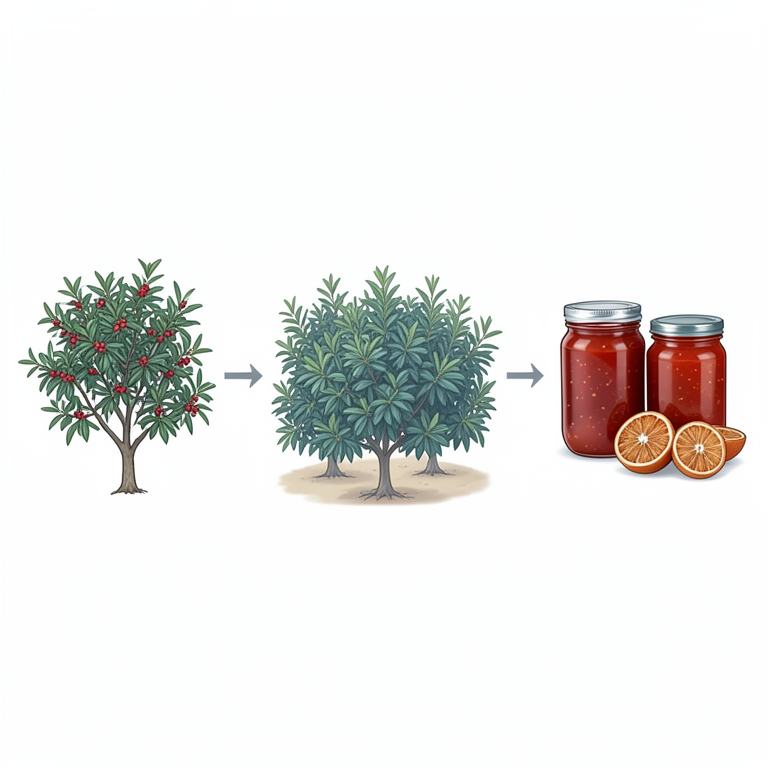
Rural Development Cycle
AI-generated conceptual illustration (Carissa carandas (Karonda) plants and processed fruit products). It explains the idea and does not show study data.
View source evidence ↗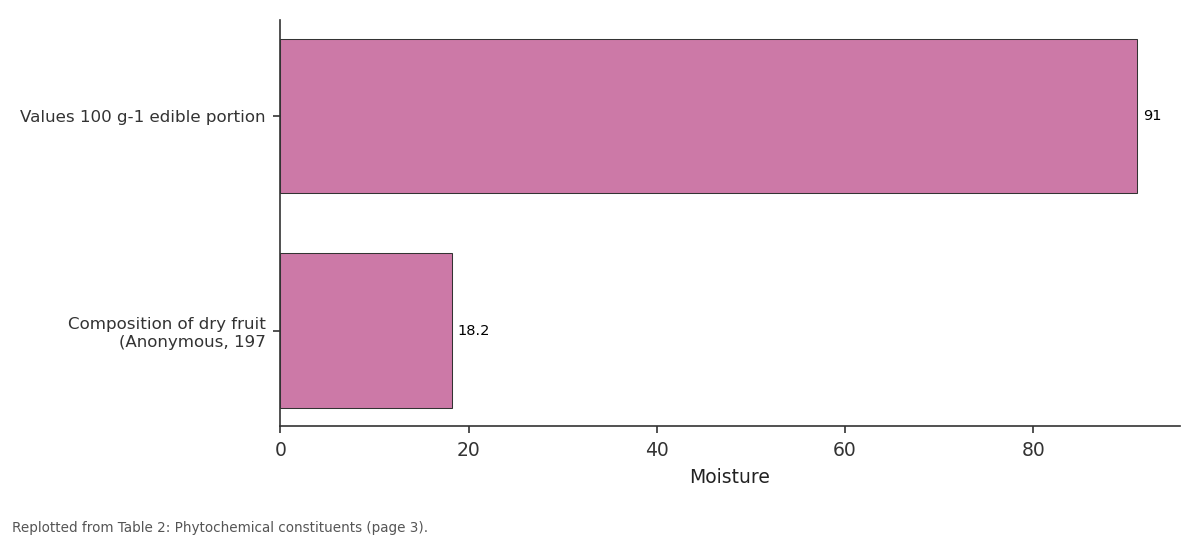
Moisture: Values 100 g-1 edible... vs Composition of dry...
Replotted from Table 2 (page 3) of the original paper. Every bar is the paper's own table value.
View source evidence ↗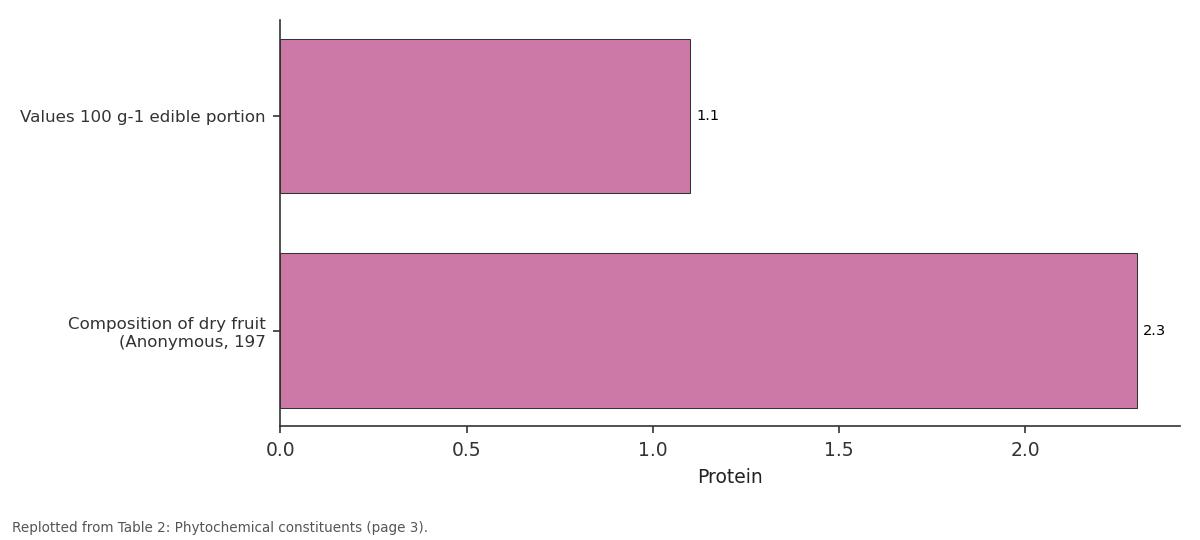
Protein: Values 100 g-1 edible... vs Composition of dry...
Replotted from Table 2 (page 3) of the original paper. Every bar is the paper's own table value.
View source evidence ↗Figures & tables
From the original paper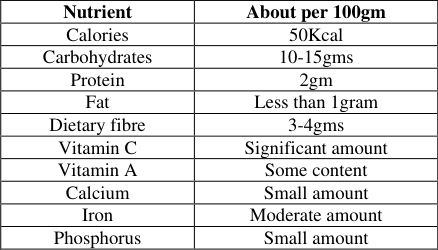 Table 1
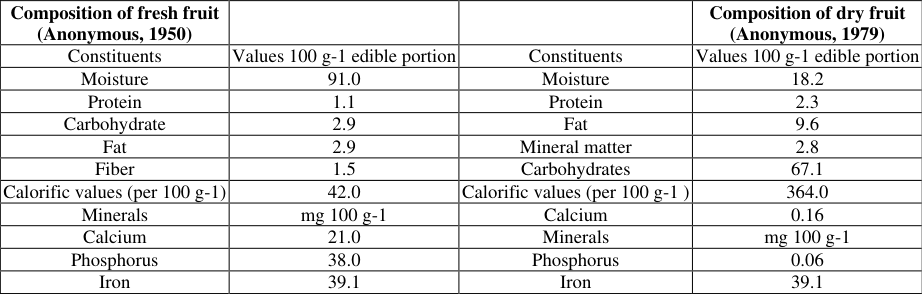 Table 2
 Table 3
Introduction
The Carissa carandas L. popularly known as Karonda or Christ Thorn Tree, belongs to the family Apocynaceae is a hardy, evergreen, spiny and indigenous multipurpose horticultural shrub flourishing well without much care. There are approximately twenty-five species of genus Carissa, out of which five species have originated in India (Carissa carandas L, Carissa spinarum L, Carissa congesta L, Carissa edulis L and Carissa grandiflora L). Carissa species has a lot of socio-economic significance in tribal region of Tripura. It is also grown in Rajasthan, Madhya Pradesh, Uttar Pradesh, Bihar, West Bengal, Maharashtra. It is believed to be originated near the Himalayas in India. It is distributed in the Himalayas at elevations of 300 to 1800 m, in the Shivalik Hills, The Western Ghats, Nepal, Afghanistan, India, Sri Lanka, Java, Malaysia, Myanmar, Pakistan, Australia and South Africa (Wiart, 2006) [36] . Karonda (Carissa spp.) plant is used in traditional medicine to treat biliousness and biliary problems as well as stomach diseases rheumatism and diseases of the brain. It is also used as an anthelminthic, astringent, appetizer, and antipyretic. According to earlier research, the plant's extract has cardio tonic, antipyretic, and antiviral properties. Different cardiac glycosides and triterpenoid components as carissone, carissin, and sitosterol as have been identified in various plant sections. These fruits refer to the species that have been domesticated but not cultivated in commercial scale like Aegle marmelos, Artocarpus lakoocha, Dillenia sp., Buchanania lanzan,
Carissa carandus, Feronia limonia, etc. Some fruit crops are considered minor in some places while the same fruit crops are in commercial cultivation in some other regions. Moreover, wild edible fruits which are sources of vitamins, minerals, fiber, antioxidants and compounds of nutritional importance, secondary metabolites such as alkaloids, essential oils, phenols, tannins, etc. play an important role in maintaining livelihood and nutritional security of native communities in the developing countries. Indian tribal people use various portions of this plant as powerful treatments for a variety of illnesses.
Origin and Distribution
Karonda plant grows well under tropical and sub-tropical climatic conditionIndia, Sri Lanka, Java, Malaysia, Myanmar, Pakistan, Australia, and South Africa are all frequent locations for the plant. Though some botanists attribute the fruit's origin to Java, the berry-like fruits are said to have their origins close to the Himalayas. Its natural range covers several regions of India and reaches from Nepal to Afghanistan. Numerous of Indian locations, such as Siwalik Hills, Bihar, West Bengal, the Western Ghats, Karnataka, and the Nilgiris Hills, are excellent places for the fruit to thrive. The majority of karonda shrubs are decorative; however the fruit is occasionally known to be grown on small-scale among the tribal regions of Madhya Pradesh, Chhattisgarh, Rajasthan, Gujarat, and Jharkhand. It is grown commercially in the districts of Varanasi in Uttar Pradesh and South 24-Parganas in West Bengal (Karale, 2002) [13] . A few of the important cultivated species of karonda are Carissa carandas L, Carissa grandiflora DC, Carissa bispinosa Desf., Carissa spinarum DC, Carissa ovata, Carissa edulis Vahl., Carissa inermis Vahl. Syn. Carissa macrophylla, Carissa paucinervia D.C, Carissa spinarum L. Syn. Carissa diffusa Natal plum, an African species (Carissa grandiflora), bearing large and dark red fruits are also grown in India (Pareek and Sharma, 1993) [25] .
Karonda Plant
It is a tiny, evergreen tree or prickly shrub with a maximum height of about 3-6 meters. It is very popular as a protective hedge plant. It is a very hardy, drought-tolerant plant that thrives well in a wide range of soils including saline and sodic soils throughout tropics and subtropics. However, it cannot survive well in environments with heavy rain and water retention. White latex is abundant in the stem, and the branches have pointed spines. (Chadha, 2001) [6] . The leaves are 4-6 inches long, 2-3 inches wide, and oblong and conical. They are green above and brown below. The gray bark is slick. The bark is hard but flexible, and it is inside crimson in color. Flowers come in clusters and are either white or yellowish in color. The Flowers are tiny, with a diameter of just 3 to 5 cm. Berries, which are developed in clusters of three to ten fruits. The fruit has a round large oval shape and is seed-filled. Fruits are pinkish-white when young, changing red or dark purple as they ripen. Depending on the genotype, the color of ripe fruit ranges from white to green to pinkish red. Fruits begin to ripen in May and February marks the beginning of flowering. Fruits are frequently picked when they are still immature for use as vegetables; fully ripe fruits are consumed fresh or processed.
Propagation
Karonda is frequently propagated by seeds and vegetative methods such stem cuttings, inarching, and air layering. In the months of August or September, the nursery plants the fresh seeds. Transplantation occurs after a year for seedlings. Seeds and vegetative methods like stem cuttings, inarching, and air layering are often used to grow Karonda. The nursery puts the new seeds in the months of August or September. For seedlings, transplantation occurs after a year. Soft wood grafting is a very effective technique for in situ propagation in arid climates and is also successful in Karonda. In Karonda, air layering is quite effective and is spread out into the start of the monsoon. After 3-4 months of stacking, roots are obtained. Karonda propagation through inarching has also been performed and succeeded. In contrast to other techniques, inarching is not very common.
Fruit
Karonda fruit is an excellent source of iron and has antiscorbutic and vitamin C qualities, making it highly helpful for treating anemia. Fruits are used in traditional medicine as astringents, antisorbutics, and biliousness treatments. The fruit contains little aroma when it is raw and is sour and acidic. A handful of varieties are sweet enough to be tasty in their raw state during their ripest phase, though it does get a little sweeter. The high pectin concentration in mature fruit is useful for preparing jelly in addition to pickles and chutney. Chatney can be prepared with raw fruit (Kumar, 2007) [16] .
Leaf
In dry and semi-arid regions, sheep, goats, and camels graze on karonda leaves because it's tasty and generally nutrient-rich. Improve soil by adding organic matter and other mineral nutrients if fruits fall on the ground. Due to the thick plants, it decreases evaporation from the soil below. In order to feed silk worms, leaves are utilized. The extract of leaves is used to treat earaches, oral irritation, diarrhea, intermittent fever, and diarrhea. The leaves contain kaempferol, vanillic and syringic acids, leucoanthocyanins, quercetin, and the supplement (Pullaiah, 2006) [27] .
Root
High branching of the roots enhances the soil's ability to bind plants. It reduces soil erosion and runoff on wet land during the rainy season. Roots act as a stomachic, vermifuge, itch treatment, and insect control. Roots have salicylic acid and cardiac glycosides, which cause a small drop in blood pressure. As to reports, the roots of karonda plants contain carissone, a phenolic lignan that is the D-glycoside of B-sitosterol, as well as glucosides of oryside H, lupeol, ursolic acid, and its methyl ester (Kumar et al., 2007) [16] .
Nutritional Value of Karonda
According to Morton (1987) [22] , Karonda (Carissa carandas L.) fruits contain 83.17-83.24 g of moisture, 0.39-0.66 g protein, 2.57-4.63 g fat, 0.51-0.94 g carbohydrates, 0.62-1.81 g fiber and 9-11 mg ascorbic acid per 100 gram of fresh fruit. Another study on the food value of karonda fruit published by the National Bureau of Plant Genetic Resources (Malik et al., 2010) [20] provides the following nutritional information per 100 g of edible fruit: 42.5 kcal energy, 0.39-1.1 g Protein (negligible), 2.5-4.63 g Fat, 0.51-2.9 g Carbohydrate, 10-15g Fiber, 21 mg Calcium, 28 mg Phosphorous, 1619 IU Vitamin A and 9-11 mg Ascorbic Acid. Karonda is a nutritious food. It is high in iron, and the fruit also has vitamin C, which is an antiscorbutic and effective anemia treatment. Many ayurvedic preparations make use of karonda fruits and tout their nutritional benefits. For chest pain, a root extract is employed. Fever can be treated with a leaf extract. According to a research done at the Indian Horticultural Research Institute in Bangalore, the fruit is high in foliate (B9), thiamine (B1), riboflavin (B2), pantothenic acid (B5), pyridoxine (B6), and biotin (B7). It is antiscorbutic and effective in treating anemia.
Pharmacological activities
The fruit of the C. carandas plant is known to have a wide variety of phytochemicals that have a great medicinal potential. The plant's therapeutic benefit is provided by these active ingredients. Through in vitro and in vivo developments, numerous researchers have evaluated the pharmacological significance of plant fruits. Crude extract, various fractions, and isolates of C. carandas fruit, leaves, and root have all been linked to these activities.
Ayurvedic formulations
The plant is used as ingredient in a number of ayurvedic formulations and preparations. Marmagutika used in the treatment of vital organs, like diseases related to heart, brain, urinary system. Hridyamahakashaya is employed in the treatment of heart disease. Kalkantaka rasa, 'juice' or 'essence' used for mental disease. Marichadivati used in the treatment of diseases of respiratory conditions and black pepper is the first ingredient of this medicine. Many ayurvedic preparations make use of karonda fruits and tout their nutritional benefits. For chest pain, a root extract is employed. Fever can be treated with a leaf extract. According to a research done at the Indian Horticultural Research Institute in Bangalore, the fruit is high in foliate (B9), thiamine (B1), riboflavin (B2), pantothenic acid (B5), pyridoxine (B6), and biotin (B7).It is antiscorbutic and effective in treating anemia (Khare, 2007 [14] ; Kirtikar and Basu, 1999 [15] ; Nadkarani, 1976 [23] and Anonymous, 1995) [3] .
Ethno-medicinal Use
Ethno-medicinal Use
Processed product of Carissa carandas
The nutrients present in Carissa carandas fruit, such as calcium, iron, vitamin C, and vitamin A, serve as essential nourishment and are utilized in the management of various health conditions like anorexia, diarrhea, anemia, and blood sugar regulation. This fruit can be stored for an extended duration by refrigeration, freezing, pickling in brine, or canning with sugar. Ayurvedic medicines and formulations often use plant as a component.
Treatments for illnesses of the heart, brain, and urinary system involve the use of marmagutika. Therapy for cardiac disease involves the use of hridyamahakashaya. The "juice" or "essence" known as Kalkantaka rasa is used to treat mental illness. The first ingredient of marichadivati, a medication used to treat respiratory ailments, is black pepper (Hettiarachchi et al, 2011) [11] .
Homemade fruit recipes
Fruits are used to make jams, pickles, condiments, and syrups in northern India. The intensely sour flavors of fruit are made delectable by being pickled with fiery green chilies and garlic cloves; both components are rich in health benefits and enhance the flavor of the pickle. Karonda pickle is quick to make and ready to eat; it may be preserved for at least four months either fresh or in a jar. The dried Karonda fruit was found with a significantly higher nutrient content than the fresh version, with the exception of vitamin C, which was only about half as abundant in the dried fruit. This was determined by comparing the chemical makeup of the fresh and dried Karonda fruit. The fruit of the plant is full of vitamins, minerals, and nutrients, including protein, carbohydrates, calcium, iron, beta-carotene, vitamin B1, B2, and C, among others (Zaki et al., 1983) [37] In India, the karonda fruit comes in a variety of hues, from deep red to purple, and is used to make jam. Karonda fruits that are fresh and undamaged are split in half after being carefully washed. Remove the seeds, then put the fruit in a pan with a heavy bottom that has water. Fruit is heated and boiled in water.
If you want the fruit bits in the jam, add sugar as the fruit starts to become tender and keep stirring. The tender fruit can be put through a sieve to get a smooth pulp, which can then be combined with sugar to make smooth jams. Pack it in a glass bottle once it has cooled. The karonda fruit is cooked with salt and baking soda. Half a tea spoon of baking soda is added to each cup of juicy pulp and cooked in one liter of water at 100 °C. The growing scum is then removed from the mixture as it is cooked down to half its original volume, and the juice is once more filtered. A quarter cup of sugar is added for each cup. Once more, the mixture is boiled for 40 minutes. The sterilized bottle is filled with the chilled syrup and then closed (Malik et al., 2010) [20] .
Therapeutic Use
Many diseases, include biliousness, anemia, have been treated using various plant elements from the Carissa spp. In addition to having been applied as stimulants for women, these are also used as cosmetic skin treatments (juice), antiparasitic, antifungal, and anti-microbial treatments. (Omer et al., 1998) [24] Extracts of the root using chloroform and menthanol showed antibacterial properties. Water root extract has been shown to have a variety of medicinal properties, including histamine-releasing anthelmintic, sapsmolytic, and cardiotonic impacts. Alcoholic root extract decreases blood pressure. Its analgesic, anti-inflammatory, and lipase effect of fruits are also being studied. The karonda fruit is an antiscorbutic, astringent, and useful for treating biliousness and anemia. Antiinflammatory and antipyretic effects are found occurring in Carissa carandas root extracts. (Bhaskar and Balakrishnan, 2009b and Hegde and Joshi, 2009) [4,10] Scientists have discovered that the root bark has high anthelmintic traits similar to the medicine albendazole for hemaprotective properties with efficiency comparable to the liver drug silymarin. (Chatterjee and Roy., 1965) [7] The leaves of Carissa carandas showed toxicity when extracted in chloroform, as the unripe fruit when extracted in a solution of is harmful to lung cancer cell types (Sharma et al., 2007) [30,31] .
Other Uses
Fruits which are still immature are eaten raw, but mature fruits are utilized as vegetables. (Malik et al., 2010) [20] The berrysized fruits are added to or offered as a snack with Indian pickles and spices. In addition, fruits are processed in jam, jelly, and marmalade for domestic consumption as well as commercial preparations for export. The fruit is tangy and sweet when ripe, but it is very sour at maturity. It can be consumed raw or boiled with salt and/or sugar. It is a helpful element in food preparation and contains pectin. In Rajasthan, karonda fruits are frequently prepared with green chilies and served with chapattis as a delicious dish. Karonda shrubs are good for hedging in domestic gardens and can be planted for their lovely cherry-like fruits. Due to its heavily branching roots, the plant can be useful for stabilizing eroding hillsides. Additionally, root extracts are utilized as an insect repellant (Morton., 1987) [22] .
Conclusion
Karonda, despite its small size, possesses a diverse array of medicinal and therapeutic benefits. Further exploration and research are required to fully realize the potential of this fruit plant, commonly cultivated in India for its aesthetic appeal as a hedge. It is imperative to identify, isolate, and evaluate the pharmacologically active compounds present in this plant to assess their efficacy in treating different types of infections.In order for people to benefit from this fruit's healthiness, it should be included in their regular diet. As a result, it's essential to set up large-scale cultivation operations where significant quantities are made available for market marketing. To introduce a product in the domestic and international markets, market promotion should primarily focus on raising awareness of quality attributes, nutritional value, health value, numerous uses, etc. Throughout history, individuals have heavily depended on the fruits of plants for sustenance and medicinal purposes, particularly in rural and tribal regions of the country. In these areas, unemployed or educated young individuals should dedicate their efforts to creating top-notch meals and various products derived from karonda fruits, which can serve as a valuable source of income. By delving deeper into the exploration and utilization of lesserknown fruits, there is potential for the creation of functional foods and dietary supplements, ultimately contributing to the advancement of a healthier society.
Figures and tables from the paper
| Nutrient | About per 100gm |
|---|---|
| Calories | 50Kcal |
| Carbohydrates | 10-15gms |
| Protein | 2gm |
| Fat | Less than 1gram |
| Dietary fibre | 3-4gms |
| Vitamin C | Significant amount |
| Vitamin A | Some content |
| Calcium | Small amount |
| Iron | Moderate amount |
| Phosphorus | Small amount |
Table text extracted from the original PDF; superscript letters are shown inline. The original table image is below.
View original table image
| Composition of fresh fruit (Anonymous, 1950) | — | — | Composition of dry fruit (Anonymous, 1979) |
|---|---|---|---|
| Constituents | Values 100 g-1 edible portion | Constituents | Values 100 g-1 edible portion |
| Moisture | 91.0 | Moisture | 18.2 |
| Protein | 1.1 | Protein | 2.3 |
| Carbohydrate | 2.9 | Fat | 9.6 |
| Fat | 2.9 | Mineral matter | 2.8 |
| Fiber | 1.5 | Carbohydrates | 67.1 |
| Calorific values (per 100 g-1) | 42.0 | Calorific values (per 100 g-1 ) | 364.0 |
| Minerals | mg 100 g-1 | Calcium | 0.16 |
| Calcium | 21.0 | Minerals | mg 100 g-1 |
| Phosphorus | 38.0 | Phosphorus | 0.06 |
| Iron | 39.1 | Iron | 39.1 |
Table text extracted from the original PDF; superscript letters are shown inline. The original table image is below.
View original table image
| Roots | Wood& Bark | Leaf | Fruit |
|---|---|---|---|
| Salicylic acid | Carissone | Carissin | 2-phenly ethanol |
| Carissone | Carindone | Ursolic acid | Benzyl acetate |
| Carindone | Dehydrocarissone | Carissol | |
| Ursolic acid and methyl ester | β-D-glucosides |
Table text extracted from the original PDF; superscript letters are shown inline. The original table image is below.
View original table image
References
33 in the original paper- Anonymous. Indian Medicinal Plants (a compendium of 500 species), vol. IV. Orient Longman Ltd, Hyderabad. 1995, 236-238 & 386 -389.
- Chadha KL. Karonda. In: Hand Book of Horticulture, ICAR. 2001, p. 201.
- Chatterjee ML, Roy AR. Pharmacological action of Carissa carandas root. Bulletin of the Calcutta School of Tropical Medicine. 1965;13(1):14-16.
- Festus TM, Geoffrey RM, John OM, Quang N, Hashimoto K, Asakawa Y. The antiviral activity of compounds isolated from Kenyan Carissa edulis (Forssk.) Vahl. The Internet Journal of Alternative Medicine. 2009;4(15):1517-1522 DOI:10.5580/26fd.
- Folayan A, Jimoh F. Nutritional quality of some wild leafy vegetables in South Africa. Internat. Journal. Food Science. Nutri. 2009;60(5):424-431.
- Hegde K, Thakker SP, Joshi AB, Shastry CS, Chandrashekhar KS. Anticonvulsant Activity of Carissa carandas Linn. Root Extract in Experimental Mice. Tropical Journal of Pharmaceutical Research. 2009;8(2):117-125.
- Hettiarachchi DS, Locher C, Longmore RB. Antibacterial compounds from the root of the indigenous Australian medicinal plant Carissa lanceolata R. Br. Natural Products Research. 2011;25(15):1388-1395.
- John PP, Mazumder A, Mazumder R, Bhatnagar SP. Anthelmintic activity of root bark of Carissa carandas. Ancient Science of Life. 2007;27(1):11-13.
- Karale AR. Karonda. In: Bose TK, Mitra SK, Sanyal D. (Eds.). Fruits-Tropical and Subtropical. Naya Udyog, Kolkata. 2002;II:721-730.
- Khare CP. Indian Medicinal Plants (An Illustrated Dictionary). Springer Science and Business Media, New York. 2007, 472-123.
- Kirtikar KR, Basu BD. Indian Medicinal Plants. International Book Distributors, Dehardun. 1999;III:16161617 &1546-1548.
- Kumar D, Pandey V, Nath V. Karonda (Carissa conjesta)- An Underutilized Fruit Crop. In: Peter, K.V. (eds), Underutilized and Underexploited Horticultural Crops. New India Publishing Agency. 2007;1:313-325.
- Lindsay EA, Berry Y, Jamie JF, Bremner JB. Antibacterial compounds from Carissa lanceolata R. Br. Phytochemistry. 2000;55:403-407.
- Liobikas J, Majiene D, Trumbeckaite S, Kursvietiene L, Masteikova R, Kopustinskiene DM, et al. Uncoupling and antioxidant effects of ursolic acid in isolated rat heart mitochondria. Journal of Natural Products. 2011;74(7):1640-1644.
- Mala V, Dahot MU. Lipase activity of Carissa carandas fruits. Science International-Lahore. 1995;7(2):161-164.
- Malik SK, Chaudhury R, Dhariwal OP, Bhandari DC. Genetic Resources of Tropical Underutilized Fruits in India. NBPGR, New Delhi. 2010, 168.
- Mohr K, Schindler O, Reichstein T. Carissone isolation and bioactivity. Helvetica Chimica Acta. 1954;37:462-471.
- Morton JF. Fruits of warm climates.Creative Resource Systems. Inc. Winterville, N.C, USA. 1987, 503.
- Nadkarani AK. Indian Materia Medica. Popular Prakashan Pvt Ltd, Bombay. 1976;I:430 & 277-278.
- Omer MEA, Al Magboul AZ, El Egami AA. Sudanese plants used in folkloric medicine: screening for antimicrobial activity. Fitoterapia.1998;69:542-545.
- Pareek OP, Sharma S. Genetic resources of under exploited fruits. In: Advances in Horticulture. 1993;1:189-225.
- Pino J, Marbot R, Vazques C. Volatile flavour constituents of Karnda (Carissa carandas L.) fruit. Journal of Essential Oil Research. 2004;16(5):432-4.
- Pullaiah T. Encyclopaedia of World Medicinal Plants. 2006;1:450-452.
- Rai R, Misra KK. Micropropagation of Karonda (Carissa carandas L.) through shoot multiplication. Scientia Hort. 2005;103:227-232.
- Sawant BR, Desai UT, Ranpise SA, More TA, Sawant SV. Genotypic and Phenotypic variability in Karonda (Carissa carandas L.). J. Maharashtra Agri. 2002;27(3):266-268.
- Sharma A, Reddy GD, Kaushik A, Shankar K, Tiwri RK, Mukherjee A, et al. Analgesic and Anti inflammatory Activity of Carissa carandas Linn fruits and Micristylis wallichii Lindl tubers. Natural Product Sciences. 2007;13(1):6-10.
- Sharma A, Reddy GD, Kaushik A, Shankar K, Tiwri RK, Mukherjee A, et al. Analgesic and Anti inflammatory Activity of Carissa carandas Linn fruits and Micristylis wallichii Lindl tubers. Natural Product Sciences. 2007;13(1):6-10.
- Singh B, Rastogi RP. The structure of carindone. Phytochemistry. 1972;11(5):1797-1801.
- Singh HB, Arora RK. Wild Edible Plants of India. New Delhi, ICAR, 1978.
- Sulaiman SF, Teng WS, Leong OK, Yousuf SR, Muhammad ST. Anticancer study of Carissa carandas extracts. Project Report. 2008, USM, 1-6.
- Tripathi PC, Karunakaran G. Production technologies of minor fruits with special emphasis on Kodagu. Souvenir and Abstracts, SYMSAC-VII, Madikeri, Karnataka. 2013, p. 97-105.
- Wiart C. Medicinal Plants of Asia and the Pacific. 2006, 251-253.
- Zaki A, El-Tohamy S, El-Fattah S. Study of lipid content and volatile oil of the different organs of Carissacarnadas Linn. and Carissagrandiflora Dc. growing in Egypt. Egyptian Journal of Pharmaceutical Sciences. 1983;22(14):127-141.
Cited by 1
From OpenAlex, OpenCitations and reference lists read by Scinovex
- Promoting Karonda (Carissa carandas) cultivation through agricultural extension: Pathways for rural development and income security
L. Fernando Gonzalez · International Journal of Agriculture Extension and Social Development · 2025
Karonda (Carissa carandas), an underutilized fruit crop indigenous to South Asia, holds immense potential as a sustainable solution for rural development and livelihood security. Despite its nutritional richness, medicinal value, and resilience to drought and poor soils, Karonda remains largely confined to subsistence and boundary plantings rather than being integrated into mainstream horticultural or commercial systems. This paper explores the pathways through which agricultural extension can play a transformative role in promoting Karonda cultivation and value addition, thereby enhancing inc