
Research article · 2024 · Full text
International Journal of Agriculture Extension and Social DevelopmentAspects and awareness levels about government programs/Schemes of female headed farm Women’s of Eastern plain of Uttar Pradesh
Volume 7(4) · Pages 382–388 · DOI: 10.33545/26180723.2024.v7.i4e.551 ↗
Research areasAgricultural Economics and PracticesLivestock Management and Performance ImprovementAgricultural risk and resilience
Abstract
Author-writtenWomen play an important role in agriculture and rural economies in all developing countries. They play an important role in agriculture, performing the dual role of housewives and farmers. With a focus on women, governments have developed many policies and programs in the agricultural sector to improve women's health and promote overall family development, but women are less aware of the benefits of these strategies. Therefore, a survey is needed to determine agricultural women's knowledge about political elections. The purpose of this study is to find out the level of knowledge and experience of female farmers. This study collected data through interviews with 360 female headed women farmers living in UP. In this study, stratified sampling was used. This study was conducted in three districts of U.P. Analysis also includes frequencies, percentages. Front. Government policies/services Results show that women farmers have different levels of awareness of government programs and initiatives. Awareness of schemes such as Pradhan Mantri Fasal Bima Yojna, Kishan Credit Card Scheme and PM Kisan Samman Nidhi Yojna is also high, while awareness of schemes such as Soil Health Card Scheme and Pradhan Mantri Jan Arogya Yojna is low. Such plans are much less known.
Summary
Source-checkedPlain-language reading of the full paper, prepared with AI and checked against the text. Each point links to the authors' own words.
Why it matters
- Women in developing countries are critical to rural economies, often balancing the dual responsibilities of managing a household and farming. View evidence ↗
- Although governments have created agricultural policies to improve women's health and family development, there is a gap in awareness regarding the benefits of these programs. View evidence ↗
The question
- The study aims to determine the level of knowledge and experience among female farmers. View evidence ↗
What they did
- Data was collected from female-headed farm women in the Sultanpur, Ayodhya, and Amethi districts of Uttar Pradesh. View evidence ↗
- The researchers used stratified sampling to conduct interviews with 360 female-headed women farmers. View evidence ↗
- A questionnaire was used to gather demographic data, including age, education, marital status, income, and awareness of government schemes. View evidence ↗
- The study analyzed the data using ranking techniques and simple percentage calculations. View evidence ↗
What they found
- The largest group of female-headed farm women in the study were illiterate, accounting for 31.4% of the respondents. View evidence ↗
- The majority of the respondents were married, representing 60.0% of the sample. View evidence ↗
- The most common annual income bracket for the respondents was between 40,000 and 50,000 rupees, reported by 32.2% of the women. View evidence ↗
- Awareness of the PM Kisan Samman Nidhi Yojna (PMKSNY) was high, with 82.2% of respondents knowing about the scheme. View evidence ↗
- Awareness of the Soil Health Card (SHC) Scheme was very low, with only 10.6% of respondents knowing about it. View evidence ↗
- The Kishan Credit Card (KCC) Scheme had a high awareness level, known by 75.8% of the respondents. View evidence ↗
- Awareness of the Pradhan Mantri Jan Arogya Yojna (PMJAY) was low, with only 27.2% of respondents knowing about it. View evidence ↗
- The Pradhan Mantri Ujjwala Yojna (PMUY) was well-known, with 78.9% of respondents reporting awareness. View evidence ↗
- About half of the respondents (51.1%) were aware of the Pradhan Mantri Garib Kalyan Annya Yojna (PMGKAY). View evidence ↗
What it means
- The authors conclude that awareness of government schemes varies significantly, with high awareness for KCC and PM-KSNY, but low awareness for the Soil Health Card and PMJAY schemes. View evidence ↗
- The authors found that while many women benefited from the PM-Ujjawala and PM Samman Nidhi schemes, they lacked knowledge regarding the specific eligibility criteria. View evidence ↗
Visual summary
2 visualsIllustrations explain the paper; charts are replotted from the paper's own table values.
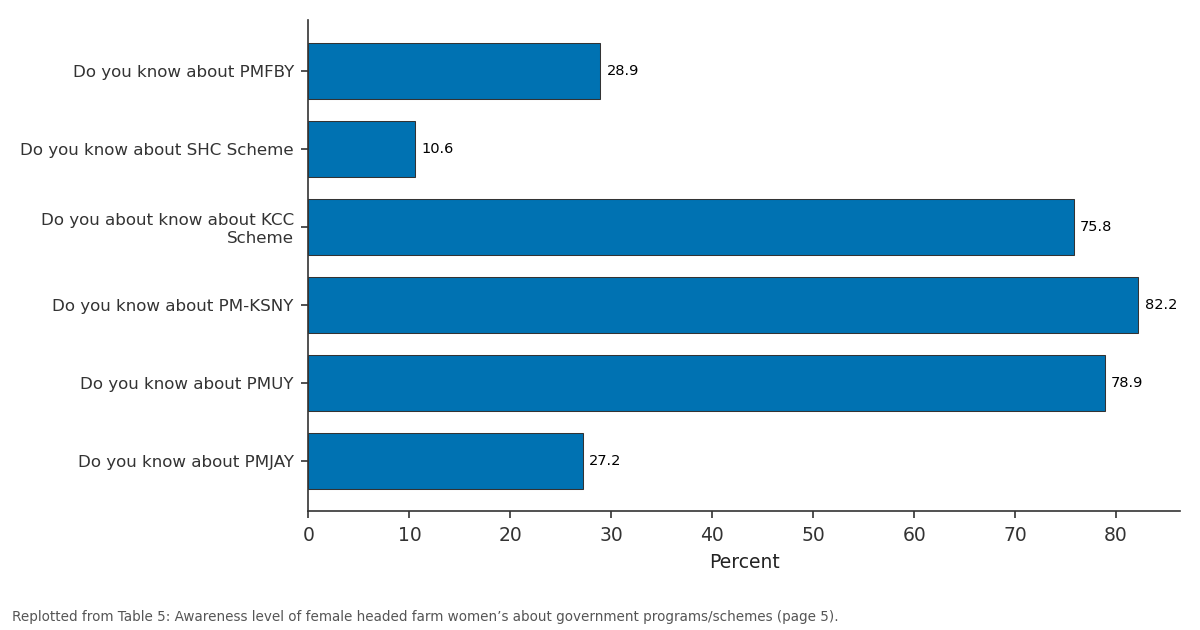
%: Do you know about PMFBY vs Do you know about SHC... vs Do you about know about... vs Do you know about... vs Do you know about PMUY
Replotted from Table 5 (page 5) of the original paper. Every bar is the paper's own table value.
View source evidence ↗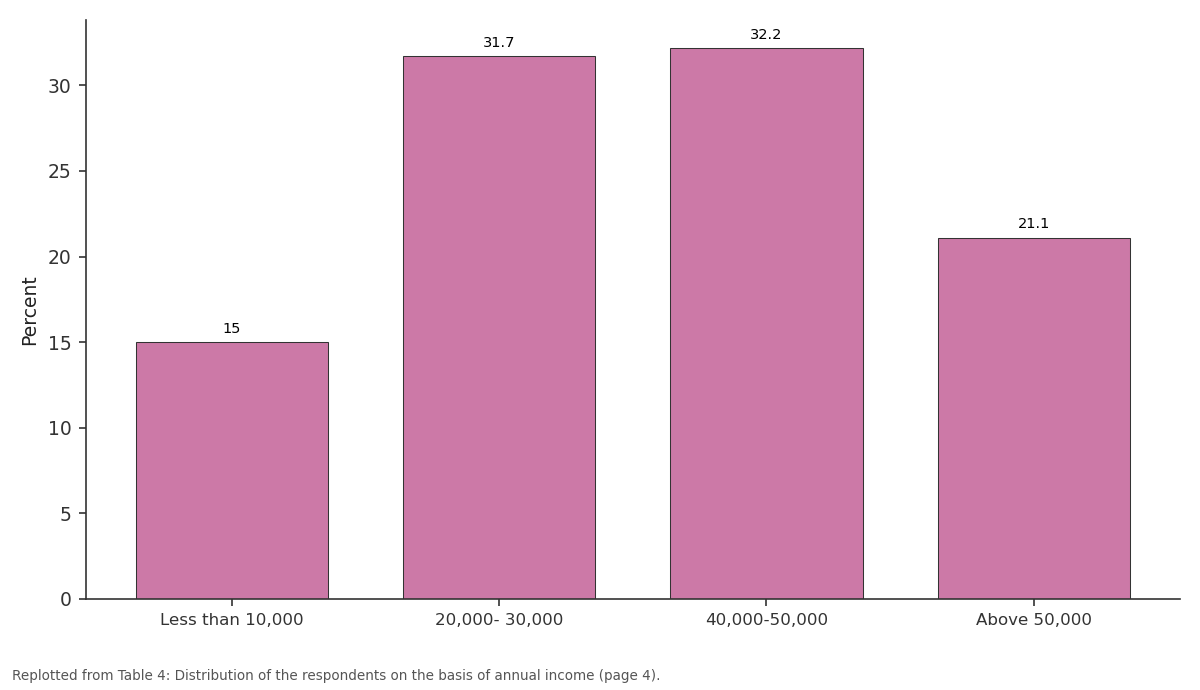
Percent: Less than 10,000 vs 20,000- 30,000 vs 40,000-50,000 vs Above 50,000
Replotted from Table 4 (page 4) of the original paper. Every bar is the paper's own table value.
View source evidence ↗Figures & tables
From the original paper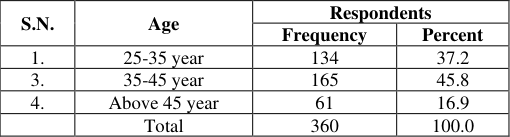 Table 1
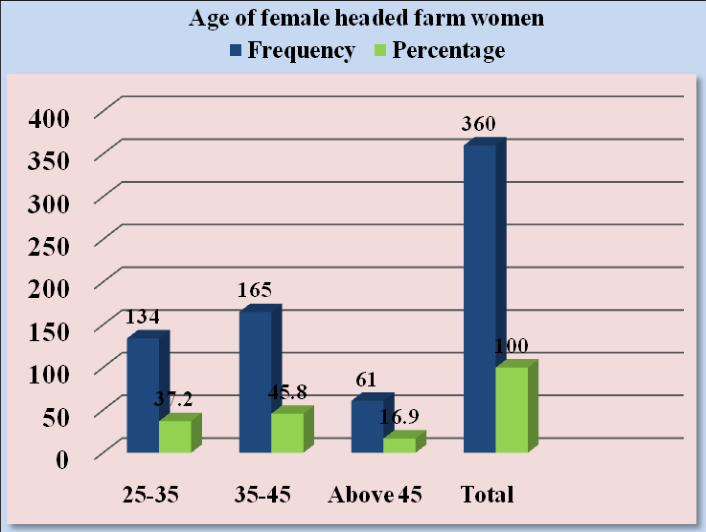 Figure 1
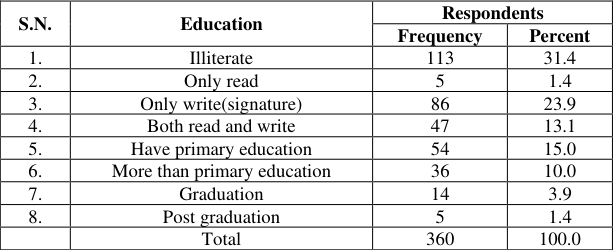 Table 2
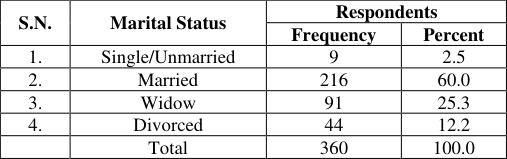 Table 3
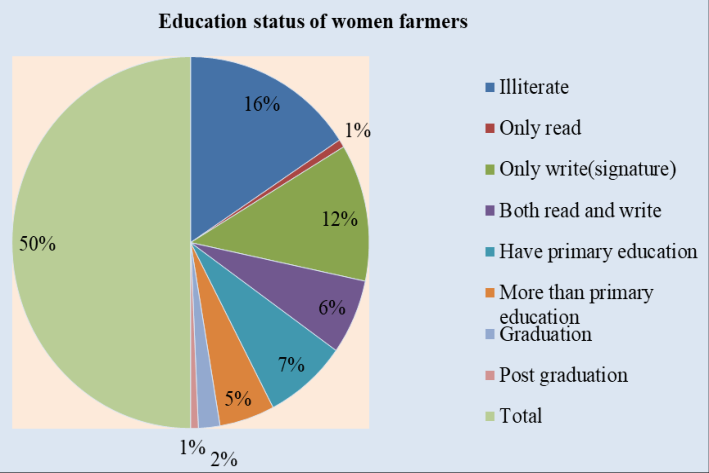 Figure 2
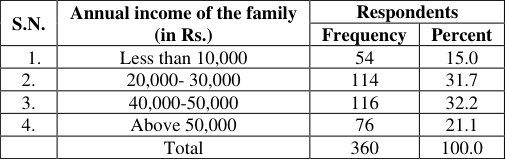 Table 4
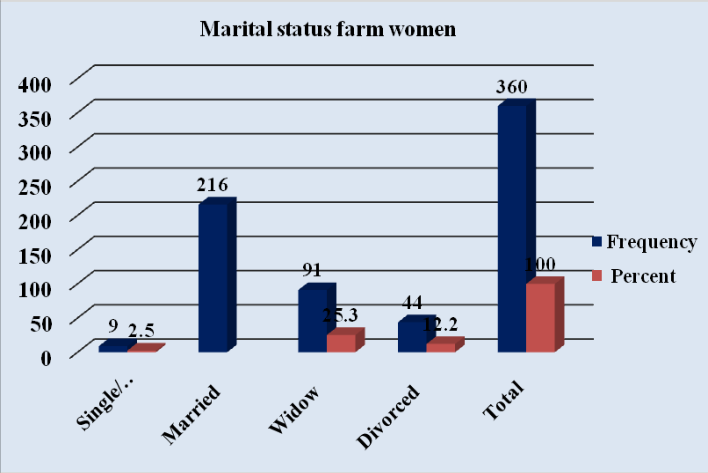 Figure 3
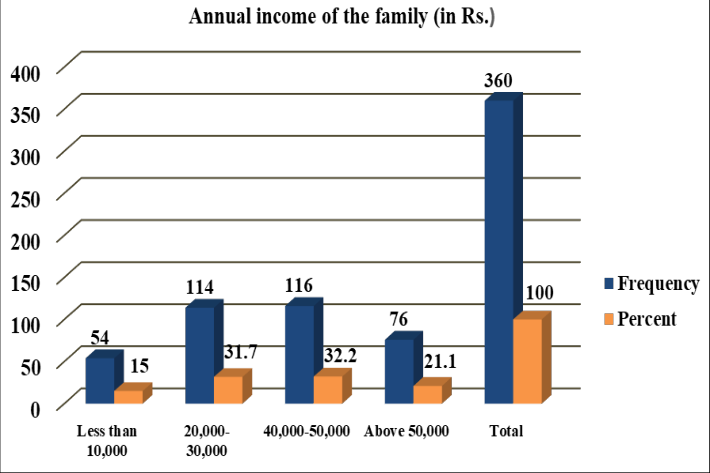 Figure 2
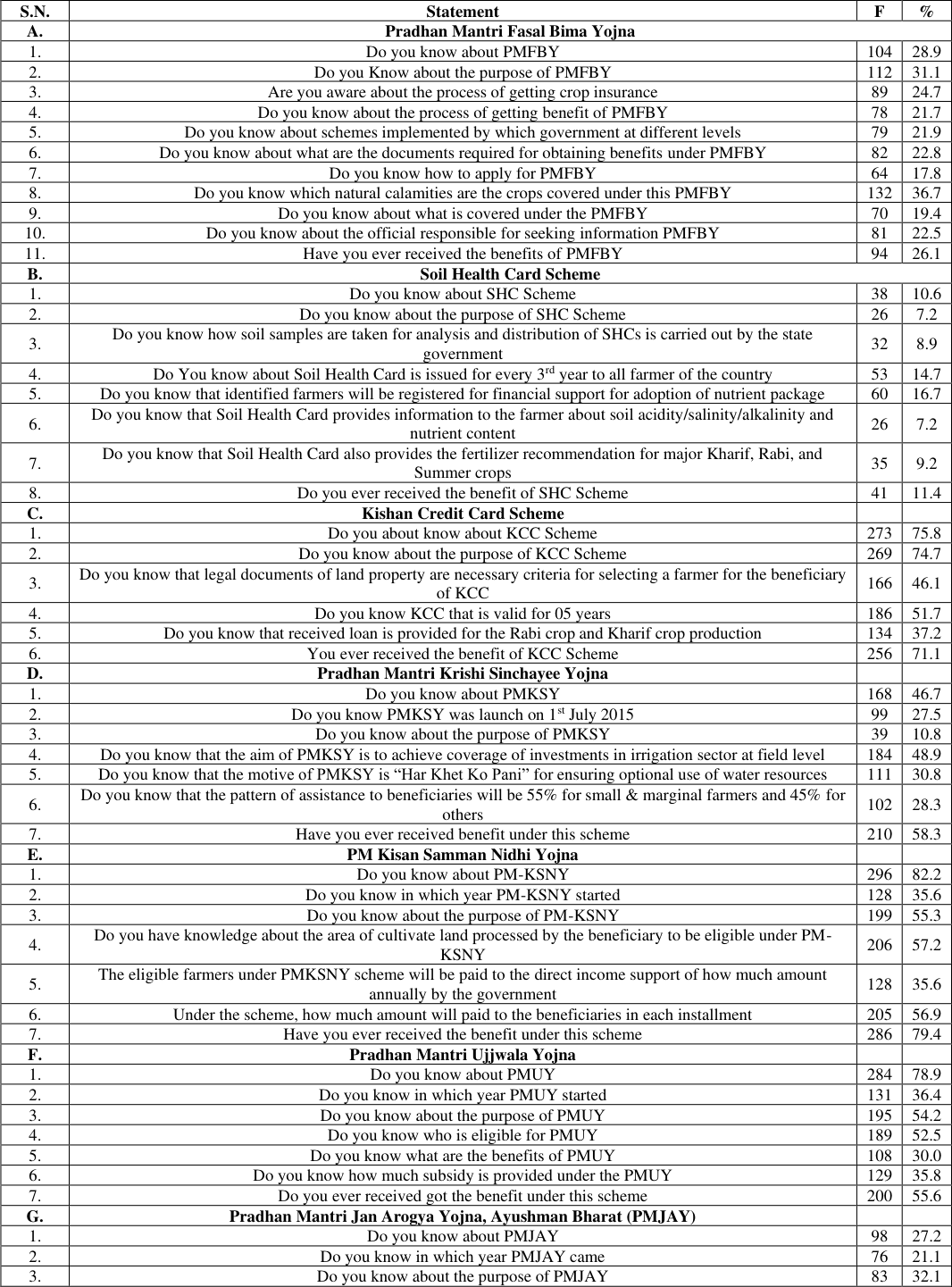 Table 5
Introduction
Agriculture plays an important role in employment in India. He is ranked 4th in the world. Women play an important role in agriculture and rural economies in all developing countries. Farming is not just a job; it is a way of life that has influenced people's thoughts and feelings in many places for centuries (Sunitha et al. 2018) [9] . The participation rate of women in domestic poultry farming is of crucial importance in the poultry industry (Butt et al. 2010) [1] . India is a rural country and 70% of Indians live in rural Indi a. (Gupta et al. 2020) [4] Their roles vary from region to region and are changing rapidly in many parts of the world as economic and social forces transform agriculture. Rural women often have complex families and lead different lifestyles (Dwivedi et al 2013) [12] . They play an important role in agriculture, performing the dual role of housewives and farmers. Many women farmers not only farm, but also raise vegetables, poultry, and livestock, collect seeds, sell milk, vegetables and fruits, etc. Their activities generally include planting crops, raising animals, making and preparing food, earning money from agriculture or other rural activities, collecting oil and water, engaging in trade and commerce, and caring for children, elderly parents, and other family member and they should take good care of their homes (Shekhar et al., 2019) [7] . Rural women farmers are also responsible for dung collection by making dung cakes which also bring additional income to poor families (Yadav et al 2023) [10] . He is the most active and wants to work at home, on the farm, and at the animal shelter. The fact is that www.extensionjournal.com women in rural areas are engaged in agriculture as well as housework. Moreover, Indian women are increasingly managing and participating in agriculture, especially in resource-rich areas (Praveen et al., 2005) [5] . Rural women involved in agriculture are also responsible for storing and preparing cakes, providing additional income for poor families. Female farmers undoubtedly have a major role in livestock production and management. In rural locations, women 0function as the efficient and reproductive part of the community and are not privy to their requirements, rights, and people empowerment techniques that allow monetary and social advancement in existence for you to become a self-reliant woman. As a result, the Indian government has established a slew of initiatives and programs to improve the socioeconomic standing of women farmers to benefit the family, community, and state as a whole. Rural women indeed labour in agriculture in addition to their home duties. Furthermore, particularly in betterresourced rural regions, Indian women are increasingly managing.
Methodology Location of the study
The district of U.P. was chosen for the study because it was convenient for the researcher to undertake it. The data on female-headed farm women was obtained in Sultanpur, Ayodhya, and Amethi, Uttar Pradesh. I have selected 3 blocks of every district Sultanpur (Baldiray, Sadar, Jaisighpur), Ayodhya (Sohawal, Bikapur, Milkipur) and Amethi (Gaurigunj, Tiloi, Amethi). I selected 15 villages of every district, 5 villages of every block and 8 respondents selected of every village.
Sampling procedure
The sample for the investigation as comprised of 360 respondents. Simple random sampling was used to select the study area and samples. The questionnaire collected demographic information, including age, education qualification, marital status, annual income, knowledge and awareness about government programs or schemes etc. It also collected information on a range of farming work.
Tools and techniques
• To carry out the present study, the following tools were used: -• A self-made interview schedule to collect general, specific, and health-related information about the respondents.
Methods of the Data Collection
The data was collected through an in-depth interview to bring out the required information from the female-headed women farmers. A pretested interview schedule collects general, specific information and government programs or schemes-related information. Data was collected using selfself-repaired interview schedule by a face-to-face interview.
The statistical tools used for the analysis of this study are simple percentage techniques and ranking techniques. Results show that the education status of female-headed farm women's majority of the (31.4%) of farm women's were illiterate (23.9%) of farm women could write and able to make signatures, (15.0%) of farm women's had primary education, (13.1%) of farm women were both read and wrote, (10.0%) farm women's had more than primary education, (3.9%) farm women's were graduated, (1.4%) farm women's were only read and only (1.4%) farm women's were post graduated. The table 5 revealed that majority of the respondents earned (32.2%) between 40,000-50,000 per year, some of the respondents earned (31.7%) between-20,000-30,000 rupees per year , and (21.1%) respondents earned above 50,000 per year, only (15%) respondents earned less than 10,000 per year. Most of the female-headed women farmers were not aware of Krishi Sinchai Yojna. The majority of the women found benefits from PM-Ujjawala Yojna and PM Samman Nidhi Yojna but they were not aware of their eligibility or prospectus criteria.
| S.N. | Statement | F | % |
|---|---|---|---|
| A. | Pradhan Mantri Fasal Bima Yojna | ||
| 1. | Do you know about PMFBY | 104 | 28.9 |
| 2. | Do you Know about the purpose of PMFBY | 112 | 31.1 |
| 3. | Are you aware about the process of getting crop insurance | 89 | 24.7 |
| 4. | Do you know about the process of getting benefit of PMFBY | 78 | 21.7 |
| 5. | Do you know about schemes implemented by which government at different levels | 79 | 21.9 |
| 6. | Do you know about what are the documents required for obtaining benefits under PMFBY | 82 | 22.8 |
| 7. | Do you know how to apply for PMFBY | 64 | 17.8 |
| 8. | Do you know which natural calamities are the crops covered under this PMFBY | 132 | 36.7 |
| 9. | Do you know about what is covered under the PMFBY | 70 | 19.4 |
| 10. | Do you know about the official responsible for seeking information PMFBY | 81 | 22.5 |
| 11. | Have you ever received the benefits of PMFBY | 94 | 26.1 |
| B. | Soil Health Card Scheme | ||
| 1. | Do you know about SHC Scheme | 38 | 10.6 |
| 2. | Do you know about the purpose of SHC Scheme | 26 | 7.2 |
| 3. | Do you know how soil samples are taken for analysis and distribution of SHCs is carried out by the state government | 32 | 8.9 |
| 4. | Do You know about Soil Health Card is issued for every 3rd year to all farmer of the country | 53 | 14.7 |
| 5. | Do you know that identified farmers will be registered for financial support for adoption of nutrient package | 60 | 16.7 |
| 6. | Do you know that Soil Health Card provides information to the farmer about soil acidity/salinity/alkalinity and nutrient content | 26 | 7.2 |
| 7. | Do you know that Soil Health Card also provides the fertilizer recommendation for major Kharif, Rabi, and Summer crops | 35 | 9.2 |
| 8. | Do you ever received the benefit of SHC Scheme | 41 | 11.4 |
| C. | Kishan Credit Card Scheme | ||
| 1. | Do you about know about KCC Scheme | 273 | 75.8 |
| 2. | Do you know about the purpose of KCC Scheme | 269 | 74.7 |
| 3. | Do you know that legal documents of land property are necessary criteria for selecting a farmer for the beneficiary of KCC | 166 | 46.1 |
| 4. | Do you know KCC that is valid for 05 years | 186 | 51.7 |
| 5. | Do you know that received loan is provided for the Rabi crop and Kharif crop production | 134 | 37.2 |
| 6. | You ever received the benefit of KCC Scheme | 256 | 71.1 |
| D. | Pradhan Mantri Krishi Sinchayee Yojna | ||
| 1. | Do you know about PMKSY | 168 | 46.7 |
| 2. | Do you know PMKSY was launch on 1st July 2015 | 99 | 27.5 |
| 3. | Do you know about the purpose of PMKSY | 39 | 10.8 |
| 4. | Do you know that the aim of PMKSY is to achieve coverage of investments in irrigation sector at field level | 184 | 48.9 |
| 5. | Do you know that the motive of PMKSY is “Har Khet Ko Pani” for ensuring optional use of water resources | 111 | 30.8 |
| 6. | Do you know that the pattern of assistance to beneficiaries will be 55% for small & marginal farmers and 45% for others | 102 | 28.3 |
| 7. | Have you ever received benefit under this scheme | 210 | 58.3 |
| E. | PM Kisan Samman Nidhi Yojna | ||
| 1. | Do you know about PM-KSNY | 296 | 82.2 |
| 2. | Do you know in which year PM-KSNY started | 128 | 35.6 |
| 3. | Do you know about the purpose of PM-KSNY | 199 | 55.3 |
| 4. | Do you have knowledge about the area of cultivate land processed by the beneficiary to be eligible under PM- KSNY | 206 | 57.2 |
| 5. | The eligible farmers under PMKSNY scheme will be paid to the direct income support of how much amount annually by the government | 128 | 35.6 |
| 6. | Under the scheme, how much amount will paid to the beneficiaries in each installment | 205 | 56.9 |
| 7. | Have you ever received the benefit under this scheme | 286 | 79.4 |
| F. | Pradhan Mantri Ujjwala Yojna | ||
| 1. | Do you know about PMUY | 284 | 78.9 |
| 2. | Do you know in which year PMUY started | 131 | 36.4 |
| 3. | Do you know about the purpose of PMUY | 195 | 54.2 |
| 4. | Do you know who is eligible for PMUY | 189 | 52.5 |
| 5. | Do you know what are the benefits of PMUY | 108 | 30.0 |
| 6. | Do you know how much subsidy is provided under the PMUY | 129 | 35.8 |
| 7. | Do you ever received got the benefit under this scheme | 200 | 55.6 |
| G. | Pradhan Mantri Jan Arogya Yojna, Ayushman Bharat (PMJAY) | ||
| 1. | Do you know about PMJAY | 98 | 27.2 |
| 2. | Do you know in which year PMJAY came | 76 | 21.1 |
| 3. | Do you know about the purpose of PMJAY | 83 | 32.1 |
Table text extracted from the original PDF; superscript letters are shown inline. The original table image is below.
View original table image
Results & Discussion
Results & Discussion
Figures and tables from the paper
| S.N. | Age | Respondents | — |
|---|---|---|---|
| Frequency | Percent | ||
| 1. | 25-35 year | 134 | 37.2 |
| 3. | 35-45 year | 165 | 45.8 |
| 4. | Above 45 year | 61 | 16.9 |
| Total | 360 | 100.0 |
Table text extracted from the original PDF; superscript letters are shown inline. The original table image is below.
View original table image
| S.N. | Education | Respondents | — |
|---|---|---|---|
| Frequency | Percent | ||
| 1. | Illiterate | 113 | 31.4 |
| 2. | Only read | 5 | 1.4 |
| 3. | Only write(signature) | 86 | 23.9 |
| 4. | Both read and write | 47 | 13.1 |
| 5. | Have primary education | 54 | 15.0 |
| 6. | More than primary education | 36 | 10.0 |
| 7. | Graduation | 14 | 3.9 |
| 8. | Post graduation | 5 | 1.4 |
| Total | 360 | 100.0 |
Table text extracted from the original PDF; superscript letters are shown inline. The original table image is below.
View original table image
| S.N. | Marital Status | Respondents | — |
|---|---|---|---|
| Frequency | Percent | ||
| 1. | Single/Unmarried | 9 | 2.5 |
| 2. | Married | 216 | 60.0 |
| 3. | Widow | 91 | 25.3 |
| 4. | Divorced | 44 | 12.2 |
| Total | 360 | 100.0 |
Table text extracted from the original PDF; superscript letters are shown inline. The original table image is below.
View original table image
| S.N. | Annual income of the family (in Rs.) | Respondents | — |
|---|---|---|---|
| Frequency | Percent | ||
| 1. | Less than 10,000 | 54 | 15.0 |
| 2. | 20,000- 30,000 | 114 | 31.7 |
| 3. | 40,000-50,000 | 116 | 32.2 |
| 4. | Above 50,000 | 76 | 21.1 |
| Total | 360 | 100.0 |
Table text extracted from the original PDF; superscript letters are shown inline. The original table image is below.
View original table image
References
8 in the original paper- Butt TM, Hassan ZY, Mehmood K, Muhammad S. Role of rural women in agricultural development and their constraints. J Agric. Soc. Sci. 2010;6:53-56
- Dwivedi P, Kiran UV. Occupational Health Hazards among Farm Women, International Journal of Humanities and Social Sciences Invention. 2013;2(7):810.
- Jayasheela G. The Role of Women: In Indian Agriculture Sector, International Journal of Creative Research Thoughts. 2015;3(2):375-382.
- Gupta D, Sharma U. A Study on impact of Government policies in rural women empowerment, International Journal of Creative Research Thoughts. 2020;8(2):1118.
- Negi R, Solanki D, Upadhyaya R. Knowledge of the rural women regarding selected government schemes. International Journal Current Microbiology Applied Science. 2020;9(9):199-204.
- Shekhar PJ. Analysis of constraints faced by farm women in agriculture in Ghazipur district of Uttar - Pradesh, International Journal of Recent Scientific Research. 2019;10(7):33725-33727.
- Sunitha NH, Naik C, Hanumanthappa D. Role of farm women in Indian agriculture, International Journal of Plant Sciences. 2018;13(2):265-270.
- Yadav S, Maurya SP, Anuradha, Arti, Verma SK. Health problems faced by female -headed farm women's of eastern plain of U.P. International Journal of Statistical and Applied Mathematics. 2023;8(4):100105.