
Research article · 2024 · Full text
International Journal of Agriculture Extension and Social DevelopmentParent's opinion about giving corporal punishment in primary level education to their children: A research analysis
Volume 7(4) · Pages 281–285 · DOI: 10.33545/26180723.2024.v7.i4d.539 ↗
Research areasEthics and Legal Issues in Pediatric Healthcare
Abstract
Author-writtenThis research has been conducted in six sub-districts under the three divisions in Bangladesh. It is a fieldwork survey. The total sample size was 300 people. The sample was taken from 60 primary schools. Parents were selected through purposive sampling. Data was collected through the interview method and the questionnaire. The age limit of the respondent was 20–60 years old. All of the parents were from a middle-class family. Parents’ 46.9% opinion that a student's education and behavior were developed to give punishment. Parents' education level was related to giving punishment to children, for example, 24% of parents give more punishment, and their education level was class 6 ‘O’ level. 72% of parents said that they punished their children (boys and girls) equally. Parents of 80% know that when children get punished, they are mentally upset. Parent’s educational level is not related to knowing about the punishment of government-restricted law, and only 21.66% know about the law.
Summary
Source-checkedPlain-language reading of the full paper, prepared with AI and checked against the text. Each point links to the authors' own words.
Why it matters
- Corporal punishment is defined as the intentional use of physical force to discipline, control, or educate a child. View evidence ↗
- Physical and humiliating punishment is a common occurrence within both family and school environments in Bangladesh. View evidence ↗
- The authors state that corporal punishment fails to teach morality and instead instills fear and hatred in children. View evidence ↗
The question
- The study aims to identify why parents punish children at home, the types of punishment used across genders, and how these punishments affect child development. View evidence ↗
What they did
- The research was a fieldwork survey involving 300 people sampled from 60 primary schools across six sub-districts in three divisions of Bangladesh. View evidence ↗
- Middle-class parents aged 20–60 were selected via purposive sampling, and data was gathered using interviews and questionnaires. View evidence ↗
- The study utilized both open-ended and closed-ended questionnaires, with data analysis performed using SPSS software. View evidence ↗
What they found
- Approximately 46.9% of parents believe that giving punishment helps develop a student's behavior and education. View evidence ↗
- Parents with an education level of class 6 ('O' level) or below were found to give more punishment, with 24% in this group doing so. View evidence ↗
- The majority of parents (72%) reported that they punish their sons and daughters equally. View evidence ↗
- 80% of parents are aware that their children become mentally upset or unhappy when they are punished. View evidence ↗
- The most common reason for punishment at home was incomplete studies, cited by 40% of parents. View evidence ↗
- Slapping was the most frequent type of punishment used by parents, reported by 48% of respondents. View evidence ↗
- Knowledge of government laws restricting punishment is low, with only 21.66% of parents being aware of such laws. View evidence ↗
- Among alternatives to punishment, 35% of parents believe that talking to a child with good behavior promotes mental and educational development. View evidence ↗
What it means
- The authors recommend that the government establish, implement, and monitor national laws against physical and psychological punishment, while ensuring these laws are widely publicized. View evidence ↗
- The authors conclude that physical, psychological, and emotional punishments should be ended in favor of promoting love and affection. View evidence ↗
Visual summary
2 visualsIllustrations explain the paper; charts are replotted from the paper's own table values.
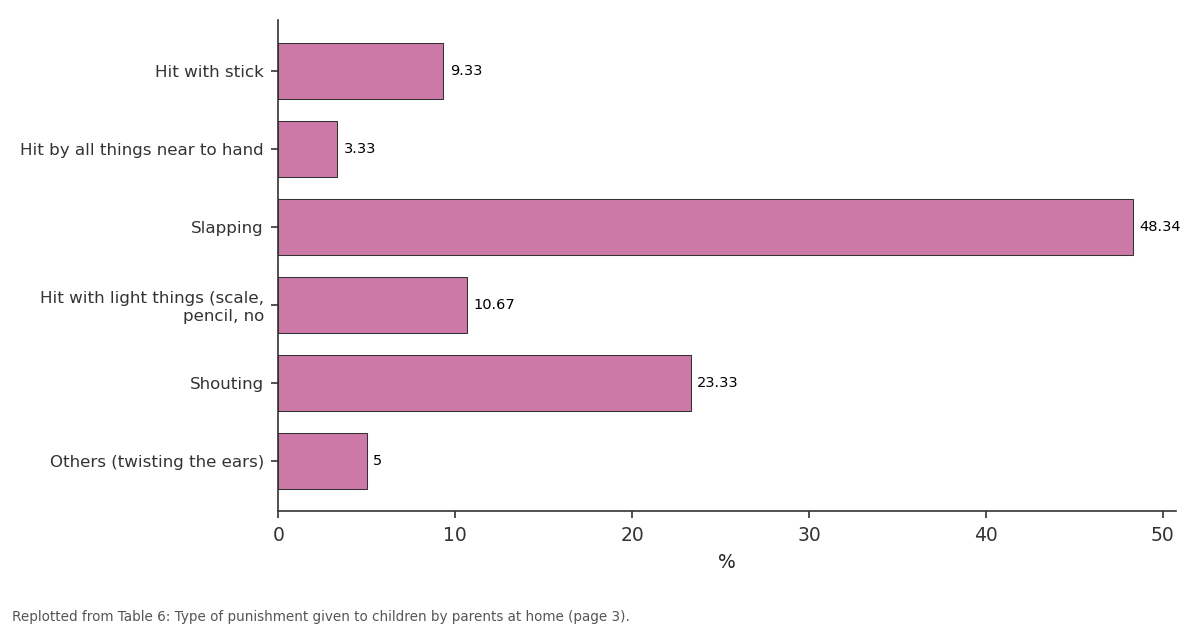
%: Hit with stick vs Hit by all things near... vs Slapping vs Hit with light things... vs Shouting
Replotted from Table 6 (page 3) of the original paper. Every bar is the paper's own table value.
View source evidence ↗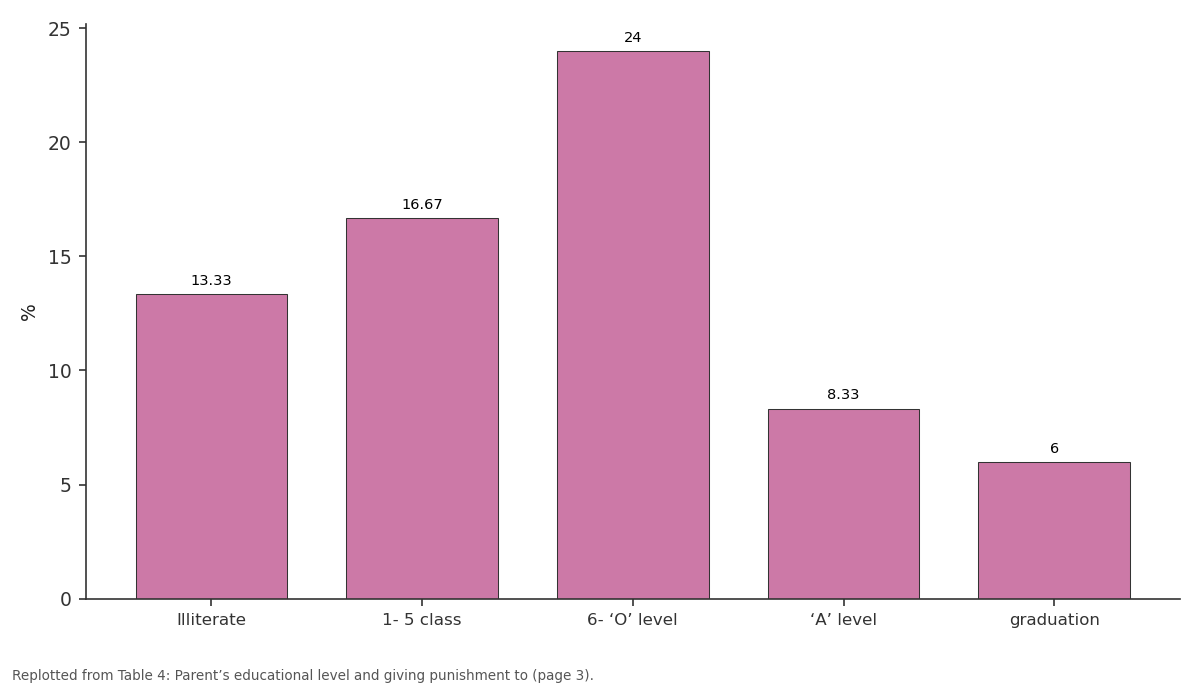
%: Illiterate vs 1- 5 class vs 6- ‘O’ level vs ‘A’ level vs graduation
Replotted from Table 4 (page 3) of the original paper. Every bar is the paper's own table value.
View source evidence ↗Figures & tables
From the original paper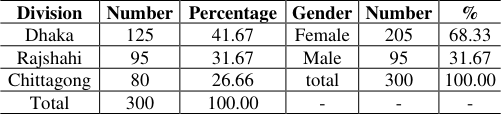 Table 1
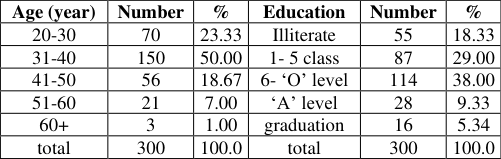 Table 2
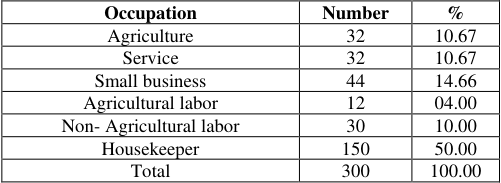 Table 3
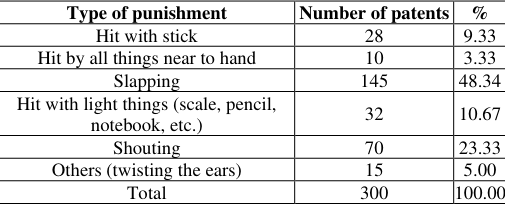 Table 6
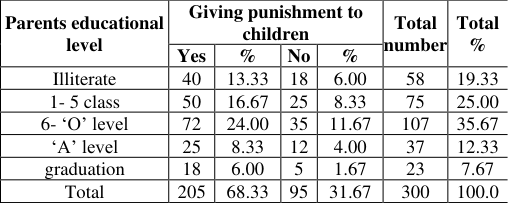 Table 4
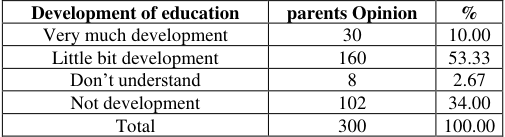 Table 7
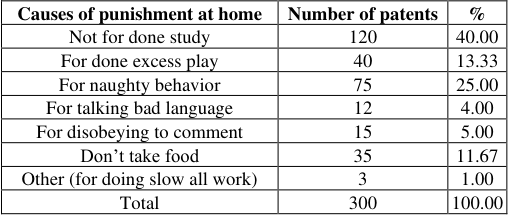 Table 5
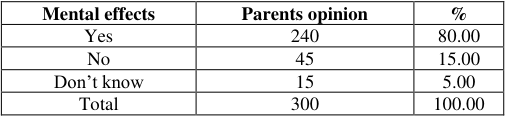 Table 8
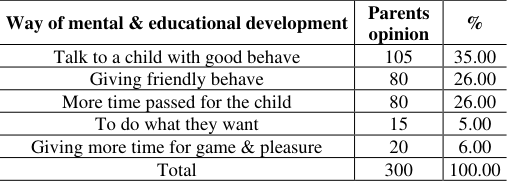 Table 9
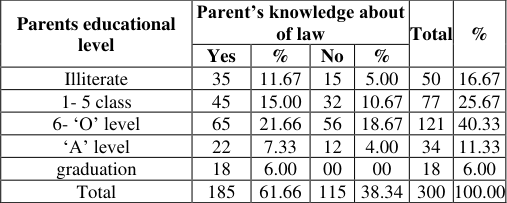 Table 10
Introduction
Corporal punishment means the intentional application of physical punishment for discipline, correction, control, and changing behavior, or in the belief of educating or bringing up the child [1] . It includes a wide variety of methods, viz., hitting, slapping, spanking, punching, kicking, pinching, shaking, shoving, choking, etc., using various objects. In Bangladesh, physical and humiliating punishment (PHP) is a common scenario in schools and family settings. Evidence shows that these depressing occurrences are happening even in the most famous schools in the country. Several stories have been published in the country's newspapers, even expressing that children are sometimes beaten to death [2] . Corporal punishment is not a healthy discipline technique in school or in the family. Discipline should teach that there are logical and natural values to all our behaviors. Physically punishing and sad kids teach that might make right. It teaches kids to fear that mistakes will bring them anxiety and shame. It causes them to seek revenge. It makes them lose trust and respect for the teacher who physically punishes them. Short of skillfully restraining a child who has physically become a danger to himself or others, teachers should not be permitted to inflict physical punishment upon kids in the name of discipline [3] . Corporal punishment does not teach right from wrong, it teaches fear and hate. Unfortunately, this is a cheap and easy way to keep people in line. Education and love are constructive ways to teach self-discipline, respect, and morality, but these require effort and tolerance [4] . Therefore, the present research work tries to build awareness among parents, and other people in society about the effects of punishment on children.
Significance of the Study
A child needs encouragement, love, and an interactive environment free from physical and humiliating punishment for their future development. Article 19.1 of the United Nations Convention on the Rights of the Child (UNCRC) mentions the protection of the child from any physical torture and humiliating conditions, injury, or other forms of abuse. The Government of Bangladesh (GOB) ratified the Convention on the Rights of the Child (CRC) in September 1991. Bangladesh, being a signatory to the CRC, is fully committed to improving the situation of the children of Bangladesh [2] . Some common myths or beliefs on behalf of physical and humiliating punishment are established in the minds of parents or older persons. These are-Punishment is necessary to keep the children disciplined. Without punishment, children do not complete their lessons properly, they become inattentive in the learning process. Punishment led a lot of people to become successful in life. Physical and psychological punishments are so freely at hand that they discourage some teachers and parents from trying alternatives. Punishment is required to shape the behavior of the children positively. Children will give up ill behavior because of punishment. Adults have the moral duty to punish the children to make their proper or bright future. If a www.extensionjournal.com teacher beats a child, parts of his body will go to heaven. Giving punishment to adults for controlling children is a symbol of a strong personality. Children obey and respect these types of people very much. Sometimes teachers become so anxious and frustrated by the children's behavior that they have to give them punishment [2] . Other researchers show that if people are more hit during their childhood, it is more likely that when they reach adulthood, they hit their children, spouses, or friends. A frequently hit child will be a problematic person tomorrow. There is another serious consequence, the chance of children assaulting their parents in retaliation will also increase with corporal punishment. The same attitude may be reflected in the schools against the teachers as well [5] . It appears that towards the beginning of 2010, there was a spate of newspaper reports concerning numerous cases of corporal punishment being meted out to children in various educational institutions, including Madrashas, primary schools, and high schools, and the children upon whom the corporal punishment had been inflicted were both boys and girls of various ages, as young as six years up to 13 or 14 years old. Corporal punishment does not produce longlasting changes in behavior; negatively affects the social, psychological, and educational development of students; contributes to the cycle of child abuse; and promotes proviolence attitudes in youth [6] . Accomplishment has developed in child psychology, and the outlook on child education has changed. Child psychologists realize that to achieve success in child development, children must have good personalities, be responsible people, and be competent citizens [5] . In Bangladesh, there is no available information in relevant fields, so the present study will develop knowledge in this area.
Objectives
To identify the causes of giving punishment to children at home. Find out the type of punishment children receive on a gender basis at home and the effects of punishment on children's development.
Materials and Methods
This study has been undertaken to investigate the punishment scenario in Bangladesh and its impact on child education. This study depends on primary and secondary data. Sixty primary schools under six sub-districts of three divisions in Bangladesh were selected for data collection. The age limit of the respondent was (parent) 20-60+ years old. Three hundred (300) data (parents) were collected through the purposive sampling method. Used in openended and closed-ended questionnaires. The collected data were analyzed through SPSS software [7] .
Results and Discussion
Parent's Information Parental information was collected from six sub-districts under the three divisions in Bangladesh. Data were collected from 60 primary schools. It was declared that six samples would be collected from each school. However, for different reasons, several samples were collected from 300 parents. They are primary school guardians.
Parent's Information of division and gender basis
Parent's Information of division and gender basis
Family patterns of parents
Parents (70.67% lived in a single family, and 30.33% lived in a joint family. Their family members were 3-15 people; 30.75% of the family lived with 6 members; and 0.9% of the family lived with 10-15 members.
Parent's Occupation
There were different types of occupational status parents. Their information is shown in Table 03.
Monthly income of parent's (Taka)
Their economic status was low. The highest number of respondents was 108 (36.00%), and their income range was 0-5000 taka. Other information, income range 5001-7000 taka, several parents 57 (19.00%); income range: 7001-10,000 taka; number of parents: 77 (25.67%); income range: 10,001+ taka; number of parents: 58 (19.53%).
Parent's educational level and giving punishment
Parents' education levels are related to giving punishment to their children. Those education levels are below, and they have given punishment very much to their children. Other information is shown in Table 4. 4).
| Parents educational level | Giving punishment to children | — | — | — | Total number | Total % |
|---|---|---|---|---|---|---|
| Yes | % | No | % | |||
| Illiterate | 40 | 13.33 | 18 | 6.00 | 58 | 19.33 |
| 1- 5 class | 50 | 16.67 | 25 | 8.33 | 75 | 25.00 |
| 6- ‘O’ level | 72 | 24.00 | 35 | 11.67 | 107 | 35.67 |
| ‘A’ level | 25 | 8.33 | 12 | 4.00 | 37 | 12.33 |
| graduation | 18 | 6.00 | 5 | 1.67 | 23 | 7.67 |
| Total | 205 | 68.33 | 95 | 31.67 | 300 | 100.0 |
Table text extracted from the original PDF; superscript letters are shown inline. The original table image is below.
View original table image
Causes of punishment for giving children at home
Parents give punishment in different causes at home to children. Some causes are shown in Table 05. The second highest (25%) parents said they have punished their children for naughty behavior (Table 5).
| Causes of punishment at home | Number of patents | % |
|---|---|---|
| Not for done study | 120 | 40.00 |
| For done excess play | 40 | 13.33 |
| For naughty behavior | 75 | 25.00 |
| For talking bad language | 12 | 4.00 |
| For disobeying to comment | 15 | 5.00 |
| Don’t take food | 35 | 11.67 |
| Other (for doing slow all work) | 3 | 1.00 |
| Total | 300 | 100.00 |
Table text extracted from the original PDF; superscript letters are shown inline. The original table image is below.
View original table image
Type of punishment given at home
Children are getting punishment from parents of different types. Some are shown in Table 06. 6). In the United States, 94% of American parents spank their children by the time they are 3 or 4 years old [8] . That corporal punishment may be effective in gaining compliance among highly disobedient and disruptive children. High parental control is associated with better child behavior for children high in temperamentally based resistance to control [9] .
Giving punishment for the development of children's education:
Parents said that, if children are getting punished, then their education level will be good. Another opinion is shown in Table 07. The table shows, that most of the parents (53%) have said that, 'little bit of development' in the education of their children after getting punishment (Table 7).
| Development of education | parents Opinion | % |
|---|---|---|
| Very much development | 30 | 10.00 |
| Little bit development | 160 | 53.33 |
| Don’t understand | 8 | 2.67 |
| Not development | 102 | 34.00 |
| Total | 300 | 100.00 |
Table text extracted from the original PDF; superscript letters are shown inline. The original table image is below.
View original table image
Giving punishment and children's mental effects
Parents' opinions are shown in Table 08. 9).
Gender basis to giving punishment at home
Most of the Parents 72% said that they punished their children equally. Parents often say they smack their children to teach them about respect.
Parent's educational level and knowledge about government-restricted law
The parent's educational level is not related to knowing about the punishment of government-restricted law. Other information is shown the Table 10. The discussion from above the table has shown that most of the parents (21.66%) knew about the law, and their educational status was 6-O level. Only 4% of parents don't know about the punishment of government-restricted laws, and their education level was 'A' (Table 10).
| Parents educational level | Parent’s knowledge about of law | — | — | — | Total | % |
|---|---|---|---|---|---|---|
| Yes | % | No | % | |||
| Illiterate | 35 | 11.67 | 15 | 5.00 | 50 | 16.67 |
| 1- 5 class | 45 | 15.00 | 32 | 10.67 | 77 | 25.67 |
| 6- ‘O’ level | 65 | 21.66 | 56 | 18.67 | 121 | 40.33 |
| ‘A’ level | 22 | 7.33 | 12 | 4.00 | 34 | 11.33 |
| graduation | 18 | 6.00 | 00 | 00 | 18 | 6.00 |
| Total | 185 | 61.66 | 115 | 38.34 | 300 | 100.00 |
Table text extracted from the original PDF; superscript letters are shown inline. The original table image is below.
View original table image
Impact of punishment on children's lives
The impact of punishment puts the children at risk of progressing in their physical, emotional, cognitive, and social development. It depends on age, developmental stage, and the type of environment in which the child grows. Physical and psychological punishment have adverse shortand long-term effects on their attention, memory and its formation, learning, reasoning, supervisory, problemsolving, executive functioning, intelligence, action, and motor control. Children become stubborn, they do not continue their education, and they run away from home.
Students mentally suffer because they do not know the cause of punishment and cannot tell about punishment. Children begin to lie to their parents about going to school but actually skip school and sit around at another location. Sometimes they leave school and engage in hazardous jobs or unlawful activities and even die or become ill or engage in child labor, Students become sick from anxiety and fear, feel frustrated, and do not feel like studying anymore [2] .
Discussion
The Ministry of Primary Education in Bangladesh declared that it had stopped punishment in schools all over the country [10] . But giving punishment to the student is a repetition now in a school setting. Parents often say they smack their children to teach them respect. Parents of 46.9% opinion that students' education and behavior were developed to give punishment. Parents' education level was related to giving punishment to children, for example, 24% of parents give more punishment, and their education level was class 6 'O' level. All parents are from middle-class families, and 14.66% of parents were small businessmen. 72% of parents said that they punished their children (boys and girls) equally. When children receive the punishment, they become mentally unhappy, upset, etc. Parents of 80% are known for their children's mental effects. Parents of 35% said that they 'talk to the child with good behavior for the child's mental and educational development. The parent's educational level is not related to knowing about the punishment of government-restricted laws. Only 21.66% of parents know about the law; the rest of the parents don't know.
Conclusion
Future development depends on the development of the child. The child is a person for all practical purposes, either at home or school. Sometimes cultural, traditional, and religious practices can be harmful to children. Children are the only group of people who do not have a legal right to be protected from beating. Children and young people are a valuable part of society with lots to offer. End physical, psychological, or emotional punishment and promote love and affection for children [11] . All international and national policy documents on the rights of children have a declaration that, in no situation, children should be discriminated against for their physical, psychological, or social abilities and that a child has the right to survive and receive all kinds of protective treatment, whether in the house, community, or school [2] . Parents of all social statuses should behave lovingly and affectionately towards children. The government should create national laws against physical, and psychological punishment, and make systems to implement and properly monitor them. Also, we should ensure that laws are widely known by everyone. The present research work tries to build awareness among parents, and other people in society about the effects of punishment on children's development.
Figures and tables from the paper
| Division | Number | Percentage | Gender | Number | % |
|---|---|---|---|---|---|
| Dhaka | 125 | 41.67 | Female | 205 | 68.33 |
| Rajshahi | 95 | 31.67 | Male | 95 | 31.67 |
| Chittagong | 80 | 26.66 | total | 300 | 100.00 |
| Total | 300 | 100.00 | - | - | - |
Table text extracted from the original PDF; superscript letters are shown inline. The original table image is below.
View original table image
| Age (year) | Number | % | Education | Number | % |
|---|---|---|---|---|---|
| 20-30 | 70 | 23.33 | Illiterate | 55 | 18.33 |
| 31-40 | 150 | 50.00 | 1- 5 class | 87 | 29.00 |
| 41-50 | 56 | 18.67 | 6- ‘O’ level | 114 | 38.00 |
| 51-60 | 21 | 7.00 | ‘A’ level | 28 | 9.33 |
| 60+ | 3 | 1.00 | graduation | 16 | 5.34 |
| total | 300 | 100.0 | total | 300 | 100.0 |
Table text extracted from the original PDF; superscript letters are shown inline. The original table image is below.
View original table image
| Occupation | Number | % |
|---|---|---|
| Agriculture | 32 | 10.67 |
| Service | 32 | 10.67 |
| Small business | 44 | 14.66 |
| Agricultural labor | 12 | 04.00 |
| Non- Agricultural labor | 30 | 10.00 |
| Housekeeper | 150 | 50.00 |
| Total | 300 | 100.00 |
Table text extracted from the original PDF; superscript letters are shown inline. The original table image is below.
View original table image
| Type of punishment | Number of patents | % |
|---|---|---|
| Hit with stick | 28 | 9.33 |
| Hit by all things near to hand | 10 | 3.33 |
| Slapping | 145 | 48.34 |
| Hit with light things (scale, pencil, notebook, etc.) | 32 | 10.67 |
| Shouting | 70 | 23.33 |
| Others (twisting the ears) | 15 | 5.00 |
| Total | 300 | 100.00 |
Table text extracted from the original PDF; superscript letters are shown inline. The original table image is below.
View original table image
| Mental effects | Parents opinion | % |
|---|---|---|
| Yes | 240 | 80.00 |
| No | 45 | 15.00 |
| Don’t know | 15 | 5.00 |
| Total | 300 | 100.00 |
Table text extracted from the original PDF; superscript letters are shown inline. The original table image is below.
View original table image
| Way of mental & educational development | Parents opinion | % |
|---|---|---|
| Talk to a child with good behave | 105 | 35.00 |
| Giving friendly behave | 80 | 26.00 |
| More time passed for the child | 80 | 26.00 |
| To do what they want | 15 | 5.00 |
| Giving more time for game & pleasure | 20 | 6.00 |
| Total | 300 | 100.00 |
Table text extracted from the original PDF; superscript letters are shown inline. The original table image is below.
View original table image
References
5 in the original paper- Dubanoski RA, Inaba M, Gerkewicz BA. Corporal punishment in schools: Myths, problems, and alternatives. Child Abuse Negl. 1983;7:271-8.
- BBC News. Should corporal punishment be banned? BBC online network, 16th September 1999, UK; c1999.
- Andero AA, Stewart A. Issues of corporal punishment: Re-examined. J Instr. Psychol. 2002;29:90-96.
- Straus MA, Stewart JH. Corporal punishment by American parents: National data on prevalence, chronicity, severity, and duration, with child and family characteristics. Clin Child Fam Psychol. Rev. 1999;2:55-70.
- Gershoff ET. Corporal Punishment by Parents and Associated Child Behaviors and Experiences: A MetaAnalytic and Theoretical Review. Psychol Bull. 2002;128(4):539-579.