
Research article · 2024 · Full text
International Journal of Research in AgronomyImpact of climate change on crop cultivation in Himachal Pradesh
Volume 7(4S) · Pages 194–195 · DOI: 10.33545/2618060x.2024.v7.i4sc.578 ↗
Research areasClimate change impacts on agricultureAgricultural risk and resilienceAgricultural Economics and Practices
Abstract
Author-writtenAmong the most urgent issues of our day is climate change, which has a big impact on agricultural systems all over the world. India's Himalayan state Himachal Pradesh, which is tucked away in the Himalayan area, is especially susceptible to the effects of climate change because of its varied terrain and reliance on agriculture. The present level of knowledge on how climate change is affecting agricultural farming in Himachal Pradesh is reviewed in this research. It looks at how temperature, precipitation patterns, and extreme weather events have changed over time and how it has affected agricultural productivity. The adaptation and mitigation techniques that may be used to increase the agricultural systems' resilience in Himachal Pradesh to climate change are also covered in this study. Historical climate data spanning several decades are analysed to identify trends and variability in temperature, precipitation, and extreme weather events. Climate projection models are utilized to simulate future climate scenarios, considering different greenhouse gas emission trajectories. The findings of this study contribute to a better understanding of the complex interactions between climate change and crop production in Himachal Pradesh, informing the development of adaptation and mitigation measures to enhance the resilience of agricultural systems in the region.
Summary
Source-checkedPlain-language reading of the full paper, prepared with AI and checked against the text. Each point links to the authors' own words.
Why it matters
- Climate change is considered one of the most pressing global issues due to its significant impact on agricultural systems. View evidence ↗
- Himachal Pradesh is particularly vulnerable to climate change because of its agricultural dependence and diverse terrain. View evidence ↗
- Climate change affects agriculture through complex factors such as soil fertility, water availability, crop yields, and the prevalence of pests and diseases. View evidence ↗
The question
- The study aims to review current knowledge regarding the effects of climate change on agricultural farming in Himachal Pradesh. View evidence ↗
- The research also seeks to identify adaptation and mitigation techniques to improve the resilience of the region's agricultural systems. View evidence ↗
What they did
- The research was carried out across four districts in Himachal Pradesh: Bilaspur, Mandi, Kullu, and Shimla. View evidence ↗
- The study sampled 100 farmers in total, with 25 participants selected from each of the four districts. View evidence ↗
- Data was collected through interviews and a structured questionnaire designed to examine various agronomical parameters. View evidence ↗
What they found
- Farmer awareness of weather changes was high across all districts, ranging from 83% in Shimla to 94% in Mandi. View evidence ↗
- Among the indicators surveyed, 85 respondents agreed that the climate has changed, while 5 disagreed and 10 remained neutral. View evidence ↗
- Erratic or shifted rainfall was the most widely recognized indicator of change, with 90 respondents answering 'Yes'. View evidence ↗
- An increase in crop pests and diseases was reported by 85 respondents. View evidence ↗
- Farmers are adapting to changing climatic conditions by switching to hybrid crop varieties for better tolerance. View evidence ↗
- Climate fluctuations, combined with overexploitation, have led to habitat loss, species migration, and extinction of some wild foodstuffs and medicinal plants. View evidence ↗
What it means
- The authors conclude that integrating scientific data with indigenous knowledge and local perceptions is a key strategy for improving climate adaptation. View evidence ↗
- The authors state that both mitigation and adaptation strategies are necessary to address the challenges of climate variability. View evidence ↗
- The authors note that previous research has often focused on negative effects while ignoring indigenous adaptation and mitigation strategies. View evidence ↗
Visual summary
3 visualsIllustrations explain the paper; charts are replotted from the paper's own table values.
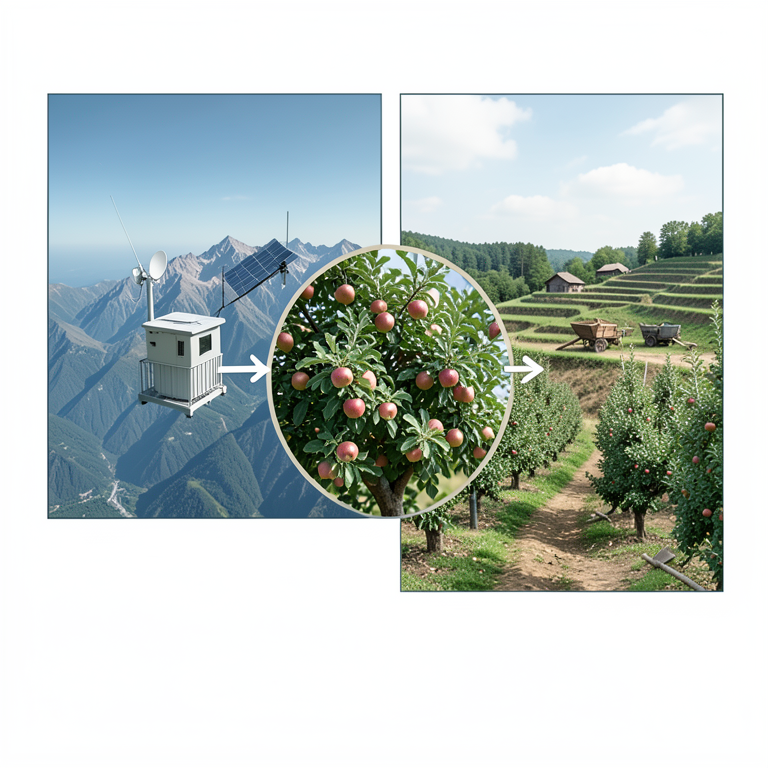
Knowledge Integration Model
AI-generated conceptual illustration (Apple orchards in the Himalayan mountains of Himachal Pradesh). It explains the idea and does not show study data.
View source evidence ↗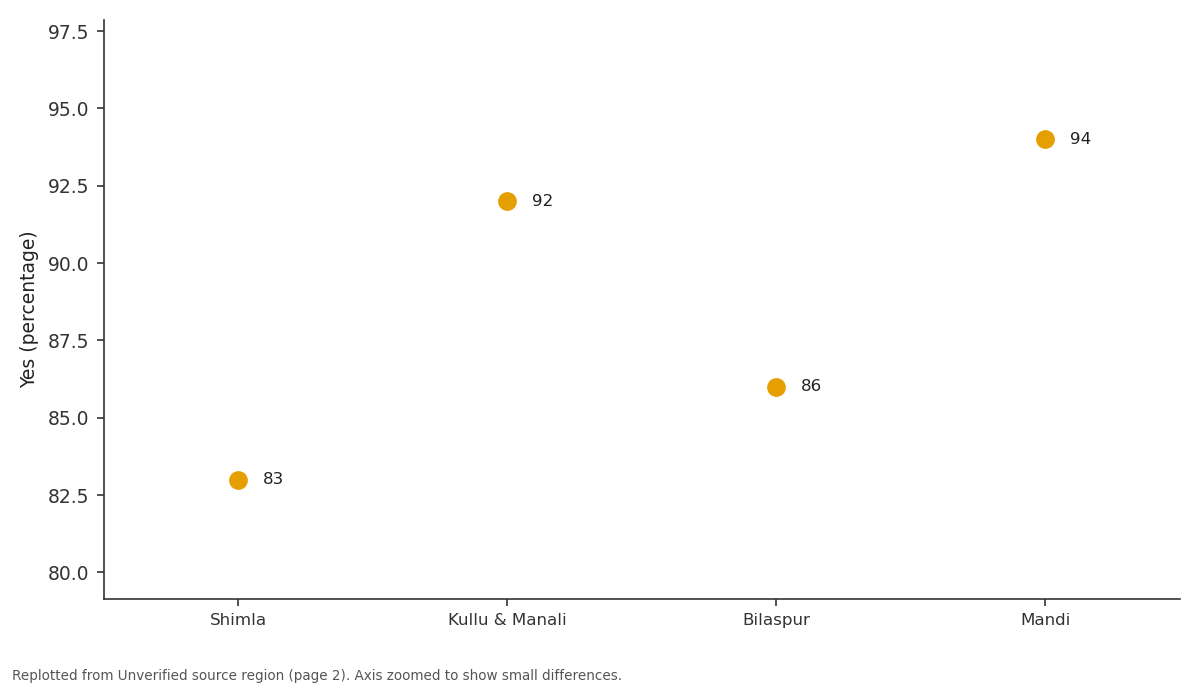
Yes (percentage): Shimla vs Kullu & Manali vs Bilaspur vs Mandi
Replotted from a table (page 2) of the original paper. Every bar is the paper's own table value.
View source evidence ↗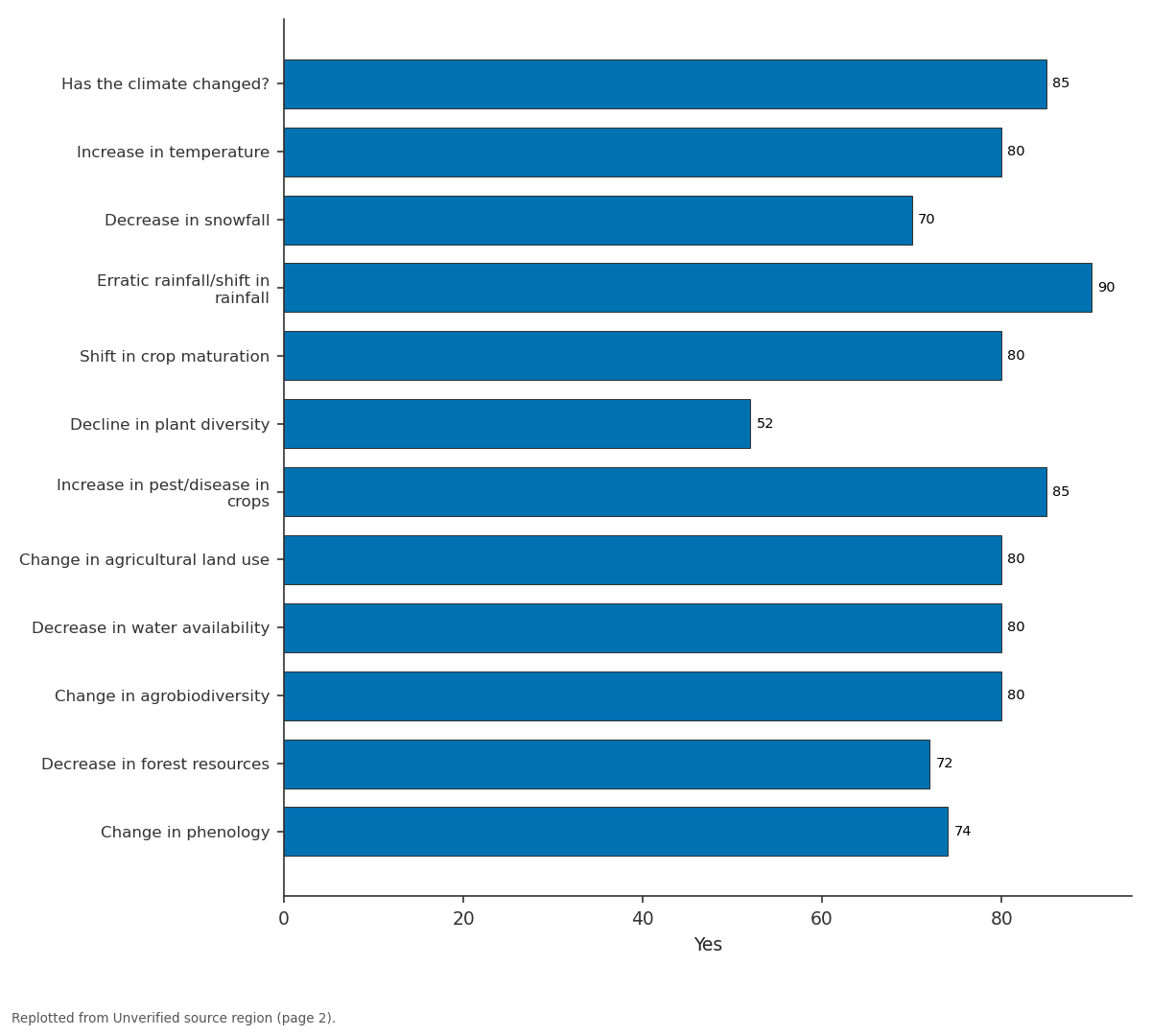
Yes: Has the climate changed? vs Increase in temperature vs Decrease in snowfall vs Erratic rainfall/shift... vs Shift in crop maturation
Replotted from a table (page 2) of the original paper. Every bar is the paper's own table value.
View source evidence ↗Introduction
One of the biggest problems confronting humanity in the twenty-first century is climate change, which has profound effects on many different industries, including agriculture. According to the Intergovernmental Panel on Climate Change (IPCC), climate change is a long-term alteration in weather patterns that results from industrial processes, the burning of fossil fuels, deforestation, and variations in temperature and precipitation. Global warming and the intensified greenhouse effect are caused by these activities' atmospheric emission of greenhouse gases (GHGs). Numerous and intricate factors, including crop yields, water availability, soil fertility, pest and disease prevalence, and overall food security, are all impacted by climate change's effects on agriculture. Climate is a fundamental aspect of agriculture; various crops have varied requirements for growth and yield, such as temperature, rainfall, and seasonality. These circumstances are becoming more and more disturbed due to climate change, which presents serious difficulties for farmers all over the world.
Materials and Methodologies
The study was conducted in district Bilaspur, Mandi, Kullu & Shimla of Himachal Pradesh. 100 farmers were selected from these districts, 25 from Bilaspur, 25 from Mandi, 25 from Kullu and 25 from Shimla. The farmers were asked to participate in a thorough discussion on their social standing and the plant protection practices they employ during the cropping cycle. Both at their homes and on their farms, the respondents were questioned. To fully cover every facet of the farmers' agronomical practices, a questionnaire was created to interview the farmers and closely scrutinize each parameter.
Results and Discussion
Crops cultivated by farmers in Bilaspur and Mandi regions are wheat, maize, paddy, sugarcane, tomatoes, fruit crops like as mango, lichi, orange and pomegranate. With change in climatic conditions farmers of Kullu valley are taking interest in pomegranate and apple as well. Shimla is known for apple cultivation at national level. Upper valleys of Shimla and Kullu are good producers of Almonds, strawberries, peach, plum, apricot. But due to change in climate farmers are opting for hybrid varieties so that crops can tolerate change in climatic conditions. Mitigation and Adaptation plans can help farmers and growers in such conditions.
Awareness of farmers about weather changes in their regions.
Districts
Districts
Discussion
The Himalayan Mountain agroecosystem is heavily reliant on the weather; seasonal rains and alterations in the earth's temperature have a detrimental effect on the region's agricultural productivity and food supply. People experienced and acknowledged that the region's low yield of agrihorticultural crops and vegetables was caused by irregular rainfall over the past few years (delayed or shifted rainfall, low rainfall or no rainfall), drastic changes in the frequency and volume of precipitation patterns, low snowfall, and rising temperatures. Pests, illnesses, and invasive plant species have proliferated as a result of climate change, directly affecting crop yield and food security.
In recent times, there has been a decrease in the seasonal availability and amounts of nontimber forest products, fuel wood, fodder, and green grasses. These resources are essential for the agroecosystem and rural landscape to operate properly and to support everyday tasks. Fodder, fuelwood, leaf litter, and non-timber forest products (NTFPs) are examples of forest resources that have decreased over time as a result of a number of reasons, including climate change. The decrease in the availability of wild foodstuffs and medicinal plants as a result of overexploitation, which was further exacerbated by climate fluctuation, led to the loss of habitats, the migration of species towards higher or lower altitudes, and the extinction of entire species. A lot of individuals began growing therapeutic plants as a result of climate change.
Conclusion
Mitigation and adaptation strategies are needed to address the issues posed by climate change and variability. Given that adaptation is often a more cost-effective solution than mitigation when it comes to addressing the immediate and ongoing challenges posed by climate change, adaptation is typically a longer-term process. Most of the research done to far has ignored the indigenous knowledge of adaptation and mitigation strategies created by the local people in favor of concentrating on the negative effects of climate change. Although people's perceptions and awareness of climate change might be valuable resources for adapting to it, governments and policy planners at the national and international levels seldom take this into account when designing and implementing mitigation and adaptation plans. Individuals are experimenting with novel methods of adapting to climate change and unpredictability, which is improving their capacity for adaptation. However, organizations that provide services might not be identifying these innovations and sharing them with others who could find value in them. One strategy to increase human capacity for global climate change adaptation and mitigation is to integrate scientific information about climate change with people's perceptions and indigenous knowledge. This necessitates greater scientific investigation, awareness-building, and improved access to pertinent data and information, especially about local residents' understanding and experiences regarding climate change.
References
5 in the original paper- Negi GCS, Samal PK, Kuniyal JC, et al. Impact of climate change on the Western Himalayan Mountain ecosystem: An overview. Tropical ecology. 2012;53(3):345-356.
- Negi VS, Maikhuri RK. Socio-ecological and religious perspective of agrobiodiversity conservation: issues, concern and priority for sustainable agriculture, Uttarakhand Himalaya. Journal of Agricultural and Environmental Ethics. 2012;26:491-512. DOI: 10.1007/s10806-012-9386-y.
- Negi VS, Maikhuri RK, Pharswan D, Thakur S, Dhyani PP. Climate change impact in the Western Himalaya: people's perception and adaptive strategies. Journal of Mountain Science. 2017;14(2):403-416.
- Rana RS, Bhagat RM, Kalia V. Impact of climate change on apple crop in Himachal Pradesh. Journal of Agrometeorology. 2011 Dec 1;13(2):97-103.
- Kumari A, Kaushal P, Dubey JK, Sharma DK. Climate change-an impact study in Himachal Pradesh. International Journal of Farm Sciences. 2012;2(2):95-101.
Cited by 1
From OpenAlex, OpenCitations and reference lists read by Scinovex
- A Comprehensive Analysis of the 2023 Himalayan Disasters in Himachal Pradesh: Multi-Sectoral Impacts and Strategic Mitigation Approaches ↗
Manish Kumar, Tanmay Gupta, Vikas Baghel · E3S Web of Conferences · 2024
The Himalayan region, renowned for its remarkable beauty and ecological significance, has been subjected to a growing number of natural calamities; among the states most seriously affected is Himachal Pradesh. Three extremely strong monsoon seasons in 2023 had an especially negative impact on the state, causing extensive flooding and landslides. July 7th to July 11th was the first spell, August…
❝ 6PDF