
Research article · 2024 · Full text
International Journal of Advanced Biochemistry ResearchAssessment of tomato genotypes for resistance to tomato leaf curl virus and bacterial wilt in the Eastern Plateau Region of India
Volume 8(4) · Pages 352–357 · DOI: 10.33545/26174693.2024.v8.i4e.956 ↗
Research areasPlant Virus Research StudiesAgricultural Practices and Plant GeneticsPlant Pathogenic Bacteria Studies
Abstract
Author-writtenTomato (Solanum lycopersicum L.) is a crucial crop globally, revered for its nutritional value and adaptability. However, it faces significant challenges posed by the Tomato Leaf Curl Virus (ToLCV) and bacterial wilt induced by Ralstonia solanacearum. This research aimed to meticulously evaluate various tomato genotypes for their resistance to these debilitating diseases while identifying hybrid combinations with promising traits. Key findings include the identification of highly resistant hybrids such as DT1504 x DT911 against ToLCV and Ralstonia solanacearum. Assessment based on disease severity indices revealed, DT1504 and Pusa Ruby consistently exhibiting heightened vulnerability. However, genotypes like DT1504, DT911 and DT806 demonstrated commendable levels of resistance in contrast to the susceptibility observed in Pusa Ruby, Pusa Rohini, DT816 and DT806. Using line× tester analysis, the GCA and SCA hybrid combinations such as DT1504 x DT911 and Pusa Rohini x DT806 demonstrated notably negative SCA values indicating strong genetic interactions contributing to disease resistance. This study highlights the vital role of genetic diversity in breeding, emphasizing hybrids dual benefits of high yield and disease resistance. Through identifying and utilizing genetic resistance it aims to mitigate tomato diseases promoting sustainable agriculture worldwide.
Summary
Source-checkedPlain-language reading of the full paper, prepared with AI and checked against the text. Each point links to the authors' own words.
Why it matters
- Tomato is a globally important crop valued for its adaptability and nutritional content. View evidence ↗
- Tomato production is severely threatened by Tomato Leaf Curl Virus (ToLCV) and bacterial wilt (Ralstonia solanacearum), both of which can cause yield losses up to 100%. View evidence ↗
- Because pesticides have become less effective due to resistance, breeding for genetic disease resistance is a more sustainable solution. View evidence ↗
The question
- The study aimed to identify superior inbred lines and hybrid combinations that provide effective resistance to both ToLCV and bacterial wilt. View evidence ↗
What they did
- The research was conducted at the IARI Jharkhand Vegetable Research Farm using eight parental lines and fifteen hybrids. View evidence ↗
- The researchers used One-way ANOVA and line × tester analysis across three replications to evaluate disease incidence and combining ability. View evidence ↗
What they found
- The hybrid DT1504 x DT911 was identified as highly resistant (HR) to both ToLCV and bacterial wilt, remaining symptom-free until maturity. View evidence ↗
- Eight hybrid combinations, including Pusa Ruby x DT802 and DT1504 x DT804, showed no ToLCV symptoms for 60 days in the field, which is considered valuable for breeding as late symptoms typically do not impact yield. View evidence ↗
- For bacterial wilt, the crosses Pusa Ruby x DT911, Pusa Ruby x DT802, and Pusa Rohini x DT802 showed high resistance with disease indices between 0.22 and 0.32. View evidence ↗
- Pusa Ruby and DT1504, along with their crosses, were more susceptible to bacterial wilt, with disease indices ranging from 0.25 to 0.55. View evidence ↗
- Genotypes DT1504, DT911, and DT802 showed significant negative General Combining Ability (GCA) for ToLCV, indicating they are effective parents for passing on resistance. View evidence ↗
- Hybrids DT1504 x DT911 and Pusa Rohini x DT816 showed significant negative Specific Combining Ability (SCA) for ToLCV, suggesting strong genetic interactions that enhance resistance. View evidence ↗
- For bacterial wilt resistance, the hybrids DT1504 x DT911 and Pusa Rohini x DT806 exhibited significant negative SCA values. View evidence ↗
- The high SCA observed in several hybrids suggests that non-additive gene action predominates in the inheritance of resistance to both ToLCV and bacterial wilt. View evidence ↗
What it means
- The authors conclude that utilizing genetic diversity and specific resistant hybrids can help develop resilient tomato varieties to withstand disease pressures. View evidence ↗
Visual summary
2 visualsIllustrations explain the paper; charts are replotted from the paper's own table values.
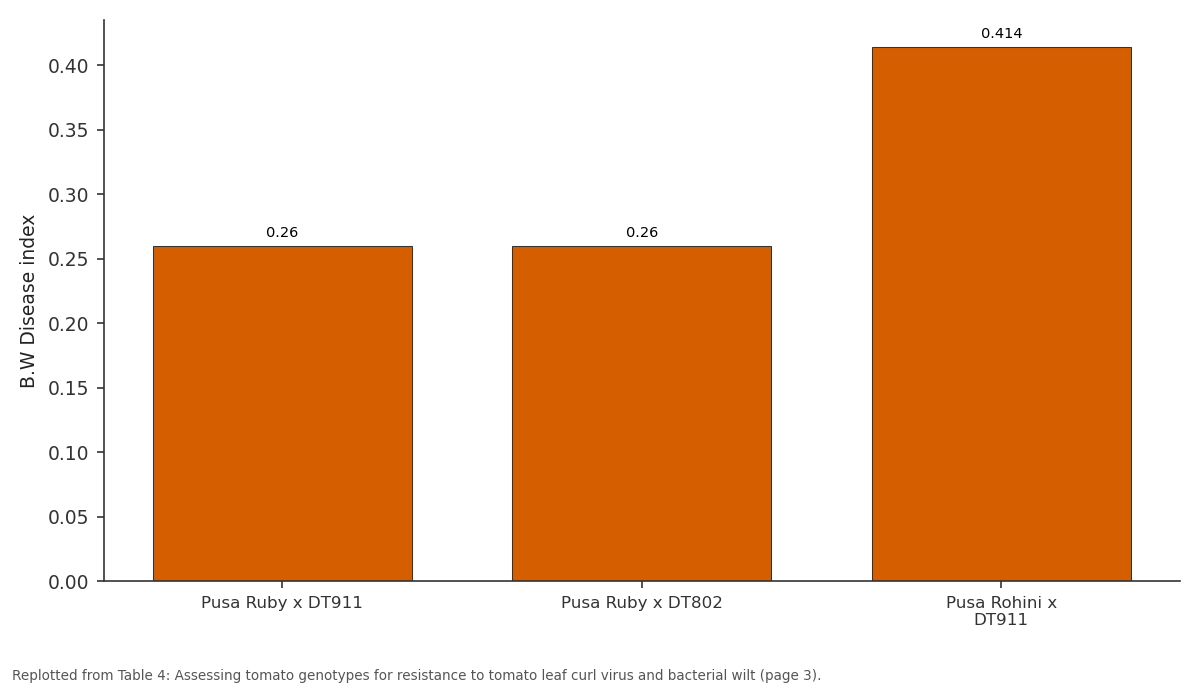
B.W Disease index: Pusa Ruby x DT911 vs Pusa Ruby x DT802 vs Pusa Rohini x DT911
Replotted from Table 4 (page 3) of the original paper. Every bar is the paper's own table value.
View source evidence ↗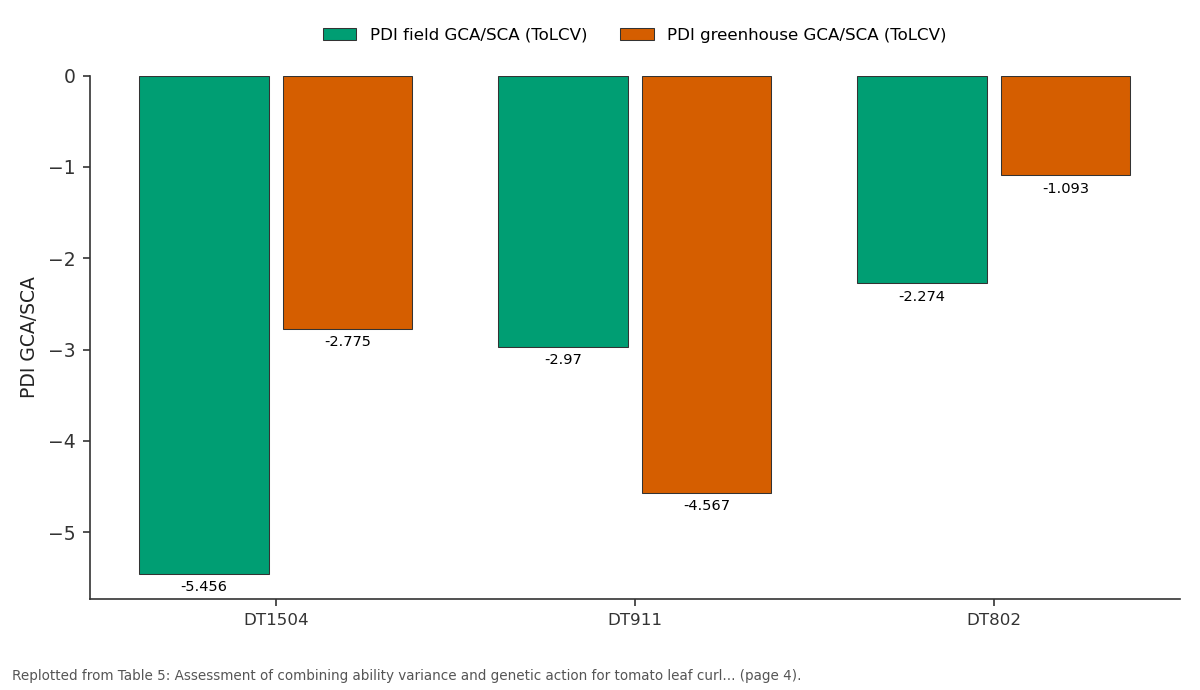
PDI field GCA/SCA (ToLCV) and PDI greenhouse GCA/SCA (ToLCV): DT1504 vs DT911 vs DT802
Replotted from Table 5 (page 4) of the original paper. Every bar is the paper's own table value.
View source evidence ↗Figures & tables
From the original paper Table 1
 Table 2
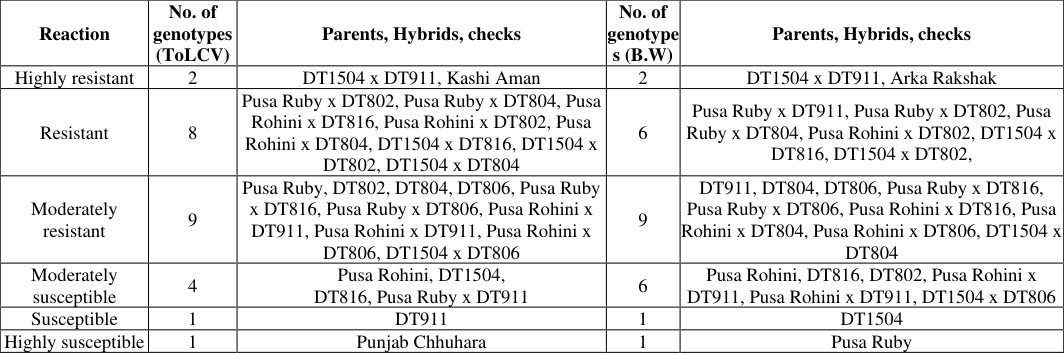 Table 3
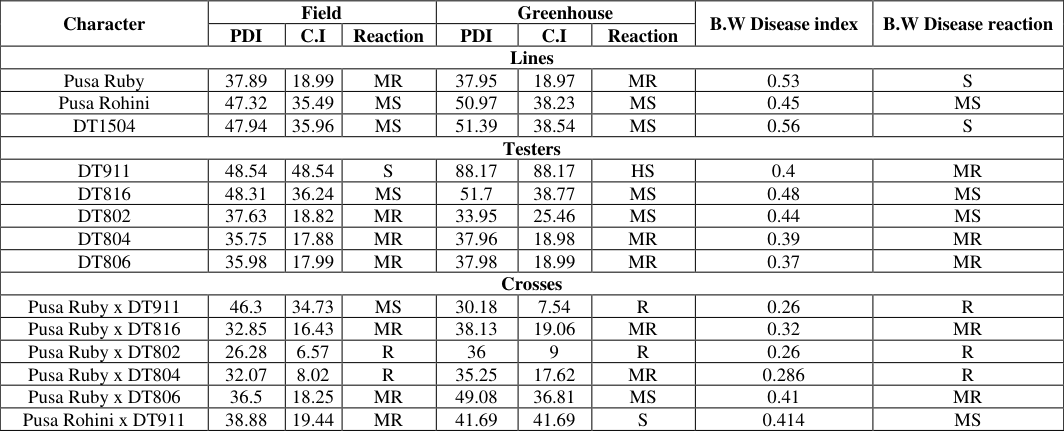 Table 4
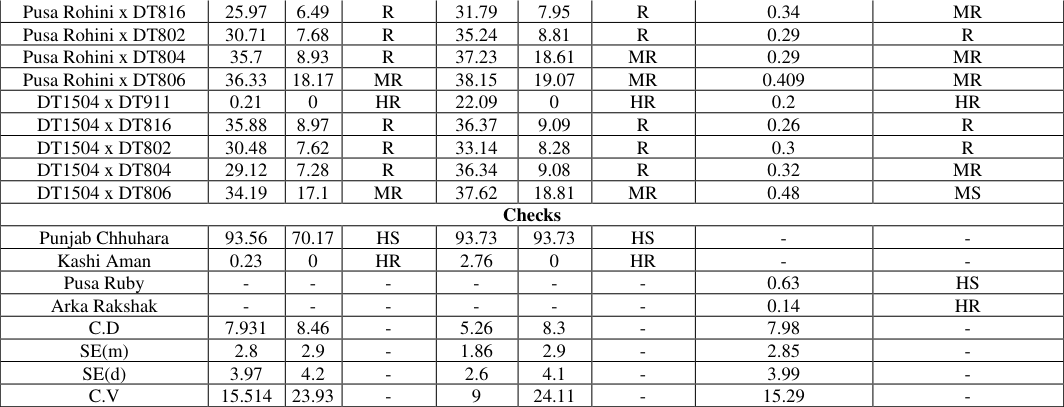 Table 5
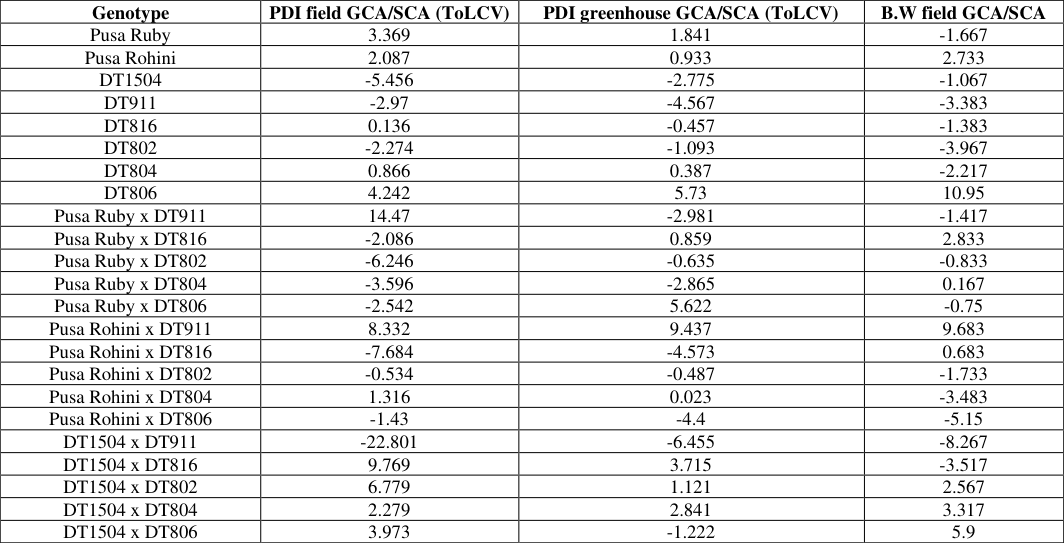 Table 5
Introduction
Tomato (Solanum lycopersicum L.) is a significant crop in the Solanaceae family originating from the Peru-Ecuador region of Latin America. Globally tomatoes are cultivated on a large scale ranking second only to potatoes in popularity due to their adaptability and versatility in both fresh and processed food industries. Tomato cultivation spans 5.16 million hectares worldwide yielding approximately 189.133 million metric tonnes annually as reported by the FAOSTAT in 2021. India ranks second in tomato production generating an annual yield of 20.69 million tonnes representing nearly 11.12% of the global production. Tomato is not only rich in essential nutrients like vitamins A, B, and C but also contain lycopene an antioxidant associated with various health benefits including protection against certain cancers (Chadha, 2006) [5] . Despite its significance tomato cultivation faces biotic challenges notably from the Tomato Leaf Curl Virus (ToLCV) and bacterial wilt caused by Ralstonia solanacearum. ToLCV belonging to the Begomovirus genus of the Geminiviridae family (Varma and Malathi, 2003) [24] exists in several variants in India including tomato leaf curl New Delhi virus (ToLCNDV), tomato leaf curl Palampur virus (ToLCPMV), tomato leaf curl Bangalore virus (ToLCBV), tomato leaf curl Karnataka virus (ToLCKV and tomato leaf curl Gujarat virus (ToLCGV) posing severe threats to tomato production worldwide. ToLCV leads to significant yield losses ranging from 90% to 100% (Butter and Rataul, 1981, Gaikwad et al., 2011, Moriones et al., 2017, Kaushik and Dhaliwal, 2018) [4,12,19,14] particularly in regions like North India where the prevalence of the whitefly vector is high manifesting through symptoms such as leaf curling, shrinking, cupping and stunted development. On the other hand Ralstonia solanacearum induces sudden plant death and stem rot causing yield losses ranging from 4.24% to 86.14% reaching up to 100% in hot and humid climates (Mishra et al., 1995) [17] .
It is considered to be the most important limiting factor in the successful cultivation of tomato during rainy and summer seasons when price advantage in the local and distant market is significant. The persistence of Ralstonia solanacearum in soil and its ability to endure various stages within water, plant residues and host plants themselves pose significant challenges for disease management. Efforts to manage these diseases include crop rotation, chemical control of vectors and the development of resistant cultivars. However, widespread pesticide use has led to resistance, highlighting the importance of breeding for disease resistance (Horowitz et al., 2005) [13] . So, breeding for disease resistance emerges as a sustainable solution given the limitations of chemical management. Several resistance genes offer promising avenues for resistant hybrids. Combining ability studies helps select diverse parents for resistant hybrids and understand genetic mechanisms. However, the lack of superior combiners hinders resistant hybrid development. Genetic analysis aids in identifying top combiners guiding hybrid development. This research aims to identify effective combiners for ToLCV and bacterial wilt resistance in superior inbred lines and hybrids enhancing sustainable tomato production and disease management.
Materials and Methods
Materials and Methods
Plant Materials (Season, strain)
The experiments were conducted at the Vegetable Research Farm, IARI Jharkhand, involving a comprehensive evaluation of tomato genotypes. Eight parental lines and fifteen hybrids were included in the study. All eight parents were crossed in a line X tester mating pattern during late Rabi 2020-21 to create 15 hybrids. The F1's and their parents were studied for disease resistance. The trials were organized in a Randomized Block Design with three replications. To ensure optimal growth conditions seedlings were initially nurtured in plastic containers within a controlled environment in a greenhouse. At twenty-five days of age, they were transplanted into the field maintaining a spacing of 60 x 45 cm. All aspects of tomato cultivation practices were followed except for plant protection measures.
Maintenance and Screening for ToLCV Resistance B. tabaci culture was established from brinjal specimens and maintained on fresh brinjal plants. ToLCV culture was obtained from infected plants and maintained in a glasshouse using tomato cv. Punjab Chuhhara. For screening, 15 hybrids and 8 parental tomato seedlings were exposed to ToLCV under greenhouse conditions via viruliferous whiteflies. To increase whitefly population and inoculum pressure one row of the ToLCV-susceptible cultivar Punjab Chhuhara was interspersed every 10 rows in experimental plots. Tomato seedlings aged 10-12 days were introduced with ten viruliferous whiteflies per plant. Symptom monitoring occurred at intervals up to 60 days post-planting to assess performance and resistance. For the evaluation of ToLCV, Punjab Chhuhara and Kashi Aman were employed as susceptible and resistant checks respectively. Disease severity was determined using the following formula:
Leaf curled (infected) plants/plot x 100 Total number of plants /plot Susceptible (S) Highly susceptible (HS) Banerjee and Kalloo (1987) [3] . * Coefficient of infection combines the disease percentage with the severity assigned to each grade
Bacterial wilt assessment
For the evaluation of bacterial wilt, Pusa Ruby and Arka Rakshak were employed as susceptible and resistant checks respectively. The genotypes underwent screening in a dedicated sick plot post-inoculation with a bacterial culture of 1 x 10 8 cfu /ml. Before transplanting, the population of R. solanacearum in the soil was determined using the soil dilution plating technique. Observations on growth, yield and quality traits were carefully recorded for five randomly selected plants per replication. Bacterial wilt incidence was documented upon observation of wilt symptoms and the wilt index (WDI) was subsequently calculated. [56] .
Upon scoring the genotypes Disease Index (PDI) is calculated following
Tomato Bacterial wilt Disease Index = Total sum of numerical ratings No. of observations ×Maximum disease rating
Statistical analysis
In this study, the statistical analysis involved One-way ANOVA to assess tomato leaf curl incidence and bacterial wilt resistance, while line × tester analysis was used for combining ability studies across three replications. Employing a randomized block design ensured robustness and minimized variability. These analyses enabled the comparison of mean differences in disease incidence and resistance among treatments or genotypes and provided insights into genetic mechanisms underlying trait inheritance.
Results
Results
Evaluation of tomato genotypes for resistance to TOLCV:
The study investigated the responses of various genotypes and hybrids to Tomato Leaf Curl Virus (TLCV) under both natural (field) and artificial (greenhouse) conditions during the late rabi season. Among parental lines and hybrids, the coefficient of infection by ToLCV ranged from 0 to 51.88 under field conditions and 0 to 80.58 under greenhouse conditions as shown in Table 4. Notably, the hybrid DT1504 x DT911 exhibited significant resistance to TLCV remaining symptom-free until maturity across all environments. In addition, under natural conditions this hybrid displayed a reduced frequency of whitefly (Bemisia tabaci), suggesting a potential non-preference mechanism contributing to its TLCV resistance. Conversely, under artificial conditions, all inoculations by viruliferous whiteflies were more consistent. Several hybrids, including Pusa Ruby x DT911, Pusa Ruby x DT802, Pusa Rohini x DT816, Pusa Rohini x DT802, Pusa Rohini x DT804, DT1504 x DT816, DT1504 x DT802 and DT1504 x DT804 exhibited no TLCV symptoms for up to 60 days under natural field conditions. After this period mild symptoms were observed only on the terminal growing shoots of the plants. This level of resistance is valuable for resistance breeding programs as symptoms after 60 days of planting do not significantly impact yield in field-grown tomatoes. Most of the accessions showed moderate disease reactions.
| Character | Field | — | — | Greenhouse | — | — | B.W Disease index | B.W Disease reaction |
|---|---|---|---|---|---|---|---|---|
| PDI | C.I | Reaction | PDI | C.I | Reaction | |||
| Lines | ||||||||
| Pusa Ruby | 37.89 | 18.99 | MR | 37.95 | 18.97 | MR | 0.53 | S |
| Pusa Rohini | 47.32 | 35.49 | MS | 50.97 | 38.23 | MS | 0.45 | MS |
| DT1504 | 47.94 | 35.96 | MS | 51.39 | 38.54 | MS | 0.56 | S |
| Testers | ||||||||
| DT911 | 48.54 | 48.54 | S | 88.17 | 88.17 | HS | 0.4 | MR |
| DT816 | 48.31 | 36.24 | MS | 51.7 | 38.77 | MS | 0.48 | MS |
| DT802 | 37.63 | 18.82 | MR | 33.95 | 25.46 | MS | 0.44 | MS |
| DT804 | 35.75 | 17.88 | MR | 37.96 | 18.98 | MR | 0.39 | MR |
| DT806 | 35.98 | 17.99 | MR | 37.98 | 18.99 | MR | 0.37 | MR |
| Crosses | ||||||||
| Pusa Ruby x DT911 | 46.3 | 34.73 | MS | 30.18 | 7.54 | R | 0.26 | R |
| Pusa Ruby x DT816 | 32.85 | 16.43 | MR | 38.13 | 19.06 | MR | 0.32 | MR |
| Pusa Ruby x DT802 | 26.28 | 6.57 | R | 36 | 9 | R | 0.26 | R |
| Pusa Ruby x DT804 | 32.07 | 8.02 | R | 35.25 | 17.62 | MR | 0.286 | R |
| Pusa Ruby x DT806 | 36.5 | 18.25 | MR | 49.08 | 36.81 | MS | 0.41 | MR |
| Pusa Rohini x DT911 | 38.88 | 19.44 | MR | 41.69 | 41.69 | S | 0.414 | MS |
Table text extracted from the original PDF; superscript letters are shown inline. The original table image is below.
View original table image
In greenhouse conditions, the same cross DT1504 X DT911 demonstrated a highly resistant response to ToLCV. Additionally, seven crosses exhibited resistance while eight genotypes displayed moderate resistance. Four genotypes exhibited moderate susceptibility and only two genotypes were found to be susceptible to ToLCV.
Response of tomato germplasm resistance against
Response of tomato germplasm resistance against
Ralstonia solanacearum
The response of tomato germplasm to Ralstonia solanacearum is summarized in Table 4. Assessment of genotypes and crosses based on the wilt disease index (WDI) in Table 2 revealed that disease incidence ranged from 0.22 to 0.51 against Ralstonia solanacearum infection. Notably several crosses including Pusa Ruby × DT911, Pusa Ruby × DT802 and Pusa Rohini × DT802 demonstrate high levels of resistance with disease indices ranging from 0.22 to 0.32. These crosses exhibit promising potential for breeding programs aimed at developing resistant tomato cultivars. Additionally, the genotype Arka Rakshak serves as a notable reference for resistance consistently displaying a low disease index of 0.3 across the dataset. Conversely genotypes such as Pusa Ruby and DT1504 along with their respective crosses consistently exhibit higher susceptibility to the disease as reflected by disease indices ranging from 0.25 to 0.55. The genotypes DT911, DT804 and DT806 performed as moderate resistance with disease indices ranging from 0.36 to 0.4 while Pusa Rohini, DT816 and DT802 are categorized as moderately susceptible, with disease indices ranging from 0.36 to 0.47. These findings provide valuable insights for breeding efforts aimed at enhancing tomato germplasm for improved resistance against Ralstonia solanacearum.
| Rating | Reaction observed | Disease index | Reaction |
|---|---|---|---|
| 0 | Healthy Plant (No wilting) | 0.00–0.2 | Highly resistant |
| 1 | < 10% of Plants showing wilt | 0.21–0.3 | Resistant |
| 2 | 11–25% plants wilted | 0.31–0.4 | Moderately resistant |
| 3 | 26–50% plants wilted | 0.41–0.5 | Moderately susceptible |
| 4 | 51–75% plants wilted | 0.51–0.6 | Susceptible |
| 5 | >75% plants wilted | 0.61–0.9 0.9–1.0 | Highly susceptible |
Table text extracted from the original PDF; superscript letters are shown inline. The original table image is below.
View original table image
Assessment of combining ability variance and genetic Action
Assessment of combining ability variance and genetic Action
Discussion
Over the years, research efforts have been dedicated to understanding the resistance of tomato varieties to Tomato Leaf Curl Virus (ToLCV) and bacterial wilt. Singh (2014) [21] observed resistance in the wild accession H 88-78-1 to ToLCV while other genotypes exhibited varying degrees of resistance. The detrimental effects of ToLCV infection such as severe mosaic symptoms and reduced leaf size have been well-documented leading to compromised photosynthetic activities and decreased biomass compared to healthy plants (Farooq & Akanda, 2007) [11] . Cheema and Dhaliwal (2010) [6] reported significant heterosis in promising F1 hybrids tested under ToLCV-infested conditions. Additionally, Ullah et al., 2017 [23] evaluated 21 tomato genotypes for resistance against Tomato mosaic virus (ToMV) with only one genotype showing high resistance one showing resistance, four showing moderate susceptibility and the remaining 15 genotypes being susceptible. Similarly, Denoyes and Aviers (1989) [9] found that 15 out of 25 tomato varieties exhibited resistance to bacterial wilt. Dutta and Rehman (2012) [7] corroborated these findings in their varietal evaluation of tomatoes in the Northeast region. Notably, UK Local-2 emerged as highly resistant in a study conducted by Kumar et al. 2018 underlining the importance of genetic diversity in breeding programs aimed at developing disease-resistant tomato cultivars. Dheemanth et al., 2020 [8] identified Abhinav as the top-performing hybrid, showcasing high yield, large fruit size and notable resistance to both bacterial wilt (1.56%) and ToLCV (5.02%). The observed higher specific combining ability (SCA) in hybrid combinations like DT1504 x DT911, Pusa Rohini x DT816, and Pusa Rohini x DT806 suggests a predominance of nonadditive gene action in the inheritance of traits related to tomato leaf curl virus disease and bacterial wilt resistance. This highlights the potential effectiveness of heterosis breeding and recombination strategies with delayed selection in subsequent generations for trait improvement. These findings resonate with previous studies reporting similar non-additive gene action for yield and yieldattributing characters in tomato Mondal et al. (2009) [18] , Alex Sandro et al. (2015) [2] , Vipesh et al. (2015) [25] . Therefore, understanding these genetic mechanisms is crucial for future breeding programs aimed at enhancing disease resistance in tomato varieties.
Conclusion
In summary, this research underscores the critical role of genetic diversity in addressing the persistent challenges faced by tomato cultivation notably from Tomato Leaf Curl Virus (ToLCV) and bacterial wilt. Through comprehensive evaluation of genotypes and hybrids, significant strides have been made in identifying sources of disease resistance. The findings highlight the potential of harnessing genetic reservoirs to develop resilient tomato varieties capable of withstanding disease pressures. By emphasizing sustainable breeding practices, this study paves the way for the continued advancement of agricultural resilience and the preservation of tomato cultivation worldwide.
Figures and tables from the paper
| Symptom | Symptom Severity Rating | Response value | Coefficient of infection* | Reaction |
|---|---|---|---|---|
| Symptomless | 0 | 0 | 0-4 | Immune/Highly resistant (HR) |
| Mild Curling up to 25% | 1 | 0.25 | 5-9 | Resistant (R) |
| Curling, wrinkling 26-50% | 2 | 0.5 | 10-19 | Moderately resistant (MR) |
| Curling, wrinkling 51-75% | 3 | 0.75 | 20-39 | Moderately susceptible |
| Severe Curling, wrinkling >75% | 4 | 1 | 40-69 70-100 | Susceptible (S) Highly susceptible (HS) |
Table text extracted from the original PDF; superscript letters are shown inline. The original table image is below.
View original table image
| Reaction | No. of genotypes (ToLCV) | Parents, Hybrids, checks | No. of genotype s (B.W) | Parents, Hybrids, checks |
|---|---|---|---|---|
| Highly resistant | 2 | DT1504 x DT911, Kashi Aman | 2 | DT1504 x DT911, Arka Rakshak |
| Resistant | 8 | Pusa Ruby x DT802, Pusa Ruby x DT804, Pusa Rohini x DT816, Pusa Rohini x DT802, Pusa Rohini x DT804, DT1504 x DT816, DT1504 x DT802, DT1504 x DT804 | 6 | Pusa Ruby x DT911, Pusa Ruby x DT802, Pusa Ruby x DT804, Pusa Rohini x DT802, DT1504 x DT816, DT1504 x DT802, |
| Moderately resistant | 9 | Pusa Ruby, DT802, DT804, DT806, Pusa Ruby x DT816, Pusa Ruby x DT806, Pusa Rohini x DT911, Pusa Rohini x DT911, Pusa Rohini x DT806, DT1504 x DT806 | 9 | DT911, DT804, DT806, Pusa Ruby x DT816, Pusa Ruby x DT806, Pusa Rohini x DT816, Pusa Rohini x DT804, Pusa Rohini x DT806, DT1504 x DT804 |
| Moderately susceptible | 4 | Pusa Rohini, DT1504, DT816, Pusa Ruby x DT911 | 6 | Pusa Rohini, DT816, DT802, Pusa Rohini x DT911, Pusa Rohini x DT911, DT1504 x DT806 |
| Susceptible | 1 | DT911 | 1 | DT1504 |
| Highly susceptible | 1 | Punjab Chhuhara | 1 | Pusa Ruby |
Table text extracted from the original PDF; superscript letters are shown inline. The original table image is below.
View original table image
| Pusa Rohini x DT816 | 25.97 | 6.49 | R | 31.79 | 7.95 | R | 0.34 | MR |
|---|---|---|---|---|---|---|---|---|
| Pusa Rohini x DT802 | 30.71 | 7.68 | R | 35.24 | 8.81 | R | 0.29 | R |
| Pusa Rohini x DT804 | 35.7 | 8.93 | R | 37.23 | 18.61 | MR | 0.29 | MR |
| Pusa Rohini x DT806 | 36.33 | 18.17 | MR | 38.15 | 19.07 | MR | 0.409 | MR |
| DT1504 x DT911 | 0.21 | 0 | HR | 22.09 | 0 | HR | 0.2 | HR |
| DT1504 x DT816 | 35.88 | 8.97 | R | 36.37 | 9.09 | R | 0.26 | R |
| DT1504 x DT802 | 30.48 | 7.62 | R | 33.14 | 8.28 | R | 0.3 | R |
| DT1504 x DT804 | 29.12 | 7.28 | R | 36.34 | 9.08 | R | 0.32 | MR |
| DT1504 x DT806 | 34.19 | 17.1 | MR | 37.62 | 18.81 | MR | 0.48 | MS |
| Checks | ||||||||
| Punjab Chhuhara | 93.56 | 70.17 | HS | 93.73 | 93.73 | HS | - | - |
| Kashi Aman | 0.23 | 0 | HR | 2.76 | 0 | HR | - | - |
| Pusa Ruby | - | - | - | - | - | - | 0.63 | HS |
| Arka Rakshak | - | - | - | - | - | - | 0.14 | HR |
| C.D | 7.931 | 8.46 | - | 5.26 | 8.3 | - | 7.98 | - |
| SE(m) | 2.8 | 2.9 | - | 1.86 | 2.9 | - | 2.85 | - |
| SE(d) | 3.97 | 4.2 | - | 2.6 | 4.1 | - | 3.99 | - |
| C.V | 15.514 | 23.93 | - | 9 | 24.11 | - | 15.29 | - |
Table text extracted from the original PDF; superscript letters are shown inline. The original table image is below.
View original table image
| Genotype | PDI field GCA/SCA (ToLCV) | PDI greenhouse GCA/SCA (ToLCV) | B.W field GCA/SCA |
|---|---|---|---|
| Pusa Ruby | 3.369 | 1.841 | -1.667 |
| Pusa Rohini | 2.087 | 0.933 | 2.733 |
| DT1504 | -5.456 | -2.775 | -1.067 |
| DT911 | -2.97 | -4.567 | -3.383 |
| DT816 | 0.136 | -0.457 | -1.383 |
| DT802 | -2.274 | -1.093 | -3.967 |
| DT804 | 0.866 | 0.387 | -2.217 |
| DT806 | 4.242 | 5.73 | 10.95 |
| Pusa Ruby x DT911 | 14.47 | -2.981 | -1.417 |
| Pusa Ruby x DT816 | -2.086 | 0.859 | 2.833 |
| Pusa Ruby x DT802 | -6.246 | -0.635 | -0.833 |
| Pusa Ruby x DT804 | -3.596 | -2.865 | 0.167 |
| Pusa Ruby x DT806 | -2.542 | 5.622 | -0.75 |
| Pusa Rohini x DT911 | 8.332 | 9.437 | 9.683 |
| Pusa Rohini x DT816 | -7.684 | -4.573 | 0.683 |
| Pusa Rohini x DT802 | -0.534 | -0.487 | -1.733 |
| Pusa Rohini x DT804 | 1.316 | 0.023 | -3.483 |
| Pusa Rohini x DT806 | -1.43 | -4.4 | -5.15 |
| DT1504 x DT911 | -22.801 | -6.455 | -8.267 |
| DT1504 x DT816 | 9.769 | 3.715 | -3.517 |
| DT1504 x DT802 | 6.779 | 1.121 | 2.567 |
| DT1504 x DT804 | 2.279 | 2.841 | 3.317 |
| DT1504 x DT806 | 3.973 | -1.222 | 5.9 |
Table text extracted from the original PDF; superscript letters are shown inline. The original table image is below.
View original table image
References
24 in the original paper- Ahmad S, Quamruzzaman AKM, Nazim Uddin M. Combining ability estimates of tomato (Solanum lycopersicum) in late summer. SAARC J Agri. 2009;7(1):43-56.
- Alex Sandro TF, Juliano TVR, Marcos VF, Juliana TPK, Daniel SZ. Crop Breeding and Applied Biotechnology. 2015;15:154-161.
- Banerjee MK, Kalloo MK. Sources and inheritance of resistance to leaf curl virus in Lycopersicon. Theor Appl Genet. 1987;73:707-710.
- Butter NS, Rataul HR. Nature and extent of loss in tomatoes due to tomato leaf curl virus (TLCV) transmitted by white fly, Bemisia tabaci Gen. (Aleyrodidae: Hemiptera). Note. Indian J Ecol. 1981;8.
- Chadha KL. Handbook of horticulture ICAR publication. New Delhi; 2006:109-114.
- Cheema DS, Dhaliwal MS. Punjab Varkha Bahar 1 and Punjab Varkha Bahar 2: new varieties of tomato resistant to ToYLCV. J Res, Punjab Agric Univ. 2010;47(1/2):116-117.
- Dutta P, Rahman B. Varietal screening of tomato against bacterial wilt disease under subtropical humid climate of Tripura. Int J Farm Sci. 2012;2(2):40-43.
- Dheemanth TL, Prakash BG, Honnabyraiah MK, Gowda AM, Kumar SM. Evaluation of single cross hybrids in tomato (Solanum lycopersicum) under IDM and Non-IDM conditions for resistance to bacterial wilt and tomato leaf curl virus diseases. Int J Curr Microbiol Appl Sci. 2020;9(2):2697-2710.
- Denoyes B, Anais G. Evaluation of tomato materials for use in the processing tomato breeding program in Martinique. 1989.
- FAOSTAT, F. Statistical database. Food and Agriculture Organization of the United Nations, Rome, Italy; 2021.
- Farooq A, Akanda AM. Symptoms and prevalence of Tomato Spotted Wilt Virus (TSWV) infection in Bangladesh. 2007.
- Gaikwad KA, Cheema DS, Sharma A, Dhaliwal MS. Reaction of elite tomato (Solanum lycopersicum L.) germplasm against tomato leaf curl virus disease. In: III International Symposium on Tomato Diseases 914. 2010:157-161.
- Horowitz AR, Kontsedalov S, Khasdan V, Ishaaya I. Biotypes B and Q of Bemisia tabaci and their relevance to neonicotinoid and pyriproxyfen resistance. Arch Insect Biochem Physiol. 2005;58(4):216-225.
- Kaushik P, Dhaliwal MS. Diallel analysis for morphological and biochemical traits in tomato International Journal of Advanced Biochemistry Research https://www.biochemjournal.com cultivated under the influence of tomato leaf curl virus. Agronomy. 2018;8(8):153.
- Kumar M, Srinivasa V, Kumari M. Screening of tomato line/varieties for bacterial wilt (Ralstonia solanacearum) resistance in hill zone of Karnataka, India. Int. J Curr Microbiol App Sci. 2018;7:1451-1455.
- Kumar PA, Reddy KR, Reddy RVSK, Pandravada SR, Saidaiah P. Per se performance of dual-purpose tomato genotypes for growth, yield, and quality attributes. 2016.
- Mishra A, Mishra SK, Karmakar SK, Sarangi CR, Sahu GS. Assessment of yield loss due to wilting in some popular tomato cultivars. 1995.
- Mondal C, Sarkar S, Hazra P. Line×Tester analysis of combining ability in tomato (Lycopersicon esculentum Mill.). J Crop Weed. 2009;5(1):53-57.
- Moriones E, Praveen S, Chakraborty S. Tomato leaf curl New Delhi virus: an emerging virus complex threatening vegetable and fiber crops. Viruses. 2017;9(10):264.
- Pazarlar S, Gumus M, Oztekin GB. The effects of tobacco mosaic virus infection on growth and physiological parameters in some pepper varieties (Capsicum annuum L.). Notulae Botanicae Horti Agrobotanici Cluj-Napoca. 2013;41(2):427-433.
- Singh K. Evaluation of tomato genotypes and its reaction against ToLCV causing leaf curl disease in tomato (Solanum lycopersicon L.). J Exp. Biol. Agric Sci. 2014.
- Ram Kishun RK. Loss in yield of tomato due to bacterial wilt caused by Pseudomonas solanacearum. 1987.
- Ullah N, Ali ASAD, Ahmad M, Fahim M, Din N, Ahmad F. Evaluation of tomato genotypes against tomato mosaic virus (ToMV) and its effect on yieldcontributing parameters. Pakistan J Bot. 2017;49(4):1585-1592.
- Varma A, Malathi VG. Emerging geminivirus problems: a serious threat to crop production. Ann Appl Biol. 2003;142(2):145-164.