
Research article · 2024 · Full text
International Journal of Advanced Biochemistry ResearchEmbracing eco-friendly textiles: Sustainable screen printing with Piper betel L.
Volume 8(4) · Pages 237–277 · DOI: 10.33545/26174693.2024.v8.i4d.949 ↗
Research areasMicroplastics and Plastic Pollution
Abstract
Author-writtenThis study explores the practical application of Piper betel leaf extract in screen printing on cotton fabric, employing various mordants to achieve diverse color shades. The investigation of colourfastness reveals the crucial influence of mordant selection on the overall performance of printed fabrics. Alum emerges as the most effective mordant, contributing to excellent color retention and resistance to change in washing, sunlight exposure, and rubbing. Copper sulfate and stannous chloride also demonstrate satisfactory colourfastness properties, while ferrous sulfate exhibits moderate to poor performance. The study emphasizes the pivotal role of mordant choice in achieving optimal color stability in natural dye printing on textiles. Participant evaluation indicates that alum and copper sulfate mordants result in highly acceptable prints in terms of color depth and sharpness, followed closely by stannous chloride. In contrast, ferrous sulfate yields prints with lower acceptability. This research offers valuable insights for sustainable textile industries seeking environmentally friendly and visually appealing options for natural dye printing on fabrics. Alum stands out as a promising and sustainable mordant for enhancing colourfastness and print quality. Future research endeavours may explore additional sustainable mordant-dye combinations and their applications, further contributing to the advancement of eco-conscious textile design.
Summary
Source-checkedPlain-language reading of the full paper, prepared with AI and checked against the text. Each point links to the authors' own words.
Why it matters
- Traditional textile printing relies on synthetic dyes that cause environmental pollution and pose health risks. View evidence ↗
- Natural dyes from plants, minerals, and insects are renewable, biodegradable alternatives that reduce the ecological footprint of textile production. View evidence ↗
The question
- The study aims to extract natural dye from Piper betel L. and evaluate its application in screen printing on cotton using various mordants to achieve different colors and improve color fastness. View evidence ↗
What they did
- A 40% (w/w) aqueous extract was prepared by boiling fresh betel leaves for 45 minutes at 80 °C with a 1:10 material liquor ratio. View evidence ↗
- The study used 100% plain weave cotton fabric, which was scoured for 1 hour using a 2 g/litre non-ionic detergent at a 1:20 material liquor ratio. View evidence ↗
- Four mordants, alum, copper sulfate, stannous chloride, and ferrous sulfate, were used to create different colors from the single dye source. View evidence ↗
- Print paste was made by blending dye and gum in a 4:3 ratio, then applied to myrobalan pre-treated cotton via screen printing. View evidence ↗
- A subjective evaluation of color richness and print clarity was conducted by a group of 30 participants. View evidence ↗
What they found
- Different mordants produced distinct colors: alum (pale yellow), copper sulfate (mustard yellow), stannous chloride (mehndi green), and ferrous sulfate (black). View evidence ↗
- For dry rubbing (crock) fastness, alum scored the highest (5), while copper sulfate and stannous chloride scored 4, and ferrous sulfate scored the lowest (3). View evidence ↗
- Under acidic perspiration conditions, copper sulfate, alum, and stannous chloride showed excellent to very good fastness, whereas ferrous sulfate showed only moderate fastness. View evidence ↗
- Subjective evaluation showed that copper sulfate produced the sharpest prints, followed by alum and stannous chloride, with ferrous sulfate being the least sharp. View evidence ↗
What it means
- The authors conclude that alum and copper sulfate are the most effective mordants for ensuring color retention and resistance to washing, sunlight, and rubbing. View evidence ↗
- The authors suggest that future research should explore more mordant-dye combinations and their applications in different textile designs. View evidence ↗
Visual summary
3 visualsIllustrations explain the paper; charts are replotted from the paper's own table values.
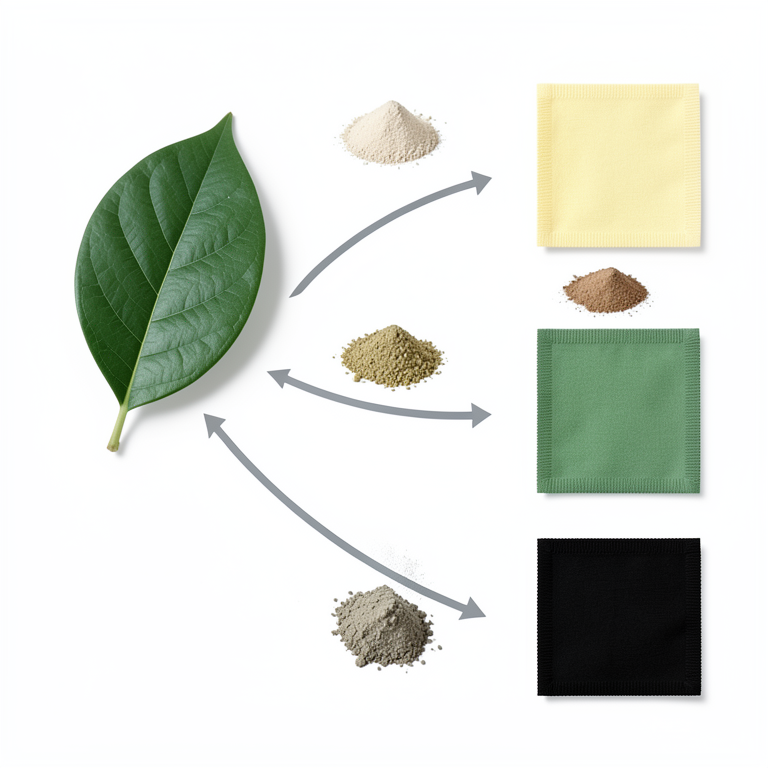
Mordant-Color Relationship
AI-generated conceptual illustration (Piper betel leaves and cotton fabric swatches). It explains the idea and does not show study data.
View source evidence ↗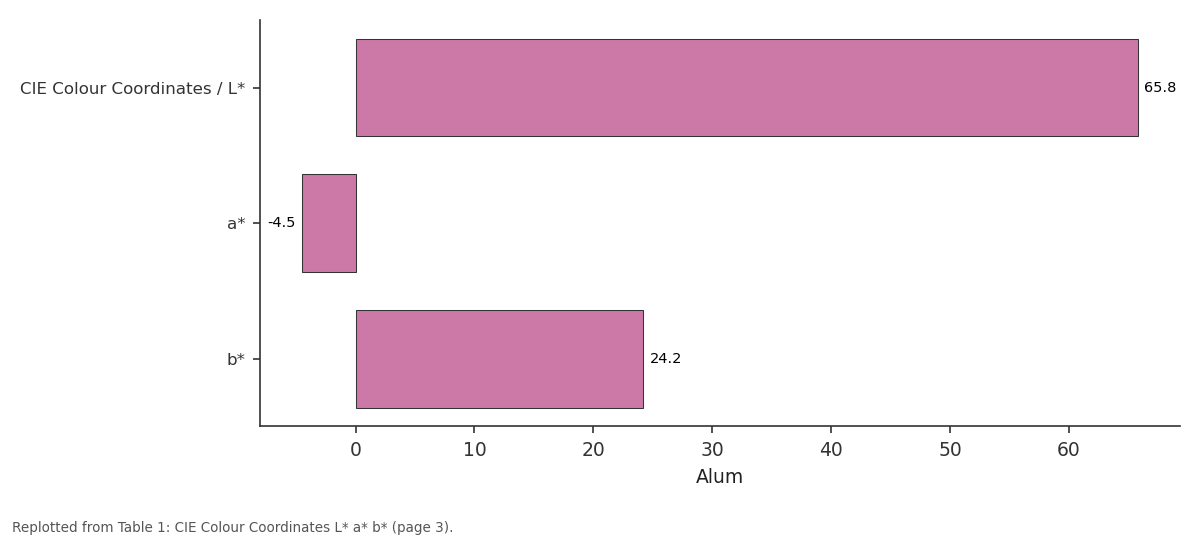
Alum: CIE Colour Coordinates... vs a* vs b*
Replotted from Table 1 (page 3) of the original paper. Every bar is the paper's own table value.
View source evidence ↗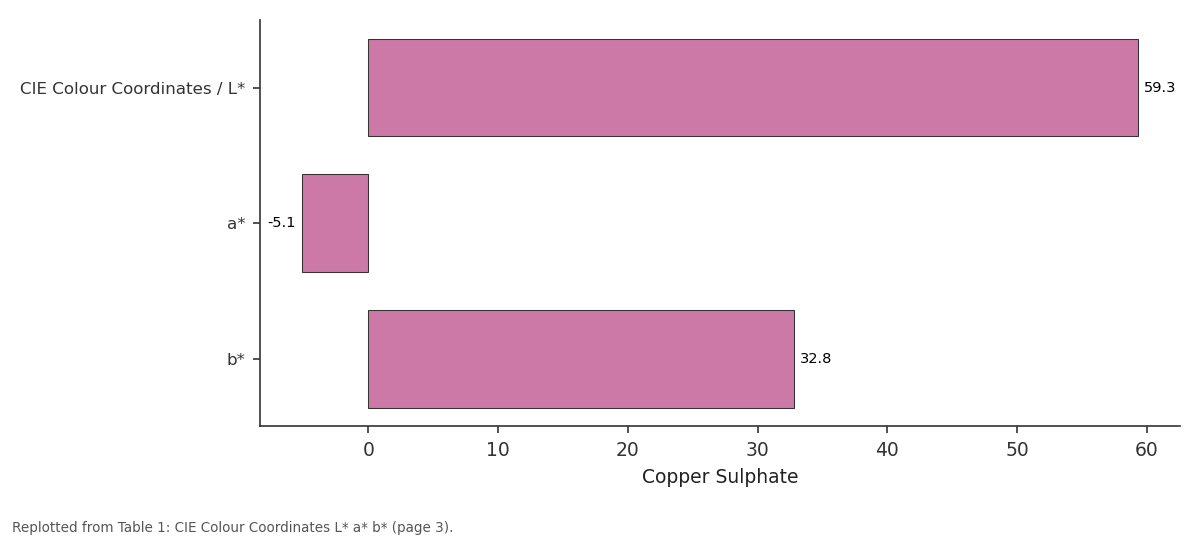
Copper Sulphate: CIE Colour Coordinates... vs a* vs b*
Replotted from Table 1 (page 3) of the original paper. Every bar is the paper's own table value.
View source evidence ↗Figures & tables
From the original paper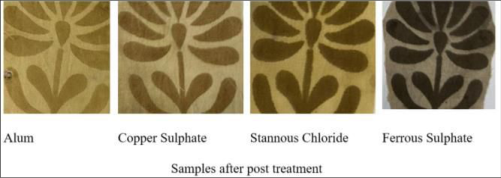 Figure 1
 Table 1
 Table 2
 Table 3
Introduction
In an era where sustainability and environmental awareness are increasingly prioritized, industries are actively pursuing innovative solutions to minimize their ecological impact. The textile industry, notorious for its substantial environmental footprint, faces scrutiny for traditional printing methods relying on synthetic dyes [1] . These not only contribute to pollution but also pose health risks. In stark contrast, natural dyes sourced from plants, minerals, and insects provide renewable and biodegradable alternatives. Their production involves fewer chemical processes, curbing pollution and reducing the ecological footprint [7] . Free from harmful substances and heavy metals present in synthetic counterparts, natural dyes not only benefit the environment but also safeguard the health of textile industry workers. Additionally, their unique and vibrant hues add exclusivity to textiles and clothing. This article explores sustainable screen printing, specifically focusing on the utilization of Piper betel L., commonly known betel leaf or "paan," belongs to the Piperaceae family, is a tropical evergreen plant that holds cultural, medicinal, and culinary significance in various parts of Asia [6] . Abundant in nature Piper betel L. offers a renewable and eco-friendly source for vibrant colours. The goal is to revolutionize the textile industry by adopting a more sustainable approach to fabric printing. The article delves into the process of extracting natural dye from Piper betel L., its application in screen printing on cotton fabric, and the exploration of different mordants for achieving diverse hues and enhancing color fastness properties. By embracing the colors of Piper betel L., this study aims to advocate for sustainable screen printing and promote eco-friendly practices in the textile industry. The article sheds light on the vast potential of natural dyes, emphasizing their environmental benefits and their role in revitalizing traditional dyeing practices.
Materials and Methods
The research involved the procurement of Piper betel L. leaves from the market, followed by a systematic processing method to prepare the dye. The aqueous extraction method was the chosen approach for this study. Initially, fresh betel leaves were meticulously weighed and subjected to boiling for a duration of 45 minutes in water, maintaining a material liquor ratio of 1:10 at a temperature of 80 °C. Subsequently, the resulting extract underwent filtration and condensation processes, ultimately yielding a 40% (w/w) aqueous extract. This concentrated extract was then employed for the subsequent printing processes conducted in the study. This study selected cotton as the primary material due to its favorable qualities: easy dyeing, finishing, and high absorbency. The chosen fabric, a 100% plain weave cotton, underwent scouring with a 2 g/litre non-ionic detergent and a 1:20 material liquor ratio for 1 hour to eliminate impurities hindering dye absorption. Despite cotton's versatility, it lacks a strong natural affinity for many dyes. To address this, the de-sized cotton fabric underwent pre-treatment with a natural myrobalan solution, following the traditional approach of tannin pre-treatment and mordant application for improved dye fixation. This study harnessed the attributes of Cassia tora (Cassia obstusifolia L.), an annual weed recognized for its innate gelling property and starch content ranging from 30-40%, leading to heightened viscosity. The formulation of the binding agent in this research involved the use of Cassia flour, with a material liquor ratio of 1:20 [19][20] . To attain diverse colors using a single dye, four specific mordants were selected for investigation. These included alum, copper sulfate, stannous chloride, and ferrous sulfate, each chosen to impart distinct hues to the final outcomes. The formulation of the print paste involved blending the dye and gum in a 4:3 ratio, with the mordants added proportionally based on the weight of the print paste. The printing procedure utilized myrobalan pre-treated cotton fabric, and the application of the print paste onto the treated fabric was carried out using the screen printing method. The screen-printed specimens were left to air-dry initially, allowing the dye to adhere to the surface of the fibres. Following this, the samples underwent a one-hour steaming process in an autoclave [13] . This steaming stage played a crucial role in promoting robust adhesion of the dye, penetrating deeply into the fibers and ensuring enduring colour retention [8,10,12] . To further optimize the dyeing process, the samples were meticulously rinsed with a 2g/l neutral soap solution. This rinsing step was pivotal in eliminating any lingering residual dye from prior treatments. By adopting this thorough approach, the dye achieved profound penetration into the fibers while efficiently removing excess dye, resulting in superior color fastness and overall quality of the printed samples [15][16][17] .
Colour fastness tests
To evaluate the quality and durability of the treated printed samples, the study adhered to standard testing procedures outlined by the Bureau of Indian Standards. These tests, essential for ensuring compliance with industry standards, encompassed color change, color staining, wash fastness, sunlight fastness, rub fastness, and fastness to perspiration [4] . Color change and color staining were assessed using the Bureau of Indian Standard Test Series IS 768-1976 and IS 769-1956, respectively. These tests gauged the extent of color alteration and the potential for bleeding or staining under various conditions. Wash fastness, indicating the dye's resistance to fading or bleeding during laundering, was evaluated using the launder-o-meter method outlined in IS 3361-1979 [14] . This method simulated repeated washing cycles with mechanical agitation and detergents [9] . Sunlight fastness, determining resistance to fading from sunlight exposure, adhered to IS 686-1985 guidelines, utilizing a sunlight cabinet to assess long-term color stability under outdoor conditions [5] . Rub fastness, assessing resistance to color transfer or rubbing off, followed IS 766-1956 standards, utilizing a crock meter to simulate wear and contact with surfaces [23] . Fastness to perspiration, gauging resistance to color change induced by perspiration, was evaluated with a Perspirometer according to IS 971-1956 specifications, crucial for assessing performance in moisture-prone situations [11] . These standardized tests rigorously evaluated the quality and performance of the treated printed samples, ensuring they met necessary standards for diverse textile industry applications [3,2] . Analyzing the color value of the samples used the Lab* color space, derived from reflectance spectra measured with a UV spectrophotometer [29] . The L* value indicated lightness and darkness, revealing the color's brightness. The a* and b* values, representing the green-red and blueyellow axes, respectively, provided a two-dimensional chromatic characterization. These Lab* values offered a comprehensive description of the sample's color.
Subjective evaluation
A group of 30 participants evaluated the richness of color and the clarity of prints, offering valuable insights into the acceptability of various mordant-dye combinations.
Results and discussion
This study sought to demonstrate the application of betel leaf extract in screen printing on cotton fabric. Various mordants were utilized in the printing process, resulting in the creation of distinct shades. Alum produced a pale yellow hue, Copper sulfate resulted in a mustard yellow shade, ferrous sulfate generated a black color, and stannous chloride produced a mehndi green shade, as illustrated in Figure 1. The CIE color coordinates, as presented in Table 1, provide valuable insights. The L* value, indicating lightness, is lower for ferrous sulfate and stannous chloride samples, signifying a darker appearance of the printed sample [27] . The a* value, representing redness or greenness, and b* value, indicating yellowness or blueness, offer additional color information [26,28] . Negative a* values for alum and copper sulfate mordanted printed samples suggest a greenish tint, whereas stannous chloride and ferrous sulfate mordanted samples exhibit positive a* values, suggesting a reddish tint. The higher b* values in alum and copper sulphate samples indicate a more yellowish hue in these samples.
| Mordant | Colour obtained | CIE Colour Coordinates | — | — |
|---|---|---|---|---|
| L* | a* | b* | ||
| Alum | Pale yellow | 65.8 | -4.5 | 24.2 |
| Copper Sulphate | Mustard Yellow | 59.3 | -5.1 | 32.8 |
| Stannous Chloride | Mehndi green | 40.6 | 3 | 19.2 |
| Ferrous Sulphate | Black | 31.6 | 4.2 | 9.2 |
Table text extracted from the original PDF; superscript letters are shown inline. The original table image is below.
View original table image
Colour fastness
Colourfastness pertains to the capacity of dyed or printed fabric to maintain its original color without undergoing fading, staining, or alteration when exposed to wetting, rubbing, cleaning, and light exposure in standard conditions. Table 2 outlines the results regarding lightfastness, crocking (rubbing), wash fastness, and resistance to perspiration. The colourfastness of natural dyes is influenced not only by the chemical composition and type of natural colorants but also by the selection of mordants employed during the dyeing process.
| Tested Parameter | Wash Fastness | — | Sunlight fastness | Crock fastness | — | — | — | Fastness to perspiration | — | — | — |
|---|---|---|---|---|---|---|---|---|---|---|---|
| Samples | Dry | Wet | Acidic | Alkaline | |||||||
| Mordants used | CC | CS | CC | CC | CS | CC | CS | CC | CS | CC | CS |
| Copper Sulphate | 4 | 3 | 6 | 4 | 3 | 4 | 3 | 4 | 4 | 4 | 4 |
| Alum | 4 | 4 | 7 | 5 | 4 | 3 | 3 | 4/5 | 4/5 | 4 | 4 |
| Stannous Chloride | 3 | 4 | 5 | 4 | 3 | 3 | 2 | 4 | 3/4 | 4 | 3 |
| Ferrous Sulphate | 3 | 3 | 4 | 3 | 2 | 2 | 2 | 2 | 2 | 2 | 2 |
Table text extracted from the original PDF; superscript letters are shown inline. The original table image is below.
View original table image
Wash fastness
Concerning wash fastness, the samples printed with alum & copper sulfate showcased outstanding colour retention, indicating strong resistance to colour change. Following closely, the sample printed with stannous chloride & ferrous sulfate displayed an average level of wash fastness. In the evaluation of colour stain during wash fastness, samples treated with alum & stannous chloride mordants exhibited excellent colour retention. Conversely, both copper sulfate and ferrous sulfate samples displayed an average level of fastness to colour stain. It is noteworthy that the findings of Popoola (2000) [21] supported and aligned with the results obtained from the wash fastness assessments.
Fastness to sunlight
The resistance of dyed and printed fabrics to sunlightinduced fading, known as colourfastness to sunlight, is crucial. The grading of the samples reflects the degree of colourfastness to light for each employed mordant. Notably, the sample printed with alum mordant exhibited excellent lightfastness, securing the highest grade. Following closely, the sample printed with copper sulfate as the mordant achieved a grade six, indicating commendable resistance to fading caused by sunlight exposure. In comparison, both samples printed with stannous and ferrous sulfate attained grade 5 and 4 respectively, signifying moderate lightfastness. These outcomes offer valuable insights into the influence of different mordants on the colourfastness of dyed and printed fabrics when exposed to sunlight [24][25] .
Crock fastness
The rub fastness or crock fastness results underscore the significant impact of mordant selection on the colourfastness of printed fabrics. The dry crock fastness results for colour change provide crucial insights into the effectiveness of various mordants utilized in the printing process. The sample printed with alum mordant exhibited outstanding dry crock fastness, securing the highest rating of 5. This signifies exceptional resistance to colour change when the fabric is subjected to rubbing. Both samples printed with copper sulfate and stannous chloride mordants also performed well, achieving a rating of 4, indicating good colour stability under friction. However, the sample printed with ferrous sulfate mordant showed a comparatively lower dry crock fastness rating of 3, indicating a moderate degree of colour alteration during rubbing. These findings align with the results discovered by Eser et al. (2016) [7] , reinforcing the observed fastness characteristics. The results for colour staining in terms of dry crock fastness reveal varying levels of performance among different mordants. The sample printed with alum demonstrated the highest resistance to colour staining, earning a rating of 4. Both stannous chloride and copper sulfate samples exhibited moderate resistance to colour staining, receiving a rating of 3. However, the sample printed with ferrous sulfate mordant displayed lower resistance to colour staining, receiving a rating of 2. These findings underscore the critical role of mordant selection in achieving optimal colourfastness, with alum emerging as the most effective choice for minimizing colour transfer during dry crocking. The wet crock fastness results for colour change in the printed samples shed light on the effectiveness of different mordants in resisting colour transfer when exposed to moisture. The sample printed with copper sulfate mordant demonstrated decent resistance to colour change during wet crocking, exhibiting limited colour bleeding or staining. Both stannous chloride and alum samples displayed moderate wet crock fastness, revealing some susceptibility to colour alteration when wet. The sample printed with ferrous sulfate mordant obtained the lowest wet crock fastness rating of 2, indicating poor resistance to colour change during wet crocking, with noticeable colour bleeding. These results align with findings reported by Kumpikaite et al. (2022) [18] . The outcomes of the samples tested for colour staining during crocking in wet conditions revealed that both samples printed with alum and copper sulphate mordants demonstrated moderate wet crock fastness, achieving a rating of 3. This indicates that the colours on these fabrics exhibited modest resistance to colour staining when wet, with minimal to no colour bleeding or transfer to other surfaces. Conversely, the sample printed with stannous chloride and ferrous sulfate mordants exhibited poor wet crock fastness with a rating of 2, suggesting that the colour on the fabric displayed limited resistance to staining when exposed to moisture, resulting in noticeable colour transfer to other surfaces [22] .
Fastness to perspiration
The examination of fastness to perspiration under acidic conditions, specifically in terms of the colour change parameter, illuminates the impact of various mordants on the colourfastness of natural dye printed samples. Copper sulfate, alum, and stannous chloride demonstrated excellent to very good fastness, indicating their efficacy in binding the dye to the fabric under acidic perspiration conditions. These mordants establish strong chemical complexes with the natural dye, effectively preventing significant colour change or fading when exposed to acidic perspiration. Conversely, ferrous sulfate exhibited moderate fastness, suggesting that the bond between the dye and the fabric was relatively weaker under acidic perspiration conditions. This could be attributed to the chemical properties of ferrous sulfate or the nature of its interaction with the natural dye, resulting in some colour change or fading in response to acidic perspiration. The evaluation of fastness to perspiration in acidic conditions, specifically for the colour stain parameter, revealed that the sample printed with alum mordant exhibited excellent perspiration fastness with a score of 4/5, indicating good dye fixation and minimal colour alteration. copper sulfate displayed moderate fastness, scoring 4, while the stannous chloride sample demonstrated efficient dye fixation and minimal colour change under acidic perspiration conditions. In contrast, ferrous sulfate exhibited limited fastness to perspiration, with a score of 2 out of 5, implying poor dye retention and significant colour stain. The examination of fastness to perspiration in alkaline conditions, and its effect on colour change and colour stain, revealed varying levels of performance among samples printed with different metal salts. Copper sulfate and alum demonstrated good fastness to perspiration in both conditions, scoring 4, indicating minimal color change and stain with effective dye retention under alkaline perspiration conditions. Stannous chloride exhibited excellent fastness for color change and moderate fastness for color stain, scoring 4 and 3 respectively, suggesting reasonably good dye fixation but with some observable color change. Conversely, ferrous sulfate displayed limited fastness to perspiration, receiving scores of 2 for color change and color staining respectively, indicating significant color change and poor dye retention.
Subjective evaluation Depth of Colour Evaluation:
In a visual assessment, the samples treated copper sulfate and Stannous chloride mordants garnered the highest scores for color depth, indicating superior acceptability. Alum-treated samples closely followed, whereas those treated with ferrous sulfate showed comparatively lower acceptability, as presented in table 3.0.
| Parameters | Copper Sulphate | Alum | Stannous Chloride | Ferrous Sulphate |
|---|---|---|---|---|
| Depth of the colour | 5 | 4 | 5 | 3 |
| Sharpness of prints | 4 | 5 | 5 | 2 |
Table text extracted from the original PDF; superscript letters are shown inline. The original table image is below.
View original table image
Conclusion
This study yielded valuable insights into the practical utilization of betel leaf extract in screen printing on cotton fabric, employing diverse mordants to achieve a spectrum of shades. The evaluation of colourfastness highlighted the substantial impact of mordant selection on the overall performance of dyed and printed fabrics. Notably, alum and copper sulfate emerged as the most effective mordant, contributing to outstanding colour retention and resistance to change in washing, exposure to sunlight, or rubbing. stannous chloride also demonstrated satisfactory colourfastness properties, while ferrous sulfate exhibited comparatively moderate to poor performance. These findings underscore the pivotal role of mordant choice in attaining optimal colour stability in natural dye printing on textiles. Additionally, the assessment by 30 participants emphasized that copper sulfate and alum mordants resulted in highly acceptable prints concerning color depth and sharpness, closely followed by stannous chloride. In contrast, ferrous sulfate yielded prints with lower acceptability in terms of both color depth and sharpness. Overall, this study provides valuable information and guidance for textile industries seeking sustainable and visually appealing options for natural dye printing on fabrics, with alum and copper sulfate standing out as a promising mordant for enhancing colourfastness and print quality. Future research endeavours may explore additional mordant-dye combinations and their potential applications in various textile design contexts
References
25 in the original paper- Babel S, Gupta R. Screen printing on silk fabric using natural dye and natural thickening agent. J Text Sci Eng. 2016;6(1):1-3.
- Bains S, Singh OP, Goraya G, Kang M. Dyeing of cotton with mango (Mangifera indica) dye. J Text Assoc. 2003;64(1):23-26.
- Bhuiyan MAR, Islam A, Ali A, Islam MN. Colour and chemical constitution of natural dye henna (Lawsonia inermis L.) and its application in the colouration of textiles. J Cleaner Prod. 2017;167:14-22.
- Cristea D, Vilarem G. Improving light fastness of natural dyes on cotton yarn. Dyes Pigments. 2006;70:238-245.
- Das S, Parida R, Sriram Sandeep IS, Nayak S, Mohanty S. Biotechnological intervention in betel vine (Piper betle L.): A review on recent advances and prospects. Asian Pac J Trop Med. 2016;9(10):938-946.
- Eser F, Telci I, Yilmaz F, Temiz C, Aktas E, Onal A. Determination of the dyeing potential of mint and sage crops wastes on wool and cotton fibres. J Nat Fibres. 2016;14(4):1-10.
- Ganesan P, Karthik T. Analysis of colour strength, colour fastness and antimicrobial properties of silk fabric dyed with natural dye from red prickly pear fruit. J Text Inst. 2016;108:1173-1179.
- Glogar M, Tancik J, Brlek I, Sutlovic A, Tkalec M. Optimisation of process parameters of alpaca wool printing with Juglans regia natural dye. Colour Technol. 2020;136(2):188-201.
- Grifoni D, Bacci L, Zipoli G, Carreras G, Baronti S, Sabatini F. Laboratory and outdoor assessment of UV protection offered by flax and hemp fabrics dyed with natural dyes. Photochem Photobiol. 2009;85(1):313-320.
- Gulrajani ML. Present status of natural dyes. Indian J Fibre Text Res. 2001;26(2):191-201.
- Harsito C, Prabowo AR, Prasetyo SD, Arifin Z. Enhancement stability and colour fastness of natural dye: A Review. Open Eng. 2021;11:548-555.
- Jothi D. Extraction of natural dyes from African marigold flowers (Tagetes erecta) for textile colouration. AUTEX Res J. 2008;8(2):49.
- Kato H, Hata T, Tsukada M. Potentialities of natural dyestuffs as antifeedants against varied carpet beetle, Anthrenusverbasci. J pn Agric Res Q. 2004;38(4):241251.
- Kavya shree M. Printing of textiles using natural dyes: A global sustainable approach. Chem Technol Nat Synth Dyes Pigments. 2020. DOI: 10.5772/intechopen.93161.
- Kizil S, Kayabasit N. Determination of dyeing properties of Spearmint (Mentha spicate var. spicata). Int J Agric Biol. 2006;8(4):496-498.
- Kumpikaite E, Tautkute SI, Milasiene D, Petraitiene S. Analysis of colour fastness and shrinkage of dyed and printed linen/silk fabrics. Coatings. 2022;12(3):408.
- Lee YH, Hwang EK, Kim HD. Colorimetric assay and antibacterial activity of cotton, silk, and wool fabrics dyed with peony, pomegranate, clove, coptischinenis and gallnut extracts. Materials. 2009;2(1):10-21.
- Popoola AV. Comparative fastness assessment performance of cellulosic fibers dyed using natural colorants. J Appl. Polym. Sci. 2000;77(4):752-755.
- Qaeed MA, Hendi A, Thahe AA, Al-Maaqar SM, Osman AM, Ismail A, et al. Effect of different ratios of Mentha spicata aqueous solution based on a Bio solvent on the synthesis of Ag-NPs for Inhibiting Bacteria. J Nanomater; c2023. doi.org/10.1155/2023/3599501.
- Samanta AK, Agarwal P. Application of natural dyes on textiles. Indian J Fibre Text Res. 2009;34:384-399.
- Salauddin S, Mia R, Haque MA, Shamim AM. Review on extraction and application of natural dyes. Text Leather Rev. 2021;4:218-233.
- Sriram ASV, Dhurjeti S. Evaluation of colour fastness properties of microbial pigment extract from novel sources for textile eco-friendly dyeing & study of CIE lab colour value. Int J Pharm Res. 2020;11:1322-1326.
- Shahidi S, Khoshechin E, Sharifi SD, Mongkholrattanasit R. Investigation of the Effect of Various Natural Dyes on UV Protection Properties and Antibacterial Activity of Cotton Fabrics. J Nat Fibers. 2022;19:7213-7228.
- Tayyab N, Sayed RY, Faisal R, Wang W, Javeed AA, Mudassar A, et al. Dyeing and colour fastness of natural dye from Citrus Aurantium on Lyocell fabric. Ind Text. 2020;71:350-356.
- Uddin MG. Extraction of eco-friendly natural dyes from mango leaves and their application on silk fabric. Text Cloths Sustain. 2015;1(7):1-8.