
Research article · 2024 · Full text
International Journal of Research in AgronomyEffect of paddy stubble powder on germination percentage and growth of chilli seedlings under poly tunnel condition
Volume 7(4) · Pages 262–264 · DOI: 10.33545/2618060x.2024.v7.i4d.548 ↗
Research areasAgricultural Science and FertilizationShallot Cultivation and Analysis
Abstract
Author-writtenAn experiment was conducted to study the effect of paddy stubble powder on chilli germination percentage and growth and development of seedlings under poly tunnel conditions at Agricultural College, Aswaraopet, Professor Jayashankar Telangana State Agricultural University, in 2024. The experiment consisted of (12) twelve treatments laid out in a (CRD) completely randomized design replicated thrice. The treatments comprised of Paddy stubble (PS) powder (T1), Cocopeat (T2), FYM (T3), Vermicompost (T4), PS Powder + Vermicompost (90:10) (T5), PS Powder + cocopeat (50:50) (T6), PS Powder + Perlite (90:10) (T7), PS Powder + Biocontrol agents (90:10) (T8), PS Powder + BA + vermiculite + perlite (80:10:05:05) (T9), PS Powder + FYM + Biocontrol agents (80:10:10) (T10), PS powder + FYM + cocopeat (80:10:10) (T11) and Vermiculite (T12).Among various treatments, the highest germination %, root, and shoot length were recorded with the treatment combination of PS Powder + BA + vermiculite + perlite (80:10:05:05) (T9) which was significantly superior to all other growing media.
Summary
Source-checkedPlain-language reading of the full paper, prepared with AI and checked against the text. Each point links to the authors' own words.
Why it matters
- Stubble burning in South Asia is a major source of air pollution, releasing gaseous pollutants and particulate matter that damage human health and the environment. View evidence ↗
- India generates approximately 352 million tonnes of stubble annually, with rice and wheat contributing 34-46% and 22-30% respectively, and 84-90 million tonnes are burnt on-field. View evidence ↗
- Paddy stubble powder is proposed as a cost-effective alternative to expensive commercial growing media like cocopeat and vermicompost for raising seedlings. View evidence ↗
The question
- The study aimed to evaluate how paddy stubble powder affects the germination percentage and growth of chilli seedlings in a poly tunnel environment. View evidence ↗
What they did
- The research was carried out from January to March 2024 at the Agricultural College in Aswaraopet, Telangana State. View evidence ↗
- The study used a completely randomized design (CRD) with 12 different treatments, each replicated three times. View evidence ↗
- Chilli seeds of variety VNR-314 were sown in protrays on January 22, 2024, at a rate of 1.5 kg per hectare. View evidence ↗
- The researchers measured germination percentage, root length, and shoot length every 15 days for a total of 45 days. View evidence ↗
What they found
- The highest germination percentage (95%) was achieved using the T9 treatment (Paddy stubble powder + BA + vermiculite + perlite in an 80:10:05:05 ratio), which significantly outperformed all other media. View evidence ↗
- Treatments T10 (PS Powder + FYM + Biocontrol agents) and T11 (PS powder + FYM + cocopeat) were the next most effective and performed similarly to each other. View evidence ↗
What it means
- The authors conclude that paddy stubble powder can be effectively utilized as a growing medium in the nursery industry by collecting and chopping the stubble. View evidence ↗
- The authors recommend using powdered stubbles to reduce pollution, improve soil health, and increase agricultural productivity and sustainability. View evidence ↗
Visual summary
2 visualsIllustrations explain the paper; charts are replotted from the paper's own table values.
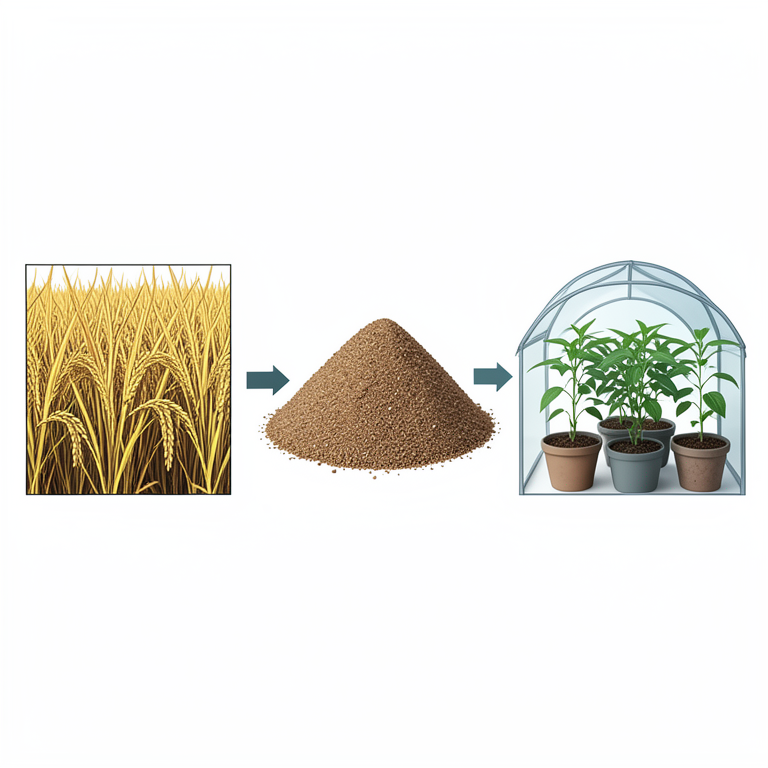
Circular Economy of Paddy Stubble
AI-generated conceptual illustration (paddy stubble and chilli seedlings in a poly tunnel). It explains the idea and does not show study data.
View source evidence ↗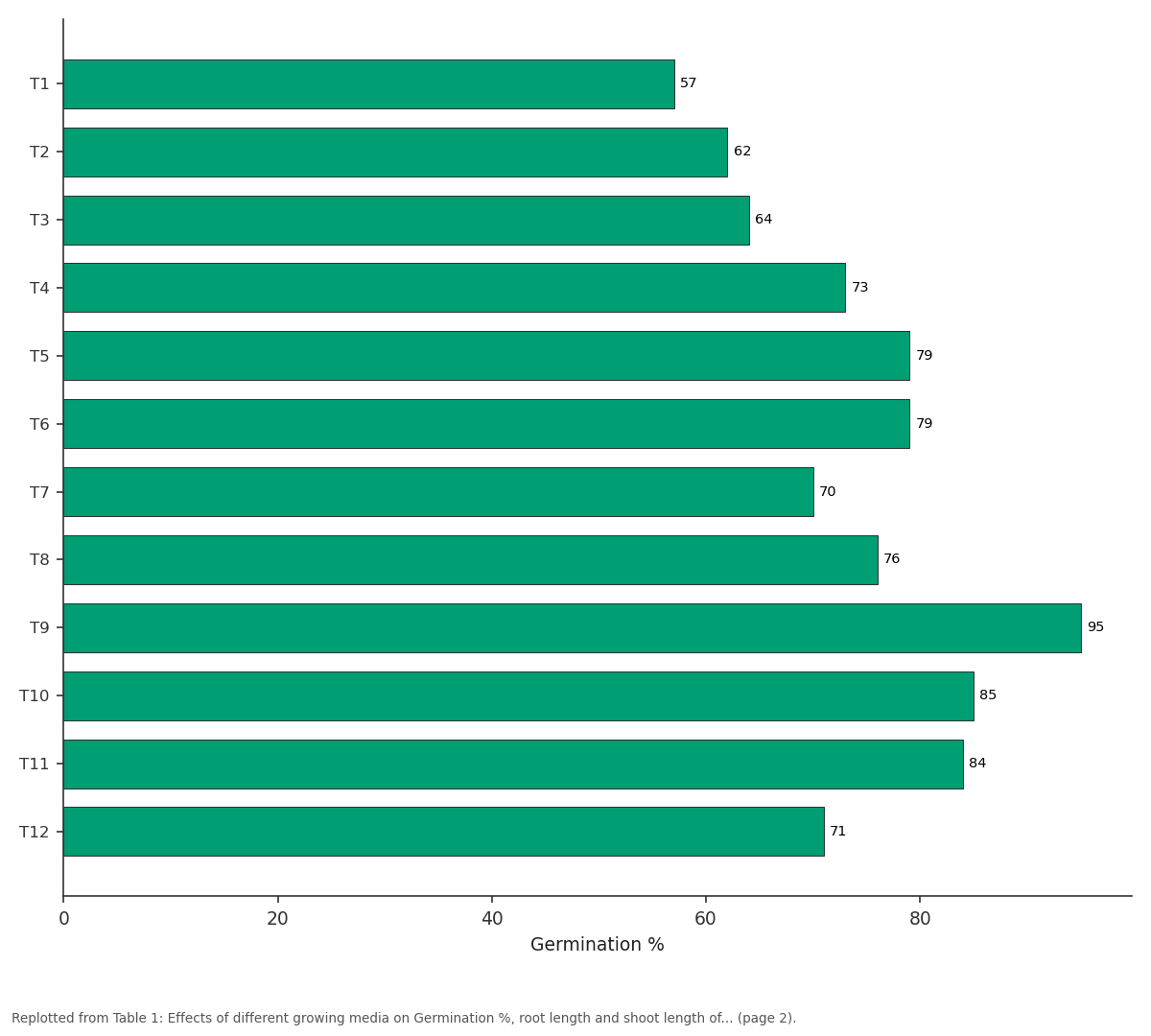
Germination %: T1 vs T2 vs T3 vs T4 vs T5
Replotted from Table 1 (page 2) of the original paper. Every bar is the paper's own table value.
View source evidence ↗Figures & tables
From the original paper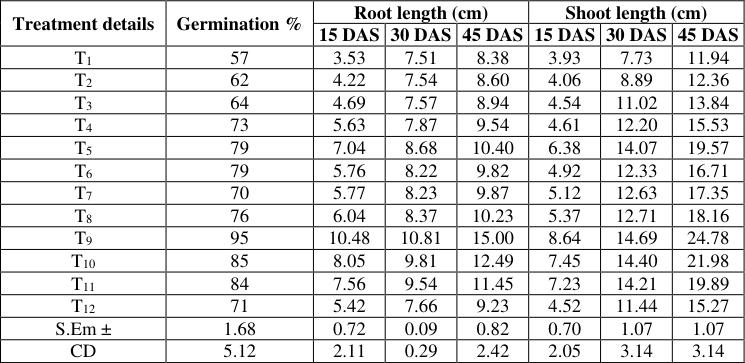 Table 1
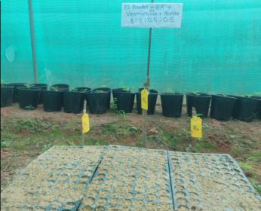 Figure 1
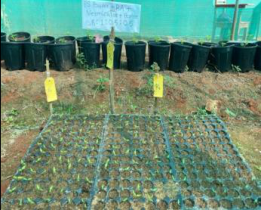 Figure 1
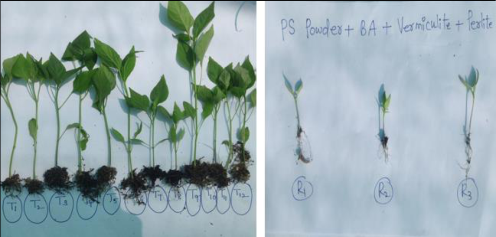 Figure 2
Introduction
Rice (Oryza sativa) is the main staple food of the Asian countries. In 2021, annual world rice production was 800 million tonnes, and 92.48% were from Asian countries. Although rice is the world's second-largest cereal crop after wheat, stubble burning has been considered among the major contributors to air pollution especially in South Asia. It is a significant source of gaseous pollutants like carbon dioxide (CO 2 ), carbon monoxide (CO), nitrogen oxides (NO x ), sulfur oxides (SO x ), and methane (CH 4 ) as well as particulate matter(PM 10 and PM 2.5 ) causing serious damage to the human health and environment.it is recorded that the burning of 1 tonne of crop stubble releases 1460 kg of carbon dioxide (CO 2 ), 199 kg of ash, 60 kg carbon monoxide (CO),3 kg of particulate matter (PM 10 and PM 2.5 ), and 2 kg sulfur dioxide (SO 2 ) into the atmosphere. The situation is more austere in India due to the intensive rice-wheat rotation system which generates a large amount of stubble. It was estimated that about 352 million tonnes (Mt) of stubble are generated each year in India out of which 22-30% and 34-46% are contributed by wheat and rice stubble respectively. About 84-90 Mt (23.86-27.45%) of the stubble is burnt onfield each year immediately after harvest. The disastrous haze observed over India during the winter season has been linked to stubble burning as it coincides with, the burning periods (October-November). During this time, most Indian cities, especially within the National Capital Region (NCR) experience harsh pollution often reaching severe levels of the air quality index (AQI). The health effects of air pollution range from skin and eye irritation to severe neurological, cardiovascular, and respiratory diseases, asthma, chronic obstructive pulmonary disease (COPD), bronchitis, lung capacity loss, emphysema, cancer, etc. It also leads to an increase in mortality rates due to prolonged exposure to high pollution. In addition to its effects on air quality, stubble burning also affects soil fertility (through the destruction of its nutrients), economic development, and climate.
The crop stubbles (if managed properly) could provide immense economic benefits to the farmers and protect the environment from severe pollution. Some of the alternative management practices include the incorporation of stubble into the soil, use of stubble as fuel in power plants, use as raw material for pulp and paper industries, or as biomass for biofuel production. It can also be used to generate compost and biochar or as a blend for the production of cement and bricks. nowadays chilli and other crops seedlings are raised in nurseries for commercial purposes and it is sustainable employment for unemployed people, day by day the cocopeat, vermicompost, vermiculite, and perlite (Media) costs shoot up and the paddy stubble powder is an alternate source of media to reduce the cost for the raising of the seedlings in the nursery industry, in this experiment, we integrated various growing media along with paddy stubble powder, and various parameters were analyzed.
Materials and Methods
The experiment was conducted at Agricultural College, Aswaraopet, Professor Jayashankar Telangana State Agricultural University, Telangana State, in January to march 2024. The experiment was planned in a completely randomized design with three repetitions consisting of 12 treatments in a polytunnel; which included paddy (PS) powder (T 1 ), cocopeat (T 2 ), FYM (T 3 ), vermicompost (T 4 ), PS Powder + Vermicompost (90:10) (T 5 ), PS Powder + cocopeat (50:50) (T 6 ), PS Powder + Perlite (90:10) (T 7 ), PS Powder + Biocontrol agents (90:10) (T 8 ), PS Powder +BA+ vermiculite + perlite (80:10:05:05) (T 9 ), PS Powder + FYM + Biocontrol agents (80:10:10) (T 10 ), PS powder + FYM + cocopeat (80:10:10) (T 11 ) and Vermiculite (T 12 ). Chilli seeds (VNR-314) were sown on 22 nd January 2024 in protrays using a seed rate of 1.5 kg ha -1 . Observations of germination %, root length, and shoot length were taken at 15-day intervals up to 45 days. Data presented in Table 1. represented the germination % when observed after one week of sowing revealed that the highest germination % was recorded with T 9 -PS Powder + BA + vermiculite + perlite (80:10:05:05) which was significantly superior over all other media and this was followed by PS Powder+ FYM+ Biocontrol agents (80:10:10) (T 10 ), and PS powder + FYM + cocopeat (80:10:10) (T 11 ) which were on par with one another. Root length and shoot length observations were taken at 15 days intervals up to 45 days and at all the stages it was observed that the highest root and shoot length was recorded with T 9 -PS Powder + BA + vermiculite + perlite (80:10:05:05) which was significantly superior over all other media and this was followed by PS Powder+ FYM+ Biocontrol agents (80:10:10) (T 10 ), PS powder + FYM + cocopeat (80:10:10) (T 11 ) which were on par with each other and the least was noticed with 100% paddy straw powder media due to the late decomposition of the straw when added directly. These results are in accordance with the findings of Sukumaran et al., 2010 [8] .
| Treatment details | Germination % | Root length (cm) | — | — | Shoot length (cm) | — | — |
|---|---|---|---|---|---|---|---|
| 15 DAS | 30 DAS | 45 DAS | 15 DAS | 30 DAS | 45 DAS | ||
| T1 | 57 | 3.53 | 7.51 | 8.38 | 3.93 | 7.73 | 11.94 |
| T2 | 62 | 4.22 | 7.54 | 8.60 | 4.06 | 8.89 | 12.36 |
| T3 | 64 | 4.69 | 7.57 | 8.94 | 4.54 | 11.02 | 13.84 |
| T4 | 73 | 5.63 | 7.87 | 9.54 | 4.61 | 12.20 | 15.53 |
| T5 | 79 | 7.04 | 8.68 | 10.40 | 6.38 | 14.07 | 19.57 |
| T6 | 79 | 5.76 | 8.22 | 9.82 | 4.92 | 12.33 | 16.71 |
| T7 | 70 | 5.77 | 8.23 | 9.87 | 5.12 | 12.63 | 17.35 |
| T8 | 76 | 6.04 | 8.37 | 10.23 | 5.37 | 12.71 | 18.16 |
| T9 | 95 | 10.48 | 10.81 | 15.00 | 8.64 | 14.69 | 24.78 |
| T10 | 85 | 8.05 | 9.81 | 12.49 | 7.45 | 14.40 | 21.98 |
| T11 | 84 | 7.56 | 9.54 | 11.45 | 7.23 | 14.21 | 19.89 |
| T12 | 71 | 5.42 | 7.66 | 9.23 | 4.52 | 11.44 | 15.27 |
| S.Em ± | 1.68 | 0.72 | 0.09 | 0.82 | 0.70 | 1.07 | 1.07 |
| CD | 5.12 | 2.11 | 0.29 | 2.42 | 2.05 | 3.14 | 3.14 |
Table text extracted from the original PDF; superscript letters are shown inline. The original table image is below.
View original table image
Results and Discussion
Results and Discussion
Conclusion
Stubble burning affects air quality, soil fertility agricultural productivity, increases mortality rates, human health and wellbeing, and economic development, and ultimately hurts climate change and general well-being either straightly or discursively. Paddy stubble burning has been identified as a major environmental and health hazard in Punjab. It is extremely important to understand the underlying causes and the existing situations as to why the farmers burn stubble and then deal with the basic problem. Most of the farmers are left with few options but to burn the paddy stubble due to lack of limited time for the next crop to prepare the field for wheat cultivation, cheaper as compared to the other practices, requires less effort, labor shortage during the harvesting period, considering the adverse effects of paddy stubble burning on the environment, attentive efforts can be made by utilizing this stubbles powder as growing media in the nursery industries by collecting and chopping paddy stubbles. Further, this media was integrated with different biocontrol agents, FYM, vermiculite, and perlite gave better results. These powdered stubbles can be used for improving soil health, increasing crop productivity, reducing pollution, and enhancing the sustainability and resilience of agriculture
Figures and tables from the paper
References
6 in the original paper- Emtenan M, Hanafi HHE, Khadrawy WM, Ahmed MM. Some observations on rice straw with emphasis on updates of its management. World Appl Sci J. 2012;16(3):354-361.
- Gadde B, Menke C, Wassmann R. Rice straw as a renewable energy source in India, Thailand, and the Philippines: Overall potential and limitations for energy contribution and greenhouse gas mitigation. Biomass Bioenergy. 2009;33(11):1532-1146.
- Kadam KL, Forrest LH, Jacobson WA. Rice straw as a lignocellulosic resource: collection, processing, transportation, and environmental aspects. Biomass Bioenergy. 2001;18:369-389.
- Mandeep, J Pranay, Sitaram, Reshu, Davinder P. Impact of stubble burning in Punjab -A review. Journal of Pharmacognosy and Phytochemistry. 2020;SP6:245-250
- Singh R, Monika S, Ashish S. Environmental sustainability of bioethanol production from rice straw in India: A review. Renewable and Sustainable Energy Reviews. 2016;54:202216.
- Sukumaran RK, Surender VJ, Sindhu R, Binod P, Janu KU, Sajna KV, et al. Lignocellulosic ethanol in India: Prospects, challenges and feedstock availability. Bioresource Technol. 2010;101:4826-4833.