
Research article · 2024 · Full text
International Journal of Research in AgronomyExpression of quantitative and qualitative traits in tomato (Solanum lycopersicum L.) under non-chemical growing conditions in the eastern Indian plateau
Volume 7(4) · Pages 247–251 · DOI: 10.33545/2618060x.2024.v7.i4d.544 ↗
Research areasAgricultural Practices and Plant Genetics
Abstract
Author-writtenTomatoes are growing extensively in the eastern Indian plateau, especially in the Chhota Nagpur region. However, most of the commercial growers in the region are using different agrochemicals for growing the crop, and consequently, the nutritional value of the crop is deteriorating day by day due mainly to residual toxicity, causing severe health hazards. Besides, water is the limiting factor in the region for increasing productivity, and several climatic abnormalities lead to a reduction in crop yield. Research findings revealed that low-cost farming practices, especially organic farming, perform well in adverse growing environments. Thereby, an initiative was taken to grow the crop by adopting alternative modes of farming practices. In this context, ten tomato cultivars (five OP varieties and five determinate F1 hybrids) were exposed to grow under four non-chemical growing conditions, namely, Vedic Farming (T1), Biodynamic Farming (T2), Minimum Budget Farming (T3), and Zero Budget Farming (by default organic) (T4). Ten cultivars of tomato, viz. V1: Swarna Lalima; V2: Pusa Ruby; V3: PKM-1; V4: S-22; V5: Patharkutchi; V6: Swarna Baibhav; V7: Swarna Deepti; V8: Swarna Sampada; V9: Swarna Vijaya; and V10: Arka Rakshak, were grown separately through four non-chemical approaches in the organic experimental farm of the university during the autumn-winter seasons of 2021-22 and 2022-23. The experiment was conducted in 120 plots each of 6.0 m2 size [10 cultivars with their replications thrice (in 30 plots) and four non-chemical growing approaches (30x4=120 plots)] by adopting a randomized complete block design. Different growth, yield, and quality attributes of the crop were taken into account for the study, and the results were found to be significant in almost all cases, especially in yield, TSS, ascorbic acid, lycopene, and β-carotene content in different tomato cultivars under diverse growing conditions. Findings of the experiment revealed that Vedic Farming (T1) is the most effective in terms of expressions of growth and yield traits, while Biodynamic Farming (T2) is a better alternative for qualitative trait expressions in tomatoes. Thus, different approaches to non-chemical growing conditions may be recommended as suitable alternatives to growing tomatoes even on a commercial scale in the eastern Indian plateau.
Summary
Source-checkedPlain-language reading of the full paper, prepared with AI and checked against the text. Each point links to the authors' own words.
Why it matters
- Tomato cultivation is widespread in the eastern Indian plateau, particularly within the Chhota Nagpur region. View evidence ↗
- The use of agrochemicals by commercial growers in this region is linked to deteriorating nutritional value in crops and potential health hazards from residual toxicity. View evidence ↗
- Crop productivity in the region is limited by water availability and climatic abnormalities. View evidence ↗
The question
- The study aimed to evaluate the growth, yield, and quality of ten tomato cultivars (five open-pollinated and five F1 hybrids) under four different non-chemical farming systems. View evidence ↗
What they did
- The research was conducted at the Ramakrishna Mission Vivekananda Educational and Research Institute in Ranchi during the autumn-winter seasons of 2021-22 and 2022-23. View evidence ↗
- The study used a randomized complete block design with 120 plots (3.0 m x 2.0 m), featuring 10 cultivars with three replications across four treatment groups. View evidence ↗
- Researchers measured growth and yield (plant height, fruit number, fruit weight, and total yield) and quality traits (TSS, ascorbic acid, lycopene, and β-carotene). View evidence ↗
What they found
- Vedic Farming (T1) resulted in the highest plant height, while Zero Budget Farming (T4) resulted in the lowest. View evidence ↗
- Among the hybrids, Swarna Sampada (V8) achieved the highest yields, reaching 63.45 t ha-1 under Vedic Farming (T1) and 51.81 t ha-1 under Biodynamic Farming (T2). View evidence ↗
- Among the open-pollinated varieties, Swarna Lalima (V1) performed best under Vedic Farming (T1) with a yield of 50.56 t ha-1, compared to 15.64 t ha-1 under Zero Budget Farming (T4). View evidence ↗
- The highest ascorbic acid content (64.59 mg 100 g-1) was found in the PKM-1 (V3) cultivar grown using Biodynamic Farming (T2). View evidence ↗
- Lycopene levels varied by treatment and variety, with the highest value of 10.60 mg 100 g-1 recorded for Swarna Sampada (V8) under Minimum Budget Farming (T3). View evidence ↗
- While Swarna Sampada (V8) had the peak β-carotene level (2.67 mg 100 g-1) under Minimum Budget Farming (T3), Biodynamic Farming (T2) generally provided better average results for this trait across varieties. View evidence ↗
What it means
- The authors conclude that Vedic Farming is most effective for growth and yield, whereas Biodynamic Farming is superior for enhancing quality traits. View evidence ↗
- Low-cost alternative farming methods are recommended as suitable and safer options for commercial tomato production in the Chhota Nagpur region, especially under climate change. View evidence ↗
Visual summary
3 visualsIllustrations explain the paper; charts are replotted from the paper's own table values.
Comparison of Farming Method Outcomes
AI-generated conceptual illustration (tomato plants (Solanum lycopersicum L.)). It explains the idea and does not show study data.
View source evidence ↗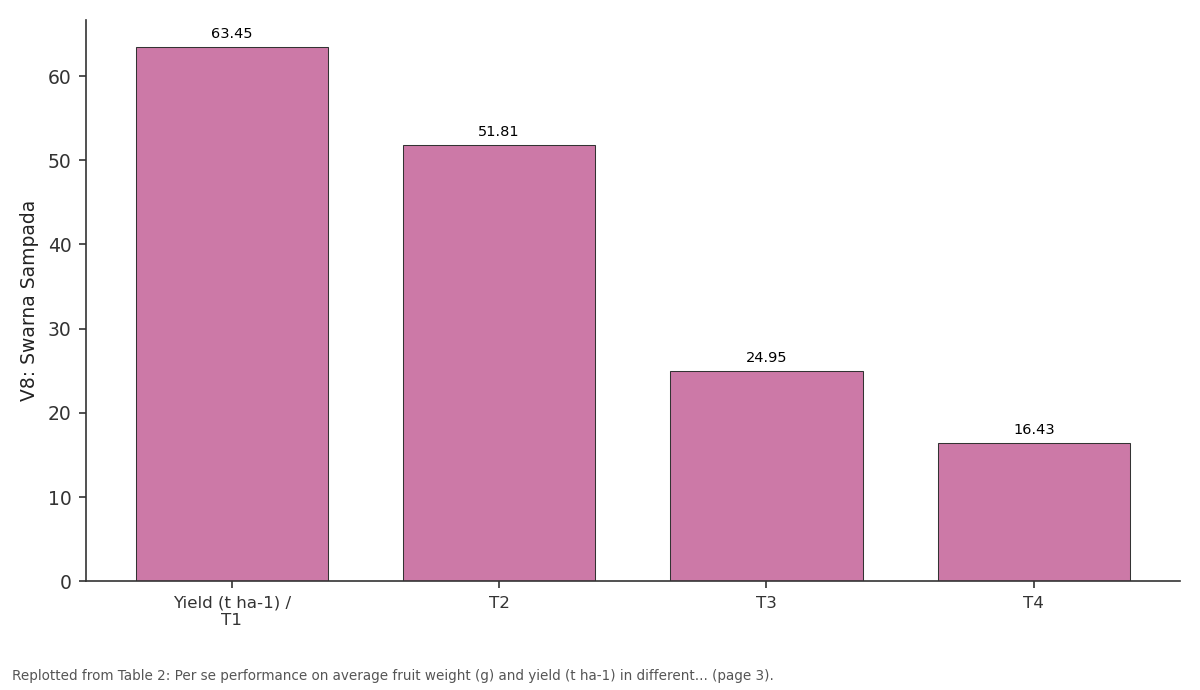
V8: Swarna Sampada: Yield (t ha-1) / T1 vs T2 vs T3 vs T4
Replotted from Table 2 (page 3) of the original paper. Every bar is the paper's own table value.
View source evidence ↗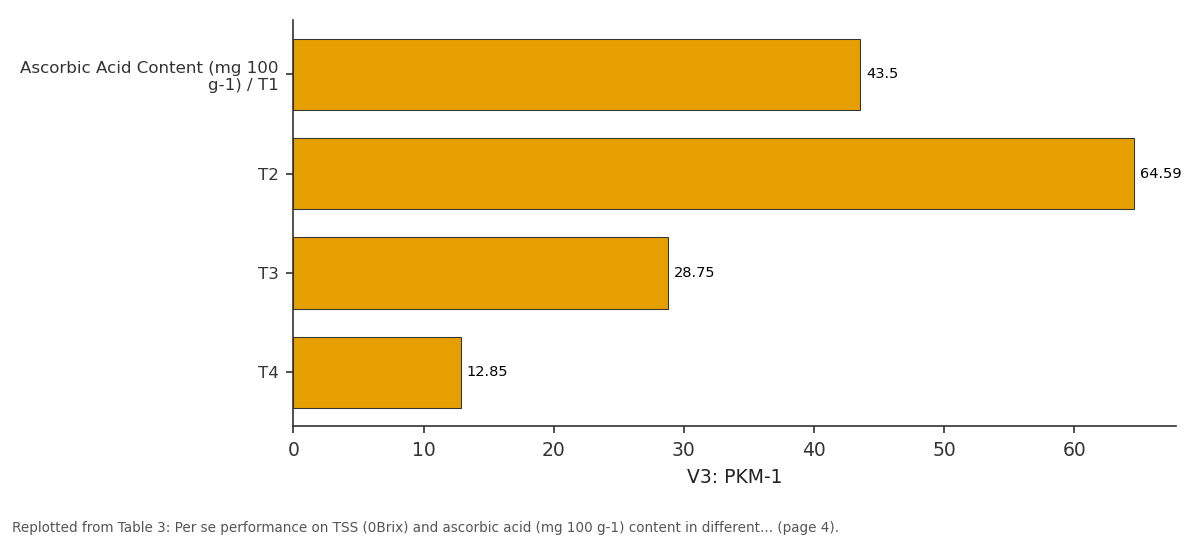
V3: PKM-1: Ascorbic Acid Content... vs T2 vs T3 vs T4
Replotted from Table 3 (page 4) of the original paper. Every bar is the paper's own table value.
View source evidence ↗Figures & tables
From the original paper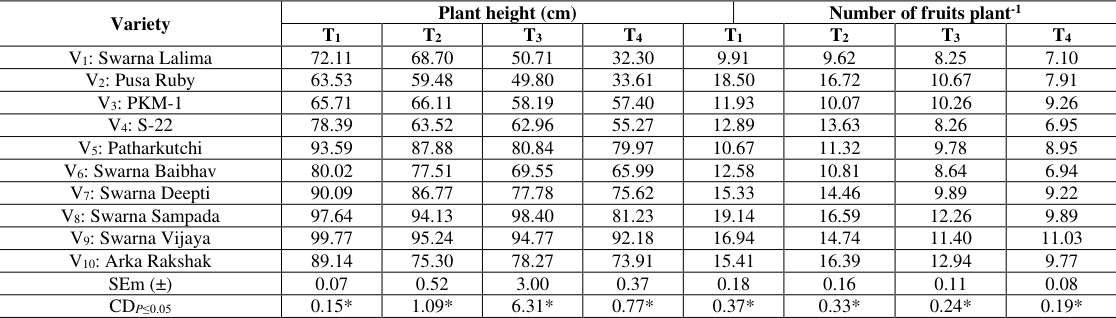 Table 1
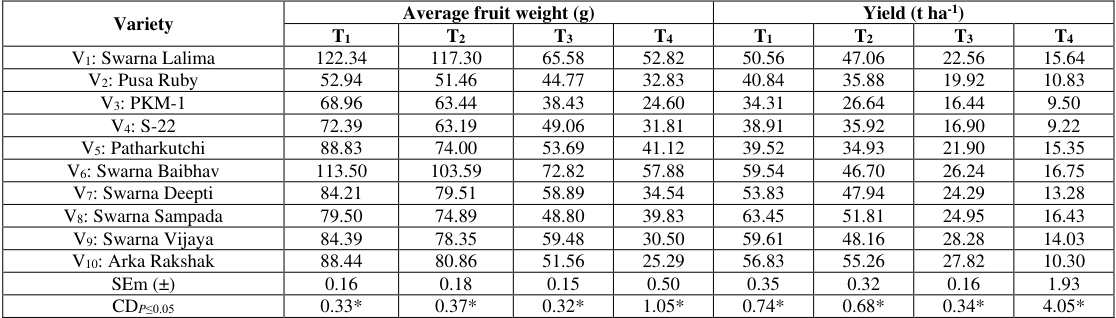 Table 2
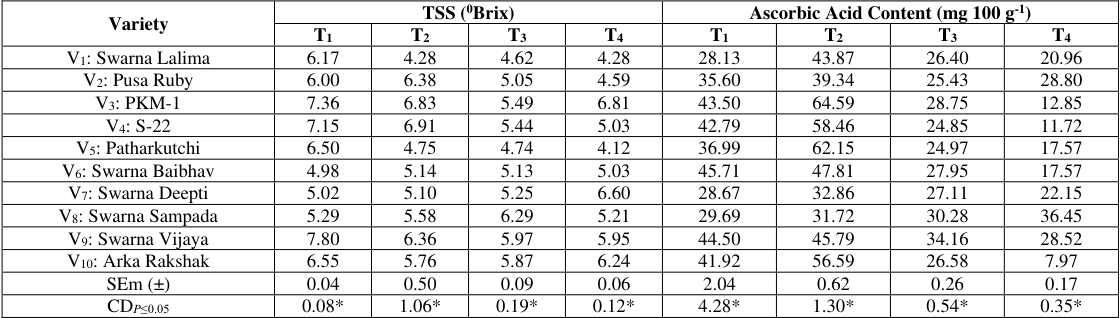 Table 3
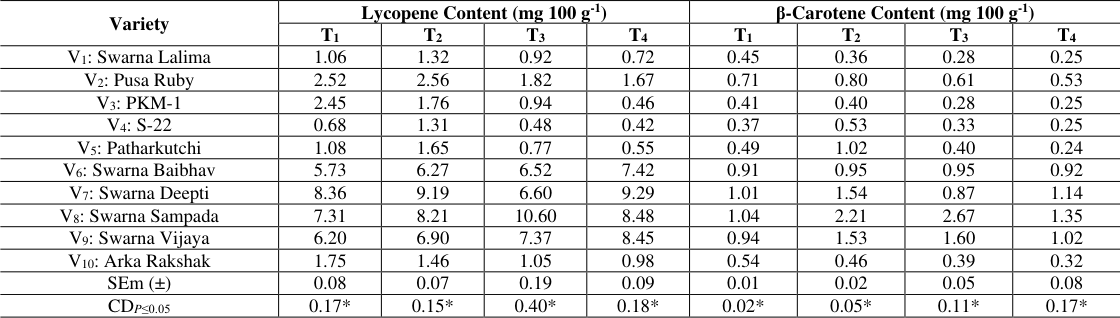 Table 4
Introduction
The tomato (Solanum lycopersicum L.), which belongs to the night shade family Solanaceae, is a palatable vegetable found generally in red and grown in tropical and sub-tropical areas. It is an important vegetable and ranks second next to potatoes in the world. Tomatoes are graded at the top of all fruits and vegetables as a source of vitamins and minerals. It plays a major role in human nutrition and is well-known both for its taste and its nutrient content, which is rich in phosphorous, iron, vitamin A, vitamin B complexes, and vitamin C, as well as a good source of lycopene and β-carotenoid. Tomato occupies an area of 4.58 million ha with 150.50 million metric tonnes of production throughout the world. India is the second-largest producer of tomatoes, just after China, with an area coverage of 8.12 lakh hectares and a production of 20.57 million metric tonnes (NHB, 2019-20) [1] . Not only the production of tomatoes, but even the consumption level of tomatoes is high in our country, which is termed the poor man's orange. Tomatoes are mainly used in processed form for the preparation of chutney, pickles, soup, and ketchup, as well as in salad as fresh. However, most commercial growers use different agrochemicals as plant nutrient sources and plant protection measures.
Thereby, the quality of the produce is gradually deteriorating, and the fertility status of the soil is also declining. In this particular context, an alternative approach to farming, like organic farming, is suitable. Besides, it has been proven that organic farming is well suited to adverse growing conditions. A review of current trends in organic practices has reported improved yields in crops in rainfed areas of India, especially in drought years (Ramesh et al., 2005) [2] . Organic farming is a practice of agriculture through the application of different organic inputs like FYM, vermicompost, green manure, some other liquid formulations like Panchagavya, Beejamrith, Sanjeevani, Shasyagavya, vermiwash, or even biodynamic preparations, etc. These inputs are eco-friendly, easily prepared, and accessible. The nutrient uptake of plants through organic sources is comparatively higher than their respective inorganic counterparts. These organic inputs improve the soil structure, texture, help the survival of beneficial microbes present in the soil (like earthworms), improve the biological health of soil and ultimately lead to sustainability of soil nutrients. Different alternative sources of plant nutrients in the form of vermicompost, FYM, poultry manures have significant role in growth, and yield of tomato (Renuka and Ravishankar, 2001) [3] . Low-cost organic liquid formulations also have remarkable effect on yield and quality of different crops especially tomato (Sarkar et [4][5][6][7][8][9][10][11][12][13][14] . Several studies also revealed organic production systems improve the quality attributes of tomatoes compared to non-organic farming practices (Barrett et al., 2007; Borguini et al., 2013; Anton et al., 2014; Dutta and Adak, 2016) [15][16][17]5] .
Materials and Methods
Experimental site: The experiment was conducted at the organic experimental farm of the Agriculture, Rural, and Tribal Development Faculty Centre under the School of Agriculture and Rural Development of Ramakrishna Mission Vivekananda Educational and Research Institute, Ranchi Campus, at 23023′59′′ N latitude and 85020′14′′ E longitude during the autumn-winter (October-February) of two subsequent years (2021-22 and 2022-23) under temperature regimes of 26 0 -33 0 C (maximum) and 6 0 -17 0 C (minimum).
Cultivars and treatment sets:
For the purpose of the study, 10 cultivars [five OP varieties (denoted as V 1 to V 5 ) and five determinate F 1 hybrids (denoted as V 6 to V 10 )] of tomato namely V 1 : Swarna Lalima; V 2 : Pusa Ruby; V 3 : PKM-1; V 4 : S-22; V 5 : Patharkutchi; V 6 : Swarna Baibhav; V 7 : Swarna Deepti; V 8 : Swarna Sampada; V 9 : Swarna Vijaya; and V 10 : Arka Rakshak were investigated under the exposures of four different nonchemical growing approaches, viz. T 1 : Vedic Farming, T 2 : Biodynamic Farming, T 3 : Minimum Budget Farming and T 4 : Zero Budget Farming (by default organic).
Details of treatments:
In the case of Vedic Farming (T 1 ), Shasyagavya (10%) and Sanjeevani (1%) were alternately applied six times at a 15-day interval, starting 15 days after transplanting at 250 ml plant -1 (during the vegetative growth stage) and at 500 ml plant -1 (during flowering and fruiting stages). Vermiwash (10%) solution was applied as a foliar spray during the initiation of flowering. All other inputs (FYM @ 1.0 kg + Vermicompost @ 500 g + Wood Ash @ 250 g per square metre running area) were applied as basal doses before 7 days of transplanting. In the case of Biodynamic Farming (T 2 ), BD-501 (3%) concentration was applied six times at a 15-day interval at 500 ml plant -1 (as foliar spray and drenching soils adjacent to the root zone) starting 15 days after transplanting. As a basal dose, FYM @ 1.0 kg + Vermicompost @ 500 g + Wood Ash @ 250 g per square metre running area was applied 7 days before transplanting. In Minimum Budget Farming (T 3 ), only FYM at 2.5 kg/m 2 of running area was applied 7 days before transplanting. However, no input was applied in the case of Zero Budget Farming (organic by default) [T 4 ].
Irrigation and mulching: Need-based irrigation during input application (in the cases of T 1 and T 2 ), occasionally need-based irrigation (in the case of T 3 ), and only lifesaving irrigation (in the case of T 4 ) were arranged accordingly. Mulching with dry paddy straw (5.0 cm thickness) was done to check weed population, conserve moisture, and protect fruits from direct contamination of soils in all cases except T 4 .
Plant protection measures: Dashparni (10%) and whey water mixed with turmeric powder (10 g/litre) [10%] solutions were sprayed alternately 8 times at a 10-day interval, starting 10 days after planting, as prophylactic measures against insect pests' infestations and pathogenic infections, respectively.
Observation recorded and methodology applied: Different growth and yield attributes namely plant height (cm), number of fruits plant -1 , fruit weight (g) and yield (t ha -1 ) were estimated from three pre-selected sample plants from each plot. Different qualitative traits like TSS ( 0 Brix) by hand refractometer, ascorbic acid (mg 100 g -1 ) by dye titration method, lycopene (mg100 g -1 ) and β-carotene (mg100 g -1 ) were estimated as per methods proposed by Sadasivam and Manickam (1996) [18] .
Experimental design: Four different experiments (employing four non-chemical approaches to farming practices) were conducted concurrently under the same location in four different sub-plots, considering 10 cultivars with their three replications in a randomised complete block design fashion in 120 plots (30 plots for each treatment) of 3.0 m x 2.0 m sizes by keeping 60 cm inter-row and 40 cm intra-row spacing.
Statistical analysis:
Two consecutive years of mean data thus obtained were subjected to statistical analysis by the Analysis of Variance method (Gomez and Gomez, 1984) [19] and the significance of different sources of variations was tested by the Error Mean Square by Fisher and Snedecor's 'F' test at the 0.05 probability level. For the determination of the critical difference at the 5% level of significance, Fisher and Yates' table was consulted.
Results and Discussion
Different alternative approaches of non-chemical farming practices showed significant influence over the growth, yield and quality traits expressions in different tomato cultivars as employed in the present investigation.
Growth and yield attributes: Plant height of different cultivars of the crop was highly influenced by the pre-designed treatments as well as different varietal situations, culminating in a higher response in Vedic Farming (T 1 ), followed by Biodynamic Farming (T 2 ), and Minimum Budget Farming (T 3 ), while the lowest performance was recorded in the case of Zero Budget Farming (organic by default) [T 4 ] with statistically significant (p≤0.05) differences among cultivars (Table 1). Comparatively higher plant heights were recorded in almost all varietals in both years of the experimentation under the Vedic Farming (T 1 ) condition, which might be due to the presence and availability of different organic inputs as adopted in this treatment condition. On the contrary, the manipulation of plant height towards a lower magnitude was observed in the case of Zero Budget Farming (organic by default) [T 4 ] because of its lower level of nutrient supply potentiality than other treatments. The number of fruits per plant was highly influenced by different treatment conditions as well as different varietal situations. As per the expectation, a greater number of fruits per plant was documented in the case of Vedic Farming (T 1 ), followed by Biodynamic Farming (T 2 ), and Minimum Budget Farming (T 3 ), but the lowest was documented in the case of Zero Budget Farming (organic by default) [T 4 ], with statistically significant (p≤0.05) differences among varieties (Table 1). Average fruit weight in different varieties under different treatment conditions was highly influenced by the different non-chemical growing conditions, with statistically significant (p≤0.05) differences among varieties (Table 2). For example, in the case of Swarna Lilima (V 1 ), with its inherent large fruits, it performed differently under different treatment conditions. As a consequence, a higher fruit weight of Swarna Lalima was documented in T 1 (122.34 g), followed by T 2 (117.30 g), and T 3 (65.58 g), but only 52.82 g as documented in T 4 (Table 2).
| Variety | Average fruit weight (g) | — | — | — | Yield (t ha-1) | — | — | — |
|---|---|---|---|---|---|---|---|---|
| T1 | T2 | T3 | T4 | T1 | T2 | T3 | T4 | |
| V1: Swarna Lalima | 122.34 | 117.30 | 65.58 | 52.82 | 50.56 | 47.06 | 22.56 | 15.64 |
| V2: Pusa Ruby | 52.94 | 51.46 | 44.77 | 32.83 | 40.84 | 35.88 | 19.92 | 10.83 |
| V3: PKM-1 | 68.96 | 63.44 | 38.43 | 24.60 | 34.31 | 26.64 | 16.44 | 9.50 |
| V4: S-22 | 72.39 | 63.19 | 49.06 | 31.81 | 38.91 | 35.92 | 16.90 | 9.22 |
| V5: Patharkutchi | 88.83 | 74.00 | 53.69 | 41.12 | 39.52 | 34.93 | 21.90 | 15.35 |
| V6: Swarna Baibhav | 113.50 | 103.59 | 72.82 | 57.88 | 59.54 | 46.70 | 26.24 | 16.75 |
| V7: Swarna Deepti | 84.21 | 79.51 | 58.89 | 34.54 | 53.83 | 47.94 | 24.29 | 13.28 |
| V8: Swarna Sampada | 79.50 | 74.89 | 48.80 | 39.83 | 63.45 | 51.81 | 24.95 | 16.43 |
| V9: Swarna Vijaya | 84.39 | 78.35 | 59.48 | 30.50 | 59.61 | 48.16 | 28.28 | 14.03 |
| V10: Arka Rakshak | 88.44 | 80.86 | 51.56 | 25.29 | 56.83 | 55.26 | 27.82 | 10.30 |
| SEm (±) | 0.16 | 0.18 | 0.15 | 0.50 | 0.35 | 0.32 | 0.16 | 1.93 |
| CDP≤0.05 | 0.33* | 0.37* | 0.32* | 1.05* | 0.74* | 0.68* | 0.34* | 4.05* |
Table text extracted from the original PDF; superscript letters are shown inline. The original table image is below.
View original table image
| Variety | Plant height (cm) | — | — | — | — | Number of fruits plant-1 | — | — | — |
|---|---|---|---|---|---|---|---|---|---|
| T1 | T2 | T3 | T4 | T1 | T2 | T3 | T4 | ||
| V1: Swarna Lalima | 72.11 | 68.70 | 50.71 | 32.30 | 9.91 | 9.62 | 8.25 | 7.10 | |
| V2: Pusa Ruby | 63.53 | 59.48 | 49.80 | 33.61 | 18.50 | 16.72 | 10.67 | 7.91 | |
| V3: PKM-1 | 65.71 | 66.11 | 58.19 | 57.40 | 11.93 | 10.07 | 10.26 | 9.26 | |
| V4: S-22 | 78.39 | 63.52 | 62.96 | 55.27 | 12.89 | 13.63 | 8.26 | 6.95 | |
| V5: Patharkutchi | 93.59 | 87.88 | 80.84 | 79.97 | 10.67 | 11.32 | 9.78 | 8.95 | |
| V6: Swarna Baibhav | 80.02 | 77.51 | 69.55 | 65.99 | 12.58 | 10.81 | 8.64 | 6.94 | |
| V7: Swarna Deepti | 90.09 | 86.77 | 77.78 | 75.62 | 15.33 | 14.46 | 9.89 | 9.22 | |
| V8: Swarna Sampada | 97.64 | 94.13 | 98.40 | 81.23 | 19.14 | 16.59 | 12.26 | 9.89 | |
| V9: Swarna Vijaya | 99.77 | 95.24 | 94.77 | 92.18 | 16.94 | 14.74 | 11.40 | 11.03 | |
| V10: Arka Rakshak | 89.14 | 75.30 | 78.27 | 73.91 | 15.41 | 16.39 | 12.94 | 9.77 | |
| SEm (±) | 0.07 | 0.52 | 3.00 | 0.37 | 0.18 | 0.16 | 0.11 | 0.08 | |
| CDP≤0.05 | 0.15* | 1.09* | 6.31* | 0.77* | 0.37* | 0.33* | 0.24* | 0.19* |
Table text extracted from the original PDF; superscript letters are shown inline. The original table image is below.
View original table image
Similar patterns of findings were also observed in the cases of other varieties and hybrids. The yield of the crop was highly influenced by the pre-designed non-chemical growing conditions under diverse varietal situations with significant (p≤0.05) differences among themselves (Table 2). The results revealed that the yield estimate was higher in almost all varieties and hybrids under the Vedic Farming (T 1 ) condition, followed by Biodynamic Farming (T 2 ) and Minimum Budget Farming (T 3 ), while the lowest values in this context were documented in the Zero Budget Farming (organic by default) [T 4 ] condition. As a consequence, among varieties, V 1 (Swarna Lalima) performed well under T 1 conditions with 50.56 t ha -1 , followed by 47.06 t ha -1 in T 2 and 22.56 t ha -1 in T 3 , but the lowest (15.64 t ha -1 ) was recorded in T 4 . However, among hybrids, V 8 (Swarna Sampada) showed outstanding performance under different non-chemical growing conditions with yield potentials of 63.45 t ha -1 and 51.81 t ha -1 in T 1 and T 2 , respectively, but Swarna Vijaya (V 9 ) responded well under Minimum Budget Farming (T 3 ) with a yield 28.28 t ha -1 , and Swana Baibhav (V 6 ) reacted well under Zero Budget Farming (organic by default) [T 4 ] with a yield of 16.75 t ha -1 (Table 2). The findings on yield as estimated through pre-designed non-chemical inputs as applied in the present investigation corroborated well with the previous findings of Kochakinezhad et al. (2012) [20] ; Dutta and Adak (2016) [5] . Quality contributing traits: Total soluble solids (TSS) as estimated in different varieties of the crop under diverse treatment conditions recorded significant (p≤0.05) differences [Table 3]. The results highlighted that higher degrees of dry matter accumulation were achieved in Vedic Farming (T 1 ), followed by Biodynamic Farming (T 2 ), Minimum Budget Farming (T 3 ), and lastly, Zero Budget Farming (T 4 ). Although in a few cases dry matter accumulated better even under Zero Budget Farming (T 4 ), for example, in the cases of V 3 : PKM-1 (6.81 0 Brix) and V 7 : Swarna Deepti (6.60 0 Brix) contributed a significant amount of TSS (Table 3). The higher magnitude of TSS as estimated here under different varietal and treatment situations showed close conformity with the earlier findings of Barrett et al. (2007) [15] ; Dutta and Adak (2016) [5] . The antioxidant levels in the form of ascorbic acid as estimated in the present experiment showed significant (p≤0.05) differences among varieties under diverse treatment conditions (Table 3). An important finding in this particular aspect stressed that biodynamic intervention emerged as the most fruitful intervention for ascorbic acid biosynthesis in different tomato cultivars. As a consequence, the highest ascorbic acid (64.59 mg 100 g -1 ) was estimated in V 3 (PKM-1) under the growing condition of Biodynamic Farming (T 2 ). The expression of this important quality trait was significantly influenced by Biodynamic, Vedic, and Minimum Budget Farming as opposed to Zero Budget Farming in different varieties and hybrids of tomatoes. The higher level of ascorbic acid estimated from different samples of tomato varieties under several non-chemical growing conditions in the present investigation well matched the previous findings of Borguini et al. (2013) [16] ; Anton et al. (2014) [17] . The lycopene content also showed statistically significant (p≤0.05) differences among different varieties under diverse non-chemical growing conditions (Table 4). The average performance of different varieties showed better results in this specific quality trait expression under the growing exposure of Biodynamic Farming (T 2 ) once again, but different varieties emerged with various degrees of expression in terms of this quality trait. As a result, higher lycopene (8.36 mg 100 g -1 ) was estimated in Swarna Deepti (V 7 ) under Vedic Farming (T 1 ) but 9.19 mg 100 g -1 in Biodynamic Farming (T 2 ) in the same variety, while in case of Minimum Budget Farming (T 3 ) it was the highest (10.60 mg 100 g -1 ) as estimated in the case of Swarna Sampada (V 8 ) but again higher lycopene (9.29 mg 100 g -1 ) as estimated in Swana Deepti (V 7 ) in the case of organic by default i.e., Zero Budget Farming (T 4 ) [Table 4]. Lycopene content in different varieties, as recorded here under different approaches to non-chemical growing practices, closely matched the previous findings of Barrett et al. (2007) [15] ; Anton et al. (2014) [17] ; Dutta and Adak (2016) [5] ; Oboulbiga et al. (2018) [21] . β-carotene (mg 100 g -1 ) content in different varieties showed significant (p≤0.05) differences under the influence of nonchemical growing conditions (Table 4). The results once again showed the greater potential of Biodynamic Farming in the expression of another important quality trait (β-carotene) in tomatoes. Although Swarna Sampada (V 8 ) had the highest level of β-carotene (2.67 mg 100 g -1 ) under Minimum Budget Farming (T 3 ), the average performance of different varieties, including hybrids, showed better results under Biodynamic Farming (T 2 ). The higher level of carotene content in different varieties of tomatoes, as documented here in different non-chemical growing conditions, showed close conformity with the previous findings of Nwaichi et al. (2015) [22] ; Oboulbiga et al. (2018) [21] .
| Variety | Lycopene Content (mg 100 g-1) | — | — | — | β-Carotene Content (mg 100 g-1) | — | — | — |
|---|---|---|---|---|---|---|---|---|
| T1 | T2 | T3 | T4 | T1 | T2 | T3 | T4 | |
| V1: Swarna Lalima | 1.06 | 1.32 | 0.92 | 0.72 | 0.45 | 0.36 | 0.28 | 0.25 |
| V2: Pusa Ruby | 2.52 | 2.56 | 1.82 | 1.67 | 0.71 | 0.80 | 0.61 | 0.53 |
| V3: PKM-1 | 2.45 | 1.76 | 0.94 | 0.46 | 0.41 | 0.40 | 0.28 | 0.25 |
| V4: S-22 | 0.68 | 1.31 | 0.48 | 0.42 | 0.37 | 0.53 | 0.33 | 0.25 |
| V5: Patharkutchi | 1.08 | 1.65 | 0.77 | 0.55 | 0.49 | 1.02 | 0.40 | 0.24 |
| V6: Swarna Baibhav | 5.73 | 6.27 | 6.52 | 7.42 | 0.91 | 0.95 | 0.95 | 0.92 |
| V7: Swarna Deepti | 8.36 | 9.19 | 6.60 | 9.29 | 1.01 | 1.54 | 0.87 | 1.14 |
| V8: Swarna Sampada | 7.31 | 8.21 | 10.60 | 8.48 | 1.04 | 2.21 | 2.67 | 1.35 |
| V9: Swarna Vijaya | 6.20 | 6.90 | 7.37 | 8.45 | 0.94 | 1.53 | 1.60 | 1.02 |
| V10: Arka Rakshak | 1.75 | 1.46 | 1.05 | 0.98 | 0.54 | 0.46 | 0.39 | 0.32 |
| SEm (±) | 0.08 | 0.07 | 0.19 | 0.09 | 0.01 | 0.02 | 0.05 | 0.08 |
| CDP≤0.05 | 0.17* | 0.15* | 0.40* | 0.18* | 0.02* | 0.05* | 0.11* | 0.17* |
Table text extracted from the original PDF; superscript letters are shown inline. The original table image is below.
View original table image
| Variety | TSS (0Brix) | — | — | — | Ascorbic Acid Content (mg 100 g-1) | — | — | — |
|---|---|---|---|---|---|---|---|---|
| T1 | T2 | T3 | T4 | T1 | T2 | T3 | T4 | |
| V1: Swarna Lalima | 6.17 | 4.28 | 4.62 | 4.28 | 28.13 | 43.87 | 26.40 | 20.96 |
| V2: Pusa Ruby | 6.00 | 6.38 | 5.05 | 4.59 | 35.60 | 39.34 | 25.43 | 28.80 |
| V3: PKM-1 | 7.36 | 6.83 | 5.49 | 6.81 | 43.50 | 64.59 | 28.75 | 12.85 |
| V4: S-22 | 7.15 | 6.91 | 5.44 | 5.03 | 42.79 | 58.46 | 24.85 | 11.72 |
| V5: Patharkutchi | 6.50 | 4.75 | 4.74 | 4.12 | 36.99 | 62.15 | 24.97 | 17.57 |
| V6: Swarna Baibhav | 4.98 | 5.14 | 5.13 | 5.03 | 45.71 | 47.81 | 27.95 | 17.57 |
| V7: Swarna Deepti | 5.02 | 5.10 | 5.25 | 6.60 | 28.67 | 32.86 | 27.11 | 22.15 |
| V8: Swarna Sampada | 5.29 | 5.58 | 6.29 | 5.21 | 29.69 | 31.72 | 30.28 | 36.45 |
| V9: Swarna Vijaya | 7.80 | 6.36 | 5.97 | 5.95 | 44.50 | 45.79 | 34.16 | 28.52 |
| V10: Arka Rakshak | 6.55 | 5.76 | 5.87 | 6.24 | 41.92 | 56.59 | 26.58 | 7.97 |
| SEm (±) | 0.04 | 0.50 | 0.09 | 0.06 | 2.04 | 0.62 | 0.26 | 0.17 |
| CDP≤0.05 | 0.08* | 1.06* | 0.19* | 0.12* | 4.28* | 1.30* | 0.54* | 0.35* |
Table text extracted from the original PDF; superscript letters are shown inline. The original table image is below.
View original table image
Conclusion
The findings revealed that different approaches to alternative farming have a significant effect on the growth, yield, and quality attributes of tomatoes. From the above findings, it may be concluded that Vedic Farming (T 1 ) is the most effective in terms of growth and yield expressions, while Biodynamic Farming (T 2 ) is a better alternative for qualitative trait expressions in tomatoes. Among the different cultivars under study, Swarna Lalima (OP variety) and Swarna Sampada (F 1 hybrid) emerged as the best with higher yields (50.56 t ha -1 and 63.45 t ha -1 , respectively). Quality traits, on the other hand, performed independently under different cultivars and treatment conditions, but Biodynamic Farming (T 2 ) emerged as the best at expressing different quality-contributing traits of tomatoes. The results also highlighted that low-cost alternative growing approaches are highly suitable under the climate change scenario for comparatively safer tomato production, even on a commercial scale, in the Chhota Nagpur region of the eastern Indian plateau.
References
20 in the original paper- NHB. Area and Production of Horticulture Crops: All India. Horticulture Crops for 2019-20 (Second Advance Estimates). [National Horticulture Board (nhb.gov.in)]. [cited 2024 Mar 13]. Available from: http://nhb.gov.in
- Ramesh P, Singh M, Rao AS. Organic farming: Its relevance to the Indian context. Curr. Sci. 2005;88(4):561568.
- Renuka B, Ravishankar C. Effect of organic manure on growth and yield of tomato. J South Indian Hort. 2001;49:216-219.
- Sarkar S, Kundu SS, Ghorai D. Validation of ancient liquid organics -Panchagavya and Kunapanjala as plant growth promoters. Indian J Tradit. Knowl. 2014;13(2):398-403.
- Dutta AK, Adak AK. Screening Tomato Varieties Based on Growth, Yield and Quality Attributes as Influenced by Different Organic Treatments. J Agric. Eng. Food Technol. 2016;3(3):215-220.
- Dutta AK, Majee SK, Das R. Effect of BD-501 and Panchagavya on Yield and Quality of Garden Pea cv. Arkel. IJLEMR 2018;3(2):50-53.
- Mahto SK, Dutta AK. Influence of different low-cost organic inputs on growth, yield and quality of French bean (Phaseolus vulgaris L.) cv. Swarna Priya. Indian J Agric. Res. 2018;52(6):661-665.
- Tripathy S, Dutta AK. Effect of enriched Sanjeevani and Agnihotra on growth, yield and quality of brinjal (Solanum melongena L.). J Phytol. 2019;11:42-46.
- Dutta AK, Majee SK. Performance of organically grown garden pea varieties in the south Chhotanagpur plateau of eastern India. J Appl. Hortic. 2021;23(1):78-83.
- Mahto SK, Dutta AK. Evaluation of bush type French bean varieties through organic farming in south Chhotanagpur plateau of eastern India. Agric. Sci. Dig. 2021; 41(3): 427432.
- Reddi G, Dutta AK. Performance of Different OpenPollinated Brinjal Varieties Grown by Organic Amendments under Eastern Indian Plateau of Jharkhand. J Res. ANGRAU. 2021;49(4):59-68.
- Dutta AK, Mahto SK, Kumar K. Performance of Organically Grown French Bean during Post-Kharif Season in South Chhota Nagpur Plateau of Eastern India. JBINO 2022;11(1):33-43.
- Ghoshal S, Dutta AK. Expression of Quantitative and Qualitative Traits in Potato (Solanum tuberosum L.) Grown through Organic Production Intervention in Eastern Indian Plateau. Curr. Agric. Res. J. 2023;11(2):508-519.
- Mukherjee S, Biswas S, Sankar A, Biswas R, Sarkar B, Yadav P, Dey et al. Optimizing the Application Timing of Liquid Organic Formulations and Their Effects on Sustainable Cowpea Production in Soils of Eastern Indian Plateau. J Soil Sci. Plant Nutr. 2023;23(4):5781-5797.
- Barrett DM, Weakley C, Diaz JV, Watnik M. Qualitative and nutritional differences in processing tomatoes grown under commercial organic and conventional production systems. J Food Sci. 2007;72(9):C441-C451.
- Borguini RG, Bastos DHM, Moita-Neto JM, Capasso FS, Torres EAFD. Antioxidant potential of tomatoes cultivated in organic and conventional systems. Braz. Arch. Biol. Technol. 2013;56(4):521-529.
- Anton D, Darja M, Priit P, Ingrid B, Renata K, Mati R, et al. Three-year comparative study of polyphenol contents and antioxidant capacities in fruits of tomato (Lycopersicon esculentum Mill.) cultivars grown under organic and conventional conditions. J Agric. Food Chem. 2014;62(22):5173-5180.
- Kochakinezhad H, Peyvast GA, Kashi AK, Olfati JA, Asadi A. A comparison of organic and chemical fertilizers for tomato production. J Org. Syst. 2012; 7(2):14-25.
- Oboulbiga EB, Traore CO, Tarpaga WV, Parkouda C, Sawadogo-Lingani H, Kere-Kando C, et al. Assessment of the Content of β-Carotene, Lycopene and Total Phenolic of 45 Varieties of Tomatoes (Solanum lycopersicum L.). JFNS 2018;6(3):82-89.
- Nwaichi EO, Chuku LC, Oyibo NJ. Profile of Ascorbic Acid, Beta-Carotene and Lycopene in Guava, Tomatoes, Honey and Red Wine. Int. J Curr. Microbiol. Appl. Sci. 2015;4(2):39-43.
Cited by 1
From OpenAlex, OpenCitations and reference lists read by Scinovex
- Impact of jeevamrutham and panchagavya on plant growth, nutrient content, and yield of tomato crop (Solanum lycopersicum L.)
K Sudheer, Y. Lavanya, S Triveni, PC Latha, T Uma Maheswari · International Journal of Research in Agronomy · 2025
This research examined the impact of Jeevamrutham and Panchagavya, traditional organic preparations, on the growth, nutrient composition, and fruit quality of tomato (Solanum lycopersicum L.) through a pot culture experiment. Seven treatments were assessed: absolute control (T1), 100% of the recommended fertilizer dose (RDF) (T2), 50% Jeevamrutham (T3), 100% Jeevamrutham (T4), 50% Panchagavya (T5), 100% Panchagavya (T6), and 100% Jeevamrutham combined with 100% Panchagavya (T7). The combined treatment (T7) displayed outstanding outcomes, matching or surpassing the effectiveness of chemical fer