
Research article · 2024 · Full text
International Journal of Research in AgronomyParametric optimization of a drone mounted sprayer to maximize the swath width using Taguchi design
Volume 7(4S) · Pages 112–116 · DOI: 10.33545/2618060x.2024.v7.i4sb.552 ↗
Research areasPlant Surface Properties and Treatments
Abstract
Author-writtenDrones have revolutionized modern agriculture by offering precision and efficiency in pesticide spraying. This study evaluates the performance of a hexacopter drone for pesticide application and aims to determine the optimal combination of operational parameters to maximize swath width. The independent parameters include type of nozzle (flat fan nozzle, hollow cone nozzle and spinning disc nozzle), forward speed (2, 3, 4, 5 and 6 m s-1) and height of spray (1, 1.5, 2, 2.5 and 3 m) while swath width is the performance evaluation criterion. The experiments were conducted using Taguchi L-25 orthogonal experimental design, the study identifies a combination of a forward speed of 6 m/s, a height of spray at 3 m, and a spinning disc nozzle as optimal, resulting in a swath width of 7.19 m. These findings emphasize the importance of selecting appropriate operational parameters for effective pesticide application.
Summary
Source-checkedPlain-language reading of the full paper, prepared with AI and checked against the text. Each point links to the authors' own words.
Why it matters
- Drones have significantly improved modern agriculture by providing more efficient and precise methods for applying pesticides. View evidence ↗
- Hexacopters are preferred for spraying systems because they offer better stability than quadcopters and are more cost-effective than octocopters. View evidence ↗
- Inconsistent spray distribution can lower the quality of pesticide application, potentially leading to poor pest control. View evidence ↗
The question
- The study aims to find the best combination of operational settings for a hexacopter drone to achieve the maximum possible swath width. View evidence ↗
What they did
- The researchers used a Taguchi L-25 orthogonal design to test three parameters at five levels: nozzle type (flat fan, hollow cone, spinning disc), forward speed (2 to 6 m/s), and spray height (1 to 3 m). View evidence ↗
- Swath width was measured by placing three parallel rows of white kraft paper 3 m apart and using red-dyed water to visualize the spray patterns. View evidence ↗
- The swath width was defined as the maximum perpendicular distance from the drone's path where dense droplets were visible on the paper. View evidence ↗
What they found
- Across all tested combinations, the observed swath width ranged from a minimum of 2.53 m to a maximum of 7.22 m. View evidence ↗
- The highest swath width (7.22 m) occurred with a spinning disc nozzle at 3 m height and 3 m/s speed, while the lowest (2.53 m) occurred with a hollow cone nozzle at 1 m height and 5 m/s speed. View evidence ↗
- Increasing the height of the spray resulted in an increase in the swath width. View evidence ↗
- The type of nozzle was the most influential factor on swath width, followed by spray height, whereas forward speed did not have a significant effect. View evidence ↗
- Using the response optimizer, the maximum optimized swath width was found to be 7.19 m. View evidence ↗
What it means
- The authors conclude that the best performance for a drone sprayer is achieved using a spinning disc nozzle at a height of 3 m and a speed of 6 m/s. View evidence ↗
Visual summary
2 visualsIllustrations explain the paper; charts are replotted from the paper's own table values.
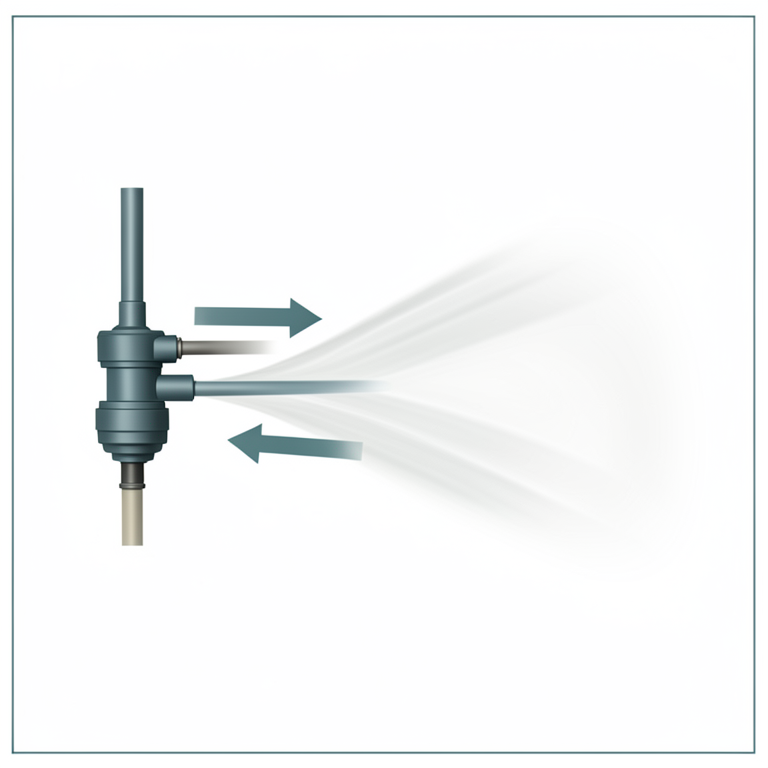
Parameter Influence Hierarchy
AI-generated conceptual illustration (drone mounted sprayer). It explains the idea and does not show study data.
View source evidence ↗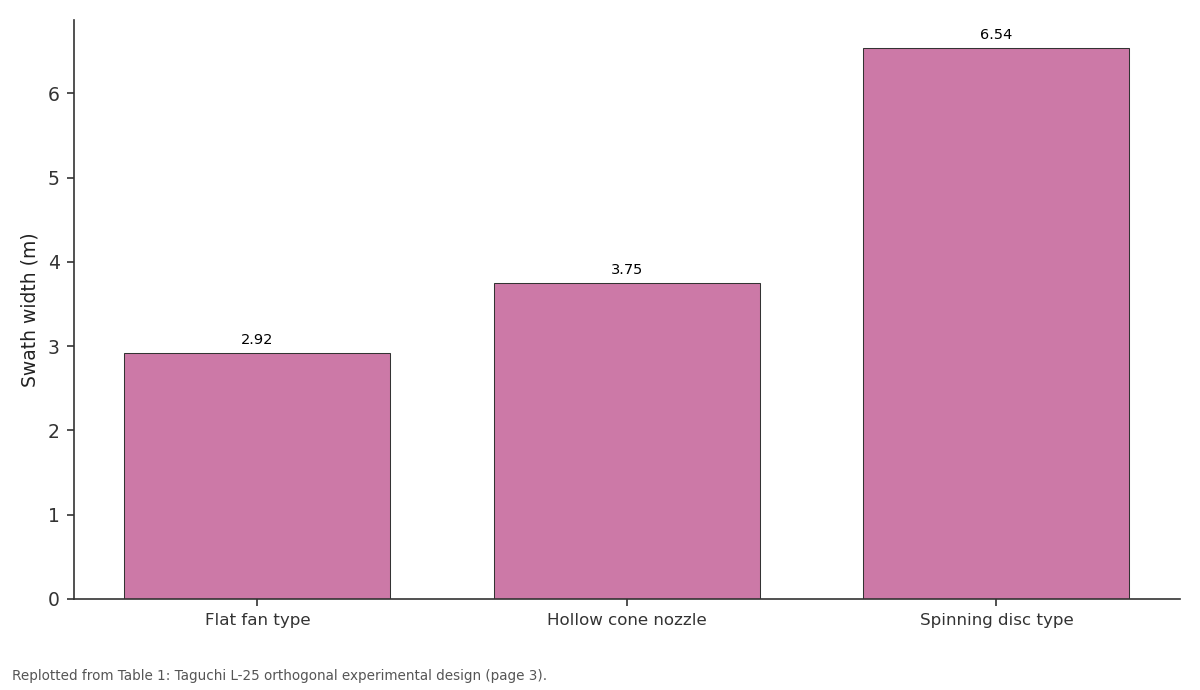
Swath width (m): Flat fan type vs Hollow cone nozzle vs Spinning disc type
Replotted from Table 1 (page 3) of the original paper. Every bar is the paper's own table value.
View source evidence ↗Figures & tables
From the original paper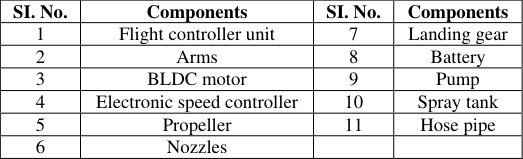 Table 1
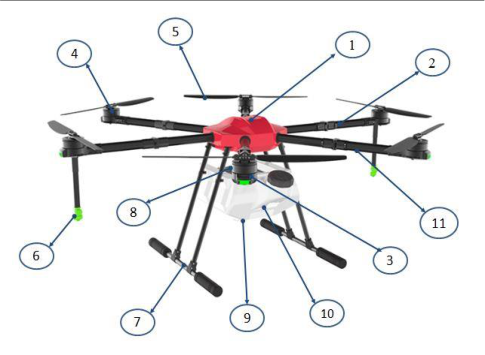 Figure 1
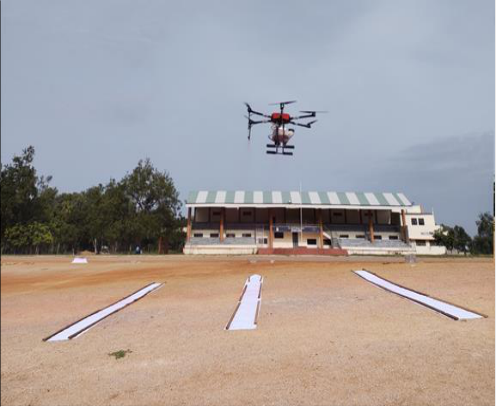 Figure 2
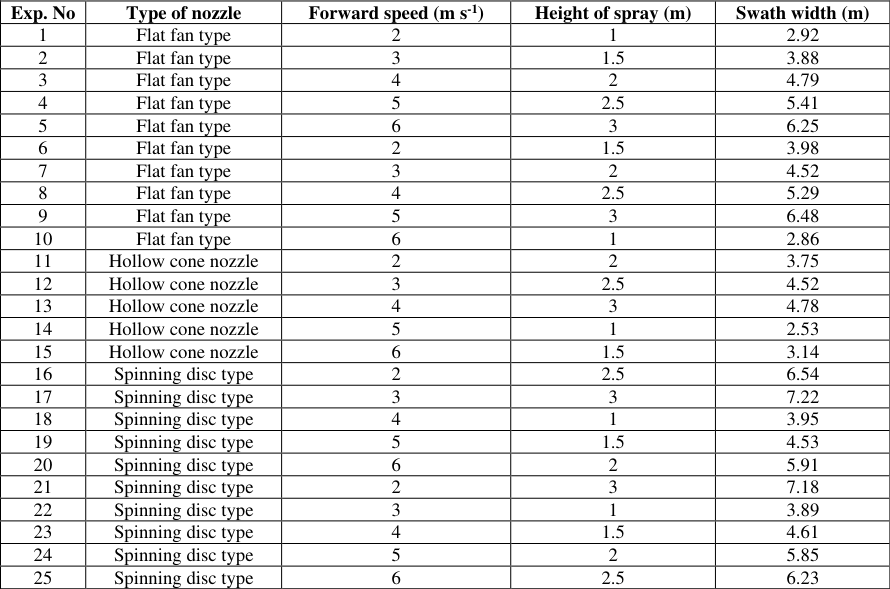 Table 1
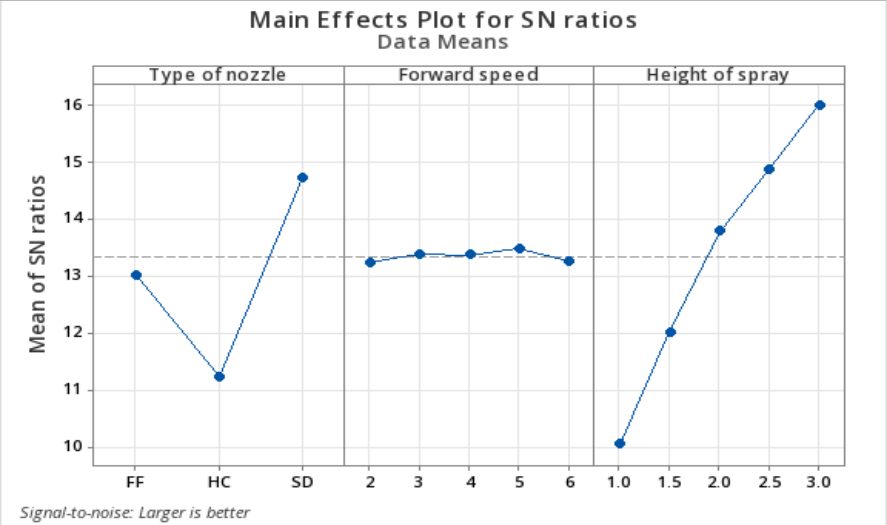 Figure 3
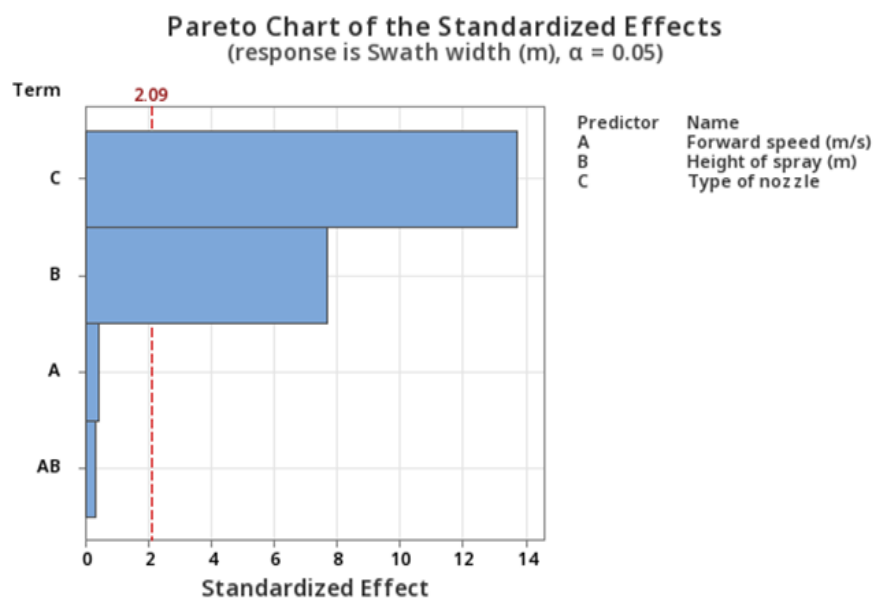 Figure 4
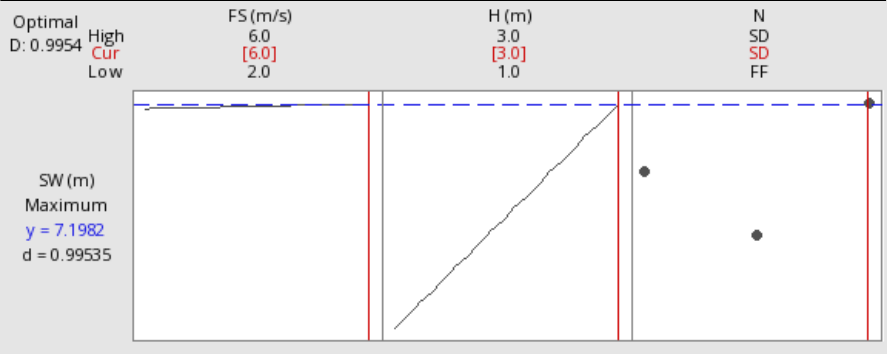 Figure 5
Introduction
The advent of drones has brought about a revolutionary transformation in agriculture, particularly in the domain of crop spraying. Unmanned Aerial Vehicles (UAVs), commonly known as drones, equipped with advanced spraying capabilities, are playing a pivotal role in optimizing the application of pesticides. Drones for spraying pesticides have revolutionized modern agriculture, offering precision and efficiency in crop protection. These unmanned aerial vehicles (UAVs) equipped with advanced technologies enable targeted pesticide application, minimizing waste and environmental impact. The multirotor drones are classified into three types namely quadcopter, hexacopter and octocopter. The quadcopter of four arms has less stability during flight and small in size with less payload capacity. The octocopter is bulky in size and more expensive as compared with all available technologies. Hence, it is suggested to use hexacopter equipped with sprayer system as it is more stable during application operations as compared to that of quadcopter and it is economical than octocopter (Susitra et al., 2020) [8] . The various companies are manufacturing the drone sprayers but no particular information is available regarding operational parameters of drone mounted sprayer for its better performance. Since the operational parameters will change according to the type of drone, location of area in the earth and type of crop. The set operational parameters such as forward speed, height of spray and type of nozzle need to be optimized to use drones appropriately in agriculture and allied sectors. Uniformity and the correct selection of swath width are among the most important aspects for aerial applications. Poor uniformity of spray distribution, such as a great variation of the dose across the field degrades the quality of the application, and may result in several negative aspects, such as low control of pests (Carvalho et al., 2020) [3] . Taguchi designs use orthogonal arrays, which estimate the effects of factors on the response mean and variation. An orthogonal array means the design is balanced so that factor levels are weighted equally. Because of this, each factor can be assessed independently of all the other factors, so the effect of one factor does not affect the estimation of a different factor. This can reduce the time and cost associated with the experiment when fractionated designs are used.
In the current investigation, the Taguchi design used to study the influence of various operational parameters on performance of drone mounted sprayer and optimum combination of operational parameters was identified.
Materials and Methods
The drone technology experiments were conducted at UAS Raichur during 2021-22.
Drone mounted sprayer
The drone mounted sprayer comprised of several components (Fig. 1) but, mainly it had basic systems like, airframe, propulsion system and command and control system. The fuselage, landing gear and arms belongs to airframe. The battery, motor, electronic speed controller (ESC) and propellers belongs to propulsion system. Radio controlled (RC) transmitter and receiver, flight controller unit, global position system (GPS) and ground control station (GCS) belongs to the command and control system.
Total swath width is defined as the total discharge of material from an applicator from the leftmost to the rightmost material deposited (Houston, 2022) [5] . Total swath width is the maximum distance between the ends of ground deposits patterns, regardless of varying densities of material along the pattern. For measuring swath width three rows of white kraft paper roll were placed at parallel with each other (Fig. 2). The distance between sampling lines was maintained 3 m. Red colour dye mixed with pure water was used to get impressions of water droplets on white kraft paper roll. Drone mounted sprayer was operated at different combinations of operational parameters such as Type of nozzle (N), Forward speed (FS) and Height of spray (H). The corresponding swath width was measured as maximum width (length perpendicular to the forward direction of drone mounted sprayer) up to which dense droplets were observed on white kraft paper roll (De Padua et al., 2021). To ensure uniformity in speed, height and application rate, spraying was started from 10 m before sampling line and stopped at 10 m after sampling line to get better results. ) and height of spray (1, 1.5, 2, 2.5 and 3 m) at five levels each (Table 1). Since Taguchi method utilizes orthogonal arrays, the levels of three factors should be same. The levels of flat fan nozzle and spinning disc nozzle were selected as dummy treatments. Measured values of performance parameter swath width was recorded and given as result inputs for further analysis. In Taguchi method, the experimental values of various responses are further transformed from signal to noise (S/N) ratio (Sudeesh et al., 2018) [7] . The goal was to optimize the combination of independent parameters which will maximize the swath width. Hence, S/N ratio for "Larger is Better" was set for swath width in Taguchi method using following model equations. The effect of operational parameters viz. Type of nozzle (N), Forward speed (FS) and Height of spray (H) on swath width (SW) is portrayed in Fig. 3. It was observed that the swath width was increased as height of spray increases. This may be due to the as drone sprayer's height increases above the target surface, the spray particles or droplets have more time to disperse and cover a wider area before reaching the ground. This can result in an increased swath width, the higher the flight altitude, the wider the swath width as spray droplets released from the nozzle are diffused (Zhang et al., 2017, and Martin et al., 2019) [10,6] . The velocity discrepancy from the middle to the outwards of the down-wash airflow led to an expanding tendency of airflow and thus an expansion of the spraying width. The spraying width was basically proportional to the flying height (Zhilun et al., 2018) [11] . The swath width was found non-significant with the forward speed. These results were in agreement with the statement of Martin et al. (2019) [6] . The Pareto chart (Fig. 4) was generated to indicate most significant parameter among selected independent variables based on the standardized effect values at 5% level of significance. It was found that the type of nozzle has more significant effect followed by height of spray. The forward speed had non-significant effect on swath width.
| Exp. No | Type of nozzle | Forward speed (m s-1) | Height of spray (m) | Swath width (m) |
|---|---|---|---|---|
| 1 | Flat fan type | 2 | 1 | 2.92 |
| 2 | Flat fan type | 3 | 1.5 | 3.88 |
| 3 | Flat fan type | 4 | 2 | 4.79 |
| 4 | Flat fan type | 5 | 2.5 | 5.41 |
| 5 | Flat fan type | 6 | 3 | 6.25 |
| 6 | Flat fan type | 2 | 1.5 | 3.98 |
| 7 | Flat fan type | 3 | 2 | 4.52 |
| 8 | Flat fan type | 4 | 2.5 | 5.29 |
| 9 | Flat fan type | 5 | 3 | 6.48 |
| 10 | Flat fan type | 6 | 1 | 2.86 |
| 11 | Hollow cone nozzle | 2 | 2 | 3.75 |
| 12 | Hollow cone nozzle | 3 | 2.5 | 4.52 |
| 13 | Hollow cone nozzle | 4 | 3 | 4.78 |
| 14 | Hollow cone nozzle | 5 | 1 | 2.53 |
| 15 | Hollow cone nozzle | 6 | 1.5 | 3.14 |
| 16 | Spinning disc type | 2 | 2.5 | 6.54 |
| 17 | Spinning disc type | 3 | 3 | 7.22 |
| 18 | Spinning disc type | 4 | 1 | 3.95 |
| 19 | Spinning disc type | 5 | 1.5 | 4.53 |
| 20 | Spinning disc type | 6 | 2 | 5.91 |
| 21 | Spinning disc type | 2 | 3 | 7.18 |
| 22 | Spinning disc type | 3 | 1 | 3.89 |
| 23 | Spinning disc type | 4 | 1.5 | 4.61 |
| 24 | Spinning disc type | 5 | 2 | 5.85 |
| 25 | Spinning disc type | 6 | 2.5 | 6.23 |
Table text extracted from the original PDF; superscript letters are shown inline. The original table image is below.
View original table image
| SI. No. | Components | SI. No. | Components |
|---|---|---|---|
| 1 | Flight controller unit | 7 | Landing gear |
| 2 | Arms | 8 | Battery |
| 3 | BLDC motor | 9 | Pump |
| 4 | Electronic speed controller | 10 | Spray tank |
| 5 | Propeller | 11 | Hose pipe |
| 6 | Nozzles |
Table text extracted from the original PDF; superscript letters are shown inline. The original table image is below.
View original table image
Larger is
Larger is
Application of response optimizer to optimize operational parameters
The swath width was optimised for the goal maximum is better.
The maximum swath width of 7.19 m was observed. Composite optimum combination plot was prepared by considering maximum swath width. It was found that forward speed at 6 m s - 1 , height of spray at 3 m and spinning disc nozzle was the optimum combination for swath width with desirability of 0.9954 (Fig. 5).
Conclusion
The experiments were conducted to find optimum combination of operational parameters to maximize the swath width of drone mounted sprayer according to Taguchi L-25 orthogonal experimental design. Taguchi analysis of parameters revealed that the type of nozzle has more significant effect on swath width followed by height of spray. The forward speed had nonsignificant effect on swath width. The maximum swath width 7.19 m was observed at combination forward speed at 6 m s -1 , height of spray at 3 m and spinning disc nozzle.
Acknowledgement
AcknowledgementsAuthors sincerely acknowledge the College of Agricultural Engineering, UAS, Raichur for providing the facility to carry out the research and also Directorate of SC/ST cell for funding publication.
References
10 in the original paper- Anchal LS, Veerangouda M, Palled V, Sreenivas AG. Parametric optimization of solar powered remote-controlled sprayer using RSM and TAGUCHI method. Indian Journal of Ecology. 2023;50(6):2129-2136.
- Arudra SR. Optimization of operational parameters for tractor operated swinging lance sprayer using Taguchi design. Agricultural Engineering International: CIGR Journal. 2023;25(3).
- Carvalho FK, Chechetto RG, Mota AA, Antuniassi UR. Challenges of aircraft and drone spray applications. Outlooks on Pest Management. 2020;31(2):83-88.
- De Padua EP, Amongo RC, Quilloy EP, Suministrado DC, Elauria JC. Development of a local unmanned aerial vehicle (UAV) pesticide sprayer for rice production system in the Philippines. IOP Conference Series: Materials Science and Engineering. 2021;1109(1):012022.
- Martin DE, Woldt WE, Latheef MA. Effect of application height and ground speed on spray pattern and droplet spectra from remotely piloted aerial application systems. Drones. 2019;3(4):83.
- Sudeesh S, Jyothish W, Kiran J, Sajul U, Sreeprasanth M. Application of taguchi method for optimization of process parameters in spur gear milling operation. International Journal of Engineering Research & Technology. 2018;5(5):3464-3474.
- Susitra D, Jebaseeli EAE, Chitturi VK, Chadalavada V. Design and development of an Hexacopter for fertlizer spraying in agriculture fields. Journal of Physics: Conference Series. 2020;1706(1):012053.
- Unal R, Dean EB. Taguchi approach to design optimization for quality and cost: an overview. In: 1991 Annual conference of the international society of parametric analysts; c1990 Jan.
- Zhang S, Qiu B, Xue X, Sun T, Gu W, Zhou F, et al. Effects of crop protection unmanned aerial system flight speed, height on effective spraying width, droplet deposition and penetration rate, and control effect analysis on wheat aphids, powdery mildew, and head blight. Applied Sciences. 2017;11(2):712.
- Zhilun Y, Luzhen G, Lijun Q, Yifan CHENG, Yalei WU. Influence of UAV rotor down-wash airflow on spray width. Transations of the Chinese Society of Agricultural Engineering. 2018;49(1).
Cited by 2
From OpenAlex, OpenCitations and reference lists read by Scinovex
- Effectiveness of Drone Mounted Sprayer for Managing Brown Planthopper (Nilaparvata lugens) in Paddy Eco-system ↗
T Kavya, Sushilendra Sushilendra, Sunil Shirwal, Vijayakumar Palled, A. G. Sreenivas, N Ananda · Journal of Agricultural Engineering (India) · 2025
The introduction of drone-mounted sprayers in Indian agriculture has created opportunities for precision pesticide application, yet challenges remain in defining crop- and growth-stage-specific operational strategies. Farmers often adopt blanket applications that result in excessive drift, wastage of pesticides, and reduced efficacy. To address this, a field experiment was conducted in paddy field to evaluate the performance of flupyrimin 10% SC…
❝ 2 - A generalised scaling correlation for airborne drift potential of agricultural nozzles ↗
Mehrzad Ansaripour, Reza Alidoost Dafsari, Chun-Gu Lee, Seung-Hwa Yu, Jeekeun Lee · Biosystems Engineering · 2026
❝ 0