
Research article · 2024 · Full text
International Journal of Advanced Biochemistry ResearchAzadirachta indica: A source of potential antibacterial activity against various bacterial strains
Volume 8(4S) · Pages 48–50 · DOI: 10.33545/26174693.2024.v8.i4sa.929 ↗
Research areasInsect Pest Control StrategiesEssential Oils and Antimicrobial ActivityPharmacology and Nanomedicine Research
Abstract
Author-writtenNeem, scientifically known as Azadirachta indica, exhibits potent antibacterial activity due to its bioactive compounds. The plant's leaves, seeds, and oil have been traditionally used in various cultures for their medicinal properties. Neem contains nimbin, nimbidin, and azadirachtin, among other constituents, which contribute to its antibacterial effects. These compounds disrupt bacterial cell membranes, inhibit enzymes essential for bacterial growth, and interfere with DNA replication, ultimately leading to bacterial cell death. Studies have shown that neem extracts or neem-based products display significant antibacterial activity against a wide range of bacterial strains, including Staphylococcus aureus, Escherichia coli, and Pseudomonas aeruginosa. Neem's antibacterial properties make it effective against both Gram-positive and Gram-negative bacteria. Additionally, neem's anti-inflammatory and immune-boosting properties further enhance its ability to combat infections. However, while neem offers promising antibacterial benefits, further research is necessary to optimize its usage, and understand potential interactions with other treatments. Nonetheless, neem stands as a natural source of antibacterial compounds with the potential to contribute to alternative or complementary antibacterial strategies.
Summary
Source-checkedPlain-language reading of the full paper, prepared with AI and checked against the text. Each point links to the authors' own words.
Why it matters
- The rise of drug-resistant pathogenic microorganisms is a significant threat to global public health, driving the search for alternative antimicrobial agents. View evidence ↗
- Azadirachta indica, commonly known as neem, is recognized for its potent antibacterial activity attributed to its bioactive compounds. View evidence ↗
- The antibacterial effects of neem are driven by specific constituents, including nimbin, nimbidin, and azadirachtin. View evidence ↗
The question
- The objective of this article is to examine the antimicrobial activity of Azadirachta indica against various pathogenic microorganisms. View evidence ↗
What they did
- The review analyzes the properties of various parts of the neem plant, specifically the leaves, seeds, and oil. View evidence ↗
- The study describes the multifaceted mechanisms of action of neem, which include disrupting cell membranes, interfering with cell division, inhibiting enzymes, and altering gene expression. View evidence ↗
What they found
- Neem extracts and products show significant antibacterial activity against a broad range of strains, specifically Staphylococcus aureus, Escherichia coli, and Pseudomonas aeruginosa. View evidence ↗
- Neem is effective against both Gram-positive and Gram-negative bacteria. View evidence ↗
- Among the different parts of the plant, leaf extracts demonstrate the strongest antibacterial activity. View evidence ↗
- In specific tests of leaf and bark extracts, Vibrio cholerae and Bacillus subtilis showed the highest inhibition zones, whereas E. coli and Salmonella typhi were more resistant. View evidence ↗
- The effectiveness of neem depends on the solvent used: chloroform extracts work against E. coli, B. subtilis, E. faecalis, and S. faecalis, while methanolic extracts are effective against Vibrio cholera. View evidence ↗
- Aqueous extracts of both old and tender neem leaves were found to kill 100% of human spermatozoa within 20 seconds. View evidence ↗
- Neem-based mouthwash has demonstrated antibacterial activity against Lactobacillus and Streptococcus mutans in saliva. View evidence ↗
What it means
- The authors conclude that neem's diverse compounds and mechanisms make it a promising candidate for combating global antimicrobial resistance. View evidence ↗
- The authors state that further research is required to optimize the use of neem and to understand how it interacts with other medical treatments. View evidence ↗
Visual summary
1 visualsIllustrations explain the paper; they do not show study data.
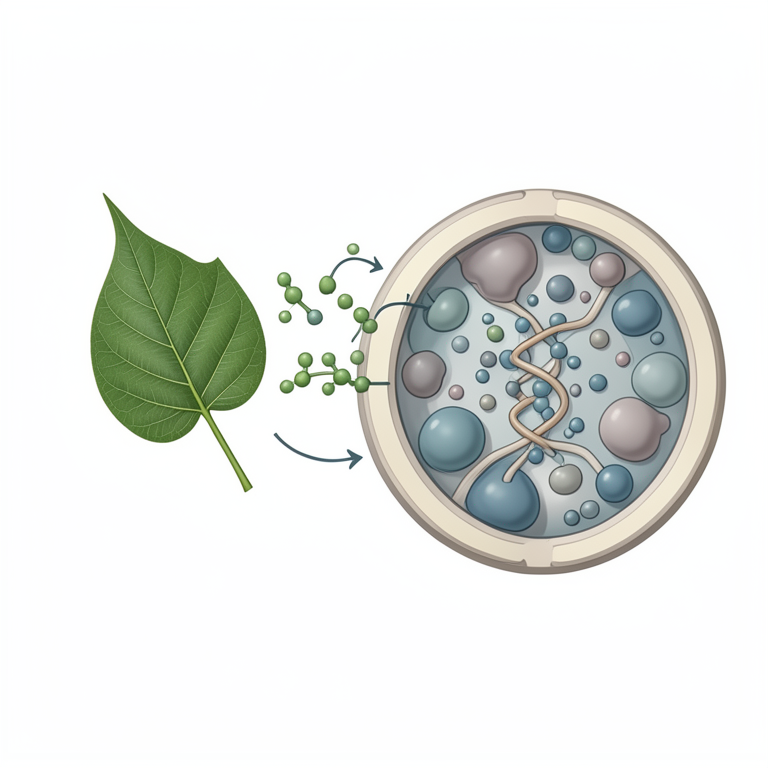
Mechanisms of Neem Action
AI-generated conceptual illustration (Neem (Azadirachta indica) leaf extract and bacterial cells). It explains the idea and does not show study data.
View source evidence ↗Figures & tables
From the original paper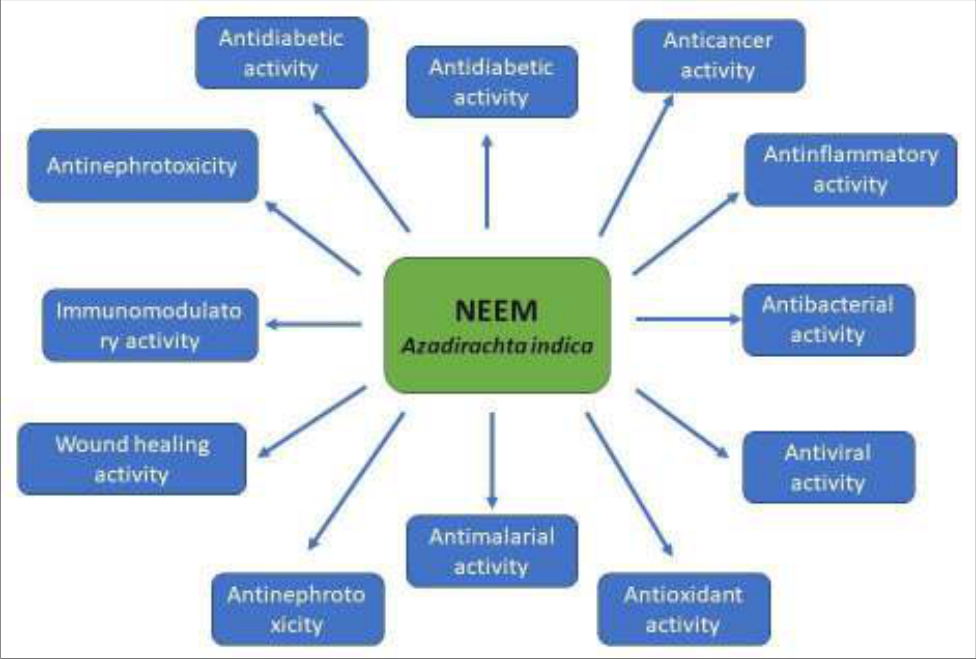 Figure 1
Introduction
In recent years, the emergence of drug-resistant pathogenic microorganisms has posed a significantly threat to public health. Researchers and scientists are actively exploring alternative source of antimicrobial agents to combat this growing concern. One such natural remedy is Azadirachta indica, commonly known as neem. Neem has a long history of traditional use in various cultures for its medical properties, including its potential as an antimicrobial agent. This article delves into the antimicrobial activity of Azadirachta indica against pathogenic microorganisms. In Indian culture neem has been used as a source of many therapeutic agents. According to Maragatharavlli (2012) [12] neem contains active substances as well as multiple medicinal properties. Neem leaf contain an aqueous extract which acts as a good therapeutic potential like antihyperglycemic agent in IDDM and NIDDM (Mossadek and Rashid 2008; Patil et al. 2013) [14,22] . Neem has many antibacterial properties which are used to control air borne bacterial contamination in the residential premise (El-Mahmood et al. 2010) [7] . Neem extracts are very functional for controlling malarial parasites, both chloroquin-resistant and sensitive strains of malarial parasites. Oil from neem leaves acts as an antibacterial action against gram positive and gram negative microorganisms. Apart from that neem has excellent qualities that are anti-inflammatory, insecticidal, larvicidal, anti-malarial, anti-ulcer, and other biological activity (Herrera-Calderon et al. 2019) [8] .
Neem: The Magical Drug
Neem (Azadirachta indica) trees are mostly grown in Indian subcontinent. It contains a plethora of bioactive compounds such as nimbin, nimbidin, azadirachtin and nimbolide. These compounds are believed to contribute to the plant's antimicrobial properties as well as antimalarial, antiviral, anti-inflammatory, analgesic, antipyretic, hypoglycaemic, antiulcer, antifertility, anticarcinogenic, hepatoprotective, antioxidant, anxiolytic, molluscicidal, acaricidal, and antifilarial properties (Kharwar et al. 2020) [9] (Fig. 1).
Interna tional Jo urna l o f Adva nced Bio chemistry Research 20 24 ; SP-8 (4 ): 48 -50
Neem's mechanisms of action against pathogenic microorganisms are multifaceted and include disrupting microbial cell membranes, interfering with cell division, inhibiting enzymatic processes, and altering gene expression. The popularity of neem are increasing day by day because of their biodegradability, least persistence and least toxic to non-target organisms and they are easily available. Boiled neem water are also acts as an excellent antiseptic to clean wounds, swelling and eases skin problems (Bonjar and Holland, 2004) [4] . The neem leaves are used as a protection against paracetamol induced liver necrosis due to its antioxidant activity (Chattopadhyay and Bandopadhyay, 2005) [5] . Antifertility effect of neem oil has also been noticed in recent studies and are suggested as one of the best methods of contraception. Aqueous extract of old and tender neem leaf was found to immobilize and kill 100% human spermatozoa within 20 s (Khillare and Shrivastav, 2003) [10] . [19] . Neem has numerous applications in pharmaceuticals and medicinal field. Against Klebsiella, Serratia species, and Streptococcus, the stem and bark of Neem have strong antibacterial properties (Mafou-Sonhafouo et al. 2019) [11] . While chloroform extracts of Neem are effective against E. coli, Bacillus subtilis, Enterococcus faecalis, and Streptococcus faecalis, methanolic extracts of Neem are effective against Vibrio cholera (Shah et al. 2017) [18] . An analysis of the antibacterial properties of Azadirachta indica (neem) leaf, seed, bark, and fruit extracts on bacteria taken from mouths of adult samples was conducted. The results showed that leaf and bark extracts have an antibacterial impact on all of the examined microorganisms (Chauhan et al. 2015) [6] . A wide variety of bacteria, including strains of Mycobacterium tuberculosis and grampositive and gram-negative bacteria with streptomycinresistance mechanisms, are resistant to oil derived from leaves, bark, and seeds of neem. The phytoconstituents such as alkaloids, tannins, saponins, steroids, and flavonoids were employed to have a sterile effect on Corynebacterium bovis, Staphylococcus aureus, and Escherichia coli strains. Neem oil has been shown to be effective against a variety of bacteria, including Salmonella, Staphylococcus, Pseudomonas, Escherichia coli, Klebsiella pneumonae, Bacillus, Streptococcus spp. Azadirachta indica leaf extracts have the strongest antibacterial activity, demonstrating the efficacy of the bioactive components and confirming the use of the neem plant in vital health benefits (Herrera-Calderon et al. 2019) [18] . Raut et al. (2014) [17] studied the leaf and bark extract of neem on various bacteria among which Vibrio cholerae and Bacillus subtilis showed highest inhibition zone against the extract while E. coli and Salmonella typhi were more resistant to the neem extract. Neem was described as an antibacterial agent against harmful bacteria found in fish by Barua et al. in 1999 [2] . In order to combat bacteria (Pseudomonas fluorescens, Aeromonas hydrophila, Mycobacteria spp. and Escherichia coli), found in fish aqua-neem made from neem kernels was utilized. This experiment showed high sensitivity of aquaneem towards these bacteria especially the first three.
In some studies, it was found that neem mouthwash also shows antibacterial activity against salivary level of Streptococcus mutans and Lactobacillus (Vanka et al. 2001) [20] . Alcoholic extracts of neem leaves act against human bacterial pathogens like Bacillus pumillus, Pseudomonas aeruginosa and Staphylococcus aureus.
Conclusion
Azadirachta indica, commonly known as Neem. It exhibits noteworthy antimicrobial activity against a variety of pathogenic microorganisms. Its diverse bioactive compounds and multifaceted mechanisms of action make it a promising candidate for addressing the global challenge of antimicrobial resistance. As research progresses, neem based treatments could potentially contribute to the development of novel antimicrobial therapies and strategies. Every part of neem plant have many beneficial effect for controlling pathogenic microbial organisms and they are also used to control leprosy, respiratory disorder in children. Now a days the demand for neem has increased as they have many medicinal as well as antibacterial properties and because of their biodegradability and are very easily available.
References
21 in the original paper- Adyanthaya S, Pai V, Maji Jose MDS. Antimicrobial potential of the extracts of the twigs of Azadirachta indica (Neem). Journal of Medicinal Plants Studies. 2014;2(6):53-57.
- Barua DR, Basavanna JM, Varghese RK. Efficacy of Neem Extract and Three Antimicrobial Agents Incorporated into Tissue Conditioner in Inhibiting the Growth of Candida albicans and Streptococcus mutans. Journal of Clinical and Diagnostic Research. 2017;11(5):ZC97-101.
- Biswas K, Chattopadhyay I, Banerjee RK, Bandopadhyay U. Biological Activities and Medicinal Properties of Neem (Azadirachta indica). Current Science. 2002;82(11):1336-1345.
- Bojar RA, Holland KT. Acne and Propionibacterium acnes. Clinics in Dermatology. 2004;22(5):375-379.
- Chattopadhyay RR, Bandyopadhyay M. Possible Mechanism of Hepatoprotective Activity of Azadirachta indica Leaf Extract Against ParacetamolInduced Hepatic Damage in rats: Part III. Indian Journal of Pharmacology. 2005;37:184-185.
- Chauhan S, Jindal M, Singh P, Tewari S. Antimicrobial Potential of Aqueous, Methanolic and Ethanolic Extracts of Azadirachta indica Against Bacterial Pathogens Isolated from Urinary Tract Infection Patients. International Journal of Current Microbiology and Applied Sciences. 2015;4(7):211-4.
- EI-Mahmood AM, Ogbonna OB, Raji M. The Antibacterial Activity Azadirachta indica (Neem) Associated with Eye and Ear Infections. Journal of Medicinal Plant Research. 2010;4(14):1414-1421.
- Herrera-Calderon O, Ejaz K, Wajid M, Shehzad M, Tinco-Jayo JA, Enciso-Roca E, et al. Azadirachta indica: Antibacterial Activity of Neem Against Different Strains of Bacteria and their Active Constituents as Preventive in Various Diseases. Pharmacognosy Journal. 2019;11(6):1597-1604.
- Kharwar RN, Sharma VK, Mishra A, Kumar J, Singh DK, Verma SK, et al. Harnessing the Phytotherapeutic Treasure Troves of The Ancient indica (Neem) and Associated Endophytic Microrganisms. Planta Medica. 2020;86:906-940.
- Khillare B, Shrivastav TG. Spermicidal Activity of Azadirachta indica (neem) Leaf Extract. Contraception. 2003;68(3):225-229.
- Mafou-Sonhafouo V, Kana JR, Nguepi-Dongmo K. Effects of Graded Levels of Azadirachta indica Seed Oil on Growth Performance and Biochemical Profiles of Broiler Chickens. Veterinary Medicine and Science. 2019;5(3):442-50.
- Maragatharavlli S, Brinda S, Kaviyaarshi NS, Gangwar SR. Antimicrobial Activity in Leaf Extract of neem (Azadirachta indica Linn.). International Journal of Science and Nature. 2012;3(1):110-113.
- Mohammad A. Antimicrobial Potential of Azadirachta indica Against Pathogenic Bacteria and Fungi. Journal of Pharmacognosy and Phytochemistry. 2012;1(4):7883.
- Mosaddek ASM, Rashid MMUA. Comparative Study of The Anti-Inflammatory Effect of Aqueous Extract of Neem Leaf and Dexamethasone. Bangladesh Journal of Pharmacology. 2008;3(1):44-47.
- Bandopadhyay U. Neem [Azadirachta indica]. Current Science. 2002;82:1336-1345.
- Paray AR, Bhakat M, Mohanty TK, Parry UR, Lone SA. Antimicrobial Activity of Indian Medicinal Plants, Azadirachta indica, Carica papaya, Curcuma longa, Moringa oleifera and Tinospora cordifolia. Pharma Innovation Journal. 2018;7(10):523-531.
- Raut RR, Sawant AR, Jamge BB. Antimicrobial activity of Azadirachta indica (Neem) Against Pathogenic Microorganisms. Journal of Academia and Industrial Research. 2014;3(7):327-329.
- Shah FM, Razaq M, Ali A, Han P, Chen J. Comparative Role of Neem Seed Extract, Moringa Leaf Extract and Imidacloprid in The Management of Wheat Aphids in Relation to Yield Losses in Pakistan. PLoS One. 2017;12(9):e0184639.
- Siddiqui S, Faizi S, Siddiqui BS, Ghiasuddin. Constituents of Azadirachta indica: Isolation and Structure elucidation of a New Antibacterial Tetranortriterpenoid, Mahmoodin, and a New Protolimonoid, Naheedin. Journal of Natural Products. 1992;55(3):303-310.
- Vanka A, Tandon S, Rao SR, Udupa N, Ramkumar P. The Effect of Indigenous Neem Azadirachta indica Mouth Wash on Streptococcus mutans and Lactobacilli growth. Indian Journal of Dental Research. 2001;12(3):133-144.
- Verkerk RHJ, Wright DJ. Biological Activity of Neem Seed Kernel Extract and Synthetic Azadirachtin Against Larvae of Plutella xylostellal. Pesticide Science. 1993;37(1):83-91.
Cited by 1
From OpenAlex, OpenCitations and reference lists read by Scinovex
- Development of a bio-based composite from in situ extracted neem oil, threadlets, and Bacillus sp. PhNs9 synthesized PHBV utilizing sugarcane molasses ↗
Pritam Bajirao Patil, Debapriya Sarkar, Kasturi Poddar, Pratik Madhukar Gorde, Sushil Kumar Singh, Angana Sarkar · Preparative Biochemistry & Biotechnology · 2025
Environmental concerns over synthetic plastics highlight the need for sustainable alternatives, among which bacterial polyhydroxyalkanoates (PHAs) have emerged as promising. However, their commercialization is limited, owing to their higher production cost and lower applicability. Hence, this study employs ANN-GA-based optimization of a novel in-situ fed-batch process using a self-isolated Bacillus sp. PhNs9 utilizing untreated sugarcane molasses as a cost-effective substrate.…
❝ 2