
Research article · 2024 · Full text
International Journal of Advanced Biochemistry ResearchA comparative statement on sustainable development of horticulture in West Bengal (India): Climate change and food security
Volume 8(4) · Pages 44–48 · DOI: 10.33545/26174693.2024.v8.i4a.906 ↗
Research areasSustainable Development and Environmental Policy
Abstract
Author-writtenSustainable Development is a concept focused on advancing the current generation's needs without jeopardizing the capacity of future generations to fulfill their own requirements. Horticulture plays a crucial role as an allied sector of agriculture, offering additional income and alternative livelihoods, particularly to the landless, along with generating employment opportunities during non-agricultural seasons. Moreover, it significantly contributes to value-added services and the food processing industry. This sector possesses the potential to create employment opportunities and foster entrepreneurship among the youth. The rising consumer demand for horticultural crops is evident, driven by an improvement in the quality of life in urban and peri-urban areas. West Bengal, with its diverse climatic conditions, holds substantial potential to meet these increasing demands.
Summary
Source-checkedPlain-language reading of the full paper, prepared with AI and checked against the text. Each point links to the authors' own words.
Why it matters
- Horticulture is a vital agricultural sector that provides alternative livelihoods and income, especially for landless individuals, and creates jobs outside of primary agricultural seasons. View evidence ↗
- India is facing a severe decline in per capita land availability, which dropped from 0.92 hectares in 1951 to 0.32 hectares in 2001, and is projected to reach 0.09 hectares by 2050. View evidence ↗
- The Indian agricultural industry is currently challenged by land fragmentation, which results in poor soil health, lower productivity, and instability in water tables and product pricing. View evidence ↗
The question
- The study examines the potential of West Bengal's diverse climate to meet the rising consumer demand for horticultural crops sustainably. View evidence ↗
What they did
- The analysis considers the six distinct agro-climatic zones of West Bengal that allow for year-round production of horticultural crops. View evidence ↗
- The study evaluates West Bengal's role as a leading contributor, accounting for 9.6% of India's total horticultural production. View evidence ↗
What they found
- Vegetables are the primary component of West Bengal's horticultural output, representing 86.4% of the total. View evidence ↗
- Based on 2011–2012 data, West Bengal is the top producer of pineapple and the second-largest producer of litchi in India. View evidence ↗
- High temperatures of 35 °C combined with low relative humidity of 49% cause dehydration injury to mango panicles during peak bloom. View evidence ↗
- Rising temperatures accelerate pest emergence, with aphid attacks beginning two weeks earlier for every 1 °C increase in temperature. View evidence ↗
- The food processing step of blanching can reduce the presence of germs in vegetables by up to 99%. View evidence ↗
What it means
- The authors conclude that horticulture is a sustainable industry that ensures long-term food security for the population. View evidence ↗
- The authors state that horticulture serves as a critical linked industry providing essential income and employment for landless individuals. View evidence ↗
Visual summary
2 visualsIllustrations explain the paper; charts are replotted from the paper's own table values.
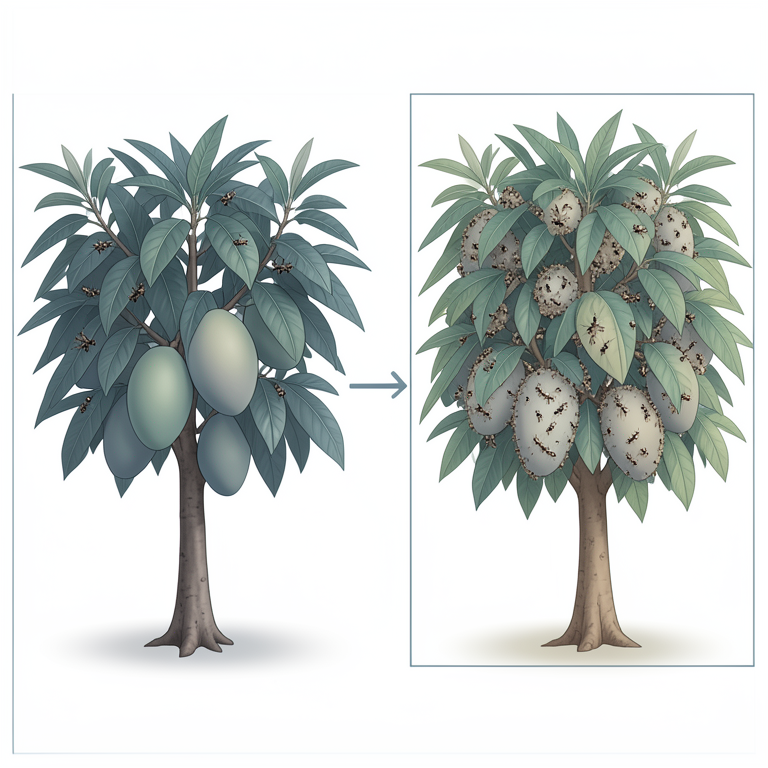
Temperature and Pest Emergence
AI-generated conceptual illustration (Mango trees and aphids in West Bengal). It explains the idea and does not show study data.
View source evidence ↗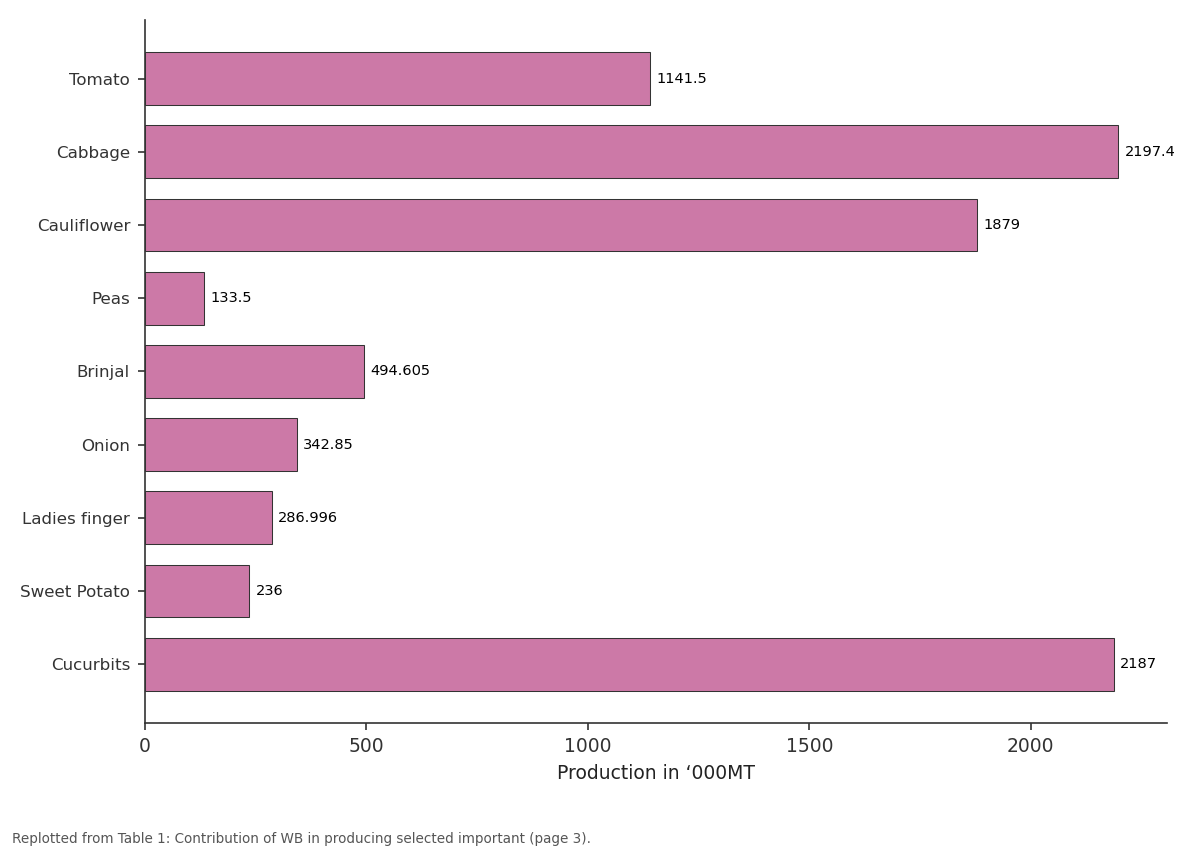
Production in ‘000MT: Tomato vs Cabbage vs Cauliflower vs Peas vs Brinjal
Replotted from Table 1 (page 3) of the original paper. Every bar is the paper's own table value.
View source evidence ↗Figures & tables
From the original paper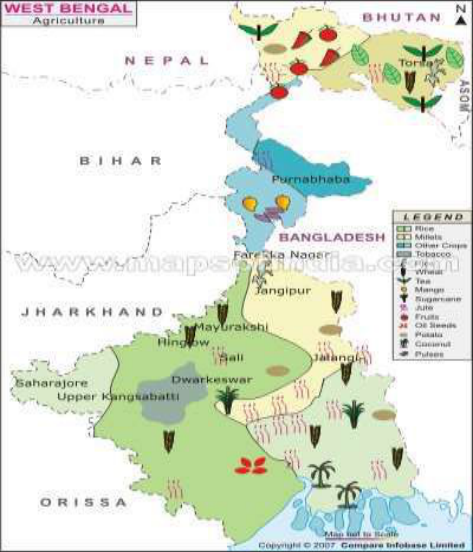 Figure 1
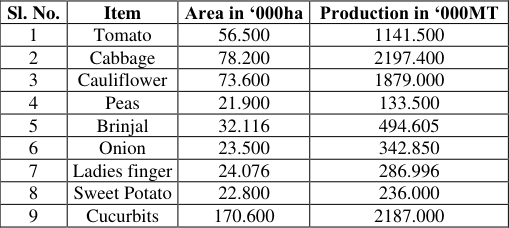 Table 1
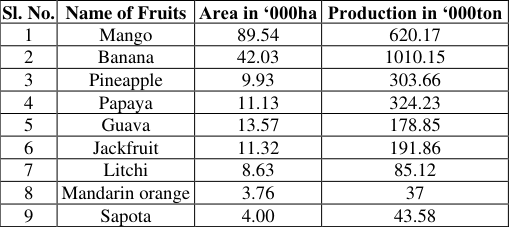 Table 2
 Figure 2
Introduction
The notion of sustainable development is inherently clear but poses challenges in providing a precise practical definition due to variations in interpretation across different fields (Briassoulis, 2001) [3] . It represents a method of resource utilization that aims to meet human needs while simultaneously safeguarding the environment, ensuring the satisfaction of these needs not only in the present but also for future generations (Smith and Rees, 1998) [16] . It encapsulates two fundamental components: addressing the concept of needs, especially those that are essential and may have been depleted or polluted. Ecologists define the carrying capacity of an ecosystem as the population of humans and animals that can be sustained, considering plant primary productivity and the available resources and services, without causing harm to the resource base-comprising soil, water, and the environment. (Daily et al. 1992) [5] . India encompasses approximately 18% of the global population and 15% of the world's cattle, yet it occupies only 2.3% of the total geographical area and 0.5% of pasture and grazing lands. The per capita availability of land has witnessed a significant decline, plummeting from 0.92 hectares in 1951 to approximately 0.32 hectares in 2001. Projections indicate a further reduction to 0.09 hectares by 2050. The demand for land is escalating swiftly, leading to an increasing scarcity of available land resources. Agriculture stands as one of the pivotal sectors in the Indian economy, and the nation's ongoing development has marked notable advancements in food production to cater to the rising needs of our expanding population. Presently, this industry encounters formidable challenges arising from the fragmentation of land holdings, leading to diminished soil health, reduced productivity, fluctuating water tables, climate change, and unpredictable prices of perishable products. Small and marginal farmers find themselves particularly vulnerable, as agriculture becomes increasingly precarious and unprofitable, contributing to a distressing surge in farmer suicides. Crop diversification and agricultural product value addition are proposed solutions to these difficulties.
Food Security
Food security pertains to the presence and attainability of food. A household is considered food-secure when its inhabitants are free from hunger or the threat of starvation.
Two widely employed definitions of food security are provided by the UN Food and Agriculture Organization (FAO) and the United States Department of Agriculture (USDA).: Basically, food security exist when overall peoples, at all times those having economical, social and physical access to sufficient, safe more nutritional food to meet their daily needs and it performance to achieve a good and healthy life. For a household to be acknowledged as food secure, its residents must consistently have access to sufficient food to maintain active and healthy lifestyles. Food security encompasses, at the very least, the immediate accessibility of nutritious, safe food, along with the guarantee of obtaining these provisions through socially acceptable means (i.e., without resorting to emergency food supplies, scavenging, stealing, or other coping mechanisms).
Food security conditions to full-scale famine are the stages of food insecurity. "Food insecurity is the primary cause of both famine and hunger. There are two types of food insecurity: chronic and temporary. In order to ensure food security, this vulnerability must be removed because chronic food insecurity makes people very vulnerable to famine and starvation. It is tied to poverty and resembles undernourishment; it is more prevalent in developing nations. The FAO stated that we were still far from meeting the MDG-millennium development target, which is to reduce hunger by half globally by 2015 (Van Eeckhout, 2010) [31] . Horticulture, which involves the cultivation of fruits and vegetables, plays a vital role in transforming barren lands and enhancing environmental conditions, thereby uplifting the socio-economic status of communities. The practice of horticulture makes a substantial and noteworthy contribution to the Indian economy. Organic farming and agro-ecology are examples of sustainable food systems that increase food security, end hunger, and are economically viable. They also preserve land, water, animal and plant genetic resources, biodiversity, and ecosystems while boosting ecosystems' resistance to climate change and natural disasters.
Scenario of West Bengal in horticulture
Scenario of West Bengal in horticulture
Climate Change
Additionally, the local farmers have been impacted by this change in the weather pattern. The Bay of Bengal's salinity, which is flowing inland and combining with fresh river water used for irrigation, has an impact on their product since it depletes the soil's fertility and kills the crops. Around the world, climate change has a significant impact on horticulture, agriculture, the environment, and public health. Environmental pressures have a significant impact on the soil's organic matter decomposition, nutrient recycling, and availability, as well as the soil's restricted soil moisture, yield, and plant water availability. Climate change can effect the agriculture in various ways such as: Temperature: Extreme weather events such as hot and cold waves have been observed to cause significant damage to numerous fruit harvests. Temperature is said to affect flowering in perennial crops like mango and guava. Mango has a vegetative bias, which gets greater as the temperature rises and affects the flowering phenology. Those panicles that emerged later and at higher temperatures had a higher proportion of hermaphrodite flowers. Intense transpiration and dehydration injury to panicles occurred during the peak bloom time as a result of the high temperature (35 °C), low relative humidity (49%), and lengthy daylight hours. In both mango plants that give fruit and those that do not, leaf burning and twig death are typical signs of heat exhaustion. Early or delayed flowering, repeated reproductive flushes, differences in fruit maturity, aberrant fruit set, and the conversion of reproductive buds into vegetative ones are among the most notable consequences of climate change on mango trees. Drought: The primary climate related threat to the horticulture is the amount of water, whether too little or too much. When drought damage is obvious on trees, it is typically too late. Due to a lack of water, trees are beginning to lose branches and occasionally even entirely uproot themselves. Ex: Jamun, mango, coconut tress etc. When under stress from a lack of water, trees are also more vulnerable to pests and illnesses. Longlasting droughts raise the possibility of a fire ex: Paddy field. Flood: Flood can affect both quality and marketing possibilities. It's possible to drink too much water as well as not enough. Tree roots may get weakened or killed by persistent floods. Floods are not just a problem in low-lying places. They can happen wherever that rapid rainfall is concentrated by the topography. We remove the debris that has been deposited after waiting for the water to wash away when floods are sporadic. We assess flood prevention systems such deflection bunds and storm drains where flooding is a frequent occurrence. Food Processing India has become a major producer of a number of food items, including milk, fruit, vegetables and black tea. The nation can supply the world with high-quality foods like Basmati rice, Darjeeling tea, and Alphonso mangoes. Sorting, grading, washing, peeling, sizing, blanching, and other preliminary processing activities for fruits and vegetables include the following. Sorting and grading: Sorting is the separation of raw materials based on particular physical qualities such as weight, size, form, density, photometric property, and so on, whereas grading is the classification of raw materials based on quality, which includes commercial value, end use, and official standards. Fruit should be ripe but solid and evenly matured, while vegetables should be tender and relatively free of soil, dirt, and so on. Blemishes, insect damage, and deformity should be avoided. The fruits and vegetables are graded after this basic sorting. This is required to obtain a pack of uniform quality in terms of size, colour, and so on. Washing: The graded fruits and vegetables are cleaned with water in a variety of ways, including soaking and subsequent washing in running water, as well as being sprayed with water or dry air to remove surface clinging particles. A thorough wash is critical for better microbiological quality of the finished product. To disinfect vegetables, immerse them in a dilute (0.1%) solution of potassium permanganate or sodium hypochlorite solution. Peeling: Using a peeler, peeling is done to remove undesirable or inedible material and to enhance the aesthetic of the finished product. a) Hand Peeling: Many fruits and vegetables are peeled and sliced by hand using special knives. b) Peeling by heat: Some fruits and vegetables are scalded in steam or boiling water to soften and loosen the peel, which is then easily removed by hand. This process results in virtually no flavour loss and a product with a consistent colour and no flaws. c) Lye Peeling: Fruits and vegetables like peaches, apricots, sweet oranges, carrots, and sweet potatoes are typically peeled by dipping them in a boiling caustic soda or lye solution of 1 to 2 percent strength for short periods of time ranging from 0.5 to 2 minutes depending on the maturity of the fruit or vegetable. The peel is then readily removed by hand. Blanching: It's sometimes referred to as scalding, parboiling, or precooking. In the case of vegetables, it is commonly done by immersing them in boiling water or steam for 2 to 5 minutes. It can reduces the area of leafy vegetables like spinach by shrinkage or wilting, making them easier to pack. Removes tissue gases that are responsible for the reduction of sulphides. Reduces germs by up to 99%. It improves the colour of green foods including peas, broccoli, and spinach. Removes the peel's unpleasant acids and astringent taste, to improving flavour. Cooling: The vegetables are submerged in cold water after blanching for easier handling and preservation.
Conclusion
After reviewing all aspects of sustainable development of horticulture in west Bengal we can conclude that horticulture is a significant agricultural linked industry that offers employment opportunities during non-agricultural seasons, supplemental income, and alternate means of particularly for those without access to land. The economic and social lives of individuals are significantly impacted by horticulture. Horticulture is sustainable and provides long-term food security for the population.
Figures and tables from the paper
| Sl. No. | Item | Area in ‘000ha | Production in ‘000MT |
|---|---|---|---|
| 1 | Tomato | 56.500 | 1141.500 |
| 2 | Cabbage | 78.200 | 2197.400 |
| 3 | Cauliflower | 73.600 | 1879.000 |
| 4 | Peas | 21.900 | 133.500 |
| 5 | Brinjal | 32.116 | 494.605 |
| 6 | Onion | 23.500 | 342.850 |
| 7 | Ladies finger | 24.076 | 286.996 |
| 8 | Sweet Potato | 22.800 | 236.000 |
| 9 | Cucurbits | 170.600 | 2187.000 |
Table text extracted from the original PDF; superscript letters are shown inline. The original table image is below.
View original table image
| Sl. No. | Name of Fruits | Area in ‘000ha | Production in ‘000ton |
|---|---|---|---|
| 1 | Mango | 89.54 | 620.17 |
| 2 | Banana | 42.03 | 1010.15 |
| 3 | Pineapple | 9.93 | 303.66 |
| 4 | Papaya | 11.13 | 324.23 |
| 5 | Guava | 13.57 | 178.85 |
| 6 | Jackfruit | 11.32 | 191.86 |
| 7 | Litchi | 8.63 | 85.12 |
| 8 | Mandarin orange | 3.76 | 37 |
| 9 | Sapota | 4.00 | 43.58 |
Table text extracted from the original PDF; superscript letters are shown inline. The original table image is below.
View original table image
References
14 in the original paper- Bharali S, Khan ML. Climate change and its impact on biodiversity; some management options for mitigation in Arunachal Pradesh. Curr. Sci. 2011;101(7):855-860.
- Briassoulis H. Sustainable tourism and the question of the commons. Ann. Tour. Res. 2001;29(4):1065-1085.
- Chand R. Demand for food grains during the 11th Plan and towards 2020. Policy brief No.28. New Delhi: National Centre for Agricultural Economics and Policy research; c2009.
- Daily GC, Ehrlich PR. Population, sustainability and earth's carrying capacity: A framework for estimating population sizes and lifestyles that could be sustained without undermining future generations. Bioscience. 1992;42:761-771.
- Food Security in the United States: Measuring Household Food Security. [Accessed on 27 September 2013].
- Ghosh SP. Research preparedness for accelerated growth of horticulture in India. J. Appl. Hort. 1999;1(1):64-69.
- Ghosh SP. Carrying capacity of Indian horticulture. Curr. Sci. 2012;2(25):889-893.
- C, Paulsen J. A world-wide study of high altitude tree line temperatures. J. Biogeogr. 2004;31:713-732.
- Singh RB. Towards a food secure India and South Asia: Making hunger a history. [Accessed on 27 September 2009]. Available from: http://www.apaari.org/wpcontent/uploads/2009/08/towards-a-food-secure-indiamaking-hunger-history.pdf
- United Nations. Report of the World Commission on Environment and Development. New York: General Assembly Resolution 42/187, United Nations; c1987. Retrieved: 2007-04-12.
- Dubey AK, Babu KD, Yadav DS. Status and prospect of horticulture in NEH region. ENVIS Bulletin. 2009, 10.
- Ghosh P. Carrying capacity of Indian horticulture. Curr. Sci. 2011;102(6):889-893.
- Chand R. Diversification through High Value Crops in Western Himalayan Region: Evidence from Himachal Pradesh. Ind. J. Agri Eco. 1996;11:236-240.
- Eeckhout VB, Hertem VD, Reza M, Srivastava K, Belmans R. Economic comparison of VSC HVDC and HVAC as transmission system for a 300 MW offshore wind farm. European Transactions on Electrical Power. 2010 Jul;20(5):661-671.