
Research article · 2024 · Full text
International Journal of Advanced Biochemistry ResearchImpact of iron and zinc agronomic biofortification on yield, concentration and uptake of nutrients in wheat as affected by iron and zinc solubilizing microbial inoculants
Volume 8(4) · Pages 192–199 · DOI: 10.33545/26174693.2024.v8.i4c.921 ↗
Research areasPlant Micronutrient Interactions and EffectsAgricultural Science and FertilizationCassava research and cyanide
Abstract
Author-written\Field experiment was conducted to improve Fe and Zn concentration and yield of wheat in response to varying Fe and Zn solubilizers and fertilizer application rates. The field experiment was carried out during rabi season of 2021-22 at research farm Department of Soil Science and Agricultural Chemistry, Vasantrao Naik Marathwada Krishi Vidyapeeth, Parbhani. Experiment consists of thirty six treatment combinations which includes four iron and zinc solubilizing cultures (Control, Pseudomona striata, Pseudomona fluorescens, and Bacillus megaterium), three levels of iron sulphate (0, 20 and 40 kg FeSO4 ha-1) and three levels of zinc sulphate (0, 20 and 40 kg ZnSO4 ha-1) in factorial randomized block design. The results emerged out found significant effect of iron and zinc solubilizing microbial inoculants particularly Pseudomona striata and in levels of iron sulphate and zinc sulphate upto40 kg ha-1on yield and concentration of iron and zinc. Significant increase in grain yield was noted with the application of Pseudomona striata (2968 kg ha-1) over control. Higher grain yield found with application of 40 kg FeSO4 ha-1 (2975 kg ha-1) and 40 kg ZnSO4 ha-1 (2971 kg ha-1). Similarly, maximum straw yield noted with application of Pseudomona striata (5331 kg ha-1) over control. Further, in levels of iron sulphate and zinc sulphate higher straw yield found with application of 40 kg FeSO4 ha-1 (5612 kg ha-1) and 40 kg ZnSO4 ha-1 (5530 kg ha-1). Higher concentration of macro nutrients and micronutrients noted with application of Pseudomona striata + 40 kg FeSO4 ha-1 +40 kg ZnSO4 ha-1. Similarly, higher uptake of macro and micro nutrients found with microbial inoculant particularly Pseudomona striata and with application of 40 kg FeSO4 ha-1 and 40 kg ZnSO4 ha-1 along with recommended dose of fertilizers.
Summary
Source-checkedPlain-language reading of the full paper, prepared with AI and checked against the text. Each point links to the authors' own words.
Why it matters
- More than 2 billion people globally experience micronutrient deficiencies due to diets consisting mainly of low-nutrient foods. View evidence ↗
- Iron deficiency is the most common nutritional issue, negatively affecting the physical, mental, and learning development of children. View evidence ↗
- Agronomic biofortification uses mineral fertilizers to increase the micronutrient levels in the edible portions of food crops. View evidence ↗
The question
- The study aimed to determine how different iron (Fe) and zinc (Zn) solubilizing microbial inoculants and fertilizer application rates affect the yield and nutrient concentration of wheat. View evidence ↗
What they did
- The field experiment took place during the 2021-22 rabi season at the research farm of Vasantrao Naik Marathwada Krishi Vidyapeeth in Parbhani. View evidence ↗
- The study used a factorial randomized block design with four microbial cultures (Control, Pseudomona striata, Pseudomona fluorescens, and Bacillus megaterium) and three levels each of iron sulphate and zinc sulphate (0, 20, and 40 kg ha-1). View evidence ↗
- Chemical fertilizers were applied at a recommended dose of 100:50:50 kg ha-1 for Nitrogen (N), Phosphorus (P2O5), and Potassium (K2O). View evidence ↗
What they found
- Inoculation with Pseudomona striata increased grain yield to 2869 kg ha-1 compared to 2454 kg ha-1 in the control group. View evidence ↗
- The highest grain yield was achieved with 40 kg FeSO4 ha-1 at 2881 kg ha-1, compared to 2394 kg ha-1 without iron sulphate. View evidence ↗
- Pseudomona striata increased nitrogen content in straw to 1.18% and in grain to 3.17%, compared to 1.00% and 2.77% in the control. View evidence ↗
What it means
- The authors specifically recommend Pseudomona striata and application rates of 40 kg ha-1 for both FeSO4 and ZnSO4 to maximize yield and nutrient levels. View evidence ↗
Visual summary
3 visualsIllustrations explain the paper; charts are replotted from the paper's own table values.
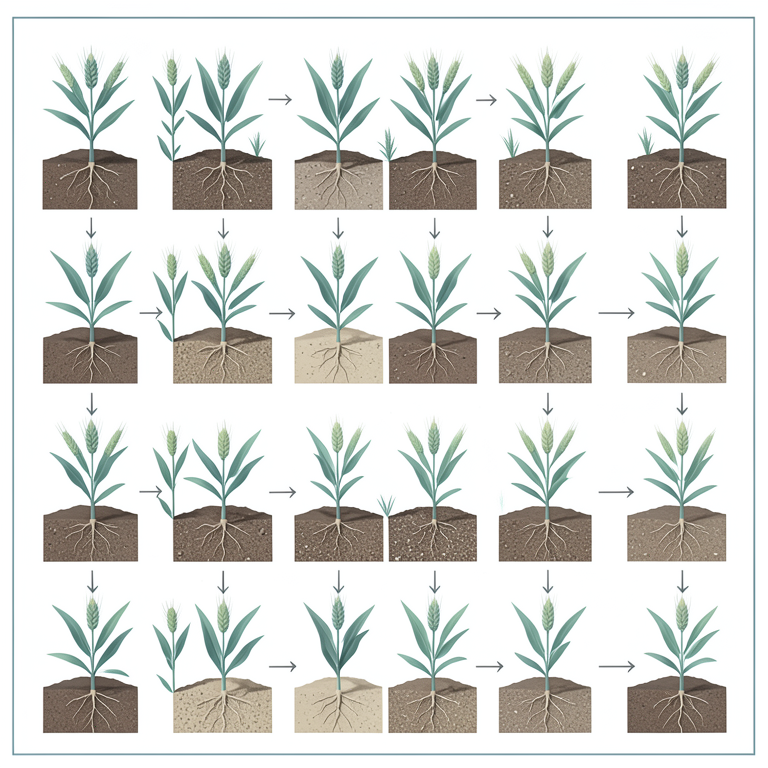
Experimental Treatment Matrix
AI-generated conceptual illustration (wheat plants in soil). It explains the idea and does not show study data.
View source evidence ↗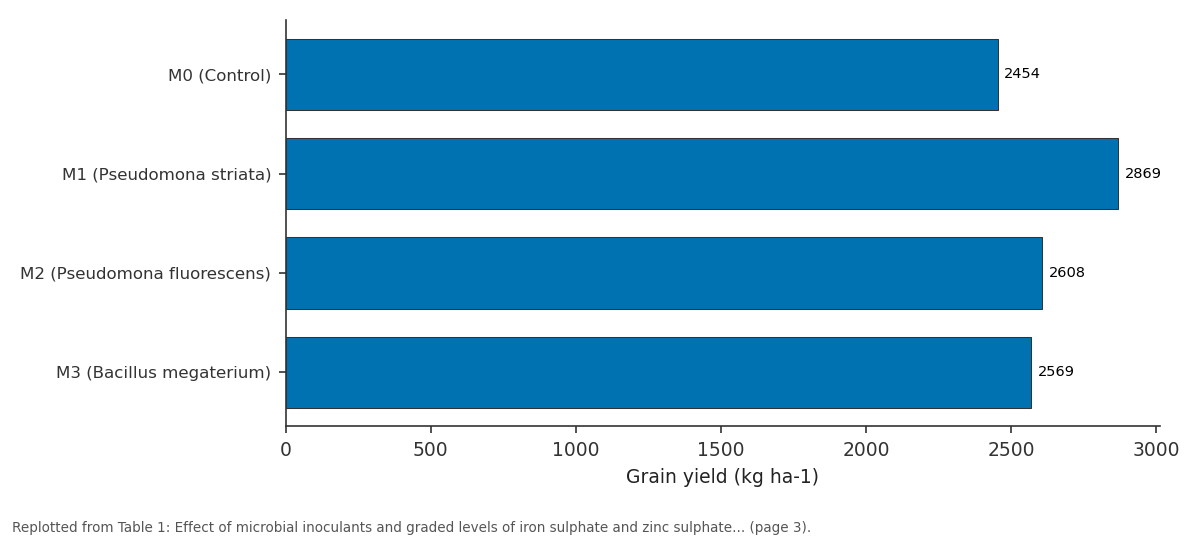
Grain yield (kg ha-1): M0 (Control) vs M1 (Pseudomona striata) vs M2 (Pseudomona... vs M3 (Bacillus megaterium)
Replotted from Table 1 (page 3) of the original paper. Every bar is the paper's own table value.
View source evidence ↗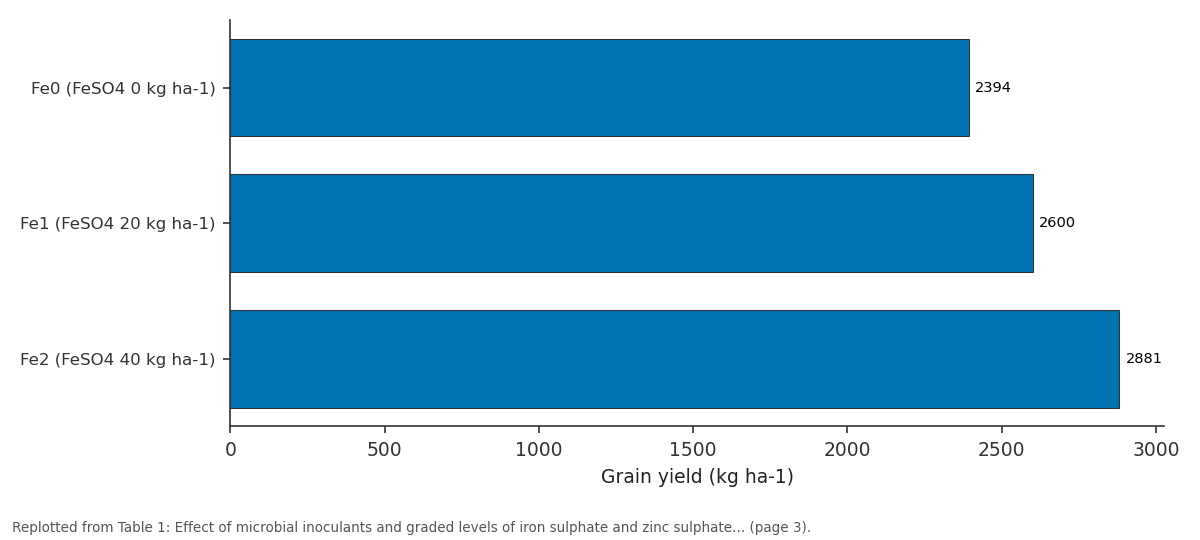
Grain yield (kg ha-1): Fe0 (FeSO4 0 kg ha-1) vs Fe1 (FeSO4 20 kg ha-1) vs Fe2 (FeSO4 40 kg ha-1)
Replotted from Table 1 (page 3) of the original paper. Every bar is the paper's own table value.
View source evidence ↗Figures & tables
From the original paper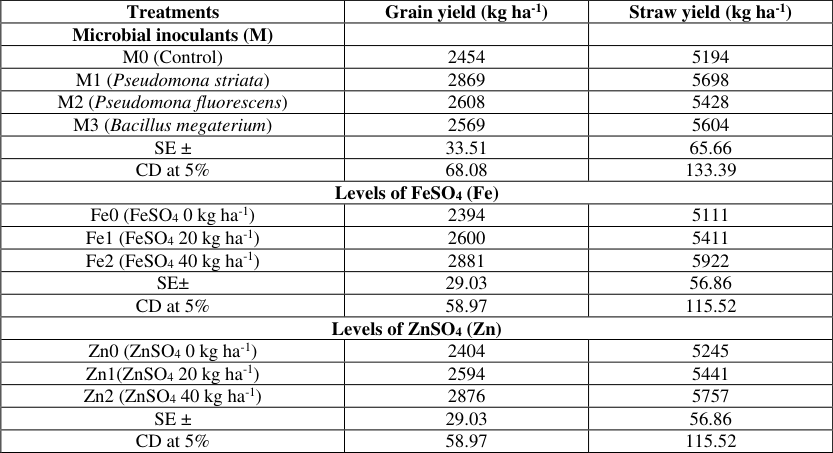 Table 1
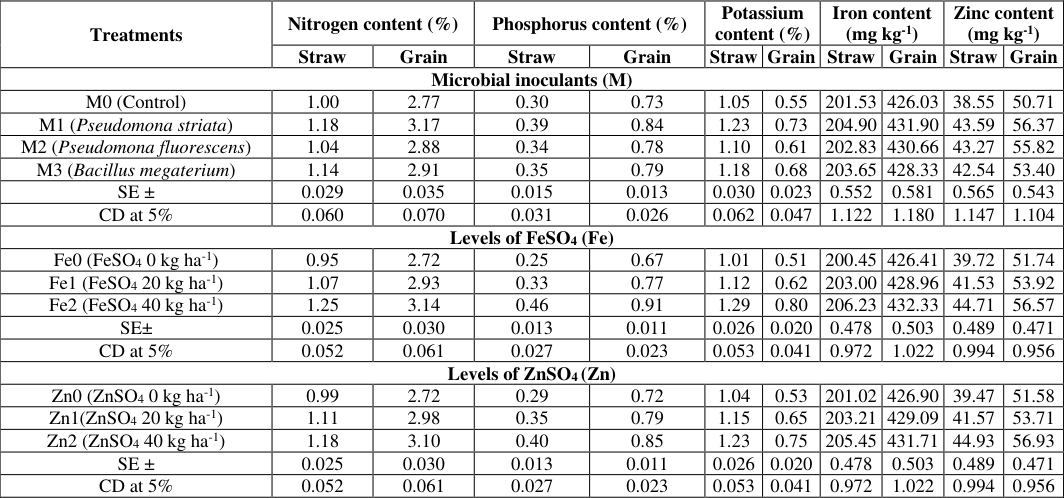 Table 2
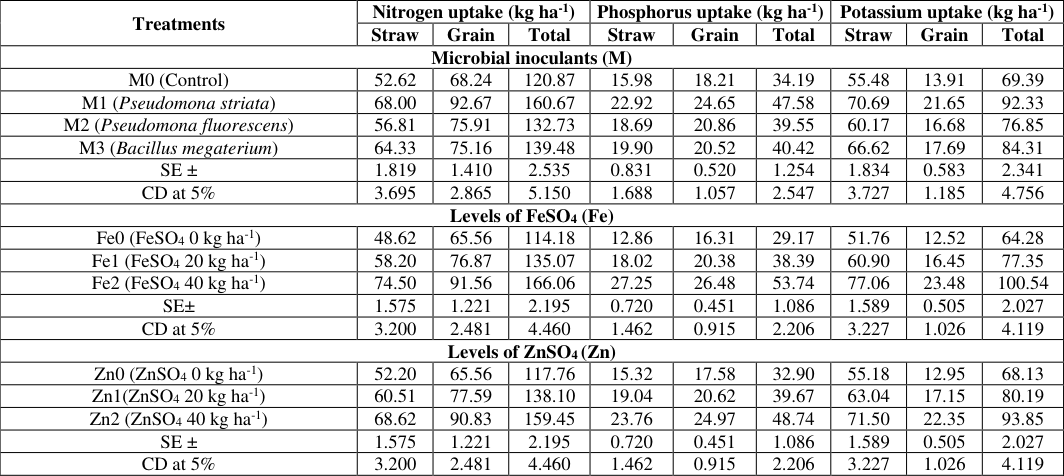 Table 3
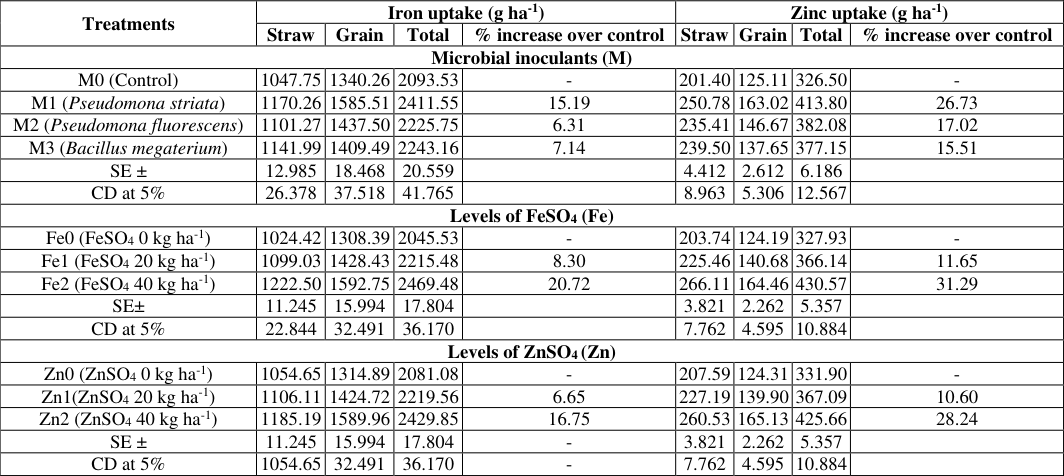 Table 4
Introduction
Over 2 billion people worldwide suffer from micronutrient deficiencies, primarily as a result of eating monotonous diets which is dominated in low-nutrient foods. (Bouis and Satzman 2017) [9] . Iron deficiency is the most widespread nutritional problem. It mostly impacts children's learning capacity as well as their physical and mental development. (Talpur et al. 2018) [30] . Deficiency of micronutrients mainly affects women and children. An estimated 45% of deaths of children under the age of 5 are linked to micronutrient malnutrition (Gernand et al. 2016) [13] . Iron deficiency can leads to a serious condition like anemia, which is also a prime cause of women's death during childbirth (Anuradha et al. 2017) [5] . The most popular diet among people living in developing nations, such as India, is vegetarianism, which mostly consists of cereals and legumes with restricted access to fruits, meat, eggs, and dairy products. etc. (Puranik et al. 2017) [26] . This low nutrient diet is the main cause of micronutrient deficiency. Further, zinc is essential for the proper development of the human body and its deficiency is ranked as the 5 th major risk factor for impairment (Anuradha et al. 2017) [5] . Its deficiency is particularly prevalent in children under 5 years old as they have a comparatively huge demand for zinc to sustain development (Black et al. 2008) [8] . Deficiency of zinc causes physiological problems such as hindrance in brain development, improper growth and augmented vulnerability to infectious diseases like pneumonia and diarrhea and low birth outcomes in pregnant women (Hambidge and Krebs 2007) [15] . The two most vital elements in the human body are iron and zinc.
A vegetarian person depends mainly on cereal based diet which is low in of Fe and Zn. Biofortification is an economical and sustainable way to challenge the micronutrient malnutrition problem worldwide (Tripti et al. 2022) [32] . Wheat is one of the most important staple food crops grown in India. It is important to increase Fe and Zn concentration in wheat. Agronomic biofortification is a strategy to increase micronutrient content in the edible part of food crops through the application of mineral fertilizers (White and Broadley 2009) [34] . This approach can enrich food crops with multiple elements at a time and can reach resource poor rural populations, providing they have access to fertilizers. Food crop micronutrient concentrations can be enhanced through agronomic biofortification, with the potential to reduce micronutrient deficiencies among rural population (Teklu et al. 2023) [31] .
Materials and Methods
The present investigations were conducted at research farm of Department of Soil Science and Agricultural Chemistry, Vasantrao Naik Marathwada Krishi Vidyapeeth, Parbhani. The crop was sown on fixed layout in the months of November and was harvested in month of March in during both growing seasons. The crop variety used was NIAW-1994. The recommended dose of chemical fertilizers was applied @ 100:50:50 N and P 2 O 5 and K 2 O kg ha -1 through urea, SSP and MOP. A basal dose of fertilizer was applied as per treatment at the time of sowing to wheat. Irrigation was given as per crop need. The recommended package of practices was followed. The grain and straw yields were recorded from net plot area at maturity stage of the crop. Experimental study consists of four iron and zinc solubilizing cultures (Control, Pseudomona striata, Pseudomona fluorescens, and Bacillus megaterium), three levels of iron sulphate (0, 20 and 40 kg FeSO 4 ha -1 ) and three levels of zinc sulphate (0, 20 and 40 kg ZnSO 4 ha -1 ) replicated twice in factorial randomized block design. Seed inoculation was done with iron and zinc solubilizing microbial inoculants as seed treatment before sowing. Nutrient content in plant sample and grain were analyzed for nitrogen (Micro Kjeldhals method (AOAC, 1990), phosphorus (Vanadomolybdate phosphoric acid yellow colour method by Jackson, 1973) [18] , potash estimated by Flame photometer (Jackson, 1973) [18] , iron and zinc by Atomic Absorption Spectrophotometer. The results data obtained were analyzed using standard statistical procedure given by Panse and Sukhatme (1967) [23] .
Results
Results
Grain yield
The data in respect of grain yield of wheat as influenced by Fe and Zn solubilizing microbial inoculants and fertilizers application is presented in Table 1. Microbial inoculants positively and significantly influenced on grain yield which ranged between 2454-2869 kg ha -1 . The higher grain yield was noted in plots inoculated with Pseudomona striata (M 1 ) over control i.e. 2869 kg ha -1 .There was significant increase in the grain yield of wheat due to graded levels of iron and zinc sulphate as compared to control treatment. Grain yield of wheat influenced with graded levels of iron up to 40 kg ha -1 ranged between 2394-2881 kg ha -1 . The highest grain yield was noted in plots treated with 40 kg FeSO 4 kg ha -1 (2881 kg ha -1 ). Similarly, the grain yield influenced with application of zinc sulphate which ranged between 2404-2876 kg ha -1 . Maximum yield was noted in plots treated with 40 kg ZnSO 4 ha -1 (2876 kg ha -1 ) Straw yield: Data narrated in Table 1. related to straw yield of wheat was significantly influenced due to microbial inoculants and graded levels of iron sulphate and zinc sulphate. The significantly maximum straw yield was recorded in treatment with inoculation of Pseudomona striata (M 1 ) (5698 kg ha -), it was statistically at par with treatment M 3 (Bacillus megaterium) (5604 kg ha -1 ). Further, graded levels of iron and zinc in the form of FeSO 4 and ZnSO 4 also significantly influenced on straw yield of wheat. The significantly highest straw yield was recorded in the application of 40 kg FeSO 4 and ZnSO 4 ha -1 . Straw yield influenced with application of iron sulphate which ranged between 5111-5922 kg ha -1 . The maximum straw yield was noted in plots treated with 40 kg FeSO 4 kg ha -1 (5922 kg ha - 1 ). Similarly, the straw yield influenced with application of zinc sulphate which ranged between 5245-5757 kg ha -1 . Higher straw yield was noted in plots treated with 40 kg ZnSO 4 ha -1 (5757 kg ha -1 ).
| Treatments | Grain yield (kg ha-1) | Straw yield (kg ha-1) |
|---|---|---|
| Microbial inoculants (M) | ||
| M0 (Control) | 2454 | 5194 |
| M1 (Pseudomona striata) | 2869 | 5698 |
| M2 (Pseudomona fluorescens) | 2608 | 5428 |
| M3 (Bacillus megaterium) | 2569 | 5604 |
| SE ± | 33.51 | 65.66 |
| CD at 5% | 68.08 | 133.39 |
| Levels of FeSO4 (Fe) | ||
| Fe0 (FeSO4 0 kg ha-1) | 2394 | 5111 |
| Fe1 (FeSO4 20 kg ha-1) | 2600 | 5411 |
| Fe2 (FeSO4 40 kg ha-1) | 2881 | 5922 |
| SE± | 29.03 | 56.86 |
| CD at 5% | 58.97 | 115.52 |
| Levels of ZnSO4 (Zn) | ||
| Zn0 (ZnSO4 0 kg ha-1) | 2404 | 5245 |
| Zn1(ZnSO4 20 kg ha-1) | 2594 | 5441 |
| Zn2 (ZnSO4 40 kg ha-1) | 2876 | 5757 |
| SE ± | 29.03 | 56.86 |
| CD at 5% | 58.97 | 115.52 |
Table text extracted from the original PDF; superscript letters are shown inline. The original table image is below.
View original table image
Macro nutrient content (NPK)
Nitrogen content (%): Iron and zinc solubilizing microbial inoculants and fertilizers showed significant effect on nitrogen content of straw and grain of wheat presented in Table 1. Microbial treatments influenced on nitrogen content which was ranged between 1.00-1.18 and 2.77-3.17% of straw and grain of wheat respectively. The highest nitrogen content in straw and grain noted with application of Pseudomonas striata i.e. 1.18% and 3.17% respectively. The levels of iron sulphate and zinc sulphate also influenced on nitrogen content. The iron sulphate up to 40 kg ha -1 influenced on nitrogen content which ranged between 0.95-1.25 and 2.72-3.14% of straw and grain respectively. The higher nitrogen content was noted in 40 kg FeSO 4 ha -1 (1.25 and 3.14% of straw and grain respectively). Similarly, levels of zinc sulphate up to 40 kg ha -1 influenced on nitrogen content which was ranged between 0.99-1.18 and 2.72-3.10% of straw and grain respectively. The higher nitrogen content was noted in 40 kg ZnSO 4 ha -1 (1.18 and 3.10% of straw and grain respectively).
Phosphorus content: It was evidence from data presented in Table 2. That phosphorus content of wheat straw and grain was positively and significantly influenced by microbial inoculation and graded levels of iron and zinc sulphate. The microbial inoculants influence on phosphorus content and highest phosphorus content noted with application of Pseudomona striata i.e. 0.39% for straw and for grain 0.84%. Scrutiny of data further revealed that, graded levels of iron and zinc in the form of FeSO 4 and ZnSO 4 also influenced the phosphorus content in straw and grain up to 40 kg ha -1 . For iron sulphate up to 40 kg FeSO 4 ha -1 influenced on phosphorus content of straw and grain and ranged between 0.25-0.46% and 0.67-0.91% respectively. For zinc sulphate up to 40 kg ZnSO 4 ha -1 influenced on phosphorus content and ranged between 0.29-0.40 and 0.72-0.85% for straw and grain respectively. Highest phosphorus content of straw and grain noted with 40 kg FeSO 4 ha -1 (0.46 and 0.91%for straw and grain respectively) and 40 kg ZnSO 4 ha -1 (0.40 and 0.85%for straw and grain respectively). Potassium content: Microbial treatments influenced on potassium content which was ranged between 1.05-1.23% and 0.55-0.73% of straw and grain of wheat respectively (Table 2). The highest potassium content in straw and grain influenced by Pseudomonas striata i.e. 1.23% and 0.73% respectively. The levels of iron sulphate and zinc sulphate also influenced on potassium content. The iron sulphate up to 40 kg ha -1 influenced on potassium content which ranged between 1.01-1.29 and 0.51-0.80% of straw and grain respectively. The higher potassium content was noted in 40 kg FeSO 4 ha -1 (1.29 and 0.80% of straw and grain respectively). Similarly, levels of zinc sulphate up to 40 kg ha -1 influenced on potassium content which was ranged between 1.04-1.23 and 0.53-0.75% of straw and grain respectively. The higher potassium content was noted in 40 kg ZnSO 4 ha -1 (1.23 and 0.75% of straw and grain respectively). Nitrogen uptake: Microbial treatments influenced on nitrogen uptake of straw and grain which was ranged between 52.62-68.00 and 68.24-92.67 kg ha -1 respectively. For total nitrogen uptake of wheat influenced by microbial inoculation and ranged between 120.87-160.67 kg ha -1 . The higher nitrogen uptake influenced by Pseudomona striata i.e. 68.00, 92.67 and 160.67 kg ha -1 for straw, grain and total respectively. The levels of iron sulphate and zinc sulphate also influenced on nitrogen uptake. The iron sulphate up to 40 kg ha -1 influenced on nitrogen uptake of straw and grain which ranged 48.62-74.50 and 65.56-91.56 kg ha -1 respectively. For total uptake of nitrogen ranged between 114.18-166.06 kg ha -1 . The higher nitrogen uptake was reported in 40 kg FeSO 4 ha -1 (74.50, 91.56 and 166.06 kg ha - 1 for straw, grain and total respectively). Similarly, levels of zinc sulphate upto 40 kg ha -1 influenced on nitrogen uptake which was ranged between 52.20-68.62, 65.56-90.83 and 117.76-159.45 kg ha -1 for straw, grain and total respectively. The higher nitrogen uptake was noted in 40 kg ZnSO 4 ha -1 (68.62, 90.83 and 159.45 kg ha -1 at straw, grain and total respectively).
| Treatments | Nitrogen content (%) | — | Phosphorus content (%) | — | Potassium content (%) | — | Iron content (mg kg-1) | — | Zinc content (mg kg-1) | — |
|---|---|---|---|---|---|---|---|---|---|---|
| Straw | Grain | Straw | Grain | Straw | Grain | Straw | Grain | Straw | Grain | |
| Microbial inoculants (M) | ||||||||||
| M0 (Control) | 1.00 | 2.77 | 0.30 | 0.73 | 1.05 | 0.55 | 201.53 | 426.03 | 38.55 | 50.71 |
| M1 (Pseudomona striata) | 1.18 | 3.17 | 0.39 | 0.84 | 1.23 | 0.73 | 204.90 | 431.90 | 43.59 | 56.37 |
| M2 (Pseudomona fluorescens) | 1.04 | 2.88 | 0.34 | 0.78 | 1.10 | 0.61 | 202.83 | 430.66 | 43.27 | 55.82 |
| M3 (Bacillus megaterium) | 1.14 | 2.91 | 0.35 | 0.79 | 1.18 | 0.68 | 203.65 | 428.33 | 42.54 | 53.40 |
| SE ± | 0.029 | 0.035 | 0.015 | 0.013 | 0.030 | 0.023 | 0.552 | 0.581 | 0.565 | 0.543 |
| CD at 5% | 0.060 | 0.070 | 0.031 | 0.026 | 0.062 | 0.047 | 1.122 | 1.180 | 1.147 | 1.104 |
| Levels of FeSO4 (Fe) | ||||||||||
| Fe0 (FeSO4 0 kg ha-1) | 0.95 | 2.72 | 0.25 | 0.67 | 1.01 | 0.51 | 200.45 | 426.41 | 39.72 | 51.74 |
| Fe1 (FeSO4 20 kg ha-1) | 1.07 | 2.93 | 0.33 | 0.77 | 1.12 | 0.62 | 203.00 | 428.96 | 41.53 | 53.92 |
| Fe2 (FeSO4 40 kg ha-1) | 1.25 | 3.14 | 0.46 | 0.91 | 1.29 | 0.80 | 206.23 | 432.33 | 44.71 | 56.57 |
| SE± | 0.025 | 0.030 | 0.013 | 0.011 | 0.026 | 0.020 | 0.478 | 0.503 | 0.489 | 0.471 |
| CD at 5% | 0.052 | 0.061 | 0.027 | 0.023 | 0.053 | 0.041 | 0.972 | 1.022 | 0.994 | 0.956 |
| Levels of ZnSO4 (Zn) | ||||||||||
| Zn0 (ZnSO4 0 kg ha-1) | 0.99 | 2.72 | 0.29 | 0.72 | 1.04 | 0.53 | 201.02 | 426.90 | 39.47 | 51.58 |
| Zn1(ZnSO4 20 kg ha-1) | 1.11 | 2.98 | 0.35 | 0.79 | 1.15 | 0.65 | 203.21 | 429.09 | 41.57 | 53.71 |
| Zn2 (ZnSO4 40 kg ha-1) | 1.18 | 3.10 | 0.40 | 0.85 | 1.23 | 0.75 | 205.45 | 431.71 | 44.93 | 56.93 |
| SE ± | 0.025 | 0.030 | 0.013 | 0.011 | 0.026 | 0.020 | 0.478 | 0.503 | 0.489 | 0.471 |
| CD at 5% | 0.052 | 0.061 | 0.027 | 0.023 | 0.053 | 0.041 | 0.972 | 1.022 | 0.994 | 0.956 |
Table text extracted from the original PDF; superscript letters are shown inline. The original table image is below.
View original table image
Micronutrient content (Fe and
Micronutrient content (Fe and
Iron uptake:
The data narrated in Table 4. about iron uptake is given. Iron uptake of straw and grain estimated separately and total iron uptake was calculated. The microbial inoculants influence on iron uptake and ranged between 1047.75-1170.26, 1340.26-1585.51 g ha -1 for straw, grain and 2093.53-2411.55 g ha -1 for total respectively. The higher iron uptake recorded in Pseudomona striata i.e. 1170.26 g ha -1 for straw, 1585.51 g ha -1 grain and total iron uptake 2411.55 g ha -1 . This was superior over other treatments. The lower iron uptake was observed in uninoculated control treatment (1047.75, 1340.26 and 2093.53 g ha -1 for straw, grain and total respectively). Moreover, highest increase in total Fe uptake over control was reported in treatment M2 i.e. Pseudomonas striata (15.19 percent).Further, graded levels of iron and zinc in the form of FeSO 4 and ZnSO 4 also influenced on iron uptake in straw and grain upto 40 kg ha -1 .The iron uptake was ranged from 1024.42-1222.50 g ha -1 for straw, 1308.39-1592.75 g ha -1 for grain and 2045.53-2469.48 g ha -1 for total uptake. The highest iron uptake was noted in 40 kg FeSO 4 ha -1 which was (1222.50 g ha -1 ) for straw uptake (1592.75 g ha -1 ) for grain uptake and total iron uptake (2469.48 g ha -1 ). Furthermore, higher total Fe uptake over control reported @ 40 kg FeSO 4 ha -1 (20.72 percent) followed by 20 kg FeSO 4 ha -1 over control (8.30 percent). For levels of zinc sulphate iron uptake ranged between 1054.65-1185.19, 1314.89-1589.96 and 2081.08-2429.85 g ha -1 for straw, grain and total uptake respectively and higher iron uptake noted in 40 kg ZnSO 4 ha -1 which was straw (1185.19 g ha -1 ), grain (1589.96 g ha -1 ) and total uptake of iron (2429.85 g ha -1 ). Moreover, higher total Fe uptake over control reported @ 40 kg ZnSO 4 ha -1 (16.75 percent) followed by 20 kg ZnSO 4 ha -1 over control (6.65 percent).
| Treatments | Iron uptake (g ha-1) | — | — | — | Zinc uptake (g ha-1) | — | — | — |
|---|---|---|---|---|---|---|---|---|
| Straw | Grain | Total | % increase over control | Straw | Grain | Total | % increase over control | |
| Microbial inoculants (M) | ||||||||
| M0 (Control) | 1047.75 | 1340.26 | 2093.53 | - | 201.40 | 125.11 | 326.50 | - |
| M1 (Pseudomona striata) | 1170.26 | 1585.51 | 2411.55 | 15.19 | 250.78 | 163.02 | 413.80 | 26.73 |
| M2 (Pseudomona fluorescens) | 1101.27 | 1437.50 | 2225.75 | 6.31 | 235.41 | 146.67 | 382.08 | 17.02 |
| M3 (Bacillus megaterium) | 1141.99 | 1409.49 | 2243.16 | 7.14 | 239.50 | 137.65 | 377.15 | 15.51 |
| SE ± | 12.985 | 18.468 | 20.559 | 4.412 | 2.612 | 6.186 | ||
| CD at 5% | 26.378 | 37.518 | 41.765 | 8.963 | 5.306 | 12.567 | ||
| Levels of FeSO4 (Fe) | ||||||||
| Fe0 (FeSO4 0 kg ha-1) | 1024.42 | 1308.39 | 2045.53 | - | 203.74 | 124.19 | 327.93 | - |
| Fe1 (FeSO4 20 kg ha-1) | 1099.03 | 1428.43 | 2215.48 | 8.30 | 225.46 | 140.68 | 366.14 | 11.65 |
| Fe2 (FeSO4 40 kg ha-1) | 1222.50 | 1592.75 | 2469.48 | 20.72 | 266.11 | 164.46 | 430.57 | 31.29 |
| SE± | 11.245 | 15.994 | 17.804 | 3.821 | 2.262 | 5.357 | ||
| CD at 5% | 22.844 | 32.491 | 36.170 | 7.762 | 4.595 | 10.884 | ||
| Levels of ZnSO4 (Zn) | ||||||||
| Zn0 (ZnSO4 0 kg ha-1) | 1054.65 | 1314.89 | 2081.08 | - | 207.59 | 124.31 | 331.90 | - |
| Zn1(ZnSO4 20 kg ha-1) | 1106.11 | 1424.72 | 2219.56 | 6.65 | 227.19 | 139.90 | 367.09 | 10.60 |
| Zn2 (ZnSO4 40 kg ha-1) | 1185.19 | 1589.96 | 2429.85 | 16.75 | 260.53 | 165.13 | 425.66 | 28.24 |
| SE ± | 11.245 | 15.994 | 17.804 | - | 3.821 | 2.262 | 5.357 | |
| CD at 5% | 1054.65 | 32.491 | 36.170 | - | 7.762 | 4.595 | 10.884 |
Table text extracted from the original PDF; superscript letters are shown inline. The original table image is below.
View original table image
Zinc uptake:
The data narrated in Table 4. regarding zinc uptake is given. Zinc uptake of straw and grain estimated separately and total zinc uptake was also calculated. Microbial treatments influenced on zinc uptake of straw and grain which was ranged between 120.40-250.78 and 125.11-163.02 g ha -1 respectively. For total zinc uptake of wheat influenced by microbial inoculation and ranged between 326.50-413.80 g ha -1 . The maximum zinc uptake influenced by Pseudomona striata i.e. 250.78, 163.02 and 413.80 g ha -1 for straw, grain and total respectively. Moreover, highest increase in total Zn uptake over control was noted in treatment M2 i.e. Pseudomonas striata (26.73 percent) followed by Pseudomonas fluorescens and Bacillus megaterium (17.02 and 15.51 percent respectively). The levels of iron sulphate and zinc sulphate also influenced on zinc uptake. The iron sulphate upto 40 kg ha -1 influenced on zinc uptake of straw and grain which ranged 203.74-266.11
and 124.19-164.46 g ha -1 respectively. For total uptake of zinc, it was influenced by iron sulphate and ranged between 327.93-430.57 g ha -1 . The higher zinc uptake was reported in 40 kg FeSO 4 ha -1 (266.11, 164.46 and 430.57 g ha -1 for straw, grain and total respectively). Further, higher total Zn uptake over control reported @ 40 kg FeSO 4 ha -1 (31.29 percent) followed by 20 kg FeSO 4 ha -1 over control (11.65 percent). Similarly, levels of zinc sulphate upto 40 kg ha -1 influenced on zinc uptake which was ranged between 207.59-260.53, 124.31-165.13 and 331.90-425.66 g ha -1 for straw, grain and total respectively. The higher zinc uptake was noted in 40 kg ZnSO 4 ha -1 (260.53, 165.13 and 425.66 g ha -1 at straw, grain and total respectively) which was superior over control treatment. The lower zinc uptake was recorded in control treatment (207.59, 124.31 and 331.90 g ha -1 at straw, grain and total respectively). Furthermore, higher total Zn uptake over control reported @ 40 kg ZnSO 4 ha -1 (28.24 percent) followed by 20 kg ZnSO 4 ha -1 over control (10.60 percent).
Discussion
Availability of sufficient amount of nutrients by solubilization of native status of nutrient present in soil and increased uptake of nutrients and their utilization increased metabolism and synthesis of carbohydrates, better vegetative growth and subsequent partitioning and translocation from to head and also release of energy rich compounds by the biofertilizers which ultimately increased auxin activities, growth and activity of microbial saprophytes and phosphates activity which ultimately affect the yield and yield attributes (Choudhary et al. 2014) [10] .
Our results also correspond with the findings of Kandoliya et al. (2018) [19] reported significantly highest grain yield (4786 kg ha -1 ) was observed for the treatment T 12 (RDF + Soil application of ZnSO 4 @ 10 kg ha -1 + FeSO 4 @ 20 kg ha -1 ) which was almost 38.2 percent higher as compared to control treatment (N-P-K: 120-60-60 kg ha -1 ). Cotton yield was significantly increased with application of RD + soil application of FeSO 4 @ 25 + ZnSO 4 @ 20 kg ha -1 reported by Durgude et al. (2014) [11] . N, P and K absorption by plants increased by PGPR supply which decreased rhizosphere soil pH due to increased concentrations of organic acids and antioxidative activity. As a result of root exudation mediated rhizosphere acidification, growth enhancement by PGPR supply was associated with increased plant antioxidation activity as well as nutrient uptake Israr et al. (2016) [17] . Kapadia et al.
(2021) [21] stated that inoculation of microbial strains enhanced the more secondary roots, which store and transport more mineral nutrients to the various regions of the plant, resulting in increased biomass, nutrient contents, uptake and growth. Increase in the nutrient content in the plants showed that more bioavailability of available nutrients in soil solution and also supply of added fertilizers. Microbial isolates release the different organic acids make the nutrient available to crop plant. Similar findings reported by Hassan and Bano (2015) [16] reported that carrier-based biofertilizer enhanced the growth of wheat and also stated that the application of biofertilizer increased nutrients content and uptake of wheat over control treatment. The similar results confirmed with findings of Pawar et al.
(2015) [25] concluded that soil application of 15 kg ZnSO 4 ha - 1 + 15 kg FeSO 4 ha -1 with recommended dose of fertilizers recorded highest NPK concentration in grain and fodder of kharif sorghum. The enhancement of micronutrient concentration by plants may be due to microbial inoculation with additional supplement of fertilizers may effect on initiation and development of effective roots system and nutrient uptake also increased in iron content of leaves and grain was might be due to increased iron availability in soil due to siderophore producing ability (Schwyn and Neilands 1987).
Pseudomonas fluorocens (52.83%) CAS medium shows maximum siderophore production followed by Pseudomonas striata (48.33%) and Bacillus megaterium (46.67%) reported by Akshay et al. (2023) [2] . The maximum available Fe and Zn was noticed under RDF + 25 kg ha -1 FeSO 4 +25 kg ha -1 ZnSO 4 reported by Waikar et al. (2021) [33] . Parmer et al. (2020) [24] concluded that higher content of Fe recorded with 25 kg ha -1 ZnSO 4 +50 kg ha -1 FeSO 4. Further, similar findings reported by Habib (2009) [14] and Kandoliya and Kunjadia (2018) [19] . The increased nutrient uptake may be due to greater availability of nutrients through inorganic and biological sources and well-developed root system. The increased uptake was also due to added supply of nutrients, balanced nutrient application and acid secretions by the microbial cultures might have acted on unavailable K in soil and made it more available for wheat crop resulting in better absorption of water and nutrients Sheng (2005) [29] . The maximum N, P and K uptake by pearl millet grain and stover was noticed in treatment consisting of RDF + 25 kg ha -1 FeSO 4 + 25 kg ha -1 ZnSO 4 reported by Waikar et al. (2021) [33] Increase in Fe uptake might be due to siderophores produced by rhizosphere microorganisms are iron chelating ligands which can be beneficial to plants can supply iron to plants under iron stress or iron limiting conditions by increasing the solubility of ferric iron (Fe III), which otherwise is unavailable for plant nutrition. This element is assimilated by root cells in the reduced form (Fe II); however, especially in sufficiently aerated soils, the oxidized state (Fe III) is predominant and needs to be reduced to be taken up by plants. Plant roots have receptors or channels which can receive microbial siderophore, and plant ferric reductase helps in unloading of iron and converting it to the ferrous form (Altomare et al. 1999) [4] . Moreover, supply of additional iron through fertilizers also play important role in increasing more uptake by wheat crop. The research of this investigation are in consonance with the findings of Sable et al. (2016) [27] reported the content and uptake of Fe, Zn, Mn and Cu by groundnut was also found to be significantly highest with the inoculation of RDF + Rhizobium + Pseudomonas striata. Kiran et al. (2017) [22] reported highest increase in Fe uptake (4850 g ha -
1
) in treatment T 7 (GRDF + 20 kg ZnSO 4 ha -1 + 25 kg FeSO 4 ha -1 + seed inoculation of Fe and Zn solubilizers) over other treatments in wheat crop. Similarly, Parmer et al. (2020) [24] reported higher uptake of Fe noted with 25 kg ha -1 ZnSO 4 + 50 kg ha -1 FeSO 4. The treatment RDF+ 25 kg ha -1 FeSO 4 + 25 kg ha -1 ZnSO 4 recorded the significantly highest iron uptake reported by Waikar et al. (2021) [33] noted that highest iron uptake in treatment RDF + 25 kg ha -1 FeSO 4 +25 kg ha -1 FeSO 4 and lowest iron uptake was observed in absolute control. Enhanced Zn uptake might be due to solubilization of insoluble soil Zn by production of gluconic acids by the bacterial sp. Like Pseudomona striata, Pseudomona fluorescens and Bacillus megaterium. The bacterial inoculation increased Zn uptake at all ZnSO 4 application levels. Zn-solubilizers, owing to the organic acid production and proton extrusion (H+), lowers the rhizospheric pH, which sequesters zinc cations and improves uptake by plants. (Alexander 1997 [3,2,35,6] . The experimental findings are confirmed with Waikar et al. (2021) [33] reported that highest zinc uptake was noted with treatment RDF + 25 kg ha -1 FeSO 4 + 25 kg ha -1 ZnSO 4 and the lowest zinc uptake was observed in absolute control. Parmer et al. (2020) [24] reported higher uptake of Zn noted with 25 kg ha -1 ZnSO 4 + 50 kg ha -1 FeSO 4. Similar findings reported by Kiran et al. (2017) [22] and Banafsheh et al. (2022) [7] .
Conclusion
Seed inoculation with microbial inoculants (Iron and zinc solubilizer) + soil application of Fe and Zn in the form of FeSO 4 and ZnSO 4 along with RDF found beneficial in improving the yield, concentration and nutrient uptake of wheat crop. Microbial inoculant particularly Pseudomonas striata and 40 kg FeSO 4 ha -1 and 40 kg ZnSO 4 ha -1 noted higher yield, nutrient concentration and uptake of nutrients by wheat.
Figures and tables from the paper
| Treatments | Nitrogen uptake (kg ha-1) | — | — | Phosphorus uptake (kg ha-1) | — | — | Potassium uptake (kg ha-1) | — | — |
|---|---|---|---|---|---|---|---|---|---|
| Straw | Grain | Total | Straw | Grain | Total | Straw | Grain | Total | |
| Microbial inoculants (M) | |||||||||
| M0 (Control) | 52.62 | 68.24 | 120.87 | 15.98 | 18.21 | 34.19 | 55.48 | 13.91 | 69.39 |
| M1 (Pseudomona striata) | 68.00 | 92.67 | 160.67 | 22.92 | 24.65 | 47.58 | 70.69 | 21.65 | 92.33 |
| M2 (Pseudomona fluorescens) | 56.81 | 75.91 | 132.73 | 18.69 | 20.86 | 39.55 | 60.17 | 16.68 | 76.85 |
| M3 (Bacillus megaterium) | 64.33 | 75.16 | 139.48 | 19.90 | 20.52 | 40.42 | 66.62 | 17.69 | 84.31 |
| SE ± | 1.819 | 1.410 | 2.535 | 0.831 | 0.520 | 1.254 | 1.834 | 0.583 | 2.341 |
| CD at 5% | 3.695 | 2.865 | 5.150 | 1.688 | 1.057 | 2.547 | 3.727 | 1.185 | 4.756 |
| Levels of FeSO4 (Fe) | |||||||||
| Fe0 (FeSO4 0 kg ha-1) | 48.62 | 65.56 | 114.18 | 12.86 | 16.31 | 29.17 | 51.76 | 12.52 | 64.28 |
| Fe1 (FeSO4 20 kg ha-1) | 58.20 | 76.87 | 135.07 | 18.02 | 20.38 | 38.39 | 60.90 | 16.45 | 77.35 |
| Fe2 (FeSO4 40 kg ha-1) | 74.50 | 91.56 | 166.06 | 27.25 | 26.48 | 53.74 | 77.06 | 23.48 | 100.54 |
| SE± | 1.575 | 1.221 | 2.195 | 0.720 | 0.451 | 1.086 | 1.589 | 0.505 | 2.027 |
| CD at 5% | 3.200 | 2.481 | 4.460 | 1.462 | 0.915 | 2.206 | 3.227 | 1.026 | 4.119 |
| Levels of ZnSO4 (Zn) | |||||||||
| Zn0 (ZnSO4 0 kg ha-1) | 52.20 | 65.56 | 117.76 | 15.32 | 17.58 | 32.90 | 55.18 | 12.95 | 68.13 |
| Zn1(ZnSO4 20 kg ha-1) | 60.51 | 77.59 | 138.10 | 19.04 | 20.62 | 39.67 | 63.04 | 17.15 | 80.19 |
| Zn2 (ZnSO4 40 kg ha-1) | 68.62 | 90.83 | 159.45 | 23.76 | 24.97 | 48.74 | 71.50 | 22.35 | 93.85 |
| SE ± | 1.575 | 1.221 | 2.195 | 0.720 | 0.451 | 1.086 | 1.589 | 0.505 | 2.027 |
| CD at 5% | 3.200 | 2.481 | 4.460 | 1.462 | 0.915 | 2.206 | 3.227 | 1.026 | 4.119 |
Table text extracted from the original PDF; superscript letters are shown inline. The original table image is below.
View original table image
References
31 in the original paper- Akshay Ingole, Syed Ismail, Anil Dhamak. Evaluation of Siderophore Production by Different Promising Microbial Isolates. Int J Plant Soil Sci. 2023 Aug;35(19):1091-1096.
- Altomare C, Norvell WA, Bjorkman TB, Harman GE. Solubilization of phosphates and micronutrients by the Plant-Growth-Promoting and Biocontrol fungus Trichoderma harzianum Rifai:1295-22. Appl Environ Microbiol. 1999 July;65(7):2926-2933.
- Anuradha N, Satyavathi CT, Bharadwaj C, Nepolean T, Sankar SM, Singh SP, et al. Deciphering genomic regions for high grain iron and zinc content using association mapping in pearl millet. Front Plant Sci. 2017 May;8:412. https://doi.org/10.3389/fpls.2017.00412
- Anuradha P, Syed I, Swati M, Patil VD. Solubilization of insoluble zinc compounds by different microbial isolates in vitro condition. Int J Trop Agric. 2015 AprilJun;33(2):865-869.
- Banafsheh Rezaeiniko, Naeimeh Enayatizamir, Mojtaba Norouzi Masir. Changes in Soil Zinc Chemical Fractions and Improvements in Wheat Grain Quality in Response to Zinc Solubilizing Bacteria. Commun Soil Sci Plant Anal. 2022 Jan;53(5):622-635. DOI: 10.1080/00103624.2021.2017962
- Black RE, Allen LH, Bhutta ZA, Caulfield LE, De Onis M, Ezzati M, et al. Maternal and child undernutrition study group. Maternal and child undernutrition: global and regional exposures and health consequences. Lancet. 2008 Jan;371:243-260. https://doi.org/10.1016/S0140-6736(07)61690-0
- Bouis HE, Saltzman A. Improving nutrition through biofortification: a review of evidence from HarvestPlus, 2003 through 2016. Global Food Security. 2017 March;12:49-58. https://doi.org/10.1016/j.gfs.2017.01.009
- Choudhary MK, Kavita A, Maurya IB, Singh B, Sharma MK, Hatwal PK. Effect of biofertilizers and micronutrients on growth and yield of garlic (Allium sativum L.) G-282. Prog Horticulture. 2014 Dec;46(2):367-371.
- Durgude AG, Kadam SR, Pharande AL. Effect of soil and foliar application of ferrous sulphate and zinc sulphate on nutrient availability in soil and yield of Bt cotton. Asian J Soil Sci. 2014 Jun;9(1):82-86.
- Fasim F, Ahmed N, Parsons R, Gadd GM. Solubilization of zinc salts by a bacterium isolated from the air environment of a tannery. FEMS Microbiol Lett. 2002 July;213(1):1-6.
- Gernand AD, Schulze KJ, Stewart CP, West KP Jr., Christian P. Micronutrient deficiencies in pregnancy worldwide: health effects and prevention. Nat Rev Endocrinol. 2016 Jun;12:274. https://doi. org/10.1038/nrendo.2016.37
- Habib Maralian. Effect of foliar application of Zn and Fe on wheat yield and quality. Afr J Biotechnol. 2009 Jan;8(24):6795-6798.
- Hambidge KM, Krebs NF. Zinc deficiency: a special challenge. J Nutr. 2007 April;137:1101-1105. https://doi.org/10.1093/jn/137.4.1101
- Hassan Tamoor UL, Bano Asghari. Role of CarrierBased Biofertilizer in Reclamation of Saline Soil and Wheat Growth. Arch Agron Soil Sci. 2015 April;61(12):1719-1731.
- Israr D, Mustafa G, Khan KS, Shahzad M, Ahmad N, Masood S. Interactive effects of phosphorus and Pseudomonas putida on chickpea (Cicer arietinum L.) growth, nutrient uptake, antioxidant enzymes and organic acids exudation. Plant Physiol Biochem. 2016 Nov;108:304-312.
- Kandoliya RU, Sakarvadiya HL, Kunjadia BB. Effect of zinc and iron application on leaf chlorophyll, carotenoid, grain yield and quality of wheat in calcareous soil of Saurashtra region. Int J Chem Stud. 2018 Jun;6(4):2092-2095.
- Kandoliya RU, Kunjadia BB. Effect soil and foliar application of zinc and iron on micronutrients uptake by wheat in calcareous soil of Saurashtra region. Eur J Biotechnol Biosci. 2018 July;6(4):65-69.
- Kapadia C, Sayyed RZ, El Enshasy HA, Vaidya H, Sharma D, Patel N, et al. Halotolerant microbial consortia for sustainable mitigation of salinity stress, growth promotion, and mineral uptake in tomato plants and soil nutrient enrichment. Sustainability. 2021 July;13(15): 8369-8375.
- Kiran A, Kadu PP, Santhosh kumar, Pavan V, Chandra SB. Effect of seed inoculation of zinc and iron solubilizing micro-organisms on yield and nutrient uptake by wheat in inceptisol. Agriculture update. 2017 July;12(5): 1291-1295.
- Parmar CD, Kharadi RR, Bhuriya KP. Influence by Various Zinc and Iron Treatments on Micronutrients Content and Uptake of Grain and Stover of Pearl Millet. Int J Curr Microbiol Appl Sci. 2020 Oct;9(10): 12471252. doi: https://doi.org/10.20546/ijcmas.2020.910.150
- Pawar A, Adsul PB, Gaikwad GK. Nutrient Content, Uptake and Biochemical Composition in Kharif Sorghum Affected by Soil and Foliar Zinc and Iron in Drought Prone Marathwada Area of Maharashtra. Indian J Dryland Agric Res Dev. 2015 Aug;30(2):7483. DOI:10.5958/2231-6701.2015.00029.9
- Puranik S, Kam J, Sahu PP, Yadav R, Srivastava RK, Ojulong H, et al. Harnessing finger millet to combat calcium deficiency in humans: challenges and prospects. Front Plant Sci. 2017 July;8:1311. https://doi.org/10.3389/fpls.2017.01311
- Sable Prasad, Ismail Syed, Pawar Anuradha, Sonwane Nandkishor. Impact of Different Microbial Cultures on Nutrient Uptake and Quality of Groundnut. Int J Agric Sci. 2016 Dec;8(47):1996-1999.
- Schwyn B, Neilands JB. Universal chemical assay for the detection and determination of siderophores. Anal Biochem. 1987 Jan;160(1):47-56.
- Sheng XF. Growth promotion and increased potassium uptake of cottonand rape by a potassium releasing strain of Bacillus edaphicus. Soil Biol Biochem. 2005 Oct;37:1918-1922.
- Talpur S, Afridi HI, Kazi TG, Talpur FN. Interaction of lead with calcium, iron, and zinc in the biological samples of malnourished children. Biol Trace Elem Res. 2018 Jun;183:209-217. https://doi.org/10.1007/s12011-017-1141-9
- Teklu D, Gashu D, Joy EJM, Lark RM, Bailey EH, Wilson L, et al. Impact of zinc and iron agronomic biofortification on grain mineral concentration of finger millet varieties as affected by location and slope. Front Nutr. 2023 May;10:1159833. doi: 10.3389/fnut.2023.1159833
- Singhal TC, Satyavathi TC, Singh SP, Mallik M, Anuradha N, Sankar MS, et al. Achieving nutritional security in India through iron and zinc biofortification in pearl millet (Pennisetum glaucum (L.) R. Br.). Physiol Mol Biol Plants. 2022 April;28(4):849-869. https://doi.org/10.1007/s12298-022-01144-0
- Waikar SL, Todmal SM, Shete VS. Response of Iron and Zinc on Yield, Quality and Soil Nutrient Dynamics of Pearl Millet on Vertisol. Int J Curr Microbiol Appl Sci. 2021 April;10(04): 307-315. https://doi.org/10.20546/ijcmas.2021.1004.032
- White PJ, Broadley MR. Biofortification of crops with seven mineral elements often lacking in human dietsiron, zinc, copper, calcium, magnesium, selenium and iodine. New Phytol. 2009 Jan;182:49-84. doi: 10.1111/j.1469-8137.2008.02738.x
- Wu SC, Cheung KC, Luo YM, Wong MH. Effects of inoculation of plant growth-promoting rhizobacteria on metal uptake by Brassica juncea. Environ Pollut. 2006 March;140(1):124-135.
Cited by 3
From OpenAlex, OpenCitations and reference lists read by Scinovex
- Molecular characterization and validation of zinc solubilization potential of bacteria isolated from onion (Allium cepa L.) rhizosphere ↗
Shivi Choudhary, Baljeet Singh Saharan, Rajesh Gera, Shubham Kumar, Minakshi Prasad, Anshika Gupta et al. · The Microbe · 2024
Zinc (Zn) is essential for optimal plant growth and nutrition, while zinc-solubilizing bacteria (ZSB) enhance plant accessibility to zinc by converting its insoluble forms into usable ones. The primary objective of this research was to isolate and identify Zn-solubilizing strains from the onion rhizosphere and evaluate their ability to solubilize different insoluble Zn compounds, including ZnO, ZnCO3, and Zn3(PO4)2. Of…
❝ 10PDF - Biogenic zinc oxide and silicon dioxide nanoparticles derived from spinach and paddy husk for enhanced rice cultivation ↗
Ramarao, B. K. Desai, M. A. Basavanneppa, K. Narayanrao, N. Pruthviraj, H. Sharanagouda et al. · Discover Materials · 2026
This study explores the green synthesis, characterization, and evaluation of zinc oxide (ZnO) and silicon dioxide (SiO₂) nanoparticles for their potential to enhance growth and yield in paddy. Spinach extract and paddy husk were utilized as sustainable bioresources for synthesizing nano-ZnO and SiO₂, respectively. Spectroscopic analyses confirmed that the nanoparticles were spherical in shape, with an average size of 25.45…
❝ 0PDF - Growth and yield of finger millet (Eleusine coracana L.) varieties as influenced by zinc fortification
PK Waghmare, AP Patel, KG Patel, V. S. Patel, RR Pisal, MJ Patange · International Journal of Research in Agronomy · 2025
A field experiment entitled ‘Response of finger millet (Eleusine coracana L.) varieties to zinc fortification’ was conducted during the kharif seasons of 2023 and 2024 at the College Farm, N. M. College of Agriculture, Navsari Agricultural University, Navsari, to evaluate the impact of zinc application through soil and foliar modes on the growth, yield and quality of finger millet. The experiment was laid out in a factorial randomized block design with three varieties (V1: WN-259, V2: GNN-7, V3: GN-8) and nine zinc fortification treatments, ranging from control to combinations of soil and foli