
Research article · 2024 · Full text
International Journal of Agriculture Extension and Social DevelopmentEmployment scope for fisheries professionals in India and Chhattisgarh: A case study
Volume 7(4S) · Pages 01–07 · DOI: 10.33545/26180723.2024.v7.i4sa.512 ↗
Research areasFisheries and Aquaculture Studies
Abstract
Author-writtenThe investigation was conducted to evaluate the potential for fisheries education in Chhattisgarh, India, across both public and private sectors associated with fisheries. The survey involved a thorough examination of existing fish farms, industries, and educational institutions through an extensive venture study. Data analysis techniques including averages and percentages were employed for estimation purposes. The study revealed that a fish seed hatchery with a capacity ranging from 1.0 to 5.0 crore fry would require 8-10 fisheries graduates and 12-24 technicians. Additionally, to ensure genetic integrity conservation and management, an additional 4-5 professionals holding postgraduate degrees and 2-3 with doctorates are deemed essential. In the fish feed industry, a major unit currently producing 10,000 tonnes per annum employs approximately 100 fisheries graduates, with projections indicating an increase to 250 by the year 2025. Furthermore, the fisheries departments of Chhattisgarh have forecasted a need for an additional 2,838 posts by 2025, totaling 7,684 positions. The study underscores the anticipated demand for fisheries professionals, averaging 8,131 per year within the state and 7,598 per year outside the state during the period spanning 2021-2025. This highlights the urgent requirement to expand educational institutions and ensure the recruitment of adequately qualified staff to facilitate the robust growth of the fisheries sector and the sustainable utilization of natural resources in Chhattisgarh.
Summary
Source-checkedPlain-language reading of the full paper, prepared with AI and checked against the text. Each point links to the authors' own words.
Why it matters
- India is a major global player in fish production, ranking sixth overall and second in inland fisheries. View evidence ↗
- There is a significant gap in skilled manpower in India, with a projected annual need for over 15,457 graduates by 2025 compared to a current supply of 4,570. View evidence ↗
The question
- The study aimed to evaluate the potential for fisheries education and employment scope within both the public and private sectors in Chhattisgarh, India. View evidence ↗
What they did
- The researchers conducted a comprehensive survey of public and private entities involved in fisheries development in Chhattisgarh. View evidence ↗
- Averages and percentages were used as the primary data analysis techniques for estimating manpower needs. View evidence ↗
What they found
- Chhattisgarh has only one dedicated fisheries education institution, which can train up to 100 Bachelor of Fisheries Science professionals. View evidence ↗
- According to government norms, a fish seed hatchery producing 1.0 to 5.0 crore fry requires 8-10 graduates and 12-24 technicians. View evidence ↗
- A major fish feed unit producing 10,000 tonnes annually currently employs 100 graduates and is projected to need an additional 250 by 2025. View evidence ↗
- The fisheries departments of Chhattisgarh are projected to need an additional 2,838 posts by 2025, reaching a total of 7,684 positions. View evidence ↗
- Between 2021 and 2025, the average annual demand for fisheries professionals is estimated at 8,131 within Chhattisgarh and 7,598 outside the state. View evidence ↗
- Employment of fisheries graduates in financial institutions is projected to grow from 500 in 2020 to 750 by 2025, based on a 2.5% annual growth rate. View evidence ↗
What it means
- The authors conclude there is an urgent need to expand educational institutions and recruit qualified staff to support the growth and sustainability of Chhattisgarh's fisheries sector. View evidence ↗
- The authors recommend a concerted effort to increase the supply of skilled professionals to meet the rising demand both within and outside Chhattisgarh. View evidence ↗
Visual summary
1 visualsIllustrations explain the paper; they do not show study data.
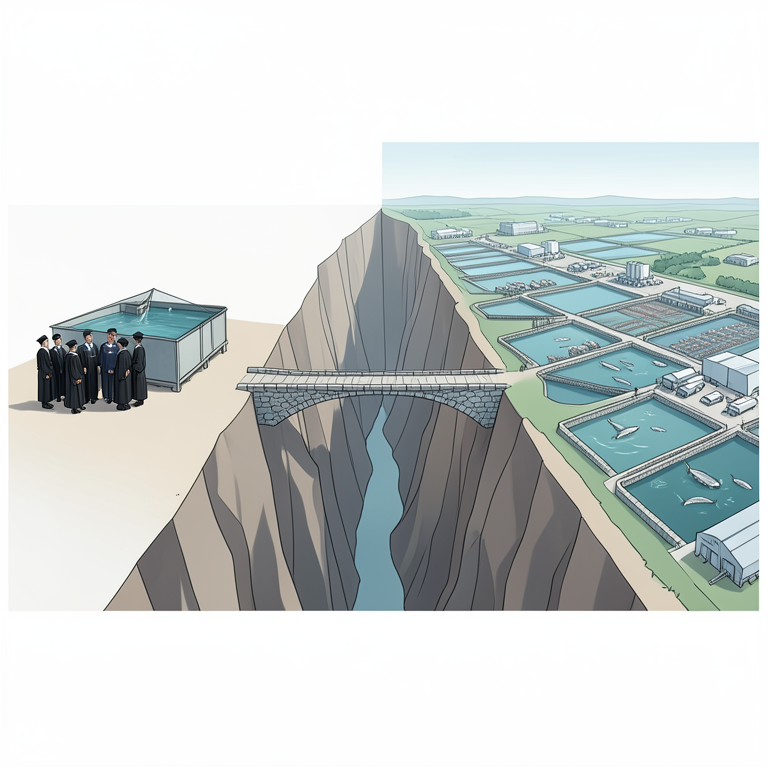
Supply vs Demand Gap
AI-generated conceptual illustration (Fisheries professionals and aquaculture infrastructure in India). It explains the idea and does not show study data.
View source evidence ↗Figures & tables
From the original paper Table 1
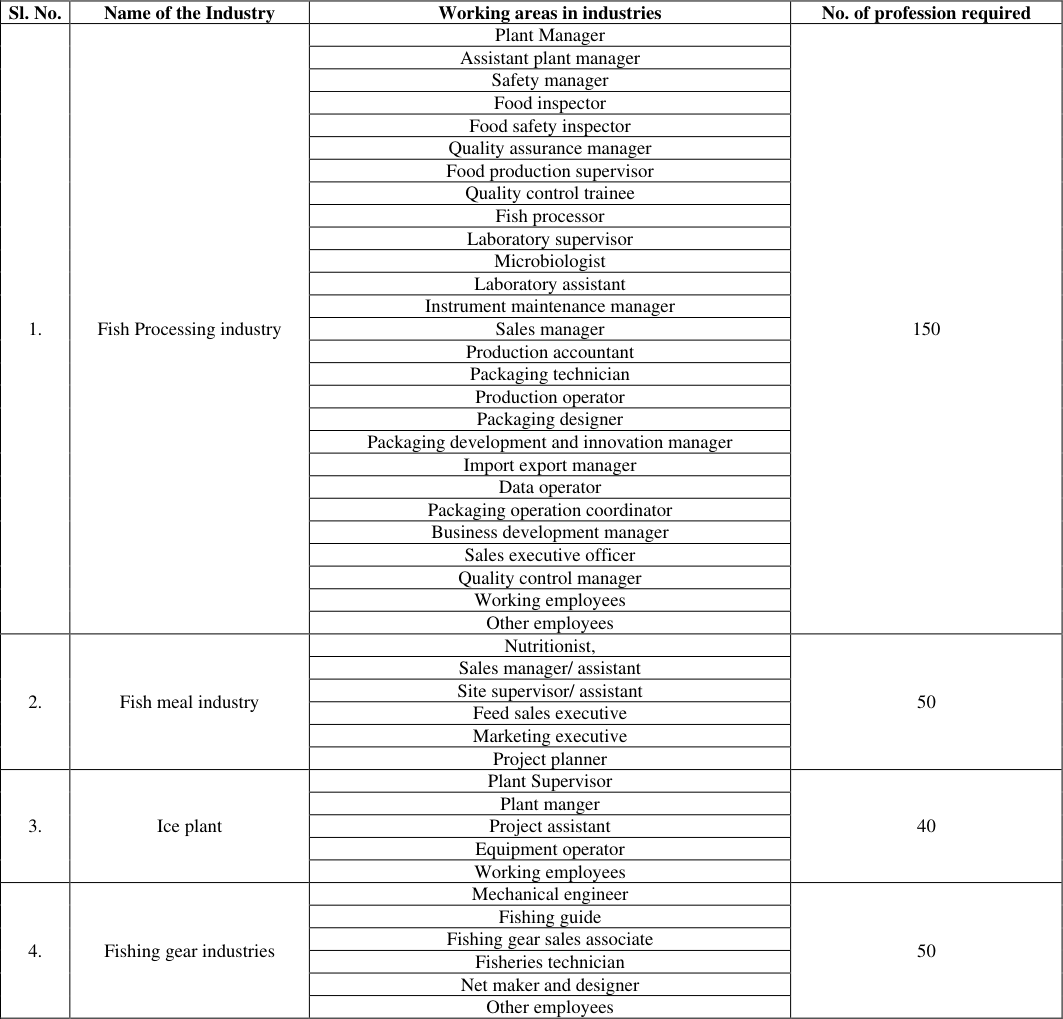 Table 2
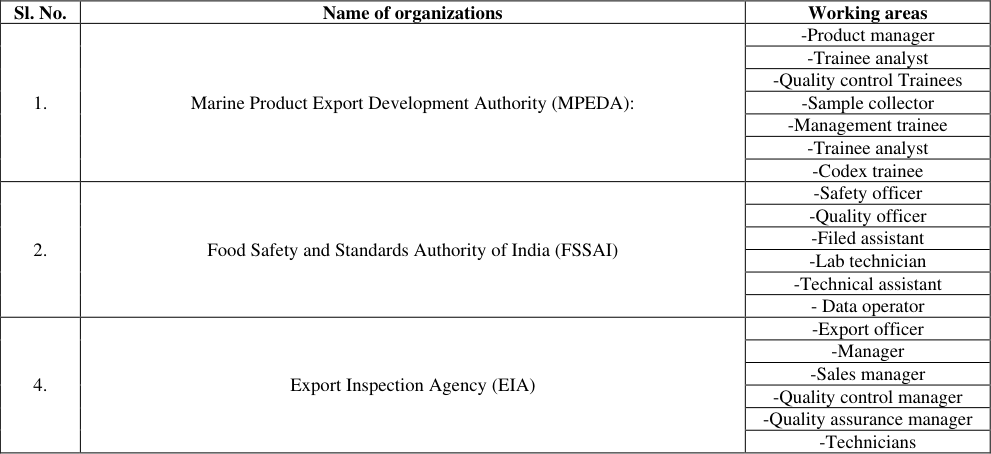 Table 3
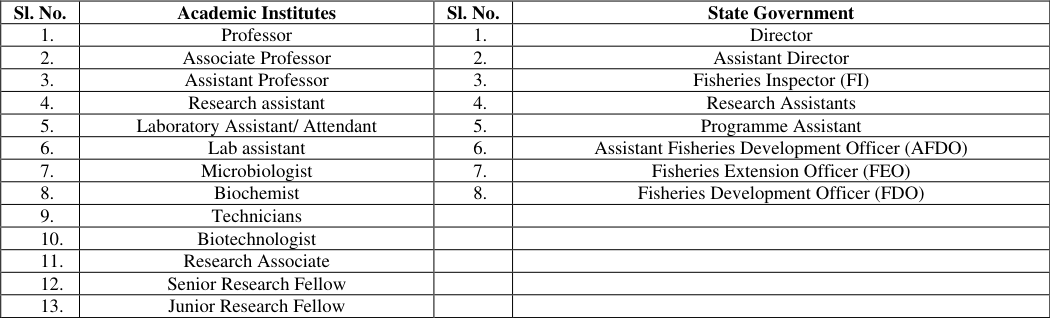 Table 4
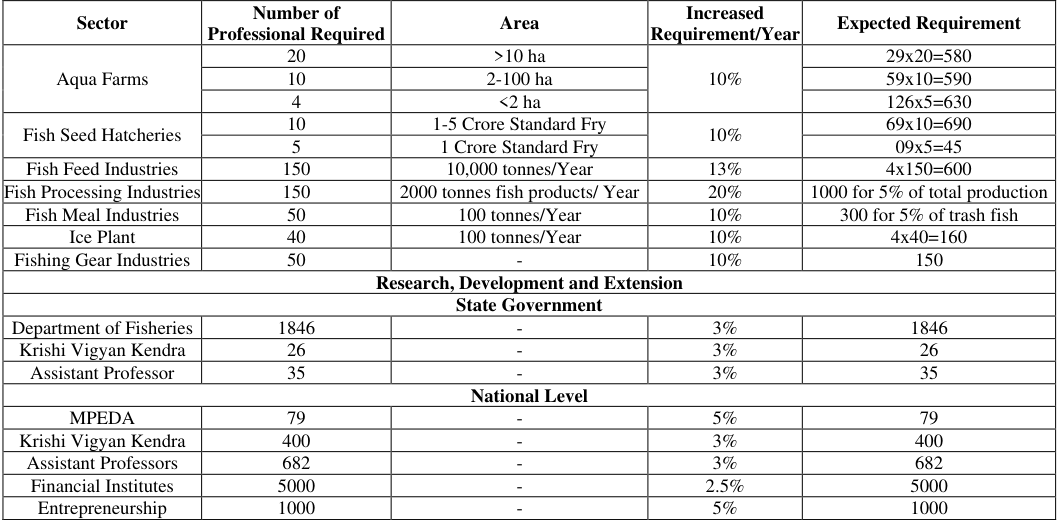 Table 6
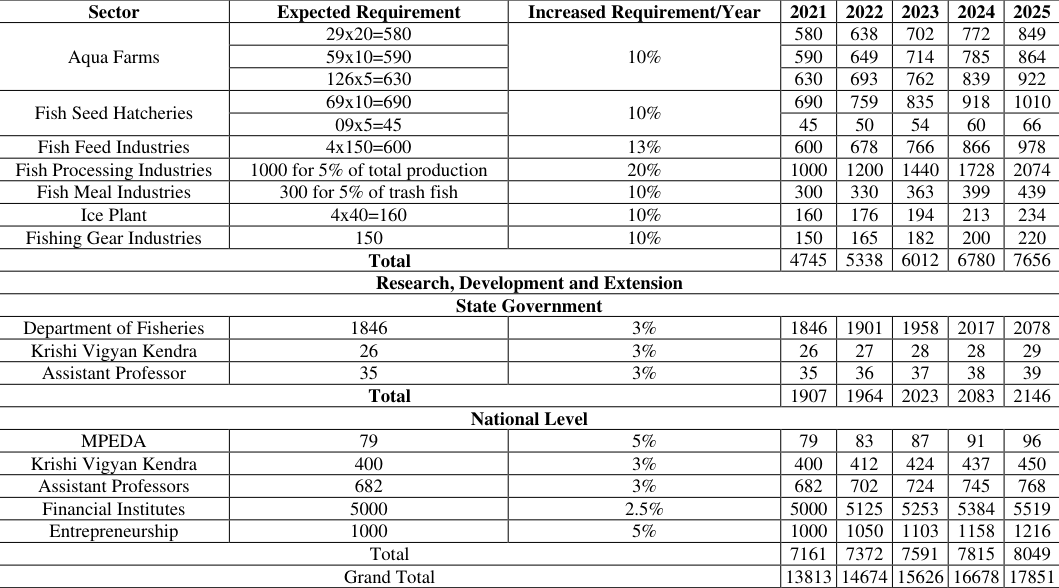 Table 7
Introduction
India stands as the sixth largest contributor to global fish production and the second largest in inland fisheries. Approximately 14 million individuals find employment directly or indirectly in the fisheries sector (GOI, 2022). This field generates numerous opportunities, including fish harvesting, post-harvest activities, pharmaceuticals, biofuel production, aqua-clinics, and organic manure production, for each person engaged in capture fisheries and aquaculture. Over the past five decades, there has been a steady annual growth rate of 4.1% in fish production. However, the demand for skilled manpower remains a significant challenge. By 2025, India is projected to require over 15,457 fisheries graduates annually, while the current supply stands at only 4,570 students per year (Agrawal, 2016) [3] . Research by the Central Institute of Fisheries Education (CIFE) forecasts a need for 10,457 fisheries graduates by 2020, yet the supply remains at 4,570 (Sukham, 1010) [11] . Various studies have addressed the manpower needs in the fisheries sector, with estimates varying widely from a few thousand to several hundred thousand individuals requiring different levels of training, education, and expertise (Chidambaram, 1985; James, 1987; Thakur et al., 1997; Kohli, 1998; Ayyappan and Biradar, 2000) [5,7,13,8,4] . The demand for skilled personnel in the fisheries sector underscores the importance of fostering education and training programs to meet these needs. Efforts to bridge the gap between demand and supply should focus on enhancing the quality and relevance of fisheries education, as well as promoting vocational training initiatives. Additionally, investments in research and development can lead to innovations that improve productivity and sustainability within the industry (Ayyappan and Biradar, 2000) [4] . By addressing these challenges holistically, India can capitalize on its vast potential in the fisheries sector while simultaneously creating more opportunities for employment and economic growth.
Materials and Methods
Materials and Methods
Data Collection
A comprehensive survey was undertaken to assess the involvement of both public and private entities in the development of fisheries within the state, whether through direct or indirect means. These entities encompassed a diverse range, including the state fisheries department, colleges, institutions, federations, centers, company groups, and individual farmers. The study primarily relied on secondary data gathered from a multitude of sources. These www.extensionjournal.com included official reports such as annual reports from government departments and updates, along with information from various venture sources pertinent to the subject matter. This method ensured a thorough examination of the landscape, drawing insights from multiple perspectives and data repositories.
Results and Discussion
Results and Discussion
Supply estimation
Chhattisgarh state is home to a singular institution dedicated to fisheries education, located within Dau Shri Vasudev Chandrakar Kamdhenu Vishwavidyalaya in Kawardha (Dist. Kabirdham). This college offers Bachelor of Fisheries Science (B.F.Sc) programs with a capacity to train up to 100 fisheries professionals. However, despite this educational provision, the state's burgeoning fisheries sector faces a considerable shortfall in trained technicians. The recently established Fisheries Polytechnic, which has the potential to contribute to addressing this gap, currently only produces around 30 fisheries technicians. This output falls significantly short of the substantial demand for skilled professionals within the sector, highlighting a pressing need for expanded educational infrastructure and capacitybuilding initiatives.
Demand estimation
Practically every sub-sector within the fisheries industry, including Aquaculture, Fish Processing Technology, Fish Genetics and Biotechnology, Fish Health, Aquatic Environment Management, Fish Biology, Fisheries Economics, and Extension, requires a workforce consisting of technicians, as well as skilled and semi-skilled personnel. This diverse category encompasses individuals with diplomas, vocational training, and those educated through on-the-job training programs. Each sub-sector demands a separate assessment of its workforce requirements to ensure that the appropriate skills and expertise are available to sustain and enhance operations effectively. Such a comprehensive approach acknowledges the multifaceted nature of the fisheries industry and facilitates targeted workforce development strategies tailored to the specific needs of each sub-sector.
Aquaculture
Aquaculture emerges as the most promising sub-sector within the fisheries industry, boasting a potential area spanning between 1.9 to 2.4 lakh hectares of water resources. Despite this vast potential, the current landscape reveals a relatively modest number of registered aquaculture units, totaling around 100, alongside a mere 69 hatcheries.
To effectively gauge the manpower requirements across the spectrum of fish farms, certain benchmarks have been established. For instance, a farm occupying 10 hectares is estimated to necessitate a workforce of at least twenty graduates, while a medium-sized farm spanning between 2 to 10 hectares would require a minimum of ten graduates.
Smaller-scale farms below 2 hectares typically require around four technicians. Given the diversity in farm sizes and operational requirements, it's crucial to account for these variations in estimating the workforce. Presently, approximately 10,000 graduates are projected to be needed, with a significant portion of these roles requiring undergraduate qualifications. This underscores the urgency for targeted education and training initiatives to meet the evolving demands of the aquaculture sector.
Fish seed hatcheries
In It's anticipated that the number of hatcheries, across all categories, will expand by approximately 5% annually, reflecting the sector's sustained growth trajectory. This underscores the imperative for strategic workforce planning and educational initiatives to meet the evolving needs of the hatchery sector.
The demand for skilled personnel in the fisheries sector is projected to experience significant growth in the coming years. In 2020, the need for 1,330 graduates is anticipated to rise to 2,170 by 2025, representing a substantial increase in workforce requirements. Similarly, the demand for technical personnel is expected to surge from 2,800 individuals in 2020 to 7,000 by 2025. This exponential growth reflects the expanding scope and complexity of the fisheries industry, driven by factors such as increasing production volumes, technological advancements, and evolving regulatory frameworks. Meeting these escalating workforce demands will be essential to sustain the sector's growth momentum and ensure its continued contribution to food security, economic development, and environmental sustainability.
Fish feed industry
The forecast for demand in this particular sub-sector has been derived through a normative approach. Currently, there are approximately four fish feed industrial units operating, boasting a collective installed capacity of 50,000 tonnes per annum. Notably, a significant unit with an annual production capacity of 10,000 tonnes employs around 100 fisheries graduates. Projections indicate that by 2025, this major unit will require an additional 250 graduates to meet operational needs. It is also assumed that the other mediumsized units will have similar demands for fisheries graduates. This highlights the critical role of skilled professionals in sustaining and expanding operations within the fish feed industry. As the sector continues to evolve, www.extensionjournal.com ensuring an adequate supply of qualified personnel will be essential for maintaining productivity and competitiveness.
Fish processing industries
During the XI five-year plan period, the fisheries sector experienced robust growth, averaging 8.95% per annum, surpassing the targeted growth rate of 6% per annum. Despite these advancements, the Ministry of Food Processing Industries aimed for a 20% increase in the fish processing sector's contribution to overall production by 2025. However, in Chhattisgarh, there remains a noticeable dearth of fish processing industries, indicating untapped potential for growth and development in this sector. Nevertheless, it's anticipated that with proper initiatives, the processing sector will expand as envisioned, driving an increase in the volume of fish processing activities.
Opportunities for Fresh water Fish processing industries in Chhattisgarh
Establishing a freshwater fish processing industry in Chhattisgarh holds the potential to create numerous job opportunities for fisheries graduates across various processing fields. Moreover, such an industry serves as a vital link between retail customers and fish farmers, providing the latter with a sustainable source of livelihood. Entire economies of port towns often rely heavily on the fish processing industry for their economic sustenance. However, challenges such as the escalation of raw material prices and stringent environmental regulations aimed at protecting fish species could hinder market growth.
Several key drivers fuel the demand for fish processing.
Firstly, there's a continuous rise in the demand for fish, driven by factors such as population growth and changing dietary habits. Additionally, consumers are increasingly seeking differentiated and value-added fish products, reflecting evolving preferences and tastes. The accessibility of fish processing industries to fish producers allows them to exert control over the final product's quality and hygiene standards, which is crucial for meeting consumer expectations. Furthermore, the growth of the global fish processing market is facilitated by the increasing availability of fish feed, which supports the aquaculture industry. The development and improvement of distribution channels, coupled with advancements in technology related to fish packaging, processing, and storage, are also significant factors propelling market growth. Therefore, investing in the fish processing industry in Chhattisgarh, along with addressing associated challenges, presents promising opportunities for economic development and meeting the evolving demands of consumers.
Government or private Industries
Candidates in the fisheries sector can explore diverse career paths, including managerial or officer roles in fish or seafood processing and export units, aqua feed plants, fishing gear industries, and pharmaceutical companies. [11] . Projections indicate a projected need for an additional 2,838 posts by 2025, bringing the total to 7,684 positions by that year. Considering recent trends in state government employment, it's improbable that such a substantial expansion will occur.
A more realistic expectation is that current vacancies will be filled, with a few additional positions created by 2025, resulting in total employment of around 5,000 fisheries graduates. This reflects the pragmatic approach needed to address workforce needs within the fisheries sector, balancing projected demand with practical constraints and resource availability.
Research and academic
As of 2010, the eight fisheries Institutions in ICAR had a sanctioned scientific strength of 679 (35% vacant), which includes 397 scientists in fisheries discipline (Fish and Fisheries Science 360, Fish Pathology and Fish Processing Technology 36). Thus, with 35% vacancies, ICAR had 270 fisheries scientists in position in 2010. In 2010, SAUs had sanctioned strength of 682 personnel in fisheries disciplines, with 403 in position. Apart from ICAR and SAUs, scope for research in fisheries is much more. Fisheries Survey of India, which had a sanctioned strength of 67 has 20 vacancies and projected their additional needs as 18 to take the total strength to 85 by 2025. Considering these factors, manpower in fisheries research and education has been projected to grow at 2% per annum only through filling up of the vacant posts. The total number of fisheries graduates in research and academic sector needed in this sub-sector of employment is estimated to be 1200 by 2025. noting that demand for their skills extends beyond traditional sectors, encompassing civil services, the fishing equipment industry, non-governmental organizations (NGOs), agri-clinics, and other avenues for selfemployment. Furthermore, there exists a significant global demand for their expertise. This diversified demand from various sectors, both domestic and international, was conservatively estimated at 5% of the total demand assessed across the different sub-sectors.
Conclusion
The fisheries sector has rapidly emerged as a vital area of development in Chhattisgarh. As the sector continues to grow, the demand for fisheries professionals in the state is expected to surge. However, both the private and public sectors in Chhattisgarh are facing a shortage of fisheries professionals compared to the escalating demand. A study conducted on this matter unveiled that the anticipated requirement for fisheries professionals is estimated to average 8,131 per year within the state and 7,598 per year outside the state during the period of 2021-2025. This projected demand underscores the pressing need for a concerted effort to bolster the supply of skilled fisheries professionals to meet the burgeoning needs of the sector in both Chhattisgarh and beyond its borders.
Figures and tables from the paper
| Undergraduate (UG) | — | — | Postgraduate (PG) | — |
|---|---|---|---|---|
| Intake | Outturn | Intake | Outturn | |
| College of Fisheries | 100 | 100 | 6 | 6 |
| Fisheries Polytechnic | 30 | 30 | - | - |
Table text extracted from the original PDF; superscript letters are shown inline. The original table image is below.
View original table image
| Sl. No. | Name of organizations | Working areas |
|---|---|---|
| 1. | Marine Product Export Development Authority (MPEDA): | -Product manager |
| -Trainee analyst | ||
| -Quality control Trainees | ||
| -Sample collector | ||
| -Management trainee | ||
| -Trainee analyst | ||
| -Codex trainee | ||
| 2. | Food Safety and Standards Authority of India (FSSAI) | -Safety officer |
| -Quality officer | ||
| -Filed assistant | ||
| -Lab technician | ||
| -Technical assistant | ||
| - Data operator | ||
| 4. | Export Inspection Agency (EIA) | -Export officer |
| -Manager | ||
| -Sales manager | ||
| -Quality control manager | ||
| -Quality assurance manager | ||
| -Technicians |
Table text extracted from the original PDF; superscript letters are shown inline. The original table image is below.
View original table image
| Sl. No. | Academic Institutes | Sl. No. | State Government |
|---|---|---|---|
| 1. | Professor | 1. | Director |
| 2. | Associate Professor | 2. | Assistant Director |
| 3. | Assistant Professor | 3. | Fisheries Inspector (FI) |
| 4. | Research assistant | 4. | Research Assistants |
| 5. | Laboratory Assistant/ Attendant | 5. | Programme Assistant |
| 6. | Lab assistant | 6. | Assistant Fisheries Development Officer (AFDO) |
| 7. | Microbiologist | 7. | Fisheries Extension Officer (FEO) |
| 8. | Biochemist | 8. | Fisheries Development Officer (FDO) |
| 9. | Technicians | ||
| 10. | Biotechnologist | ||
| 11. | Research Associate | ||
| 12. | Senior Research Fellow | ||
| 13. | Junior Research Fellow |
Table text extracted from the original PDF; superscript letters are shown inline. The original table image is below.
View original table image
| Sector | Number of Professional Required | Area | Increased Requirement/Year | Expected Requirement |
|---|---|---|---|---|
| Aqua Farms | 20 | >10 ha | 10% | 29x20=580 |
| 10 | 2-100 ha | 59x10=590 | ||
| 4 | <2 ha | 126x5=630 | ||
| Fish Seed Hatcheries | 10 | 1-5 Crore Standard Fry | 10% | 69x10=690 |
| 5 | 1 Crore Standard Fry | 09x5=45 | ||
| Fish Feed Industries | 150 | 10,000 tonnes/Year | 13% | 4x150=600 |
| Fish Processing Industries | 150 | 2000 tonnes fish products/ Year | 20% | 1000 for 5% of total production |
| Fish Meal Industries | 50 | 100 tonnes/Year | 10% | 300 for 5% of trash fish |
| Ice Plant | 40 | 100 tonnes/Year | 10% | 4x40=160 |
| Fishing Gear Industries | 50 | - | 10% | 150 |
| Research, Development and Extension | ||||
| State Government | ||||
| Department of Fisheries | 1846 | - | 3% | 1846 |
| Krishi Vigyan Kendra | 26 | - | 3% | 26 |
| Assistant Professor | 35 | - | 3% | 35 |
| National Level | ||||
| MPEDA | 79 | - | 5% | 79 |
| Krishi Vigyan Kendra | 400 | - | 3% | 400 |
| Assistant Professors | 682 | - | 3% | 682 |
| Financial Institutes | 5000 | - | 2.5% | 5000 |
| Entrepreneurship | 1000 | - | 5% | 1000 |
Table text extracted from the original PDF; superscript letters are shown inline. The original table image is below.
View original table image
| Sector | Expected Requirement | Increased Requirement/Year | 2021 | 2022 | 2023 | 2024 | 2025 |
|---|---|---|---|---|---|---|---|
| Aqua Farms | 29x20=580 | 10% | 580 | 638 | 702 | 772 | 849 |
| 59x10=590 | 590 | 649 | 714 | 785 | 864 | ||
| 126x5=630 | 630 | 693 | 762 | 839 | 922 | ||
| Fish Seed Hatcheries | 69x10=690 | 10% | 690 | 759 | 835 | 918 | 1010 |
| 09x5=45 | 45 | 50 | 54 | 60 | 66 | ||
| Fish Feed Industries | 4x150=600 | 13% | 600 | 678 | 766 | 866 | 978 |
| Fish Processing Industries | 1000 for 5% of total production | 20% | 1000 | 1200 | 1440 | 1728 | 2074 |
| Fish Meal Industries | 300 for 5% of trash fish | 10% | 300 | 330 | 363 | 399 | 439 |
| Ice Plant | 4x40=160 | 10% | 160 | 176 | 194 | 213 | 234 |
| Fishing Gear Industries | 150 | 10% | 150 | 165 | 182 | 200 | 220 |
| Total | 4745 | 5338 | 6012 | 6780 | 7656 | ||
| Research, Development and Extension | |||||||
| State Government | |||||||
| Department of Fisheries | 1846 | 3% | 1846 | 1901 | 1958 | 2017 | 2078 |
| Krishi Vigyan Kendra | 26 | 3% | 26 | 27 | 28 | 28 | 29 |
| Assistant Professor | 35 | 3% | 35 | 36 | 37 | 38 | 39 |
| Total | 1907 | 1964 | 2023 | 2083 | 2146 | ||
| National Level | |||||||
| MPEDA | 79 | 5% | 79 | 83 | 87 | 91 | 96 |
| Krishi Vigyan Kendra | 400 | 3% | 400 | 412 | 424 | 437 | 450 |
| Assistant Professors | 682 | 3% | 682 | 702 | 724 | 745 | 768 |
| Financial Institutes | 5000 | 2.5% | 5000 | 5125 | 5253 | 5384 | 5519 |
| Entrepreneurship | 1000 | 5% | 1000 | 1050 | 1103 | 1158 | 1216 |
| Total | 7161 | 7372 | 7591 | 7815 | 8049 | ||
| Grand Total | 13813 | 14674 | 15626 | 16678 | 17851 |
Table text extracted from the original PDF; superscript letters are shown inline. The original table image is below.
View original table image
References
9 in the original paper- Department of Fisheries, Government of Chhattisgarh. Annual report, (2021-22); c2002.
- Ministry of Labour and Employment, Government of India. Report of the Working Group on Skill Development and Training for XII Five Year Plan (2021-2022); c2011.
- Agrawal R, Darapuneni RR, Rao BV, Nanda SK, Bhattacharya S. Assessment of employment potential for fisheries professionals in India. Indian Journal of Fisheries. 2016;63(2):102-109.
- Ayyappan S, Biradar RS. Manpower requirements and human resource development in fisheries sector. Report of the brainstorming session, Education Division of Indian Council of Agricultural Research, New Delhi and Central Institute of Fisheries Education, 20-21 October 2000, ICAR-Central Institute of Fisheries Education, Mumbai, India; c2000.
- James PSBR. Manpower requirement in mariculture. Proceedings of the symposium on management of coastal aquaculture and oceanic resources of Andamans, Central Marine Fisheries Research Institute, Cochin; c1987. [Accessed 4 December, 2011].
- Kohli MPS. Manpower requirements in Indian fisheries sector. Fishing Chimes. 1998;18(2):42-46.
- National Institute of Agriculture Extension Management (MANAGE). Agri-clinics in India. Hyderabad; c2011. [Accessed 12 June, 2012]. Available from: http:www. manage.gov.in.
- Marine Products Export Development Authority, Ministry of Commerce and Industry, Government of India; c2011. [Accessed 12 June, 2012]. Available from: http://www.mpeda.com/
- National Fisheries Development Board, Government of India; c2020. [Accessed 4 May, 2012]. Available from: http://nfdb.ap.nic.in