
Research article · 2024 · Full text
International Journal of Advanced Biochemistry ResearchTechnology development for linen yarn spinning from linseed fibre
Volume 8(3) · Pages 968–970 · DOI: 10.33545/26174693.2024.v8.i3k.903 ↗
Research areasTextile materials and evaluations
Abstract
Author-writtenLinseed is an critical oilseed crops grown in rabi season. Linseed is produced 15 to 20 quintals of stem waste of linseed is produced according to hectare which could yield 15 to twenty % correct fine fiber. Those wastes may be used for extraction of excellent first-class fiber (Linen) for making high valued garments, canvas, suiting’s, shirting’s and numerous critical products for defense functions. In this way surroundings may be made at the same time enhancing the rural financial system via small scale industries. Taking those in to account the prevailing inspiration is ready with the objectives to refine developed generation of linen merchandise from linseed stalks and to scale up the generation to sell cloth making from linseed fiber amongst weavers. Linen yarn is spun from the lengthy fibers discovered just behind the bark within the multi-layer stem of the Linseed plant (Linum usitatissimum). On the way to retrieve the fibers from the plant, the woody stem and the internal pith (called pectin), which holds the fibers collectively in a clump, ought to be rotted away. The cellulose fiber from the stem is spinnable and is used inside the manufacturing of linen thread, cordage, and cord. From linen thread or yarn, best toweling and dress fabrics can be woven. Linen fabric is a famous preference for warm-climate garb. It feels cool in the summer season but appears crisp and fresh even in hot climate. Household linens clearly made from linen end up extra supple and smooth to the touch with use; consequently, linen was as soon as the bed sheet of choice. At the same time as the Linseed plant isn't tough to grow, it prospers high-quality in cool, humid climates and inside moist, nicely-plowed soil. The method for separating the Linseed fibers from the plant's woody stock is laborious and painstaking and should be accomplished in an area in which hard work is plentiful and comparatively less expensive. It’s far extremely good that even as there may be a few mechanization to components of the fiber preparation, some fiber instruction continues to be performed by using hand because it has been for centuries. This will be because of the care that ought to be thinking about the fragile Linseed fibers in the woody stalk, which is probably adversely affected by mechanized processing.
Summary
Source-checkedPlain-language reading of the full paper, prepared with AI and checked against the text. Each point links to the authors' own words.
Why it matters
- Linseed is an important oilseed crop grown in the rabi season, producing 15 to 20 quintals of stem waste per hectare, which can yield 15% to 20% fine fiber. View evidence ↗
- The stem waste of linseed can be used to extract high-quality linen fiber for high-value products, including garments, canvas, and defense materials. View evidence ↗
- Developing linen production from linseed waste can improve the environment and boost rural economies through small-scale industries. View evidence ↗
What they did
- Fibers are separated from the woody stalk using either water or chemicals, which are subsequently washed away. View evidence ↗
- The study compared the use of a modified motorized charkha against an upgraded rotor spinning system. View evidence ↗
What they found
- Production increased from an average of 250-300 grams per person per day using a motorized charkha to up to 12 kg per day using 4-headed upgraded rotor spinning machines. View evidence ↗
- Yarn from the upgraded rotor spinning system is stronger, more uniform, and has greater fineness (5-25s Ne) compared to yarn from the motorized charkha. View evidence ↗
- The upgraded rotor spinning system is eco-friendly because it avoids fossil fuels and combustion, eliminating explosion risks and environmental harm. View evidence ↗
- The upgraded rotor spinning system is easy to operate and eliminates human drudgery while ensuring operator safety. View evidence ↗
- Operating costs for the upgraded rotor spinning system are low, consisting primarily of electricity charges for an 8-hour daily shift. View evidence ↗
What it means
- The authors conclude that the progressive spinning system reduces physical drudgery for laborers and increases their remuneration while improving yarn quality and fineness. View evidence ↗
- Ongoing research and development are focused on further reducing costs and integrating the system with renewable energy sources. View evidence ↗
Visual summary
1 visualsIllustrations explain the paper; they do not show study data.
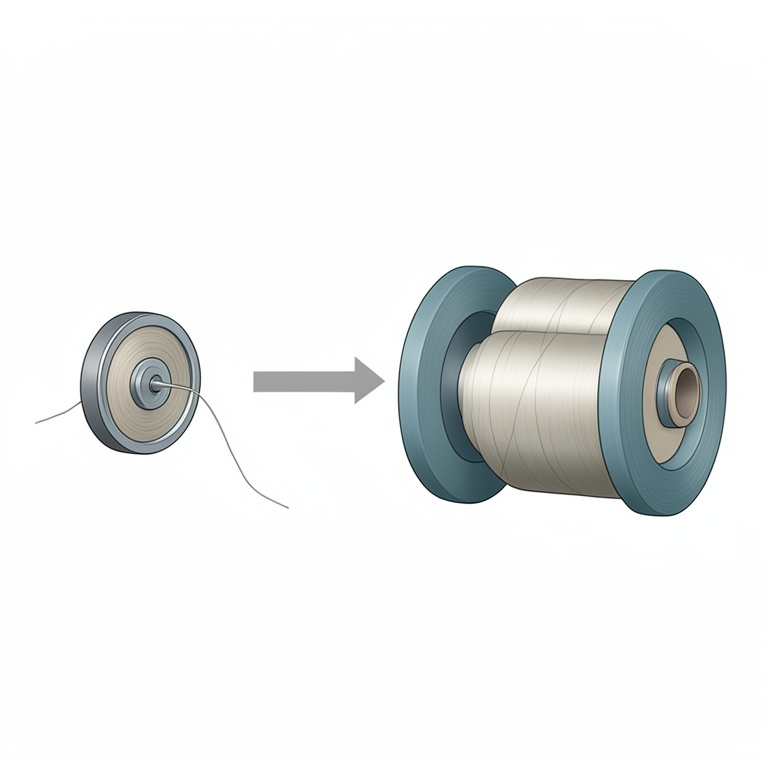
Comparison of Spinning Technologies
AI-generated conceptual illustration (linseed fiber and spinning machinery). It explains the idea and does not show study data.
View source evidence ↗Figures & tables
From the original paper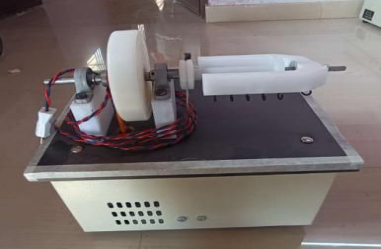 Figure 1
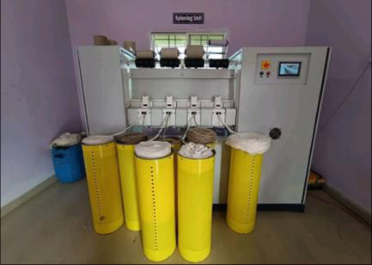 Figure 2
Introduction
Chhattisgarh is fortunate to have required climatic variety for our traditional crop i.e. linseed. Chhattisgarh is one of the critical linseed growing states of India, which account 27.10 thousand hectares region and 7.90 thousand metric tones production. Linseed has been cultivated in the state from very earlier instances. Chhattisgarh region is divided into 3 agroclimatic zones viz., Chhattisgarh plains, Northern Hill location and Bastar Plateau. Linseed is grown in lots of districts of the state however primary linseed growing districts are Rajnandgaon, Durg, Bilaspur, Kabirdham, Raipur, Dhamtari, Sarguja, Kanker and Raigarh. In Chhattisgarh linseed is grown as a wintry weather crop ordinarily in sub-marginal land beneath rainfed (sixty three %) and utera (25%) i.e. para cropping conditions. Indira Gandhi Krishi Vishwavidyalaya, Raipur has been working for the reason that 1967sixty eight relentlessly for greater manufacturing and value addition of linseed. 16 sorts of linseed were launched out of which RLC 133, RLC 143. RLC 148, RLC 153. RLC 161, RLC 164 & RLC 167 these seven are recent (released after 2012). These sorts have distinctive characteristics and have been released from CVRC for specific environmental situations like rainfed, utera, irrigated and specific zones of India with resistance to numerous biotic stresses.
In Chhattisgarh IGKV holds around 2025 linseed germplasm accessions until date. these accessions having variability for all the important tendencies like seed colour, plant top, seed yield, oil yield, values addition traits, resistance to diseases and pest etc. we've got also yellow seeded accessions as nicely, which is known for its golden yellow seed shade and buttery flavor and is demanded for fit for human consumption & confectionary market. Then again flax type germplasm accessions with plant height extra than ninety cm are being utilized for fiber extraction and spinning to reinforce linseed in fabric and handloom marketplace of the country. Those accessions are being explored to beautify linseed residences for distinct targets. Flax kind linseed varieties are usually of tall stature while compared to seed type linseed varieties (>90 cm). Also, the branching addiction of flax kind linseed is one-of-a-kind as it has fewer secondary branches and erects plant kind. Flax fiber is extracted from the bast or skin of the stem of flax plant. Flax fibers are arranged inside the form of thin filaments, grouped in longitudinal slim bundles dispensed circularly around a imperative wooden cylinder. Because of the combination of excessive mechanical performances and plant-based foundation, flax fibers are thrilling reinforcement for environmentally friendly composite substances. Flax fibers have been used as fabric raw cloth, composing cords and weaving yarn and later on extra fashionable garments or fabric upholstery.
Raw substances
All this is needed to show Linseed fiber into linen, after which spin and weave the linen fibers into linen cloth is the cellulose Linseed fiber from the stem of the Linseed plant.
The process for keeping apart the fibers from the woody stalk can use either water or chemical substances, but those are in the long run washed away and aren't a part of the finished material.
Method
A changed, incredibly efficient Motorised charkha is helping Linen spinners in earn more than traditional charkhas. but we are running on the Rotor Spinning with the intention of assisting marketers improve to existing technologies. Based on feedbacks received from the spinners, it was reported that a spinner normally spins on an average 250-300 grams per person per day through spinning on motorized charkha. But after the introduction of upgraded Rotor Spinning, it can spins upto 12 kgs per day with just 4 headed machines resulting in multiple times more spinning. It was also found that yarn produced by upgraded rotor spinning is stronger and too much fineness (5-25 s Ne) than the yarn produced using the motorised charkha and is more uniform also. Upgraded Rotor Spinning Machine is used to spin Linseed fibre into fine linen yarn. Furthermore, it was observed that the upgraded rotor spinning is eco-friendly as it does not require any fossil fuel and sort combustion, so there is no risk of explosions and operation of upgraded rotor spinning does not harm the environment. It ensures safety of the people and has no human drudgery as well as is easy to operate. Further, R&D for reducing the cost and integrating with sources of renewable energy is underway.
Once given to the manufacturer, it is easier to manufacture the upgraded rotor spinning as almost all the parts are available in the market, while the gearbox and speed controller may be procured from cotton manufacturing markets. As far as the operating cost of the upgraded rotor spinning, it is very little will be about towards electricity charges, operated by electrical motor in 8 hour shift in a day.
Result and dialogue
The motorized charkha spinning wheel became at the start designed as a home device for much less privileged ladies to growth their profits by way of selling home made garments. This design converts the conventional charkha into a contemporary device for empowerment and smooth energy. The charkha is a tool for spinning yarn that turned into propagated for the financial empowerment of the agricultural poor through Mahatma Gandhi Ji, the daddy of our kingdom, India. This charkha now sees a brand new shape as the e-charkha, which produces each yarn and power." "That allows you to eliminate the restrictions of motorised charkha, an strive became made to modify through introducing upgraded rotor spinning system. This device turned into upgraded after it underwent unique degrees of amendment.
End
On this way surroundings may be made eco friendly on the equal time enhancing the productiveness via small scale industries. Study revealed that the progressive spinning system led to discount of bodily drudgery to the labour and increased remuneration by means of approximately normally whilst in comparison with conventional one with development the yarn high-quality and fineness. Nowadays, linen is one of the most desired materials for mattress sheets because of its sturdiness and hypoallergenic residences. Linen can be up to 3 instances more potent than cotton. That is due to the fact the cellulose fibers in linen yarn are barely longer and wrapped tighter than those found in cotton yarn. This offers it excellent sturdiness and allows linen merchandise to be lengthy-lasting. Currently researchers are running on a cotton/flax mixture to create new yarns in order to enhance the feel of denim all through hot and humid weather.
Acknowledgement
AcknowledgementThe authors are fantastically indebted to the Indian Council of Agricultural studies, New Delhi for sanctioning the sector financial institution funded NAHEP-W2W mission on "Linen from Linseed products" and afterwards same project funded via IGKV, Raipur below which the paintings changed into executed. We also are grateful to helping us for up gradation of Rotor spinning machine by using M/s. Texperience, Gorakhpur.
Figures and tables from the paper
References
3 in the original paper- Harper, Douglas. Linen life. Archived from the original on 2018-01-26. Retrieved 2018-01-25
- Prance Sir Ghillean. The Cultural History of Plants. Routledge, 2012, 295.
- Linen. Lexico.com. Oxford. Archived from the original on August 3, 2020. Retrieved 22 May 2020.