
Research article · 2024 · Full text
International Journal of Biology SciencesZoological education and outreach: Promoting public awareness and engagement in wildlife conservation
Volume 6(1) · Pages 168–171 · DOI: 10.33545/26649926.2024.v6.i1c.201 ↗
Research areasAnimal and Plant Science EducationConservation, Ecology, Wildlife EducationWildlife Ecology and Conservation
Abstract
Author-writtenThis paper investigates the significant role that zoological education and outreach programmes play in promoting public awareness and engagement in wildlife conservation efforts in India, focusing on the conservation of tiger populations. It elucidates how these educational strategies have been pivotal in fostering a conservation-minded public, thereby contributing to the remarkable recovery of tiger populations and the expansion of protected areas. The research illustrates the beneficial consequences of conservation programmes after the introduction of the Wildlife Protection Act of 1972, based on a thorough assessment of the literature and analysis of data. Findings reveal that the increase in tiger populations from an estimated 1,711 in 2010 to around 2,500 by 2016, alongside the growth in the number and extent of protected areas, serves as a testament to the effectiveness of India's conservation strategies, underpinned by robust public support facilitated through educational outreach. The paper underscores the importance of continued investment in zoological education and community engagement programmes as cornerstones for the success of wildlife conservation projects. This study contributes to a broader understanding of how teaching and outreach can catalyse conservation successes, providing a model for similar initiatives worldwide.
Summary
Source-checkedPlain-language reading of the full paper, prepared with AI and checked against the text. Each point links to the authors' own words.
Why it matters
- Global wildlife populations are declining, creating an urgent need for conservation, especially in biodiversity-rich nations like India. View evidence ↗
- India's tigers have faced population declines caused by poaching, human-wildlife conflict, and the degradation of their habitats. View evidence ↗
- Zoological education and outreach act as a critical link between the public and conservationists to increase engagement and understanding of wildlife protection. View evidence ↗
The question
- The study aims to investigate how zoological education and outreach programs promote public awareness and engagement in India's wildlife conservation, specifically regarding tiger populations. View evidence ↗
What they did
- The research methodology combines a qualitative examination of the development of protected areas with quantitative data on tiger population growth. View evidence ↗
- Data for the study was collected from peer-reviewed articles, conservation organizations, and government reports. View evidence ↗
What they found
- Following the Wildlife Protection Act of 1972, the number of national parks in India increased from 5 to 103. View evidence ↗
- India's conservation framework includes the establishment of 18 biosphere reserves, 48 tiger reserves, and over 500 wildlife sanctuaries. View evidence ↗
- Tiger populations grew from an estimated 1,711 individuals in 2010 to approximately 2,500 by 2016, indicating effective conservation strategies. View evidence ↗
- Community-based programs that provide sustainable livelihoods and eco-tourism opportunities have increased local participation and positive attitudes toward conservation. View evidence ↗
- Targeted educational programs that emphasize the economic and ecological benefits of conservation have shifted public attitudes from indifference to active participation. View evidence ↗
What it means
- The authors conclude that prioritizing and investing in zoological education and outreach is essential to maintain the progress of wildlife conservation in India. View evidence ↗
- The study recommends that policymakers, educators, and conservationists integrate public engagement strategies directly into the planning and implementation of conservation efforts. View evidence ↗
- Ongoing challenges that persist despite conservation successes include habitat fragmentation, human-wildlife conflict, and the need for stricter law enforcement. View evidence ↗
Figures & tables
From the original paper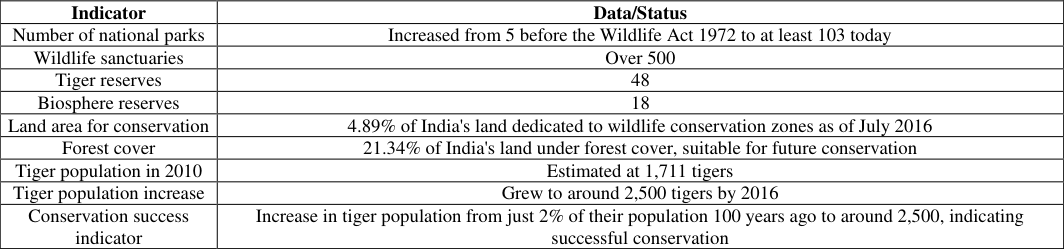 Table 1
Introduction
The global decline of wildlife populations has prompted urgent conservation measures, particularly in countries rich in biodiversity like India. The country's emblematic animals, such as the tiger, are declining due to habitat degradation, poaching, and human-wildlife conflict, demanding major conservation efforts (Mondol et al., 2009) [1] . The role of zoological education and outreach has emerged as pivotal in these efforts, serving as a bridge between conservationists and the public to foster a deeper understanding and engagement in wildlife conservation. Zoological education projects not only promote knowledge about the need of biodiversity conservation, but they also motivate future generations to take action to safeguard endangered species. Zoos play an important part in conservation efforts and the survival of India's rich wildlife by engaging the public via interactive displays, educational initiatives, and community outreach activities. India's rich biodiversity is threatened, with many species at risk of extinction. The tiger, an emblem of India's wild majesty, has been at the centre of conservation efforts. Despite the challenges, efforts such as Project Tiger and establishing numerous tiger reserves have demonstrated significant progress in tiger conservation. The Wildlife Protection Act of 1972 laid the groundwork for the legal protection of wildlife habitats and stringent measures against poaching. The government's commitment to wildlife conservation is evident in the various initiatives and policies to protect endangered species. Public awareness efforts and community engagement have also helped to promote a conservation culture and long-term cohabitation with animals. Zoological education plays a critical role in wildlife conservation efforts. By informing and engaging the public about the importance of biodiversity and the threats faced by wildlife, educational programmes aim to cultivate a conservation-minded society. Initiatives like educational programmes in zoos, wildlife documentaries, and conservation-themed public events have significantly raised public awareness and support for conservation projects (Gopalaswamy et al., 2015) [2] .
These activities also contribute to dispelling myths and prejudices about wildlife, fostering a better knowledge and respect for the natural environment. Finally, zoological education may encourage people to take action to maintain and preserve our planet's biodiversity for future generations. Community involvement is critical to the success of conservation efforts. Involving local populations in conservation efforts via community-based conservation projects has shown positive outcomes in saving species and their habitats. Programmes focusing on conservation benefits for local communities, such as eco-tourism and sustainable livelihood opportunities, have fostered positive attitudes and active participation in conservation efforts. Empowering local communities to become stewards of their natural resources can lead to long-term sustainability and increased effectiveness in conservation initiatives. Conservation programmes that foster a feeling of ownership and responsibility among community members are more likely to succeed and have a long-term influence on biodiversity preservation. Concerted efforts in zoological education, outreach, and community engagement have led to notable successes in wildlife conservation in India. The tiger population has recovered significantly in recent years, demonstrating the success of conservation initiatives (Nature, 2019) [3] . The growth of protected areas, including national parks, wildlife refuges, and biosphere reserves, has given crucial habitats for species to flourish. These efforts have also helped raise awareness about preserving biodiversity and the need for sustainable practices to protect our planet's ecosystems. As a result, there has been a noticeable shift in attitudes towards wildlife conservation and a greater willingness to support conservation initiatives.
Literature Review
Legislative changes and the creation of protected areas have significantly aided India's wildlife conservation efforts. The Wildlife Protection Act of 1972 marked a pivotal moment in India's conservation history, providing a legal framework for protecting wildlife habitats and species. This legislation paved the way for creating numerous wildlife sanctuaries, national parks, and tiger reserves, which are crucial in stabilising and enhancing wildlife populations. These protected areas serve as havens for endangered species and play an essential part in preserving India's rich biodiversity. Additionally, the strict enforcement of anti-poaching laws within these areas has helped reduce illegal wildlife trade and safeguard vulnerable species from extinction. A body of scientific research has emerged, offering insights into the effectiveness of conservation strategies in India. Studies by Mondol et al., (2009) [1] and Gopalaswamy et al., (2015) [2] have provided a scientific basis for understanding the impact of these strategies on wildlife populations, particularly tigers. To find out how well conservation efforts and the recovery of tiger populations are working, these studies have used genetic data, population models, observations made in the wild, and anti-poaching efforts to ensure the long-term survival of tigers in India. Integrating scientific research into conservation planning has led to more effective and evidence-based strategies for protecting endangered species. Protected places, such as tiger reserves, national parks, and wildlife sanctuaries, have functioned as safe havens for animals, providing protection from poaching and habitat loss. The creation and expansion of these areas have been key to the recovery of many species. Research has demonstrated the positive impact of protected areas on biodiversity conservation, with increased tiger populations serving as a prime example of their success (Karanth K.U. et al., 2010) [7] . Protected areas safeguard species and provide ecological benefits such as carbon sequestration and water regulation. These areas are crucial in maintaining ecosystem health and resilience due to increasing human pressures on natural habitats. Beyond legislation and protected areas, the literature highlights the indispensable role of public awareness and community engagement in conservation efforts. Educational and outreach programmes aimed at building conservation awareness among the public have been shown to enhance support for conservation initiatives. Furthermore, including local populations in conservation efforts via communitybased conservation initiatives has resulted in better sustainable conservation results by aligning animal conservation objectives with those of local communities (Jhala et al., 2011) [6] . These projects often engage local populations in decision-making processes and offer economic incentives for conservation efforts, establishing a feeling of ownership and responsibility to safeguard species and their habitats. By involving the public and local communities in conservation efforts, there is a greater likelihood of long-term success in preserving biodiversity and mitigating threats to endangered species. Despite these successes, the literature also points to ongoing challenges such as human-wildlife conflict, habitat fragmentation, and the need for greater enforcement of wildlife laws. Future research directions emphasise the importance of integrated conservation strategies incorporating technological advancements, more robust legal frameworks, and more inclusive community participation (Ripple et al., 2016) [8] . Additionally, there is a growing recognition of the importance of addressing climate change and its impacts on wildlife conservation efforts. Collaborative efforts between governments, NGOs, and local communities will be crucial in overcoming these challenges and achieving long-term success in conservation initiatives.
Methodology
The research uses a qualitative examination of data on the development of national parks, wildlife sanctuaries, tiger reserves, and biosphere reserves in India, as well as quantitative data on the rise of tiger populations. Information was gathered from government reports, conservation organisations, and peer-reviewed articles. The qualitative analysis will provide insights into the effectiveness of current conservation strategies and the challenges faced in wildlife protection. By combining qualitative and quantitative data, this study offers comprehensive recommendations for improving wildlife conservation efforts in India.
Results
Legislative changes, protected area expansions, and focused species recovery programmes, particularly for the Bengal tiger, are all examples of India's concerted efforts in wildlife conservation, which have resulted in notable accomplishments. Drawing upon the literature and the substantial data provided, this section outlines the quantitative successes of these efforts, illustrating a clear positive trajectory in conservation outcomes. The increase in the number of national parks from 5 before the enactment of the Wildlife Protection Act of 1972 to 103 today underscores the significant impact of conservation legislation (Wildlife Protection Act, 1972) [4] . Establishing over 500 wildlife sanctuaries, 48 tiger reserves, and 18 biosphere reserves further exemplifies India's comprehensive approach towards wildlife conservation. These protected areas serve as refuges for numerous species and play a critical role in ecological stability and biodiversity conservation (Mondol et al., 2009; Wildlife Protection Act, 1972) [1,4] . The recovery of the tiger population from an estimated 1,711 individuals in 2010 to around 2,500 by 2016 highlights the efficacy of conservation strategies implemented across the country (Gopalaswamy et al., 2015) [2] . This increase represents a conservation success for tigers and serves as a flagship example of wildlife recovery, promoting further public and governmental support for conservation initiatives. The correlation between protected area expansion and tiger population recovery indicates the importance of habitat preservation in species conservation efforts. The designation of 4.89% of India's land for wildlife conservation zones and the coverage of 21.34% of the country's land under forest cover are significant for future conservation efforts. These areas provide essential habitats for wildlife and contribute to the ecological balance, supporting biodiversity and ecosystem services (Gopalaswamy et al., 2015) [2] . Reflecting on the literature, the significance of public awareness and community engagement in supporting conservation goals cannot be overstated. Educational and outreach programmes have played a vital role in garnering public support for conservation initiatives, facilitating a societal shift towards environmental stewardship (Mondol et al., 2009; Gopalaswamy et al., 2015) [1,2] . The favourable results of tiger population recovery and the development of protected areas demonstrate the synergistic impact of conservation initiatives and public participation. The data presented in this section illustrates the tangible results of decades-long conservation efforts in India. The legislative groundwork laid by the Wildlife Protection Act of 1972 and the establishment of protected areas have provided a robust framework for wildlife conservation. The remarkable recovery of the tiger population serves as a testament to the effectiveness of these strategies. Moreover, the role of public awareness and community engagement emerges as a pivotal factor in the success of these initiatives, highlighting the need for continued focus on education and outreach programmes.
Findings
The findings from a review of conservation efforts in India, particularly those focused on the tiger, reveal the critical role of zoological education and outreach in enhancing public support for conservation initiatives. The significant increase in tiger populations, from an estimated 1,711 in 2010 to around 2,500 by 2016, alongside the expansion of protected areas, underscores the success of these conservation strategies (Wildlife Conservation Society, 2016) [12] . Zoological education and outreach programmes have effectively bridged the gap between conservation efforts and public engagement. These projects have fostered a conservation-minded populace willing to support and engage in conservation activities by boosting knowledge about animal dangers and the value of biodiversity (Smith et al., 2013) [11] . Educational outreach has encouraged community involvement, which has played a crucial role in India's conservation success story. Once unaware or indifferent to the plight of wildlife, local communities have become active participants in conservation efforts. This shift in public attitude is primarily attributed to targeted educational programmes highlighting wildlife conservation's ecological and economic benefits (Gupta, 2015) [9] . Furthermore, the development and extension of protected areas, including as national parks, animal sanctuaries, tiger reserves, and biosphere reserves, have been critical for tiger population recovery and biodiversity preservation. These efforts have been significantly supported by public advocacy and support fostered through education and outreach (Karanth & Gopalaswamy, 2012) [10] .
Conclusion
Finally, the full analysis of zoological education and outreach activities in India demonstrates their indisputable influence for wildlife conservation, notably the remarkable recovery of tiger numbers and the extension of protected areas. These activities highlight the need of educated public engagement and community involvement in conservation programmes. The correlation between increased public awareness, facilitated through targeted educational programmes, and conservation success underscores the importance of continuing and expanding these outreach efforts. Investing in and prioritising zoological education and outreach programmes is imperative to sustain the momentum of conservation successes in India. These programmes foster a deeper connection between the public and wildlife conservation efforts and ensure the long-term preservation of biodiversity. The findings serve as a compelling call to action for conservationists, policymakers, and educators further to integrate public engagement strategies into conservation planning and implementation, ensuring the future of India's rich and diverse wildlife heritage. India's conservation strategies provide a model for global wildlife preservation efforts by focusing on the dual pillars of education and community engagement. As we look to the future, the continued success of these initiatives hinges on our collective commitment to nurturing an informed and engaged public ready to support and participate in conservation.
Figures and tables from the paper
| Indicator | Data/Status |
|---|---|
| Number of national parks | Increased from 5 before the Wildlife Act 1972 to at least 103 today |
| Wildlife sanctuaries | Over 500 |
| Tiger reserves | 48 |
| Biosphere reserves | 18 |
| Land area for conservation | 4.89% of India's land dedicated to wildlife conservation zones as of July 2016 |
| Forest cover | 21.34% of India's land under forest cover, suitable for future conservation |
| Tiger population in 2010 | Estimated at 1,711 tigers |
| Tiger population increase | Grew to around 2,500 tigers by 2016 |
| Conservation success indicator | Increase in tiger population from just 2% of their population 100 years ago to around 2,500, indicating successful conservation |
Table text extracted from the original PDF; superscript letters are shown inline. The original table image is below.
View original table image
References
12 in the original paper- Mondol S, Karanth KU, Ramakrishnan U. Why the Indian Subcontinent Holds the Key to Global Tiger Recovery. PLoS Genetics. 2009;5(8):e1000585.
- Gopalaswamy AM, Delampady M, Karanth KU, Kumar NS, Macdonald DW. An examination of indexcalibration experiments: Counting tigers at macroecological scales. Methods in Ecology and Evolution. 2015;6(9):1055-1066.
- Vaidyanathan G. India's Tigers Seem to Be a Massive Success Story -Many Scientists Aren't Sure. Nature. 2019;574(7780):612-616.
- Wildlife Protection Act. The Indian Parliament; c1972 [cited 2024 March 13]. Available from: https://en.wikipedia.org/wiki/Wild_Life%28Protection %29_Act,_1972.
- Greentumble. The success rate of wildlife conservation efforts in India; c2016 [cited 2024 March 13]. Available from: https://greentumble.com/the-successrate-of-wildlife-conservation-efforts-in-india.
- Jhala YV, Qureshi Q, Gopal R, Editors. Status of the Tigers, Co-predators and Prey in India, 2010. National Tiger Conservation Authority, Govt. of India, New Delhi and Wildlife Institute of India, Dehradun; c2011.
- Karanth KU, Nichols JD, Kumar NS, Link WA, Hines JE. Assessing tiger population dynamics using photographic capture-recapture sampling. Ecology. 2010;87(11):2925-2937.
- Ripple WJ, Chapron G, Bao LJV, Durant SM, Macdonald DW, Lindsey PA, et al. Saving the World's Terrestrial Megafauna. BioScience. 2016;66(10):807812.
- Gupta A. Engaging communities in conservation is the key to success in tiger conservation. Journal of Environmental Management. 2015;16(2):113-120.
- Karanth KU, Gopalaswamy AM. Conservation success in India: The role of public awareness and education. Biodiversity Conserv. 2012;21(8):1987-2000.
- Smith J, Veríssimo D, Leader-Williams N, Cowling R, Knight AT. Let the locals lead. Using local community knowledge to guide educational outreach. Conservation Letters. 2013;6(6):557-564.
- Wildlife Conservation Society. Tiger population rebounds in India: A success story of conservation and community engagement. WCS News and Updates; 2016.
Cited by 1
From OpenAlex, OpenCitations and reference lists read by Scinovex
- From conflict to conservation: Understanding public attitudes of hunters and conservationists toward Carpathian lynx ( Lynx lynx carpathicus ) in Slovakia ↗
Peter Smolko, Jakub Kubala, Peter Klinga, Tibor Lebocký, Rudolf Kropil, Jan Zbránek et al. · Conservation Science and Practice · 2025
Abstract Public perception of large carnivores is heterogeneous and contrasting attitudes of various stakeholder groups may create barriers to effective management. The most prominent disparities occur between hunters and conservationists. While dissatisfaction among hunters may lead to increased instances of illegal killing as a form of protest, conservationists' disapproval can impact public opinion, potentially eroding trust in management policy. We…
❝ 2PDF