
Research article · 2024 · Full text
International Journal of Research in AgronomyAdvancements in precision control in intra-row weeding: A comprehensive review
Volume 7(4S) · Pages 15–29 · DOI: 10.33545/2618060x.2024.v7.i4sa.509 ↗
Research areasWeed Control and Herbicide ApplicationsPlant tissue culture and regenerationPlant Disease Management Techniques
Abstract
Author-writtenSensor-based weed detection is a significant breakthrough in precise weed management that reduces the need for manual work and herbicides. GPS systems have shown promising results, with a single pass covering 30-49% of the intra-row area. Additionally, using an RGB sensor and a laser sensor together can identify the center of a plant, regardless of lighting conditions. Robots have demonstrated the ability to distinguish 99.7% of crop plants in dense outdoor areas with high weed density. These advancements offer opportunities for more effective and environmentally-friendly weed management in different farming systems.
Summary
Source-checkedPlain-language reading of the full paper, prepared with AI and checked against the text. Each point links to the authors' own words.
Why it matters
- Weeds negatively impact agriculture by competing with crops for sunlight, water, and nutrients, which results in lower yields and higher costs for farmers. View evidence ↗
- Intra-row weeding is more difficult than inter-row weeding because weeds grow very close to the crop plants, making it hard for mechanical tools to remove them without damaging the crop. View evidence ↗
- Sensor-based detection technologies are considered a breakthrough because they can reduce the reliance on manual labor and chemical herbicides. View evidence ↗
The question
- The review aims to comprehensively explore recent progress in integrating sensor technologies, machine vision, and control systems for intra-row weeding. View evidence ↗
What they did
- The authors reviewed several categories of technology: vision-based systems, laser and 3D LiDAR, hyperspectral/spectral imaging, navigation/localization techniques, and non-image sensor systems. View evidence ↗
What they found
- GPS-based systems can cover between 30% and 49% of the intra-row area in a single pass. View evidence ↗
- Robotic systems have achieved a 99.7% accuracy rate in distinguishing crop plants in dense outdoor environments with high weed density. View evidence ↗
- In a test area with Chinese cabbage, a laser-based approach achieved a 94.5% weed removal rate while causing only 0.8% crop damage. View evidence ↗
- Stationary LiDAR achieved a 100% weed detection rate in wheat plots by utilizing height differences between weeds and the crop canopy. View evidence ↗
- A multispectral Bayesian classifier reached an average discrimination rate of 95.9% for tomatoes and two specific weed species based on canopy reflectance. View evidence ↗
- An algorithm for lettuce fields achieved 99% crop detection accuracy and identified 98.11% of weeds in 1.2 seconds per image pair. View evidence ↗
- GPS-based systems for lateral control of hoes achieved cross-track errors between 0.009 m and 0.028 m. View evidence ↗
- Using UAVs for detection, ANN and VARI methods achieved accuracies of 98.6% and 98.1% respectively, reducing spray areas by up to 93.35%. View evidence ↗
- An autonomous robot using sonar sensors detected plant positions with 2.7 cm precision and reduced liquid usage by 72% compared to standard spraying. View evidence ↗
- An improved CNN model for weed identification achieved an average test accuracy of 98.80%. View evidence ↗
- A deep learning-based robotic weeding system achieved an 85.91% weed removal rate with only 1.17% crop injury. View evidence ↗
What it means
- The authors conclude that the future of the field lies in integrating sensor technologies with automated systems to create autonomous robots for mapping and identifying weeds. View evidence ↗
- The authors state that further progress requires improved algorithm speed and accuracy, as well as more extensive and diverse datasets covering various species and growth stages. View evidence ↗
Visual summary
1 visualsIllustrations explain the paper; they do not show study data.
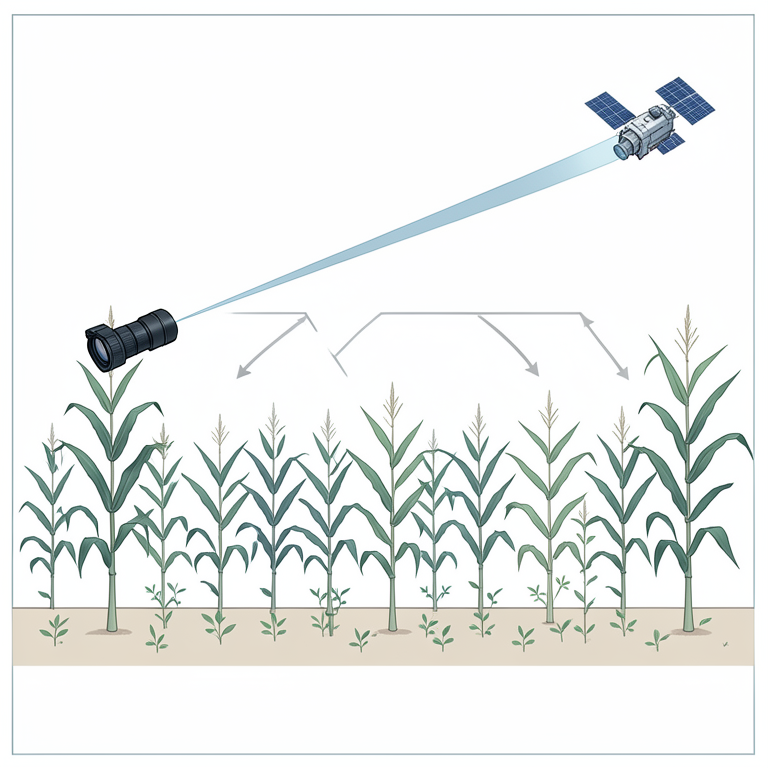
Intra-row Weeding Technology Overview
AI-generated conceptual illustration (maize plants in a field row with small weeds). It explains the idea and does not show study data.
View source evidence ↗Figures & tables
From the original paper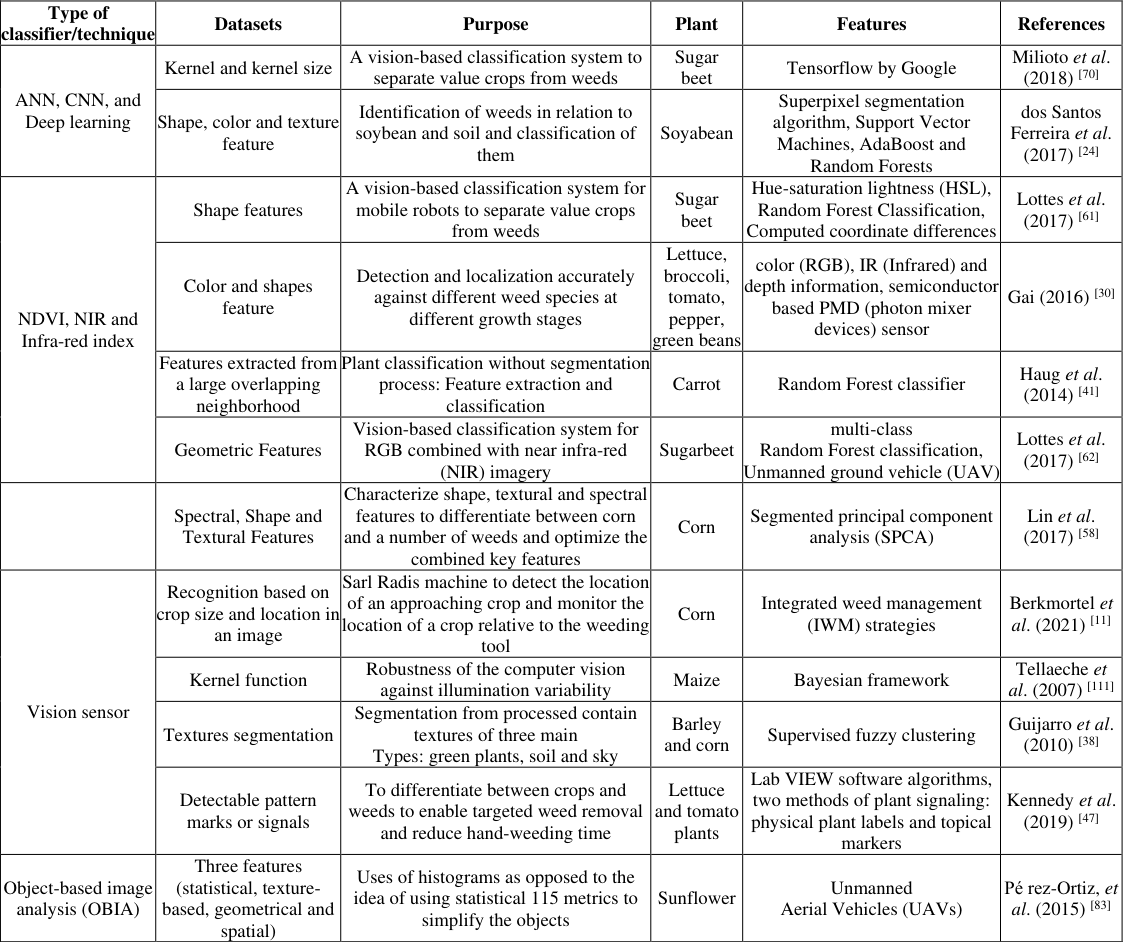 Table 1
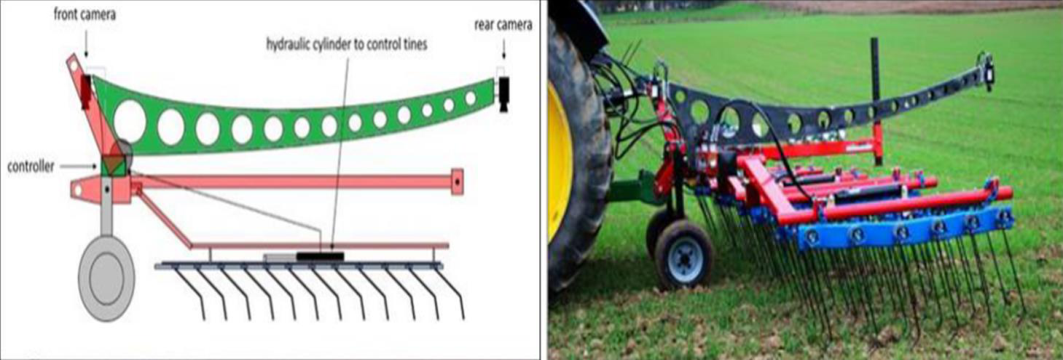 Figure 1
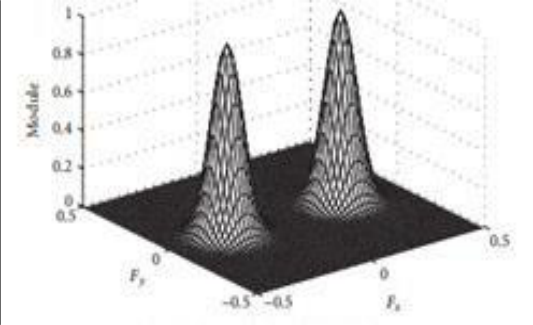 Figure 2
 Figure 2
Introduction
Weeds are a significant problem in agriculture, as they compete with cultivated plants for vital resources such as sunlight, water, and nutrients. This competition can lead to poor crop growth, lower yields, and increased expenses for farmers. Proper weed management is therefore crucial to ensure that crops grow properly and produce healthy, high-quality yields. Weed management involves essentially controlling weeds in two distinctive crop zones namely intra-row and intrarow space. Inter-row weeding involves removing weeds growing between rows of crops, often carried out with mechanical weeding machinery and is easier and less time-consuming. Whereas, weed control in the intra row spaces in the crop rows is more challenging because the crop fall in line of the weeds. Moreover, the weeds grow in close proximity to the main crop plant, which makes intra-row weeding more intricate and challenging task by available mechanical weeders. Traditional manual tools, such as khurpi, grubber, spade, wheel hoe, and push-pull weeders, remain common for intra-row weed removal. Technological advancements have introduced automated systems that have made possible the mechanization in intra row weed management. These systems, equipped with specialized machinery, can eliminate weeds within the same row as the crop by distinguishing between crops and weeds (Kumar et al., 2022) [138] . Various sensor technologies are under development for in-field use in weed management. These sensors play a crucial role in weed management and are capable of directly detecting weeds in the field or indirectly assessing factors such as total plant coverage, leaf area, photosynthetic activity, and plant height. The primary focus is on ground-based sensor technologies designed to distinguish between weeds and crops or indirectly measure weed infestation. This integration has significantly improved sensor capabilities in weeding operations, contributing to enhanced reliability and the generation of more extensive datasets (Kumar et al., 2019) [139] . Mechatronic systems have been developed, incorporating machine vision, controls, and mechanical actuation to selectively remove weeds within a crop row (Berkmortel et al., 2021) [11] . Thermal weeding techniques such as soil steaming and flame weeding are also discussed as intra-row weed management methods (Kumar et al., 2022) [138] . Sensor-based technologies have been adapted for managing intra-row weeds in crops with wider rows (Kumar et al., 2022) [138] . Cutting-edge technologies, including image segmentation, plant height measurement, machine vision systems, and sensor-based methods, show promising potential in accurately distinguishing crops from weeds (Al-Badri et al., 2022; Hasan et al., 2021 and Teja et al., 2022) [5,40,110] .
The integration of sensors, microcontrollers, and computing technologies has provided the way for autonomous guidance systems in agriculture (Pallottino et al., 2019) [140] . The use of advanced sensor technologies in weed management has the potential to transmute the agricultural industry, helping farmers for weed management efficiently and cost-effectively while maintaining high yields and quality crops. The development of more sophisticated and accurate sensor systems will continue to play a significant role in shaping the future of agriculture and weed management. Recent technological progress, particularly the integration of sensor-based technologies, machine vision, and control systems in agriculture for intra-row weeding, is comprehensively explored in this review.
Overview of different advanced intra row weeding techniques vision based weed control techniques
In precision agriculture, an innovative approach called visionbased intra-row weeding control is being developed to effectively manage weeds while minimizing harm to crops. This method combines advanced sensor technologies and selective weeding tools within crop rows, advancing sustainable and efficient farming practices. Various types of vision-based intrarow weeding systems have emerged in agricultural technology. The autonomous vision-based navigation and control for intrarow weeding system employs a plant classification algorithm with easy-to-extract features, enabling autonomous navigation without GPS reliance. The computer vision-based intra-row weeding system compensates for classification delays through a non-overlapping multi-camera system, allowing for more advanced detection algorithms. Vision Systems identify weeds in the crop and use tools to remove them, while electromechanical systems automate intra-row weeding by combining machine vision and control. These diverse systems showcase innovative approaches to address the challenge of intra-row weeding, contributing to the advancement of efficient and accurate weed control in agriculture. Researches support the potential of this method, demonstrating the effectiveness of image segmentation, plant height identification, machine vision systems, and sensor-based approaches in distinguishing between crops and weeds (Wu et al. in 2019) [129] . This enabled the way for further exploration of advanced technologies, image processing methods, and robotics to enhance the accuracy and efficiency of weed control within crop rows.
Laser and 3D LiDAR based weed detection and control
Laser vision-based intra-row weeding is a technology that uses sensors for precise weed detection and control various types of lasers, including CO2 lasers, diode lasers, and fiber lasers, have been employed for weed control experiments. With the right detection, localization, and laser targeting hardware and software, this technology has the potential to remove not only the inter-row weeds but also the intra-row weeds, making it a promising solution for precision agriculture. The light energy from CO2 and fiber lasers is absorbed strongly by plants, leading to weed detection (Gates et al., 1965) [151] . The combination of plant species recognition tools with laserequipped small autonomous vehicles presents a sustainable alternative to widespread herbicide use. Laser-based weed detection and control represents a significant progress in precision agriculture. In past, Hilton et al. (2000) [42] , developed a laser system that used varying wavelengths, to achieve accuracy with a range of 1-10 centimeters. It was effective both during the day and at night. The latter utilized laser beams for maize stalk detection, employing a lateral quasi-sinusoidal motion to avoid stalks, resulting in high weed removal rates and reduced herbicide use. This environmentally sustainable approach demonstrated effectiveness in various crops, particularly with a 94.5% weed removal rate and only 0.8% crop damage in a Chinese cabbage test area (Cordill and Grift, 2011) [23] . Light detection and ranging (LiDAR) sensors demonstrated promise for weed detection and discrimination, offering advantages like higher sampling resolution and faster scanning rates. LiDAR is a device that emits light through optical amplification based on the stimulated emission of electromagnetic radiation. Emission wavelengths of lasers are typically in the visible and the near infrared light spectrum. Ground-based LiDAR sensors initially designed for characterizing tree and vine canopies, have been adapted to create a system for detecting and differentiating weed species within the intra-row areas of maize fields (Rosell et al. 2009 and Rosell & Sanz 2011) [142][143] . The hypothesis driving this innovation is centered on the estimation of weed height using LiDAR sensor, with the aim of utilizing height differences as a means to effectively discriminate between various weed species. LiDAR, a remote-sensing technique for distance measurement, was tested for weed characterization in the intra-row area of a maize field (Andjur et al., 2013) [6] . The study aimed to discriminate weed species based on their heights using LiDAR. Mounted on an all-terrain vehicle, the LiDAR sensor scanned downwards, capturing the vegetation profile. The results, correlated with manually determined height values, showed a high correlation (r² = 0.88) and significant discrimination capabilities, especially for tall weeds like Sorghum halepense. Grass weed species tend to exhibit higher height profiles compared to broad-leaved weed species. This distinct height difference provides a reliable basis for discriminating between these two categories of weeds. In the context of maize fields, the general height of weeds is notably lower than that of the maize crop. This disparity in height serves as a key factor in effectively distinguishing between the weeds and the crop in maize fields. Examining the potential of Light Detection and Ranging (LiDAR) sensors for weed detection, the research emphasizes key parameters such as target size and orientation, elucidated through trials with artificial targets (Shahbazi et al., 2021) [97] . The findings underscore the direct influence of target size and orientation on detectability at varying scanning distances. In a field trial within a wheat plot, the stationary LiDAR impressively achieved a 100% weed detection rate based on height disparities with the crop canopy. While LiDAR sensors have shown promising results in weed detection, further research efforts are warranted to enhance their efficacy for this purpose. Continued investigation and refinement of LiDAR technology can contribute to optimizing its capabilities and improving the accuracy and reliability of weed detection systems.
Image processing and species discrimination
In addition to advancements in inter-row weed management, significant progress has been made in intra-row weed control using image processing techniques. The ability to automatically identify and remove weeds within crop rows has become a crucial aspect of modern agriculture, contributing to increased farming efficiency and crop yields. Reflectance measurements at different wavelengths have proven to be a valuable tool in intrarow weed discrimination. Vrindts et al. (2002) [121] demonstrated impressive results with 97% accuracy in distinguishing between crop and weed species in laboratory conditions using this approach. This method involves capturing the reflectance characteristics of plants at various wavelengths, allowing for the differentiation between desirable crops and unwanted weeds. Furthermore, Joao (2004) [15] introduced a novel approach for classifying and mapping weed species in minimum-tillage systems. The algorithm presented in this work focuses on individual leaf extraction, achieving a 75% success rate for accurate leaf extraction. This signifies progress in developing precise methods for characterizing and managing intra-row weed populations. Otsu's method, combined with modified excess green features, has been utilized for automatic thresholding in weed image segmentation (Mansheng and Dongjian, 2007) [64] . This technique helps in effectively separating weed objects from the crop background, facilitating accurate identification and subsequent removal. Morphological operations and shape-based classification have shown success in achieving accurate differentiation between corn and weed objects within crop rows (Agrawal et al. 2012) [1] . Recent studies have also explored real-time discrimination between weed patches and crop rows. These methods focus on the structure, texture and shape of the plants, enabling precise discrimination in real-world agricultural scenarios. Despite these advancements, there is ongoing research to further improve intra-row weed management. Burgos-Artizzu et al. (2011) [14] proposed a computer vision system that combines fast image processing (FIP) and a robust crop row detection (RCRD) system. This innovative approach achieved an average weed detection rate of 95% and a crop detection rate of 80%, with minimal false negatives, showcasing the potential for real-time and accurate intra-row weed management. Elstone et al. (2020) [26] emphasized the need for testing at high weed densities and enhancements in plant identification and system calibration to ensure robust performance under varying conditions. These innovations hold promise for further improvements in weed discrimination within crop rows, ultimately enhancing overall agricultural productivity.
Hyperspectral and spectral imaging
Hyperspectral imaging, a fusion of imaging and spectroscopy, collects full-wavelength spectral information for each image pixel. When combined with VIS/IR spectroscopy, it creates a 3-D image with one spectral and two spatial dimensions, providing both spectral and image features of plants. It helps us understand the characteristics of objects without harming them. The specific frequencies of vibrations in the visible or infrared spectrum can be analyzed and quickly learn about the properties of materials without any special preparation of the samples. Hyperspectral and spectral imaging play pivotal roles in intra-row weeding, enabling precise discrimination of crop plants and weeds based on their distinct spectral signatures. These advanced imaging technologies provide valuable data for developing targeted and efficient weeding strategies, contributing to improved agricultural practices. The initial RGB color image is formed by combining the captured broad-spectrum data that includes red (R), green (G), and blue (B) lights. Broad band data, while less sensitive than full-wavelength spectra, can still distinguish crops from weeds (Slaugher et al. 2008) [102] . Zhang et al. (2012) [144] successfully combined a hyperspectral imaging system with a precise pulsed-jet micro-dosing setup for targeted delivery of heated organic oil to control intra-row weeds in early-stage tomatoes. The multispectral Bayesian classifier achieved a 95.9% average discrimination rate for tomato, Solanum nigrum, and Amaranthus retroflexus based on canopy reflectance. The application of heated oil, at a rate of 0.85 mg/cm² in 10-ms pulses, demonstrated effective weed control (95.8% for S. nigrum and 93.8% for A. retroflexus) with minimal damage to tomato plants (2.4%). There are three methods to acquire fullwavelength hyperspectral images: line scanning, area scanning, and point scanning. Selected feature variables from the fullwavelength region can simplify a multispectral system to highlight specific object characteristics. With its lightweight hardware and faster calculation speed, multispectral imaging is becoming the successor to hyperspectral technology (Kamruzzaman et al. 2016) [145] . Other useful features for plant detection include visual textures, biological morphology, and spatial contexts. Texture features describe the arrangement of image pixel gray levels, providing measures like coarseness and regularity. Biological morphology refers to plant shape and structure. Spatial context, or location information, can improve discrimination accuracy in crop fields (Su et al. 2018) [158] . The latest spectral sensing aims to identify a few key spectra from continuous narrow-band data for plant classification. Using principal component analysis (PCA), feature wavelengths from 350 to 2500 nm were selected. This enabled effective weed classification, including barnyard grass and green foxtail, from two seedling cabbages using Bayesian discriminant analysis (Deng et al. 2016) [146] . Gao et al. (2018) [31] introduced a hyperspectral snapshot mosaic camera for precise weed and maize classification, relying on 185 spectral features and employing an optimal random forest model to achieve high accuracy. These authors have significantly advanced the application of hyperspectral imaging in intra-row weeding, and their work is complemented by a range of other studies that have harnessed this technology for diverse challenges specific to intra-row weeding. Notably, vegetation indices, particularly those proximate to the red edge, emerged as significant contributors to the classification. Hyperspectral remote sensing (HRS) technology is employed for a competitive experiment combines comprehensive competition indices (CCI) and deep learning. Notably, the study establishes a robust relationship between various weed competitive pressures and structural/physiological changes in maize, offering precise quantification through accumulative/transient competition indices (CCI-A and CCI-T). The approach, outperforming traditional methods like relative competitive intensity (RCI), demonstrates superior dispersion capabilities (Lou et al. 2022) [147] .
Robotic systems with camera integration
Automated selection of assessment areas for crops and weeds relies on precise knowledge of crop row locations within the image. To ensure optimal results, it is crucial to position weed assessment areas strategically, avoiding any overlap with crop leaves. Tian et al. (1997) [112] developed a machine vision system for detecting tomato seedlings and weed plants in agricultural fields. The system successfully identified 65% to 78% of target crop plants and had an error rate of less than 5% in identifying weeds as crop plants. Utilizing a vegetative index invariant to natural daylight variations, the transformed image was segmented into soil and vegetative components. Hague et al. (2006) [39] proposed an automated method for evaluating crop and weed areas in tractor-mounted camera images of widely spaced cereal crops. The algorithm robustly located crop rows, automatically positioned assessment zones for crop and weed growth, and demonstrated consistent results compared to manual assessments, providing an accurate mapping of crop and weed areas in the images. Limited scientific evaluations exist for the weeding performance of new robotic weeders. For instance, a study on Robocrop in transplanted cabbage demonstrated low crop damage levels under typical commercial growing conditions, achieving weed reductions between 62% and 87% within a 240 mm radius zone around crop plants (Tillett et al., 2008) [113] . Machine-guided technologies for precise, automated intra-row weed control have rapidly advanced, leading to the commercialization of at least three automated intra-row cultivators. Two of these employ machine vision based on cameras, while the third detects crop plants by interrupting a light beam over the crop row. These systems, however, require easily distinguishable crops and weeds, limiting their applicability to transplanted crops where weeds are not a predominant part of the vegetation (Rasmussen et al. 2012) [148] . Langsenkamp et al. (2014) [54] showcased the effectiveness of the "tube stamp" tool, achieving a remarkable 93.86% reduction in intra-row weeds in field conditions. Part of the Remote Farming project, this autonomous field robot tool, assisted by a human worker, uses cameras, a manipulator arm, and the tube stamp for precise individual plant weed control. With a narrow impact zone of 11 mm, it minimizes soil disturbance, proving successful in dense row crops without affecting the surrounding soil. In addition to academic research, several startups are pioneering automatic weed control technologies, utilizing advancements in robotics to enhance efficiency and sustainability in agriculture (Steketee, 2017, Farm Machinery Ltd, 2019) [149] . Developing a reliable, intelligent robotic system for real-time weed control in intra row crops is essential to boost crop productivity and address labor shortages. The study compared an intelligent mechanical weeding machine with nonintelligent tools in transplanted onion and white cabbage. While intelligent weeding did not outperform simpler tools in onions, it provided comparable weed control in cabbage, eliminating the need for subsequent manual weeding near the plants (Malender et al., 2015) [68] . Zheng et al. (2017) [136] introduced an automated maize and weed detection method utilizing color features and post-processing algorithms. This approach achieved remarkable overall accuracy rates of 90.19%, 92.36%, and 93.87% over three years. In the field of weed detection using robotic systems with camera integration. An autonomous mobile manipulation system utilizes high-speed image processing and visual servoing for fast plant detection and precise treatment (Michaels et al. 2015) [69] . Designed to counter the challenges of declining field worker availability and the laborious nature of manual weeding, the system demonstrates competitive performance by treating single plants in less than 1 second during experiments in field-like conditions. Ahmad (2018) [2] designed a mechanical weeding actuation system that incorporated a machine vision system for pinpointing crop plant locations. This innovation facilitated precise mechanical weeding operations without harming the crops. Raja et al. (2019) [89] presented a novel computer vision algorithm for automated weed control in leafy vegetables. Leveraging the crop signaling technique, this approach marks crop plants with a machine-readable compound, enabling high-accuracy detection and classification of in-row weed-crops throughout the season. Tailored for lettuce fields, the algorithm achieves 99% crop detection accuracy, identifying 98.11% of weeds within 1.2 seconds per pair of images, showcasing its reliability and robustness compared to other sensor-based methods in situations with high weed densities and visual occlusion.
Navigation and localization techniques
Robotic weeding, as demonstrated by Nørremark and Griepentrog (2004) [74] , is crucial for efficient and precise weed control in agriculture. Their findings underscore that 26.4% of sugar beet plants at the 4-6 leaf stage cover weed main shoots, emphasizing the need for robotic tools to address these challenges. Bossu et al. (2009) [13] introduced a comprehensive approach for crop/weed discrimination utilizing image processing based on wavelet transforms, comparing it with Gabor filtering. This study demonstrated that the wavelet-based method, specifically using Daubechies 25 and Meyer wavelets, outperformed Gabor filtering in weed-to-intra-row (WIR) measurement for both synthetic and real agronomic images. Among various wavelet basis functions tested, Daubechies 25 wavelet proved to be the most efficient, striking a balance between processing time and accuracy, making it a favorable choice for real-time crop/weed discrimination applications. Kelly et al. (2012) [46] introduced an object-based image analysis (OBIA) procedure using color-infrared images from quadrotor UAVs for site-specific weed management in maize fields. The procedure effectively identified and classified crop rows, achieving 100% accuracy in row identification and 90% accuracy in defining longitudinal row borders when compared to ground-based measurements of weed emergence. Peña et al. (2013) [81] presented an approach by utilizing unmanned aerial vehicles (UAVs) and object-based image analysis (OBIA) to create detailed weed maps in early post-emergence of weed management. The method involves a three-phase process, including crop row classification, discrimination of crops and weeds based on their positions relative to rows, and the generation of weed infestation maps. The results demonstrated a high potential for reducing herbicide application and weed management costs with an 86% overall accuracy in categorizing weed coverage. Yano et al. (2016) [130] presents a UAV-based system for weed surveying in sugarcane fields, offering closeup species recognition and addressing the limitations of traditional sampling methods. The weed detection system achieved an overall accuracy of 82% and a kappa coefficient of 0.73 in initial tests. Zhang et al. (2017) [132] proposed a navigation method for robotic weed control based on SUSAN corners and an improved sequential clustering algorithm, enabling the extraction of guidance lines for navigation in complex paddy fields. Guerrero et al. (2012) [37] introduced an automatic image segmentation strategy for maize fields using Support Vector Machines, achieving a 93.1% success rate in identifying plants with masked and unmasked green spectral components. These navigation and image processing techniques play a crucial role in the intelligent paddy field weeding robot in South China, where environmental complexities and similarities between weed and rice seedlings pose significant challenges. Several studies have yielded noteworthy research results in the realm of intra-row weeding. Tannouche et al. (2016) [109] successfully implemented real-time weed detection through computer vision and designed robotic control strategies, leading to enhanced weed removal precision and reduced herbicide usage. In summary, various innovative technologies and techniques are being employed to advance weed detection and control in precision agriculture. Researchers are making significant progress in enhancing crop productivity while minimizing the impact of weeds through the use of advanced imaging technologies, robotic systems, navigation and localization techniques, and performance comparison studies. Some of vision-based techniques are presented in Table 1. (2017) [24] NDVI, NIR and Infra-red index
Shape features
A vision-based classification system for mobile robots to separate value crops from weeds
Sugar beet
Hue-saturation lightness (HSL), Random Forest Classification, Computed coordinate differences Lottes et al. (2017) [61] Color and shapes feature Detection and localization accurately against different weed species at different growth stages Lettuce, broccoli, tomato, pepper, green beans color (RGB), IR (Infrared) and depth information, semiconductor based PMD (photon mixer devices) sensor
Gai (2016) [30] Features [62] Spectral, Shape and Textural Features
Characterize shape, textural and spectral features to differentiate between corn and a number of weeds and optimize the combined key features
Corn
Segmented principal component analysis (SPCA)
Recognition based on crop size and location in an image
Sarl Radis machine to detect the location of an approaching crop and monitor the location of a crop relative to the weeding tool Corn Integrated weed management (IWM) strategies
Berkmortel et al. (2021) [11] Kernel function Robustness of the computer vision against illumination variability Maize Bayesian framework Tellaeche et al. (2007) [111] Textures segmentation Segmentation from processed contain textures of three main Types: green plants, soil and sky
Barley and corn
Supervised fuzzy clustering Guijarro et al.
(2010) [38] Detectable pattern marks or signals (2019) [47] Object-based image analysis (OBIA) Three features (statistical, texturebased, geometrical and spatial)
Uses of histograms as opposed to the idea of using statistical 115 metrics to simplify the objects Sunflower Unmanned Aerial Vehicles (UAVs) Pé rez-Ortiz, et al. (2015) [83] A B In this review paper on vision-based intra-row weeding control, it becomes apparent that the adoptions of these technologies and methods holds significant promise for achieving more sustainable and efficient weed management in agriculture. The upcoming sections will provide an in-depth exploration of these contributions, shedding light on the advancements in this swiftly evolving field.
GPS-Based Positioning Systems
Stafford et al. (1996) [103] discuss the Silsoe Patch Spraying System, which relies on weed patch field maps. These maps are built using diverse methods, including farmer input, aerial imagery, and handheld GPS devices. The system includes userfriendly software and ensures compatibility with the patch spraying technology. The system of comprised side-shifting frame attached with vertically directed tine-rotor (cycloid hoe) with sigmoid shaped. The system navigated with reference to pre-defined waypoints for tillage parallel to crop rows and around individual crop plants. The system evaluation was based on quantification of treated areas for uprooting and burial and the corresponding prediction of weed control efficiencies. A single and double pass of an 80 mm wide row band provided tillage of 30-49% and 31-58% of the intra-row area, with highest coverage at a speed of 0.32 ms-1 with even plant spacing (Nørremark et al. 2012) [150] .
Precision intra-row weed control with gps-guided tools
Precision intra-row weed control with GPS-guided tools has been a topic of extensive research, garnering attention from various authors in the field. In their study, Griepentrog and Dedousis (2010) [36] explored the utilization of a GPS-based system for accurate lateral control of hoes in agriculture. The system effectively minimized lateral deviations and achieved cross-track errors ranging from 0.009 m to 0.028 m, highlighting the crucial role of GPS technology in enhancing weeding efficiency. Nørremark et al. (2007) [75,78] [66] employ low-cost UASs and opensource software to map weed distribution, significantly reducing herbicide treatments to just 3.47% of the field. This approach offers a cost-effective, sustainable solution for weed management in small to medium-sized farms within the framework of Agriculture 4.0. Samseemoung et al. (2012) [94] utilized low altitude remote sensing (LARS) images from cranemounted and helicopter-mounted platforms to monitor crop growth and weed infestation in a soybean field. Crane-mounted platforms provided better image quality at altitudes below 10 meters, making them cost-effective for low altitude applications. They found that NDVI values at 28 days after germination (DAG) had a strong correlation with image capture altitudes, with R-squared values of 0.75 for crane-mounted and 0.79 for helicopter-mounted systems. Additionally, the study showed high R-squared values (>0.75) when correlating chlorophyll content with indices from these images at different stages of crop growth. Sun et al. (2010) [107] achieved impressive numerical results, with a mean error of just 2 cm between predicted and surveyed plant locations, and 95% of predictions within 5.1 cm of actual locations. This underscores the significance of GPS technology in accurately mapping transplanted row crops, facilitating precision tasks like intra-row weed control and enhancing agricultural efficiency.
Automated intra-row weed control with gps and machine vision
Bak and Jakobsen (2004) [7] introduced an autonomous vehicle with improved field maneuverability based on four-wheel steering (4WS) and a distributed control system. The 4WS concept enhanced path tracking, maintaining a fixed orientation relative to the path, with a standard deviation of 1.0 for moderate turns at low speeds. However, the error increased to 7.9-10.7 in sharp turns at higher speeds. Nørremark et al. (2008) [76][77] developed an autonomous intra-row weed control system using RTK-GPS navigation. Their field tests demonstrated effective weed control without collisions, even at speeds of up to 0.52 m/s. The system maintained transverse position accuracy within ±16 mm at 0.31 m/s and ±22 mm at 0.52 m/s, with minimal tine intrusion into the uncultivated zone (max. 9 mm out of 1224 observations). Ahmed et al. (2011) [3] introduced an automated machine vision system using local binary pattern (LBP) for distinguishing between broadleaf and grass weeds in digital images. Their method, utilizing template matching and support vector machine classification, achieved high accuracy when classifying 200 field images, with 100 samples from each category. Ahmed et al. (2014) [4] introduced a texture-based weed classification method with LBP, LTP, and LDP operators.
In experiments with 400 field images, the approach outperformed existing methods, providing efficient classification of broadleaf and grass weeds. Lease et al. (2020) [56] developed a high-precision weed classification model for autonomous field robots, achieving a classification accuracy of 87.9%. This innovative approach, based on rotation-invariant uniform local binary pattern (LBP) features and ensemble optimization with CMA-ES, enhances weed management in early crop growth stages, increasing agricultural efficiency and reducing resource competition.
In the study by Berge et al. (2012) [10] , the authors highlight the potential for herbicide savings through patch spraying (PS) in arable fields. They introduced Weedcer, a machine vision algorithm, to estimate relative weed cover (RWC) and relative may weed cover (RMC) based on high-resolution images. Field trials demonstrated that mean RWC and RMC per management unit (12.0 × 12.5-m) were generally adequate. Bengochea-Guevara et al. (2016) [9] focused on developing a small autonomous field inspection vehicle for precision agriculture.
The system integrated a camera with a GPS receiver to enable efficient and low-impact scouting of crop fields. The GPS played a crucial role in route planning, ensuring the robot could cover the entire field without damaging crops. Kanagasingham et al. (2019) [45] aimed to create an autonomous weeding robot for rice fields, integrating GNSS, compass, and machine vision.
Their system achieved an average deviation from the ideal path of 45.9 mm, with heading compensation accuracy of less than 2.5°. Wang et al. (2019) [122] employed GPS and machine vision for weed recognition, achieving precise weed removal and improved grapevine health. Lopez et al. (2020) [151] applied GPS and machine vision to target weeds, leading to a remarkable increase in crop yield and quality. Chang et al. (2012) [18] developed three algorithms for spot-specific agrochemical application in wild blueberry fields using co-occurrence matrixbased textural features. Forty-four features were extracted from NTSC luminance (L), hue, saturation, and intensity (HSI) images. The DF_ALL model achieved 98.1% overall classification accuracy in 83 ms. For practicality, the DF_HSISD, DF_SISD, and HSILD algorithms are preferred, with overall accuracies of 94.9%, 92.7%, and 91.4%, and processing times of 55, 27, and 29 ms, respectively. Zhou et al.
(2021) [137] developed a visual navigation system for outdoor orchards, achieving high accuracy with path extraction accuracy between 90.36% and 96.81%. The program executed within 0.55 seconds under various sunlight conditions, offering real-time capabilities. Their method outperformed traditional Hough transforms, offering an effective approach for UGV navigation in orchards with minimal lateral errors (maximum 0.118 meters). Nikolić et al. (2021b) [73] integrated site-specific and time-specific weed control strategies using a weed emergence prediction model. [67,[152][153][154] . While these mechanical approaches are commonly employed, only a limited number of studies have explored the development of selective mechanical methods. Non-image sensor systems have become essential tools in the field of intra-row weeding, providing innovative solutions for precise and efficient weed management. These systems utilize various technologies, including UV-induced fluorescence, laser-based optical sensors, phototransistors, ultrasonic plant detection, and mechatronic mechanisms. Notably, Huzaifah et al. (2021) [155] employed UV-induced fluorescence alongside unmanned aerial vehicles (UAVs) for large-scale weed monitoring in maize fields. Their work signifies a significant advancement in precision agriculture. In a different context, Korresa et al. (2019) [156] explored a shift in weed science towards integrated management strategies, including "many little hammers" and technology-driven solutions, to combat herbicide resistance and enhance weed control in modern agriculture. For organic farming practices, Monteiro and Santos (2022) [71] introduced phototransistor-equipped weeding machinery, offering selective weed control without chemical herbicides. In variable terrains, Khan et al. (2020) [157] introduced the CED-Net, a compact cascaded encoder-decoder network for precise weed and crop detection in farmland via semantic segmentation. CED-Net's efficiency with fewer parameters results in shorter training and inference times, and it outperforms or matches other state-of-the-art networks across multiple evaluation metrics, while requiring only 1/3 to 1/5 fewer parameters than comparable models like U-Net and SegNet. Lastly, Coleman et al. (2022) [22] integrated mechatronic systems with AI-driven algorithms, leading to more effective and environmentally friendly herbicide applications in maize fields. These developments collectively underscore the dynamic and evolving landscape of non-image sensor systems for intra-row weeding.
UV-induced fluorescence for corn-weed discrimination
Keränen et al. (2003) [48] further extended the UV-induced fluorescence technique, achieving a classification accuracy of 93% in distinguishing between crop plants and various weed species, significantly reducing manual weeding efforts. Longchamps et al. (2010) [60] explored UV-induced fluorescence for discriminating between corn and various weed species. Their method, involving principal component analysis and linear discriminant analysis, achieved a success rate of 91.8%, demonstrating effective weed discrimination. Tyystjärvi et al.
(2010) [115] explored the use of chlorophyll fluorescence fingerprinting for identifying maize and barley amidst six weed species in outdoor pot-grown plants. Their measurements, taken under variable natural conditions, showed promising results. A neural network classifier, utilizing 17 features from each fluorescence induction curve, correctly classified 86.7% to 96.1% of the curves as either crop (maize or barley) or weed. For individual species classification, success rates ranged from 50.2% to 80.8%.
Laser-based optical sensor for precision depth measurement
Van der Linden et al. (2008) introduced a laser-based optical sensor known for its remarkable precision in depth measurements. This sensor is now poised to revolutionize weed management, offering depth measurements accurate to at least 1 mm and an average measurement speed of 35 ms. Marx et al.
(2012) [65] explored environmentally and energetically sustainable weed control methods, focusing on CO2 laser technology.
They assessed the impact of laser radiation (10,600 nm) with varying spot diameters, positions, and intensities on two weed species at different growth stages. The study resulted in the development and validation of weed-specific laser damage models, pinpointing the probabilities of successful laser application (psuccess = 0.95). Paap (2014) [80] have further improved this technology by enhancing real-time data processing capabilities, reducing measurement error to just 0.5 mm. Li et al. (2017) [57] addressed the issue of imprecise weed control practices due to a lack of weed identification and positioning equipment. They presented a spectral sensor designed for accurate weed identification, utilizing characteristic wavelengths (595, 710, 755, and 950 nm) selected based on weed investigations in winter rape fields. The sensor, featuring active LED light sources and a well-structured optical system, was successfully calibrated and verified, achieving determination coefficients ranging from 0.799 to 0.892. In actual weed identification experiments, the sensor demonstrated a notable average recognition rate of 90.7%.
Phototransistor-based maize crop weed control
Shearer et al. (1991) [99] created and tested a selective applicator for post-emergence herbicides in row crops. Using NIR light and a phototransistor receiver to sense weed competition, their system activated a solenoid valve at the spray nozzle. Initial findings showed a promising herbicide savings of 15% with no detrimental impact on weed control. Wang et al. (2000) [123] implemented phototransistor-based weed control in soybean cultivation, enhancing precision and achieving an 87% reduction in herbicide application. Cordill and Grift (2011) [23] introduced an innovative approach for weed control in maize crops, utilizing phototransistors to measure stalk diameters and selectively target weeds based on size relative to maize stalks. The laser beams for maize stalk detection, employing a lateral quasi-sinusoidal motion to avoid stalks, resulting in high weed removal rates and reduced herbicide use. This environmentally sustainable approach demonstrated effectiveness in various crops, particularly with a 94.5% weed removal rate and only 0.8% crop damage in a Chinese cabbage test area.
Co-robot system for intra-row weed control
Pe ŕ ez-Rui ź et al. (2016) introduced a co-robot system for intra-row weed control in row crops, significantly reducing manual labor requirements for weeding compared to traditional methods. The co-robot uses a single odometry sensor for cost minimization and has been evaluated in an experimental trial, demonstrating its effectiveness. Ge et al. (2013) [34] introduced a mechanical arm design for a laser weeding robot aimed at replacing chemical weeding. The design incorporates a mechanical arm, a laser generator, and a control center with impressive precision, effectively dividing the laser's working area into a 10×10 grid. The analysis demonstrated the arm's small error in targeting the laser beam toward the weeds, along with an optimized execution area sequence resulting in a shorter arm moving path. Mechanical inter-row weed treatment offers several viable options, but the choices become more constrained for intra-row treatment. Particularly, for densely planted row crops like carrots, there is currently no method available for individual plant weed control, primarily due to the heightened risk of causing damage to the cultivated plants.
Automated intra-row weed control with ultrasonic plant detection Saber et al. (2015) [92] introduced an automated intra-row weed control system with an ultrasonic plant detection system. This system demonstrated a strong correlation (R2 = 0.94) between sensor-estimated and manual height measurements of crop plants, achieving varying weed control efficacy for different species. Reiser et al. (2017) [90] investigated the use of a lowcost sonar sensor for autonomous selective spraying of individual plants, aiming to reduce costs, resource consumption, and environmental impact in agriculture. Their autonomous robot accurately detected plant positions with 2.7 cm precision, reducing liquid usage by 72% compared to conventional spraying methods, thus showing potential for efficient and sustainable weed control. Jakasania et al. (2019) [44] evaluated an automated intra-row weeder equipped with an ultrasonic sensor, finding that a minimum plant-to-plant distance of 35 cm allowed operation without damaging crops, with the most effective forward speed identified as 1.0 km/h. W. Zhang et al. (2022) [133] have implemented an automated weeder with improved ultrasonic sensors in cotton fields, achieving more precise weed removal and a 70% reduction in manual labor requirements.
Mechatronic system for precise electronic weed control Kurstjens and Perdok (2000) [52] investigated the effectiveness of intra-row mechanical weed control using soil cover. They examine how a plant's resistance to soil cover relates to its height, flexibility, and leaf shape. The research highlights the importance of soil conditions and implement settings in the relationship between weed control and crop covering, with limited burial depth primarily causing growth reduction rather than complete weed elimination. Pötsch and Griesebner (2007) [86] emphasized the importance of visualizing and addressing broad-leaved dock issues on a farm level. They introduced the Mini-WUZI, an Austrian innovation for mechanical dock control, capable of removing up to 400 dock plants per hour. Sujaritha et al. (2017) [105] developed a weed-detecting robotic model for sugarcane fields, achieving a 92.9% accuracy in detecting different weed species. Their approach, based on fuzzy real-time classification of leaf textures, holds promise for enhancing the efficiency and cost-effectiveness of weed management in Indian sugarcane cultivation. Kumar et al.
(2020) [50] introduced a mechatronic system incorporating a fourbar linkage mechanism and inductive sensing, guided by a fuzzy logic algorithm for precise electronic weed control. Preliminary field evaluations demonstrated effective weed control with minimal crop damage.
Integration of machine learning
The integration of machine learning for intra-row weeding represents a transformative development in modern agriculture, providing intelligent solutions for the precise identification and removal of weeds. By harnessing the power of advanced algorithms and sensor technologies, these systems offer the potential to greatly enhance the efficiency and effectiveness of weed control practices in farming.
Advancements in Machine Learning for Weed Detection
The integration of machine learning into intra-row weeding systems marks a significant shift in precision agriculture, offering advanced tools for precise weed identification and removal. Leveraging sophisticated algorithms and sensor technologies, these systems hold the potential to greatly improve weed control efficiency. Cho et al. (2002) [21] developed a machine vision system that achieved a high recognition rate for radish and weeds. Bosilj et al. (2020) [12] , further utilized the knowledge transfer in deep learning for crop-weed classification reduced retraining time by up to 80%, demonstrating its efficiency. Even with imperfectly annotated data, their approach achieved classification performance within 2% of networks trained with pixel-precision data, emphasizing its potential for cost-effective and precise agriculture. Sánchez and Gallandt (2020) [95] examined Franklin Robotics' Tertill, an autonomous weeding robot designed for home gardeners, and found it to be highly effective in controlling both broadleaf and grass weeds.
The study emphasized the significance of its simple yet efficient design, which could provide insights for developing larger-scale farm weeding robots, highlighting key design criteria such as weed density, emergence patterns, working rate, and weeding mechanisms, regardless of the technology used for plant detection.
With innovative machine learning s for weed detection, Tang et al. (2017) [108] applied feature engineering along with a Naïve Bayes classifier to recognize seedlings, resulting in an approach with a 90% accuracy in seedling detection. Liu and Bruch (2020) [59} utilized deep learning methods for seedling detection, achieving a high accuracy rate of 96% for precise weeding operations. Chen et al. (2021) [20] employed multi-feature fusion with K-means clustering and Support Vector Machine (SVM) to extract images and identify seedling positions, allowing for accurate weeding. Fawakherji et al. (2021) [28] further advanced this field by using a conditional Generative Adversarial Network (cGAN) for crop/weed segmentation, creating a multi-spectral dataset with Near-Infrared (NIR) information.
Torres-Sospedra and Nebot (2014) [114] advanced the machine learning method by appling a noisy learning procedure to weed detection. This approach addressed challenges associated with varying weather and light conditions. The system demonstrated a significant improvement, with an average Precision Error Rate (PER) increase of approximately 5% compared to traditional training and other noisy ensembles. The most effective classifier with traditional training had an average PER of 32.4%, while the top-performing noisy classifier, trained with CVCv3Conserboost, achieved an average PER of 37.9%. In field tests involving 130 images from orange groves, the CVCv3Conserboost trained with noisy learning yielded an average performance of 95.0% in the first stage and 92.28% in the second stage. These results underscore the efficacy of this approach for weed detection and reducing chemical inputs. Furthermore, an improved Convolutional Neural Network (CNN) model for weed identification was proposed to address issues with the traditional Alex Net model (Sun et al. 2018) [106] . This enhanced model integrates dilated convolution, multi-scale fusion, and global pooling to optimize training time and achieve high precision. Through extensive parameter exploration, the optimal model demonstrated over 90% recognition accuracy after just four training epochs, with a memory requirement significantly lower than traditional models. The improved model's recognition capability, enhanced by a wider network structure and global pooling, achieves an average test accuracy of 98.80%. This makes it a promising tool for intelligent weed and seedling identification devices. Su (2020) [104] discusses the importance of early weed control in crop production, highlighting the use of smart agriculture and advanced sensing technology like spectroscopy, color imaging, and hyperspectral imaging combined with machine learning algorithms (CNN, ANN, SVM) to accurately differentiate between crops and weeds. Olsen (2019) [79] addressed the need for robotic weed control in rangelands, introducing the DeepWeeds dataset of 17,509 labeled images from Australian rangelands. Using Inception-v3 and ResNet-50 models, they achieved high average classification accuracies of 95.1% and 95.7%, respectively, demonstrating the potential for real-time robotic weed control implementation in the complex rangeland environment. Additionally, Shirzadifar (2018) [100] investigated visible and near-infrared spectroscopy's potential in discriminating three weed species in a greenhouse experiment. Using the Soft independent modeling of class analogy (SIMCA) method with second derivative preprocessing on NIR spectra, they achieved a remarkable 100% accuracy in classifying waterhemp, kochia, and lamb's-quarters with 63 test samples. Specific wavelengths, like 640, 676, 730 nm in the red region, and 1078, 1435, 1490, and 1615 nm in the NIR region, were identified as most effective for weed discrimination. Quan et al. (2022b) [87] highlighted the significance of mechanical weed control in organic agriculture. They developed an intelligent intra-row robotic weeding system based on deep learning, consisting of a mobile robot platform and weeding units. Through field trials, they identified the most effective weeding knife for different field conditions, achieving an impressive 85.91% weed removal rate and a minimal 1.17% crop injury rate. Zhang et al. (2023) [131, 134] introduce an improved Swin-Unet model for precise weed recognition in maize fields, achieving remarkable results with a mean intersection over union of 92.75% and a mean pixel accuracy of 95.57%. The model's high inference speed of 15.1 FPS further enhances its significance for real-time, accurate crop and weed segmentation, aiding the development of intelligent agricultural equipment. More recently, Visentin et al. (2023) [120] combined remote human-controlled rover motion with a pretrained Deep Neural Network (DNN) for autonomous weed identification and removal. These advancements contribute to the development of intra-row weeders, enhancing their precision and efficiency, and paving the way for more sustainable weed management strategies in agriculture.
Multi-Sensor Fusion: The Future of Weed Detection
In the progress of comprehensive weed detection, Wang et al. (2019) [122] integrated multi-sensor data, including LiDAR and RGB images, with machine learning algorithms. Their system achieved a 96% accuracy in identifying weeds, highlighting the potential of multi-sensor fusion for precise and comprehensive weed management in diverse environmental conditions.
Challenges And Future Prospects
In agriculture, sensor-based systems that detect weeds have the potential to revolutionize farming practices. However, these systems face significant challenges. They must be able to distinguish between weeds and crops, navigate complex and unpredictable field environments, and integrate data from multiple sensors. To fully realize the potential of these techniques, the system needs to improve the accuracy and speed of detection algorithms using advanced machine learning techniques such as deep learning and reinforcement learning. We also need extensive and diverse datasets that include various weed and crop species, growth stages, and environmental conditions to develop the discrimination capabilities required to solve the weed-crop identification problem. In agriculture, sensor systems that detect weeds need to be adaptable and resilient. By combining data from cameras, LIDAR, hyperspectral sensors, and more, we can create a comprehensive vision to identify weeds among crops. This will help farmers manage weeds precisely and in a timely manner. It is also important to process sensor data in real-time to enable quick analysis of high-resolution data. This will help optimize agricultural efficiency while conserving resources. In the future, we need to integrate sensor-based technologies with automated weeding systems to create autonomous robots that can accurately map and identify weed infestations. These robots will reduce reliance on human intervention and harmful herbicides, leading to a sustainable future where humanity and nature thrive together.
Conclusion
Sensor-based weed detection systems are emerging as cuttingedge solutions in intra-row weeding practices. These systems leverage the prowess of vision-based cameras, the precision of GPS-based positioning, and the versatility of non-image sensors to open new avenues for accurate and targeted weed control. The seamless integration of machine learning algorithms empowers these sensor-driven solutions with data-driven insights, elevating weed detection capabilities to unprecedented levels of sophistication and precision. Despite the challenges, the search for a sustainable and resource-efficient agricultural future is fueled by confronting complexities related to robust weed-crop discrimination, mastering navigation through intricate field environments, and optimizing the fusion of multi-sensor data. The convergence of advanced technology and agricultural practices sets the stage for an empowered agricultural landscape, where each stride towards optimized weed management reverberates with the cadence of progress. Sowing the seeds of change in sensor-based weed detection systems holds the promise of a harvest teaming with prosperity -a future where precision agriculture and environmental sustainability unite in harmony.
Acknowledgement
AcknowledgmentsThe author would like to thank the Department of Farm Machinery and Power Engineering, College of Agricultural Engineering and Post Harvest Technology, CAU, Ranipool, East Sikkim for providing the required facilities
Figures and tables from the paper
References
145 in the original paper- Agrawal KN, Singh K, Bora G, Lin D. Weed recognition using Image Processing technique based on Leaf Parameters. Journal of Agricultural Science and Technology. 2012;2(8B):899.
- Ahmad MTKB. Development of an automated mechanical Intra-Row weeder for vegetable crops. [dissertation]. 2018. https://doi.org/10.31274/etd-180810-142.
- Ahmed F, Bari ASMH, Shihavuddin A, Al-Mamun HA, Kwan P. A study on local binary pattern for automated weed classification using template matching and support vector machine. In: 12th International Symposium on computational intelligence and informatics (CINTI), 2011. IEEE Publications. IEEE Publications; c2011. p. 329-334. https://doi.org/10.1109/CINTI.2011.6108524.
- Ahmed F, Kabir MH, Bhuyan S, Bari H, Hossain E. Automated weed classification with local pattern-based texture descriptors. International Arab Journal of Information Technology. 2014;11(1):87-94.
- Al-Badri AH, Ismail NA, Al-Dulaimi K, Salman GA, Khan AR, Al-Sabaawi A, Salam MSH. Classification of weed using machine learning techniques: A review-Challenges, current and future potential techniques. Journal of Plant Diseases and Protection. 2022;129(4):745-768. https://doi.org/10.1007/s41348-022-00612-9.
- Andújar D, Escolà A, Rosell-Polo JR, FernándezQuintanilla C, Dorado J. Potential of a terrestrial LiDARbased system to characterise weed vegetation in maize crops. Computers and Electronics in Agriculture. 2013;92:11-15. doi: 10.1016/j.compag.2012.12.012.
- Bak T, Jakobsen HL. Agricultural robotic platform with four wheel steering for weed detection. Biosystems Engineering. 2004;87(2):125-136. https://doi.org/10.1016/j.biosystemseng.2003.10.009.
- Bakhshipour A, Jafari A, Nassiri SM, Zare D. Weed segmentation using texture features extracted from wavelet sub-images. Biosystems Engineering. 2017;157:1-12.
- Bengochea-Guevara JM, Conesa-Muñoz J, Andújar D, Ribeiro A. Merge fuzzy visual servoing and GPS-Based planning to obtain a proper navigation behavior for a small Crop-Inspection robot. Sensors. 2016;16(3):276. https://doi.org/10.3390/s16030276.
- Berge TW, Goldberg S, Kaspersen K, Netland J. Towards machine vision based site-specific weed management in cereals. Computers and Electronics in Agriculture. 2012;81:79-86. https://doi.org/10.1016/j.compag.2011.11.004.
- Berkmortel N, Curtis M, Johnson C, Schmidt A, Hill E, Andrew Gadsden S. Development of a mechatronic system for plant recognition and intra-row weeding with machine vision. Journal of Agricultural Science. 2021;13(3):1-9. https://doi.org/10.5539/jas.v13n3p1.
- Bosilj P, Aptoula E, Duckett T, Cielniak G. Transfer learning between crop types for semantic segmentation of crops versus weeds in precision agriculture. Journal of Field Robotics. 2020;37(1):7-19. https://doi.org/10.1002/rob.21869.
- Bossu J, Gée C, Jones G, Truchetet F. Wavelet transform to discriminate between crop and weed in perspective agronomic images. Computers and Electronics in Agriculture. 2009;65(1):133-143. https://doi.org/10.1016/j.compag.2008.08.004.
- Burgos-Artizzu XP, Ribeiro A, Guijarro M, Pajares G. Real-time image processing for crop/weed discrimination in maize fields. Computers and Electronics in Agriculture. 2011;75(2):337-346. https://doi.org/10.1016/j.compag.2010.12.011.
- Joao CN. A combined statistical-soft computing approach for classification and mapping weed species in minimum - tillage systems. ETD collection for University of NebraskaLincoln. AAI3147135. https://digitalcommons.unl.edu/dissertations/AAI3147135. 2004.
- Chandel AK, Tewari VK, Kumar SP, Nare B, Agarwal A. On-the-go position sensing and controller predicated contact-type weed eradicator. Current Science. 2018;114(7):1485-1494. https://doi.org/10.18520/cs/v114/i07/1485-1494.
- Chang C, Xie B, Chung S. Mechanical control with a deep learning method for precise weeding on a farm. Agriculture. 2021;11(11):1049. https://doi.org/10.3390/agriculture11111049.
- Chang YK, Zaman Q, Schumann AW, Percival D, Esau T, Ayalew G. Development of color co-occurrence matrix based machine vision algorithms for wild Blueberry fields. Applied Engineering in Agriculture. 2012;28(3):315-323. https://doi.org/10.13031/2013.42321.
- Chechliński Ł, Siemiątkowska B, Majewski M. A system for weeds and crops identification-Reaching over 10 fps on Raspberry Pi with the usage of MobileNets, DenseNet and custom modifications. Sensors. 2019;19(17):3787. https://doi.org/10.3390/s19173787.
- Chen Y, Wu Z, Zhao B, Fan C, Shi S. Weed and corn seedling detection in field based on multi-feature fusion and support vector machine. Sensors. 2020;21(1):212. https://doi.org/10.3390/s21010212.
- Cho SI, Lee DS, Jeong JY. AE-Automation and emerging technologies. Biosystems Engineering. 2002;83(3):275-280. https://doi.org/10.1006/bioe.2002.0117.
- Coleman G, Salter W, Walsh M. Open Weed Locator (OWL): An open-source, low-cost device for fallow weed detection. Scientific Reports. 2022;12(1):170. https://doi.org/10.1038/s41598-021-03858-9.
- Cordill C, Grift TE. Design and testing of an intra-row mechanical weeding machine for corn. Biosystems Engineering. 2011;110(3):247-252. https://doi.org/10.1016/j.biosystemseng.2011.07.007.
- Ferreira DSA, Freitas MD, Silva GDG, Pistori H, Folhes TM. Weed detection in soybean crops using Conv Nets. Computers and Electronics in Agriculture. 2017;143:314324. https://doi.org/10.1016/j.compag.2017.10.027.
- El-Faki MS, Zhang N, Peterson DE. Weed detection using color machine vision. Transactions of the ASAE. 2000;43(6):1969-1978. https://doi.org/10.13031/2013.3103.
- Elstone L, How KY, Brodie S, Ghazali MZ, Heath WP, Grieve B. High speed crop and weed identification in lettuce fields for precision weeding. Sensors. 2020;20(2):455.
- Esposito M, Crimaldi M, Cirillo V, Sarghini F, Maggio A. Drone and sensor technology for sustainable weed management: A review. Chemical and Biological Technologies in Agriculture. 2021;8(1). https://doi.org/10.1186/s40538-021-00217-8.
- Fawakherji M, Potena C, Pretto A, Bloisi DD, Nardi D. Multi-Spectral image synthesis for crop/weed segmentation in precision farming. Robotics and Autonomous Systems. 2021;146:103861. https://doi.org/10.1016/j.robot.2021.103861.
- Fennimore SA, Tourte LJ, Rachuy JS, Smith RF, George CA. Evaluation and economics of a machine-vision guided cultivation program in broccoli and lettuce. Weed Technology. 2010;24(1):33-38. https://doi.org/10.1614/WT09-022.1.
- Gao J, Nuyttens D, Lootens P, He Y, Pieters JG. Recognising weeds in a maize crop using a random forest machine-learning algorithm and near-infrared snapshot mosaic hyperspectral imagery. Biosystems Engineering. 2018;170:39-50. https://doi.org/10.1016/j.biosystemseng.2018.03.006
- Garcia C, Gil E, Llorens J, Escolà A. RTK-GPS control for precision weed management. Precision Agriculture. 2018;19(1):1-17. https://doi.org/10.1007/s11119-017-9519y.
- Garcıa-Santillan ID, Pajares G. On-line crop/weed discrimination through the Mahalanobis distance from images in maize fields. Biosystems Engineering. 2018;166:28-43.
- Ge Z, Wu W, Yu Y, Zhang R. Design of mechanical arm for laser weeding robot. In Proceedings of the 2nd International Conference on Computer Science and Electronics Engineering (CSE, July 1-2, 2013). Los Angeles. CA. 2340-2343.
- Gerhards R, Späth M, Sökefeld M, Peteinatos GG, Nabout A, Rueda Ayala VR. Automatic adjustment of harrowing intensity in cereals using digital image analysis. Weed Research. 2021;61(1):68-77. https://doi.org/10.1111/wre.12458.
- Griepentrog HW, Dedousis AP. Mechanical weed control. Soil Biology. 2010:171-179. https://doi.org/10.1007/978-3642-03681-1_11.
- Guerrero JM, Pajares G, Montalvo M, Romeo J, Guijarro M. Support Vector Machines for crop/weeds identification in maize fields. Expert Systems with Applications. 2012;39(12):11149-11155. https://doi.org/10.1016/j.eswa.2012.03.040.
- Hague T, Tillet N, Wheeler H. Automated crop and weed monitoring in widely spaced cereals. Precision Agriculture. 2006;1(1):95-113.
- Hasan ASMM, Sohel F, Diepeveen D, Laga H, Jones MGK. A survey of deep learning techniques for weed detection from images. Computers and Electronics in Agriculture. Cornell University. 2021;184. https://doi.org/10.1016/j.compag.2021.106067.
- Haug S, Michaels A, Biber P, Ostermann J. Plant classification system for crop/weed discrimination without segmentation. In Proceedings of the of the IEEE Winter Conference on Applications of Computer Vision (WACV) p. 1142-1149. https://doi.org/10.1109/WACV.2014.6835733.
- Hu K, Wang Z, Coleman G, Bender A, Yao T, Zeng S, Song D, Schumann AW, Walsh M. Deep learning techniques for in-crop weed recognition in large-scale grain production systems: A review. Precision Agriculture. 2023. https://doi.org/10.1007/s11119-023-10073-1.
- Jakasania RG, Yadav R, Rudani MR. Performance evaluation of intra row weeder in soil bin. International Journal of Current Microbiology and Applied Sciences. 2019;8(6):2781-2785. https://doi.org/10.20546/ijcmas.2019.806.335.
- Kanagasingham S, Ekpanyapong M, Chaihan R. Integrating machine vision-based row guidance with GPS and compassbased routing to achieve autonomous navigation for a rice field weeding robot. Precision Agriculture. 2020;21(4):831855. https://doi.org/10.1007/s11119-019-09697-z.
- Keränen M, Aro E, Tyystjärvi E, Nevalainen O. Automatic plant identification with chlorophyll fluorescence fingerprinting. Precision Agriculture. 2003;4(1):53-67.
- Korres NE, Burgos NR, Travlos I, Vurro M, Gitsopoulos TK, Varanasi VK, Duke SO, Kudsk P, Brabham C, Rouse CE, Salas-Perez R. Six-New directions for integrated weed management: Modern technologies, tools and knowledge discovery. Advances in Agronomy. 2019;155:243-319. https://doi.org/10.1016/bs.agron.2019.01.006.
- Kumar SP, Tewari VK, Chandel AK, Mehta CR, Nare B, Chethan CR, Mundhada K, Shrivastava P, Gupta C, Hota S. A fuzzy logic algorithm derived mechatronic concept prototype for crop damage avoidance during eco-friendly eradication of intra-row weeds. Artificial Intelligence in Agriculture. 2020;4:116-126. https://doi.org/10.1016/j.aiia.2020.06.004.
- Kunz C, Weber JF, Gerhards R. Benefits of precision farming technologies for mechanical weed control in soybean and sugar beet comparison of precision hoeing with conventional mechanical weed control. Agronomy. 2015;5(2):130-142. https://doi.org/10.3390/agronomy5020130.
- Kurstjens DAG, Perdok UD. The selective soil covering mechanism of weed harrows on sandy soil. Soil and Tillage Research. 2000;55(3-4):193-206. https://doi.org/10.1016/S0167-1987(00)00128-8.
- Lamm RD, Slaughter DC, Giles DK. Precision weed control system for cotton. Transactions of the ASAE (American Society for Agricultural Engineers). 2002;45(1):231-238.
- Lati RN, Siemens MC, Rachuy JS, Fennimore SA. Intrarow weed removal in broccoli and transplanted lettuce with an intelligent cultivator. Weed Technology. 2016;30(3):655663. https://doi.org/10.1614/WT-D-15-00179.1.
- Lease BA, Wong WK, Gopal L, Chiong CWR. Pixel-Level weed classification using evolutionary selection of local binary pattern in a stochastic optimised ensemble. SN Computer Science. 2020;1(6). https://doi.org/10.1007/s42979-020-00357-y.
- Li L, Wei X, Mao H, Wu S. Design and application of spectrum sensor for weed detection used in winter rape field. Transactions of the Chinese Society of Agricultural Engineering. 2017;33:127-133.
- Lin F, Zhang D, Huang Y, Wang X, Chen X. Detection of corn and weed species by the combination of spectral, shape and textural features. Sustainability. 2017;9(8):1335. https://doi.org/10.3390/su9081335.
- Liu B, Bruch R. Weed detection for selective spraying: A review. Current Robotics Reports. 2020;1(1):19-26. https://doi.org/10.1007/s43154-020-00001-w.
- Longchamps L, Panneton B, Samson G, Leroux GD, Thériault R. Discrimination of corn, grasses and dicot weeds by their UV-induced fluorescence spectral signature. Precision Agriculture. 2010;11(2):181-197. https://doi.org/10.1007/s11119-009-9126-0.
- Lottes P, Hörferlin M, Sander S, Stachniss C. Effective vision-based classification for separating sugar beets and weeds for precision farming. Journal of Field Robotics. 2017;34(6):1160-1178. https://doi.org/10.1002/rob.21675.
- Lottes P, Khanna R, Pfeifer J, Siegwart R, Stachniss C. Uav-based crop and weed classification for smart farming. In Proceedings of the of the IEEE International Conference on Robotics and Automation (ICRA). 2017:3024-3031. https://doi.org/10.1109/ICRA.2017.7989347.
- Machleb J, Peteinatos GG, Sökefeld M, Gerhards R. Sensor-based intrarow mechanical weed control in sugar beets with motorized finger weeders. Agronomy. 2021;11(8):1517.
- Mansheng L, Dongjian H. Weed identification from corn seedling based on computer vision. Trans Chin Soc Agric Eng. 2007;23(7):139-144.
- Marx C, Barcikowski S, Hustedt M, Haferkamp H, Rath T. Design and application of a weed damage model for laserbased weed control. Biosystems Engineering. 2012;113(2):148-157.
- Mattivi P, Pappalardo SE, Nikolić N, Mandolesi L, Persichetti A, De Marchi M, Masin R. Can commercial Low-Cost drones and Open-Source GIS technologies be suitable for Semi-Automatic weed mapping for smart farming? A case study in NE Italy. Remote Sensing. 2021;13(10):1869. https://doi.org/10.3390/rs13101869.
- Melander B, Rasmussen G. Effect of cultural methods and physical weed control on intra row weed numbers, manual weeding and marketable yield in direct-sown leek and bulb onion. Weed Research. 2001;41(6):491-508. https://doi.org/10.1046/j.1365-3180.2001.00252.x.
- Melander B, Lattanzi B, Pannacci E. Intelligent versus nonintelligent mechanical intra-row weed control in transplanted onion and cabbage. Crop Protection. 2015;72:1-8.
- Michaels A, Haug S, Albert A. Vision-based high-speed manipulation for robotic ultra-precise weed control. In Proceedings of the 2015 IEEE/RSJ International Conference on Intelligent Robots and Systems (IROS);
- Milioto A, Lottes P, Stachniss C. Real-time semantic segmentation of crop and weed for precision agriculture robots leveraging background knowledge in CNNs. IEEE International Conference on Robotics and Automation. 2018:2229-2235. DOI: 10.1109/ICRA.2018.8460962.
- Monteiro A, Santos SRD. Sustainable approach to weed management: The role of precision weed management. Agronomy. 2022;12(1):118. https://doi.org/10.3390/agronomy12010118.
- Murad NY, Mahmood T, Forkan ARM, Morshed A, Jayaraman PP, Siddiqui MS. Weed detection using deep learning: A systematic literature review. Sensors. 2023;23(7):3670.
- Nikolić N, Rizzo D, Marraccini E, Gotor AAA, Mattivi P, Saulet P, et al. Site-and time-specific early weed control is able to reduce herbicide use in maize -A case study. Italian Journal of Agronomy. 2021;16(4). https://doi.org/10.4081/ija.2021.1780.
- Nørremark M, Green O, Jensen N, Jensen KH. Geo-spatial maps of individual crop plants using precision seeding equipment retrofitted with optical sensors and real-time kinematic global positioning systems (RTK-GPS). Biosystems Engineering. 2007;96(4):571-579.
- Nørremark M, Griepentrog HW, Nielsen J, Søgaard HT. The development and assessment of the accuracy of an autonomous GPS-based system for intra-row mechanical weed control in row crops. Biosystems Engineering. 2008;101(4):396-410. https://doi.org/10.1016/j.biosystemseng.2008.09.007.
- Nørremark M, Jørgensen RN, Kristensen K. Autonomous intra-row weed control in maize using RTK-GPS and machine vision. Precision Agriculture. 2008;9(5):285-302.
- Nørremark M, Søgaard HT, Griepentrog HW, Nielsen H. Instrumentation and method for high accuracy georeferencing of sugar beet plants. Computers and Electronics in Agriculture. 2007;56(2):130-146. https://doi.org/10.1016/j.compag.2007.01.006.
- Olsen A, Konovalov DA, Philippa B, Ridd P, Wood JC, Johns J, et al. Deep Weeds: A multiclass weed species image dataset for deep learning. Scientific Reports. 2019;9(1):2058. https://doi.org/10.1038/s41598-018-38343-3.
- Paap AJ. Development of an optical sensor for real-time weed detection using laser based spectroscopy. Edith Cowan University; 2014. https://ro.ecu.edu.au/theses/1282.
- Peña JM, Torres-Sánchez J, de Castro AI, Kelly M, LópezGranados F. Weed mapping in early-season maize fields using object-based analysis of unmanned aerial vehicle (UAV) images. PLOS ONE. 2013;8(10):e77151. https://doi.org/10.1371/journal.pone.0077151.
- Perez-Ortiz M, Pen ǎ JM, Gutierrez PA, Torres-Sa ńchez J, Herva ś -Marti ń ez C, Lo pez-Granados F. Selecting patterns and features for between-and within-crop-row weed mapping using UAV-imagery. Expert Systems with Applications. 2016;47:85-94.
- Pérez-Ruiz MP, Slaughter DC, Gliever CJ, Upadhyaya SK. Automatic GPS-based intra-row weed knife control system for transplanted row crops. Computers and Electronics in Agriculture. 2012;80:41-49. https://doi.org/10.1016/j.compag.2011.10.006.
- Pérez-Ruíz M, Slaughter DC, Fathallah FA, Gliever CJ, Miller BJ. Co-robotic intra-row weed control system. Biosystems Engineering. 2014;126:45-55.
- Peteinatos GG, Weis M, Andújar D, Ayala RV, Gerhards R. Potential use of ground-based sensor technologies for weed detection. Pest Management Science. 2014;70(2):190-199.
- Pötsch EM, Griesebner C. Control of broad-leaved dock on organic grassland farms. In: Proceedings of the 14th EGFSymposium "Permanent and temporary grassland-plant, environment and economy"; Gent, Belgium; July 2007.
- Quan L, Jiang W, Li H, Li H, Wang Q, Chen L. Intelligent intra-row robotic weeding system combining deep learning technology with a targeted weeding mode. Biosystems Engineering. 2022;216:13-31. https://doi.org/10.1016/j.biosystemseng.2022.01.019.
- Raja R, Nguyen TT, Slaughter DC, Fennimore SA. Realtime robotic weed knife control system for tomato and lettuce based on geometric appearance of plant labels. Biosystems Engineering. 2020;194:152-164. https://doi.org/10.1016/j.biosystemseng.2020.03.022.
- Reiser D, Martín-López J, Memic E, Vázquez-Arellano M, Brandner S, Griepentrog H. 3D imaging with a sonar sensor and an automated 3-axes frame for selective spraying in controlled conditions. Journal of Imaging. 2017;3(1):9. https://doi.org/10.3390/jimaging3010009.
- Roslim MHM, Juraimi AS, Che'Ya NN, Sulaiman N, Manaf MNHA, Ramli Z, et al. Using remote sensing and an unmanned aerial system for weed management in agricultural crops: A review. Agronomy. 2021;11(9):1809. https://doi.org/10.3390/agronomy11091809.
- Sabzi S, Abbaspour-Gilandeh Y, García-Mateos G. A fast and accurate expert system for weed identification in potato crops using metaheuristic algorithms. Computers in Industry. 2018;98:80-89. https://doi.org/10.1016/j.compind.2018.03.001.
- Samseemoung G, Soni P, Jayasuriya HPW, Salokhe VM. Application of low altitude remote sensing (LARS) platform for monitoring crop growth and weed infestation in a soybean plantation. Precision Agriculture. 2012;13(6):611-627. https://doi.org/10.1007/s11119-012-9271-8.
- Sánchez JG, Gallandt ER. Functionality and efficacy of Franklin Robotics' TertillTMrobotic weeder. Weed Technology. 2020;35(1):166-170. https://doi.org/10.1017/wet.2020.94.
- Schuster I, Nordmeyer H, Rath T. Comparison of visionbased and manual weed mapping in sugar beet. Biosystems Engineering. 2007;98(1):17-25. https://doi.org/10.1016/j.biosystemseng.2007.06.009.
- Shahbazi N, Ashworth MB, Callow N, Mian A, Beckie HJ, Speidel S, Nicholls E, Flower K. Assessing the capability and potential of LIDAR for weed detection. Sensors. 2021;21(7):2328. https://doi.org/10.3390/s21072328.
- Shearer SA, Jones PT. Selective application of postemergence herbicides using photoelectrics. Transactions of the ASAE. 1991;34:1661-1666.
- Shirzadifar A, Bajwa S, Mireei SA, Howatt K, Nowatzki J. Weed species discrimination based on SIMCA analysis of plant canopy spectral data. Biosystems Engineering. 2018;171:143-154. https://doi.org/10.1016/j.biosystemseng.2018.04.019.
- Singh AK, Ganapathysubramanian B, Sarkar S, Singh A. Deep learning for plant stress phenotyping: Trends and future perspectives. Trends in Plant Science. 2019;24:677687.
- Stafford JV, Le Bars JM, Ambler B. A handheld data logger with integral GPS for producing weed mapis by field walking. Computers and Electronics in Agriculture. 1996;14(2-3):235-247.
- Su W. Advanced Machine Learning in point Spectroscopy, RGB-and hyperspectral-Imaging for Automatic Discriminations of crops and weeds: A review. Smart Cities. 2020;3(3):767-792.
- Sujaritha M, Annadurai S, Satheeshkumar J, Kowshik Sharan S, Mahesh L. Weed detecting robot in sugarcane fields using fuzzy real time classifier. Computers and Electronics in Agriculture. 2017;134:160-171. https://doi.org/10.1016/j.compag.2017.01.008.
- Sun J, He X, Tan W, Wu X, Shen J, Lu H. Recognition of crop seedling and weed recognition based on dilated convolution and global pooling in CNN. Transactions of the Chinese Society of Agricultural Engineering (Transactions of the CSAE). 2018;34(11):159-165.
- Sun H, Slaughter DC, Ruiz MP, Gliever C, Upadhyaya SK, Smith RF. RTK-GPS mapping of transplanted row crops. Computers and Electronics in Agriculture. 2010;71(1):3237.
- Tang J, Wang D, Zhang Z, He L, Xin J, Xu Y. Weed identification based on K-means feature learning combined with convolutional neural network. Computers and Electronics in Agriculture. 2017;135:63-70. https://doi.org/10.1016/j.compag.2017.01.001.
- Tannouche A, Sbai K, Rahmoune M, Agounoun R, Rahmani A, Rahmani A. Real time weed detection using a boosted cascade of simple features. International Journal of Electrical and Computer Engineering. 2016;6(6):2755. https://doi.org/10.11591/ijece.v6i6.pp2755-2765.
- Tellaeche A, Burgos-Artizzu XP, Pajares G, Ribeiro A. A vision-based method for weeds identification through the Bayesian decision theory. Pattern Recognition. 2008;41(2):521-530. https://doi.org/10.1016/j.patcog.2007.07.007.
- Tian L, Slaughter DC, Norris RF. Outdoor field vision identification of tomato seedlings for automated weed control. Transactions of the ASAE (American Society for Agricultural Engineers). 1997;40:1761-1768.
- Tillett N, Hague T, Grundy AC, Dedousis AP. Mechanical within-row weed control for transplanted crops using computer vision. Biosystems Engineering. 2008;99(2):171178.
- Torres-Sospedra J, Nebot P. Two-stage procedure based on smoothed ensembles of neural networks applied to weed detection in orange groves. Biosystems Engineering. 2014;123:40-55.
- Tyystjärvi E, Nørremark M, Mattila H, Keränen M, HakalaYatkin M, Ottosen C, Rosenqvist E. Automatic identification of crop and weed species with chlorophyll fluorescence induction curves. Precision Agriculture. 2011;12(4):546-563. https://doi.org/10.1007/s11119-010-9201-6.
- Utstumo T, Urdal F, Brevik A, Dørum J, Netland J, Overskeid Ø, Berge TW, Gravdahl JT. Robotic in-row weed control in vegetables. Computers and Electronics in Agriculture. 2018;154:36-45. https://doi.org/10.1016/j.compag.2018.08.043.
- Linden VDS, Mouazen AM, Anthonis J, Ramon H, Saeys W. Infrared laser sensor for depth measurement to improve depth control in intra-row mechanical weeding. Biosystems Engineering. 2008;100(3):309-320. https://doi.org/10.1016/j.biosystemseng.2008.03.010.
- Evert VFK, Samsom J, Polder G, Vijn M, Hv VD, Lamaker A, et al. A robot to detect and control broad-leaved dock (Rumex obtusifolius L.) in grassland. Journal of Field Robotics. 2011;28(2):264-277.
- Vioix JB, Douzals JP, Truchetet F, Assemat L, Guillemin JP. Spatial and spectral methods for weed detection and localization. EURASIP Journal on Applied Signal Processing. 2002;7:679-685.
- Visentin F, Cremasco S, Sozzi M, Signorini L, Signorini M, Marinello F, Muradore R. A mixed-autonomous robotic platform for intra-row and inter-row weed removal for precision agriculture. Computers and Electronics in Agriculture. 2023;214:108270. https://doi.org/10.1016/j.compag.2023.108270.
- Vrindts E, De Baerdemaeker J, Ramon H. Weed detection using canopy reflection. Precision Agriculture. 2002;3(1):63-80. https://doi.org/10.1023/A:1013326304427.
- Wang A, Zhang W, Wei X. A review on weed detection using ground-based machine vision and image processing techniques. Computers and Electronics in Agriculture. 2019;158:226-240.
- Wang Y, Zhang X, Ma G, Du X, Shaheen N, Mao H. Recognition of weeds at asparagus fields using multifeature fusion and backpropagation neural network. International Journal of Agricultural and Biological Engineering. 2021;14(3):190-198. https://doi.org/10.25165/j.ijabe.20211404.6135.
- Weiss U, Biber P. Plant detection and mapping for agricultural robots using a 3D LIDAR sensor. Robotics and Autonomous Systems. 2011;59(5):265-273. https://doi.org/10.1016/j.robot.2011.02.011.
- Wendel A, Underwood J. Self-supervised weed detection in vegetable crops using ground based hyperspectral imaging. 2016 IEEE International Conference on Robotics and Automation (ICRA). https://doi.org/10.1109/icra.2016.7487717.
- Wu X, Aravecchia S, Pradalier C. Design and Implementation of Computer Vision based In-Row Weeding System; c2019. https://doi.org/10.1109/ICRA.2019.8793974.
- Wu Z, Chen Y, Zhao B, Kang X, Ding Y. Review of weed detection methods based on Computer Vision. Sensors. 2021;21(11):3647. https://doi.org/10.3390/s21113647.
- Xu Y, He R, Gao Z, Li C, Zhai Y, Jiao Y. Weed density detection method based on absolute feature corner points in field. Agronomy. 2020;10(1):113. https://doi.org/10.3390/agronomy10010113.
- Yano IH, Alves JR, Santiago WE, Mederos BJT. Identification of weeds in sugarcane fields through images taken by UAV and random forest classifier. IFACPapersOnLine. 2016;49(16):415-420. https://doi.org/10.1016/j.ifacol.2016.10.076.
- Zhang J, Gong J, Zhang Y, Mostafa K, Yuan G. Weed identification in maize fields based on improved Swin-Unet. Agronomy. 2023;13(7):1846. https://doi.org/10.3390/agronomy13071846.
- Zhang Q, Shaojie Chen ME, Li B. A visual navigation algorithm for paddy field weeding robot based on image understanding. Computers and Electronics in Agriculture. 2017;143:66-78.
- Zhang W, Miao Z, Li N, He C, Sun T. Review of current robotic approaches for precision weed Management. Current Robotics Reports. 2022;3(3):139-151. https://doi.org/10.1007/s43154-022-00086-5.
- Zhang Y, Staab ES, Slaughter DC, Giles DK, Downey D. Automated weed control in organic row crops using hyperspectral species identification and thermal microdosing. Crop Protection. 2023;41:96-105. https://doi.org/10.1016/j.cropro.2012.05.007.
- Zhao X, Wang X, Li C, Fu H, Yang S, Zhai C. Cabbage and weed identification based on machine learning and target spraying system design. Frontiers in Plant Science. 2022;13.
- Zheng Y, Zhu Q, Huang M, Guo Y, Qin J. Maize and weed classification using color indices with support vector data description in outdoor fields. Computers and Electronics in Agriculture. 2017;141:215-222. https://doi.org/10.1016/j.compag.2017.07.028.
- Zhou MK, Xia JF, Yang F, Zheng K, Hu MJ, Li D, Zhang S. Design and experiment of visual navigated UGV for orchard based on Hough matrix and RANSAC. International Journal of Agricultural and Biological Engineering. 2021;14(6):176-184.
- Kumar S, Thambiraja TS, Karuppanan K, Subramaniam G. Omicron and Delta variant of SARS-CoV-2: a comparative computational study of spike protein. Journal of medical virology. 2022 Apr;94(4):1641-1649.
- Kumar V, Parihar RD, Sharma A, Bakshi P, Sidhu GP, Bali AS, Karaouzas I, Bhardwaj R, Thukral AK, Gyasi-Agyei Y, Rodrigo-Comino J. Global evaluation of heavy metal content in surface water bodies: A meta-analysis using heavy metal pollution indices and multivariate statistical analyses. Chemosphere. 2019 Dec 1;236:124364.
- Pallottini A, Ferrara A, Decataldo D, Gallerani S, Vallini L, Carniani S, et al. Deep into the structure of the first galaxies: SERRA views. Monthly Notices of the Royal Astronomical Society. 2019 Aug;487(2):1689-708.
- Gates DM. Energy, plants, and ecology. Ecology. 1965 Jan;46(1-2):1-3.
- Rosell R, Moran T, Queralt C, Porta R, Cardenal F, Camps C, et al. Screening for epidermal growth factor receptor mutations in lung cancer. New England Journal of Medicine. 2009 Sep 3;361(10):958-967.
- Sanz-Cortiella R, Llorens-Calveras J, Rosell-Polo JR, Gregorio-Lopez E, Palacin-Roca J. Characterisation of the LMS200 laser beam under the influence of blockage surfaces. Influence on 3D scanning of tree orchards. Sensors. 2011 Mar 2;11(3):2751-2572.
- Zhang ZJ, Wang XM, McAlonan GM. Neural acupuncture unit: a new concept for interpreting effects and mechanisms of acupuncture. Evidence-based complementary and alternative medicine. 2012 Oct;2012.
- Kamruzzaman M, Makino Y, Oshita S. Hyperspectral imaging for real-time monitoring of water holding capacity in red meat. LWT-Food Science and Technology. 2016 Mar 1;66:685-691.
- Deng Y. Deng entropy. Chaos, Solitons & Fractals. 2016 Oct 1;91:549-553.
- Lou Z, Wang Q, Kara UI, Mamtani RS, Zhou X, Bian H, et al. Biomass-derived carbon heterostructures enable environmentally adaptive wideband electromagnetic wave absorbers. Nano-micro letters. 2022 Dec;14:1-6.
- Rasmussen R, Baker B, Kochendorfer J, Meyers T, Landolt S, Fischer AP, et al. How well are we measuring snow: The NOAA/FAA/NCAR winter precipitation test bed. Bulletin of the American Meteorological Society. 2012 Jun;93(6):811-29.
- Steketee G, Ross AM, Wachman MK. Health outcomes and costs of social work services: A systematic review. American journal of public health. 2017 Dec;107(S3):S25666.
- Nørremark M, Griepentrog HW, Nielsen J, Søgaard HT. Evaluation of an autonomous GPS-based system for intrarow weed control by assessing the tilled area. Precision agriculture. 2012 Apr;13:149-62.
- López-Bueno R, Calatayud J, Ezzatvar Y, Casajús JA, Smith L, Andersen LL, et al. Association between current physical activity and current perceived anxiety and mood in the initial phase of COVID-19 confinement. Frontiers in psychiatry. 2020 Jul 23;11:549064.
- Bond W, Grundy AC. Non-chemical weed management in organic farming systems. Weed research. 2001 Oct 17;41(5):383-405.
- Upadhyaya MK, Blackshaw RE, editors. Non-chemical weed management: principles, concepts and technology. Cabi; 2007.
- Van Der Weide R, Bleeker PO, Achten VT, Lotz LA, Fogelberg F, et al. Innovation in mechanical weed control in crop rows. Weed research. 2008 Jun;48(3):215-24.
- Huzaifah M, Wyse L. Deep generative models for musical audio synthesis. Handbook of artificial intelligence for music: foundations, advanced approaches, and developments for creativity. 2021:639-78.
- Korres NE, Burgos NR, Travlos I, Vurro M, Gitsopoulos TK, Varanasi VK, et al. New directions for integrated weed management: Modern technologies, tools and knowledge discovery. Advances in Agronomy. 2019 Jan 1;155:243319.
- Khan SA, Yu Z, Belhadi A, Mardani A. Investigating the effects of renewable energy on international trade and environmental quality. Journal of Environmental management. 2020 Oct 15;272:111089.
- Su J, Liu C, Coombes M, Hu X, Wang C, Xu X, et al. Wheat yellow rust monitoring by learning from multispectral UAV aerial imagery. Computers and electronics in agriculture. 2018 Dec 1;155:157-166.
Cited by 3
From OpenAlex, OpenCitations and reference lists read by Scinovex
- Development of Mechatronics-based Self-propelled Intra-Row Weeder ↗
Jyoti Lahre, S. K. Satpathy, Bhavesh Sukdeve, Utkarsh Dwivedi, Bharath Kumar Komatineni · Journal of Experimental Agriculture International · 2024
Background: This research presents a significant stride in precision agriculture, focusing on the development and field evaluation of a self-propelled intra-row weeder engineered using mechatronics and machine learning. The study was motivated by the need for labor-efficient and environmentally friendly weed control methods, as conventional techniques pose various challenges. Methodology: The intra-row weeder, equipped with a crop detection and avoidance…
❝ 1PDF - Technologies for Sustainable Agriculture Development ↗
Ashmitha J. Mishma, Robinson Emilin Renitta · World sustainability series · 2026
❝ 0 - A brief insight on precision weed management technologies
Sandeep Kumar, Vinay Chauhan, Gagan Saini, Soni Kumari, Nivedita Nivedita · International Journal of Research in Agronomy · 2025
The increasing global population intensifies demand for food production, placing significant strain on agricultural systems. This challenge is compounded by threats from climate change, water scarcity, and the decline of arable land. Weeds exacerbate these pressures by competing with crops for natural resources, leading to reduced yield and quality. To address this issue sustainably, a balanced integration of cultural, mechanical, and chemical weed control methods is essential, as overreliance on intensive mechanization and herbicides risks ecosystem harm and has led to the widespread issue of