
Research article · 2024 · Full text
International Journal of Research in AgronomyIntegrated disease management modules for rice-bacterial leaf blight ecosystem under rice: Wheat cropping system
Volume 7(3) · Pages 644–647 · DOI: 10.33545/2618060x.2024.v7.i3i.493 ↗
Research areasPlant Pathogenic Bacteria StudiesPlant Disease Resistance and GeneticsPlant Virus Research Studies
Abstract
Author-writtenBacterial leaf blight (BLB), caused by Xanthomonas oryzae pv. oryzae is one of the crucial disease in rice ecosystem due to its wider distribution and destructiveness under the conducive environment. Considering the importance of this disease, experiment was conducted to assess integrated disease management (IDM) module with some antibiotics in rice through on field trials (OFT) against BLB in Singrauli district of M.P. during kharif 2018 and 2019. The experimental findings expressed superiority of all three IDM module over practices followed by farmers. The modules T3involving seed treatment with Agrimycin-100 and copper sulphate, avoidance of seedling clipping during transplanting, split application of nitrogen, and foliar sprays of fresh cow dung extract, at 15 days interval on early onset of disease was found most effective in reduction of BLB disease severity with improvement in yield and cost benefit ratio followed by module T2. IDM modules of current study can be used in controlling BLB of rice and sustaining higher yield in environmentally friendly manner.
Summary
Source-checkedPlain-language reading of the full paper, prepared with AI and checked against the text. Each point links to the authors' own words.
Why it matters
- Bacterial leaf blight (BLB), caused by the pathogen Xanthomonas oryzae pv. oryzae, is a critical rice disease because it is widely distributed and destructive in favorable environments. View evidence ↗
- In India, BLB has caused significant economic yield losses, with estimated losses ranging from 6% to 74%. View evidence ↗
- Relying solely on chemical controls for bacterial plant diseases is problematic due to environmental hazards and the development of antibiotic resistance. View evidence ↗
The question
- The study aimed to establish an effective integrated disease management (IDM) module against BLB in rice by testing combinations of antibiotics, copper oxychloride, balanced nitrogen fertilizer, and cow dung extract. View evidence ↗
What they did
- On-farm trials were conducted in the Chitarwaikalan and Naugai villages of Singrauli district during the kharif seasons of 2018 and 2019. View evidence ↗
- The high-yielding hybrid rice variety US-312 was used to minimize the impact of cultivar variability. View evidence ↗
- The T3 module included seed soaking in Agrimycin-100 (0.025%) and copper sulphate (0.1%) for 8 hours, split nitrogen application, avoiding seedling clipping, and two foliar sprays of 2% fresh cow dung extract at 15-day intervals. View evidence ↗
What they found
- Treatment T3 resulted in the lowest BLB severity over the two-year trial, with values between 9.05% and 10.50%. View evidence ↗
- On average, the T3 treatment combination reduced BLB infection by 76.82% over two consecutive years. View evidence ↗
- T3 achieved the highest grain yields (34.49 to 35.49 quintals/ha), followed by T2 (32.34 to 32.94 quintals/ha), both of which outperformed the control T0 (26.87 quintals/ha). View evidence ↗
- T3 showed the highest benefit-cost ratio (2.14:1 in 2018-19 and 2.12:1 in 2019-20), while T2 followed with 2.04:1 and 2.06:1 respectively. View evidence ↗
What it means
- The authors recommend Integrated Disease Management module T3 for managing BLB in rice due to its superior disease control, yield gains, net returns, and sustainability. View evidence ↗
Visual summary
3 visualsIllustrations explain the paper; charts are replotted from the paper's own table values.
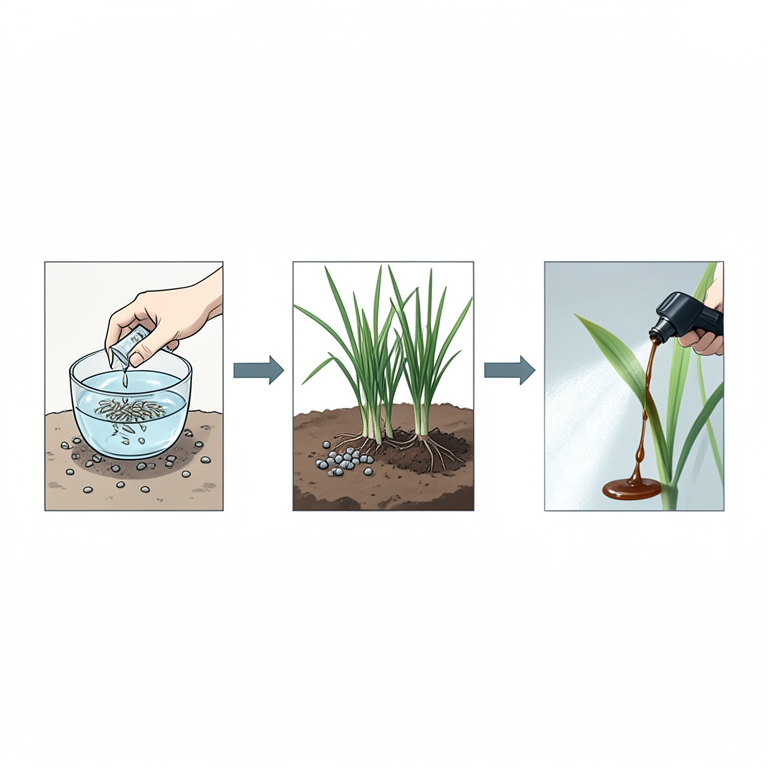
T3 Management Module Workflow
AI-generated conceptual illustration (Rice plants (Oryza sativa) in a field setting). It explains the idea and does not show study data.
View source evidence ↗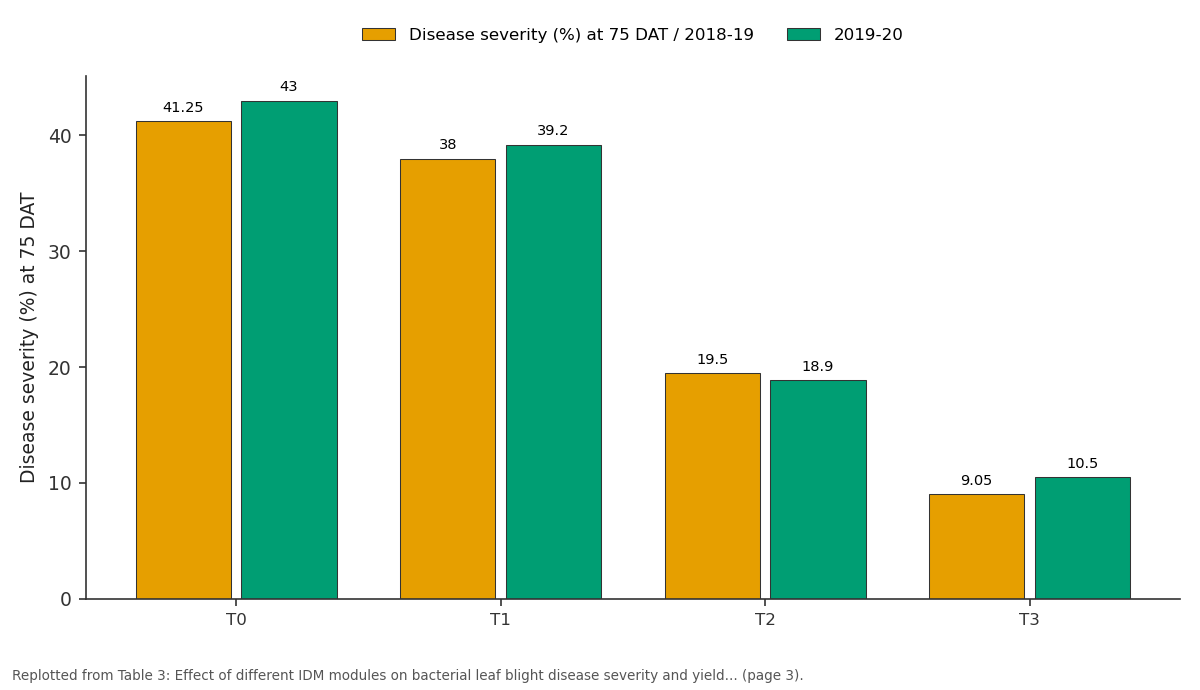
Disease severity (%) at 75 DAT / 2018-19 and 2019-20: T0 vs T1 vs T2 vs T3
Replotted from Table 3 (page 3) of the original paper. Every bar is the paper's own table value.
View source evidence ↗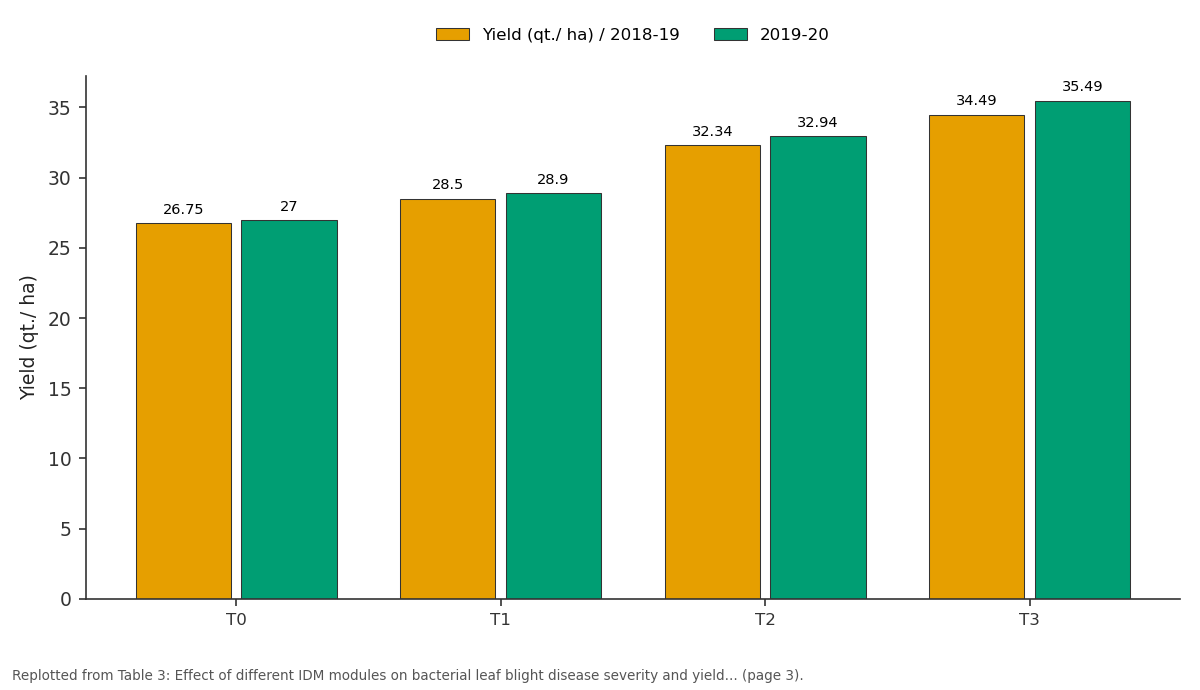
Yield (qt./ ha) / 2018-19 and 2019-20: T0 vs T1 vs T2 vs T3
Replotted from Table 3 (page 3) of the original paper. Every bar is the paper's own table value.
View source evidence ↗Figures & tables
From the original paper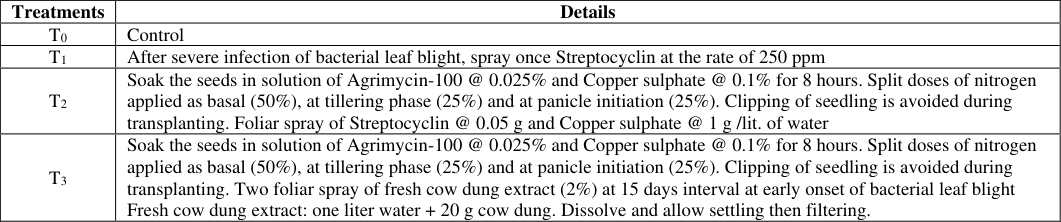 Table 1
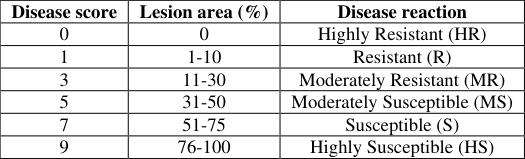 Table 2
 Table 3
 Table 4
Introduction
Rice (Oryza sativa L.) is the staple food crop, occupying about 63 percent of total area in food grain production in India. Globally, India stands at second position in rice production following china. In India acreage of rice is around 46.38 million ha with total production of 130.29 million tones and 2809 kg/ha yield productivity (Anonymous, 2023) [2] . In Madhya Pradesh the area production and productivity estimates are 2.016 lakh ha., 48149.0 M tones and 2085 kg/ha respectively (Anonymous, 2023) [2] . However, potential yield of rice is not gained under field condition due to various factors affecting the yield. Yield can still be improved by following various management tactics to control tee factors affecting yield. Rice crop exposed to several biotic and abiotic factors where biotic factors are predominant factor in fluctuating the yield. In cupboard of biotic stresses, it include several bacterial, fungal, viral and nematode pathogens which harbors rice ecosystem. Bacterial leaf blight (BLB) caused by Xanthomonas oryzae pv. Oryzae (Xoo) is one of the most significant rice disease which causes economic yield loss. In India, the disease was first reported from Maharashtra (Srinivasan et al., 1959) [19] and the losses had been estimated to vary from 6-74 percent (Gnanamanickam et al., 1999 and Adhikari et al., 1995) [7,1] . BLB of rice lead epidemics in Northwestern part of India during 1979 and 1980 and in Southern part of India in 1998, 2010 and 2013 (Laha et al., 2009; Yugander et al., 2014) [10,22] , showing the destructive nature of the disease in tropical areas. Various methods are followed for managing the BLB of rice with varying degree of success. Most widely used tactics include use of resistant varieties and chemical control. For the management of bacterial leaf blight of rice, number of control measures are being used but effective, economic and sustainable control measure for BLB is yet to be developed (Singh, 2009) [17] . Complete dependency on chemical control against bacterial plant diseases has restricted the availability of antibiotics due to development of antibiotic resistance and hazardous impact on environment. Keeping in consideration of all these issues, the current research was performed with the integration of several approaches to manage the BLB disease in with boosting effect on yield of rice. Integration of management tactics could help in effective and successful management of BLB disease in rice. In the current study IDM modules consisting of antibiotics, Copper oxychloride, balance dose of nitrogenous fertilizer and cow dung extract were tested under field condition with the objective to establish an effective integrated disease management module against bacterial leaf blight of Rice.
Materials and Methods
Krishi Vigyan Kendra, Singrauli, conducted on farm trials (OFTs) on integrated bacterial leaf blight management technology in rice at farmers' fields of Chitarwaikalan and Naugai villages of Singrauli district during kharif 2018 and 2019. The trials were laid out in completely randomized block design having four replications including farmers' practices as control in 10 different farmers' field representing 10 replications of plot. The experimental plot was prepared by furrowing threefold with cultivator and for fine tilt and smooth surface planking was done. Prior to 30 days of transplanting, FYM at the recommended rate of 1 t/ha was mixed and at the time of transplanting recommended dose of inorganic fertilizers (120:60:40 kg NPK/ha) was applied. Bispyribac-sodium 10% EC @ 250 ml/ha was used for weed management at 20 days after transplanting. To avoid the impact of cultivar variability high yielding hybrid variety of rice (US-312) was chosen for experimentation. Plot size was 50m x 10m with plant spacing of 30cm x 15cm and transplanting was conducted in second fortnight of July constantly.
Estimation of disease severity
As susceptible stage for BLB of rice is from seedling to early tillering stage. Therefore, percent disease severity of bacterial leaf blight was recorded from randomly selected 10 plants from each plot at fifteen days interval. Final observation was recorded at 75 days after transplanting (DAT), following the 0-9 scale of standard evaluation system (IRRI, 1996) for BLB. Observations on disease severity and yield recorded during investigation and data was analyzed statistically.
Estimation of Cost-Benefit Ratio
Grain yield was noted from all ten farmers field separately. Yield was determined by cumulating the harvesting from respective field and calculated in quintal per hectare. The information was analyzed and positioned based on their yield performance. The cost-benefit ratio (CBR) of various treatments was determined by assessing different expense of cultivation and return from yield, then converting them to one hectare land. Average market cost of rice was supposed at rupees 20.0 per kg during test period. Benefitcost ratio was calculated.
Results and Discussions
The findings presented in Table 3 clearly indicate a significant reduction in bacterial leaf blight (BLB) severity in treatment T 2 and T 3 compared to control (T 0 ). The lowest BLB severity, consistently observed over two years of trial, was in T 3 , ranging from 9.05% to 10.50%.treatment combination 3 (T 3 ) exhibited a remarkable ability to reduce BLB infection by an average of 76.82% over two consecutive years. Treatment T 3 , involving seed treatment with Agrimycin-100 and copper sulphate, avoidance of seedling clipping during transplanting, split application of nitrogen, and foliar sprays of fresh cow dung extract, proved to be the most effective in managing BLB in rice. The following best bundle of treatments wasT 2 , which included similar seed treatment and nitrogen application along with foliar sprays of streptocyclin and copper sulphate, also showed significant reduction in BLB severity from 18.90% to 19.50%. Treatment T 1 was having just a single spray of Streptocyclin @ 250 ppm after severe infection of BLB and has38.0 to 39.20 percent disease severity. Furthermore, in terms of grain yield, the same treatment combinations that effectively managed BLB also resulted in the highest yields, with T 3 yielding 34.49 to 35.49 quintals per hectare and T 2 yielding 32.34 to 32.94 quintals per hectare, compared to 26.87 quintals per hectare in untreated control (T 0 ). The economics of experiment was also calculated based on the expenditure incurred for different treatments under trial. The income data of rice yield in different treatments are presented in Table 4. Economic analysis revealed that T 3 and T 2 treatments provided the highest net returns per hectare, significantly surpassing the usual practices of the area. On comparison of economics of all treatments, it was found that maximum net returns of rupees 36792.5 to 37531.5 per ha were obtained from T 3 followed by T 2 with rupees 33127.5 to 33852.5.0 per ha. Highest benefit-cost ratio that was 2.14:1 and to 2.12:1 in the year 2018-19 and 2019-20, respectively in the T 3 followed by T 2 , where it was 2.04:1 and 2.06:1 in 2018-19 and 2019-20 respectively. Whereas the lowest benefit -cost ratio of 1.90:1 and 1.91:1 in above mentioned cropping season were recorded in control plot (T 0 ). Higher benefit-cost ratio for T 3 and T 2 , indicating their economic viability and profitability compared to the control (T 0 ).
| Details of technology | Cost of cultivation (Rs./ha) | — | Average Gross Return (Rs/ha) | — | Average Net Return (Rs/ha) | — | B:C ratio | — |
|---|---|---|---|---|---|---|---|---|
| 2018-19 | 2019-20 | 2018-19 | 2019-20 | 2018-19 | 2019-20 | 2018-19 | 2019-20 | |
| T0 | 28083.0 | 28289.80 | 53500.0 | 54000.0 | 25417 | 25710.2 | 1.90 | 1.91 |
| T1 | 291009.50 | 292547.5 | 57000.0 | 57800.0 | 27890.5 | 28545.3 | 1.95 | 1.97 |
| T2 | 34652.5 | 35027.5 | 64980.0 | 65880.0 | 33127.5 | 33852.5 | 2.04 | 2.06 |
| T3 | 35187.5 | 36148.5 | 68980.0 | 70980.0 | 36792.5 | 37531.5 | 2.14 | 2.12 |
Table text extracted from the original PDF; superscript letters are shown inline. The original table image is below.
View original table image
| Details of technology | Yield (qt./ ha) | — | Increase in Yield (%) over farmers Practice | — | Disease severity (%) at 75 DAT | — | Reduction in Disease severity(%) over farmers practice | — |
|---|---|---|---|---|---|---|---|---|
| 2018-19 | 2019-20 | 2018-19 | 2019-20 | 2018-19 | 2019-20 | 2018-19 | 2019-20 | |
| T0 | 26.75 | 27.0 | - | - | 41.25 | 43.0 | - | - |
| T1 | 28.5 | 28.9 | 6.45 | 7.03 | 38.00 | 39.20 | 7.89 | 8.83 |
| T2 | 32.34 | 32.94 | 20.89 | 22.0 | 19.50 | 18.90 | 52.72 | 56.04 |
| T3 | 34.49 | 35.49 | 28.93 | 31.44 | 09.05 | 10.50 | 78.06 | 75.58 |
| CD at 0.05 | 3.97 | 4.06 | NA | NA | 8.88 | 9.27 | NA | NA |
| SE(m)± | 1.98 | 2.03 | NA | NA | 4.44 | 4.63 | NA | NA |
Table text extracted from the original PDF; superscript letters are shown inline. The original table image is below.
View original table image
In the same way Biswas et al. (2009) [6] and Patil et al. (2017) [15] advocated that Streptocycline (100ppm) is highly effective to managing BLB followed by Bacterinashak, Kasugamycin and Agrimycin 100. The results of present findings were coincide with the observations about great antibacterial property of Agrimycin-100 (Banerjee et al., 1984 [5] and Sharma et al., 2022) [16] , Streptomycin Sulfate (Thimmegowda et al., 2012 and Naqvi et al., 2014) [21,13] and Streptomycin sulfate + copper oxychloride (Kumar et al., 2009) [9] . The prophylactic spraying of Streptocycline (500 ppm),Streptomycin + Oxytetracycline (1:9, 250 and 500 ppm), Bactrinol-100 (500 ppm) and Cow dung extract (20 g/liter) on rice was viewed as successful against bacterial leaf blight by Mary et al. (2001) [12] , and Sreekumar and Nair, 1990 [18] . Mandal et al. (2017) [11] , verified that the suggested portions of NPK (80:40:40) + higher dosages of potash (24 kg/ha) + three spraying of fresh cow dung slurry @1kg in 10 liter water at 10 days interval was acquired least bacterial leaf blight severity and higher yield in rice. Sumit et al. (2020) [20] showed that rice seeds soaked in a 0.07 percent solution of Agrimycin and 0.025 percent Streptocycline for an hour and afterward sited for hot water treatment at 52°C to 54 °C for 30 minute, which resulted about 95-100 percent destruction of microorganism Xanthomonas oryzae pv. oryzae which decreased the occurrence of BLB in the rice field. Foliar spray comprising of 20 percent or 20 g fresh cow dung extract in one liter of water utilized two times has been accounted for to restrain the improvement of BLB in rice fields by spraying it just after the onset of disease symptoms in rice. Consequently, shifting focus over to the disease management potential, grain yield gain, greatest insurance over yield losses due to disease, net return and ideal advantage in cost benefit ratio as well as sustainability, the Integrated disease management modules 3 (T 3 ), would be suggested for the management of BLB in rice crop.
Conclusions
The results of present investigation showed that considering the disease management potential, grain yield, economic returns, and sustainability, the integrated disease management module 3 (T 3 : Soak the seeds in solution of Agrimycin-100 @ 0.025% and Copper sulphate @ 0.1% for 8 hours. Split doses of nitrogen applied as basal (50%), at tillering phase (25%) and at panicle initiation (25%). Clipping of seedling is avoided during transplanting. Two foliar spray of fresh cow dung extract (2%) at 15 days interval at early onset of bacterial leaf blight, fresh cow dung extract: one liter water + 20 g cow dung. Dissolve and allow to settle then filter) is recommended for the effective management of bacterial leaf blight in Rice.
Acknowledgement
AcknowledgementThe authors are grateful to Director, ICAR-Agricultural Technology Application Research Institute, Zone -IX, Jawaharlal Nehru Krishi Vishwa Vidayalaya, Jabalpur campus, Jabalpur (M.P.), Director Extension Services, Jawaharlal Nehru Krishi Vishwa Vidayalaya, Jabalpur (M.P.), Jabalpur for providing funds and necessary facility for conducting this research work.
Figures and tables from the paper
| Disease score | Lesion area (%) | Disease reaction |
|---|---|---|
| 0 | 0 | Highly Resistant (HR) |
| 1 | 1-10 | Resistant (R) |
| 3 | 11-30 | Moderately Resistant (MR) |
| 5 | 31-50 | Moderately Susceptible (MS) |
| 7 | 51-75 | Susceptible (S) |
| 9 | 76-100 | Highly Susceptible (HS) |
Table text extracted from the original PDF; superscript letters are shown inline. The original table image is below.
View original table image
References
16 in the original paper- Adhikari TB, Cruz C, Zhang Q, Nelson RJ, Skinner DZ, Mew TW, et al. Genetic diversity of Xanthomonas oryzae pv. oryzae in Asia. Appl. Environ. Microbiol. 1995;61:966971.
- Banerjee AK, Rai M, Srivastava SSL, Singh DV. Suitable dose of Streptocycline and Agrimycin 100 for control of bacterial leaf streak of paddy. Indian Phytopathol. 1984;37:726-728.
- Gnanamanickam SS, Priyadarisini VB, Narayanan NN, Vasudevan P, Kavitha S. An overview of Bacterial blight disease of rice and strategies for its management. Current Science. 1999;77:1435-1443.
- Kumar M, Parate RL, Ninawe BN. Effect of botanicals, bio agents and some chemicals against Xantomonas oryzae pv. oryzae. Journal of Plant Disease Science. 2009;4(1):60-63.
- Mandal D, Pal R, Mohanty AK. Management of Bacterial leaf blight of rice in an integrated way. Journal of Mycopathological Research. 2017;54(4):539-541.
- Mary CA, Nair SK, Saraswathy P. Efficacy of prophylactic and curative sprayings on the control of bacterial blight of rice. Tropical Agric. 2001;39(1):73-75.
- Naqvi S, Atif H, Perveen R, Umer Ummadud Din M, Owais R, Ateequr Sajid W, et al. Determination of antibacterial activity of various broad spectrum antibiotics against Xanthomonas oryzae pv. oryzae, a cause of bacterial leaf blight of rice. Int. J Microbiol. Mycol. 2014;2(3):12-19.
- Narasimhamurthy HB, Ganesha Naik R, Mukesh Sehgal, Meenakshi Malik. Integrated Management of Rice Diseases. Special Issue on Status of Information and Communication Technology in the Successful Implementation of IPM, 2021;4(2):13-24.
- Patil B, Jagadeesh GB, Karegowda C, Seema Naik, Revathi RM. Management of bacterial leaf blight of rice caused by Xanthomonas oryzae pv. oryzae under field condition. Journal of Pharmacognosy and Phytochemistry. 2017;6(6):244-246.
- Sharma P, Suraj Baidya, Saraswoti Kandel, Suraj Chaudhary, Prem Bahadur Magar. Management of bacterial leaf blight disease of rice in farmer's field condition at Bhaktapur district of Nepal. Journal of Agriculture and Natural Resources. 2022;5(1):105-112.
- Singh RS. Plant Diseases. Oxford & IBH. Pub. Co. Pvt. Ltd. 2009, p. 64-65.
- Sreekumar CT, Nair SK. Effect of spraying with Bactrinol100 on the control of bacterial leaf blight of rice. Proc. Nat. Symp Rice in Wetland Ecosystem, Kerala Agricultural University, Trichur, 1990.
- Srinivasan MC, Thirumalachar MJ, Patel MK. Bacterial blight disease of rice. Curr Sci. 1959;28:469-470.
- Sumit S, Diksha S, Anita K. An Overview of Bacterial Leaf Blight Disease of Rice and Different Strategies for its Management. Int. J Curr. Microbiol. App. Sci. 2020;9(04):2250-2265.
- Thimmegowda PR, Sataraddi A, Ambika DS, Prasad PS, Chandrashekhar M. Efficacy of Antibiotics and Biorational Pesticides against Bacterial Blight of Paddy. Madras Agricultural Journal. 2012;99(7-9):592-596.
- Yugander A, Sundaram RM, Ladhalakshmi D. Pathogenic and genetic profile of Xanthomonas oryzae pv. oryzae isolates from Andhra Pradesh. Indian J Plant Protect. 2014;42:149-155.