
Research article · 2024 · Full text
International Journal of Agriculture Extension and Social DevelopmentDynamics of self-help groups (SHGs) in Karnataka: Evaluating SKDRDP vs. DCCB for socio-economic progress
Volume 7(3) · Pages 645–649 · DOI: 10.33545/26180723.2024.v7.i3h.485 ↗
Research areasMicrofinance and Financial Inclusion
Abstract
Author-writtenThe current research aimed to assess the performance of Self-Help Groups (SHGs) and their impact on the socio-economic conditions of rural populations. The study focused on SHGs supported by the Shri Kshethra Dharmasthala Rural Development Project (SKDRDP) in Dakshina Kannada district and SHGs backed by District Co-operative Credit Societies in Bidar district, Karnataka. To gather primary data, 120 respondents were selected as a sample, and the analysis was carried out using descriptive statistics and the Relative Importance Index (RII). The findings indicated several noteworthy points of differentiation between the two organizations. Firstly, the average loan per rupee of savings in SKDRDP was significantly higher at Rs. 11.84 compared to DCCB's Rs. 4.03. However, when it came to average monthly savings per person, DCCB had a relatively higher figure of Rs. 122, whereas SKDRDP reported Rs. 96. A crucial aspect observed in both sets of SHGs was the positive impact on the socio-economic conditions of the participants. Respondents from both SKDRDP and DCCB SHGs reported that their participation had led to social improvement by increasing access to basic necessities and enhancing economic well-being. SKDRDP facilitated access to microfinance, while DCCB Bidar contributed to increased savings. Importantly, these organizations not only provided financial opportunities but also nurtured self-reliance and empowerment within the communities they served.
Summary
Source-checkedPlain-language reading of the full paper, prepared with AI and checked against the text. Each point links to the authors' own words.
Why it matters
- Self-Help Groups (SHGs) are recognized globally as a modern instrument for fighting poverty and improving financial sustainability in rural areas via microfinance. View evidence ↗
- The microfinance system used by SHGs is effective because it lowers transaction costs and provides financial products tailored to the needs of marginalized, unbanked people. View evidence ↗
- SHGs are voluntary, economically similar groups of rural people in poverty who save money collectively in a common fund. View evidence ↗
The question
- The study aimed to evaluate the performance of SHGs under the SKDRDP and DCC Bank models and compare their impact on the socio-economic conditions of their members. View evidence ↗
What they did
- Data analysis was performed using descriptive statistics and the Relative Importance Index (RII). View evidence ↗
- The study compared two distinct bank linkage models in Karnataka: the Business Correspondent/Suvida model (SKDRDP) and the Co-operative model (DCCB). View evidence ↗
What they found
- SKDRDP members had a significantly higher borrowing-to-savings ratio (Rs. 11.84 per rupee saved) compared to DCCB members (Rs. 4.03 per rupee saved). View evidence ↗
- DCCB members had higher average monthly savings per person (Rs. 122) than SKDRDP members (Rs. 96). View evidence ↗
- Despite lower monthly savings, SKDRDP members had a higher average total savings per person (Rs. 11,032) compared to DCCB members (Rs. 9,762). View evidence ↗
- For both models, the highest social impact was the increase in access to basic necessities of living, with RII values of 0.97 for SKDRDP and 0.98 for DCCB. View evidence ↗
- Increased access to microfinance was the top economic impact for SKDRDP (RII 0.92, Rank I) and the second highest for DCCB (RII 0.92, Rank II). View evidence ↗
- The most significant economic impact for DCCB members was the increase in savings (RII 1.12, Rank I), whereas it was ranked seventh for SKDRDP (RII 0.73). View evidence ↗
- Both models effectively reduced dependency on non-institutional loans, with both recording an RII of 0.89. View evidence ↗
What it means
- The authors conclude that both SKDRDP and DCCB demonstrate how community-driven and cooperative efforts can provide financial access and foster self-reliance and empowerment. View evidence ↗
Visual summary
2 visualsIllustrations explain the paper; charts are replotted from the paper's own table values.
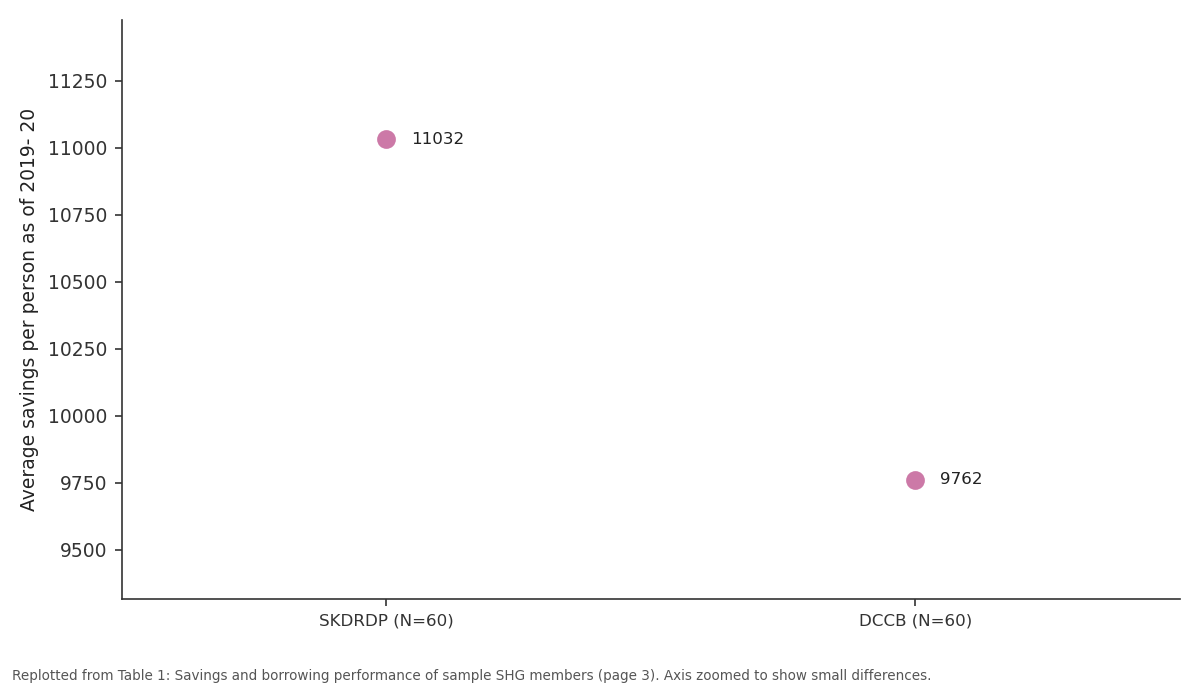
Average savings per person as of 2019- 20: SKDRDP (N=60) vs DCCB (N=60)
Replotted from Table 1 (page 3) of the original paper. Every bar is the paper's own table value.
View source evidence ↗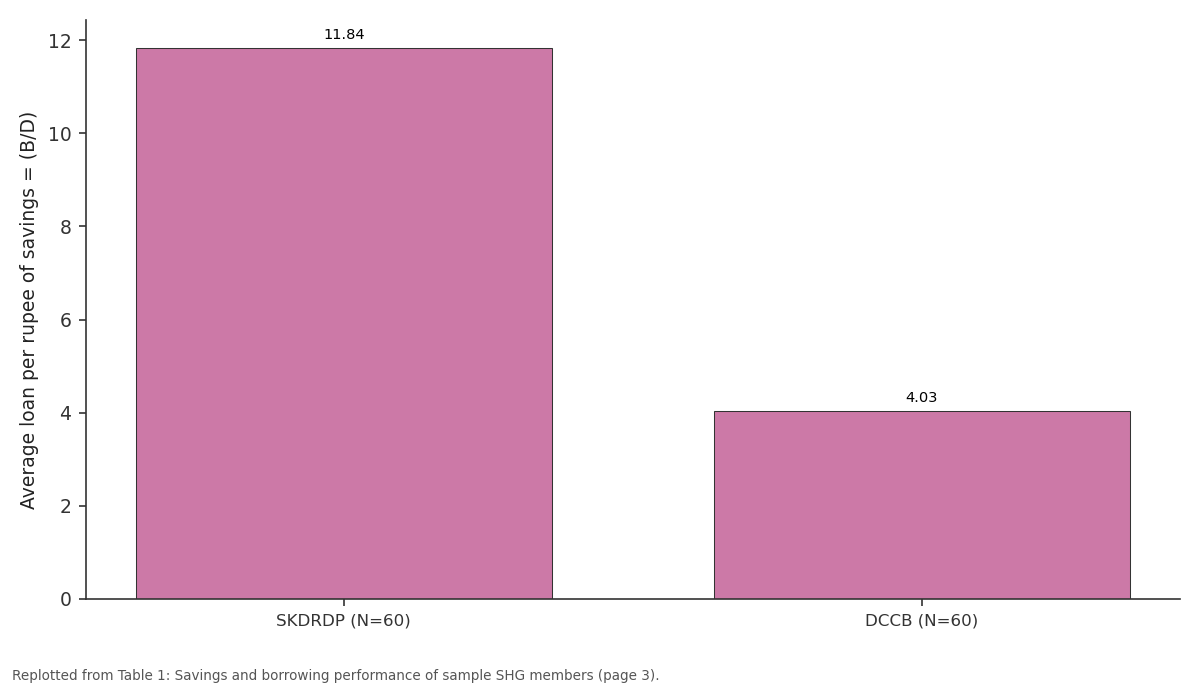
Average loan per rupee of savings = (B/D): SKDRDP (N=60) vs DCCB (N=60)
Replotted from Table 1 (page 3) of the original paper. Every bar is the paper's own table value.
View source evidence ↗Figures & tables
From the original paper Table 1
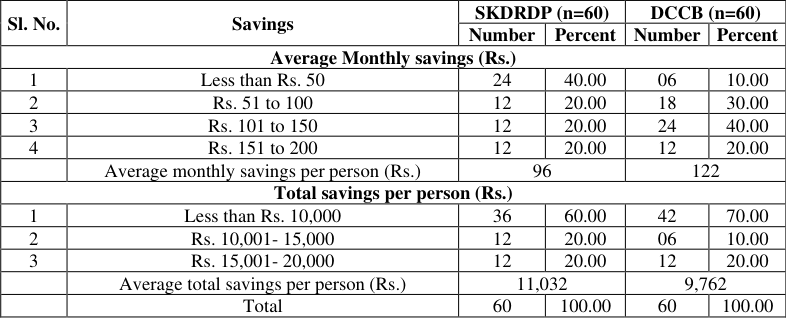 Table 2
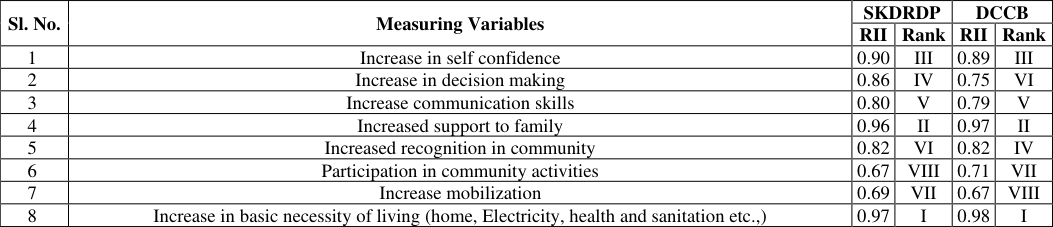 Table 3
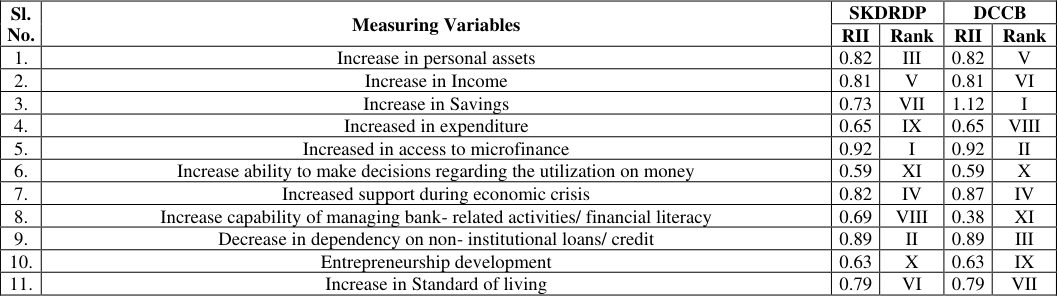 Table 4
Introduction
Self-Help Groups (SHGs) are small, economically homogenous affinity groups consisting of rural individuals in poverty. These groups are formed voluntarily, with the primary objective of collectively saving and contributing to a common fund. The funds accumulated within the SHG are then lent to its members according to group decisions. This unique financial structure operates on the foundation of trust and peer pressure, as described by the National Bank for Agriculture and Rural Development (NABARD). Internationally, SHGs have gained recognition as a modern tool to combat poverty and promote financial sustainability in rural economies through microfinance. This innovative financial system has proven to be effective in reducing transaction costs, providing tailored products and services that align with the needs of its clients, and devising novel approaches to reach marginalized and unbanked individuals living in poverty. The origin of SHGs in Karnataka dates back to 1984 when Mysore Resettlement and Development Agency (MYRADA) engaged in rural development and promoted several SHGs and cooperative societies that extended loans to their members. In the mid-1980s, the National Bank for Agriculture and Rural Development (NABARD) took the lead, and in 1991-92, they launched the SHG-Bank Linkage Program (SBLP) with the primary objective of expanding the outreach of the formal banking system to the unreached rural poor on a sustainable basis. As of March-end 2019, the total number of SHGs linked with banks stood at 10.01 million, with savings aggregating Rs. 23,324.48 Crore. Furthermore, 50.77 lakh SHGs had outstanding loans totaling Rs 15,210 Crore (Anon., 2020) [1] . In Karnataka many Non-Governmental Organizations (NGOs), public sector banks, co-operative societies etc. The Shri Kshethra Dharmasthala Rural Development Project (SKDRDP) is a registered non-governmental organization (NGO) established in 1982 in Dharmasthala, a village situated in the Belthangady taluk of the Dakshina Kannada district in the Indian state of Karnataka. Dr. D. Veerendra Heggade, a distinguished individual and recipient of the Padma Vibhushan award, serves as the chair of SKDRDP. Since its inception, SKDRDP has been at the forefront of initiating various community and rural development programs. These programs began as experimental and pilot projects, initially benefitting 18,000 families in the Belthangady taluk. Over time, their success led to gradual expansion into other taluks within the Dakshina Kannada district. SKDRDP has played a pivotal role in the implementation and expansion of the Indian government's financial inclusion program by serving as a Banking Correspondent and Business Facilitator (BC and BF) across vast operational areas. Under this program, www.extensionjournal.com SKDRDP facilitates access to formal banking and financial services for rural individuals, primarily through SHGs. The organization collaborates with various banks, including Vijay Bank, Corporation Bank, State Bank of India, Union Bank of India, IDBI Bank, Pragathi Krishna Grameen Bank, and Syndicate Bank (Canara Bank). Currently, SKDRDP's outreach encompasses 4,77,250 active SHGs, with a total membership of 40,96,777 individuals and outstanding loans totaling Rs. 9,625 Crores. SKDRDP's dedicated efforts have made a substantial impact in rural development, financial inclusion, and women's empowerment, contributing to positive change in the communities it serves. The District Cooperative Central Bank Ltd. Bidar was established in 1922, at a time of rapid expansion of the credit cooperative sector, with the mandate of serving the primary credit cooperatives in Bidar district. DCCB Bidar is considered one of the best among 367 district cooperative central banks in India, consistently showing profits. It functions as a central cooperative bank in the region. The primary function of the bank from the beginning has been providing financial services to the PACS in the district, with an emphasis on agriculture. In 1996, when NABARD began implementing its SHG-Bank Linkage Programme for the rural poor on a national scale, DCCB expanded its mission to include SHGs predominantly of poor landless women. It further deepened its inclusive outreach in the 2000s, establishing SAHARA a non-formal training centre for unemployed youth and providing start-up and repeat loans for new micro businesses of the trainees. With this background, the present study conducted (i) To study the performance of SHGs under SKDRDP in Dakshina Kannada and DCC Bank in Bidar districts (ii) To assess and compare the impact of SKDRDP and DCC Bank in the enhancement of socio-economic conditions of SHG members.
Materials and Methods
This research study aims to evaluate the performance of Self-Help Groups (SHGs) operating under two distinct models of SHG bank linkage in Karnataka: the Business Correspondent/Suvida model promoted by SKDRDP in Dakshin Kannada and the Co-operative model promoted by DCCB in Bidar district. Belthangady and Bidar taluks were purposively chosen due to their relevance and potential in representing these distinct SHG bank linkage models. The study methodology involved the random selection of twenty SHGs, ten from each model and taluk, resulting in a total of 120 respondents (six respondents from each SHG). This comprehensive approach allows for a broad representation of both models and regions, providing a diverse dataset for analysis. To achieve the objectives, the data was analysed by using descriptive statistics and Relative Importance Index (RII) was employed The study likely aimed to compare and contrast the performance of SHGs under the two different bank linkage models. Factors such as financial inclusion, empowerment of members, sustainability, outreach, and efficiency in utilizing financial services might have been evaluated to understand the strengths and weaknesses of each model. The findings derived from these analyses could provide valuable insights into the effectiveness of each SHG bank linkage model, offering recommendations for improvement, policy implications, or best practices for fostering the growth and success of SHGs in the respective regions. The relative importance index was used to study the important socio-economic components impacted and satisfaction level of respondents on respondents after joining SHG, by using following formula.
Where, W is weightage assigned to each response of fivepoint Likert scale in which each one is assigned to least i.e., strongly disagree and very unsatisfied and five is assigned to highest i.e., strongly agree and highly satisfied respectively. The weighted average and relative indices (RI) were calculated based on formula mentioned above, ranks were assigned on the basis of RI which the values range from 0 to 1. According to Rooshdi et al. (2018) [6] , five important levels are transformed from RI values as high (0.8 ≤ RI ≤1), high-medium (0.6 ≤ RI ≤ 0.8), medium (0.4 ≤ RI ≤ 0.6), medium-low (2.0 ≤ RI ≤ 0.4), and low (0 ≤ RI ≤ 0.2).
Results and Discussion
Results and Discussion
Performance of SHGs under SKDRDP in Dakshina Kannada and DCC Bank in Bidar districts Saving and borrowing performance of SHG members
The comparison of savings and borrowing performance between the SHG members under SKDRDP and DCCB in Karnataka offers compelling insights into their financial dynamics and patterns. In Table 1, the figures clearly delineate the contrasting tendencies in borrowing and savings habits between these two groups. Under the SKDRDP model, the 60 respondents collectively borrowed a substantial amount totaling Rs. 78,36,000, averaging to Rs. 1,30,600 per person. In terms of savings, their combined total amounted to Rs. 6,61,920, resulting in an average savings per person of Rs. 11,032. This implies a ratio where, on average, for every rupee saved, the respondents borrowed Rs. 11.84. Conversely, within the DCCB cohort, the total borrowings were significantly lower at Rs. 23,58,000, averaging to Rs. 39,300 per respondent. Their total savings summed up to Rs. 5,85,720, with an average savings per person of Rs. 9,762. Here, the borrowing-tosavings ratio depicts that for every rupee saved, the respondents borrowed Rs. 4.03. The comparison between these borrowing-to-savings ratios of SKDRDP and DCCB reflects intriguing financial behavior within these groups. The SKDRDP participants, on average, borrowed a larger sum compared to their savings, indicating a relatively higher dependence on loans. In contrast, the DCCB respondents displayed a more conservative borrowing behavior, with a lower loan-tosavings ratio, suggesting a greater reliance on their own savings rather than external borrowings. This trend aligns with findings from the study by Suganya and Prabhu (2017) [8] , indicating consistency and reinforcing the observed financial patterns. The data underscores the divergent financial strategies adopted by SHG members under different models, showcasing varying levels of reliance on borrowed funds versus internal savings. The implications of these findings could be far-reaching. For instance, higher borrowing ratios might signal a need for financial literacy programs or interventions to encourage www.extensionjournal.com better savings practices among SKDRDP-linked SHGs. Conversely, DCCB-linked groups might benefit from strategies to leverage their existing savings effectively for further economic growth or investment opportunities.
| Sl. No. | Particulars | SKDRDP (N=60) | DCCB (N=60) |
|---|---|---|---|
| A. | Total loan borrowed by SHGs as of 2019- 20 | 78,36,000 | 23,58,000 |
| B. | Average loan per person | 1,30,600 | 39,300 |
| C. | Total savings of SHG as of 2019-20 | 6,61,920 | 5,85,720 |
| D. | Average savings per person as of 2019- 20 | 11,032 | 9,762 |
| E. | Average loan per rupee of savings = (B/D) | 11.84 | 4.03 |
Table text extracted from the original PDF; superscript letters are shown inline. The original table image is below.
View original table image
Savings performance of respondents
Table 2 delves into the intricate patterns of savings among respondents affiliated with SKDRDP and DCCB, shedding light on the distinct approaches to savings habits within these groups. Under the SKDRDP model, the distribution of savings among respondents showcases a notable trend. A substantial 40% of respondents save less than Rs. 50 per month, while equal proportions of 20% each save in the brackets of Rs. 51 to 100, Rs. 101 to 150, and Rs. 151 to 200, respectively. This distribution signifies a considerable portion of individuals allocating minimal amounts to savings, with an average monthly savings per person of Rs. 96. In contrast, within the DCCB group, the savings distribution paints a different picture. Here, 40% of respondents save in the range of Rs. 101 to 150 per month, 30% save between Rs. 51 to 100, 20% save in the range of Rs. 151 to 200, and a minor 10% save less than Rs. 50 per month. The average monthly savings per person in this cohort amount to Rs. 122. The disparity in monthly savings distributions between SKDRDP and DCCB indicates divergent approaches to saving behaviors. DCCB-linked respondents tend to save higher amounts monthly compared to their SKDRDP counterparts. This divergence might stem from various factors such as differing economic activities, access to financial resources, or the effectiveness of savings mobilization initiatives undertaken by the respective models. Additionally, when considering total savings per person, a nuanced pattern emerges. Within SKDRDP, a majority (60%) of respondents have accumulated less than Rs. 10,000 in total savings, while 20% have saved between Rs. 10,001 to Rs. 15,000, and another 20% have managed to save more than Rs. 15,000. The average total savings per member in this group stand at Rs. 11,032. In comparison, among DCCB respondents, 70% have saved less than Rs. 10,000, 20% have accumulated more than Rs. 15,000, and only a minor 10% have saved in the range of Rs. 10,001 to Rs. 15,000. The average total savings per person in this group amount to Rs. 9,762. The higher monthly savings observed in DCCB may be attributed to the practice of collective savings, enabling internal loans and savings-based lending, fostering a culture of saving higher amounts among its members. On the other hand, the higher average total savings per person in SKDRDP might be influenced by a larger presence of matured SHGs in their study, compared to DCCB, suggesting a longer period for savings accumulation among SKDRDP-linked respondents. These findings echo similar observations made by Shree and Reddy (2015) [7] , affirming the consistency and reliability of the trends identified in the study. The insights gained from this analysis underscore the importance of understanding distinct savings behaviors within SHG models and offer valuable input for targeted interventions to enhance savings practices among rural communities in Karnataka.
| Sl. No. | Savings | SKDRDP (n=60) | — | DCCB (n=60) | — |
|---|---|---|---|---|---|
| Number | Percent | Number | Percent | ||
| Average Monthly savings (Rs.) | |||||
| 1 | Less than Rs. 50 | 24 | 40.00 | 06 | 10.00 |
| 2 | Rs. 51 to 100 | 12 | 20.00 | 18 | 30.00 |
| 3 | Rs. 101 to 150 | 12 | 20.00 | 24 | 40.00 |
| 4 | Rs. 151 to 200 | 12 | 20.00 | 12 | 20.00 |
| Average monthly savings per person (Rs.) | 96 | 122 | |||
| Total savings per person (Rs.) | |||||
| 1 | Less than Rs. 10,000 | 36 | 60.00 | 42 | 70.00 |
| 2 | Rs. 10,001- 15,000 | 12 | 20.00 | 06 | 10.00 |
| 3 | Rs. 15,001- 20,000 | 12 | 20.00 | 12 | 20.00 |
| Average total savings per person (Rs.) | 11,032 | 9,762 | |||
| Total | 60 | 100.00 | 60 | 100.00 |
Table text extracted from the original PDF; superscript letters are shown inline. The original table image is below.
View original table image
Socio-Economic impact of SHGs:
The main aim of SHG promotion institutes should not be only restricted for lending and earning profit, it should be for enhancement of socio and economic empowerment SHG members. This study infers the socio-economic impact on SHG members after joining SKDRDP and DCCB promoted SHGs.
Economic impact of SHPIs on SHG members
The economic impact of joining Self-Help Groups (SHGs) is revealed through the Relative Importance Index (RII) analytical tool, as shown in Table 4. The results underscore the substantial positive changes in various economic aspects following SHG membership, particularly in the case of SKDRDP and DCCB. The results found that there was significant increase (RII value 0.92) in accessibility to formal micro finance, decreasing in dependency on money lenders (RII value 0.89), increase in personal assets (RII value 0.82), financial support during economic crisis (RII value 0.82), increase in income (RII value 0.81), increase in standard of living (RII value 0.79), increase in savings (RII value 0.73), increase in knowledge about financial literacy (RII value 0.69), increase in expenditure (RII value 0.65), new entrepreneurship development (RII value 0.63) and ability to make decision on utilization of money(RII value 0.59) in SKDRDP. Whereas, major economic impact found in DCCB were increase in savings (I), increase in assessable to formal micro finance (II), decrease in dependency for loans on money lenders (III), support during economic crisis (IV), increase in personal assets (V), increment in income (VI), increase in standard of living(VII), increase in expenditure (VIII), entrepreneurship development (IX), making decision on money utilization(X) and knowledge on financial literacy (XI). Results on par with Maity and Sarania (2017) [4] . The findings underscore a significant boost in accessibility to formal microfinance, enabling the pursuit of new business ventures and providing a vital source for emergency consumption loans. This decrease in reliance on highinterest money lenders positively impacts the credit dependency of SHG members. Within SKDRDP, beneficiaries experienced remarkable growth in personal assets, including gold, vehicles, and land. These assets offer valuable liquidity during financial or economic crises, ensuring financial stability during uncertain conditions. Moreover, wise investments in income-generating activities like agriculture, dairy, tailoring, and entrepreneurship have led to increased income for respondents, Similar to subsequently benefiting their families and enhancing their standard of living by ensuring access to food, education, and other necessities. www.extensionjournal.com In DCCB promoted SHGs, the major impact was on savings of the members because more importance given to group savings by both SHPIs (DCCB) and SHG members rather than external funds. This savings attitude which not only add to group savings corpus, but mainly used for members emergency needs through internal lending. These group savings were act as yard sticks for availing external bank loans. Some respondents utilized borrowed loan for purchase of assets like auto and livestock's which will generates a potential income, the respondent are agree with increase in income and standard of living after joining SHG. But small proportion of impact on expenditure, diversification of enterprise and awareness on financial activity.
| Sl. No. | Measuring Variables | SKDRDP | — | DCCB | — |
|---|---|---|---|---|---|
| RII | Rank | RII | Rank | ||
| 1. | Increase in personal assets | 0.82 | III | 0.82 | V |
| 2. | Increase in Income | 0.81 | V | 0.81 | VI |
| 3. | Increase in Savings | 0.73 | VII | 1.12 | I |
| 4. | Increased in expenditure | 0.65 | IX | 0.65 | VIII |
| 5. | Increased in access to microfinance | 0.92 | I | 0.92 | II |
| 6. | Increase ability to make decisions regarding the utilization on money | 0.59 | XI | 0.59 | X |
| 7. | Increased support during economic crisis | 0.82 | IV | 0.87 | IV |
| 8. | Increase capability of managing bank- related activities/ financial literacy | 0.69 | VIII | 0.38 | XI |
| 9. | Decrease in dependency on non- institutional loans/ credit | 0.89 | II | 0.89 | III |
| 10. | Entrepreneurship development | 0.63 | X | 0.63 | IX |
| 11. | Increase in Standard of living | 0.79 | VI | 0.79 | VII |
Table text extracted from the original PDF; superscript letters are shown inline. The original table image is below.
View original table image
Conclusion
Self-Help Groups (SHGs) have emerged as a powerful tool for addressing poverty and financial inclusion, not only in India but also internationally. These small, economically homogenous groups of rural individuals have proven to be effective in reducing transaction costs, offering tailored financial products, and reaching marginalized and unbanked populations, contributing to the economic development of these communities. Both SKDRDP and DCCB Bidar exemplify the potential of cooperative and communitydriven efforts to address economic and social challenges. These organizations have not only created financial access but also nurtured a sense of self-reliance and empowerment within the communities they serve. Their endeavors underscore the importance of localized, inclusive, and sustainable approaches to development, ultimately contributing to the betterment of society as a whole.
References
7 in the original paper- Amrutha D. Socio-Economic Impact through Self Help Groups. J Econ Sustain Dev. 2009;2(6):89-94.
- Asha, Shivani D, Nanjappa D, Shanbhoga MB. Performance of Self-Help Groups (SHGs) in Ramanagara District of Karnataka. Res J Agric Res Sci. 2018;7(09):3438-3446.
- Maity S, Sarania R. Does microfinance alleviate poverty and inequality: Studying self-help groups in Bodoland, Assam. Dev Pract. 2017;27(7):1006-1019.
- Manikandan A, Muthumeenakshi M. Loan Repayment Performance of Women Self-help Groups in Vellore District: An Empirical Study. J Soc. Sci. Res. 2018;4(12):459-465.
- Rooshdi RR, Majid MZ, Shamir SR. Relative Importance index of sustainable design and construction activities criteria for green highway. Chem. Eng. Trans. 2018;63:151-156.
- Shree DA, Chandavari V, Rayanagoudar R. A study on the profile of SHGs and their members in Karnataka. Int. J Agric Sci. 2016;3(2):97-101.
- Suganya KS, Prabhu GG. A study on utilisation of selfhelp groups. Int. J Acad. Res Dev. 2017;2(5):257-263.
Social impact on SHG respondents
The aim of Self Help Group Promotion Institutes (SHPIs) is not only to finance, but to develop sustainable growth of SHG members in all the aspects of living. Table 3 depicts the social impact of promotion institutes in SHGs.
Table text extracted from the original PDF; superscript letters are shown inline. The original table image is below.
View original table image
The results revealed a greater impact in terms of (I) www.extensionjournal.com accessibility to necessity of living, followed by increased support of amilyinsocialcrisis (II), increased confidence (III), increase in decision making (IV), increase in communication skills(V), recognition in society(VI) and participation in community programs(VIII) were in SKDRDP promoted SHGs. Whereas, in DCCB major impact on increase in availability to basic necessities (I), followed by increase in support to family both financially and socially (II), increase in confidence (III), increase in recognition in community (IV), increase in communication skills (V), increase in decision making (VI), participation in community activities (VII) and increase in mobilization (VIII). The results on line with Asha et al. ( 2018) [3] .
The results revealed a greater impact on beneficiaries in accessible to necessity of living like availability of home, electricity, health and sanitation, followed by increased support to family in economically and morally, by all the means respondents felt there is a feeling of increased confidence and individual decision making after joining, increase in communication and recognition in society due to regular meeting and interaction with other group members, mobilization due to weekly repay to collection center and attending quarterly compulsory federation meetings, the participation in community programs like cleaning temple ponds, attending campaigns, hosting quarterly or weekly meetings are found in SKDRDP promoted SHGs. Increase in basic necessity of living (home, Electricity, health and sanitation etc.,) 0.97 I 0.98 I
The similar impact was found in DCCB promoted SHG members also. Results found there is an increase in availability to the basic necessity of living like home, electricity and sanitation (toilets) with the assistance of bank and SAHARDA. Some agree that there is an increase in support from co-group members during the social crisis due to we feeling developed from the group. A significant portion of respondents opined increase in their selfconfidence because of financial and moral support from group and DCCB, respondents acknowledged that they are recognized in their local community due to regular meeting and decision making in SHG.A substantial part of respondents accepted there is an increase in communication skill as a result of participation in group communication and discussions. Similar responses found in Amrutha (2011) [2] . A part of respondents strongly agreed that there is an increase in decision making both in family and outside family-related issues, because financial support to family made them to recognize and involve in decision making.
And obliviously an increment in the participation of community activities, like support to a government school and helping other to form new SHGs, A small proportion felt there is an increase in mobilization in their lifestyle, because movement for bank-related, tours and participation in mela in the intended to learn and see the world.