
Research article · 2024 · Full text
International Journal of Advanced Biochemistry ResearchStudy on effect of millet milk on spleen iron concentration
Volume 8(3) · Pages 826–831 · DOI: 10.33545/26174693.2024.v8.i3j.840 ↗
Research areasNutrition, Genetics, and DiseaseNutritional Studies and Diet
Abstract
Author-writtenInfant nutrition is the basis of the body’s reservoir of nutrients including iron. Babies are born with a reserves of iron, which comes from their mother’s blood, while they are in womb. For the first 6 months of life, baby’s get the nutrients from their mother’s milk and is sufficient for the growth and development of infants. After 6 months of their life iron becomes a critical nutrient. The estimated daily iron requirement at the age of 6 to 12 months (0.9 to 1.3 mg per kg body weight) are higher than during any other period of life. During this period, they get the iron through infant milk formula and later from solid foods. From 6 months of age all infants should receive a sufficient intake of iron rich foods which may be meat products or iron fortified foods. Breast milk, infant formula, and water should be the only drinks offered after 6 months of age. A wide range of solid foods, including iron containing foods, should be introduced in an age appropriate form from around 6 months of age along with continued breastfeeding. According to the American academy of pediatrics suggests that breast fed infants should be supplemented with 1mg/kg per day of oral iron. Standard infant formulae contain 12 mg per liter can full fill the needs of iron in infants until the age of 1year. Supplementation of iron through mediations may cause problems in health. Hence better to get iron through diet like iron fortified cereals. The best food sources of iron are whole grain cereals, pulses, and legumes, liver, egg yolk and fish. And the best plant sources are green leafy vegetables such as radish greens, lotus stems, cauliflower greens, and turnip greens. Fruits such as watermelon, black currants, raisins and dried dates are rich sources of iron. Millets and soya based infant formula are best alternatives for milk because they are rich in iron along with other nutrients. All the breast fed infants are not tolerated to breast milk because some infants are not able to digest lactose, the sugar present in milk. They do not produce enough enzyme known as Lactase which is used to digest lactose in the milk. This condition is called Lactose intolerance. Symptoms of lactose intolerance usually develop within a few hours of consuming food or drink that contains lactose. They may include bloating, diarrhoea, flatulence and abdominal cramps. The lactase enzyme is needed to break down lactose into glucose and galactose, which can then be absorbed into the bloodstream and used for energy. An allergy to cow’s milk and related dairy products affects one in 50 babies and is different to lactose intolerance. Peoples who are allergic to cow’s milk can also be allergic to milk from other animals such as goats, sheep and buffalo. A cow’s milk allergy can cause symptoms such as wheezing and asthma, diarrhoea, vomiting, and gastrointestinal distress. Other reactions include eczema, an itchy rash and rhinitis or inflammation in the nose. In several cases, it can lead to bleeding, pneumonia, and even anaphylaxis, a potentially fatal hypersensitivity reaction. As concern about lactose intolerance and milk allergies widen, a range of substitute milks, such as millet and soya milk, have become available. Milk has long been seen as a healthy drink, because it is high in range of nutrients. According to medical advice: . Milk alternatives include soya milk and millet milk are the great sources of nutrients. . Each type has a different nutritional profile, so it is important to check that all the nutrient requirements are meeting or not. .Some plant based milk is not suitable for children, but it is possible to consume a balanced diet without dairy products.
Summary
Source-checkedPlain-language reading of the full paper, prepared with AI and checked against the text. Each point links to the authors' own words.
Why it matters
- Iron is a critical nutrient for infants, with the highest daily requirements (0.9 to 1.3 mg per kg body weight) occurring between 6 and 12 months of age. View evidence ↗
- Millet and soya-based formulas are considered effective alternatives to milk because they provide iron and other essential nutrients. View evidence ↗
The question
- The study aimed to investigate how millet milk affects the iron concentration in the spleens of albino rats. View evidence ↗
What they did
- The experiment used 12 male weanling albino rats, 3 weeks old, divided into two groups based on their body length and weight. View evidence ↗
- Over a 45-day period, the control group was fed cow's milk and the experimental group was fed millet milk ad libitum. View evidence ↗
- The millet milk was produced using a process involving 8 hours of soaking, 12 hours of sprouting, and wet grinding with water. View evidence ↗
- Spleen iron concentrations were estimated by measuring absorbance at 535 nm using a spectrophotometer. View evidence ↗
What they found
- The mean spleen iron level for the control group (cow milk) was 339.3 µg/g, while the experimental group (millet milk) was 301.7 µg/g. View evidence ↗
- There was no statistically significant difference in spleen iron levels between the cow milk and millet milk groups (T value = 0.112, NS). View evidence ↗
- Individual spleen iron levels ranged from 272.2 to 429.1 µg in control rats and from 212.5 to 399.29 µg in experimental rats. View evidence ↗
What it means
- The authors conclude that millet milk is as effective as cow's milk for providing iron to infants. View evidence ↗
- The authors state that further research is required to confirm the findings of this study. View evidence ↗
Visual summary
2 visualsIllustrations explain the paper; charts are replotted from the paper's own table values.
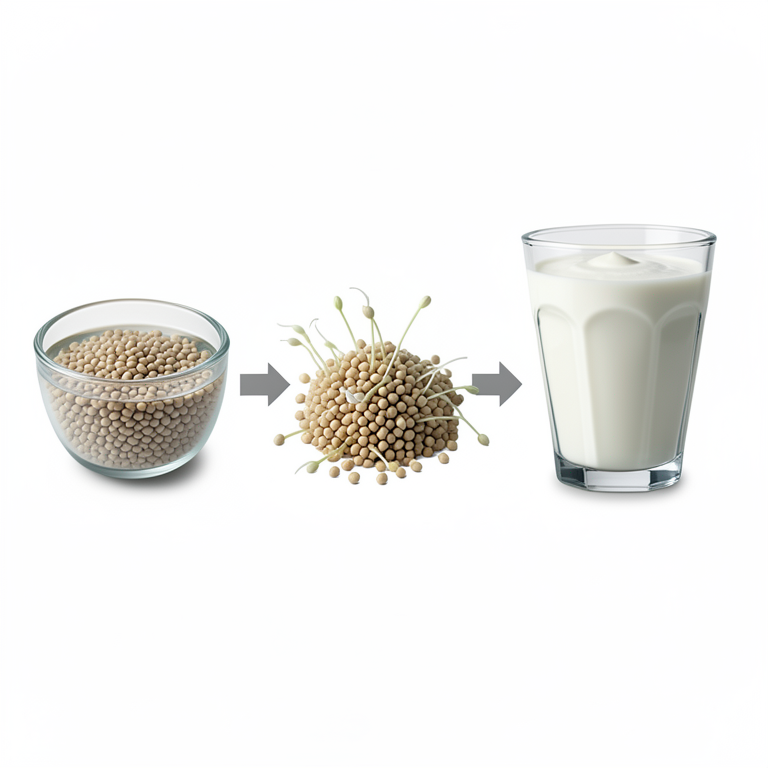
Millet Milk Production Process
AI-generated conceptual illustration (millet grains and millet milk). It explains the idea and does not show study data.
View source evidence ↗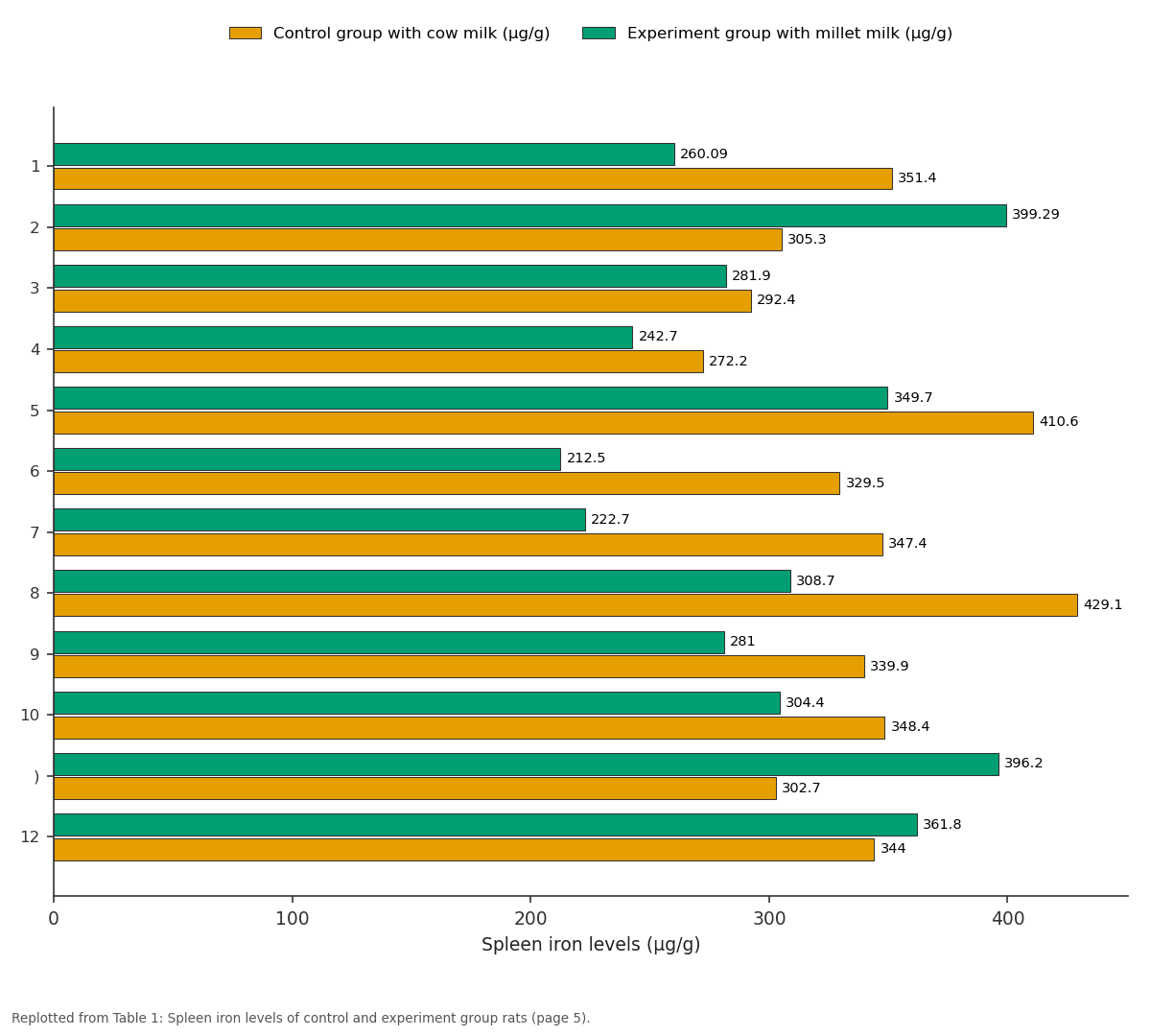
Control group with cow milk (µg/g) and Experiment group with millet milk (µg/g): 1 vs 2 vs 3 vs 4 vs 5
Replotted from Table 1 (page 5) of the original paper. Every bar is the paper's own table value.
View source evidence ↗Figures & tables
From the original paper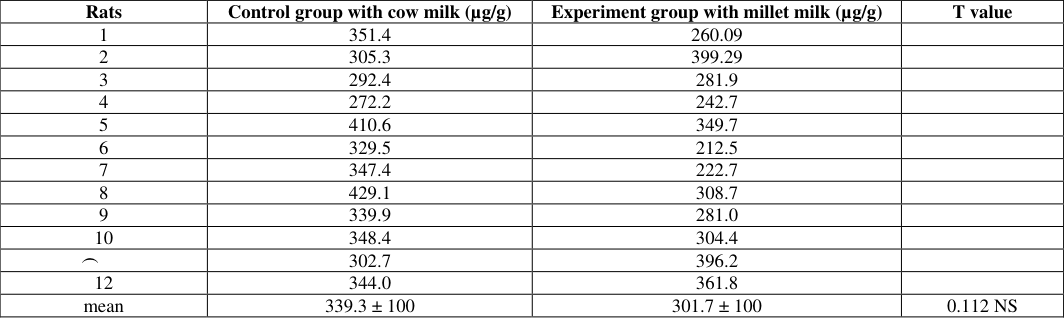 Table 1
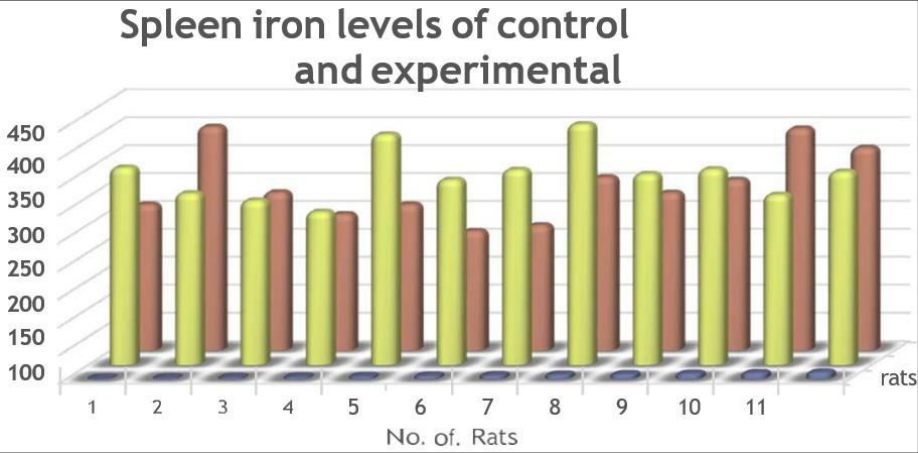 Figure 1
Introduction
Millet is the main food source for people living in the drought and semi-arid tropics of Asia and Africa. Millet is an important source of carbohydrates, proteins and minerals. Due to its importance to national food security and potential health benefits, millet grains are currently receiving increased interest from scientists, engineers, and nutritionists. (Ahmed Sn Saleh et al., 2013) [2] .
According to IIMR (Indian Millet Research Institute), India was the largest millet producing country in 2000 and 2009, followed by Nigeria. The most common millet is pearl millet, which is an important crop in India. India is a major producer of small millets such as finger millet, porso millet, foxtail millet, kodo millet.
Importance
Millet contains health-promoting secondary plant substances such as polyphenols, lignin, phytosterols, phytoestrogens, and phytocyanins. These act as antioxidants, immune modulators, antidotes, etc.). Therefore, millet protects against age-related degenerative diseases such as cardiovascular disease, diabetes, and cancer. [Rao et a1. 2011] [6] . It is also rich in vitamins, minerals and essential fatty acids, which have health benefits in terms of preventing degenerative and malnutrition diseases. Millets are known to have high nutritional value comparable to major grains such as wheat and rice. [Saleh et al. 2013] [2] . Furthermore, it is rich in essential amino acids except lysine and threonine, but it also contains relatively high amounts of methionine. Millet grains exhibit prebiotic activity that helps increase the number of beneficial bacteria that play an important role in promoting digestion (Sarita et al. 2016) [1] . Millet is safe for people with gluten allergies and celiac disease. They do not produce acids and are not allergenic (Saleh et al. 2013) [2] . Millets are rich sources of insoluble fiber, binds with triglycerides in the body and remove out from the body to prevent coronary artery disorders. The ant diabetic effect of millet is mainly due to its rich fiber content. (Jayabhaye. et al. 2010) [4] . The high fiber content in millet and the presence of some anti-nutritional factors such as phytates and tannins affect the bioavailability of minerals. The phytonutrient lignin in millet is converted to mammalian lignin in the intestines, which protects against breast cancer. Millet also helps in losing weight as it is rich in fiber. It creates a feeling of fullness.
Nutrition in millets
Millet is a rich source of nutritional supplements and contains more fiber than wheat (or) rice. It also contains protein (9-14%). -80% carbohydrates. Millets such as sorghum and ragi are important sources of essential amino acids and micronutrients such as calcium, iron, and zinc in the Indian diet, especially for people living in poor socioeconomic conditions. (Maha Lakshmi et al., 1997) [5] . A variety of traditional household food processing and preparation methods can also be used to improve the bioavailability of micronutrients in plant-based diets. These include heat treatment, mechanical treatment, steeping, fermentation and germination (or) malting. The purpose of these processing techniques is to increase the physicochemical accessibility of micronutrients and reduce the content of anti-nutrients such as phytates (or) increase the content of compounds that improve their bioavailability (Ahmed Sn Saleh 2013) [2] . Millet is an excellent source of magnesium and phosphorus. Magnesium can help reduce the effects of migraines and heart attacks, and phosphorus is an essential component of adenosine triphosphate (ATP), the body's energy precursor. Finger millet lowers plasma cholesterol, serum total cholesterol, and LDL cholesterol by 9% each, lowers triglycerides by 15%, and increases HDL cholesterol. This has a pronounced positive effect on the plasma profile.
[Kajal Srivastava et al., 2012] [3] . Pearl millet has the highest protein content among all cereals which is helpful for tissue growth and muscle development, it has a property to convert acidic condition to alkaline to prevent stomach ulcers. The high fiber content in pearl millet is known to reduce gallstones occurrence. Ragi is a folk remedy for leprosy, liver disease, measles, pleurisy, pneumonia, and pneumonia.
[Kajal Srivastava et al., 2012] [3] .
Iron
Iron is a micronutrient found in many foods, and daily intake of milligram amounts is sufficient for physical health and mental well-being. Iron deficiency is a major health problem worldwide. The average iron content in the body of an adult is about 4 g, about 50% of the iron is in the form of hemoglobin, and more than 25% of the iron is stored in the liver, spleen and bone marrow. The remaining small amount of iron forms myoglobin (which acts as an oxygen store) and other iron-containing proteins. Humans absorb approximately 12 to 18 mg of iron each day. Only 1-2 mg of iron is absorbed. (Journal of Medical Research (2008). Iron mainly exists in the human body in the form of complexes, which include heme compounds (Hemoglobin (or) myoglobin), heme enzymes (Or) proteins (Heme proteins) as the non-heme compound ferritin and transferrin (J Res Med sci. 2014). Primarily, iron is required for the production of heme enzymes, which are responsible for electron transport, oxidation, and reduction, and for the synthesis of heme proteins, which are responsible for gas transport in the body.
Materials and Methods Selection and standardization of ingredients
For extracting milk two millets namely finger millet and pearl millet were selected. Finger millet is referred as the power house of proteins, minerals and amino acids. Among all cereals, finger millet has the highest calcium percentage and also rich in amino acids tryptophan, threonine, alanine, isoleucine and methionine. Pearl millet is also called as miracle millet as it contains iron which is eight times higher than in rice. Pearl millet is also a good source of protein, calcium, folic acid, fat, fiber, phosphorous and niacin. Millets used in study were procured from the local market in Tirupati.
Millet milk extraction process
Millet milk extraction process
Experimental Work
Feeding of rats Each group of rats were fed with respective diets adlibitum. Everyday 7:00 a.m. in the morning and 5:00 p.m. in the evening, the leftover feed was weighed and recorded and then the rats were fed with the fresh stock diet and millet milk in the morning and only the stock diet during the evenings. The weekly consumption of feed was also increased from 5 ml to 15 ml by the end of the experiment based on their acceptance. The weekly consumption of feed was also increased after observing the zero percentage of leftover. During the first week the stork diet given was 10 grams which was gradually increased to 20 grams by the end of the experiment. Care was taken to clean and sterilize the Water bottles and food cups daily before administering the diet.
Growth-parameters Sacrificing
The rats were not fed with any food before 24 hours of the sacrifice but the weight and length of the rats were measured. The rats were euthanized (Decapitated).
Immediately after decapitation, the spleen was removed from the body. Spleen of the rats were collected individually, weighed, rinsed it with alcohol and further analysis was carried out to estimate the iron content in the spleen.
Analysis
Spleens were weighed and stored at -80 degrees centigrade until prepared for the analysis. Spleen tissue iron concentrations were determined using a modification of the genome protocol.
Reagents required for estimation of spleen Ion concentration: Protein precipitant 100 grams of trichloro acetic acid dissolved in 700 ml of water and add 30 ml of thio glycolic acid and 86 ml of concentrated HCL, make up to 1 liter. It can be stored in 2 months.
Color reagent
Dissolve 204 gram of Sodium acetate tri hydrate dissolved in 800 ml of water add 250 milligrams of batho phenanthroline sulphate and make up to 1 liter, and stored in a dark bottle the reagent stables for 2 weeks at least.
Analysis
Spleens were weighed and stored at -80 degrees centigrade until prepared for the analysis. Spleen tissue iron concentrations were determined using a modification of the genome protocol.
Reagents required for estimation of spleen Ion concentration Protein precipitant 100 grams of trichloro acetic acid dissolved in 700 ml of water and add 30 ml of thio glycolic acid and 86 ml of concentrated HCL, make up to 1 liter. It can be stored in 2 months.
Color reagent
Dissolve 204 gram of Sodium acetate tri hydrate dissolved in 800 ml of water add 250 milligrams of batho phenanthroline sulphate and make up to 1 liter, and stored in a dark bottle the reagent stables for 2 weeks at least. The data in the Table no.1 interprets the spleen iron levels of control and experimental group rats. The mean spleen iron levels of the control group were 339.3 µg/g and the experiment group was 301.7µg/g. There was no significant difference of spleen iron levels between both control and experiment groups. Hence the iron levels are almost equal between control and experiment rats and the millet milk is as good as cow's milk for feeding the infants. According to Jennifer Gibson et.al, (2011) the levels of iron concentration in male rats which were fed with adequate nutrition diet with adequate iron was 12.739 µg to 3869 µg. In the present study also the range was between in control rats 272.2 µg to 429.1 µg, and experiment rats between 212.5 µg to 399.29 µg. The results of this study indicate that milk prepared from finger millet and pearl millet is also suitable as milk. Millet is an excellent source of nutrition. Additionally, millet is a rich source of essential amino acids and essential fatty acids that promote the physical and mental growth of infants. Results of a study on iron concentrations in the spleen showed no significant difference between rats weaned on millet milk and cow milk.
Glassware
Glassware
Summary and conclusion
Present research with animal models using albino rats was undertaken to study the effect of millet milk on spleen iron levels of albino rats. Speaking of millet, finger millet and pearl millet were selected for milk production. Finger millet is rich in protein, minerals, and amino acids. Finger millet has the highest calcium content of all grains and is also rich in the amino acids tryptophan, threonine, alanine, isoleucine, and methionine. It is also a good source of protein, calcium, folate, fat, fiber, phosphorus, and niacin. At the household level, we use traditional methods that result in less loss of nutrients. Traditional methods such as soaking, germination, and wet grinding have been used to improve the nutritional content of milk. Product formulation is not indicated. This is because the formulation and technology are patented. Male weanling albino rats (3 weeks old: n = 12) were purchased from Chennai and maintained in laboratory rat cages (Per cage). Rats were kept in cages for 2-5 days to get used to the new environment. Rats were fed food until the beginning of the experiment. Before the start of the experimental day, rats were weighed and body length measured. The rats were divided into two groups based on body weight and body length. Each group of rats are fed with respective diets ad libitum. Every day, 7:00 a.m. in the morning Cow's International Journal of Advanced Biochemistry Research https://www.biochemjournal.com milk was fed to the control group rats and millet milk is fed to the experimental group rats ad libitum.
The experiment was carried out for 45 days. The rats were not fed with any food before 24 hours of the sacrifice. The weights and length of the rats were measured. The rats were euthanized or (Decapitated). Immediately after euthanization spleens were carefully dissected from the body and recorded the weights of the spleen. They were kept at -80 degrees centigrade for further analysis and performed iron analysis. Iron is the nutrient most commonly associated with red blood cell formation and metabolism. Large amounts of iron exist in the body as hemoglobin. The pigment contains iron and protein molecules and is responsible for transporting oxygen from the lungs to the tissues. Memories are stored in the liver, spleen, and bone marrow. Small amounts of iron are stored in muscle tissue as myoglobin. The mean spleen iron level of rats in the control group was 317.03±100 μg, and the mean spleen iron level of the experimental group was 311.84±100. There was no statistical difference between the control group fed cow's milk and the experimental group fed millet milk. Therefore, this study concludes that millet milk is as good as cow's milk. Further research is needed to confirm the study.
Figures and tables from the paper
| Rats | Control group with cow milk (µg/g) | Experiment group with millet milk (µg/g) | T value |
|---|---|---|---|
| 1 | 351.4 | 260.09 | |
| 2 | 305.3 | 399.29 | |
| 3 | 292.4 | 281.9 | |
| 4 | 272.2 | 242.7 | |
| 5 | 410.6 | 349.7 | |
| 6 | 329.5 | 212.5 | |
| 7 | 347.4 | 222.7 | |
| 8 | 429.1 | 308.7 | |
| 9 | 339.9 | 281.0 | |
| 10 | 348.4 | 304.4 | |
| ) | 302.7 | 396.2 | |
| 12 | 344.0 | 361.8 | |
| mean | 339.3 ± 100 | 301.7 ± 100 | 0.112 NS |
Table text extracted from the original PDF; superscript letters are shown inline. The original table image is below.
View original table image
References
6 in the original paper- Singh SE. Potential of Millets: Nutrients composition and Health Benefits. J Sci Innov Res. 2016;5(2):46-50.
- Saleh AS, Zhang Q, Chen J, Shen Q. Millet grains: Nutritional quality, processing, and potential health benefits. Compr Rev Food Sci Food Saf. 2013;12(3):281-295.
- Srivastava K, Sharma AK. Nutraceuticals Importance of Finger Millet (Eleusine coracana) for Improved Human Health. Eur J Plant Sci Biotechnol. 2012;6(1):16. Importance of iron for human health. J Res Med Sci. 2014 Feb;19(2):164-174.
- Jayabhaye RV, Srivastav PP. Oven toasting of barnyard millet based ready-to-eat (RTE) snacks: Process parameter optimization and sensory evaluation. In: Proceedings of international conference on Food Technology -Edition II' from 30 -031October; c2010 at IICPT, Tanajavur (T.N). Tanajavur (T.N): IICPT; 2010.
- Maha Lakshmi R, Sumathi S. Binding of iron, calcium, and zinc by fibre of sorghum and ragi. Food Chem. 1997;60(2):213-217.
- Rao ML, Savithramma N. Biological synthesis of silver nanoparticles using Svensonia Hyderabadensis leaf extract and evaluation of their antimicrobial efficacy. Journal of Pharmaceutical Sciences and Research. 2011 Mar 1;3(3):1117.