
Research article · 2024 · Full text
International Journal of Veterinary Sciences and Animal HusbandryIn vitro detection of acaricidal resistance status of Rhipicephalus microplus against Fenvalerate and Flumethrin from Banaskantha, Gujarat, India
Volume 9(2) · Pages 536–541 · DOI: 10.22271/veterinary.2024.v9.i2h.1256 ↗
Research areasPlant Virus Research Studies
Abstract
Author-writtenRhipicephalus microplus is the most common tick species in India infesting cattle and buffaloes and causing significant economic losses to dairy and leather industries by adversely affecting the milk production and quality of hides. A study to evaluate the acaricide resistance status of Rhipicephalus microplus to fenvalerate and flumethrin was conducted on the samples collected from organized and unorganized farms of mahesana district from Gujarat state, where treatment failures were reported frequently. Adult Immersion Test (AIT) was conducted using field strain for determination of 50 and 95% lethal concentration of fenvalerate and flumethrin. Results obtained by the AIT showed level I resistance (RF > 5), level Ⅱ resistance (5.1 < RF < 25) and level Ⅳ resistance (RF > 41) has been developed against both fenvalerate. Carboxyl esterase essay was also performed for understanding the mechanism of resistance in R. microplus against the synthetic pyrethroid compounds. Quantitative analysis of α and β- esterase enzyme activity was found to be in range of 2.01±0.221 to 13.85±0.141 and 1.79±0.056 to 4.89±0.102 μmol/min/mg of protein, respectively. RF was high (Punjpur village of Danta taluka) having α-esterase and β-esterase were 13.85±0.141 and 4.89±0.102 μmoles/min./mg, respectively which indicated RF correlate with the enzyme activity and also in some villages had the RF was low but enzyme activity was high. This may be due to present strain may be treated with other group of synthetic pyrethroids
Summary
Source-checkedPlain-language reading of the full paper, prepared with AI and checked against the text. Each point links to the authors' own words.
Why it matters
- Rhipicephalus microplus is a prevalent tick species in India that causes substantial economic damage to the leather and dairy sectors by reducing milk production and hide quality. View evidence ↗
- While chemical control is the primary method for managing ticks, frequent use of these chemicals leads to the development of resistance in tick populations. View evidence ↗
- Flumethrin and fenvalerate, both synthetic pyrethroids, are the main commercial acaricides currently used for tick control in India. View evidence ↗
The question
- The study aimed to evaluate the resistance of Rhipicephalus microplus to fenvalerate and flumethrin in the Mahesana district of Gujarat, where treatment failures had been frequently reported. View evidence ↗
What they did
- Ticks were collected from both organized and unorganized farms across several talukas in the Banaskantha district of Gujarat between October 2022 and May 2023. View evidence ↗
- The Adult Immersion Test (AIT) was used to test ticks submerged for two minutes in concentrations of flumethrin (80–800 ppm) and fenvalerate (100–1600 ppm). View evidence ↗
- To understand the resistance mechanism, a carboxyl esterase assay was performed using homogenized tick larvae stored at -20 °C. View evidence ↗
What they found
- Tick populations from Punjpur village in Danta taluka exhibited Level II resistance to fenvalerate, with a resistance factor (RF) of 17.39. View evidence ↗
- Most other tested populations, including those from Baiwada, Jorapura, and Motakapra, were found to be susceptible to fenvalerate. View evidence ↗
- Ticks from Vasda, Punjpur, and Khimat villages showed 100% mortality when exposed to flumethrin, indicating susceptibility in those areas. View evidence ↗
- The resistant population from Punjpur village showed the highest enzyme activity, with α-esterase at 13.85±0.141 and β-esterase at 4.89±0.102 μmol/min/mg of protein. View evidence ↗
- In resistant isolates, α-esterase activity was increased up to 5.60-fold and β-esterase activity up to 4.00-fold compared to susceptible isolates. View evidence ↗
What it means
- The authors conclude that current field dosages are inefficient and suggest that higher concentrations of flumethrin and fenvalerate may be required to achieve significant tick mortality. View evidence ↗
- The authors recommend integrated tick management, such as rotational grazing and targeted acaricide application, to reduce infestations and prevent further resistance. View evidence ↗
- The resistance factor for flumethrin could not be determined because of incomplete data regarding the reference tick line. View evidence ↗
Visual summary
2 visualsIllustrations explain the paper; charts are replotted from the paper's own table values.
Enzyme Activity Comparison
AI-generated conceptual illustration (Rhipicephalus microplus ticks). It explains the idea and does not show study data.
View source evidence ↗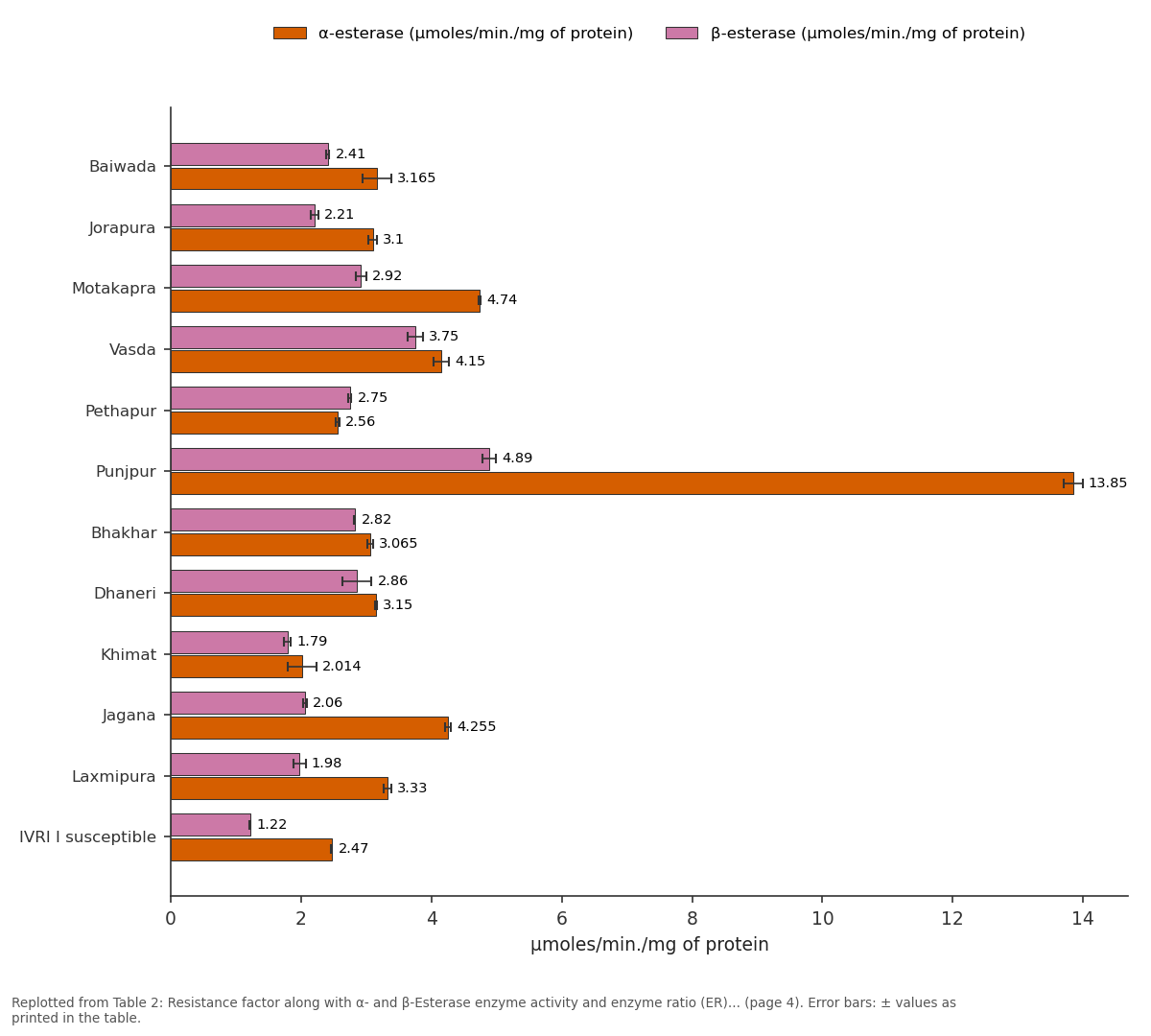
α-esterase (µmoles/min./mg of protein) and β-esterase (µmoles/min./mg of protein): Baiwada vs Jorapura vs Motakapra vs Vasda vs Pethapur
Replotted from Table 2 (page 4) of the original paper. Every bar is the paper's own table value.
View source evidence ↗Figures & tables
From the original paper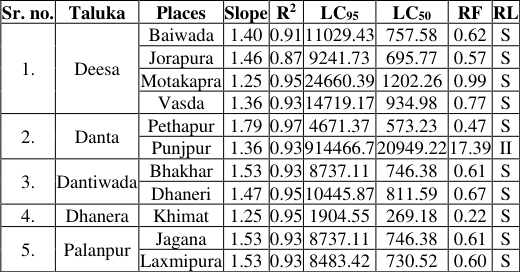 Table 1
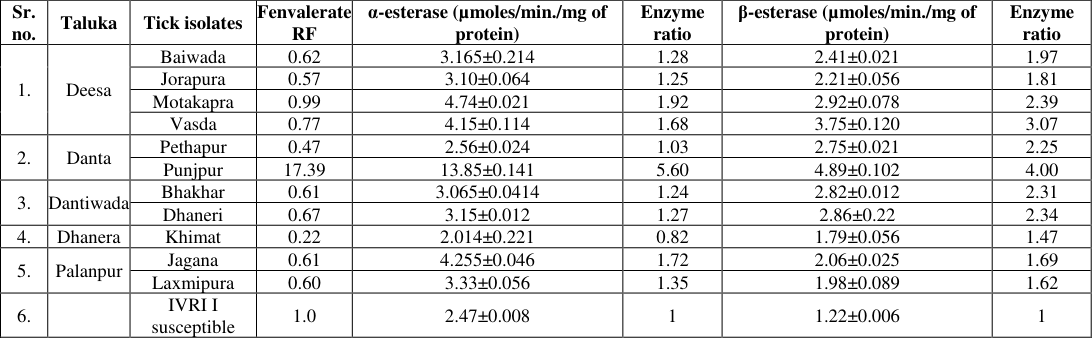 Table 2
Introduction
The warm, humid climate of tropical nations like India makes Rhipicephalus microplus the most common and major tick species there. Although the expenses of tick-borne illnesses have not been thoroughly studied, they are commonly estimated to be around 2000 crore rupees per year in India (Minjauw & McLeod, 2003) [1] . In the Gujarat plains and hills agroclimatic zone, the westernmost subtropical region of the Indian subcontinent, R. microplus is the most often found tick species to infest cattle (Ghosh et al., 2007) [8] . Chemical control has been the most popular method of managing tick infestations; however, repeated application of these chemicals leads to the development of resistance in the ticks, and the selection of resistant ticks is thought to be the primary obstacle to the success of pest and vector management programmes (Shyma et al., 2013) [25] . Many non-organophosphate pesticide classes have been created; these are safe for the environment, effective against arthropod pests, and, in comparison to organophosphate (OP) compounds, relatively less hazardous to mammals and other non-target animals. According to Graf et al. (2004) [11] , the use of these chemical acaricides has a limited ability to reduce tick infestations and is often associated with major side effects, such as the growth of resistant ticks, contamination of the environment, and pesticide residues in milk, meat, and dairy products. Among these insecticides, the synthetic pyrethroids flumethrin and fenvalerate are commercially available and are currently the primary acaricides used to control ticks in India (Mathivathani et al., 2011; Sharma et al., 2012) [16,22] . Several field strains have reportedly grown resistant to pyrethroids to differing degrees (Andreotti et al [26,27] . With all of this in mind, determining the level of resistance to widely used acaricides in the region that significantly contributes to the nation's livestock wealth and livestock products was extremely difficult.
Materials and Methods
Materials and Methods
Collection and preparation of ticks
Ticks were gathered from several talukas in Gujarat's Banaskantha district. For the collection of the ticks, both organised and disorganised farms were used. These districts' animal farms have certain local cattle and buffalo breeds in addition to cross-bred livestock. Animals in small, unorganised farms are mostly reared by farmers in villages and are allowed to graze freely, while organised farms adopt a zero grazing regime. Using forceps, ticks were removed without causing any damage to their mouth parts. In the Banaskantha district, ticks were gathered from the talukas of Deesa, Danta, Dantiwada, Dhanera, and Palanpur. Adult female ticks that were fully engorged were gathered from the bodies of sick animals as well as from cracks and crevices around the cow shed. A small number of male ticks were collected as well for identification. Ticks were collected between October 2022 to May 2023. The mature ticks were collected and placed in muslin cloth-covered, clean vials to facilitate moisture and air exchange. These vials were then transported to the Department of Veterinary Parasitology, College of Veterinary Science and Animal Husbandry at Kamdhenu University, Sardarkrushinagar. Two batches of ticks are separated-one for the adult immersion test and the other for the biochemical assay-after they are collected from the various locations.
Acaricides
Fenvelarate and flumethrin, two technical-grade drugs, were used to identify acaricide resistance. Technical grade Fenvelarate (99.3%) and Flumethrin (96.1%) from Sigma Aldrich were utilised to prepare stock solutions in acetone and methanol, respectively, and were then kept at 4o C. Flumethrin (80 ppm, 100 ppm, 200 ppm, 400 ppm, 800 ppm) and Fenvelarate (100 ppm, 200 ppm, 400 ppm, 800 ppm, 1600 ppm) stock solutions were produced in distilled water as a diluent for the bioassay.
Adult immersion test
Engorged female ticks on arrival in the laboratory were washed in tap water and then dried on an absorbent paper properly. The Adult Immersion Test (AIT) was carried out with only slight modifications to the technique outlined by Drummond et al. (1973) [6] . The pre-weighed ticks were submerged in 10 millilitres of various chemical acaricide concentrations-80, 100, 200, 400, and 800 parts per millilitre of flumethrin and 100, 200, 400, 800, and 1600 parts per millilitre of fenvelarate-for two minutes in a 25 millilitre beaker with mild stirring. The medium in the control group was distilled water. Subsequently, the ticks were placed on petri plates covered with Whatman filter paper number 1. Every petri plate containing treated ticks was kept at room temperature for a full day. After 24 hours, the ticks were moved to glass vials with muslin cloth covers. They were then kept in desiccators with relative humidity values ranging from 75 to 85% and placed in a BOD incubator at 28 °C. Each replica (n = 15) contained five ticks, and each concentration was utilised three times. For a maximum of fifteen days, the oviposition and mortality of these ticks were monitored. Egg mass was tracked in a BOD incubator using the same incubation parameters for the next fifteen days. The weight of the treated ticks' eggs and the percentage of adult tick mortality were recorded in comparison to the control. The following formulas were used to calculate the index of egg laying and the percentage of fecundity inhibition, according to Gonçalves et al. (2007) [10] . The proportion of hatched eggs was calculated visually after the eggs were incubated under the identical conditions. To calculate dose dependent response the following parameters were recorded: (a) Mortality: Engorged females that oviposited were considered as live and females that did not oviposit were considered as dead. (b) Egg masses on day 14 post AIT
Biochemical Assay (Esterase assay) 2.4.1 Sample preparation
200 μl of ice-cold distilled water was used to homogenise precounted deep freeze larvae kept at -20 °C in a mortar and pestle that had been previously chilled. For every strain, the esterase enzyme activity profiles were computed with an equivalent number of 12-to 14-day-old, unfed larvae. The suggested microplate enzyme assay was performed with a few minor modifications. Twenty larvae each tick, stored at a temperature of -20 °C, were mixed and homogenised in 200 μl of distilled water. The mixture was centrifuged at 5000 rpm for 15 minutes at 4 °C, and the supernatant was then collected.
Titration of esterase
The α-and β-NA 30 mM stock solutions were prepared in acetone and stored separately at 4° C in bottles with tight stoppers. A working solution of α-NA and β-NA was prepared by mixing 120 μl of 30 mM α-NA and β-NA with 12 ml of 0.02 M phosphate buffer (pH 7.2). To make a fresh quick blue stain solution, 0.023 g of fast blue was combined with 2.25 ml of distilled water and 5.25 ml of 5% SDS in 0.1 M sodium phosphate buffer pH 7. 200 μl of the α-NA or β-NA working solution and 20 μl of the homogenate were added in duplicate to each of the adjacent wells of a 96-well microtitre plate. 20 μl of distilled water were added to the tick homogenate in the control blank wells. The reaction mixtures were allowed to sit at room temperature for half an hour. After adding 50 μl of fast blue solution to each well, the plates were allowed to change colour for five minutes at room temperature. The absorbance was then measured in an ELISA reader at 570 nm. The resulting optical densities (OD) were compared with comparable standard curves of known product concentrations in order to translate the absorbance to product (α or β naphthol) concentrations. The absorbance readings from the samples were converted to nanomoles of α-and βnaphthol using the relevant reference curves. The amount of time that the substrate and homogenate were incubated before the stain was added divided by the naphthol production values. The protein levels in grammes for 20 microliters of homogenate were calculated using a protein standard curve. The protein value was split again and then multiplied by 1000 in the computation of the amount of naphthol produced per minute that was previously indicated. Esterase activity was measured in micromoles of product generated per minute per milligramme of protein (Hemingway, 1998) [13] .
Estimation of total protein of tick larvae
The total protein content of the homogenate of larvae was determined using a 96-well plate approach and the standard Bradford Protein assay procedure (Bradford, 1976) [3] . A standard curve was produced using a BSA (1 mg/ml) stock solution that was serially diluted. Two hundred microliters of a Bradford reagent 1x solution were mixed with ten microliters of BSA. The OD at 595 nm was recorded using an ELISA reader following a 10-minute incubation period at room temperature. A standard curve was generated using a linear regression analysis of the data. 200 μl of Bradford reagent was combined with tick larvae homogenate, incubated for 10 minutes, and the optical density (OD) was recorded. Utilising the BSA standard curve, the homogenate's protein content was determined.
Visual observation of the assay
Individuals with non-elevated levels of esterase activity showed pale blue or pink colour with α-NA or β-NA respectively. Individuals with elevated esterase activity showed an intense blue/black or pink/red colour with α-NA or β-NA, respectively.
Statistical analysis
The LC50 was estimated from the dose response curves and compared to a susceptible reference strain. Resistance factor were calculated relative to the susceptible reference strain. LC50 value of flumethrin and fenvelarate against R. microplus was calculated by regression curve of probit mortality plotted against values of log acaricide concentrations by log dosage probit mortality analysis (Finney, 1971) [7] . Resistance factors (RF) for field tick isolates were worked out by the quotient between LC50 of field isolates and LC50 reference of susceptible line against flumethrin and fenvelarate. On the basis of RF, the resistance status in the field population of R. microplus were classified as susceptible (RF ≤ 1.4), level I resistant (RF = 1.5-5.0), level II resistant (RF = 5.1-25.0), level III resistant (RF 26-40) and level IV resistance (RF ≥ 41) (Shyma et al., 2015) [24] .
Results
Results
Adult Immersion Test (AIT) of R. microplus against fenvelarate
All tick isolates were tested for dose-dependent mortality against varying concentrations of fenvalerate. To ascertain the LC50 and LC95 via log dose probit mortality analysis, drug concentration logs were plotted against probit mortality. Table 3.1 displays the dose-dependent mortality results of R. microplus tick populations against fenvalerate in the various study locations. The resistant factor was computed by comparing the LC50 values of susceptible IVRI-I strain of R. microplus, which is not exposed to any acaricides, with those of field isolates. The LC50 values obtained from data published by Sharma et al. (2012) [22] and Shyma et al. (2013) [25] were applied to R. microplus sensitive strains against fenvalerate and flumethrin. Tick populations from Punjpur village of Danta taluka with level Ⅱ resistance with resistant factor 17.39. Tick population from Baiwada, Jorapura, Motakpra and Vasda villages of Deesa taluka, Pethapur village of Danta taluka, Bhakhar and Dhaneri villages of Dantiwada taluka, Khimat village of Dhanera taluka, Jagana and Laxmipura villages of Palanpur taluka were found susceptible to fenvalerate.
Adult Immersion Test (AIT) of R. microplus against flumethrin
The LC50 and LC95 of Baiwada and Pethapur were calculated as 1366.93 and 22799.34, respectively. The LC50 and LC95 of Jorapura, Motakapra, Bhakhar, Dhaneri, Jagana and Laxmipura were calculated as 393.76 and 3727.59, respectively. Tick Population from Vasda villages of Deesa taluka, Punjpur village of Danta taluka, Khimat village of Dhanera taluka with 100% mortality of R. microplus ticks against flumethin itindicated that the flumethrin is susceptible in research area.
Spectrophotometric interpretation of the assay
The mean activities of α-and βesterase enzyme in tick isolates collected from Banaskantha district of Gujarat were determined from the naphthol standard curves. The results of α-and βesterase activities were summarized in Table 2. The α-and βesterase enzyme activity in IVRI -I reference ticks were reported as 2.47±0.008 and 1.22±0.006 nmoles/min/mg of protein, respectively (Ghosh et al., 2017) [9] . This value was considered as the base line activity of esterase enzyme and used for comparing field resistant ticks to determine the enzyme ratio. The αand βesterase enzyme activity in field susceptible ticks were recorded in the range of 2.014 to 13.85 μmole/min/mg of protein and 1.79 to 4.89 μmole/min/mg of protein, respectively (Table 2). Tick population from Punjpur village of Danta taluka exhibited the highest α-esterase and βesterase activity i.e., 13.85 μmole/min/mg of protein and 4.89 μmole/min/mg of protein respectively, amongst all the isolates assayed. The αand βesterase activity of the ticks having high RF factor were significantly higher than susceptible isolates. The ratio of mean activities of each enzyme of the resistant populations to those of susceptible ones (enzyme ratio -ER) are also presented in Table 2. The α-esterase enzyme activity was elevated up to 5.60 fold in the resistant isolates as compared to the susceptible isolates. The βesterase enzyme activity was elevated up to 4.00 fold in the resistant isolates. A significant elevated levels of both α-esterase and β -esterase were detected in tick samples collected from all nine isolates which were resistant to fenvalerate.
| Sr. no. | Taluka | Tick isolates | Fenvalerate RF | α-esterase (µmoles/min./mg of protein) | Enzyme ratio | β-esterase (µmoles/min./mg of protein) | Enzyme ratio |
|---|---|---|---|---|---|---|---|
| 1. | Deesa | Baiwada | 0.62 | 3.165±0.214 | 1.28 | 2.41±0.021 | 1.97 |
| Jorapura | 0.57 | 3.10±0.064 | 1.25 | 2.21±0.056 | 1.81 | ||
| Motakapra | 0.99 | 4.74±0.021 | 1.92 | 2.92±0.078 | 2.39 | ||
| Vasda | 0.77 | 4.15±0.114 | 1.68 | 3.75±0.120 | 3.07 | ||
| 2. | Danta | Pethapur | 0.47 | 2.56±0.024 | 1.03 | 2.75±0.021 | 2.25 |
| Punjpur | 17.39 | 13.85±0.141 | 5.60 | 4.89±0.102 | 4.00 | ||
| 3. | Dantiwada | Bhakhar | 0.61 | 3.065±0.0414 | 1.24 | 2.82±0.012 | 2.31 |
| Dhaneri | 0.67 | 3.15±0.012 | 1.27 | 2.86±0.22 | 2.34 | ||
| 4. | Dhanera | Khimat | 0.22 | 2.014±0.221 | 0.82 | 1.79±0.056 | 1.47 |
| 5. | Palanpur | Jagana | 0.61 | 4.255±0.046 | 1.72 | 2.06±0.025 | 1.69 |
| Laxmipura | 0.60 | 3.33±0.056 | 1.35 | 1.98±0.089 | 1.62 | ||
| 6. | IVRI I susceptible | 1.0 | 2.47±0.008 | 1 | 1.22±0.006 | 1 |
Table text extracted from the original PDF; superscript letters are shown inline. The original table image is below.
View original table image
Discussions
In the present study, RF was high (Punjpur village of Danta taluka) having α-esterase and β-esterase were 13.85±0.141 and 4.89±0.102 μmoles/min./mg, respectively which indicated RF correlate with the enzyme activity and also in some villages had the RF was low but enzyme activity was high. This may be due to present strain may be treated with other group of synthetic pyrethroids. Esterase based resistance has been demonstrated to be one of the mechanisms for SPs in R. microplus. However, the specific mechanism through which resistance is conferred has not been suitably elucidated. Due to its delayed entry into the Indian market, flumethrin appears to be somewhat effective against R. microplus. The ticks' flumethrin resistance factor could not be ascertained due to incomplete data on the reference tick line. On the other hand, family resistance-in which ticks concurrently acquire resistance to several substances within the group-is the usual description of tick resistance to synthetic pyrethroids (Miller, 1988 [18] . For other countries, however, data on reference tick lines for flumethrin were available. According to Kumar et al.
(2015) [15] , monitoring the level of resistance in ticks requires a country-specific discriminating concentration for different acaricides because a number of factors, including geographic location, climate, farmers' economic status, acaricide application dose and frequency, and animal breed, can lead to the development of resistance.
The study was carried out in response to reports of treatment failure in North Gujarat and Kutch, which led researchers to look for safer alternatives to chemical acaricides like flumethrin and fenvalerate. There have been concerns expressed regarding the indiscriminate use of these pesticides resulting in tick populations developing resistance, especially to synthetic pyrethroids like fenvalerate, which could jeopardize their effectiveness (Shyma et al., 2014) [23] . [22,2,5,15,17,4] . The findings indicated the inefficiency of the present dosages used in the field and suggested that larger concentrations of fenvalerate and flumethrin may be needed to produce considerable mortality. Compared to analytical grade acaricides, the study's use of commercially available acaricides allowed for a more accurate evaluation of their efficacy (Haque et al., 2014) [12] . The necessity for better tick control procedures and the prudent application of acaricides is highlighted by the development of resistance in R. microplus to chemical acaricides. In order to handle this new concern, it is imperative that resistance be tracked and that prudent acaricide use be encouraged. Herbal acaricides have demonstrated potential in lowering tick resistance to chemical acaricides and managing tick populations. Tick populations can be prevented from developing resistance by implementing integrated tick management techniques, including as rotational grazing, pasture management, and targeted acaricide application. This multifaceted strategy encourages sustainable livestock management practices in addition to helping to reduce tick infestations (Singh et al., 2014) [28] .
Conclusion
The study conducted in Banaskantha district of Gujarat highlighted the presence of varying levels of resistance in Rhipicephalus microplus tick populations against fenvalerate and flumethrin. The resistance factor (RF), as well as the elevated levels of α-and βesterase enzyme activities in resistant isolates, indicated the possible mechanisms behind the development of resistance. It is crucial to monitor resistance levels in tick populations to ensure effective tick control strategies and to prevent the spread of resistance to other acaricides. Integrated tick management approaches, including the use of herbal acaricides and sustainable livestock management practices, can play a significant role in managing tick populations and reducing the development of resistance. Continued research and monitoring efforts are needed to address the challenges posed by tick resistance and to promote the responsible use of acaricides in tick control programmes.
Figures and tables from the paper
| Sr. no. | Taluka | Places | Slope | R2 | LC95 | LC50 | RF | RL |
|---|---|---|---|---|---|---|---|---|
| 1. | Deesa | Baiwada | 1.40 | 0.91 | 11029.43 | 757.58 | 0.62 | S |
| Jorapura | 1.46 | 0.87 | 9241.73 | 695.77 | 0.57 | S | ||
| Motakapra | 1.25 | 0.95 | 24660.39 | 1202.26 | 0.99 | S | ||
| Vasda | 1.36 | 0.93 | 14719.17 | 934.98 | 0.77 | S | ||
| 2. | Danta | Pethapur | 1.79 | 0.97 | 4671.37 | 573.23 | 0.47 | S |
| Punjpur | 1.36 | 0.93 | 914466.7 | 20949.22 | 17.39 | II | ||
| 3. | Dantiwada | Bhakhar | 1.53 | 0.93 | 8737.11 | 746.38 | 0.61 | S |
| Dhaneri | 1.47 | 0.95 | 10445.87 | 811.59 | 0.67 | S | ||
| 4. | Dhanera | Khimat | 1.25 | 0.95 | 1904.55 | 269.18 | 0.22 | S |
| 5. | Palanpur | Jagana | 1.53 | 0.93 | 8737.11 | 746.38 | 0.61 | S |
| Laxmipura | 1.53 | 0.93 | 8483.42 | 730.52 | 0.60 | S |
Table text extracted from the original PDF; superscript letters are shown inline. The original table image is below.
View original table image
References
27 in the original paper- Ahanger RR, Godara R, Katoch R, Yadav A, Bhutyal ADS, Katoch M, et al. Deltamethrin resistance in field populations of Rhipicephalus (Boophilus) microplus (Acari: Ixodidae) in Jammu and Kashmir, India. Exp Appl Acarol. 2015;67(3):467-475. [https://doi.org/10.1007/s10493-015-9960-x]
- Andreotti R, Guerrero FD, Soares MA, Barros JC, Miller RJ, Léon APD. Acaricide resistance of Rhipicephalus (Boophilus) microplus in state of Mato Grosso do Sul, Brazil. Braz J Vet Parasitol. 2011;20:127-133. [https://doi.org/10.1590/S1984-29612011000200007]
- Bradford MM. A rapid and sensitive method for the quantitation of microgram quantities of protein utilizing the principle of protein-dye binding. Anal Biochem. 1976;72(1-2):248-254. [https://doi.org/10.1016/00032697(76)90527-3]
- Camillo G, Vogel FF, Sangioni LA, Cadore GC, Ferrari R. In vitro evaluation of acaricides efficiency to bovine's ticks of Rio Grande do Sul State, Brazil. Ciência Rural. 2009;39(2):490-496.
- Castro-Janer E, Rifran L, González P, Piaggio J, Gil A, Schumaker TTS. Rhipicephalus (Boophilus) microplus (Acari: Ixodidae) resistance to fipronil in Uruguay evaluated by in vitro bioassays. Vet Parasitol. 2010;169(1-2):172-177.
- Drummond REA, Ernst SE, Trevino JL, Gladney WJ, Graham OH. Boophilus annulatus and B. microplus: laboratory tests of insecticides. J Econ Entomol. 1973;66(1):130-133. [https://doi.org/10.1093/jee/66.1.130]
- Finney DJ. Probit analysis. 3rd ed. Cambridge University Press; 1971.
- Ghosh S, Bansal GC, Gupta SC, Ray D, Khan MQ, Irshad H, Shahiduzzaman MD, Seitzer U, Ahmed JS. Status of tick distribution in Bangladesh, India and Pakistan. Parasitol Res. 2007;101(2):207-216. [https://doi.org/10.1007/s00436-007-0684-7]
- Ghosh S, Gupta S, Kumar KA, Sharma AK, Kumar S, Nagar G, Kumar R, Paul S, Fular A, Chigure G, Nandi A. Characterization and establishment of a reference deltamethrin and cypermethrin resistant tick line (IVRIIV) of Rhipicephalus (Boophilus) microplus. Pestic Biochem Physiol. 2017;138:66-70. [https://doi.org/10.1016/j.pestbp.2017.03.002]
- Gonçalves K, Toigo E, Ascoli B, von Poser G, Ribeiro VLS. Effects of solvents and surfactant agents on the female and larvae of cattle tick Boophilus microplus. Parasitol Res. 2007;100(6):1267-1270. [https://doi.org/10.1007/s00436-006-0418-2]
- Graf JF, Gogolewski R, Leach-Bing N, Sabatini GA, Molento MB, Bordin EL, et al. Tick control: an industry point of view. Parasitology. 2004;129(S1):S427-S442. [https://doi.org/10.1017/S0031182004006079]
- Haque M, Singh NK, Rath SS. Effect of various acaricides on hatchability of eggs of Rhipicephalus (Boophilus) microplus. BioMed Res Int. 2014.
- Hemingway J. Techniques to Detect Insecticide Resistance Mechanisms (Field and Laboratory Manual). Document WHO/CDS/CPC/MAL/98.6, World Health Organization, Geneva. 1998.
- Jyoti, Singh NK, Singh H, Rath SS. Malathion resistance in Rhipicephalus (Boophilus) microplus from Ludhiana district, Punjab. J Parasit Dis. 2014;38:343-346. [https://doi.org/10.1007/s12639-013-0322-5]
- Kumar S, Sharma AK, Nagar G, Ghosh S. Determination and establishment of discriminating concentrations of malathion, coumaphos, fenvalerate and fipronil for monitoring acaricide resistance in ticks infesting animals. Ticks Tick-Borne Dis. 2015;6(3):383-387.
- Mathivathani C, Basith SA, Latha BR, Raj GD. In vitro evaluation of synthetic pyrethroid resistance in Rhipicephalus sanguineus ticks of Chennai. J Vet Parasitol. 2011;25(1):56-58.
- Mendes MC, Pereira JR, Prado AP. Sensitivity of Boophilus microplus (Acari: Ixodidae) to pyrethroids and organophosphate in farms in the Vale do Paraíba region, São Paulo, Brazil. Arq Inst Biol. 2022;74:81-85.
- Miller TA. Mechanisms of resistance to pyrethroid insecticides. Parasitol Today. 1988;4(7):S8-S12.
- Nandi A, Singh H, Singh NK. Esterase and glutathione Stransferase levels associated with synthetic pyrethroid resistance in Hyalomma anatolicum and Rhipicephalus microplus ticks from Punjab, India. Exp Appl Acarol. 2015;66(1):141-157. [https://doi.org/10.1007/s10493015-9884-5]
- Nisa F, Godara R, Yadav A, Rafiqi SI, Nazim K, Din OMU. Fenvalerate and diazinon resistance in Rhipicephalus microplus ticks collected from NorthWestern Himalayas, India. J Entomol Zool Stud. 2021;9(1):1083-1087.
- Sharma AK, Kumar R, Kumar S, Nagar G, Singh NK, Rawat SS, Dhakad ML, Rawat AKS, Ray DD, Ghosh S. Deltamethrin and cypermethrin resistance status of Rhipicephalus (Boophilus) microplus collected from six agro-climatic regions of India. Vet Parasitol. 2012;188(34):337-345. [https://doi.org/10.1016/j.vetpar.2012.03.050]
- Shyma KP, Gupta JP, Ghosh S, Patel KK, Singh V. Acaricidal effect of herbal extracts against cattle tick Rhipicephalus (Boophilus) microplus using in vitro studies. Parasitol Res. 2014;113:1919-1926.
- Shyma KP, Gupta JP, Singh V, Patel KK. In vitro detection of acaricidal resistance status of Rhipicephalus (Boophilus) microplus against commercial preparation of deltamethrin, flumethrin, and fipronil from North Gujarat, India. J Parasitol Res. 2015. [https://doi.org/10.1155/2015/506586]
- Shyma KP, Kumar S, Sangwan AK, Sharma AK, Nagar G, Ray DD, Ghosh S. Acaricide resistance status of Rhipicephalus (Boophilus) microplus and Hyalomma anatolicum collected from Haryana. Indian J Anim Sci. 2013;83(6):591-594.
- Singh NK, Rath SS. Esterase mediated resistance against synthetic pyrethroids in field populations of Rhipicephalus (Boophilus) microplus (Acari: Ixodidae) in Punjab districts of India. Vet Parasitol. 2014;204(34):330-338. [https://doi.org/10.1016/j.vetpar.2014.05.035]
- Singh NK, Gelot IS, Bhat SA, Singh H, Singh V. Detection of acaricidal resistance in Hyalomma anatolicum from Banaskantha district, Gujarat. J Parasitic Dis. 2015;39(3):563-566. [https://doi.org/10.1007/s12639-013-0397-z]
- Singh NK, Jyoti, Vemu B, Nandi A, Singh H, Kumar R, Dumka VK. Acaricidal activity of Cymbopogon winterianus, Vitex negundo and Withania somnifera against synthetic pyrethroid resistant Rhipicephalus (Boophilus) microplus. Parasitol Res. 2014;113:341-350.
Cited by 1
From OpenAlex, OpenCitations and reference lists read by Scinovex
- Cattle tick control in India: Current strategies and future directions ↗
Nirbhay K. Singh, Jyoti, Manisha, Harkirat Singh, Srikanta Ghosh · Veterinary Parasitology Regional Studies and Reports · 2026
❝ 1