
Research article · 2024 · Full text
International Journal of Research in AgronomyPopularization of Var.HN-46 (Hagari Navane) under Rainfed conditions of Northern Karnataka
Volume 7(3) · Pages 604–608 · DOI: 10.33545/2618060x.2024.v7.i3h.489 ↗
Research areasAgricultural Economics and PracticesFood Science and Nutritional StudiesPhytochemicals and Medicinal Plants
Abstract
Author-writtenThe front line demonstration on Popularization of Var.HN-46 (Hagari Navane) under Rainfed conditions of Northern Karnataka was conducted in 10 farmers’ fields during kharif season during the year 2020-21 and 2021-22 at Muranpur village of Raichur taluk. The results of the front line demonstration (FLD) indicated that the new Foxtail millet Var. HN-46 recorded significant increase in yield upto 33.30 per cent with higher average grain yield of 21.10 q/ha, straw yield of 21.25 q/ha and Harvest index was 1.35 percent due to higher growth and yield prameters such as number of tillers (3.91 tillers plant-1) and panicle length (21.10 cm), with respect to local variety HMT-100-1 number of tillers (2.92 tillers plant-1) and panicle length (16.08 cm), grain yield 16.60 q ha-1, straw yield 18.71 q/ha and Harvest index was 0.97 %. With respect to economics, the average cost of cultivation was 17638 Rs / ha with Gross returns of 60982 Rs / ha, net returns 43344 Rs / ha and the benefit cost ratio was 3.52 where as the average cost of cultivation of the check fields were 18306 Rs / ha with Gross returns of 45609 Rs / ha and net returns 27303 Rs / ha respectively. On an average the percent dead heart incidence observed lesser at demonstrated fields was 2.12 when compared to check fields recorded higher pest incidence 3.73.
Summary
Source-checkedPlain-language reading of the full paper, prepared with AI and checked against the text. Each point links to the authors' own words.
Why it matters
- Foxtail millet is a nutritious, climate-resilient traditional crop capable of growing in the marginal and rainfed lands of Karnataka, though it remains underutilized. View evidence ↗
- Farming in arid and semi-arid lands is challenging due to harsh climates, low adoption of drought-tolerant varieties, and limited technical knowledge among farmers. View evidence ↗
The question
- The study aimed to popularize the foxtail millet variety HN-46 (Hagari Navane) in Northern Karnataka and demonstrate its ability to increase yields and income for farming families. View evidence ↗
What they did
- Front line demonstrations were conducted in 10 farmers' fields in Muranpur village, Raichur taluk, during the kharif seasons of 2020-21 and 2021-22. View evidence ↗
- Ten farmers were provided with the HN-46 variety as a critical input to implement the demonstrations in their fields. View evidence ↗
- The researchers measured growth parameters (panicle length, number of tillers), yield (grain and straw), and economic factors (cost of cultivation, gross/net yield, and benefit-cost ratio). View evidence ↗
What they found
- Pooled data showed that variety HN-46 significantly outperformed the local variety HMT-100-1, increasing yield by up to 33.30%, with an average grain yield of 21.10 q/ha compared to 16.60 q/ha. View evidence ↗
- HN-46 showed superior growth parameters over HMT-100-1, specifically having more tillers per plant (3.91 vs 2.92) and longer panicles (21.10 cm vs 16.08 cm). View evidence ↗
- The harvest index for HN-46 was higher at 1.35 compared to 0.97 for the local variety HMT-100-1. View evidence ↗
- Pest incidence was lower in the demonstrated HN-46 fields, with a dead heart incidence of 2.12% compared to 3.73% in the check fields. View evidence ↗
- On a pooled mean basis, HN-46 provided higher economic returns than HMT-100-1, with gross returns of 60,982 Rs/ha and a benefit-cost ratio of 3.52, versus 45,609 Rs/ha and 2.52 for the local variety. View evidence ↗
- The cost of cultivation was lower for HN-46 (17,638 Rs/ha) than for the local variety HMT-100-1 (18,306 Rs/ha) based on pooled means. View evidence ↗
What it means
- The authors conclude that using HN-46 with improved practices increases both grain and fodder yields per unit area, thereby enhancing farmer income. View evidence ↗
- The authors noted a gap between demonstrated yields and actual farmer plot yields, suggesting a need for better dissemination of location-specific technologies in the Raichur District. View evidence ↗
Visual summary
2 visualsIllustrations explain the paper; charts are replotted from the paper's own table values.
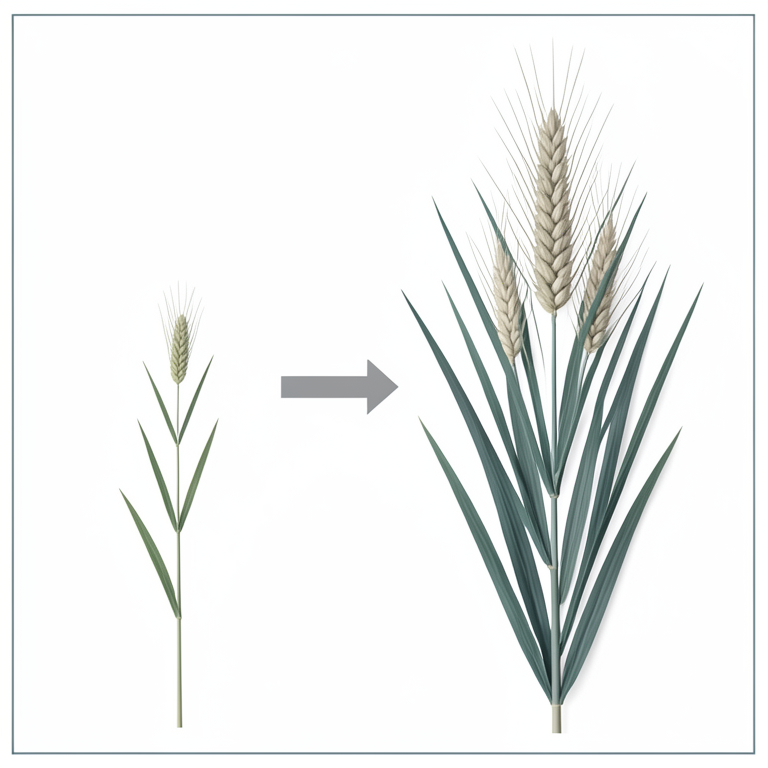
Comparison of HN-46 vs Local Variety
AI-generated conceptual illustration (Foxtail millet plants (Setaria italica)). It explains the idea and does not show study data.
View source evidence ↗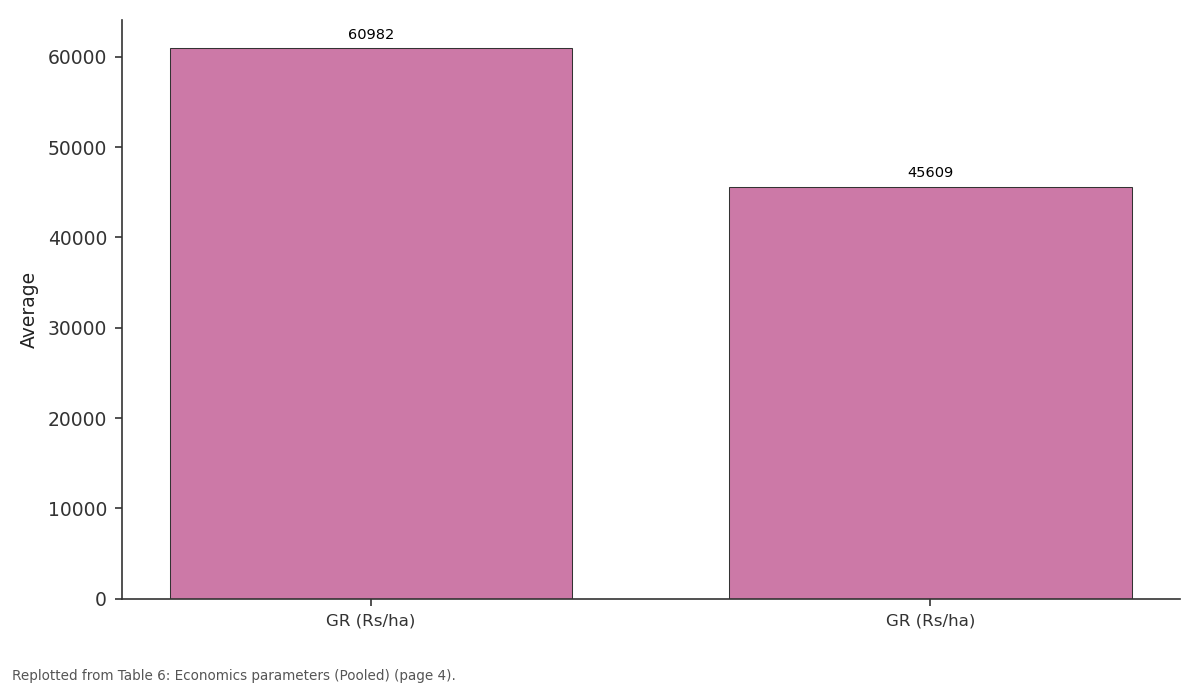
Average: GR (Rs/ha) vs GR (Rs/ha)
Replotted from Table 6 (page 4) of the original paper. Every bar is the paper's own table value.
View source evidence ↗Figures & tables
From the original paper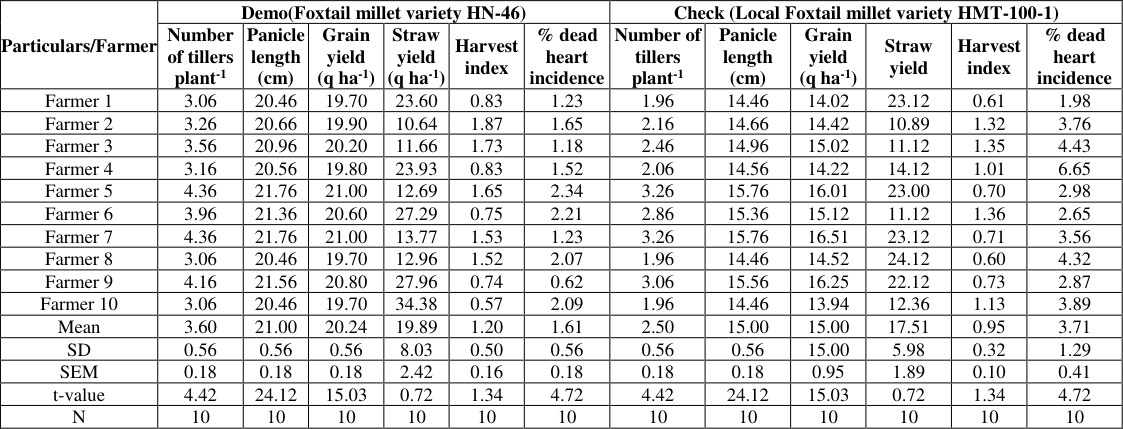 Table 1
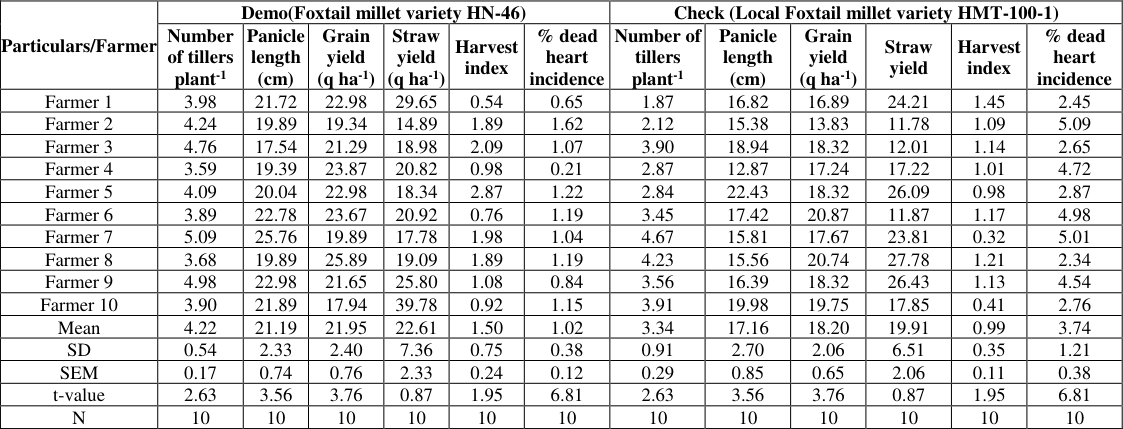 Table 2
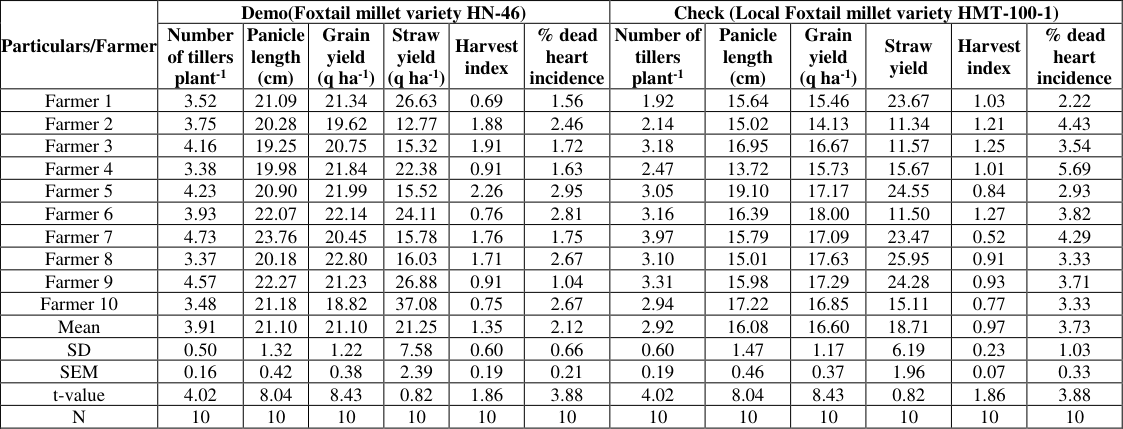 Table 3
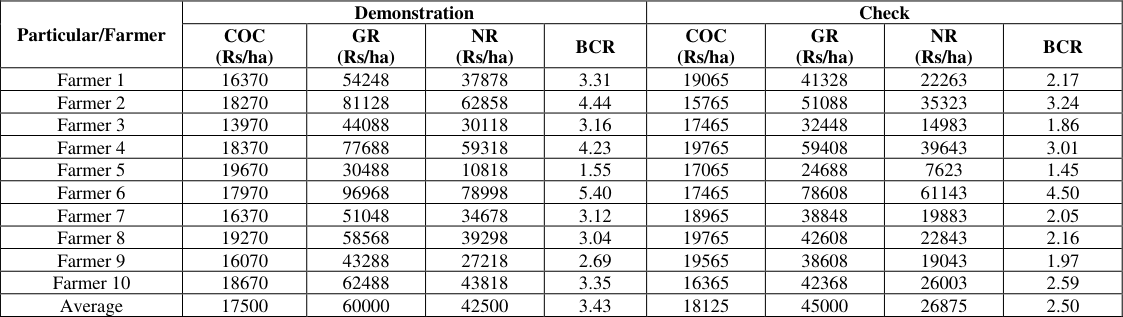 Table 4
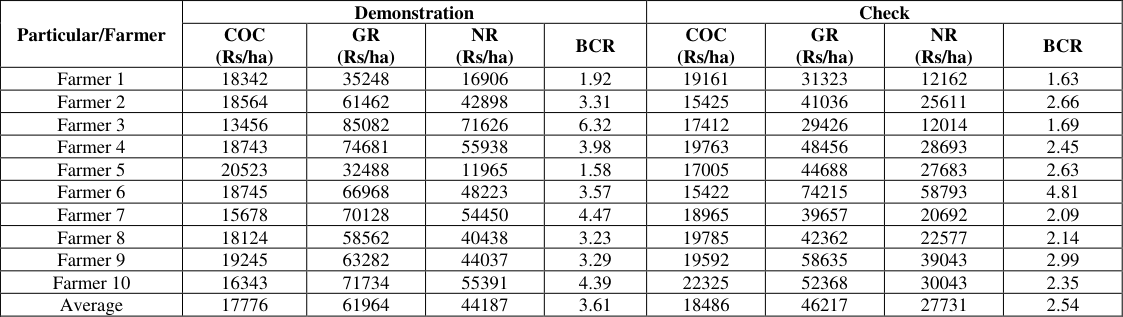 Table 5
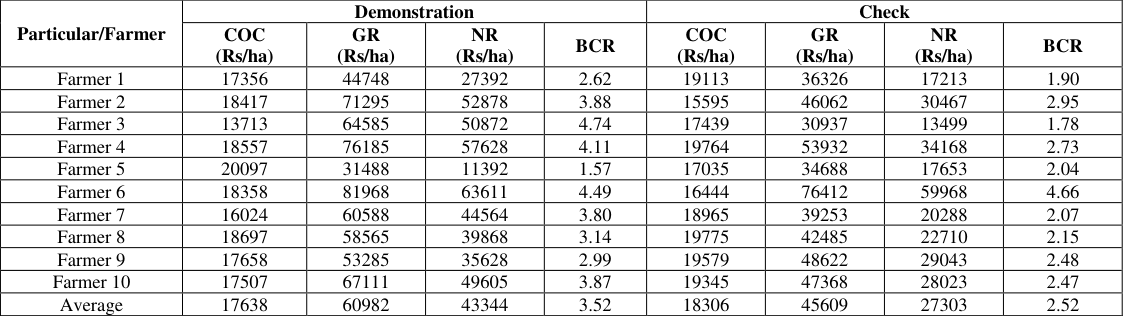 Table 6
Introduction
Foxtail millet (Setaria italica (L.) Beauv) is an underutilized and neglected traditional crop that is hardy, climate resilent, highly nutritious which can grow well in rainfed and marginal lands of Karnataka. It is a self-pollinating crop with chromosome number, 2n = 18, classified under the family Poaceae. Millets are known for nutri-rich content and having characteristics like drought tolerance, photo-insensitivity and resilient to climate change. It is a matter of pride for all of us, that millets have now been recognized as superfood. Millets have been called "Nutri grains" since they are rich in micro nutrients like minerals and B complex vitamins. Small millets have gained their attention owing to their inherent capacity of early maturity, higher yields due to C4 plant type, capacity to yield even in poor soil under low rainfall and poor management conditions; hence they are popularly known as "climate resilient" crops in Indian agriculture. Small millets provide much needed food and fodder security of the nation. Among minor millets, foxtail millet have low glycemic index. Consumption of these grains has demonstrated positive health benefits among the diabetics and they are known as "wonder grains". Foxtail millet can be planted when it is too late to plant most other crops. It keeps growing at 300 -400 mm annual rainfall also in semi arid areas. In Kharif season millets are one of the cereals besides the major wheat, rice, and maize. Millets are major food sources for millions of people, especially those who live in hot and humid areas of the world. They are grown mostly in marginal areas under agricultural conditions in which major cereals fail to give substantial yields. Millets are important foods in many under developed countries because of their ability to grow under adverse weather conditions. Crop farming in the Arid and Semi-arid Lands (ASALs) is a big challenge due to factors such as the harsh climatic conditions experienced there, low adoption of improved drought tolerant crop varieties and limited farmer's knowledge on appropriate agricultural technologies. These factors contribute significantly to low food production, which leads to food insecurity persistently experienced in the ASALs, which are home to about a third of the world's population. Hence it was felt to know the potentiality of Var.HN-46 (Hagari Navane) wherein considerable improvement in yield of foxtail millet could be noticed. Therefore, the demonstration of Popularization of Var. HN-46 (Hagari Navane) under Rainfed conditions of Northern Karnataka was undertaken in the farmer's fields with the following major two objective: • Popularization of Var.HN-46 (Hagari Navane) under rainfed conditions of Northern Karnataka by conducting front line demonstrations. • To demonstrate substantial increase in yield and income of the farming families.
Methodology
Ten Farmers from Muranpur village were selected to implement demonstrations in their fields. Ten demonstrations were conducted wherein each farmer was given variety HN-46 as critical input so as to implement the demonstrations in their respective fields. Critical observations viz., panicle length, number of tillers, grain yield, straw yield and per cent increase in yield was worked out, and economic parameters like cost of cultivation, gross and net yield and B:C ratio were taken from each demonstrated farmers field. Farmers' feedback was also taken at the end of the crop period.
Results and Discussions
The field demonstration results of year 2020-21 revealed that significant differences were recorded between demo and check.
Between two varieties, HN-46 (Hagari Navane) recorded significantly higher number of tillers plant -1 (3.60), panicle length (21 cm), grain yield (20.24), straw yield (19.89) when compared to local variety HMT-100-1 which recorded number of tillers plant -1 (2.50), panicle length (15.00 cm), grain yield (15 q ha -1 ), straw yield (17.51 q ha -1 ).
The demonstrated variety recorded the highest harvest index (1.20) whereas HMT-100-1 recorded the lowest harvest index (0.95) (Table 1). Difference in yields among the varieties could be attributed to their genetic potentiality to utilize and translocate photosynthates from source to sink. The results were in conformity with the findings of Saini and Negi (1996) [3] , Munirathnam et al. (2006) [2] . Significant differences were recorded between the demo and check varieties of foxtail millet. The results of year 2021-22 revealed that among the two different varieties, HN-46 recorded significantly higher growth and yield parameters viz., tillers plant -1 (4.22), panicle length (21.19 cm), grain yield (18.20), straw yield (19.91) and percent harvest index (1.50) when compared to local variety (HMT-100-1) which recorded less number of tillersplant -1 (3.34), panicle length (17.16 cm), grain yield (15 q ha -1 ) and straw yield (17.51 q ha -1 ).
| Particulars/Farmer | Demo(Foxtail millet variety HN-46) | — | — | — | — | — | Check (Local Foxtail millet variety HMT-100-1) | — | — | — | — | — |
|---|---|---|---|---|---|---|---|---|---|---|---|---|
| Number of tillers plant-1 | Panicle length (cm) | Grain yield (q ha-1) | Straw yield (q ha-1) | Harvest index | % dead heart incidence | Number of tillers plant-1 | Panicle length (cm) | Grain yield (q ha-1) | Straw yield | Harvest index | % dead heart incidence | |
| Farmer 1 | 3.06 | 20.46 | 19.70 | 23.60 | 0.83 | 1.23 | 1.96 | 14.46 | 14.02 | 23.12 | 0.61 | 1.98 |
| Farmer 2 | 3.26 | 20.66 | 19.90 | 10.64 | 1.87 | 1.65 | 2.16 | 14.66 | 14.42 | 10.89 | 1.32 | 3.76 |
| Farmer 3 | 3.56 | 20.96 | 20.20 | 11.66 | 1.73 | 1.18 | 2.46 | 14.96 | 15.02 | 11.12 | 1.35 | 4.43 |
| Farmer 4 | 3.16 | 20.56 | 19.80 | 23.93 | 0.83 | 1.52 | 2.06 | 14.56 | 14.22 | 14.12 | 1.01 | 6.65 |
| Farmer 5 | 4.36 | 21.76 | 21.00 | 12.69 | 1.65 | 2.34 | 3.26 | 15.76 | 16.01 | 23.00 | 0.70 | 2.98 |
| Farmer 6 | 3.96 | 21.36 | 20.60 | 27.29 | 0.75 | 2.21 | 2.86 | 15.36 | 15.12 | 11.12 | 1.36 | 2.65 |
| Farmer 7 | 4.36 | 21.76 | 21.00 | 13.77 | 1.53 | 1.23 | 3.26 | 15.76 | 16.51 | 23.12 | 0.71 | 3.56 |
| Farmer 8 | 3.06 | 20.46 | 19.70 | 12.96 | 1.52 | 2.07 | 1.96 | 14.46 | 14.52 | 24.12 | 0.60 | 4.32 |
| Farmer 9 | 4.16 | 21.56 | 20.80 | 27.96 | 0.74 | 0.62 | 3.06 | 15.56 | 16.25 | 22.12 | 0.73 | 2.87 |
| Farmer 10 | 3.06 | 20.46 | 19.70 | 34.38 | 0.57 | 2.09 | 1.96 | 14.46 | 13.94 | 12.36 | 1.13 | 3.89 |
| Mean | 3.60 | 21.00 | 20.24 | 19.89 | 1.20 | 1.61 | 2.50 | 15.00 | 15.00 | 17.51 | 0.95 | 3.71 |
| SD | 0.56 | 0.56 | 0.56 | 8.03 | 0.50 | 0.56 | 0.56 | 0.56 | 15.00 | 5.98 | 0.32 | 1.29 |
| SEM | 0.18 | 0.18 | 0.18 | 2.42 | 0.16 | 0.18 | 0.18 | 0.18 | 0.95 | 1.89 | 0.10 | 0.41 |
| t-value | 4.42 | 24.12 | 15.03 | 0.72 | 1.34 | 4.72 | 4.42 | 24.12 | 15.03 | 0.72 | 1.34 | 4.72 |
| N | 10 | 10 | 10 | 10 | 10 | 10 | 10 | 10 | 10 | 10 | 10 | 10 |
Table text extracted from the original PDF; superscript letters are shown inline. The original table image is below.
View original table image
Among the demo and check varieties, the highest harvest index was recorded by HN-46 (Hagari Navane) (1.50) where as HMT-100-1 recorded the lowest harvest index (0.99) (Table 2). Pooled data showed that the variety HN-46 recorded significantly higher number of tillers plant 3). The percent dead heart incidence observed lesser at demonstrated fields was 2.12 when compared to check fields recorded higher pest incidence 3.73.
Economics analysis
Significant variations in grain and straw yields brought about variations in cost of cultivation, gross returns, net returns and BC ratio between demo and check during both the years of demonstration and also in pooled data.
During the year 2020-21 highest gross returns with 60,000 Rs./ha, net returns with 42,500 Rs./ha and 3.43 BC ratio with was obtained for improved HN-46 variety while farmers local variety recorded lower gross returns with 45,000 Rs./ha, net returns with 26,875Rs./ha and 2.50 BC ratio with were observed across the varietiesof foxtail millet (Table 4). The variations between the varieties in the economic returns may be attributed to the variable performance of HN-46 variety in terms of grain yield under improved practices in frontline demonstration. Higher returns and BC ratio under improved practices in frontline demonstration was also reported by Thakur et al., (2017) in finger millet crop, similarly higher net returns and B:C ratio in the FLDs on improved technologies compared to the farmers practices reported by Joshi et al., (2014) [1] in wheat. Between the two varieties, higher cost of cultivation was recorded with the variety HMT-100-1 (18306 Rs. ha -1 ) compared to HN-46 (17638 Rs. ha -1 ) on pooled mean basis. Significant variations in grain and straw yields brought about variations in net returns gross returns and BC ratio between varieties during both the years of study and in pooled data.
| Particular/Farmer | Demonstration | — | — | — | Check | — | — | — |
|---|---|---|---|---|---|---|---|---|
| COC (Rs/ha) | GR (Rs/ha) | NR (Rs/ha) | BCR | COC (Rs/ha) | GR (Rs/ha) | NR (Rs/ha) | BCR | |
| Farmer 1 | 16370 | 54248 | 37878 | 3.31 | 19065 | 41328 | 22263 | 2.17 |
| Farmer 2 | 18270 | 81128 | 62858 | 4.44 | 15765 | 51088 | 35323 | 3.24 |
| Farmer 3 | 13970 | 44088 | 30118 | 3.16 | 17465 | 32448 | 14983 | 1.86 |
| Farmer 4 | 18370 | 77688 | 59318 | 4.23 | 19765 | 59408 | 39643 | 3.01 |
| Farmer 5 | 19670 | 30488 | 10818 | 1.55 | 17065 | 24688 | 7623 | 1.45 |
| Farmer 6 | 17970 | 96968 | 78998 | 5.40 | 17465 | 78608 | 61143 | 4.50 |
| Farmer 7 | 16370 | 51048 | 34678 | 3.12 | 18965 | 38848 | 19883 | 2.05 |
| Farmer 8 | 19270 | 58568 | 39298 | 3.04 | 19765 | 42608 | 22843 | 2.16 |
| Farmer 9 | 16070 | 43288 | 27218 | 2.69 | 19565 | 38608 | 19043 | 1.97 |
| Farmer 10 | 18670 | 62488 | 43818 | 3.35 | 16365 | 42368 | 26003 | 2.59 |
| Average | 17500 | 60000 | 42500 | 3.43 | 18125 | 45000 | 26875 | 2.50 |
Table text extracted from the original PDF; superscript letters are shown inline. The original table image is below.
View original table image
Between the two different varieties, higher gross returns (60982 Rs. ha -1 ), net returns (43344 Rs. ha -1 ) and BC ratio (3.52) was recorded with the variety HN-46 when compared to HMT-100-1 which recorded gross returns (45609 Rs. ha -1 ), net returns (27303 Rs. ha -1 ) and BC ratio (2.52) on pooled mean (Table 5).
| Particular/Farmer | Demonstration | — | — | — | Check | — | — | — |
|---|---|---|---|---|---|---|---|---|
| COC (Rs/ha) | GR (Rs/ha) | NR (Rs/ha) | BCR | COC (Rs/ha) | GR (Rs/ha) | NR (Rs/ha) | BCR | |
| Farmer 1 | 18342 | 35248 | 16906 | 1.92 | 19161 | 31323 | 12162 | 1.63 |
| Farmer 2 | 18564 | 61462 | 42898 | 3.31 | 15425 | 41036 | 25611 | 2.66 |
| Farmer 3 | 13456 | 85082 | 71626 | 6.32 | 17412 | 29426 | 12014 | 1.69 |
| Farmer 4 | 18743 | 74681 | 55938 | 3.98 | 19763 | 48456 | 28693 | 2.45 |
| Farmer 5 | 20523 | 32488 | 11965 | 1.58 | 17005 | 44688 | 27683 | 2.63 |
| Farmer 6 | 18745 | 66968 | 48223 | 3.57 | 15422 | 74215 | 58793 | 4.81 |
| Farmer 7 | 15678 | 70128 | 54450 | 4.47 | 18965 | 39657 | 20692 | 2.09 |
| Farmer 8 | 18124 | 58562 | 40438 | 3.23 | 19785 | 42362 | 22577 | 2.14 |
| Farmer 9 | 19245 | 63282 | 44037 | 3.29 | 19592 | 58635 | 39043 | 2.99 |
| Farmer 10 | 16343 | 71734 | 55391 | 4.39 | 22325 | 52368 | 30043 | 2.35 |
| Average | 17776 | 61964 | 44187 | 3.61 | 18486 | 46217 | 27731 | 2.54 |
Table text extracted from the original PDF; superscript letters are shown inline. The original table image is below.
View original table image
In conclusion, the grain as well as fodder yield under improved practices with HN-46 was recorded higher than the farmers' practices, which not only increased the yield per unit area but also enhanced the farmers' income. We also found a gap between demonstrated yields and farmers plot yields indicating that there is a need of proper dissemination of location specific technologies imbedded with high yielding varieties to improve productivity and profitability of rainfed farming of Raichur District.
Figures and tables from the paper
| Particular/Farmer | Demonstration | — | — | — | Check | — | — | — |
|---|---|---|---|---|---|---|---|---|
| COC (Rs/ha) | GR (Rs/ha) | NR (Rs/ha) | BCR | COC (Rs/ha) | GR (Rs/ha) | NR (Rs/ha) | BCR | |
| Farmer 1 | 17356 | 44748 | 27392 | 2.62 | 19113 | 36326 | 17213 | 1.90 |
| Farmer 2 | 18417 | 71295 | 52878 | 3.88 | 15595 | 46062 | 30467 | 2.95 |
| Farmer 3 | 13713 | 64585 | 50872 | 4.74 | 17439 | 30937 | 13499 | 1.78 |
| Farmer 4 | 18557 | 76185 | 57628 | 4.11 | 19764 | 53932 | 34168 | 2.73 |
| Farmer 5 | 20097 | 31488 | 11392 | 1.57 | 17035 | 34688 | 17653 | 2.04 |
| Farmer 6 | 18358 | 81968 | 63611 | 4.49 | 16444 | 76412 | 59968 | 4.66 |
| Farmer 7 | 16024 | 60588 | 44564 | 3.80 | 18965 | 39253 | 20288 | 2.07 |
| Farmer 8 | 18697 | 58565 | 39868 | 3.14 | 19775 | 42485 | 22710 | 2.15 |
| Farmer 9 | 17658 | 53285 | 35628 | 2.99 | 19579 | 48622 | 29043 | 2.48 |
| Farmer 10 | 17507 | 67111 | 49605 | 3.87 | 19345 | 47368 | 28023 | 2.47 |
| Average | 17638 | 60982 | 43344 | 3.52 | 18306 | 45609 | 27303 | 2.52 |
Table text extracted from the original PDF; superscript letters are shown inline. The original table image is below.
View original table image
References
3 in the original paper- Joshi NS, Bariya MK, Kunjadia BB. Yield gap analysis through front line demonstrations in wheat crop. International Journal of Scientific Research Publications. 2014;4(9):1-3.
- Munirathnam P, Reddy A, Sambasiva, Sawadhkar SM. Evaluation of foxtail millet varieties under low fertility conditions. Agricultural Science Digest. 2006;26(3):197199.
- Thakur AK, Kumar P, Yadav SC. Impact of Front Line Demonstration (FLD) on the Yield and Economics of Small Millet on Bastar District of Chhattisgarh, India. International Journal of Current Microbiology and Applied Sciences. 2017;6(9):1489-1497.