
Research article · 2024 · Full text
International Journal of Horticulture and Food ScienceMarketing strategies for value-added cauliflower products
Volume 6(1) · Pages 45–48 · DOI: 10.33545/26631067.2024.v6.i1a.189 ↗
Research areasBusiness Strategies and InnovationConsumer Packaging Perceptions and Trends
Abstract
Author-writtenIn recent years, cauliflower has emerged from being a simple side dish to a versatile ingredient in the health and wellness food market. This paper explores the marketing strategies crucial for promoting value-added cauliflower products, such as cauliflower rice, pizza bases, and snacks. It delves into consumer behavior, digital marketing trends, and the importance of sustainability and health benefits in influencing purchasing decisions. The aim is to provide a comprehensive overview of effective approaches to market these innovative products, ensuring their success in the competitive food industry.
Summary
Source-checkedPlain-language reading of the full paper, prepared with AI and checked against the text. Each point links to the authors' own words.
Why it matters
- There is a growing demand in the modern food market for products that are health-oriented and provide added value. View evidence ↗
- Cauliflower is a versatile vegetable from the Brassicaceae family valued for its antioxidants, minerals, and vitamins. View evidence ↗
- Value-added products are those processed to improve taste, health benefits, or convenience for the consumer. View evidence ↗
The question
- The study aims to identify and develop effective marketing strategies specifically for value-added cauliflower products. View evidence ↗
What they did
- The authors analyzed consumer behavior, digital marketing trends, and the roles of sustainability and health benefits to determine how to promote products like cauliflower rice, snacks, and pizza bases. View evidence ↗
What they found
- The main target audience consists of health-conscious consumers looking for high-fiber, low-calorie alternatives to traditional staples. View evidence ↗
- Cauliflower-based products serve as low-carb alternatives for consumers with diabetes, gluten intolerance, or those on vegan, paleo, or ketogenic diets. View evidence ↗
- Convenience is a key driver, as busy families and individuals seek healthy food options that are easy and quick to prepare. View evidence ↗
- Consumers concerned with ethics and the environment are attracted to products featuring eco-friendly packaging, minimal processing, and sustainable farming. View evidence ↗
- Although these products usually have a premium price, competitive pricing is necessary to attract consumers who are sensitive to cost. View evidence ↗
- Digital marketing via Facebook, Pinterest, and Instagram is recommended to show product versatility through recipes and user content. View evidence ↗
- Partnering with regional and national grocery chains is a critical strategy for achieving mass-market visibility. View evidence ↗
- Meal kit delivery services are an effective channel for introducing these products to consumers who value convenience and new healthy ingredients. View evidence ↗
What it means
- The authors conclude that market success requires a combined approach of high product quality, strategic distribution, and clever marketing. View evidence ↗
- The authors recommend that brands focus on innovation and consumer-centric strategies to grow within the health and wellness market. View evidence ↗
Visual summary
1 visualsIllustrations explain the paper; they do not show study data.
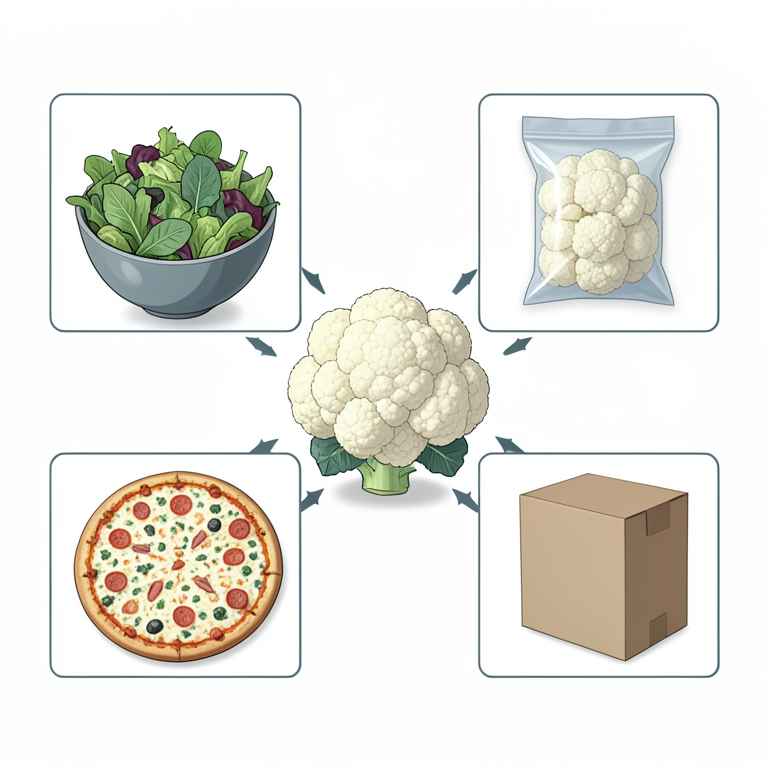
Target Consumer Segments
AI-generated conceptual illustration (cauliflower products). It explains the idea and does not show study data.
View source evidence ↗Introduction
In the contemporary food market, the demand for health-oriented and value-added products is rapidly expanding. This shift in consumer preferences presents a unique opportunity for the agricultural sector, particularly in the cultivation and marketing of cauliflower. Cauliflower, a member of the Brassicaceae family, is not only versatile in its culinary uses but also highly regarded for its nutritional benefits, including being rich in vitamins, minerals, and antioxidants. Despite its nutritional benefits and versatility, the marketing and consumption of cauliflower and its value-added products have not reached their full potential. Value-added products refer to goods that have been processed in a manner that adds value from the consumer's perspective, such as increased convenience, improved health benefits, or enhanced taste. For cauliflower, this includes products like cauliflower rice, pizza crusts, snacks, and even nutritional supplements.
Objective
The primary objective of this study is to explore and develop effective marketing strategies for value-added cauliflower products.
Literature Review
Breeding Cauliflower: A Review highlights the importance of breeding for improving the sustainability of production, enhancing nutritional quality, and reducing waste, which can indirectly contribute to marketing strategies by focusing on these value-added traits (B. Singh, Bijendra Singh, & P. Singh, 2018) [1] . Promising Nutritional and Curative Potentials of Cauliflower Leaves discusses the utilization of cauliflower leaves for value-added products, suggesting that emphasizing the nutritional benefits of the whole plant can be an effective marketing strategy (S. Chakraborty & S. Datta, 2018) [2] . Does food marketing need to make us fat? A review and solutions examines current food marketing practices and offers insights into how marketers can support healthier eating habits, which can be leveraged in marketing value-added cauliflower products by focusing on health and nutrition (Pierre Chandon & B. Wansink, 2012) [4] .
Market Analysis
The market for value-added cauliflower products has experienced significant growth in recent years, driven by shifting consumer preferences towards healthier, plant-based, and convenient food options. This section provides a detailed analysis of the current market trends, consumer behavior, and the competitive landscape, which are essential for developing effective marketing strategies for these products.
Consumer Insights
Health-Conscious Consumers: The primary target market for value-added cauliflower products includes healthconscious consumers seeking nutritious alternatives to traditional staples. This group is particularly interested in products that are low in calories, high in fiber, and offer a good source of vitamins and minerals.
Dietary Restrictions: There's a growing segment of consumers with specific dietary restrictions, such as gluten intolerance, diabetes, or those following ketogenic, vegan, or paleo diets. Value-added cauliflower products, like cauliflower rice or pizza bases, cater to these needs by providing tasty, low-carb alternatives to grain-based products.
Convenience Seekers: Modern lifestyles demand convenience, leading many consumers to look for easy-toprepare yet healthy food options. Cauliflower products that can be quickly turned into meals fit perfectly into the lives of busy individuals and families.
Environmental and Ethical Considerations:
A significant portion of consumers is increasingly concerned about the environmental impact and ethical considerations of their food choices. Products that emphasize sustainable farming practices, minimal processing, and eco-friendly packaging appeal to this demographic.
Competitive Landscape
The market for value-added cauliflower products is competitive, with both established food companies and new entrants vying for market share. Differentiation is key, and companies are focusing on various aspects, including:
Product Quality and Innovation: Brands are continuously improving the taste and texture of cauliflower products to closely mimic their traditional counterparts. Innovations in freezing and packaging technology also help in extending shelf life without compromising quality.
Branding and Marketing: Effective branding and marketing strategies that highlight the health benefits, versatility, and sustainability of cauliflower products are crucial for attracting and retaining customers.
Price Positioning: While value-added cauliflower products typically command a premium price due to their health and convenience benefits, competitive pricing strategies are important in attracting price-sensitive consumers.
Distribution Channels: Expanding into various distribution channels, from supermarkets and health food stores to online platforms, is key for increasing product accessibility and convenience for consumers.
Market Trends Increasing Health Awareness:
The rising awareness of health and wellness is a major driver for the growth of the cauliflower product market. Consumers are actively seeking out food options that support a healthy lifestyle.
Plant-based Eating:
The surge in plant-based eating trends supports the growth of cauliflower-based products as consumers look for plant-based alternatives to meat and dairy products.
Technological Advancements: Advances in food technology are enabling the development of new and improved cauliflower products with better taste, texture, and nutritional profiles.
Sustainability:
The growing consumer demand for sustainable and ethically produced food is pushing companies to adopt more environmentally friendly practices in the production of cauliflower products.
Marketing
Marketing
Sales and Distribution Channels 1. Retail Grocery Chains
Supermarkets and Hypermarkets: Partnering with national and regional grocery chains can provide extensive visibility and accessibility to a wide audience. These retailers cater to the majority of the consumer base, making them a critical channel for mass-market products. Health Food Stores: Specialty health food stores attract health-conscious consumers and those with specific dietary needs, aligning closely with the target market for cauliflower products. Being present in these stores can enhance brand credibility and attract a dedicated customer base.
Online Marketplaces
E-commerce Platforms: Selling through online platforms like Amazon, Walmart, and specialty health food e-retailers can significantly increase product accessibility. The convenience of online shopping and the broad reach of these platforms can drive sales and expand market presence. Direct-to-Consumer (DTC) Sales: Establishing a brand-owned online store allows for direct engagement with consumers, offering a controlled brand experience and higher margins. DTC channels are ideal for building a loyal customer base and gathering valuable consumer insights.
Subscription Services and Meal Kits
Meal Kit Deliveries: Collaboration with meal kit delivery services can introduce value-added cauliflower products to consumers who prioritize convenience and are willing to try new, healthy ingredients. This channel also offers the opportunity for creative recipe inclusion, showcasing the versatility of cauliflower products. Subscription Boxes: Health-focused subscription services can serve as a discovery platform for new customers. Being featured in such boxes can increase product trial and visibility among a targeted audience interested in health and wellness.
Foodservice and Hospitality
Restaurants and Cafés: Partnering with food service operators, especially those focusing on healthy, plantbased, or innovative menus, can enhance brand visibility and encourage consumer trials in a culinary setting. This can also inspire consumers to purchase the products for home use. Hotels and Catering Services: Supplying value-added cauliflower products to hotels and catering services for use in their menus can open up new business-tobusiness (B2B) opportunities, reaching consumers through corporate events, weddings, and other gatherings.
Specialty Stores and Boutiques
Gourmet Shops: Specialty boutiques and gourmet shops that focus on unique, high-quality food products can be an excellent channel for premium cauliflower products. These outlets attract discerning customers looking for exceptional food items not found in conventional grocery stores.
Community Markets and Events
Farmers Markets: Participating in local farmers markets can boost brand visibility and engage directly with the community. These venues allow for direct feedback from consumers and can be a testing ground for new products. Food Festivals and Trade Shows: Attending food festivals and trade shows can increase brand awareness among food enthusiasts and industry professionals, creating networking opportunities and potential retail partnerships.
Strategies for Channel Management
Integrated Marketing: Ensure consistent branding and messaging across all channels. Integrated marketing efforts enhance brand recognition and reinforce the product's value proposition. Channel-specific Promotions: Tailor promotions and marketing strategies to fit the unique characteristics of each channel, maximizing appeal to the specific audience they serve. Supply Chain Efficiency: Manage logistics and supply chains efficiently to meet the demands of different channels, ensuring product freshness and availability, especially important for perishable products like cauliflower.
Conclusion
The strategic marketing and distribution of value-added cauliflower products hold immense potential for brands to tap into the growing demand for healthy, convenient, and plant-based food options. Through innovative product development, targeted marketing strategies, and a diversified approach to sales and distribution channels, brands can effectively reach and engage their target audiences, driving growth and establishing a strong market presence.
Product innovation and diversification ensure that the offerings meet the evolving tastes and dietary preferences of consumers, positioning cauliflower as a versatile and desirable ingredient. Effective branding and positioning, alongside tailored digital marketing efforts, are crucial for creating a strong connection with consumers, emphasizing the health benefits, convenience, and sustainability of cauliflower products. An Omni channel distribution strategy, encompassing both physical retail spaces and online platforms, maximizes product accessibility and convenience for consumers. Partnerships with grocery chains, health food stores, online marketplaces, and the inclusion in meal kits and subscription services, expand the reach and visibility of these products. Meanwhile, engaging with the foodservice industry and participating in community markets and events can further enhance brand awareness and consumer trials.
Ultimately, the success of value-added cauliflower products in the market depends on a comprehensive approach that integrates product excellence with savvy marketing and strategic distribution. By focusing on quality, innovation, and consumer-centric strategies, brands can navigate the competitive landscape, meet the needs of health-conscious consumers, and drive the growth of cauliflower products in the health and wellness market. This journey not only contributes to the success of individual brands but also supports the broader movement towards healthier, more sustainable food choices, reflecting changing consumer values and dietary trends.
References
7 in the original paper- Singh B, Singh B, Singh P. Breeding Cauliflower: A Review. International Journal of Vegetable Science. 2018;24(1):58-84. https://doi.org/10.1080/19315260.2017.1354242.
- Chakraborty S, Datta S. Promising Nutritional and Curative Potentials of Cauliflower Leaves. Indian Science Cruiser; c2018. https://doi.org/10.24906/ISC/2018/V32/I4/176487.
- Teshome Y, Loyew A. Agronomic management status in cauliflower cultural practices in Ethiopia for vegetable crop production technology. International Journal of Agriculture and Food Science. 2021;3(1):1013. DOI: 10.33545/2664844X.2021.v3.i1a.44
- Chandon P, Wansink B. Does food marketing need to make us fat? A review and solutions. Nutrition Reviews. 2012;70(10):571-593.
- Reddy AA, Yadav IP. Vegetable technology and future strategies-A review. Progressive Agriculture. 2003;3(12):8-13.
- Somleva MN, Snell KD, Beaulieu JJ, Peoples OP, Garrison BR, Patterson NA. Production of polyhydroxybutyrate in switch grass, a value-added co-product in an important lignocellulosic biomass crop. Plant Biotechnology Journal. 2008;6(7):663-678.
- Olaiya CO, Soetan KO, Esan AM. The role of nutraceuticals, functional foods and value added food products in the prevention and treatment of chronic diseases. African Journal of food science. 2016;10(10):185-193.
Cited by 1
From OpenAlex, OpenCitations and reference lists read by Scinovex
- Physicochemical and functional properties of microwave-dried cauliflower powder ↗
Nur Hafizah Malik, Noor Azuin Roslan, Nabhan Baharuddin · Food Research · 2025
Cauliflower, scientifically known as Brassica oleracea L. var. botrytis, is often consumed for its nutritional benefits. While the florets are commonly regarded as the primary edible part, the stalk is frequently overlooked and discarded, despite being a rich source of bioactive compounds. Recently, vegetable powder has gained popularity for various applications in the food industry due to its ease of…
❝ 0PDF