
Research article · 2024 · Full text
International Journal of Advanced Biochemistry ResearchInfluence of papaya pulp powder on fin pigmentation of an ornamental fish banded cichlid, Heros severus
Volume 8(3S) · Pages 595–600 · DOI: 10.33545/26174693.2024.v8.i3sh.826 ↗
Research areasPapaya Research and ApplicationsAquatic life and conservationAquaculture Nutrition and Growth
Abstract
Author-writtenThe monetary worth of ornamental fish in the market mainly depended on the presence of carotenoids which activate the coloration of fish. Nevertheless, there is limited exploration of various natural carotenoid sources as potential feed supplements for ornamental fish. The present feeding trial was conducted to know the influence of papaya pulp powder meal on the fin pigmentation of banded cichlid, Heros severus. Five experimental diets were prepared, each containing varying amounts of papaya pulp powder {0 g/100 g (C-0), 1 g/100 g (T1), 2 g/100 g (T2), 3 g/100 g (T3), 4 g/100 g (T4), 5 g/100 g (T5)}. Ten fish per tank, each weighing 4.18±0.3 g and measuring 4.12±0.2 cm were randomly stocked to 12 glass aquaria (L 60 cm x W 30 cm x H 30 cm). The experiment was conducted in duplicate for 60 days. The feed was given at 2% of body weight with equal split doze at 09:00 and 18:00 hours. To maintain a healthy state, any uneaten food and waste were syphoned out on daily basis and water was replaced with fresh water at a rate of 10% to 15% every three days. The carotenoid level variation was observed at 380, 450, 475 and 500 nm wavelength. After the experiment, it was found that there was increase in the total carotenoid concentration (TCC) in the fin of banded cichlid in all five treatments than that of control ones significantly (p<0.01). The results suggest that the supplementation of 3 g/100 g papaya pulp powder in the diet can be effective in enhancing fin pigmentation of banded cichlid.
Summary
Source-checkedPlain-language reading of the full paper, prepared with AI and checked against the text. Each point links to the authors' own words.
Why it matters
- The market value of ornamental fish is primarily determined by their coloration, which is activated by carotenoids. View evidence ↗
- Because fish cannot produce their own carotenoid pigments, they must obtain them through their diet to maintain skin and fin coloration. View evidence ↗
- Artificial pigments used for color enhancement can be expensive and potentially harmful to fish health, leading researchers to seek affordable natural alternatives. View evidence ↗
The question
- The study aimed to determine how different concentrations of papaya pulp powder in the diet affect the fin pigmentation of the banded cichlid, Heros severus. View evidence ↗
What they did
- The researchers tested six diet groups: a control (0 g/100 g) and five treatments containing 1, 2, 3, 4, and 5 g of papaya pulp powder per 100 g of feed. View evidence ↗
- Total carotenoid content (TCC) in the fins was measured using a UV-VIS Spectrophotometer at four specific wavelengths: 380, 450, 475, and 500 nm. View evidence ↗
- The data were analyzed using a multivariate ANOVA model to determine the significance of the results. View evidence ↗
What they found
- All five papaya pulp powder treatments significantly increased the total carotenoid concentration in the fins compared to the control group (p<0.01). View evidence ↗
What it means
- The authors concluded that a diet supplemented with 3 g/100 g of papaya pulp powder is most effective for increasing total carotenoid concentration in the fins of banded cichlids. View evidence ↗
- The authors recommend using a 3 g/100 g concentration of papaya pulp powder to achieve optimal pigmentation in Heros severus. View evidence ↗
Visual summary
1 visualsIllustrations explain the paper; they do not show study data.
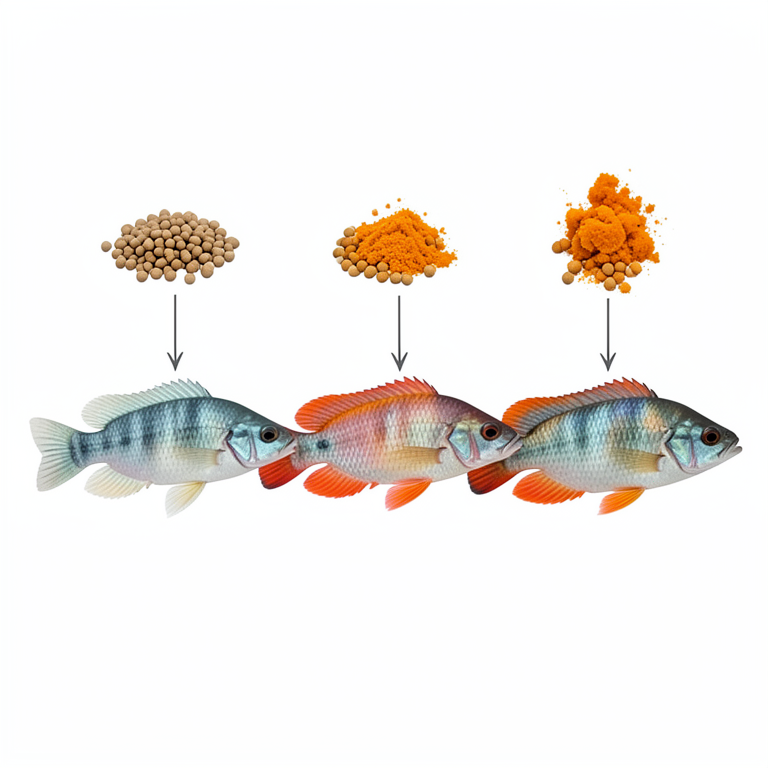
Experimental Diet Setup
AI-generated conceptual illustration (Banded cichlid (Heros severus) and papaya pulp powder). It explains the idea and does not show study data.
View source evidence ↗Figures & tables
From the original paper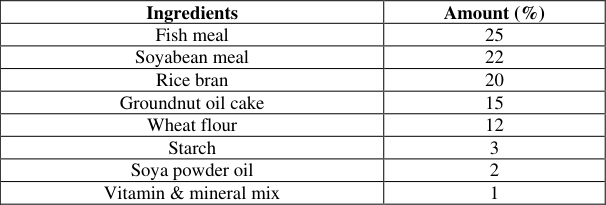 Table 1
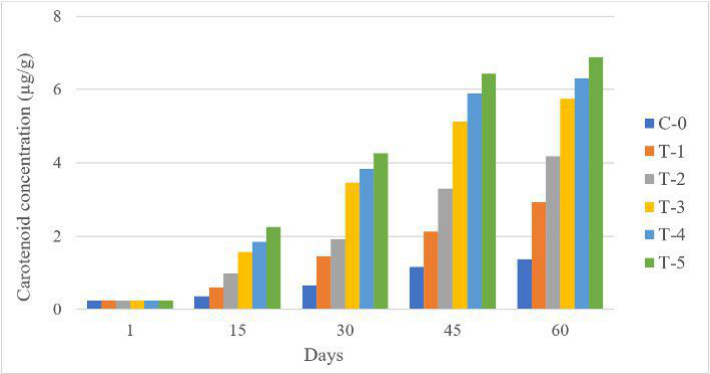 Figure 1
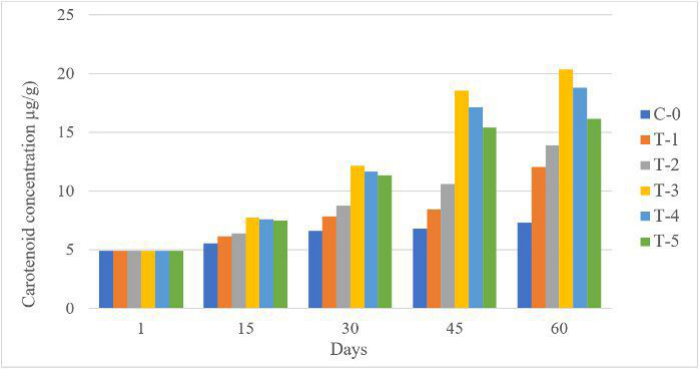 Figure 2
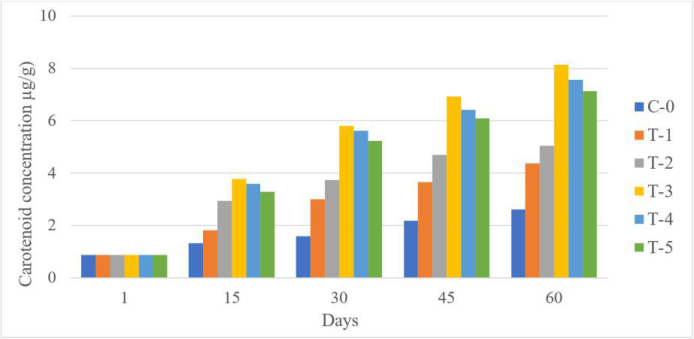 Figure 3
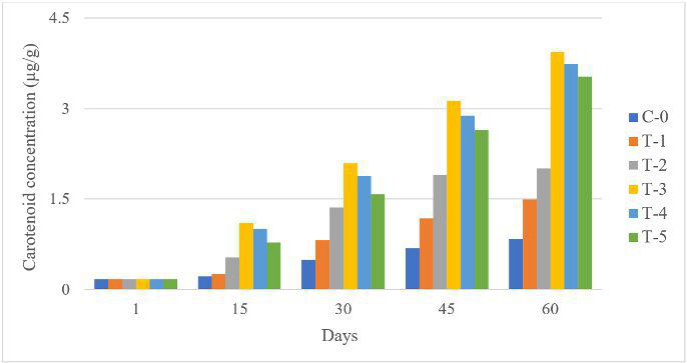 Figure 4
Introduction
The banded cichlid, Heros severus locally known as "The poor man's discus" an indigenous coloured fish belonging to the family Cichlidae and is a calm and popular ornamental fish to the hobbyists. Due to its consistent behaviour and colour, it commands a fair price in the market, making it of tremendous economic significance. Colour is regarded as a primary determinant influencing the price of the ornamental fish [1] . The colour of the fin of ornamental fish is thought to be caused by chromatophores, which are composed of three primary pigments i.e. purines, carotenoids, and melanins [2] . Carotenoids are the dominant pigment in fish. Carotenoids are natural lipid-soluble yellow to red colour compounds, mostly found in plants, algae, and photosynthetic bacteria [3] . The carotenoids constitute the major pigment in the carrot root, Daucus carota [4] . Since fish cannot synthesise carotenoid pigments, the amount and duration of dietary carotenoids in natural or synthetic forms, as well as the type of carotenoids given, determines the intensity of colouration of the integument [5] . Therefore, carotenoids must either be obtained directly from the feed or transformed into feed carotenoid precursors via metabolic processes [6] . In fish, carotenoids are primarily employed for colouration as well as camouflage, signalling, healthy growth, metabolism, and breeding [7] . In addition to their potent colouring effects, carotenoids guard against oxidative stress by acting as antioxidants and radical scavengers. [8] . In their natural habitat, fish satisfy their need for carotenoids by consuming aquatic plants or by way of their food chains. There are more than 600 different types of carotenoids in nature, but only a limited selection finds application in pharmaceuticals, animal feed, food colouring, or chemical polishing [9] . In captivity, deficiency of nutrients and pigment-bearing chemicals may cause the fish's nutrient profile to deteriorate as well as stunted growth and faded colouration [10] . The freshwater colour fish has encountered the issue of fish with faded pigmentation, particularly when the fish are remained in captivity for long time [11] . Now-adays, numerous scientists are dedicated to enhancing the coloration of the fins or skin of ornamental fish, recognizing its pivotal role in influencing the market value of these fish. Most of the time, artificial pigments are employed to intensify colour, even though they are costly and can harm the fish health. This prompt the scientist to utilise relatively inexpensive and widely accessible natural additives to intensify the fish colour. However, detailed studies on color enrichment through the different dietary sources in ornamental fishes are still not available. So, the current research aimed to investigate how varying concentrations of papaya pulp powder affect the fin pigmentation of the ornamental fish Heros severus in laboratory settings.
Materials and Methods
Materials and Methods
Experiment site
The present trial took place at the Krishi Vigyan Kendra, Ashok Nagar, North-24-Parganas, affiliated with the West Bengal University of Animal and Fishery Sciences, West Bengal.
Collection and acclimatization of fishes
Adult males of Banded Cichlid (Heros severus) of same size group (weight 4.18±0.3 g & length 4.12±0.2 cm) were bought from the same batch of Bengal Aqua Fish Farm, Ashoknagar, North 24 Parganas, West Bengal. The fish were undergone a bath treatment with a 3 ppm KMnO 4 solution for 3 to 5 minutes at the experimental site as prophylactic measures to disinfect them. They were then carefully transferred to acclimatization tanks filled with chlorine-free tap water so they could get used to the natural environment. Fish were acclimated in the lab condition for three weeks before the experiment. At 09:00 and 18:00 hours, the fish were given prepared pellet feed in two equal portions at 2% of their body weight (without papaya powder) for three weeks.
Preparation of the experimental tanks
Healthy fish were stocked to the experimental tanks after the acclimatization period. Five treatment sets, each with a duplicate, and a control set of twelve glass aquaria of the same dimensions (L 60 x W 30 x H 30 cm) were employed. The experiment was done for 60 days. Ten fish were maintained in each experimental tank throughout the experiment. To provide aquariums natural aquatic vegetation, a small amount of floating aquatic weed Hydrilla (Hydrilla verticillata), was utilised.
Formulation of diet
Papaya pulp powder was blended during the preparation of pelleted feed in varying amounts: 1 g per 100 g (T 1 ), 2 g per 100 g (T 2 ), 3 g per 100 g (T 3 ), 4 g per 100 g (T 4 ), and 5 g per 100 g (T 5 ) and one group served as the control (C-0) without papaya pulp powder. The feed ingredients utilized in formulating the experimental diet are listed in Table 1. Fish fed at a rate of 2% of body weight, twice a day, at 9 am in morning and 6 pm in evening. In order to keep the environment healthy, food scraps and waste were syphoned out every day, and 10% to 15% of the water was replenished with fresh water in every three days.
| Ingredients | Amount (%) |
|---|---|
| Fish meal | 25 |
| Soyabean meal | 22 |
| Rice bran | 20 |
| Groundnut oil cake | 15 |
| Wheat flour | 12 |
| Starch | 3 |
| Soya powder oil | 2 |
| Vitamin & mineral mix | 1 |
Table text extracted from the original PDF; superscript letters are shown inline. The original table image is below.
View original table image
Analysis of total carotenoid content
Olson's method was used to analyze the total carotenoid content (TCC) in the experiment fish's fin. [12] . A UV-VIS Spectrophotometer (UV 3200, manufactured by LABINDIA Analytical) was used to measure the optical density of the fin samples at 380, 450, 475, and 500 nm. Using the following formula, the carotenoid content (µg/g) was determined-
Total Carotenoid Content = optical density 0:25 x sample weight (g) X 10
where, The dilution factor is 10 and the extinction coefficient is 0.25.
Statistical analysis
The carotenoid contents in the fin of banded cichlid (Heros severus), were statistically analysed through multivariate ANOVA model. Microsoft Excel 2010 software was utilised to exhibit the data graphically, and SPSS for Windows (standard version 21.0) software packages were utilised for statistical analysis of the data. The statistical findings were interpreted at % level of significance.
Results and Discussion
Results and Discussion
Carotenoid level observed in fin at different wavelengths Carotenoid concentration at 380 nm wavelength
The fluctuation in the fin's total carotenoid concentration (µg/g) measured at 380 nm is displayed in (Figure -1). The fin's initial carotenoid value was 0.25 µg/g. Fish showed maximum carotenoid content in T 5 (6.89 µg/g) in their fins, with T 4 , T 3 , T 2 and T 1 following in descending order. The effect of all the papaya pulp powder included in the diet on fin colouration on the fifteenth day of sampling was essentially non-existent. However, the impact of every diet that included papaya pulp powder increased noticeably on the 30th day onwards. On the other hand, there was a very slight rise in the control group's carotenoid concentration.
Carotenoid concentration at 450 nm wavelength
At 450 nm, the total variation in the carotenoid content of fin is presented in Figure -2. It was evident that all five treatments enhanced fin's total carotenoid concentration over control. At the end of the trial, the carotenoid level in the fin increased to 21.52 µg/g, from an initial concentration of 4.88 µg/g. The highest accumulation of carotenoids was noted in T 3 , with T 4 , T 5 , T 2 , and T 1 followed by; whereas, the control group fish showed a negligible increase in the carotenoid level (Figure -2).
Carotenoid concentration at 475 nm wavelength
The carotenoid level variation in the fin of Heros severus was also measured at a wavelength of 475 nm (Figure -3).
The estimated results showed that total carotenoid level in fin was increased for all the five concentrations of papaya pulp powder added to the diet. In fin, the carotenoid content increased from 0.88 µg/g to 8.12 µg/g throughout the experimental period. The 45th and 60th day of the sampling period in T 3 showed the highest carotenoid pigmentation, which was subsequently followed by T 4 , T 5 , T 2 , T 1 , and C-0 (Figure -3).
Carotenoid concentration at 500 nm wavelength
The carotenoid level variation in the fin was also measured at 500 nm (Figure -4). At the conclusion of the trial, the carotenoid level in the fin increased to 3.94 µg/g from the initial level of 0.17 µg/g. A highest amount of carotenoid was found in T 3 with T 4 , T 5 , T 2 , T 1 and C-0 following in descending order (Figure -4). The experiment was done to find out how the inclusion of papaya pulp powder in the diet affected the fin pigmentation of Heros severus, a whitish-yellow variety of male banded cichlid. Two-way ANOVA statistical calculation was used to determine how varied diet dosages of papaya pulp powder affected the colour of the fins. The "p" value is 0.01, which was at a significant level (p<0.01) according to the two-way ANOVA result. The outcome demonstrated that all the diets that included papaya pulp powder affected the banded cichlid's fin colour significantly. At 380 nm wavelength, the TCC in the fin was increased with the increasing concentration of papaya pulp powder. The fish showed maximum carotenoid content in T 5 (6.89 µg/g) in their fins, with T 4 , T 3 , T 2 and T 1 followed by. The results of a similar experiment done on goldfish by feeding them Ulva reticulata supplemented supported the results of the current study (Rama et al., 2014) [13] . Khieokhajonkhet et al. (2023) who conducted a comparable experiment in goldfish by feeding them turmeric powder incorporated diet [14] . Schiedt et al. (1985) claimed that reductive metabolic routes were established from muscle to the skin and fins in order to obtain pigmentation [15] . This could be the reason that T 5 resulted in the highest carotenoid deposits from muscle to fin, compared to other concentrations. Das and Biswas (2020) observed a very similar outcome in banded gourami, Trichogaster fasciata administered with papaya powder as like the result of 450 nm wavelength [16] . Our findings also in line with the observation of Vasudhevan et al. (2013) who also observed that goldfish's carotenoid accumulation in their fins rose in tandem by the addition of azolla in their diet [17] . The largest accumulation of carotenoid was evident on the 45th and 60th day of sampling in T 3 , as indicated by the 475 nm wavelength analysis. This could be because the fin has a disproportionately large amount of carotenoids that were absorbed from papaya and transferred there instead of anywhere else. Song et al. (2017) found exact similar findings relevant to our study in discus fish by feeding them synthetic astaxanthin incorporated diet [18] . However, Kim et al. (2012) discovered that the carotenoid content of Fancy Carp (Cyprinus carpio) did not improve with spirulina powder, paprika powder, astaxanthin, and canthaxanthin [19] .
In light of this, it may be said that different species exhibited different levels of carotenoids' effects and intake from diet. The changes of carotenoid concentration measured at 500 nm showed that 3 g/100 g of papaya pulp powder incorporated diet resulted in the best. Mukherjee et al.
(2009) discovered a comparable outcome in banded gourami, Trichogaster fasciata, when incorporating a dosage of 45mg/50 gm of turmeric powder into their diet. [20] . The investigation's outcomes concur with the conclusions of Patel et al. (2023) who carried out a comparable experiment on three spot gourami, Trichopodus trichopterus by feeding them spinach powder incorporated diet [21] . According to Ranjan (2016), the reduced degree of carotenoid utilization from diet is mainly caused by a low absorption rate in the gastrointestinal tract, metabolic conversion into colourless chemicals and accumulation in other organs which may be eliminated in the near future [22] . This might be due to these reasons: T 1 and T 2 showed comparatively lower fin colouration than T 3 , T 4 and T 5 .
Carotenoids must be absorbed from the digestive tract and delivered to a specific tissue in order for them to be deposited, according to Mirzaee et al. (2013) [23] . Fish fed a diet containing 3 g/100 g powdered papaya pulp may absorb the most carotenoids from the diet, which travel from the digestive tract to the fin. For this reason, banded cichlids fed 3 g/100 g papaya pulp showed the greatest increase in carotenoid levels in their fins.
Conclusion
The price of aquarium fish in the global market is influenced by their coloration. In ornamental fish, colouration of fin is very much important. Papaya pulp powder, readily accessible in local markets, can be seamlessly integrated as feed ingredients. The current study has successfully achieved its objectives on a broader scale, yielding some noteworthy findings. The findings of the research will be helpful in understanding the effects of papaya pulp powder on the fin pigmentation of Heros severus. The results of the study indicated a maximum rise in the total carotenoid concentration in the fin when fish were provided with a diet supplemented with 3 g/100 g of papaya pulp powder in compared to other treatments. So, it can be concluded that, the feed supplemented with 3 g/100 g of papaya pulp powder must be given to get the best pigmentation in the aquarium fish banded cichlid (Heros severus).
Acknowledgement
AcknowledgmentThe authors are thankful to the Dean, Faculty of Fishery Sciences, West Bengal University of Animal and Fishery Sciences and the Head of KVK, North-24-Paragans, for their support, provision of essential facilities, and encouragement during the research endeavours. The first authors express their deep gratitude to the West Bengal University of Animal and Fishery Sciences for granting stipends during the study period.
Figures and tables from the paper
References
19 in the original paper- Steffen JE, McGraw KJ. Contributions of pterin and carotenoid pigments to dewlap coloration in two anole species. Comp. Biochem. Physiol. B Biochem. Mol. Biol. 2007;146(1):42-46. DOI: https://doi.org/10.1016/j.cbpb.2006.08.017.
- Amar EC, Kiron V, Satoh S, Watanabe T. Influence of various dietary synthetic carotenoids on bio-defence mechanism in rainbow trout, Oncorhynchus mykiss (Walbaum). Aquaculture Research. 2001;32:162-173. DOI: https://doi.org/10.1046/j.1355557x.2001.00051.x.
- Ong AS, Tee ES. Natural sources of carotenoids from plants and oils. In Methods in enzymology. 1992;213:142-167. DOI: https://doi.org/10.1016/00766879(92)13118-H.
- Vinkler M, Albrecht T. Carotenoid maintenance handicap and the physiology of carotenoid-based signalisation of health. Naturwissenschaften. 2010;97:19-28. DOI: https://doi.org/10.1007/s00114-009-0595-9.
- Maoka T. Carotenoids in marine animals. Mar. Drugs. 2011;9:278-293. DOI: https://doi.org/10.3390/md9020278.
- de Carvalho CC, Caramujo MJ. Carotenoids in Aquatic Ecosystems and Aquaculture: A Colorful Business with Implications for Human Health. Frontiers in Marine Science. 2017;4:93. DOI: https://doi.org/10.3389/fmars.2017.00093.
- Yeum KJ, Aldini G, Russell RM, Krinsky NI. Antioxidant/pro-oxidant actions of carotenoids. Carotenoids book series. 2009;5:235-268. DOI: https://doi.org/10.1007/978-3-7643-7501-0_12.
- Bricaud A, Morel A, Babin M, Allali K, Claustre H. Variations of light absorption by suspended particles with chlorophyll a concentration in oceanic (case) waters: analysis and implications for bio-optical models. Journal of Geophysical Research. 1998;103(13):31033-31044. DOI: https://doi.org/10.1029/98JC02712.
- Uthayasiva M, Haq MB, Kumar TA. Significance of light intensity to enhance the colour of marine ornamental fish Amphiprion clarkii (Bennett, 1830) in captivity. International Journal of Fauna and Biological Studies. 2014;1(4):14-18. Available from: https://api.semanticscholar.org/CorpusID:226220475.
- Pailan GH, Sinha A, Borkar A. Rose Petals Meal as a Natural Carotenoid Source for Pigmentation and Growth of Dwarf Gourami, Colisa lalia. Animal Nutrition and Feed Technology. 2012;12(2):199-207. Available from: https://www.researchgate.net/ publication/266477469_Rose_Petals_Meal_as_a_Natur al_Carotenoid_Source_for_Pigmentation_and_Growth_ of_Dwarf_Gourami_Colisa_lalia.
- Olson A. A simple dual assay for Vit. A and carotenoids in human and liver. Nutrition Reports International. 1979;19(6):807-813.
- Rama NP, Elezabeth MA, Uthayasiva M, Arularasan S. Seaweed Ulva reticulata a Potential Feed Supplement for Growth, Colouration and Disease Resistance in Fresh Water Ornamental Gold Fish, Carassius auratus. Journal of Aquaculture Research and Development. 2014;5(5):1-10. DOI: https://doi.org/10.4172/21559546.1000254.
- Khieokhajonkhet A, Roatboonsongsri T, Suwannalers P, Aeksiri N, Kaneko G, Ratanasut K, et al. Effects of dietary supplementation of turmeric (Curcuma longa) extract on growth, feed and nutrient utilization, coloration, hematology, and expression of genes related immune response in goldfish (Carassius auratus). Aquaculture Reports. 2023;32:1-11. DOI: https://doi.org/10.1016/j.aqrep.2023.101705.
- Schiedt K, Leuenberger FJ, Vecchi M, Glinz E. Absorption, retention and metabolic transformation of carotenoids in rainbow trout, Salmon and chicken. Pure and Applied Chemistry. 1985;57(5):685-692. DOI: https://doi.org/10.1351/pac198557050685.
- Das AP, Biswas SP. The effect of ripe papaya, Carica papaya, as natural carotenoids meal on body pigmentation and growth performance in banded gourami, Trichogaster fasciata. International Journal of Aquatic Biology. 2020;8(2):83-90. DOI: https://doi.org/10.22034/ijab.v8i2.782.
- Vasudhevan I, James R, Pushparaj A, Asokan K. Effect of Azolla filiculoides on growth, coloration and leucocytes count in goldfish, Carassius auratus. International Journal of Plant, Animal and Environmental Sciences. 2013;3(1):211-219. Available from: http://www.ijpaes.com/admin/php/uploads/296_pdf.pdf.
- Song X, Wang L, Li X, Chen Z, Liang G, Leng X. Dietary astaxanthin improved the body pigmentation and antioxidant function, but not the growth of discus fish (Symphysodon spp.). Aquaculture Research. 2017;48(4):1359-1367. DOI: https://doi.org/10.1111/are.13200.
- Kim YO, Jo JY, Oh SY. Effects of dietary spirulina, chlorella and astaxanthin on the body colour of red and white-coloured carp, Cyprinus carpio. Korean Journal of Fisheries and Aquatic Sciences. 2012;41(3):193-200. DOI: https://doi.org/10.5657/kfas.2008.41.3.193.
- Mukherjee A, Mandal B, Banerjee, S. Turmeric as a carotenoid source on pigmentation and growth of fantail guppy, Poecilia reticulata. Proceedings of the Zoological Society of London. 2009;62(2):119-123. DOI: https://doi.org/10.1007/s12595-009-0013-5.
Cited by 2
From OpenAlex, OpenCitations and reference lists read by Scinovex
- Natural carotenoids and its function for ornamental fish colouration: A review
Surya Kanta Sau, Amit Shit, Kherwal Raj Kisku · International Journal of Advanced Biochemistry Research · 2026
Keeping ornamental fish is the second hobby globally. The vibrant and lucrative colour variation of any ornamental fish fetch more money or profit to the breeders and culturists. The prominent and long-lasting colour depends on the feeding to fish with natural carotenoids rich feed ingredients. The deposition or accumulation of colour pigment on skin, fin and flesh of ornamental fish is species specific. But the colour development is influenced by water quality parameters, temperature, photoperiod, and light intensity/quality, balanced feed and carotenoids sources. The majority of carotenoids
- Effect of ripe papaya pulp powder on fin colouration of Tiger Oscar fish, Astronotus ocellatus
Souvik Halder, Surya Kanta Sau, Swagat Ghosh, Jayan Barik, Prasenjit Mali, Samiran Patra · International Journal of Advanced Biochemistry Research · 2026
The presence of carotenoids, which activate fish colouring, is a major factor in the market value of ornamental fish. The goal of the current feeding experiment was to determine how papaya pulp powder meal affected the fin colouring of Tiger Oscar, Astronotus ocellatus. In a confined setting, papaya pulp powder was added to five different experimental diets in different amounts (C- 0g/100g, T1- 1g/100g, T2- 2g/100 g, T3- 3g/100 g, T4- 4g/100 g, and T5- 5g/100 g). Eighteen glass aquaria (L 60 cm x W 30 cm x H 30 cm) were randomly filled with fifteen fish each tank. The experiment was conducted