
Research article · 2024 · Full text
International Journal of Advanced Biochemistry ResearchAdvances in micropropagation of Aglonema var. Red valentine
Volume 8(2) · Pages 668–675 · DOI: 10.33545/26174693.2024.v8.i2h.821 ↗
Research areasInnovative Microfluidic and Catalytic Techniques InnovationChemical synthesis and alkaloidsAnalytical Chemistry and Chromatography
Abstract
Author-writtenAglaonema, a popular ornamental plant valued for its vibrant foliage and aesthetic appeal. This study aimed to establish an efficient protocol for in vitro propagation of Aglaonema variety Red valentine using tissue culture techniques. The experiment involved the establishment of sterile cultures from nodal explants. Murashige and Skoog (MS) medium supplemented with various concentrations of plant growth regulators used to stimulate organogenesis. Surface sterilization of explants with carbendazim (0.2%) + Plantomycin (200 mg/l) for 30 minutes, along with Ethanol 70% for 1 minute, Sodium hypochlorite 10% for 15 minute, and Mercuric chloride 0.3% for 15 minute, showed the highest aseptic cultures (88.67%). Murashige and Skoog’s medium supplemented with 3.0 mg/l Benzyl-amino-purine resulted in 84% of bud sprouting. Highest multiplication ratio (1: 2.53) obtained on Murashige and Skoog’s medium supplemented with 6 mg/l Benzyl-amino-purine and 2 mg/l of Kinetin. Maximum rooting (95%) was observed in medium supplemented with 2.0 mg/l Indole-3-butyric acid and 0.5 mg/l Naphthalene acetic acid. Plantlets were successfully hardened in 100% of Cocopeat in greenhouse.
Summary
Source-checkedPlain-language reading of the full paper, prepared with AI and checked against the text. Each point links to the authors' own words.
Why it matters
- Aglaonema, or Chinese evergreen, is a highly valued ornamental plant used in interior landscaping due to its attractive foliage and ability to adapt to indoor settings. View evidence ↗
- Traditional sexual reproduction is difficult for Aglaonema because of short pollen lifespans and non-simultaneous flowering, making cuttings and shoot division the primary propagation methods. View evidence ↗
- Using in vitro propagation techniques can reduce the time required to multiply these plants. View evidence ↗
The question
- The study aimed to develop an efficient tissue culture protocol for the in vitro propagation of the Aglaonema 'Red Valentine' variety. View evidence ↗
What they did
- The researchers used nodal explants on Murashige and Skoog (MS) medium supplemented with different plant growth regulators to stimulate organogenesis. View evidence ↗
- Experiments followed a completely randomized design (CRD) with three replicates, each containing 20 test samples. View evidence ↗
- Cultures were maintained at 25°C with a 16-hour light (1600 Lux) and 8-hour dark cycle. View evidence ↗
What they found
- The highest rate of aseptic cultures (88.67%) was achieved using a sterilization sequence of carbendazim (0.2%) and Plantomycin (200 mg/l) for 30 minutes, followed by 70% ethanol (1 min), 10% sodium hypochlorite (15 min), and 0.3% mercuric chloride (15 min). View evidence ↗
- Explants from the 3rd node position were found most suitable for propagation as they survived treatment and showed a responsive outcome with low contamination. View evidence ↗
- Bud sprouting reached 84% when MS medium was supplemented with 3.0 mg/l Benzyl-amino-purine (BAP). View evidence ↗
- The highest multiplication ratio of 1:2.53 was achieved using MS medium supplemented with 6 mg/l BAP and 2 mg/l Kinetin. View evidence ↗
- Rooting peaked at 95% in medium containing 2.0 mg/l Indole-3-butyric acid (IBA) and 0.5 mg/l Naphthalene acetic acid (NAA). View evidence ↗
What it means
- The authors conclude that their established protocol is a reliable and efficient method for the large-scale production of uniform Aglaonema 'Red Valentine' plants. View evidence ↗
Visual summary
1 visualsIllustrations explain the paper; they do not show study data.
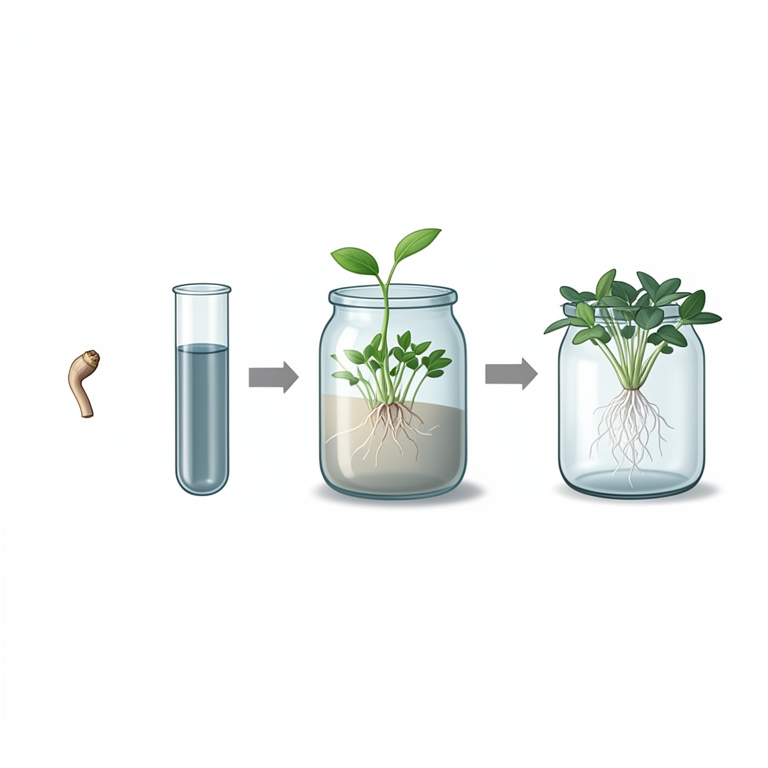
Micropropagation Workflow
AI-generated conceptual illustration (Aglonema var. Red Valentine plants). It explains the idea and does not show study data.
View source evidence ↗Figures & tables
From the original paper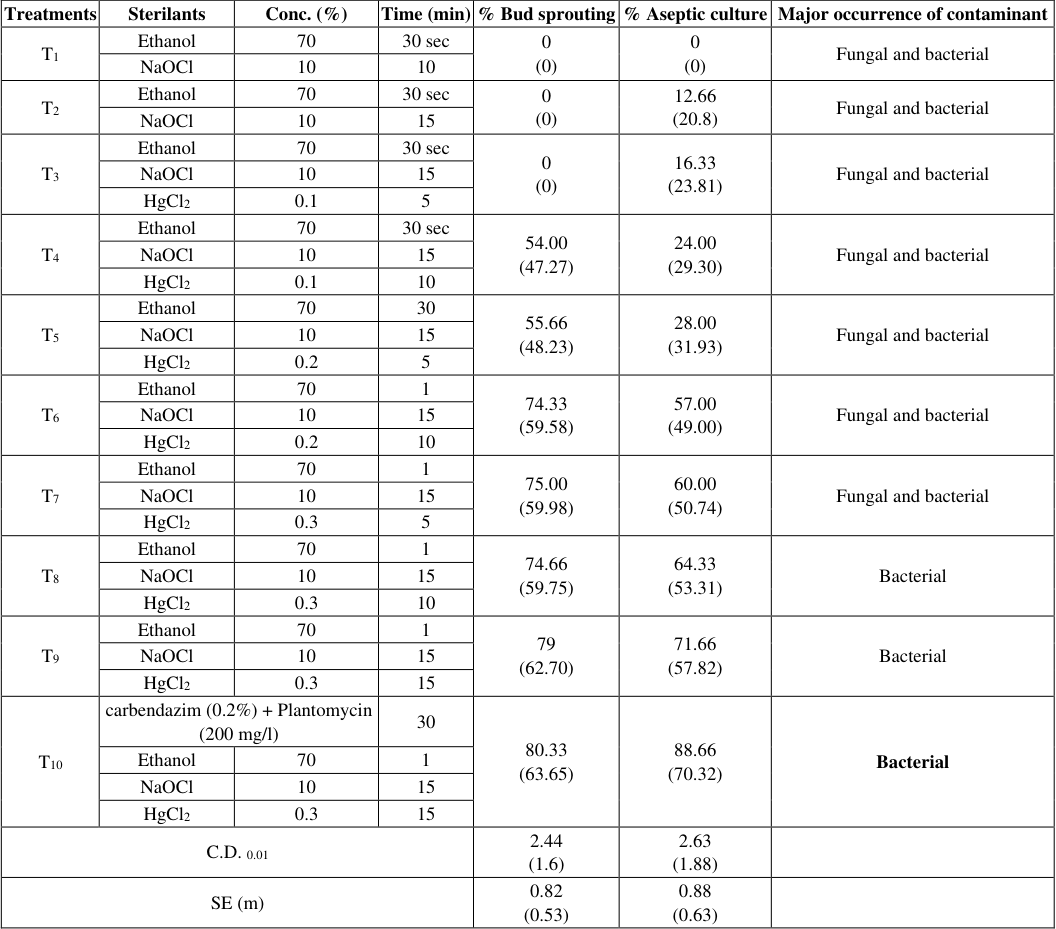 Table 1
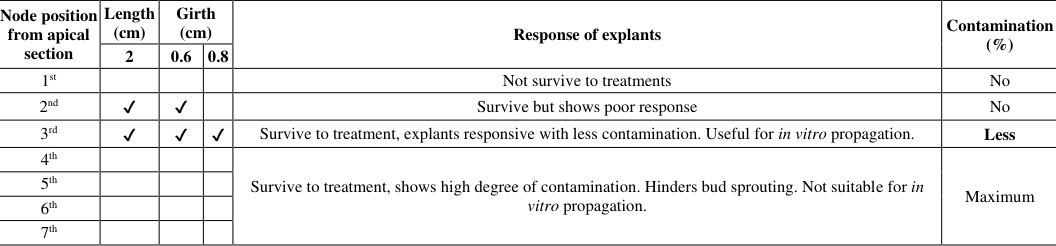 Table 2
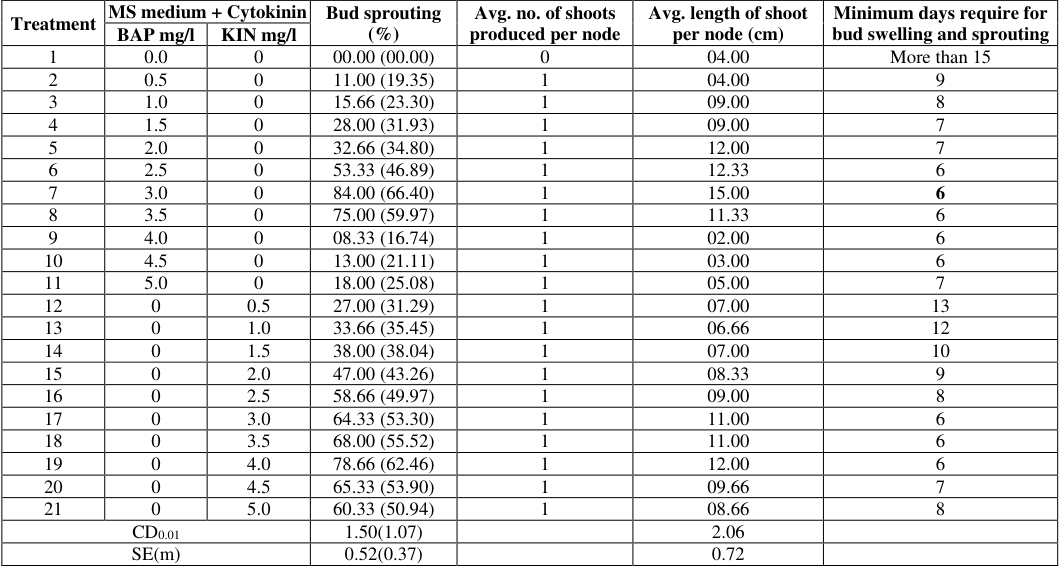 Table 3
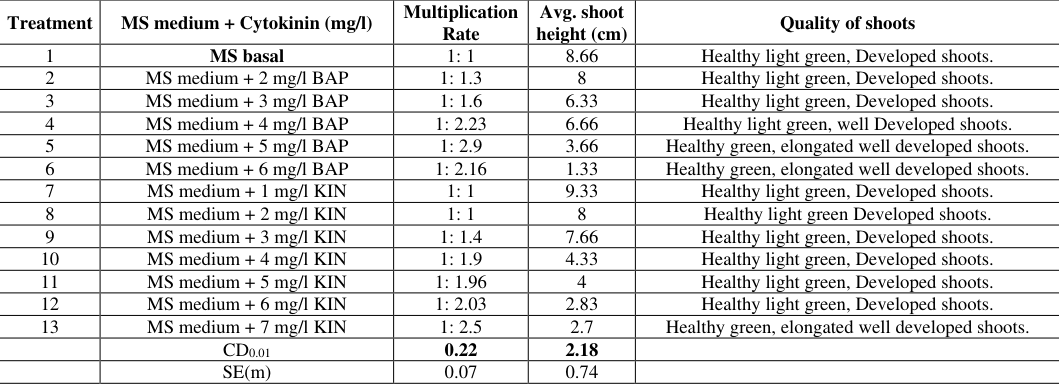 Table 4
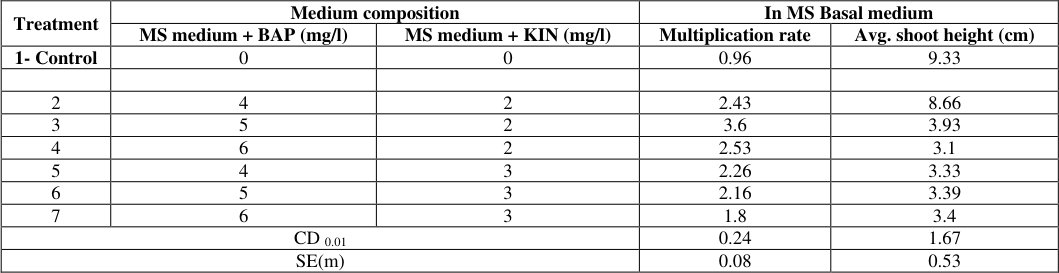 Table 5
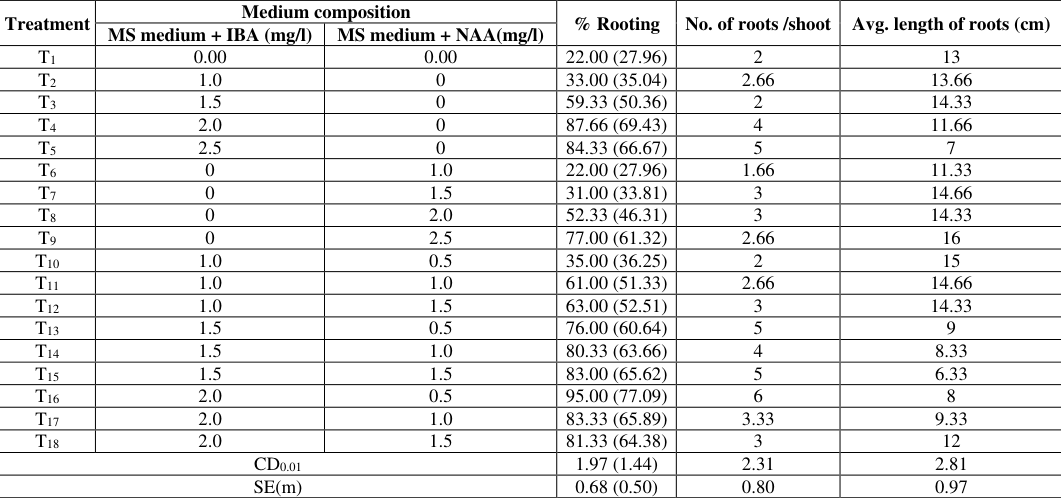 Table 6
 Table 7
 Figure 1
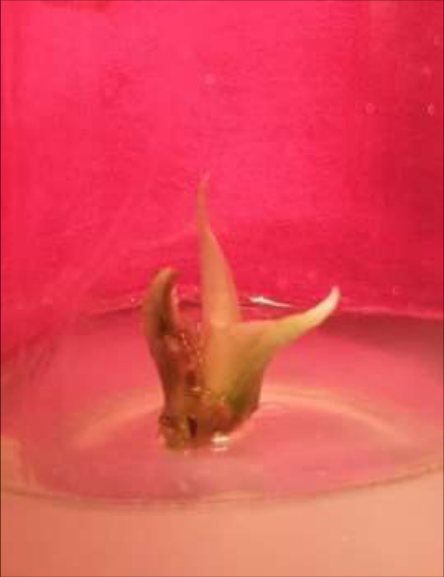 Figure 2
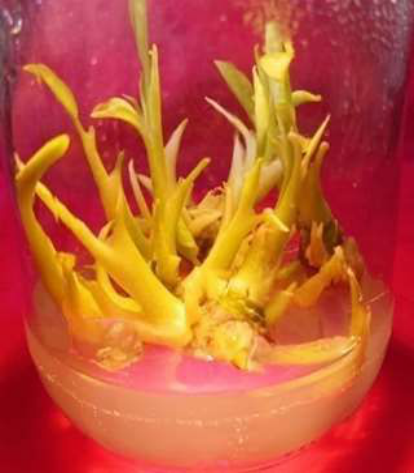 Figure 3
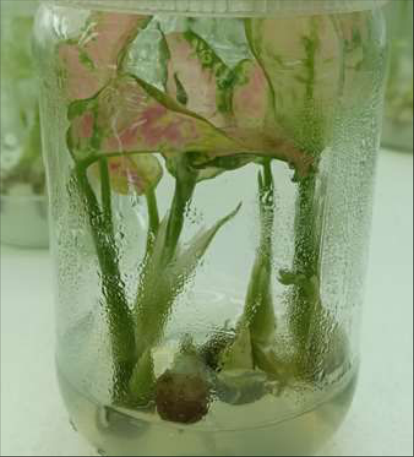 Figure 4
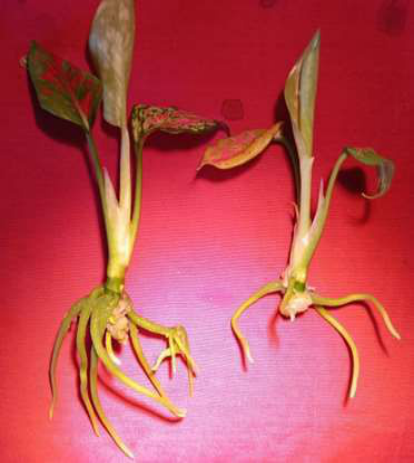 Figure 5
Introduction
Aglaonema, commonly known as Chinese evergreen, is a popular ornamental plant prized for its attractive foliage and adaptability to indoor environments, which commonly known as aroids important in interior landscaping [1] . Aglaonema genus comprised 21 species which inhabit humid and heavily shaded forests of many territories of Asia [2] . Aglaonema easiness to grow and tolerance to low light conditions and low relative humidity [3] . The rooting of its cuttings and division of basal shoots are the basic methods of propagation since non-simultaneous flowering and short life span of the pollen make sexual reproduction difficult [4] . Adoption of in vitro propagation has reduced the time-spanned for plant multiplication [5] . The process of in vitro micropropagation involves the manipulation of plant cells, tissues, and organs on a nutrient-rich agar medium supplemented with specific plant growth regulators. The importance of this research work is to understanding and examining the proper amount of different concentrations of plant growth regulators in medium for the proper growth of the Aglaonema plantlets Red valentine.
Materials and Methods Plant Materials
Aglaonema var. Red valentine was used for research study. The study was conducted in plant tissue culture laboratory of Plant Biotechnology Centre, Dr. Balasaheb Sawant Konkan Krishi Vidhyapeeth, Dapoli, Ratnagiri, Maharashtra state, India. Explants were collected from the ornamental nursery of College of Horticulture, Dr. Balasaheb Sawant Krishi Vidhyapeeth, Dapoli. Healthy and disease-free planting materials were selected as the initial source for culture establishment. Typically, young shoots, nodal segments, or meristematic tissues were chosen as explants due to their high regenerative capacity and contains low contaminants as compare to mature explants.
After sterilization, immature and small size explants turn to brown and simultaneously dead. Large size explants, contains more microbial count, tolerate harsh sterilants treatment but hinder bud sprouting. Nodal segments and apical tips were collected and brought to laboratory. Nodal position counted from apex to base and these explants cut into various sizes and arranged according to their nodal position. The bud break frequency and occurrence of contamination in respect to their size and position were recorded.
Surface sterilization of explants
Firstly explants were kept under running tap water for 30 min. Then explants were transferred inside the laminar airflow, inside a sterilized jars containing 0.2% Carbendazim and treat for 30-45 min. After that, explants were washed with sterilized distilled water at least 3-4 times. The explants were treated with 70% isopropanol for about 1 min then they were washed using sterilized distilled water about 2-3 times. Next the explants were treated with sodium hypochlorite solution and then washed 2-3 times with sterilized distilled water. Then explants were treated with HgCl 2 solution, again washed with sterilized distilled water about 3-5 times (Table -1). After the surface sterilization, explants were removed from the bottle jar and placed on sterilized tissue paper to dry. Note that during washing of explants with sterilized distilled spend 5 min in each wash.
Culture Medium preparation
Many researchers use MS medium [6] and also find advantages in shoot multiplication of many Aglaonema species like A. red valentine or A. Red widuri [7] . MS medium contains various required, high salts concentration of elements and reported best for in vitro propagation by many researchers. In all experiments, full strength MS medium were used for Aglaonema micropropagation. Required stock solutions of MS medium and plant growth regulators prepared well in advance and stored in refrigerator. During medium preparation there stock solutions bring to room temperature and all stock solution will mix one by one and final volume adjusted by sterilized distilled water. Required pH of the medium was adjusted with the help of NaOH and/or HCl before autoclaving. After adjusting pH, equal volume boiled medium dispensed in culture glass jar bottles. Medium autoclaved at temperature of 121 °C for 20 min. Autoclaved medium stored in the dark at 24±2 °C and used after one week of sterilization. MSmedium supplemented with various different concentrations of plant growth regulators for bud sprouting, shoot multiplication, rooting and their results on proliferation of Aglaonema were recorded.
Experimental Conditions
The culture chamber/growth rooms in which the experiments were conducted was kept at a constant temperature of 25± °C, and a 16/8-hour light/dark cycle was used to provide consistent illumination of light (1600 Lux) using white fluorescent lights.
Hardening of in vitro plantlets:
Healthy well grown plantlets obtained after 4 to 5 weeks of inoculation on rooting medium were taken out from jars and washed thoroughly with water to remove traces of adhere medium. These plantlets were treated with carbendazim (1%) solution for 30 minute and transplanted in different potting mixtures and their observations were recorded. The plantlets were kept in shade (in polyhouse) for one week and then transferred to partial-sunlight in green shade-net house. Thereafter, plantlets nurtured inside for 2 months.
Statistical analysis
The data recorded from the experiments were conducted according to completely randomized design (CRD). Each experiment was replicated three times and each replication contains 20 test samples. The goal of the study was to find a significant difference between the treatment means. On the basis of critical difference, the treatment means were classified as significant or non-significant (CD) [8] .
Results and Discussion
Results and Discussion
Establishment of asceptic cultures
In present investigation, ten different treatments were used for sterilization. T1 to T9 showed low percentages of aseptic culture, with fungal and bacterial contaminants being the major occurrence. As the concentration of HgCl 2 increased an increase in aseptic culture observed. Treatment T10, which utilized a combination of carbendazim (0.2%) and Plantomycin (200 mg/l) for 30 mins along with Ethanol (70%) 1 min, NaOCl (10%) 15 mins , and HgCl 2 (0.3) 15 mins, showed the highest aseptic culture (88.66%) with 80.33% of bud sprouting (Table -1). Contamination were also observed even after 3 rd subculture because presence of endophytic contaminants. When lower concentration of sterilants employed, contaminants (bacterial and fungal) appeared on upper lower cut ends and near the buds. Chen and Yeh (2007) [9] also studied effect of antibiotic streptomycin for pretreatment of explants in aglaonema.
Effect of nodal position and size of explants
Explants from the 1 st to 7 th node positions were used for culture establishment. Explants from the 2 nd node position survived the treatments, showed no contamination but also showed a poor response which is not suitable for in vitro propagation. The 3 rd node position survived the treatment and showed a responsive outcome with less contamination (Table -2). They are considered suitable for culture establishment and in vitro propagation. Explants from the 4 th node position survived the treatment but showed a high degree of contamination, hindering bud sprouting.
Effects of PGR on shoot initiation
During initiation of cultures, treatments exhibit that both applied growth regulators (BAP and Kin) and their concentration exerted significant effects on the initiation stage characters of single node explants of A. Red valentine grown in vitro. Treatments with higher concentrations of cytokinin, particularly in the range of 3.0 to 4.0 mg/l, tend to result in higher bud sprouting. The minimum 6 days are required for bud swelling and initiate bud sprouting. MS medium supplemented with 3.0 mg/l BAP and 4 mg/l KIN results in 84% and 78.66% of bud sprouting, respectively (Table-3).
Effects of PGR on multiplication of A. Red valentine
Treatments with varying concentrations of cytokinin (both BAP and KIN) influence the multiplication rate and average shoot height of Aglaonema cultures. Higher concentrations of cytokinin generally results in increased shoot multiplication rates up to a certain point, after which the multiplication rate declines. The average shoot height tends to decrease as the concentration of cytokinin increases, indicating that higher concentrations may negatively affect shoot elongation. Shoots produced under all treatments exhibit overall healthy characteristics, including light green coloration and developed structures. No pigmentation seen in newly developed leaves and shoots. Pigmentation on leaves seen after 8 to 9 days of leaf emergence. Treatments with concentrations of 4 mg/l BAP resulted in healthy light green well developed shoots with 2.23 multiplication rate (Table -4). The control-basal MS medium (free of cytokinins) no multiplication rate of shoots (0.967) is observed. The data suggest that combinations of cytokinins (BAP and KIN) influence the shoot multiplication rate and average shoot height of A. Red valentine. But due to lack of PGR in medium shoot height is recorded maximum (9.33 cm). Medium supplemented with combinations of BAP and KIN resulted in varying multiplication rates and average shoot heights of cultures. Treatment 3, comprises 5 mg/l of BAP and 2 mg/l of Kinetin shows highest multiplication rate (2.53) among the treatments, but had a lower average shoot height (3.1 cm) (Table -5). This treatment exhibited a balance between multiplication rate and average shoot height of A. Red valentine.
In vitro rooting of A. red valentine
Analysis of the data provided in the table-6, which observes the effect of auxin on the rooting of Aglaonema. Treatments with combinations of IBA and NAA exhibited varying effects on rooting parameters. Generally, an increase in the concentration of IBA at certain level led to an increase in the percentage of rooting, and beyond this concentration rooting percentage declines with root number per shoot. Rooting of shoots observed in all the treatments tried during experiment. Treatment 16 (IBA 2.0 mg/l, NAA 0.5 mg/l) had the highest rooting percentage (95%) among the treatments with more roots per shoot (Table -6).
Hardening
The dataset outlines various combinations of potting mediums and their corresponding survival rates. These combinations include the use of Sand, Cocopeat, cocopeat: Sand, Cocopeat: Red soil and Cocopeat: red soil: FYM. The survival of plantlets is improved by covering them with polythene, which raises the relative humidity. From the data, it is evident that the cocopeat alone serves 90.83% survival of plantlets with 6.46cm of height days after plantation (Table -7). In contrast, Barakat and Gaber (2018) [10] , uses mixture of perlite and peatmoss at (1:1); which resulted in the highest mean value of survival percentage/plant (100%).
Discussion
Similar to other ornamental aroids, fungal and bacterial contaminants being the major hurdle of Aglonema [11; 12] . Contamination were also observed even after 3 rd subculture because presence of endophytic contaminants. When lower concentration of sterilants employed, contaminants (bacterial and fungal) appeared on upper-lower cut ends and near the buds. Use of antibiotic and fungicide in presterilization technique is more efficient for in vitro asceptic culture initiation. Use of carbendazim and plantomycin (fungicide and antimicrobial agents, respectively) for reducing microbial load of explants. In present study, pretreatment with carbendazim 0.1% and plantomycin (200 mg/l) caused lower contamination percentage. Similarly, Chen and Yeh (2007) [9] also reported that pre-treated with antibiotic mixtures containing streptomycin before in vitro culture could achieve satisfactory disinfection. As the concentration of HgCl 2 increased an increase in aseptic culture observed. Also it was observed that beyond certain limit of concentration and duration, exposure of explants to HgCl 2 causes phytotoxic effect. Position of nodal segments plays an important role during establishment of cultures. Old buds contain more endophytic contaminants and immature buds do not survive after surface sterilization. To date, experiments on-effect of nodal position with respect to bud sprouting and asceptic culture establishment was not carried out in Aglaonema. Explants from the 3 rd node position resulted more survival to the treatments with highest asceptic per cent. They are considered suitable for culture establishment and in vitro propagation of Aglaonema. Endogenous level and exogenously supplied plant growth regulator plays an important role during regeneration of plantlets and these are species specific. To determine the optimum concentration and selective cytokinin for bud sprouting in Aglaonema, BAP and Kin were used at various concentrations in medium. During initiation of cultures, treatments exhibit that both applied growth regulators (BAP and Kin) and their concentration exerted significant effects on the initiation stage characters of single node explants. The minimum 6 days are required for bud swelling and initiate bud sprouting. MS medium supplemented with 3.0 mg/l BAP results in 84% of bud sprouting. However, study conducted by Barakat and Gaber (2018) [10] on A. commutatum shows the highest level of BA (1.00 mg/l); gave rise to the highest mean value of number of shoots per propagule (1.86). The data suggest that the BAP cytokinin perform best over the cytokinin-Kinetin. Higher concentrations of cytokinin generally results in increased shoot multiplication rates up to a certain point, after which the multiplication rate declines. In present study, it was revealed that MS medium fortified with concentrations of 4 mg/l of BAP produces healthy green well developed shoots with 2.23 multiplication rate. The average shoot height tends to decrease as the concentration of cytokinin increases, indicating that higher concentrations may negatively affect shoot elongation. Pigmentation on leaves was observed after 8 to 9 days of leaf emergence. Study of Zahara and Win (2020) [7] shows the best growth of axillary buds obtained on medium supplemented with 10 mg/l of BA. Fang et. al.
(2013) [13] , resulted TDZ as a best growth regulator for multiple shoot induction. Also, Gadhe and Kale (2020) [14] , reported 4.0 mg/l BA + 1.0 mg/l NAA was found to be most suitable for shoot multiplication. Our results suggested that, MS medium supplemented with both cytokinin-BAP (5 mg/l) and Kinetin (2 mg/l) shows highest multiplication rate. Labasano (2018) [15] studied combination of Kin and NAA for the growth and development of Aglaonema tricolor cultures. The superiority of BAP over other cytokinins such as KIN, 2-iP and TDZ has been reported in Aglaonema sp. and some other ornamental Araceae [16,17,18,19,20] . Various researchers described IBA as a suitable auxin for root induction and also found to be superior to NAA and IAA [13; 21]. In present study, rooting of shoots observed in all the treatments tried. It was also observed that the endogenous level of auxins in Aglaonema Red Valentine shoots enough for self inducing roots. IBA (2.0 mg/l) in combination with NAA (0.5 mg/l) shows the highest rooting percentage (95%) among the treatments tried. Similar, findings of Hussein (2001) [22] revealed that IBA at concentration of 2 mg/l in medium shows higher rooting.
Conclusion
During culture establishment, use of pre-sterilization technique is helpful to reduce microbial load of explants.
Our study revealed that explants treated with Carbendazim (0.2%) and Plantomycin (200 mg/l) for 30 minutes, increases percentage of asceptic cultures. Followed treatment with 70% Ethanol for 1 minute, 10% NaOCl for 15 minute and 0.3% HgCl 2 for 15 minutes, showed the highest aseptic culture percentages. Higher cytokinin concentrations (BAP and KIN) positively correlated with increased bud sprouting and shoot multiplication. Medium supplemented with two cytokinin, instead use of single, increases shoot multiplication rate. In our experiments use of both BAP (6 mg/) and KIN (2 mg/l) shows higher multiplication rate (2.53). Also, use of two auxins (IBA 2.0 mg/l, NAA 0.5 mg/l) in rooting medium shows highest rooting percentage (95%) among the treatments used. Use of Cocopeat (100%) in hardening of Aglaonema resulted 90% of survival of plantlets. This protocol provides a reliable and efficient method for the large-scale production of Aglaonema var. Red Valentine plants with uniform growth characteristics.
Acknowledgement
AcknowledgmentAuthors are thankful to the Plant biotechnology Centre. Dr. Balasaheb Sawant Konkan Krishi Vidyapeeth, Dapoli, Dist-Ratnagiri, Maharashtra state, India, for provided their research facilities and financial assistance.
Figures and tables from the paper
| Treatments | Sterilants | Conc. (%) | Time (min) | % Bud sprouting | % Aseptic culture | Major occurrence of contaminant |
|---|---|---|---|---|---|---|
| T1 | Ethanol | 70 | 30 sec | 0 (0) | 0 (0) | Fungal and bacterial |
| NaOCl | 10 | 10 | ||||
| T2 | Ethanol | 70 | 30 sec | 0 (0) | 12.66 (20.8) | Fungal and bacterial |
| NaOCl | 10 | 15 | ||||
| T3 | Ethanol | 70 | 30 sec | 0 (0) | 16.33 (23.81) | Fungal and bacterial |
| NaOCl | 10 | 15 | ||||
| HgCl2 | 0.1 | 5 | ||||
| T4 | Ethanol | 70 | 30 sec | 54.00 (47.27) | 24.00 (29.30) | Fungal and bacterial |
| NaOCl | 10 | 15 | ||||
| HgCl2 | 0.1 | 10 | ||||
| T5 | Ethanol | 70 | 30 | 55.66 (48.23) | 28.00 (31.93) | Fungal and bacterial |
| NaOCl | 10 | 15 | ||||
| HgCl2 | 0.2 | 5 | ||||
| T6 | Ethanol | 70 | 1 | 74.33 (59.58) | 57.00 (49.00) | Fungal and bacterial |
| NaOCl | 10 | 15 | ||||
| HgCl2 | 0.2 | 10 | ||||
| T7 | Ethanol | 70 | 1 | 75.00 (59.98) | 60.00 (50.74) | Fungal and bacterial |
| NaOCl | 10 | 15 | ||||
| HgCl2 | 0.3 | 5 | ||||
| T8 | Ethanol | 70 | 1 | 74.66 (59.75) | 64.33 (53.31) | Bacterial |
| NaOCl | 10 | 15 | ||||
| HgCl2 | 0.3 | 10 | ||||
| T9 | Ethanol | 70 | 1 | 79 (62.70) | 71.66 (57.82) | Bacterial |
| NaOCl | 10 | 15 | ||||
| HgCl2 | 0.3 | 15 | ||||
| T10 | carbendazim (0.2%) + Plantomycin (200 mg/l) | 30 | 80.33 (63.65) | 88.66 (70.32) | Bacterial | |
| Ethanol | 70 | 1 | ||||
| NaOCl | 10 | 15 | ||||
| HgCl2 | 0.3 | 15 | ||||
| C.D. 0.01 | 2.44 (1.6) | 2.63 (1.88) | ||||
| SE (m) | 0.82 (0.53) | 0.88 (0.63) |
Table text extracted from the original PDF; superscript letters are shown inline. The original table image is below.
View original table image
| Node position from apical section | Length (cm) | Girth (cm) | — | Response of explants | Contamination (%) |
|---|---|---|---|---|---|
| 2 | 0.6 | 0.8 | |||
| 1st | Not survive to treatments | No | |||
| 2nd | ✔ | ✔ | Survive but shows poor response | No | |
| 3rd | ✔ | ✔ | ✔ | Survive to treatment, explants responsive with less contamination. Useful for in vitro propagation. | Less |
| 4th | Survive to treatment, shows high degree of contamination. Hinders bud sprouting. Not suitable for in vitro propagation. | Maximum | |||
| 5th | |||||
| 6th | |||||
| 7th |
Table text extracted from the original PDF; superscript letters are shown inline. The original table image is below.
View original table image
| Treatment | MS medium + Cytokinin | — | Bud sprouting (%) | Avg. no. of shoots produced per node | Avg. length of shoot per node (cm) | Minimum days require for bud swelling and sprouting |
|---|---|---|---|---|---|---|
| BAP mg/l | KIN mg/l | |||||
| 1 | 0.0 | 0 | 00.00 (00.00) | 0 | 04.00 | More than 15 |
| 2 | 0.5 | 0 | 11.00 (19.35) | 1 | 04.00 | 9 |
| 3 | 1.0 | 0 | 15.66 (23.30) | 1 | 09.00 | 8 |
| 4 | 1.5 | 0 | 28.00 (31.93) | 1 | 09.00 | 7 |
| 5 | 2.0 | 0 | 32.66 (34.80) | 1 | 12.00 | 7 |
| 6 | 2.5 | 0 | 53.33 (46.89) | 1 | 12.33 | 6 |
| 7 | 3.0 | 0 | 84.00 (66.40) | 1 | 15.00 | 6 |
| 8 | 3.5 | 0 | 75.00 (59.97) | 1 | 11.33 | 6 |
| 9 | 4.0 | 0 | 08.33 (16.74) | 1 | 02.00 | 6 |
| 10 | 4.5 | 0 | 13.00 (21.11) | 1 | 03.00 | 6 |
| 11 | 5.0 | 0 | 18.00 (25.08) | 1 | 05.00 | 7 |
| 12 | 0 | 0.5 | 27.00 (31.29) | 1 | 07.00 | 13 |
| 13 | 0 | 1.0 | 33.66 (35.45) | 1 | 06.66 | 12 |
| 14 | 0 | 1.5 | 38.00 (38.04) | 1 | 07.00 | 10 |
| 15 | 0 | 2.0 | 47.00 (43.26) | 1 | 08.33 | 9 |
| 16 | 0 | 2.5 | 58.66 (49.97) | 1 | 09.00 | 8 |
| 17 | 0 | 3.0 | 64.33 (53.30) | 1 | 11.00 | 6 |
| 18 | 0 | 3.5 | 68.00 (55.52) | 1 | 11.00 | 6 |
| 19 | 0 | 4.0 | 78.66 (62.46) | 1 | 12.00 | 6 |
| 20 | 0 | 4.5 | 65.33 (53.90) | 1 | 09.66 | 7 |
| 21 | 0 | 5.0 | 60.33 (50.94) | 1 | 08.66 | 8 |
| CD0.01 | 1.50(1.07) | 2.06 | ||||
| SE(m) | 0.52(0.37) | 0.72 |
Table text extracted from the original PDF; superscript letters are shown inline. The original table image is below.
View original table image
| Treatment | MS medium + Cytokinin (mg/l) | Multiplication Rate | Avg. shoot height (cm) | Quality of shoots |
|---|---|---|---|---|
| 1 | MS basal | 1: 1 | 8.66 | Healthy light green, Developed shoots. |
| 2 | MS medium + 2 mg/l BAP | 1: 1.3 | 8 | Healthy light green, Developed shoots. |
| 3 | MS medium + 3 mg/l BAP | 1: 1.6 | 6.33 | Healthy light green, Developed shoots. |
| 4 | MS medium + 4 mg/l BAP | 1: 2.23 | 6.66 | Healthy light green, well Developed shoots. |
| 5 | MS medium + 5 mg/l BAP | 1: 2.9 | 3.66 | Healthy green, elongated well developed shoots. |
| 6 | MS medium + 6 mg/l BAP | 1: 2.16 | 1.33 | Healthy green, elongated well developed shoots. |
| 7 | MS medium + 1 mg/l KIN | 1: 1 | 9.33 | Healthy light green, Developed shoots. |
| 8 | MS medium + 2 mg/l KIN | 1: 1 | 8 | Healthy light green Developed shoots. |
| 9 | MS medium + 3 mg/l KIN | 1: 1.4 | 7.66 | Healthy light green, Developed shoots. |
| 10 | MS medium + 4 mg/l KIN | 1: 1.9 | 4.33 | Healthy light green, Developed shoots. |
| 11 | MS medium + 5 mg/l KIN | 1: 1.96 | 4 | Healthy light green, Developed shoots. |
| 12 | MS medium + 6 mg/l KIN | 1: 2.03 | 2.83 | Healthy light green, Developed shoots. |
| 13 | MS medium + 7 mg/l KIN | 1: 2.5 | 2.7 | Healthy green, elongated well developed shoots. |
| CD0.01 | 0.22 | 2.18 | ||
| SE(m) | 0.07 | 0.74 |
Table text extracted from the original PDF; superscript letters are shown inline. The original table image is below.
View original table image
| Treatment | Medium composition MS medium + BAP (mg/l) MS medium + KIN (mg/l) | — | In MS Basal medium | — |
|---|---|---|---|---|
| MS medium + KIN (mg/l) | Multiplication rate | Avg. shoot height (cm) | ||
| 1- Control | 0 | 0 | 0.96 | 9.33 |
| 2 | 4 | 2 | 2.43 | 8.66 |
| 3 | 5 | 2 | 3.6 | 3.93 |
| 4 | 6 | 2 | 2.53 | 3.1 |
| 5 | 4 | 3 | 2.26 | 3.33 |
| 6 | 5 | 3 | 2.16 | 3.39 |
| 7 | 6 | 3 | 1.8 | 3.4 |
| CD 0.01 | 0.24 | 1.67 | ||
| SE(m) | 0.08 | 0.53 |
Table text extracted from the original PDF; superscript letters are shown inline. The original table image is below.
View original table image
| Treatment | Medium composition | — | % Rooting | No. of roots /shoot | Avg. length of roots (cm) |
|---|---|---|---|---|---|
| MS medium + IBA (mg/l) | MS medium + NAA(mg/l) | ||||
| T1 | 0.00 | 0.00 | 22.00 (27.96) | 2 | 13 |
| T2 | 1.0 | 0 | 33.00 (35.04) | 2.66 | 13.66 |
| T3 | 1.5 | 0 | 59.33 (50.36) | 2 | 14.33 |
| T4 | 2.0 | 0 | 87.66 (69.43) | 4 | 11.66 |
| T5 | 2.5 | 0 | 84.33 (66.67) | 5 | 7 |
| T6 | 0 | 1.0 | 22.00 (27.96) | 1.66 | 11.33 |
| T7 | 0 | 1.5 | 31.00 (33.81) | 3 | 14.66 |
| T8 | 0 | 2.0 | 52.33 (46.31) | 3 | 14.33 |
| T9 | 0 | 2.5 | 77.00 (61.32) | 2.66 | 16 |
| T10 | 1.0 | 0.5 | 35.00 (36.25) | 2 | 15 |
| T11 | 1.0 | 1.0 | 61.00 (51.33) | 2.66 | 14.66 |
| T12 | 1.0 | 1.5 | 63.00 (52.51) | 3 | 14.33 |
| T13 | 1.5 | 0.5 | 76.00 (60.64) | 5 | 9 |
| T14 | 1.5 | 1.0 | 80.33 (63.66) | 4 | 8.33 |
| T15 | 1.5 | 1.5 | 83.00 (65.62) | 5 | 6.33 |
| T16 | 2.0 | 0.5 | 95.00 (77.09) | 6 | 8 |
| T17 | 2.0 | 1.0 | 83.33 (65.89) | 3.33 | 9.33 |
| T18 | 2.0 | 1.5 | 81.33 (64.38) | 3 | 12 |
| CD0.01 | 1.97 (1.44) | 2.31 | 2.81 | ||
| SE(m) | 0.68 (0.50) | 0.80 | 0.97 |
Table text extracted from the original PDF; superscript letters are shown inline. The original table image is below.
View original table image
| Potting mixture | Survival percentage | Average no. of leaves | Average plant height (40DAP) (cm) |
|---|---|---|---|
| Sand | 10.20 (18.61) | 4.30 | 4.46 |
| Cocopeat | 90.83 (71.86) | 6.43 | 6.46 |
| Cocopeat : sand (1:1) | 59.30 (49.38) | 4.53 | 5.36 |
| Cocopeat : red soil (1:1) | 60.56 (55.30) | 4.50 | 5.16 |
| Cocopeat : red soil : FYM (1:1:1) | 70.46 (61.02) | 5.43 | 5.80 |
| CD 0.05 | 2.15 (1.58) | 0.53 | 0.78 |
| SE | 1.05 (64) | 0.16 | 0.32 |
Table text extracted from the original PDF; superscript letters are shown inline. The original table image is below.
View original table image
References
20 in the original paper- Yeh DM, Yang WJ, Chang FC, Chung MC, Chen WL, Huang HW. Breeding and micropropagation of Aglaonema. International Society for Horticultural Science (ISHS) Acta Horticulturae. 2007;755:93-98.
- Chen J, Devanand PS, Norman DJ, Henny RJ, Chao CCT. Genetic relationships of Aglaonema species and cultivars inferred from AFLP markers. Annals of Botany. 2004;93(2):157-166.
- Zhang S, Jiang R, Zhou H. Study on Rapid Propagation Aglaonema commutatum cv. 'Golden Jewelry'. Chinese Agricultural Science Bulletin. 2004;20(4):39-40.
- Mariani T, Fitriani A, Wicaksono A, Chia TF. Micropropagation of Aglaonema using Axillary Shoot Explants. International Journal of Basic & Applied Sciences. 2011;11(01):27-30.
- Aziza M, Aldeen T, Mona SA. Enhancement of Aglaonema Commutatum Propagation using Thidiazuron and Naphthalene Acetic Acid in vitro. London Journal of Medical and Health Research. 2021;21(1):7-14.
- Murashige T, Skoog F. A revised medium for rapid growth and bioassays with tobacco tissue cultures. Physiologia Plantarum. 1962;15:473-497.
- Zahara M, Win CC. The Effect of Plant Growth Regulators on Micropropagation of Aglaonema sp. Journal of Tropical Horticulture. 2020;3(2):96-100.
- Chen WL, Yeh DM. Elimination of In vitro Contamination, Shoot Multiplication, and Ex vitro Rooting of Aglaonema. Acta Agriculturae Scandinavica. 2007;42(3):629-632.
- Barakat AA, Gaber MK. Micropropagation and ex vitro acclimatization of Aglaonema plants. Middle East Journal of Applied Science. 2018;8(4):1425-1436.
- Fisse JA, Pera J. Endogenous bacteria elimination in ornamental explants. Acta Horticulturae. 1987;236:8893.
- Brunner I, Echegaray A, Rubluo A. Isolation and characterization of bacterial contaminants from Dieffenbachia amoena Bull, Anthurium andreanum Linden and Spathiphyllum sp. Schott cultured in vitro. Scientia Horticulturae. 1995;62:103-111.
- Fang JY, Rong YH, Chen F. Development of an efficient micropropagation procedure for Aglaonema 'Lady Valentine' through adventitious shoot induction and proliferation. Plant Biotechnology. 2013;30(5):423431.
- Gadhe S, Kale A. In vitro propagation of Aglaonema (Aglaonema commutatum). Journal of Emerging Technologies and Innovative Research. 2020;10(6):574-578.
- Labasano ST. Application of Kin and NAA for the growth and development of Aglaonema tricolor explants. Davao Research Journal. 2018;12:19-27.
- Dewir Y, Chakrabarty D, Hahn E, Paek K. A simple method for mass propagation of Spathiphyllum cannifolium using an airlift bioreactor. In vitro Cellular and Developmental-Biology, Plant. 2006;42:291-297.
- Ali A, Munawar A, Naz S. An in vitro study on micropropagation of Caladium bicolor. International Journal of Agriculture and Biology. 2007;9:731-735.
- Kozak D, Stelmaszczuk M. The effect of benzyladenine on shoot regeneration in vitro of Zantedeschia aethiopica 'Green Goddess'. Annals of University of Maria Curie-Skłodowska. Horticulture. 2009;19:14-18.
- Azza M, Sheikh KE, Mutasim MK. In vitro shoot micropropagation and plant establishment of an ornamental plant dumb cane (Dieffenbachia compacta). International Journal of Current Research. 2010;6:2732.
- Atak C, Celik O. Micropropagation of Anthurium andraeanum from leaf explants. Pakistan Journal of Botany. 2009;41:1155-1161.
- Jahan M, Islam M, Khan R, Mamun A, Ahmed G, Hakim L. In vitro clonal propagation of Anthurium (Anthurium andraeanum L.) using callus culture. Plant Tissue Culture and Biotechnology. 2009;19:61-69.