
Research article · 2024 · Full text
International Journal of Agriculture Extension and Social DevelopmentPradhan Mantri Kisan Samman Nidhi (PM-KISAN Scheme): Assessing the effectiveness of direct benefit transfer to farmers
Volume 7(3) · Pages 475–478 · DOI: 10.33545/26180723.2024.v7.i3f.462 ↗
Research areasAgricultural Economics and PracticesAgricultural risk and resilience
Abstract
Author-writtenThis study was conducted in 2022-23 in Hisar and Karnal districts of Haryana to assess the awareness among farmers regarding the Pradhan Mantri Kisan Samman Nidhi (PM-KISAN) scheme. The findings of the study revealed positive impact of the PM-KISAN scheme on farmers in the selected regions. Data revealed that since the implementation of PM Kisan scheme centrally all the installments were released quarterly in all the states. Total funds transferred to registered farmers in Haryana were consistent and on time and with growth rate of 25.2 percent in 13th installment. The data analysis provided insights into the level of awareness among the surveyed respondents regarding various aspects of the scheme. Overall 33.33 percent farmers had high awareness level regarding scheme followed by 36.67 percent with medium awareness level. This research aims to contribute to the ongoing efforts to empower farmers and uplift the agricultural sector in India by shedding light on the awareness and perceived benefits of the PM-KISAN scheme in the region.
Summary
Source-checkedPlain-language reading of the full paper, prepared with AI and checked against the text. Each point links to the authors' own words.
Why it matters
- Indian agriculture faces significant challenges, including debt, price instability, and risks associated with weather. View evidence ↗
- Direct Benefit Transfer (DBT) programs are considered more efficient and transparent than traditional subsidies because they offer beneficiaries a predictable and regular income. View evidence ↗
- The PM-KISAN scheme aims to stimulate the rural economy by helping farmers afford agricultural inputs and household needs. View evidence ↗
The question
- The study sought to assess the level of awareness among farmers in the Hisar and Karnal districts of Haryana regarding the PM-KISAN scheme during 2022-23. View evidence ↗
What they did
- The researchers used a purposive sample of 60 beneficiaries for the study. View evidence ↗
- Primary data was collected through a structured interview schedule designed to meet the study's specific objectives. View evidence ↗
- Secondary data was obtained from the official PM-KISAN portal, agricoop annual reports, and academic literature. View evidence ↗
- The analysis employed both descriptive and inferential statistics, specifically using average and percentage calculations. View evidence ↗
What they found
- Registration was highest in the central zone (42,892,786 farmers) and south zone (25,694,099 farmers), while Union Territories had the lowest registration (95,470 farmers). View evidence ↗
- Fund transfers to registered farmers in Haryana were timely and consistent, showing a growth rate of 25.2% during the 13th installment. View evidence ↗
- Among the surveyed farmers, 36.67% had a moderate level of awareness, 33.33% had a high level, and 30.00% had a low level of awareness. View evidence ↗
- Awareness was lowest regarding the application deadline (16.67%) and the portal's approval authority (6.67%). View evidence ↗
- Age, family type, socio-economic status, and exposure to mass media were highly significant factors influencing a farmer's awareness of the scheme. View evidence ↗
- Caste, social participation, and the size of land holdings showed no significant association with the level of awareness among farmers. View evidence ↗
What it means
- The authors conclude that while PM-KISAN has successfully reached many farmers, there is a need for improved communication strategies targeted at demographics with lower awareness. View evidence ↗
- The authors recommend incorporating socio-economic variables into the design of awareness campaigns to ensure the scheme is accessed equitably. View evidence ↗
Visual summary
1 visualsIllustrations explain the paper; charts are replotted from the paper's own table values.
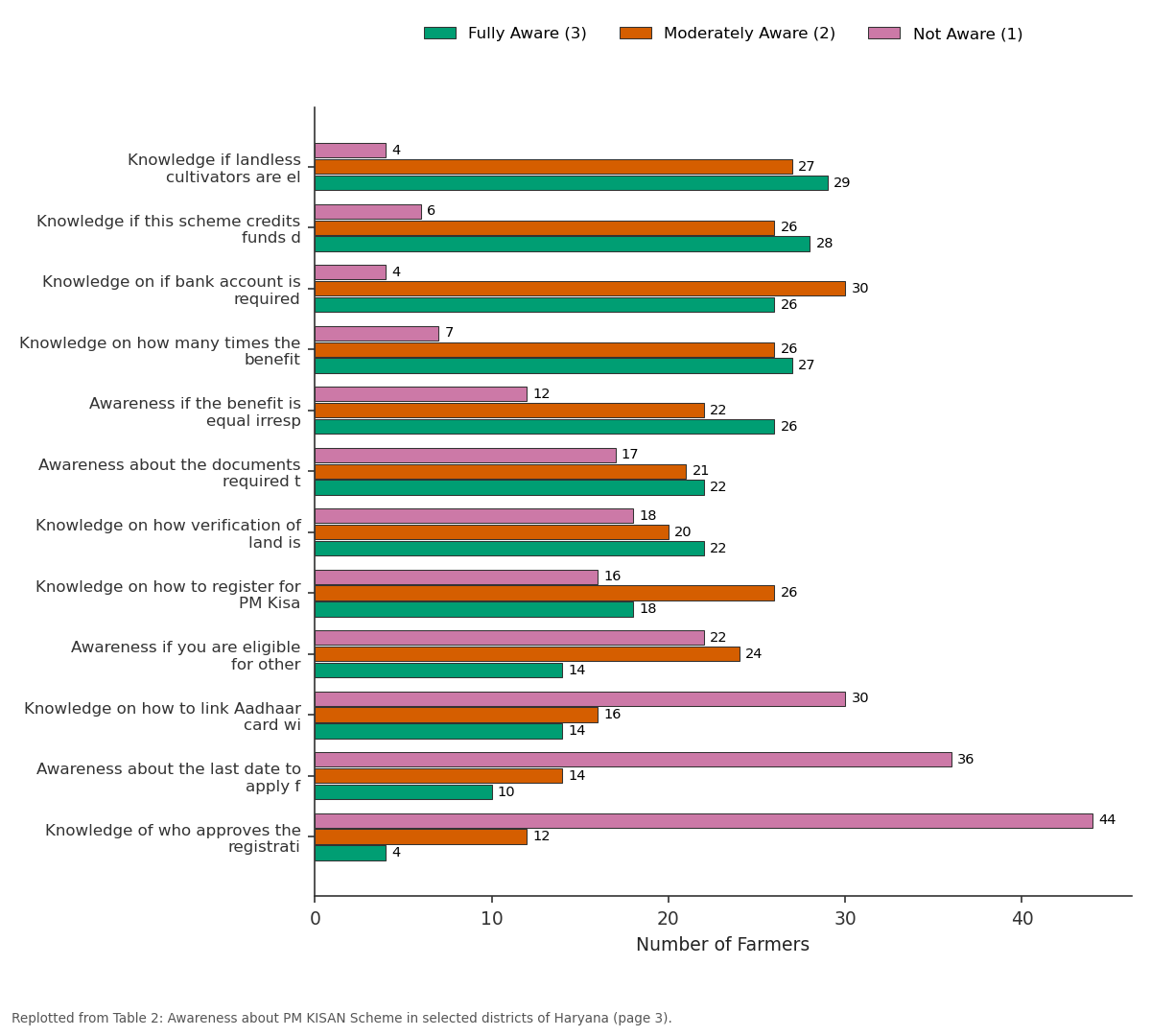
Fully Aware (3) and Moderately Aware (2) and more: Knowledge if landless... vs Knowledge if this... vs Knowledge on if bank... vs Knowledge on how many... vs Awareness if the...
Replotted from Table 2 (page 3) of the original paper. Every bar is the paper's own table value.
View source evidence ↗Figures & tables
From the original paper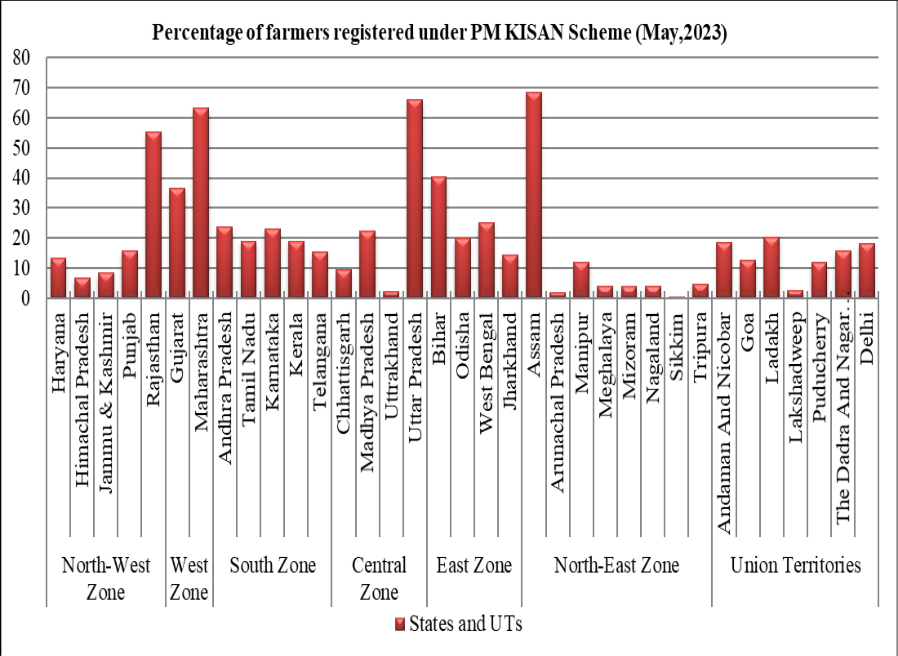 Figure 1
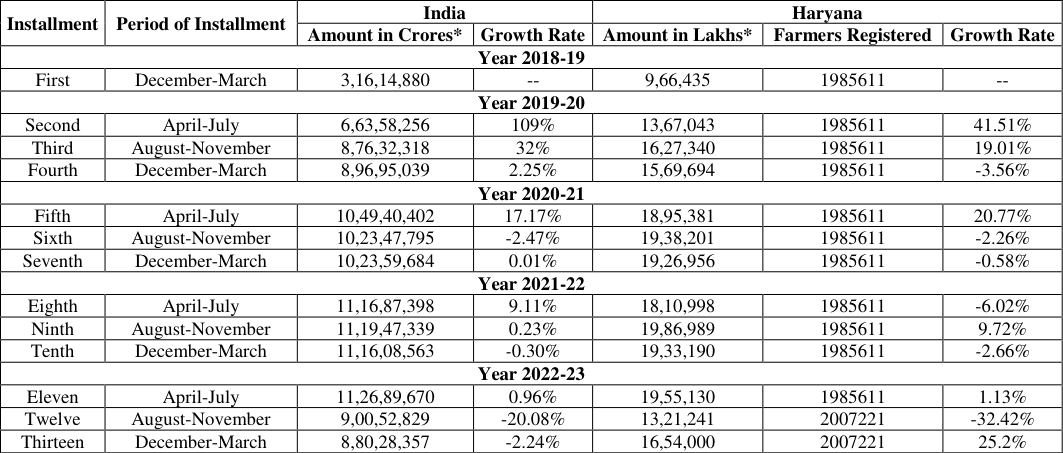 Table 1
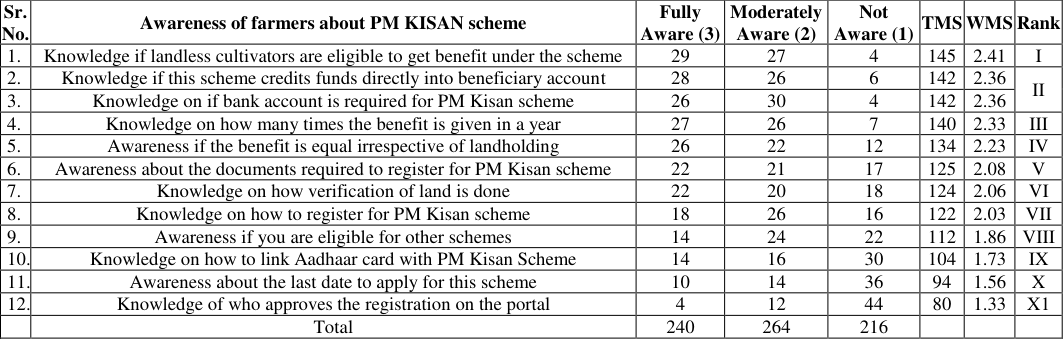 Table 2
 Table 3
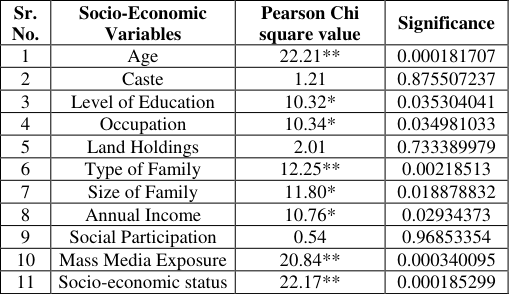 Table 4
Introduction
Agriculture in India is crippled by debt, weather risk, and price unrest. In the past significant initiatives have been adopted to improve the economic and social conditions of farmers, aiming to empower them and transform the agricultural sector such as Pradhan Mantri Fasal Bima Yojana (PMFBY), Pradhan Mantri Krishi Sinchayee Yojna (PMKSY), Soil Health Card (SHC), National Agricultural Market (eNAM) etc. to extend financial incentives to eligible individuals and farmers. In recent times, the central government has been committed to supporting various segments of the farming community through the implementation of Direct Benefit Transfer (DBT) programs. These initiatives aim to provide financial assistance to meet agricultural requirements and enhance the socio-economic well-being of farmers. DBT schemes have several advantages over traditional subsidy schemes, such as being more transparent and efficient. They provide regular and predictable income to the beneficiary. The DBT programme, which is being implemented in several parts of the world, has varied impacts on people's socio-economic conditions. It has been found to have a considerable favourable influence on household expenditure, coping mechanisms, school participation, shift to healthy eating habits, rise in health/education expenditure, enhanced living standards, and so on. However the farm distress continues to remain prevalent in rural India. As a result the Prime Minister Kisan Samman Nidhi Yojna (PMKISAN) scheme was introduced in the country as DBT initiative for small and marginal farmers. PM-KISAN is a central sector program of the Indian government that provides income support to farmers and their families. The scheme is intended to boost demand in the rural economy by facilitating the farmers to purchase inputs for agricultural and allied sector as well as meet their household requirements. The PM-KISAN program was initially implemented as the Rythu Bandhu program by the Telangana government, with a certain amount being paid directly to eligible farmers. Later, on February 1, 2019, Piyush Goyal announced the implementation of this program as a nationwide project as part of the Indian Union Interim Budget 2019. Kumar P. and et al. assessed the awareness level of farmers towards the PM-Kisan scheme. The study indicated that the scheme had reached 30 percent farmers within three months of its implementation. Because the money is placed directly into the farmers' accounts, the scheme is regarded as more efficient than farm loan waivers and subsidy schemes. A amount of Rs. 2000/-is transferred directly into farmers bank accounts in three installments throughout year through Public Financial Management System (PFMS) which is a platform for e-payment of subsidy under Direct Benefit Transfer (DBT). Akhilesh K. (2019) [2] studied the impact of the PM Kisan scheme in India and indicated that the PM-Kisan scheme has a significant impact on farmers' income and other macro-economic indicators like output, government revenue, saving, gross value added and trade. The farmers and their families have been shown to benefit from these types of programmes in a variety of ways, including increased income which can be used to purchase www.extensionjournal.com essential goods and services, such as food, clothing, and healthcare. However, there are certain limitations to DBT schemes. In most cases, it has not lasted long due to the type of funding needed to continue its functioning. One disadvantage is that they might be challenging to implement and administer. Another drawback is that they may not be able to reach all eligible farmers. This paper will examine the current status and progress of PM KISAN scheme for farmers in India as well as Haryana.
Methodology
The study aimed to comprehensively address its objectives through a dual-methodological approach, employing both quantitative and qualitative methodologies. The research was conducted in the districts of Hisar and Karnal in the Haryana state in the year 2022-23. A purposive sample size of 60 beneficiaries was selected to ensure a representative sample for the study. Primary data was gathered using a meticulously designed structured interview schedule, tailored to extract information aligning with the study's objectives. Secondary data was sourced from the pm-kisan portal, annual reports such as agricoop, and relevant journals and books (CS Armo, 2022) [8] . The data analysis involved a combination of statistical techniques, with a focus on both descriptive and inferential methods. Average and percentage analyses were conducted to derive interpretations of the results. Factor analysis was employed to measure the relationships between observed variables, providing understanding of underlying patterns. To facilitate a precise statistical examination, tools like the Statistical Package for the Social Sciences (SPSS) were utilized. Various techniques such as frequency analysis, chi-square tests, weighted mean scores, and rank order analysis were employed based on the nature of the data.
Results and Discussion
Results and Discussion
Current status of PM KISAN scheme
To examine the current status of the scheme, data was collected to determine the outreach of the scheme to farmers. For this, states and union territories were zoned and data collected from the PM-KISAN portal to analyze the number of registered farmers benefiting from this scheme. Out of all zones, the most farmers were registered in the central zone with 4,28,92,786 followed by south zone with 2,56,94,099. In contrast, the Union Territories had the lowest number of registered farmers at 95,470. The data show that Rajasthan had the most registered farmers in the North West Zone. In the western zone, Maharashtra had more than Gujarat. Likewise, Andhra Pradesh had the most registered farmers in the southern zone and Uttar Pradesh in the central zone. In the north-eastern zone of Assam, 68.4 percent of farmers were registered in the north-eastern states. In Table 1, it is revealed from the data that since the implementation of PM Kisan scheme centrally all the installments were released timely. Data revealed total funds transferred to registered farmers in Haryana were consistent and on time. www.extensionjournal.com
| Installment | Period of Installment | India | — | Haryana | — | — |
|---|---|---|---|---|---|---|
| Amount in Crores* | Growth Rate | Amount in Lakhs* | Farmers Registered | Growth Rate | ||
| Year 2018-19 | ||||||
| First | December-March | 3,16,14,880 | -- | 9,66,435 | 1985611 | -- |
| Year 2019-20 | ||||||
| Second | April-July | 6,63,58,256 | 109% | 13,67,043 | 1985611 | 41.51% |
| Third | August-November | 8,76,32,318 | 32% | 16,27,340 | 1985611 | 19.01% |
| Fourth | December-March | 8,96,95,039 | 2.25% | 15,69,694 | 1985611 | -3.56% |
| Year 2020-21 | ||||||
| Fifth | April-July | 10,49,40,402 | 17.17% | 18,95,381 | 1985611 | 20.77% |
| Sixth | August-November | 10,23,47,795 | -2.47% | 19,38,201 | 1985611 | -2.26% |
| Seventh | December-March | 10,23,59,684 | 0.01% | 19,26,956 | 1985611 | -0.58% |
| Year 2021-22 | ||||||
| Eighth | April-July | 11,16,87,398 | 9.11% | 18,10,998 | 1985611 | -6.02% |
| Ninth | August-November | 11,19,47,339 | 0.23% | 19,86,989 | 1985611 | 9.72% |
| Tenth | December-March | 11,16,08,563 | -0.30% | 19,33,190 | 1985611 | -2.66% |
| Year 2022-23 | ||||||
| Eleven | April-July | 11,26,89,670 | 0.96% | 19,55,130 | 1985611 | 1.13% |
| Twelve | August-November | 9,00,52,829 | -20.08% | 13,21,241 | 2007221 | -32.42% |
| Thirteen | December-March | 8,80,28,357 | -2.24% | 16,54,000 | 2007221 | 25.2% |
Table text extracted from the original PDF; superscript letters are shown inline. The original table image is below.
View original table image
Awareness of the farmers about PM KISAN scheme in Haryana
In Table 2, it is revealed from the data that almost half of the respondent stated they were fully aware about eligibility criteria of farmers under the scheme (Rank I), followed by funds credit into beneficiaries account and if bank account is required under this scheme (Rank II). Rank IV was given to the statement if benefit is equal for everyone based on weighted mean score, followed by documents required to register (Rank V). Similarly, awareness about how verification is done, how to register, eligible for other schemes and how to link Adhaar card were given Rank VI, VII, VIII and IX. Remaining ranks X and XI were given to awareness about last date to apply and who approves the registration on portal as only 16.67% and 6.67% farmers were aware about that.
| Sr. No. | Awareness of farmers about PM KISAN scheme | Fully Aware (3) | Moderately Aware (2) | Not Aware (1) | TMS | WMS | Rank |
|---|---|---|---|---|---|---|---|
| 1. | Knowledge if landless cultivators are eligible to get benefit under the scheme | 29 | 27 | 4 | 145 | 2.41 | I |
| 2. | Knowledge if this scheme credits funds directly into beneficiary account | 28 | 26 | 6 | 142 | 2.36 | II |
| 3. | Knowledge on if bank account is required for PM Kisan scheme | 26 | 30 | 4 | 142 | 2.36 | |
| 4. | Knowledge on how many times the benefit is given in a year | 27 | 26 | 7 | 140 | 2.33 | III |
| 5. | Awareness if the benefit is equal irrespective of landholding | 26 | 22 | 12 | 134 | 2.23 | IV |
| 6. | Awareness about the documents required to register for PM Kisan scheme | 22 | 21 | 17 | 125 | 2.08 | V |
| 7. | Knowledge on how verification of land is done | 22 | 20 | 18 | 124 | 2.06 | VI |
| 8. | Knowledge on how to register for PM Kisan scheme | 18 | 26 | 16 | 122 | 2.03 | VII |
| 9. | Awareness if you are eligible for other schemes | 14 | 24 | 22 | 112 | 1.86 | VIII |
| 10. | Knowledge on how to link Aadhaar card with PM Kisan Scheme | 14 | 16 | 30 | 104 | 1.73 | IX |
| 11. | Awareness about the last date to apply for this scheme | 10 | 14 | 36 | 94 | 1.56 | X |
| 12. | Knowledge of who approves the registration on the portal | 4 | 12 | 44 | 80 | 1.33 | X1 |
| Total | 240 | 264 | 216 |
Table text extracted from the original PDF; superscript letters are shown inline. The original table image is below.
View original table image
Awareness level of the farmers
In Table 3, it is revealed that highest percentage of the farmers were having medium level of awareness i.e. 36.67 percent followed by 33.33 percent and 30.00 percent who were having high and low level of awareness respectively.
| Sr. No | Level of awareness | Frequency (%) |
|---|---|---|
| 1 | Low (12-19) | 18 (30.00) |
| 2 | Moderate (20-28) | 22 (36.67) |
| 3 | High (29-36) | 20 (33.33) |
Table text extracted from the original PDF; superscript letters are shown inline. The original table image is below.
View original table image
Association between socio economic variables and awareness level of farmers about PM KISAN scheme
Socio-economic variables which exhibit influence on the awareness level of the farmers about PM KISAN scheme are shown in Table 4. Data analysis revealed that the socioeconomic variables such as age, type of family, mass media exposure and socio-economic status were found to be highly significant with level of awareness about the scheme. Similarly, level of education, occupation, size of family and annual income were significantly associated with level of awareness. Whereas, caste, size of land holdings and social participation clearly had no significant association with level of awareness of farmers about PM KISAN scheme.
| Sr. No. | Socio-Economic Variables | Pearson Chi square value | Significance |
|---|---|---|---|
| 1 | Age | 22.21** | 0.000181707 |
| 2 | Caste | 1.21 | 0.875507237 |
| 3 | Level of Education | 10.32* | 0.035304041 |
| 4 | Occupation | 10.34* | 0.034981033 |
| 5 | Land Holdings | 2.01 | 0.733389979 |
| 6 | Type of Family | 12.25** | 0.00218513 |
| 7 | Size of Family | 11.80* | 0.018878832 |
| 8 | Annual Income | 10.76* | 0.02934373 |
| 9 | Social Participation | 0.54 | 0.96853354 |
| 10 | Mass Media Exposure | 20.84** | 0.000340095 |
| 11 | Socio-economic status | 22.17** | 0.000185299 |
Table text extracted from the original PDF; superscript letters are shown inline. The original table image is below.
View original table image
Conclusion
The data analysis conducted to assess the current status of the PM-KISAN scheme's outreach to farmers provides valuable insights. Firstly, it is evident that the central and south zones have the highest number of registered farmers, indicating a strong presence of the program in these regions. Conversely, Union Territories exhibit the lowest participation, possibly due to their unique administrative status. Rajasthan, Maharashtra, Andhra Pradesh, and Uttar Pradesh stand out as states with the highest number of registered farmers in their respective zones. This distribution reflects regional disparities in program adoption. The awareness levels among farmers about the scheme were assessed. It's heartening to note that roughly half of the respondents were fully aware of the eligibility criteria, indicating successful communication efforts. However, the lack of awareness about the last application date and the approval authority on the portal signifies areas for improvement. The influence of socio-economic variables on awareness was examined. Age, family type, mass media exposure, socio-economic status, education, occupation, family size, and annual income were found to be significantly associated with awareness, emphasizing the importance of tailored communication strategies. In conclusion, the PM-KISAN scheme has made substantial progress in reaching farmers, with varied regional adoption. The analysis highlights the need for enhanced communication efforts, especially in less-aware demographics, and underscores the importance of considering socio-economic variables when designing awareness campaigns to ensure equitable access to the scheme
Figures and tables from the paper
References
13 in the original paper- Adhikari S, Mishra A. Impact of direct cash transfer on farmers' income and food security: Evidence from India. J Dev Stud. 2019;55(12):2397-2420.
- Akhilesh K. Macro-economic Impact of Income Support Programme for Farmers in India. J Income Wealth. 2019;41(1):177-187.
- Amitha CD, Karthikeyan C. Pradhan Mantri Kisan Samman Nidhi (PM KISAN) -Beneficiaries Opinion, amid -COVID-19 pandemic. Indian Res J Ext Edu. 2022;22(3):July-September.
- Gupta A, Mishra PK. Impact of direct cash transfer on farmer's welfare: Evidence from India. Econ Polit Weekly. 2020;55(26):48-55.
- PM Kisan Samman Nidhi. [Internet]. [cited 2024 Mar 22]. Available from: https://pmkisan.gov.in
- Government of India. PM Kisan Samman Nidhi. 2023.
- Kapur D. Direct benefit transfers: A new approach to social protection. World Bank Policy Research Working Paper. 2013;6646.
- Qureshi A, CS Armo. Evaluation of groundwater quality in Raya Block, Mathura District (Uttar Pradesh) using water quality index. Int. J Geogr Geol Environ. 2022;4(1):49-53.
- Kavitha HN, Kumar P, Anbukkani P, Burman RR, Venkatesh P, Jha GK, Prakash P. Performance of Universal Basic Income Programme in India: A Case Study of PM-Kisan Scheme. Indian J Ext Educ. 2020;56(3):1-8.
- Kumar D, Phougat S. Analysis of Pradhan Mantri Kisan Samman Nidhi (PM-KISAN) Scheme: With special reference to Haryana state. J Global Agric Ecol. 2021;12(2):1-8.
- List of beneficiaries in Indian and all other states under PM Kisan Scheme. [Internet]. [cited 2024 Mar 22].
- Mr L, Vallabhaneni M. A Study on Analysis of the Progress of PM Kisan Samman Nidhi Yojana to the Farmers in Karnataka State. Eur Chem Bull. 2023;12(S3):3880-3887.
- Rao K, Sharma A. Impact of direct cash transfer on farmers' welfare: Evidence from India. Econ Polit Weekly. 2019;54(29):43-51.
Cited by 3
From OpenAlex, OpenCitations and reference lists read by Scinovex
- Knowledge of PM-KISAN beneficiary farmers in Namakkal district of Tamil Nadu: A statistical assessment
Poovarasan K, Senthamizhkumaran VR, Arthy P, 3Inmozhi S, Ishwarya S, Kalaiyarasi V · International Journal of Agriculture Extension and Social Development · 2026
The Pradhan Mantri Kisan Samman Nidhi (PM-KISAN) scheme, launched in February 2019, provides income support of Rs. 6,000 per year to eligible landholding farmer families across India through Direct Benefit Transfer (DBT). The success of such welfare interventions depends substantially on the level of knowledge that beneficiaries possess regarding eligibility, documentation, registration procedures and instalment patterns. The present study assessed the socio-economic profile and knowledge of farmers towards the PM-KISAN scheme in Namakkal district of Tamil Nadu, and statistically validated the
- Utilization of farmers towards PM-KISAN Scheme in Namakkal District of Tamil Nadu
Poovarasan K, Ragunath S, Senthamizhkumaran VR, Arthy P, Inmozhi S, Ishwarya S · International Journal of Agriculture Extension and Social Development · 2026
The Pradhan Mantri Kisan Samman Nidhi (PM-KISAN) scheme is one of the largest direct benefit transfer (DBT) programmes for farm households in India, yet its ground-level performance depends heavily on the socio-economic composition of the beneficiaries it reaches. This study profiled 70 PM-KISAN beneficiary farmers on eleven socio-personal, economic and communication-behaviour variables such as age, gender, education, landholding, type of land ownership, farming experience, annual income, cropping pattern, risk orientation, extension agency contact and social participation using a pre-tested,
- Socio-economic profile, awareness and constraints of farmers regarding PM-KISAN scheme
Prachi Shivvedi, YK Singh, Manu Singh · International Journal of Agriculture Extension and Social Development · 2026
The present study was conducted in Seoni district of Madhya Pradesh to assess the socio-economic profile, awareness regarding the Pradhan Mantri Kisan Samman Nidhi (PM-KISAN) Scheme and constraints faced by farmers in accessing and availing its benefits. Primary data were collected from 120 farmers selected from four villages, namely Suktar, Karbodi, Arandiya and Devri, through a pre-tested structured interview schedule. The data were analyzed using frequency, percentage, mean, standard deviation and mean score techniques. The findings revealed that the majority of respondents were middle-aged