
Research article · 2024 · Full text
International Journal of Agriculture Extension and Social DevelopmentCOVID-19 Impact on agriculture: A review
Volume 7(3) · Pages 471–474 · DOI: 10.33545/26180723.2024.v7.i3f.461 ↗
Research areasCOVID-19 Pandemic ImpactsCOVID-19 epidemiological studiesCOVID-19 impact on air quality
Abstract
Author-writtenThe expand of Covid-19 pandemic affected all parts of the human society by creating massive socio-economic panic across all the sectors including agriculture, commerce, shipping, manufacturing and tertiary sectors across the world. The agricultural and food sector were considered as the most crucial part of the developing economics across the globe, which was completely exposed during the Covid-19 pandemic. Due to the spread of the coronavirus pandemic (COVID-19), global agriculture is currently out of balance. The agriculture companies states that the two primary ways that COVID-19 affects agriculture are the supply and demand for food. In an attempt to disrupt the movement of agricultural products into markets, the virus started to spread over multiple countries.Farmers have limited access to agricultural inputs. Open-field vegetables and spring crops like wheat, barley, and maize cannot be grown during a pandemic. Agriculture is now facing significant effects as a result of the pandemic. Each and every thing which are linked to agricultural production to the final consumer has been impacted by COVID-19. Noticeably, the Indian economy was dealing with rising food prices even prior to the start of the COVID-19 pandemic. A significant part of our existence is agriculture. Agriculture has been seriously impacted by the coronavirus outbreak. Numerous factors have affected the supply chain for agriculture, agriculture is the most significant area of human progress. No income exists when there is no production, depending on the workers of the agricultural industry.COVID-19 pandemic affects the lives of many farmers all over the world and has a negative impact on agriculture sector.
Summary
Source-checkedPlain-language reading of the full paper, prepared with AI and checked against the text. Each point links to the authors' own words.
Why it matters
- The agricultural and food sectors are critical components of developing economies worldwide, a fact that became evident during the COVID-19 pandemic. View evidence ↗
- Agriculture serves as the backbone of the Indian economy, with over 60% of the population depending on it. View evidence ↗
- Approximately 140 million people in India rely on the agriculture and food sectors for their primary income, making the national economy vulnerable to pandemic-driven imbalances. View evidence ↗
The question
- The objective of this review is to examine the impacts of the COVID-19 pandemic on the agricultural sector. View evidence ↗
What they did
- The authors conducted a review of existing literature and reports, including data from the FAO and WFP, to synthesize the effects of the pandemic on agriculture. View evidence ↗
What they found
- Agricultural companies identify the disruption of food supply and demand as the two primary ways COVID-19 affected the sector. View evidence ↗
- An FAO report estimated that the pandemic could increase the number of people worldwide suffering from chronic hunger and malnutrition by approximately 130 million in 2020. View evidence ↗
- The agriculture sector contributes 23% to the GDP while providing food for 1 billion people. View evidence ↗
- Disruptions to the agricultural supply chain led to a 64% increase in the cost of products. View evidence ↗
- Globally, more than 1 billion people rely on the agriculture sector as a source of income. View evidence ↗
- Logistical failures and mismatches between supply and demand caused the waste of thousands of liters of milk across various regions. View evidence ↗
- Transport restrictions, road blockages, and border closures significantly hindered the movement of harvesters, laborers, and migrant workers. View evidence ↗
- Lockdowns affecting agricultural machinery disrupted the supply of inputs for farmers and impacted exports. View evidence ↗
- The global pandemic caused worker shortages that negatively impacted both the planting and harvesting of crops. View evidence ↗
What it means
- The authors conclude that the government must provide financial assistance to the agricultural sector to prevent the collapse of this vital part of the Indian economy. View evidence ↗
- The authors recommend adopting innovations such as digitalization, hydroponics, community farming, and new financial schemes to build resilience and sustainability in agriculture. View evidence ↗
Visual summary
1 visualsIllustrations explain the paper; they do not show study data.
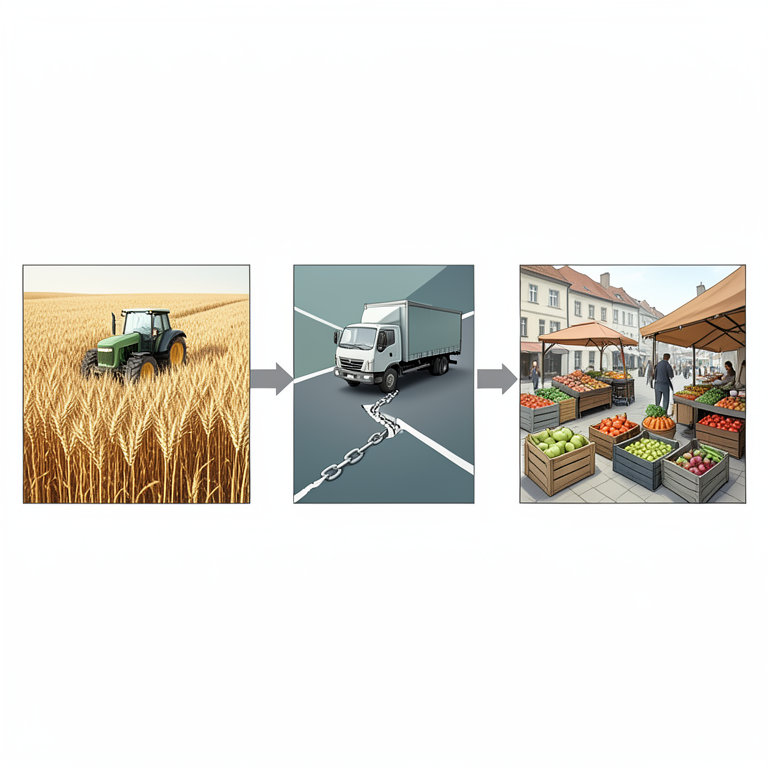
Agricultural Supply Chain Disruption
AI-generated conceptual illustration (Agricultural supply chain including wheat fields, transport trucks, and a city marketplace). It explains the idea and does not show study data.
View source evidence ↗Figures & tables
From the original paper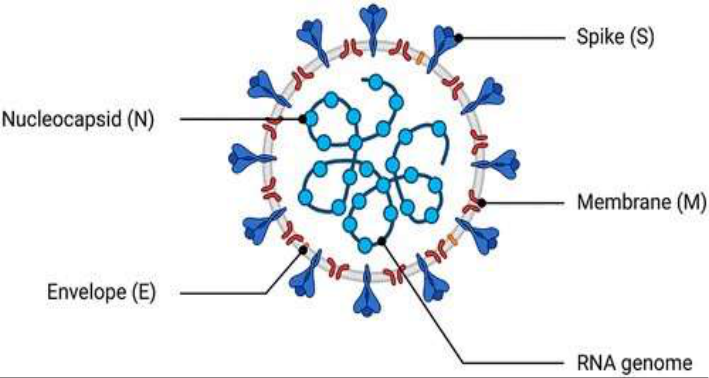 Figure 1
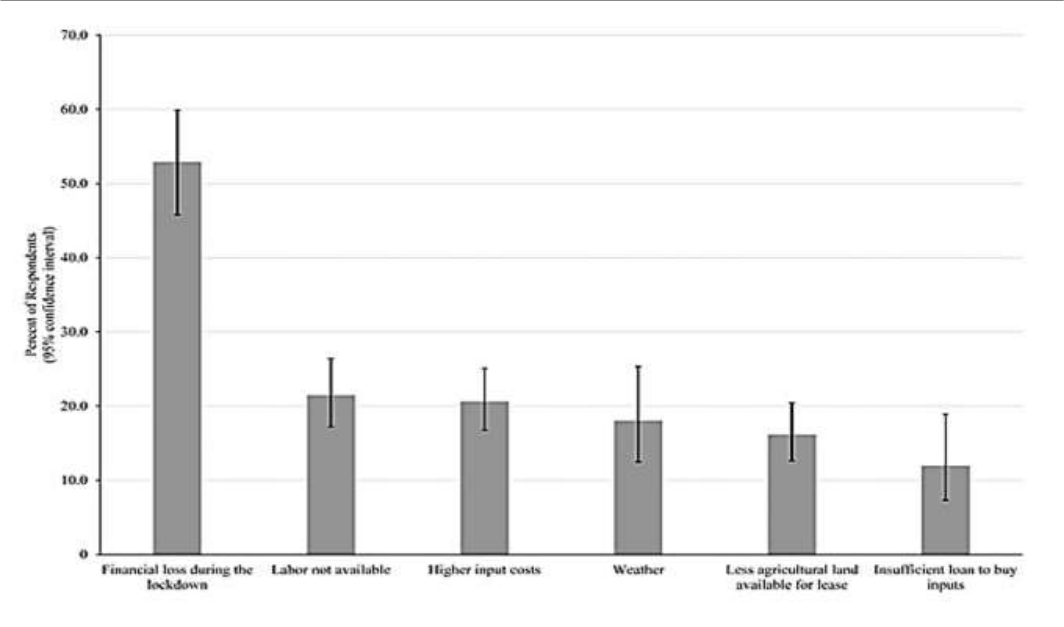 Figure 2
 Figure 3
Introduction
The agriculture industry is a broad spot in the Indian economy during the 2020-2021 coronavirus pandemic. The Indian and global economy has suffered greatly.The 2019 novel coronavirus, also known as severe acute respiratory syndrome coronavirus 2 (SARS-COV 2), is the infectious agent that causes COVID-19. Coronavirus were seen in Wuhan, China in December 2019, and it was declared a pandemic on March 11, 2020, after the virus spread over the world. Covid-19 is severe in India as compared with other countries. The first Covid-19 positive case was identified in Kerala in India on 27 January 2020. Since then, it started spreading at an alarming rate. In order to prevent its spread, the Government of India had announced a nationwide lockdown on 24 March 2020. The lockdown had adversely affected all the segments of the Indian society. Agriculture is one of the priority sectors severely affected by the lockdown. If a nation's agricultural sector is confronted with challenges, the population's well-being will be affected (Tambi et al., 2021) [10] . The strict lockdown measures resulted in the restrictions of major economic activities such as production, exports, commerce, logistics, processing, manufacturing, etc. It has an undesirable and prominent influence on agriculture and allied sectors of the country. The pandemic lockdown has resulted in the agrarian crisis across the nation by influencing and disrupting the food demand, food supply and value chain of various agricultural goods and commodities. In the country like India where majority of the population, approximately 140 million, depends directly or indirectly on agriculture and food sectors as the primary source of their income the impact due to the Covid-19 pandemic created an imbalance and affected the economy of the nation. The FAO report, "State of Food Security and Nutrition in the World", estimates that the Covid-19 pandemic could add about 130 million people worldwide suffering from chronic hunger and malnutrition in 2020 (FAO et al., 2020) [11] . The COVID-19 viruses can be transmitted through direct surface contacts or respiratory droplets while sneezing or coughing. The virus has also been shown to affect with individuals with low immunity.COVID-19 symptoms are Respiratory sickness, fever, heart problems, vomiting, and loss of taste and smell. Preventive measures are Using masks in public areas, social distancing, hand sanitizer, and vaccination. Diagnostic test are RT-PCR and CT scan. More than 60% of Indians depend on agriculture, this is the backbone of the Indian economy. Spread of covid 19 around the world, imposition of nationwide lockdown from 23-march-2020 to 31-may-2020, agriculture emerged as a absorbing sector. The GDP is contributed by the agriculture sector is 23%. Although it feeds a 1 billion people. The agriculture sector is suffering a lot of problems as a result of the COVID-19 outbreak. Lockdown disrupted the economic activities and food supply chains significantly.
Farmers suffer greatly during lockdowns since all marketplaces and industries are closed. Agriculture is important because it increase crop yields, diseases resistant varieties is developed, it is Used in medicinal plants and it Provides raw materials for food, and other products.
Economic Impact of COVID-19 on Agriculture
Economic Impact of COVID-19 on Agriculture
Impact on transportation, exportation, and distribution of agriculture products
The stoppage of transport restrictions, border closures, and road blockages have a significant impact on the movement of migrant workers, harvesters and labors. The lockdown on agricultural machinery caused supply chain disruptions for farmers, agricultural inputs, and exports. The same way that people couldn't go to retail stores to make purchases, fertilizers and seeds couldn't move. Markets and mandis are closed due to a lack of transportation. Commodity import and export are significantly impacted by coronavirus.
Impact on Fruit/vegetable processing
A shortage of workers for crop cultivation impacted planting and harvesting as a result of the worldwide pandemic, because of the COVID-19 lockdown, perishable food commodities including fruits and vegetables are severely impacted. Most of the industry is unorganized in the agriculture sector. Owned supply stores and sabji mandis are closed during lockdown. This network is totally disrupted by COVID-19. Due to their inability to access marketplaces for purchase and sale, small farmers will also be negatively impacted.
Impact on Dairy products
During a coronavirus, market, shops, dairy and retail establishments are closed. Milk and other perishable foods have been adversely impacted by the lockdown. Without the right preparation, milk cannot be processed. Farmers that raise cattle have converting milk into butter and ghee, which have longer shelf lives. There have been significant losses for farmers. Due to logistical issues that led to a mismatch in supply and demand, thousands of litres of milk have been wasted in several regions of the nation.
Impact on Food Price
The lack of market access and disruptions to the food supply chain and transportation have led to an increase in the price of agricultural globally. Indications that food costs will be rising in the third week of March 2020. The increases are marked for rice, wheat, legumes, fruits, vegetables, milk, curd, butter, and other items. Disruptions to the agricultural supply result in a 64% rise in product costs. The impact of COVID-19 on farmers' livelihoods.The agriculture sector is a source of income for more than 1 billion people across the globe.
Conclusion
This review concluded that COVID -19 Impact on agriculture, farmers are facing difficulties in many ways. Pandemic affect the lives of all over the world, but especially Farmers are suffering from basic needs and they don't have money to lead their life. Farmers family become financially weak and they are not able to sell food. These situations affect the lives of farmers, Govt needs to take a step and help the agriculture sector financially, so that the biggest agriculture sector of the Indian economy doesn't lost during the difficult times and all these things are beneficial for Indian economy and agricultural world. This pandemic crisis has started a new era in the agriculture and food industry. It has created several challenges in the agriculture and food ecosystem worldwide. It has affected major areas of production, processing, food supply chain, dietary changes, logistics, etc. along with national economy and food security. Innovations such as development and introduction of new products and services, introducing new financial schemes, family farming, community farming, roof top farming, hydroponics, digitalization, etc. will address the modern challenges in agricultural sectors moving a step ahead towards resilience and sustainability.
Figures and tables from the paper
References
10 in the original paper- Arumugam DU, Kanagavalli DG. COVID-19: Impact of agriculture in India. Aegaeum Journal. 2020, 8(5).
- Poudel PB, Poudel MR, Gautam A, Phuyal S, Tiwari CK, Bashyal N, et al. COVID-19 and its global impact on food and agriculture. Journal of Biology and Today's World. 2020;9(5):221-225.
- Gray RS. Agriculture, transportation, and the COVID-19 crisis. Canadian Journal of Agricultural Economics/Revue canadienne d'agroeconomie. 2020;68(2):239-243.
- Lin BX, Zhang YY. Impact of the COVID-19 pandemic on agricultural exports. Journal of Integrative Agriculture. 2020;19(12):2937-2945.
- Sridhar A, Balakrishnan A, Jacob MM, Sillanpää M, Dayanandan N. Global impact of COVID-19 on agriculture: role of sustainable agriculture and digital farming. Environmental Science and Pollution Research. 2023;30(15):42509-42525.
- Mouloudj K, Bouarar AC, Fechit H. The impact of COVID-19 pandemic on food security. Les cahiers du CREAD. 2020;36(3):159-184.
- Gregorioa GB, Ancog RC. Assessing the impact of the COVID-19 pandemic on agricultural production in www.extensionjournal.com Southeast Asia: Toward transformative change in agricultural food systems. Asian Journal of Agriculture and Development. 2020;17(1):1-13.
- Aday S, Aday MS. Impact of COVID-19 on the food supply chain. Food Quality and Safety. 2020;4(4):167180. DOI: https://doi.org/10.1002/fft2.93
- Alvi M, Gupta M. Learning in times of lockdown: how Covid-19 is affecting education and food security in India. Food Security. 2020;12:793-796. DOI: https://doi.org/10.15832/ankutbd.941162
- Tambi N, Choy EA, Yusoff NH, Abas A, Halim UL. Well-being challenges of palm oil smallholders community. e-Bangi. 2021;18:262-278. DOI: https://doi.org/10.17221/344/2022-AGRICECON