
Research article · 2024 · Full text
International Journal of Agriculture Extension and Social DevelopmentKnowledge of adopter and non-adopter farmers regarding super seeder for crop residue management
Volume 7(3) · Pages 479–483 · DOI: 10.33545/26180723.2024.v7.i3f.463 ↗
Research areasAgricultural Economics and PracticesCrop Yield and Soil FertilityAgricultural Science and Fertilization
Abstract
Author-writtenThe agriculture ecosystem has observed a transformative shift with the introduction of advanced technologies for sustainability and one such innovation making like a wave is Super Seeder. Keeping in mind the environment sustainability through the agricultural technologies and knowledge of farmers, a study was conducted in Karnal district of Haryana state among 80 adopter and non- adopter farmers of Super seeder. Results revealed that one fourth of the respondents had low level of knowledge, while 45.00 percent of the respondents had medium level of knowledge and rest (30.00%) of the respondents demonstrated high level of knowledge regarding super seeder technology. Age, education, subsidiary occupation, size of landholdings, annual income, social participation, mass media exposure and socio-economic status were significantly associated with level of knowledge among respondents. It was found that 53.85 percent of the respondents with high socio-economic status had high level of knowledge. The mean comparison of level of knowledge among adopters and non-adopters showed that the mean score of knowledge among adopters was 23.03, with a standard error of 0.76, whereas the mean score of knowledge among non-adopters was 21.33, with a standard error of 0.55. Furthermore, the z-value for level of knowledge was 2.02*, indicating that level of knowledge was statistically significant at 5% level.
Summary
Source-checkedPlain-language reading of the full paper, prepared with AI and checked against the text. Each point links to the authors' own words.
Why it matters
- Paddy straw burning is a significant issue in India, with the highest number of reported cases occurring in the states of Punjab and Haryana. View evidence ↗
- The practice of burning crop residues leads to a substantial loss of biomass and creates various environmental problems. View evidence ↗
- The Super Seeder is considered a highly productive technology that allows wheat to be planted in paddy fields without burning straw, which helps maintain soil nutrition. View evidence ↗
The question
- The study aimed to evaluate farmers' knowledge levels regarding the Super Seeder, identify factors associated with that knowledge, and compare knowledge between adopters and non-adopters. View evidence ↗
What they did
- The research was conducted in the Karnal district of Haryana, involving a total of 80 farmers who were either adopters or non-adopters of Super Seeder technology. View evidence ↗
- The sample was evenly split between 40 adopter farmers and 40 non-adopter farmers. View evidence ↗
- Data were gathered using a survey method with structured interviews and analyzed using frequency, chi-square, t-tests, weighted mean scores, and rank order. View evidence ↗
What they found
- A large majority (90%) of the respondents recognized the Super Seeder as a viable option for managing crop residue. View evidence ↗
- Every respondent (100%) was aware that the Super Seeder is used to sow wheat in fields that have standing stubble. View evidence ↗
- Knowledge levels were significantly associated with several factors, including age, education, annual income, landholding size, social participation, mass media exposure, subsidiary occupation, and socio-economic status. View evidence ↗
- Socio-economic status played a role, with 53.85% of respondents in the high socio-economic category possessing a high level of knowledge. View evidence ↗
- Adopters had a higher mean knowledge score (23.03 ± 0.76) compared to non-adopters (21.33 ± 0.55). View evidence ↗
- The difference in knowledge levels between adopters and non-adopters was statistically significant at the 5% level (z-value = 2.02). View evidence ↗
What it means
- The authors conclude that the Super Seeder is one of the most effective technologies for sowing wheat while simultaneously protecting the environment. View evidence ↗
- Because many farmers had low to medium knowledge, the authors suggest that increasing farmer knowledge is key to making the Super Seeder an effective, environmentally friendly technology. View evidence ↗
Visual summary
3 visualsIllustrations explain the paper; charts are replotted from the paper's own table values.
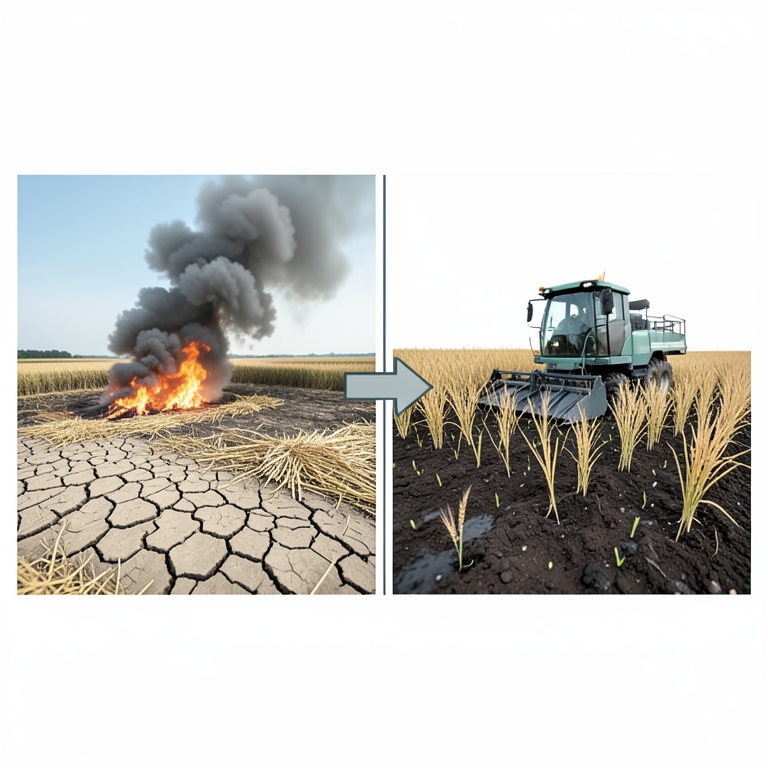
Environmental Impact Comparison
AI-generated conceptual illustration (paddy fields and wheat crops). It explains the idea and does not show study data.
View source evidence ↗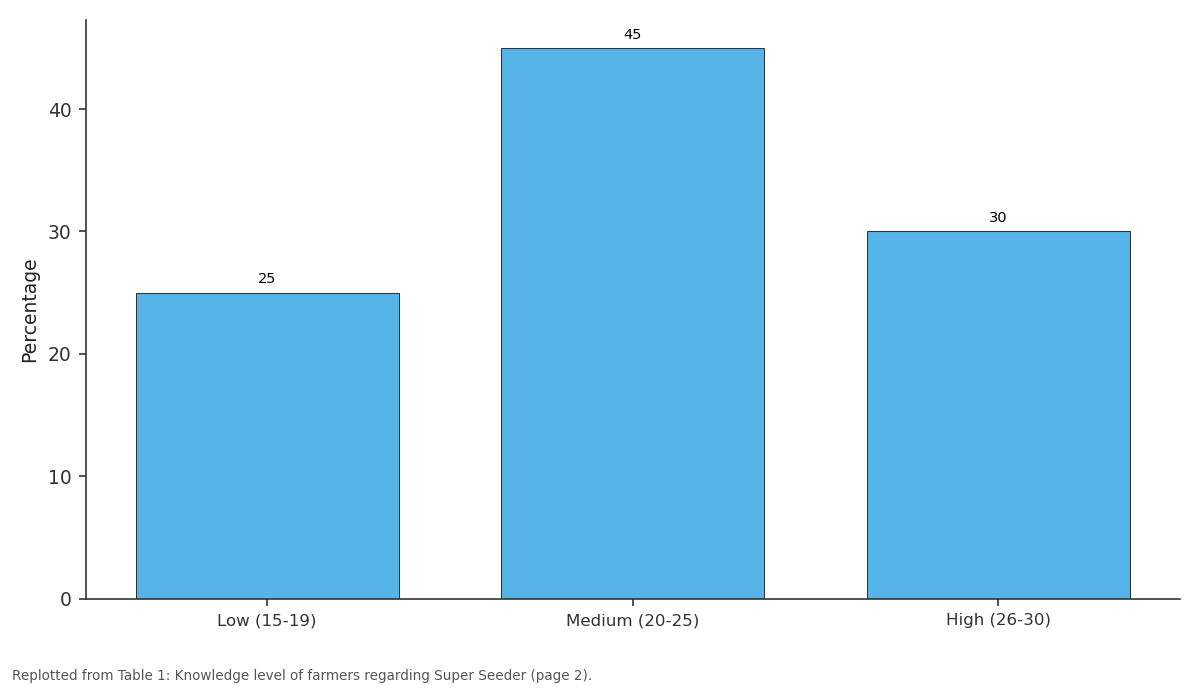
Percentage: Low (15-19) vs Medium (20-25) vs High (26-30)
Replotted from Table 1 (page 2) of the original paper. Every bar is the paper's own table value.
View source evidence ↗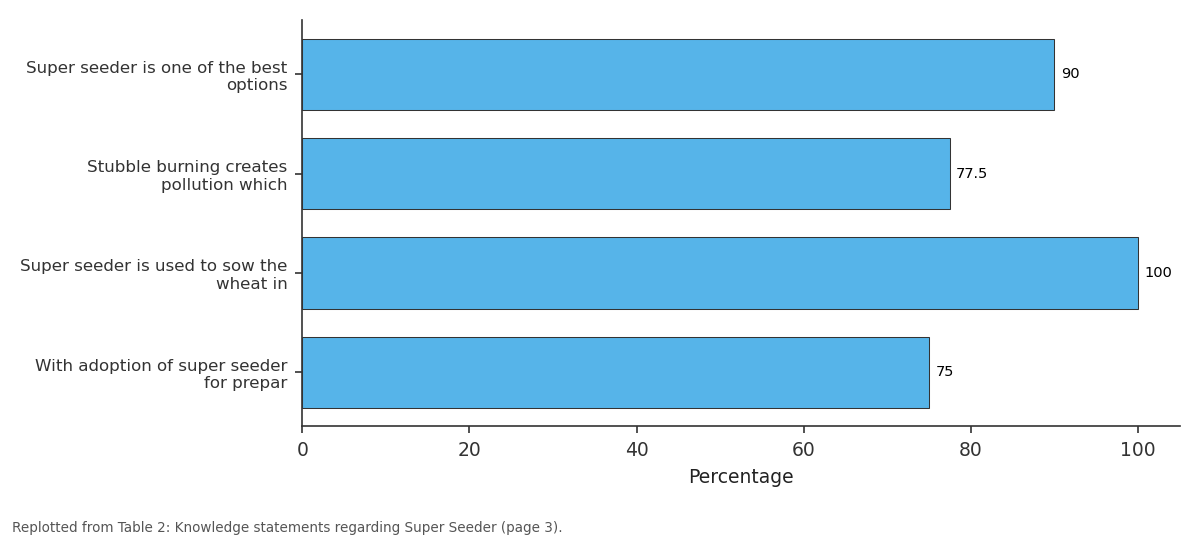
Percentage: Super seeder is one of... vs Stubble burning creates... vs Super seeder is used to... vs With adoption of super...
Replotted from Table 2 (page 3) of the original paper. Every bar is the paper's own table value.
View source evidence ↗Figures & tables
From the original paper Table 1
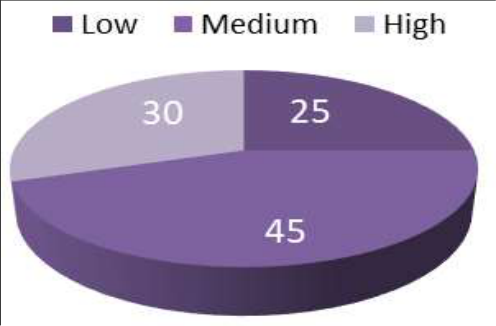 Figure 1
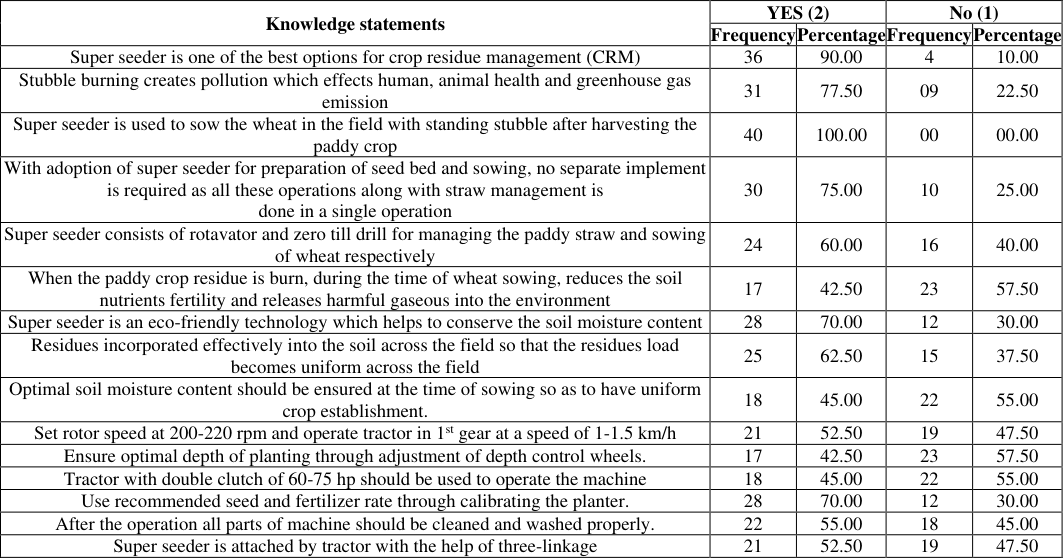 Table 2
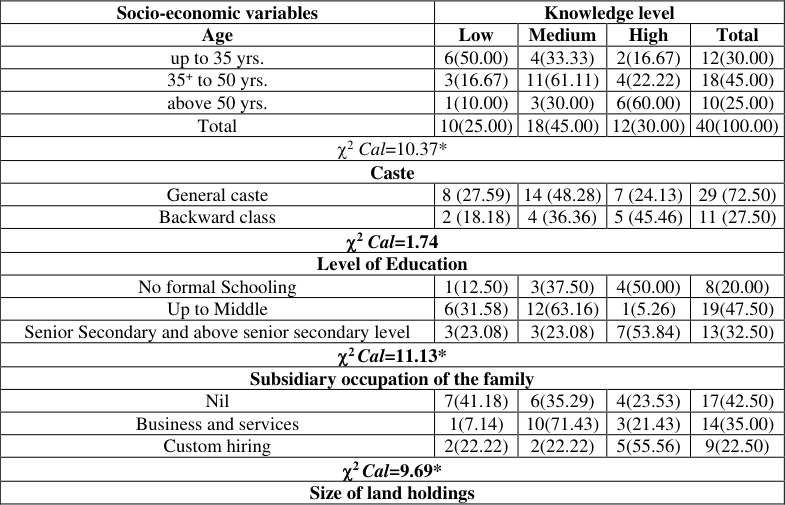 Table 3
 Table 4
Introduction
Wheat grows on approximately 29.3 million hectares (Mha) in India, yielding 103.6 million tonnes (MT) with a productivity of 3,533 kg ha-1 (FAO, 2021) [2] . This makes Haryana the fourth most important state in the nation for growing wheat, after Madhya Pradesh, Punjab, and Uttar Pradesh. With a yield of 48.36 quintals ha-1 and a production of 12.36 MT, Haryana produces 11.28 percent of all wheat produced in India. Rice-wheat farming replaced conventional crops (oilseeds, pulses, pearl millet, and maize) in Haryana and Punjab in the late 1970s and early 1980s. Sustainable resource use was not a problem because farming practices were changed to guarantee that the nation generated enough food. Currently, a very productive ricewheat region in the Indo-Gangetic Plain exists in Haryana and Punjab, contributing over 69% of global food production (approximately 84% wheat and 54% rice), (Singh et al 2014) [11] . Despite its significance, there have been problems with crop management and residue generation in wheat and rice crops. While burning of paddy straw is an issue in many states, Punjab and Haryana have the highest numbers of reported cases, (PIB 2022). Because of its ease of use, low cost, increased automated harvesting, short window between rice harvest and wheat sowing, and lack of useful applications for leftovers, burning is the most used method for managing rice crop wastes.One of burning's main benefits is that it helps clean land as soon as possible before the next crop is harvested, which promotes seed germination and reduces the risk of residue-borne diseases (Mandal et.al. 2004) [10] . Under this arrangement, farmers benefit more, but they also deplete natural resources like groundwater, soil fertility, soil fauna and flora. In addition, they harmed agro-ecosystem, increased insect pest and disease resistance, decreased soil organic matter, and did other things to the agro-ecosystem. Thus, the process of burning not only leads to the huge loss of biomass but also causes different type of environmental problems (Kumar, et al 2015) [9] . It has been estimated that this crop rotation will result in around 40 million tonnes of crop waste, (Kathpalia et al 2022) [7] . Every year, around half of the 50 MT of rice straw that is burned takes place in northwest India between October and November (Kaur et al 2022) [8] . Thus, Punjab's and Haryana's air quality has been drastically declining. Using crop wastes as mulch for surface management provides a number of benefits. By preserving soil, utilising a sensible temperature regime, managing weeds, and enhancing soil health, these conserve irrigation water. For a comparable yield in summer crops, conserving irrigation www.extensionjournal.com water with straw mulch can save up to 70-300 mm (Jalota et al 2007). [4] Reducing water evaporation using crop straw mulching. A notable rise in the sustainability score is also largely attributable to crop residue retention. The last ten years have seen the development of a variety of equipment to address the issue of paddy straw burning, including a straw baler, a straw chopper-cum-spreader, zero drills, happy seeders, super seeders, etc. Accordingly, the Super Seeder is the most productive recent technology for placing wheat in paddy fields without burning straw in order to maintain soil nutrition value also. So, keeping in mind the need and importance of Super Seeder a study was conducted with following objectives: 1. To study the knowledge level of farmers regarding Super Seeder 2. To delineate the factors associated with knowledge level 3. To draw the mean comparison of knowledge among adopters and non-adopter farmers.
Methodology
The study was conducted in Karnal district of Haryana state among 80 adopter and non-adopter farmers of Super Seeder farm technology. The study was carried out in the 3 blocks of the district namely Karnal, Kunjpura and Gharaunda. The villages undertaken for the study were Mughal majra, Nabipur, Nalwikhurd, Naiwal, Subhri, Amupur, Sharafabad, Sarsi, Ganger and village Ramba from Karnal block; fromKunjpura block village Kunjpura and Mohamadpur, from Gharaunda block villageGudhawere undertaken where maximum number of farmers had adopted Super seeder farm technology. On the whole, a total of 40 Super Seeder adopter farmers and 40 non-adopter farmers were selected. Interview schedule was prepared to collect the desired information as per objectives of the study. Data were collected with survey method with the help of wellstructured interview schedule. Statistical techniques like frequency, chi square, t-test, weighted mean scores and rank order were
Results and Discussion Knowledge level of Super Seeder Adopters
The Table 1. Illustrates the level of knowledge among the Super Seeder adopters. One fourth of the respondents had low level of knowledge, while 45.00 percent of the respondents had medium level of knowledge and rest (30.00%) of the respondents demonstrated high level of knowledge.
| Knowledge level | Frequency | Percentage |
|---|---|---|
| Low (15-19) | 10 | 25.00 |
| Medium (20-25) | 18 | 45.00 |
| High (26-30) | 12 | 30.00 |
Table text extracted from the original PDF; superscript letters are shown inline. The original table image is below.
View original table image
Knowledge statements regarding Super Seeder
The Table 2 presents the respondents' level of knowledge regarding the super seeder. According to the findings, overwhelming majority (90.00%) of the respondents were aware that the super seeder is a viable option for managing crop residue. Additionally, 77.50 percent of the respondents recognized that burning stubble contributes to pollution. Furthermore, all respondents (100%) acknowledged that the super seeder is utilized for sowing wheat in fields with standing stubble. Moreover, three-fourths of the respondents were aware that this process eliminates the need for a separate implement since all the required operations are completed in a single operation. Regarding the management of paddy straw (60.00%) of the respondents were familiar with the fact that the Super Seeder comprises a rotavator and zero till drill. Furthermore, 42.50% of the respondents were aware that burning residues leads to a reduction in soil nutrient fertility. An additional 70.00 percent of the respondents recognized that the super seeder technology is eco-friendly. Additionally, 45.00 percent of the respondents were aware that maintaining optimal soil moisture content is crucial. Regarding the technical aspects, half of the respondents (52.50%) had knowledge about rotor speed, and 70.00 percent were aware of the importance of using recommended seed and fertilizer rates by calibrating the planter. Near about fifty percent of the respondents (47.50%) were unaware that this technology is attached to the tractor with a three-linkage system. www.extensionjournal.com
| Knowledge statements | YES (2) | — | No (1) | — |
|---|---|---|---|---|
| Frequency | Percentage | Frequency | Percentage | |
| Super seeder is one of the best options for crop residue management (CRM) | 36 | 90.00 | 4 | 10.00 |
| Stubble burning creates pollution which effects human, animal health and greenhouse gas emission | 31 | 77.50 | 09 | 22.50 |
| Super seeder is used to sow the wheat in the field with standing stubble after harvesting the paddy crop | 40 | 100.00 | 00 | 00.00 |
| With adoption of super seeder for preparation of seed bed and sowing, no separate implement is required as all these operations along with straw management is done in a single operation | 30 | 75.00 | 10 | 25.00 |
| Super seeder consists of rotavator and zero till drill for managing the paddy straw and sowing of wheat respectively | 24 | 60.00 | 16 | 40.00 |
| When the paddy crop residue is burn, during the time of wheat sowing, reduces the soil nutrients fertility and releases harmful gaseous into the environment | 17 | 42.50 | 23 | 57.50 |
| Super seeder is an eco-friendly technology which helps to conserve the soil moisture content | 28 | 70.00 | 12 | 30.00 |
| Residues incorporated effectively into the soil across the field so that the residues load becomes uniform across the field | 25 | 62.50 | 15 | 37.50 |
| Optimal soil moisture content should be ensured at the time of sowing so as to have uniform crop establishment. | 18 | 45.00 | 22 | 55.00 |
| Set rotor speed at 200-220 rpm and operate tractor in 1st gear at a speed of 1-1.5 km/h | 21 | 52.50 | 19 | 47.50 |
| Ensure optimal depth of planting through adjustment of depth control wheels. | 17 | 42.50 | 23 | 57.50 |
| Tractor with double clutch of 60-75 hp should be used to operate the machine | 18 | 45.00 | 22 | 55.00 |
| Use recommended seed and fertilizer rate through calibrating the planter. | 28 | 70.00 | 12 | 30.00 |
| After the operation all parts of machine should be cleaned and washed properly. | 22 | 55.00 | 18 | 45.00 |
| Super seeder is attached by tractor with the help of three-linkage | 21 | 52.50 | 19 | 47.50 |
Table text extracted from the original PDF; superscript letters are shown inline. The original table image is below.
View original table image
Association between socio economic variables and knowledge level of farmers regarding Super Seeder
The Table 3 presents the relationship between socioeconomic variables and the level of knowledge regarding the super seeder adopters. Results revealed that age, education, subsidiary occupation, size of landholdings, annual income, social participation, mass media exposure and socio-economic status were significantly associated with level of knowledge among respondents. Age was found to be significant at chi-value of 10.37*, indicating that knowledge regarding the technology increased with age. In contrast, level of education was significant at chi-value of 11.13*, representing that higher level of education was positively associated with increased knowledge. Caste was found to be non-significant, indicating that it did not play a role in determining the level of knowledge. Majority (53.85%) of the respondents who earned above 4 lakhs had a high level of knowledge. Exact half of the respondents who were member of more than one organization had high level of knowledge. Socio-economic status was also significant, 53.85 percent of the respondents with high socio-economic status had high level of knowledge.
| Socio-economic variables | Knowledge level | — | — | — |
|---|---|---|---|---|
| Age | Low | Medium | High | Total |
| up to 35 yrs. | 6(50.00) | 4(33.33) | 2(16.67) | 12(30.00) |
| 35+ to 50 yrs. | 3(16.67) | 11(61.11) | 4(22.22) | 18(45.00) |
| above 50 yrs. | 1(10.00) | 3(30.00) | 6(60.00) | 10(25.00) |
| Total | 10(25.00) | 18(45.00) | 12(30.00) | 40(100.00) |
| 2 Cal=10.37* | ||||
| Caste | ||||
| General caste | 8 (27.59) | 14 (48.28) | 7 (24.13) | 29 (72.50) |
| Backward class | 2 (18.18) | 4 (36.36) | 5 (45.46) | 11 (27.50) |
| 2 Cal=1.74 | ||||
| Level of Education | ||||
| No formal Schooling | 1(12.50) | 3(37.50) | 4(50.00) | 8(20.00) |
| Up to Middle | 6(31.58) | 12(63.16) | 1(5.26) | 19(47.50) |
| Senior Secondary and above senior secondary level | 3(23.08) | 3(23.08) | 7(53.84) | 13(32.50) |
| 2 Cal=11.13* | ||||
| Subsidiary occupation of the family | ||||
| Nil | 7(41.18) | 6(35.29) | 4(23.53) | 17(42.50) |
| Business and services | 1(7.14) | 10(71.43) | 3(21.43) | 14(35.00) |
| Custom hiring | 2(22.22) | 2(22.22) | 5(55.56) | 9(22.50) |
| 2 Cal=9.69* | ||||
| Size of land holdings |
Table text extracted from the original PDF; superscript letters are shown inline. The original table image is below.
View original table image
Mean comparison of level of knowledge among adopters and non-adopters
The Table 4 presents the mean comparison of level of knowledge among adopters and non-adopters. The mean score of knowledge among adopters was 23.03, with a standard error of 0.76, whereas the mean score of knowledge among non-adopters was 21.33, with a standard error of 0.55. Furthermore, the z-value for level of knowledge was 2.02*, indicating that level of knowledge was statistically significant at a 5% level.
Conclusion
The study revealed that Super Seeder is one of the most effective technology used for sowing of wheat sowing and which saves the environment also. In order to deploy inputs without affecting the environment, it is essential to make the agricultural sector sustainable. In addition to providing the farmers with numerous benefits, the Super Seeder resolves a significant issue. As a result, managing the stubble becomes easy and convenient forthe farmer as there is no longer of need to burn crop residue. Super Seeder is the most productive tool for placing wheat in paddy fields without burning straw in order to maintain soil nutrition value also. Knowledge of the farmers regarding Super Seeder was found low and medium among the selected farmers, so it can be concluded that with increase in knowledge of the farmers adoption of the super seeder can be the most effective environment friendly agricultural technology.
Figures and tables from the paper
References
10 in the original paper- Bishnoi R, Kumar V, Bishnoi DK, Meena MS. Economics of Super Seeder Technique of Wheat Cultivation in Haryana. Int J Environ Clim Change. 2023;13(9):574-582.
- FAO. World Food and Agriculture -Statistical Yearbook 2021. Rome; c2021. Available from: https://doi.org/10.4060/cb4477en.
- Jalota SK, Arora VK. Model-based assessment of water balance components under different cropping systems in northwest India. Agric Water Manage. 2002;57(1):75-87.
- Kathpalia J, Chander S, Tyagi R, Kumar A, Kumari V. www.extensionjournal.com Adoption of agricultural technology with special reference to super seeder versus conventional practices in wheat in Haryana: A sociological study. J Community Mobilization Sustainable Dev. 2022;(seminar special 1 issue):167-173.
- Kathpalia J, Tyagi R, Kumar A, Kumari V. Innovative Post Harvest Management of Residue through Adoption of Super Seeder. Indian J Ecol. 2023;50(5):1727-1730.
- Kathpalia J, Chander S, Tyagi R, Kumar A. Reasons for Adoption and Non-adoption of Super Seeder Farm Technology and Factors Affecting Knowledge Level of Farmers in Haryana. J Community Mobilization Sustainable Dev. 2022;17(2):620-626.
- Kaur M, Malik DP, Malhi GS, Sardana V, Bolan NS, Lal R, Siddique KH. Rice residue management in the Indo-Gangetic plains for climate and food security. A review. Agron Sustainable Dev. 2022;42(5):92.
- Kumar P. Socioeconomic and Environmental Implications of Agricultural Residue Burning: A Case Study of Punjab, India. Springer Briefs Environ Sci. 2015. DOI: 10.1007/978-81-322-2014-5.
- Mandal KG, Misra AK, Hati KM, Bandyopadhyay KK, Ghosh PK, Mohanty M. Rice residue-management options and effects on soil properties and crop productivity. J Food Agric Environ. 2004;2:224-231.
- Singh Y, Sidhu HS. Management of cereal crop residues for sustainable rice-wheat production system in the Indo-Gangetic plains of India. Proc Indian Natl Sci Acad. 2014;80(1):95-114.
Cited by 1
From OpenAlex, OpenCitations and reference lists read by Scinovex
- Performance of wheat crop varieties sown with super seeder under paddy residue in district Panipat, Haryana
Sunil Kumar, Satpal Singh, Rajbir Garg, HN Meena · International Journal of Agriculture Extension and Social Development · 2026
This study evaluated the agronomic and economic performance of various wheat varieties sown using a super seeder under paddy residue in Panipat district, Haryana, through 266 frontline demonstrations across farmers' fields during the 2024-2025 season. This study compared the super seeder technology with conventional sowing (using rotavator) across multiple administrative blocks (Bapoli, Israna, Madlauda, and Samalkha) and wheat varieties including DBW 187, DBW 222, DBW 303, DBW 327, DBW 370 & 372, HD 2967, HD 3386 & 3086, PBW 343 & 826, and WH 1270. The results revealed that the super seeder c