
Research article · 2024 · Full text
International Journal of Advanced Biochemistry ResearchDevelopment and performance evaluation of roller type semi continuous fish descaling machine
Volume 8(3S) · Pages 201–210 · DOI: 10.33545/26174693.2024.v8.i3sc.757 ↗
Research areasAgricultural Systems and PracticesWater Quality Monitoring TechnologiesIndustrial Technology and Control Systems
Abstract
Author-writtenIndian fisheries are one of the important sectors in terms of its contribution to the national economy. In view of the importance of fish processing, a semi continuous roller type fish descaling machine (FDM) was developed to address the needs of small fish farmers and vendors of inland fisheries sector. The components of the roller type FDM such as scalp roller assembly, shaper bracket assembly, support frame, different kinds of rollers viz., conveyor and descaling rollers were designed. The size of the rollers and number of rollers were designed based on length and width of fish weighing around 800±50 g. Performance evaluation of the FDM was carried out for selected speed levels of conveyor and descaling rollers. The maximum descaling efficiency of 83.7% was achieved for optimum conveyor roller speed (7.54 m min‑1) and descaling roller speed (56.52 m min‑1) with desirability value of 0.960. The capacity of FDM for the maximum descaling efficiency was found to be 66.4 kg h-1 with power consumption of 0.78 kWh. The cost of the machine was computed as ₹ 2,04,500 with cost of operation of ₹ 5.57 kg-1. The machine operation was found to be economical and quite comparable to manual operation cost of ₹ 15 and ₹ 4.76 for drum type descaler as reported by Delfia et al., (2019). The machine could remove the fish scales effectively and was enabling to collect scales separately in a clean and hygienic way for further value addition of the fish products and by products.
Summary
Source-checkedPlain-language reading of the full paper, prepared with AI and checked against the text. Each point links to the authors' own words.
Why it matters
- The fisheries sector is vital to India's national economy, providing food, nutrition, and livelihoods for a large population. View evidence ↗
- Manual descaling of common Indian freshwater fish like rohu is time-consuming, difficult, and often performed in unhygienic conditions. View evidence ↗
- Fish vendors often avoid existing descaling machines due to high costs and a lack of locally produced equipment tailored to their specific needs. View evidence ↗
The question
- The study aimed to develop an indigenous, semi-continuous roller-type fish descaling machine specifically for rohu freshwater fish. View evidence ↗
What they did
- The machine's scalp roller assembly features eleven rollers, including eight conveyor rollers and three descaling rollers positioned at the 4th, 6th, and 8th spots. View evidence ↗
- The study tested three levels of conveyor roller speed (3.77, 7.54, and 11.30 m min-1) and three levels of descaling roller speed (37.68, 56.52, and 75.36 m min-1). View evidence ↗
- To maximize efficiency, each fish underwent four passes through the machine on one side, followed by four passes on the opposite side. View evidence ↗
What they found
- The maximum descaling efficiency achieved was 83.7%, occurring at a conveyor roller speed of 7.54 m min-1 and a descaling roller speed of 56.52 m min-1. View evidence ↗
- While the absolute maximum capacity was 99.3 kg h-1 (at 53.3% efficiency), the capacity at the optimal efficiency of 83.7% was 66.4 kg h-1. View evidence ↗
- Energy consumption was 0.78 kWh at the maximum efficiency setting and reached 0.85 kWh when rollers were operated at maximum speeds. View evidence ↗
- Variations in roller speeds did not cause significant physical damage or bruises to the fish skin during the descaling process. View evidence ↗
- The developed machine cost ₹ 2,04,500 to build, with an operational cost of ₹ 5.57 per kg of fish. View evidence ↗
What it means
- The authors conclude that this indigenous machine effectively saves time and improves hygiene and safety compared to manual methods. View evidence ↗
- The machine's capacity of 66.4 kg h-1 makes it a suitable tool for small and medium-scale fish vendors. View evidence ↗
Visual summary
3 visualsIllustrations explain the paper; charts are replotted from the paper's own table values.
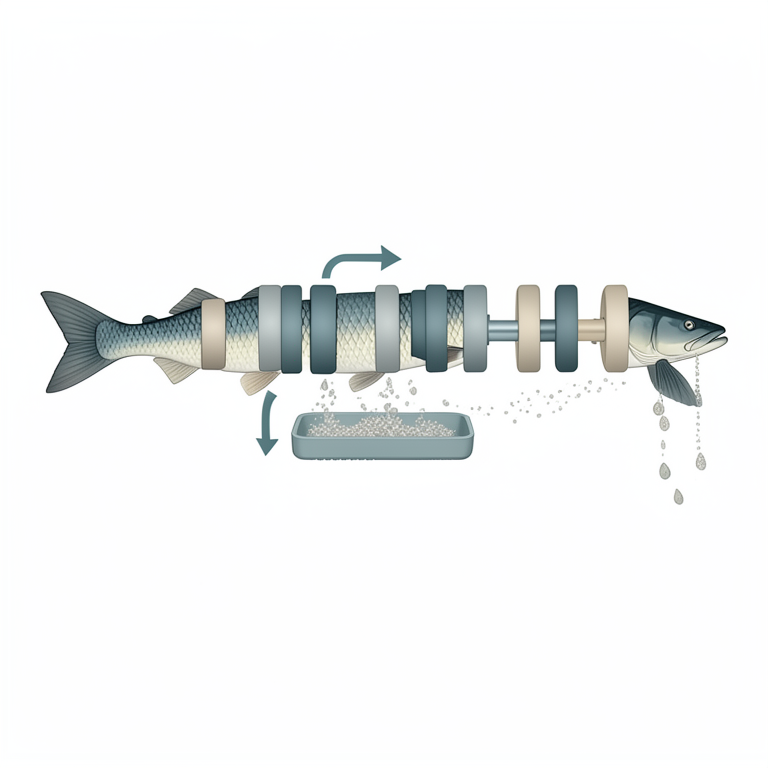
Machine Mechanism Concept
AI-generated conceptual illustration (a fish descaling machine with rollers and whole fish). It explains the idea and does not show study data.
View source evidence ↗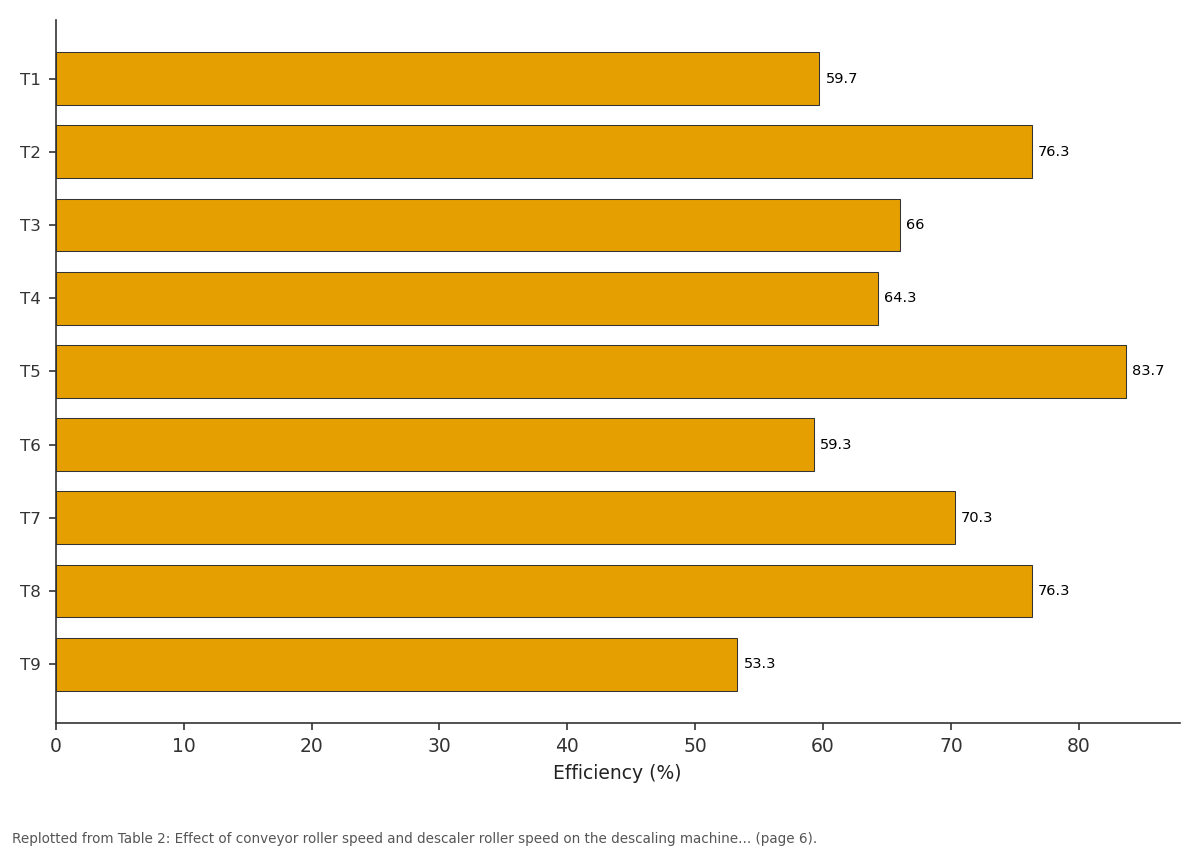
Efficiency (%): T1 vs T2 vs T3 vs T4 vs T5
Replotted from Table 2 (page 6) of the original paper. Every bar is the paper's own table value.
View source evidence ↗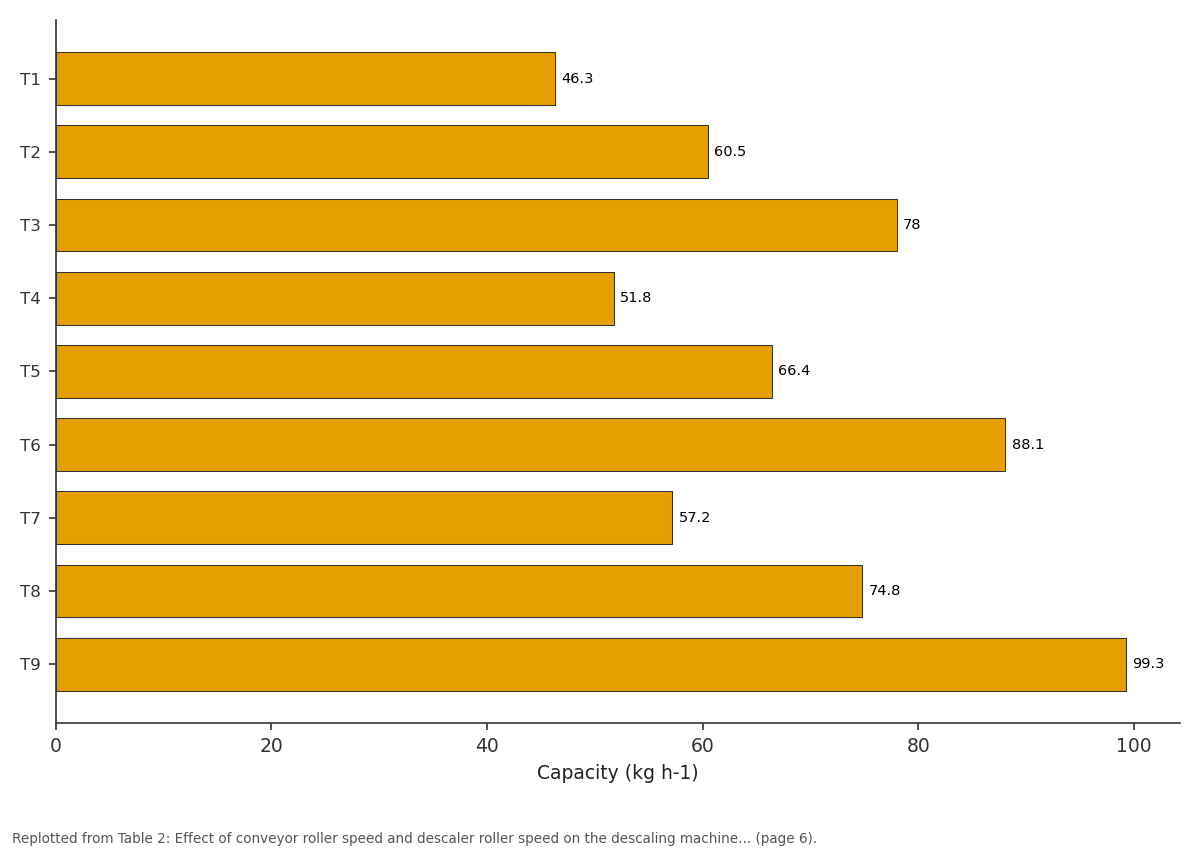
Capacity (kg h-1): T1 vs T2 vs T3 vs T4 vs T5
Replotted from Table 2 (page 6) of the original paper. Every bar is the paper's own table value.
View source evidence ↗Figures & tables
From the original paper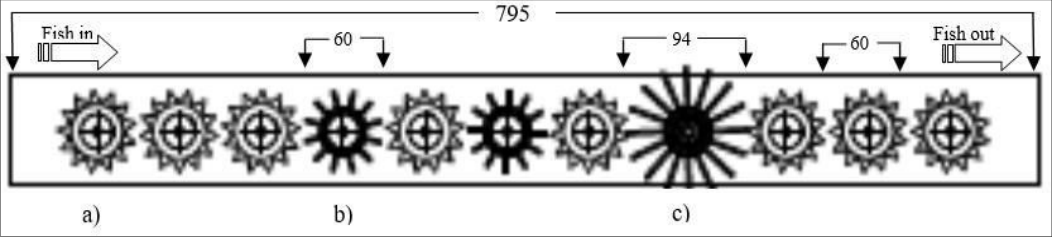 Figure 1
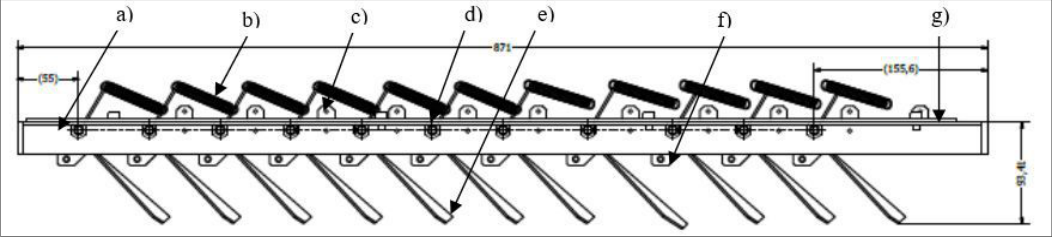 Figure 2
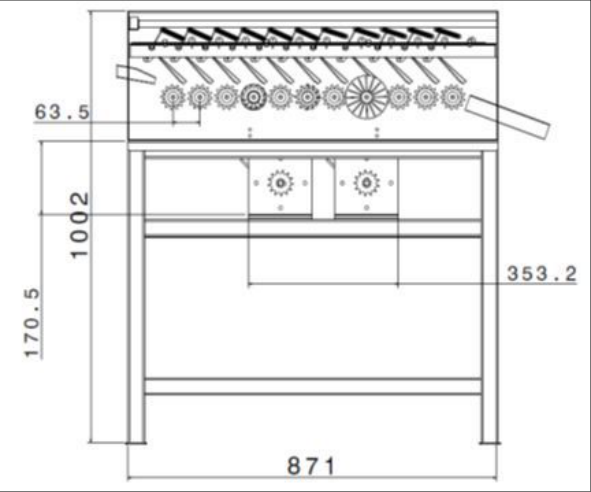 Figure 3
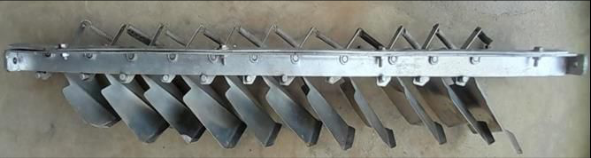 Figure 4
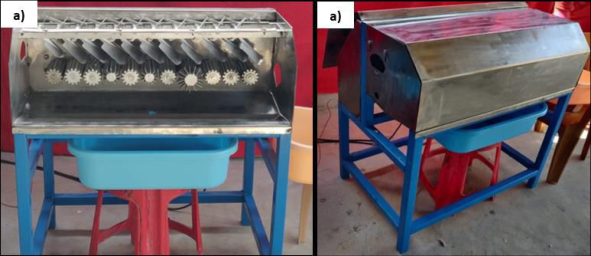 Figure 5
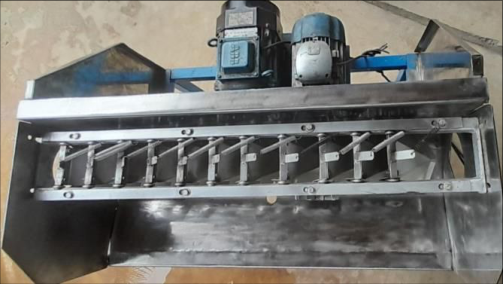 Figure 6
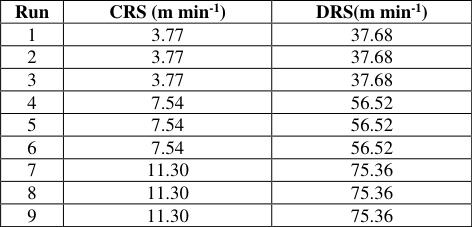 Table 1
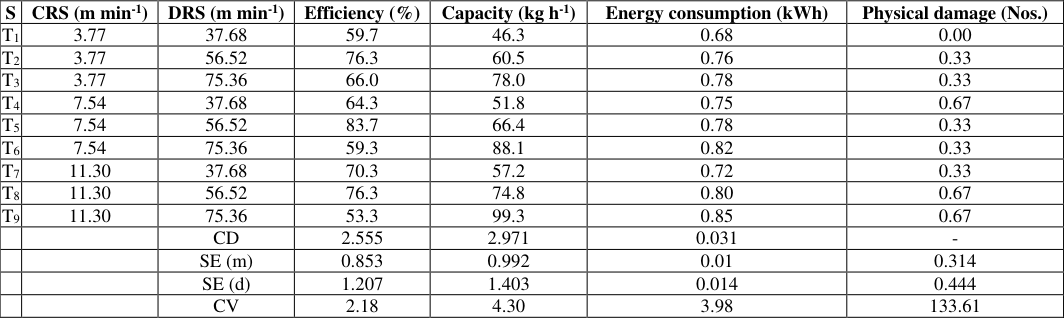 Table 2
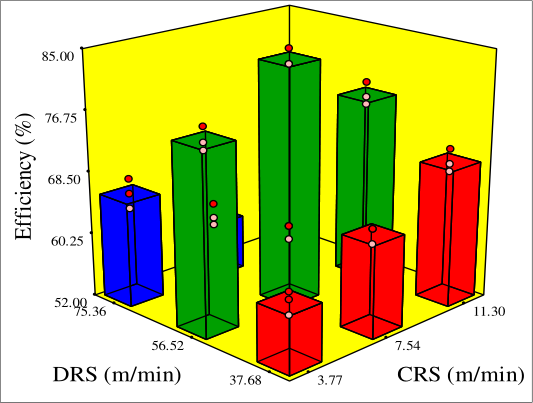 Figure 7
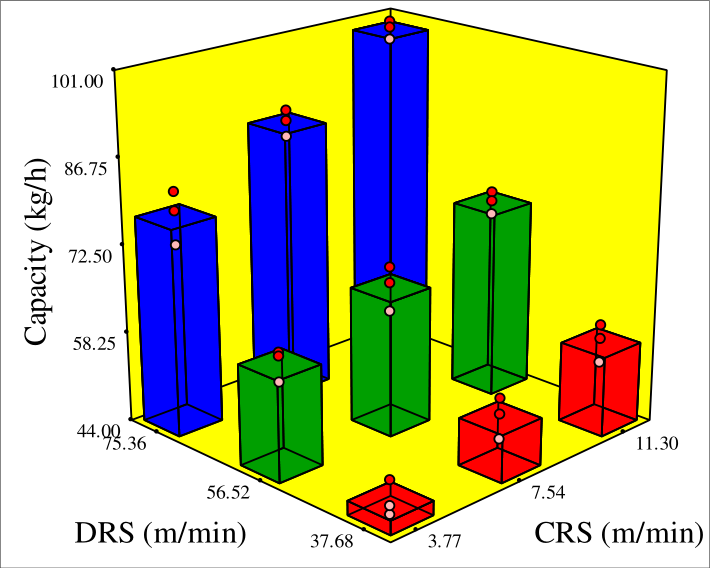 Figure 8
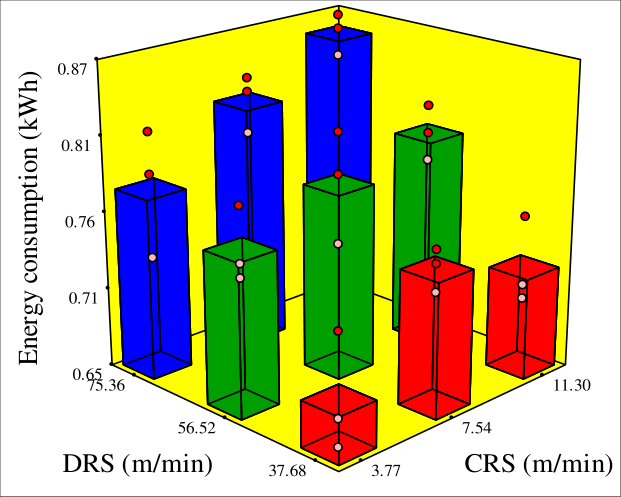 Figure 9
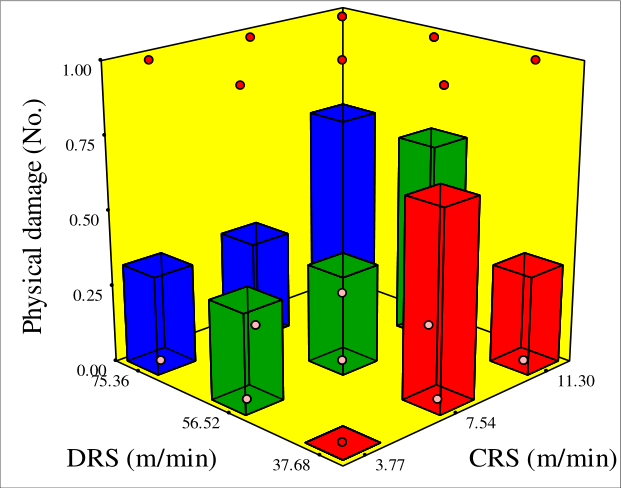 Figure 10
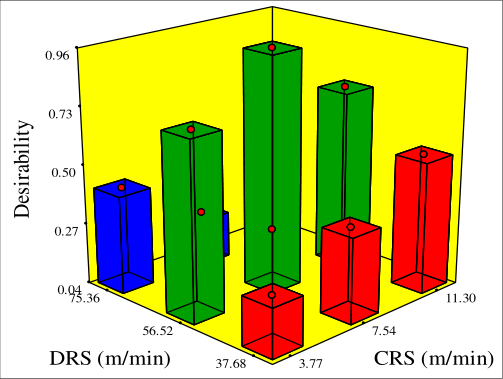 Figure 11
Introduction
Indian fisheries are one of the important sectors in terms of its contribution to the national economy. It is providing food, nutrition, socio-economic development and livelihood to the large population of the country. In addition, country earns valuable foreign exchange by exporting fish and fish value added products (NFDB, 2021). With a share of 7.58% in global fish production, the fisheries and aquaculture sector is a source of livelihood for over 25.0 million people engaged at primary level and twice the number along the value chain. According to the National Fisheries Development Board, fisheries sector is contributing 1.24% to the overall GVA and 7.28% to the agricultural GVA. The per capita consumption of fish in India is about 8-9 kg per annum, which is less than the global rates of 20 kg/capita and 12 kg/capita recommended by Indian Council of Medical Research. Only around 16% of the total fish produced is exported. The export trade is constrained by trade restrictions which are being imposed by the importing countries as they are looking for high standards of hygiene, sanitation and traceability (NABARD, 2018) [15] . The preliminary processing of fish consists of evisceration, beheading, scaling, cutting of fins and belly flaps, slicing of whole fish into small parts or steaks and other operations based on the consumption like filleting, skinning, grinding of skinned fillets etc. Scaling is the process of removal of scales on the fish skin and is one of the important operations. Many fresh water fish needs descaling and the fish vendors remove the scales manually using hand tools. They use different kinds of brushes or knives to remove the scales. The freshwater fishes prevalent in the Indian fish markets such as rohu, catla, mrigal, silver carp and grass carp have prominent scales and their manual descaling is very difficult (Bykowski and Dutkiewicz, 1996) [4] . It also consumes lot of time unless it is done by a skilled person. All the process is done in an unhygienic way (Gaikwad et al., 2017) [7] .
In manual scaling operations, normally the scales and other fish waste including viscera, fins etc. are mixed, and collecting scales separately is a tedious process (Aradhyula et al., 2019) [1] . Currently, there are different commercial fish descaling machines available and are mostly designed and manufactured abroad and patented (Majure and Frazier, 1990; Barlow and Barlow, 2003) [12,2] . There are few hand held machines, drum scalers which are power assisted or manually operated for house hold and small vendors developed in India (Nahak, 2015; Delfiya et al., 2019) [14,6] . The mechanized and continuous scalers are available in the market for large commercial fish processing establishments. During the market survey, it was found that the fish vendors were removing the scales manually with hand-held tools and not using any of the machines. Some of the reasons they mentioned were the lack of locally made machines that suit their species or needs and relatively higher cost of equipment. As per the literature reviewed on fish descaling machines, it was found that there are mainly four types of descaling machines being employed to remove the scales on the fish, i) Indigenous hand tools that include blades, knives with wire brush or serrated cutting edges that scrape the scales while moving those tools along the surface of the fish from tail to head several times by hand (Bykowski and Dutkiewicz,1996) [4] , ii) Manually operated (Campbell, 1977; Klager, 2002) [5,11] or electric motor driven or battery operated (Saizon, 1978; Barlow and Barlow, 2003) [20,2] hand held descalers, iii) Manually or power operated drum scalers with perforations on the drum (Walter, 1984; Majure and Frazier, 1990; Nahak, 2015; Manoj et al., 2018) [22,12,14,13] and iv) Continuous scalers (Godfrey, 1957; Rajesh et al., 2013) [8,18] . These tools or machines have adopted different mechanisms. Scaling element with three or more blunt edged radial arms with a shaft (Barlow and Barlow, 2003) [2] , diamond shaped scaling heads (Gaikwad et al., 2017) [7] , pointed ridges which spiral around longitudinal axis of a shank (Klager, 2002) [11] were some of the mechanisms used in hand held, manually or power operated fish scalers. Some mechanisms employed drums with projections (Walter, 1984; Majure and Frazier, 1990) [22,12] and drums made up of perforated stainless steel sheet fitted in a SS frame with suitable projections (Manoj et al., 2018) [13] to remove the scales. For large commercial establishments, continuous scalers having rolls with longitudinally extending circumferentially spaced sharp edges (Godfrey, 1957) [8] etc., were used. Several companies in abroad were involved in manufacturing of continuous fish descalers like Trifisk Manufacturing Inc. (Trifisk, 2021) [21] and Baader Food Processing Machinery (Baader, 2021) [3] . Keeping in view of the above facts, the research on development of an indigenous semi continuous roller type fish descaling machine suitable to descale fresh water fish rohu, was undertaken.
Materials and Methods
The FDM was designed and developed at the workshop of College of Agricultural Engineering, Professor Jayashankar Telangana State Agricultural University, Kandi, Sangareddy with the help of technicians from Hyderabad.
Selection of materials for fabrication of the machine
Main components of the machine such as rollers, bearing block, shafts, shaper plates, frame and safety covers were fabricated using SS 304 and the accessories like bearings, chains, sprockets, variable frequency drives (VFD), motors, springs etc., of desired specifications, were procured from the local market. The detailed design of the major components and development of the machine was done using Autodesk Inventor 2016 software trial version and design calculations of the machine components were made as per the procedures laid out in Khurmi and Gupta (2005) [10] .
Components of the fish descaling machine (FDM)
The machine components mainly included were motors and a power transmission assembly having chain and sprockets to impart motion, a scalp roller assembly for conveying and descaling the fish, a shaper bracket assembly with shaper plate assemblies mounted over individual rollers to hold, press and guide the fish tightly against the rollers for an effective descaling. A supporting frame, back and front covers were provided to give stability and safety to various machine components mounted on it during the operation.
Electrical motors and power transmission assembly
Power requirement was calculated based on the force needed for descaling the fish. Force was calculated considering the shearing resistance offered by the fish for removing its scales and separating them, while it was getting conveyed over the rollers. The shear test was done on the fish scales using texture analyzer with wire cutter probe which gave a force value of 9.6 N. Selecting an average diameter of rollers as 63.1 mm, power required was calculated as 177.4 W. On this basis, two 1 hp (746 W), 1400 rpm, 3 phase electric motors were selected, one each to run two sets of rollers viz., conveyor rollers and descaling rollers to convey the fish and to remove the scales, respectively. Chain and sprocket mechanism was used to drive the rollers. Variable frequency drives (VFDs) were used to control the speeds of different types of rollers.
Scalp roller assembly
Scalp roller assembly consisted of eleven rollers out of which three were descaling rollers placed at 4 th , 6 th and 8 th positions in between eight conveyor rollers. Primary descaling rollers were fixed at 4 th and 6 th positions and secondary descaling roller was at 8 th position from the feed end. These rollers were positioned so as to keep the fish in a straight position while it is fed to the roller blades. Based on the length of this roller assembly, other components like number of sprockets, shaper plates, shafts and overall dimensions of other components of the machine were designed. Length of the roller was derived based on the average width of 800 g fish designed for descaling which was found to be around 83 mm. Diameter of the roller was taken based on the length of the fish. The average total length of 800 g fish was found to be around 400 mm from tip of the mouth to end of the tail. It was found that effectively around 250 mm length (excluding head and caudal length) might rest on 4 rollers including the gap between the rollers. Based on this, a roller diameter of 60 mm was considered for the conveyor and primary descaling rollers. The primary rollers were fabricated with 12 plates welded on the shaft. The plates were cut uniformly up to a depth of 10 mm along the width to create serrated sharp edges to effectively dislodge the fish scales. The diameter of the roller was taken as 60 mm. The sharp edges of the teeth on the rollers would lift the fish scales by shear and impact and remove the scales by shearing action. Conveyor rollers were designed with horizontally extended ridge type projections on the periphery for easy transportation of the fish. Secondary descaling roller was made bigger in size and teeth were cut tapered towards centre in transverse direction from either end to form a U shaped path to accommodate convex shape of the fish underbelly. This allowed the fish to lower into the trough during its travel with the aid of pressure from the shaper plates. The length of the secondary descaling roller was taken as 155.0 mm and the diameter as 94.0 mm. Number of ridges (teeth) on the secondary roller were taken as 16. A bearing block supported the scalp roller assembly and chain and sprocket assembly firmly with the help of shafts, bearings, spacers, bushes etc. With the help of the bearings, the shafts were mounted in the bearing block that was fitted to the bottom weldment and supporting frame. Power was transmitted from motors to the shafts through the chain and sprocket mechanism and subsequently torque was transmitted from the shafts to the rollers resulting in motion of the rollers.
Shaper bracket assembly
The shaper bracket assembly with shaper plates or pressure plates was used to firmly holding the fish against the rollers while the fish was being conveyed from one end to the other end and descaled by the rollers. This unit consisted of shaper plate assembly, brackets, locking plates, helical springs, and PP bushes. The shaper plate assembly consisted of shaper plates, square rods, location pin and spring plate. The shaper plate was a 2 mm thick stainless steel plate, 120 × 80 mm size. One end of the plate, which was fixed, was bent into a flange at an angle. The other free end of the plate, was bent into a wedge. This bend allowed the plate to control the fish surface from slipping away, holding it firmly over the rollers.
Supporting frame
Supporting frame was made in MS with provision for accommodating various assemblies and components appropriately placed for easy movement of the fish for descaling. Back cover was kept to protect the operator from any untoward incident from the motors, chains and sprockets. Front cover was kept in such a way that it closes the fish descaler, while the descaler was running for removing fish scales. This protected the operator from the rapidly moving rollers and scattering dislodged scales. The height of the frame was designed such that the operator could able to work comfortably.
Assembly of the fish descaling machine
The individual components after fabrication as per the design specifications were brought to the workshop and assembled. The total weight of the fish descaling machine was found to be 159.65 kg. Few assemblies and the front side view of the assembly drawings were presented in Fig. 1, 2, and 3. The assembled fish descaling machine was shown in Fig. 4, 5 and 6. Performance evaluation of the developed machine for rohu fish Fish descaling operation using fish descaling machine Trial and error experiments were conducted on the machine and identified the approximate linear speeds of the rollers at which the descaling efficiency of the machine was maximum. Also, number of passes for maximum scales removal was found out. Accordingly, experiments were conducted and evaluated the performance of the developed descaling machine. Peripheral speeds of the rollers as independent variables and variations in speeds as levels, Converyor Roller Speed (CRS) -3.77, 7.54 and 11.30 m min -1 (20, 40 and 60 rpm) and Descaling Roller Speed (DRS) -37.68, 56.52 and 75.36 m min -1 (200, 300 and 400 rpm) were considered. The details of the treatments were given in Table 1.
| Run | CRS (m min-1) | DRS(m min-1) |
|---|---|---|
| 1 | 3.77 | 37.68 |
| 2 | 3.77 | 37.68 |
| 3 | 3.77 | 37.68 |
| 4 | 7.54 | 56.52 |
| 5 | 7.54 | 56.52 |
| 6 | 7.54 | 56.52 |
| 7 | 11.30 | 75.36 |
| 8 | 11.30 | 75.36 |
| 9 | 11.30 | 75.36 |
Table text extracted from the original PDF; superscript letters are shown inline. The original table image is below.
View original table image
In order to determine treatment combinations, two (2) factorial Completely Randomized Design (CRD) statistical method was used with the help of Design Expert trial software (Version 7.0.0) for two independent variables at three levels. The descaling efficiency, capacity, energy consumption of the fish descaling machine and physical damage to the fish were determined as dependent variables.
Eighty one rohu fish (Labeo rohita) each fish weighing 800 ± 50 g were procured from the local market of Sangareddy. This weight was found to be one of the major marketed average weight range of the rohu fish. Fish was cleaned and washed for any extraneous matter and kept in the deep freezer at -4 o C for further processing. Three numbers of whole fish were used for each replication in each treatment.
During the experiment, speeds of both the conveyor and descaling rollers were optimized for getting maximum descaling efficiency with minimum physical damage to the fish for a selected size range of rohu fish species. For the descaling operation, fish was fed from the inlet tray of the machine on to the scalp roller assembly, during which one side of the fish scales along with sides were removed.
The fish was collected at the end of the outlet tray and returned to be fed repetitively through the inlet tray for the second pass to increase the descaling efficiency. This process was repeated four times for better efficiency. Then the fish was turned over and passed four times again with the opposite side of the fish in contact with the rollers for removing the scales from the other side of the fish surface.
After the descaling operation, the descaled fish were packed and stored in the deep freezer and the scales were collected from the bottom.
Dependent variables Descaling efficiency of the developed machine
This is the percentage of scales removed from the surface of the fish by using the fish descaling machine. Descaling efficiency of the fish descaling machine for different roller speeds was determined. Scales on the fish were counted manually before and after the fish was descaled using the machine. The descaling efficiency (DE) was calculated using the equation (1) (Gaikwad et al., 2017) [7] .
Where, N = Total number of scales on the fish (No.)
Capacity of the machine
Capacity of the machine is the quantity (in kg) of fish descaled per hour. To find out the capacity, time taken to descale the three fish and the weight of the fish, used in each treatment, were determined (Gaikwad et al., 2017) [7] . The time included the time elapsed in presenting the fish in four passes. The capacities were computed using the equation ( 2).
Energy consumption by the descaling machine
This is the amount of energy consumed by the descaling machine in watt per hour of descaling operation. This was measured using a three phase energy meter when the machine was operated for descaling purpose. It was measured in terms of kWh (Gaikwad et al., 2017) [7] .
Physical damage to the fish skin
This is the number of damages or bruises occuring to the fish during the descaling operation (Delfia et al., 2019) [23] caused either due to the impact of rollers or the blades while removing the scales. This was determined by physically counting the visible bruises on the surface of the fish after the fish had been completely descaled.
Statistical analysis
The results of the performance evaluation of the developed fish descaler were analysed through two factor CRD using Design Exeprt software -Version 7.0 software trial version and OPSTAT application of HAU, Hissar. The effect of different roller speeds on descaling efficiency, capacity, energy consumption and physical damange to the fish using the machine were studied. The optimized solution of operational parameters for maximum descaling efficiency were obtained from the desirability analysis.
Economics of developed fish descaling machine
The cost of operation was calculated based on the method described by Ojha and Micheal (2009) [7] ; Reddy et al., (2004) [19] . The cost of the machine was found to be ₹ 2,04,500. The cost of operation was found to be ₹ 5.57 kg -1 .
Delfiya et al. (2019) [6] reported that manual fish scaling required ₹ 15 and operating cost of a drum type descaler they developed was calculated as ₹ 4.76 and ₹ 9.52 per kg in case of Tilapia and Pearl spot, respectively and stated that ₹ 5.5 could be saved by using the machine in case of Pearl spot. The cost of operation determined in the present study was in close agreement with the cost of operation estimated by the earlier investigator. The benefit-cost ratio (B-C) was found to be 1.36:1. In manual descaling operation, it was observed that on an average, one person took about 2 minutes for descaling a fish of size 500 g (Gaikwad et al., 2017) [7] , i.e. around 15-20 kg h -1 . The fish descaling machine developed in the present study could descale a similar fish in less than 1 minute.
Results and Discussion
The descaling efficiency, capacity of the machine, energy consumption of the descaling machine and physical damage to the fish as dependent variables, were determined for each randomized treatment combination as per the design. The mean values of dependent variables with treatments were given in the Table 2. The analysis of the effects of independent variables on the responses were discussed in the below sections.
| S | CRS (m min-1) | DRS (m min-1) | Efficiency (%) | Capacity (kg h-1) | Energy consumption (kWh) | Physical damage (Nos.) |
|---|---|---|---|---|---|---|
| T1 | 3.77 | 37.68 | 59.7 | 46.3 | 0.68 | 0.00 |
| T2 | 3.77 | 56.52 | 76.3 | 60.5 | 0.76 | 0.33 |
| T3 | 3.77 | 75.36 | 66.0 | 78.0 | 0.78 | 0.33 |
| T4 | 7.54 | 37.68 | 64.3 | 51.8 | 0.75 | 0.67 |
| T5 | 7.54 | 56.52 | 83.7 | 66.4 | 0.78 | 0.33 |
| T6 | 7.54 | 75.36 | 59.3 | 88.1 | 0.82 | 0.33 |
| T7 | 11.30 | 37.68 | 70.3 | 57.2 | 0.72 | 0.33 |
| T8 | 11.30 | 56.52 | 76.3 | 74.8 | 0.80 | 0.67 |
| T9 | 11.30 | 75.36 | 53.3 | 99.3 | 0.85 | 0.67 |
| CD | 2.555 | 2.971 | 0.031 | - | ||
| SE (m) | 0.853 | 0.992 | 0.01 | 0.314 | ||
| SE (d) | 1.207 | 1.403 | 0.014 | 0.444 | ||
| CV | 2.18 | 4.30 | 3.98 | 133.61 |
Table text extracted from the original PDF; superscript letters are shown inline. The original table image is below.
View original table image
Effect of CRS and DRS speed on descaling efficiency of the machine
The effect of conveyor roller speed (CRS) and descaler roller speed (DRS) on the efficiency of the descaling machine were observed for different speed combinations as per the statistical design of evaluation. From the Table 2 it was observed that for different combinations of CRS, 3.77 to 11.3 m min -1 and DRS, 37.68 to 75.36 m min -1 , the descaling efficiencies varied from 59.7 to 53.5% and reached a maximum descaling efficiency of 83.7% at 7.54 m min -1 and 56.52 m min -1 speeds of conveyor roller (CR) and descaling roller (DR), respectively. From the Fig. 7, it was observed that the efficiency of the descaling machine increased with increase in conveyor roller speed upto a certain speed of the descaling roller and then decreased upon further increasing the descaler roller speed. For all the combination of CR and DR speeds, the descaling efficiency showed the same trend.
As the descaling roller speed increased, increase in conveyor roller speed, increased the efficiency upto a CR speed of 7.54 m min -1 . However, the efficiency decreased with further increase in CR speed. The shearing action between the two rollers might be playing a crucial role to dislodge the scales from the fish. Beyond these optimum speeds, increase in speeds of CR or DR was found to be ineffective as the fish might not be getting enough contact area and contact time with the descaling rollers to get the scales removed. On the other hand, at lower speeds of CR, the speed differential between the two kinds of rollers might be insufficient to create force required to shear and cut open the scales. For removal of the fish scales, the descaling roller speed might be playing a major role. Earlier, a hand operated drum type fish descaler was developed at Engineering division, ICAR-CIFT, Cochin (Delfiya et al., 2019) [6] . The descaling efficiencies reported using the descaler were 89.45, 75.39 and 86.78% in case of sardine, Threadfin bream and Tilapia fish, respectively at a loading rate of 2 kg in 9 minutes. Using a hand operated fish descaler developed by Gaikwad et al. (2017) [7] , the efficiencies reported were 99 and 99.5% using catla and silver carp fish.
In the present study, the efficiency of 83.7% was obtained at an average loading rate of 1.1 kg in 1 minute (66.4 kg h -1 ) which was in agreement with the earlier reported values.
When compared with manually operated descaler, the developed machine obtained less efficiency. This might be due to the semi continuous nature of the developed machine and no manaul intervention during descaling operation. The efficiency was comparable with the drum type descaling machine.
Effect of CRS and DRS on the capacity of the descaling machine
From the Table 2, it was noticed that the descaler capacity had increased from 46.3 to 99.3 kg h -1 for the conveyor roller speeds of 3.77, 7.54 and 11.3 m min -1 at descaler roller speeds of 37.68, 56.52 and 75.36 m min -1 , respectively. The maximum capacity obtained was when both the rollers were at maximum speeds indicating that the speed of the rollers increased the capacity. The lowest capacity was observed when both the rollers were at least speeds. At low speeds, rollers might be unable to overcome the resistance offered by the fish sufficiently and the fish moved slowly resulting in lower capacities. Also, from the Fig. 8, it was noticed that as both the speeds increased the capacity of the machine increased. As the DR speed increased, the increase in capacity was not as high as compared to the increase in capacity with respect to CR speed. This might be indicating that the DR speed was contributing much in shearing the scales rather than pushing the fish in forward direction. However, both CR and DR participated in moving the fish forward. The fish might have conveyed at greater speeds with both rollers at high speeds, resulting in higher output. The maximum capacity obtained was 99.3 kg h -1 at a descaling efficiency of 53.3%. At maximum efficiency of 83.7%, the capacity obtained was 66.4 kg h -1 . Descaling capacities reported using fish descaling machine developed by previous investigator (Gaikwad et al., 2017) [7] with a descaler head run by 1 hp motor were about 47.36 and 45 kg h -1 with catla and silver carp species, respectively. The capacity of 66.4 kg h -1 at maximum efficiency, obtained using the developed fish descaling machine in the present study was comparable with the previously reported capacity.
Effect of CRS and DRS on the energy consumption of the descaling machine
The data obtained from the experiments was used to study the effects of peripheral speeds of the conveyor rollers and descaling rollers on the energy consumption of the descaling machine. From the The energy consumption primarily depended on the load applied due to the fish descaling action by the rollers and the speed of the rollers. Additionally, there might be energy losses resulting from the transmission of motion between different moving parts of the machine. The energy consumption increased with increase in the speed of the rollers. Descaling action resulted in the increase of load which might have caused increase in energy consumption. From the Fig. 9, the effect of conveyor roller speed (CRS) and descaler roller speed (DRS) on the energy consumption of the descaling machine showed that the energy consumption of the machine increased with the increase in speeds of both the descaler roller and conveyor roller. The energy consumption was high when both the rollers were at high speeds. The energy consumption increased with increase in the speeds of the rollers as well as when the load increased. The energy consumption at maximum efficiency of 83.7% was observed to be 0.78 kWh. Whereas, energy consumption at maximum speeds of the rollers was 0.85 kWh. From the figure, it was observed that energy consumption was increasing with the speeds of both the conveyor and descaling rollers.
In the development of fish descaler machine by previous researcher (Gaikwad et al., 2017) [7] , the power consumption was observed to be 0.25 kWh at 2800 rpm. This machine was designed to operate by hand using a rotating head powered by a 1 hp, 3 phase motor. The energy consumption in the present investigation was found to be high at 0.78 kWh at maximum efficiency. This might be due to the higher energy consumption by the operation of two electric motors with more loads when compared with hand operated machine. 2, the physical damage to the fish skin in descaling operation was studied due to the effect of peripheral speeds of the conveyor rollers and descaling rollers. The effect of conveyor rollers speed (CRS) and descaler rollers speed (DRS) on the physical damage to the fish found to be non significant. There were no significant damages to the skin of the fish during descaling operation which was desired to maintain the descaling area hygienic free of meat pieces chipped away due to bruises or damages during descaling operation. For any combination of CR and DR speeds, the physical damages were found to be minimum and insignificant. From the Fig. 10, it was noticed that the physical damage to the fish was non significant, causing insignificant damage to the fish skin. In the previous investigation carried out by Delfiya et al. (2019) [6] physical damages to the fish were not observed in Tilapia and Pearl spot fish using drum type descaler operating for 3, 6 and 9 minutes at loading of 1, 2 and 3 kg fish. Skin softness and belly burst were observed in Indian oil sardine and Threadfin bream fish at 6 and 9 minute operation at loading rates of 3 kg. This was attributed to the softness of fish tissue in later species. In case of current investigation, the physical damage appeared to be insignificant. Optimization of process parameters for the fish descaling machine Optimization of two process variables namely, speeds of conveyor roller and descaler roller was performed using the general factorial design in Design Expert Software 7.7.0. trial version. Numerical optimization was performed to find the optimal process parameters for the fish descaling machine. The independent variables were kept within the range and dependent variables were chosen as maximum or in range. Among the response variables, descaling efficiency was kept at maximum value and other variables viz., descaling capacity, energy consumption and physical damage to the fish skin were kept as 'in range' values. From the desirability graph in Fig. 11, the desirability for the parameters was 0.960. The optimized values obtained at that desirability were 7.54 and 56.52 m min -1 for conveyor and descaling rollers, respectively. The efficiency, capacity and the energy consumption were found to be 83.7%, 66.4 kg h -1 and 0.78 kWh, respectively. And the observed physical damages were not significant. These values were based on the maximum descaling efficiency which was considered for determining the acceptability of the finished fish product by the consumer.
Conclusion
A roller type fish descaling machine (FDM) was developed for a fish with a size range of 750 to 850 g. The semi continuous machine was fabricated with components for descaling, power transmission and support operations. Performance evaluation was done using Labeo rohita (rohu) fish. The FDM achieved a maximum descaling efficiency of 83.7% with an optimized conveyor roller and descaling roller speeds of 7.54 m min -1 and 56.52 m min -1 , respectively. The corresponding capacity was found to be 66.4 kg h -1 , suitable for small and medium scale fish vendors. The power consumption was observed to be 0.78 kWh at maximum efficiency without any physical damage to the fish. The desirability obtained was 0.960 at the optimized conditions. The cost of the machine was found to be ₹ 2,04,500. Assuming, 300 working days and 8 working hours per day, the cost of operation was found to be ₹ 5.57 kg -1 . The machine operation was found to be economical and quite comparable to manual operation cost of ₹ 15 and ₹ 4.76 for drum type descaler as reported by Delfia et al.,
(2019) [23] . Thus, the indigenously developed roller type fish descaling machine could be used effectively saving time and improving the hygiene and safe operating environment.
Acknowledgement
AcknowledgementsThe author is indebted to University of Agricultural Sciences, Raichur, Karnataka state and Professor Jayashankar Telangana State Agricultural University, Rajendranagar, Hyderabad, Telangana state for providing the opportunity and necessary finances to conduct research to develop and undertake performance evaluation of the roller type fish descaling machine.
Figures and tables from the paper
References
6 in the original paper- Aradhyula TV, Biana D, Reddy AB, Jeng Y, Chavalie M, Sadiku ER, et al. Compounding and the mechanical properties of catla fish scales reinforced-polypropylene composite-from biowaste to biomaterial. Advanced Composite Materials; c2019. DOI: 10.1080/09243046.2019.1647981.
- Bykowski P, Dutkiewicz D. FAO Fisheries circular no. 905 FIIU/C905 Preliminary processing of fresh water fish, fresh water fish processing and equipment in small plants. Sea Fisheries Institute, Fisheries and Aquaculture Department, FAO, Rome. 1996;3(1):3-13. Available at: www.fao.org/3/w0495e/w0495E03.htm. Accessed: [Date of Access].
- Delfiya DSA, Murali S, Alfiya PV, Zynudheen AA, Gokulan CR, Samuel MP, et al. Optimization of processing conditions of hand-operated descaling machine for various fish. Fishery Technology. 2019;56(1):221-226.
- Gaikwad N, Ahmed T, Govind BY, Singh A. Design, development and performance evaluation of fish descaling machine. Fishery Technology. 2017;54(2):273-278.
- Manoj PS, Murali S, Delfiya AR, Alfiya PV. Engineering tools and technologies for fish processing: A profitable venture in Agri-business. Engineering division, ICAR-CIFT, Cochin. 2018;1:243-252. Available at: http://drs.cift.res.in/handle/123456789/4510?show=full. Accessed: [Date of Access].
- Mayar F, Roza D, Delfia E. Urgensi Profesionalisme Guru PAUD dalam Mengembangan Kreativitas Anak Usia Dini. Jurnal Pendidikan Tambusai. 2019 Sep 21;3(3):1112-1119.
Cited by 1
From OpenAlex, OpenCitations and reference lists read by Scinovex
- Design and Fabrication of Enhanced Fish De-Scaling Machine ↗
SK Chrispin Binesh, P. Karthickumar, N. Manimehalai, M. Kamalakannan, M. Sivakumar, Vettath Pathayapurayil Harigovindan · Journal of Aquatic Food Product Technology · 2025
This study explains how a motor-powered fish descaling machine was developed and tested to improve descaling efficiency for different types of fish. The machine features a 10 kg batch capacity and three interchangeable patterns (perforated, projected, and bar) designed to suit species-specific descaling requirements. Comparison tests showed the projected pattern delivered the highest descaling efficiency (up to 98.6%) for hard-scaled…
❝ 0