
Research article · 2024 · Full text
International Journal of Research in AgronomyEffect of liquid organic formulations on growth and yield of black gram
Volume 7(3) · Pages 215–218 · DOI: 10.33545/2618060x.2024.v7.i3d.411 ↗
Research areasAgriculture, Plant Science, Crop ManagementAgricultural Science and FertilizationCrop Yield and Soil Fertility
Abstract
Author-writtenA field experiment was conducted during Zaid, 2023 at Crop Research Farm, Department of Agronomy, SHUATS, Prayagraj (U.P). The soil of the experimental plot was sandy loam in texture, nearly neutral in soil reaction (pH 7.1), organic carbon (0.71%), available N (262.96 kg/ha), available P (34.10 kg/ha), and available K (324.14 kg/ha). The treatments comprised of Kunapajala (3%), Shasyagavya (3%), Jeevamrutha (3%), Panchagavya (3%), and at intervals on (14, 21 &28) different DAS. The experiment was laid out in Randomized Block Design with twelve treatments each replicated thrice. The results showed that viz: Plant height (44.93 cm), number of nodules per plant (9.10), plant dry weight (7.70 g/plant) were recorded significantly higher with Kunapajala (3%) + at an interval of 14 DAS. Whereas, number of pods per plant (17.60), number of seeds per pod (5.47), test weight (31.13), seed yield (917.36 kg/ha), stover yield (1964.60 kg/ha) and harvest index (31.83) were recorded significantly higher with the application of Kunapajala (3%) + at an interval of 14 DAS. Higher gross returns (1,19,256.80 ₹/ha), net returns (75,956.80 ₹/ha), and benefit-cost ratio (1.81) were obtained with the application of Kunapajala (3%) + at an interval of 14 DAS as compared to other treatments.
Summary
Source-checkedPlain-language reading of the full paper, prepared with AI and checked against the text. Each point links to the authors' own words.
Why it matters
- Black gram is a widely cultivated grain legume that is highly important for nutritional security. View evidence ↗
- The crop is nutritionally dense, containing 24% protein and serving as the richest source of phosphoric acid among pulses. View evidence ↗
- Pulse productivity can be improved by enhancing soil fertility, specifically by increasing soil organic carbon and moisture storage. View evidence ↗
The question
- The study aimed to evaluate how different liquid organic formulations affect the growth and yield of black gram. View evidence ↗
What they did
- A field experiment was carried out during the Zaid season of 2023 at the Crop Research Farm in Prayagraj, Uttar Pradesh. View evidence ↗
- The experimental soil was sandy loam with a pH of 7.1, 0.71% organic carbon, and available N, P, and K levels of 262.96 kg/ha, 34.10 kg/ha, and 324.14 kg/ha, respectively. View evidence ↗
- Treatments involved spraying 3% concentrations of Kunapajala, Shasyagavya, Jeevamrutha, or Panchagavya at intervals of 14, 21, or 28 days. View evidence ↗
- The study used a Randomized Block Design consisting of twelve treatments, each with three replicates. View evidence ↗
What they found
- The highest plant height of 44.93 cm was significantly recorded in plants treated with 3% Kunapajala every 14 days. View evidence ↗
- The maximum number of nodules per plant (9.10) was significantly achieved using 3% Kunapajala every 14 days. View evidence ↗
- The highest plant dry weight of 7.70 g was significantly recorded for the 3% Kunapajala treatment at 14-day intervals. View evidence ↗
- The 3% Kunapajala treatment every 14 days produced a significantly higher number of pods per plant (17.60) than other treatments. View evidence ↗
- The maximum number of seeds per pod (5.47) was significantly observed in the 3% Kunapajala treatment at 14-day intervals. View evidence ↗
- The highest seed yield of 917.36 kg/ha was significantly recorded for 3% Kunapajala applied every 14 days. View evidence ↗
- The highest stover yield of 1964.60 kg/ha was significantly observed in the 3% Kunapajala treatment at 14-day intervals. View evidence ↗
- The highest gross returns (1,19,256.80 INR/ha) were achieved with 3% Kunapajala every 14 days, while the lowest (77,122.50 INR/ha) were with 3% Shasyagavya every 28 days. View evidence ↗
- The highest benefit-cost ratio (1.81) was found in the 3% Kunapajala 14-day interval treatment, compared to the lowest (1.09) in the 3% Shasyagavya 28-day interval treatment. View evidence ↗
What it means
- The authors conclude that applying 3% Kunapajala at 14-day intervals results in superior growth, yield, and benefit-cost ratio for black gram. View evidence ↗
Visual summary
3 visualsIllustrations explain the paper; charts are replotted from the paper's own table values.
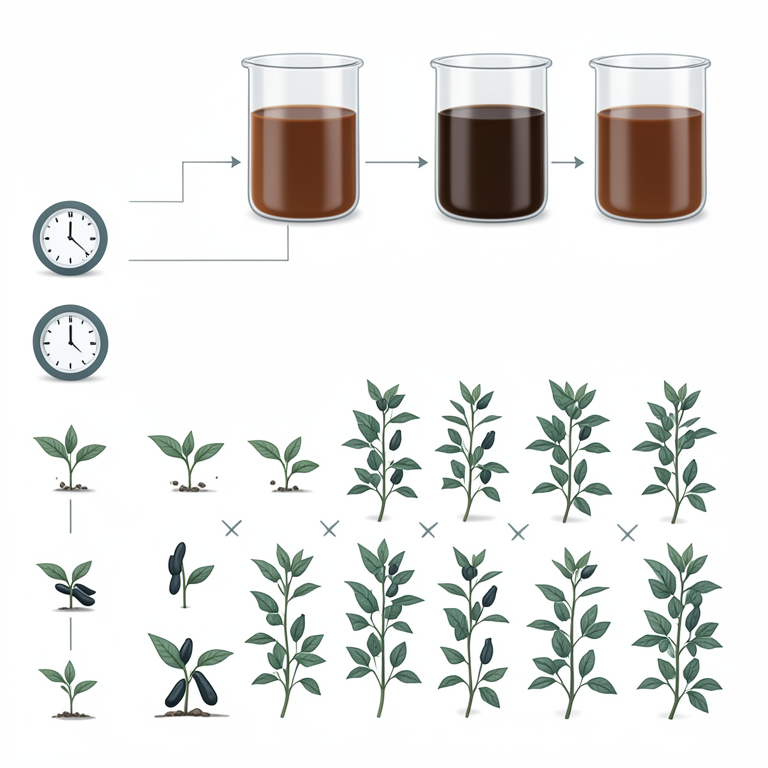
Experimental Treatment Matrix
AI-generated conceptual illustration (black gram plants). It explains the idea and does not show study data.
View source evidence ↗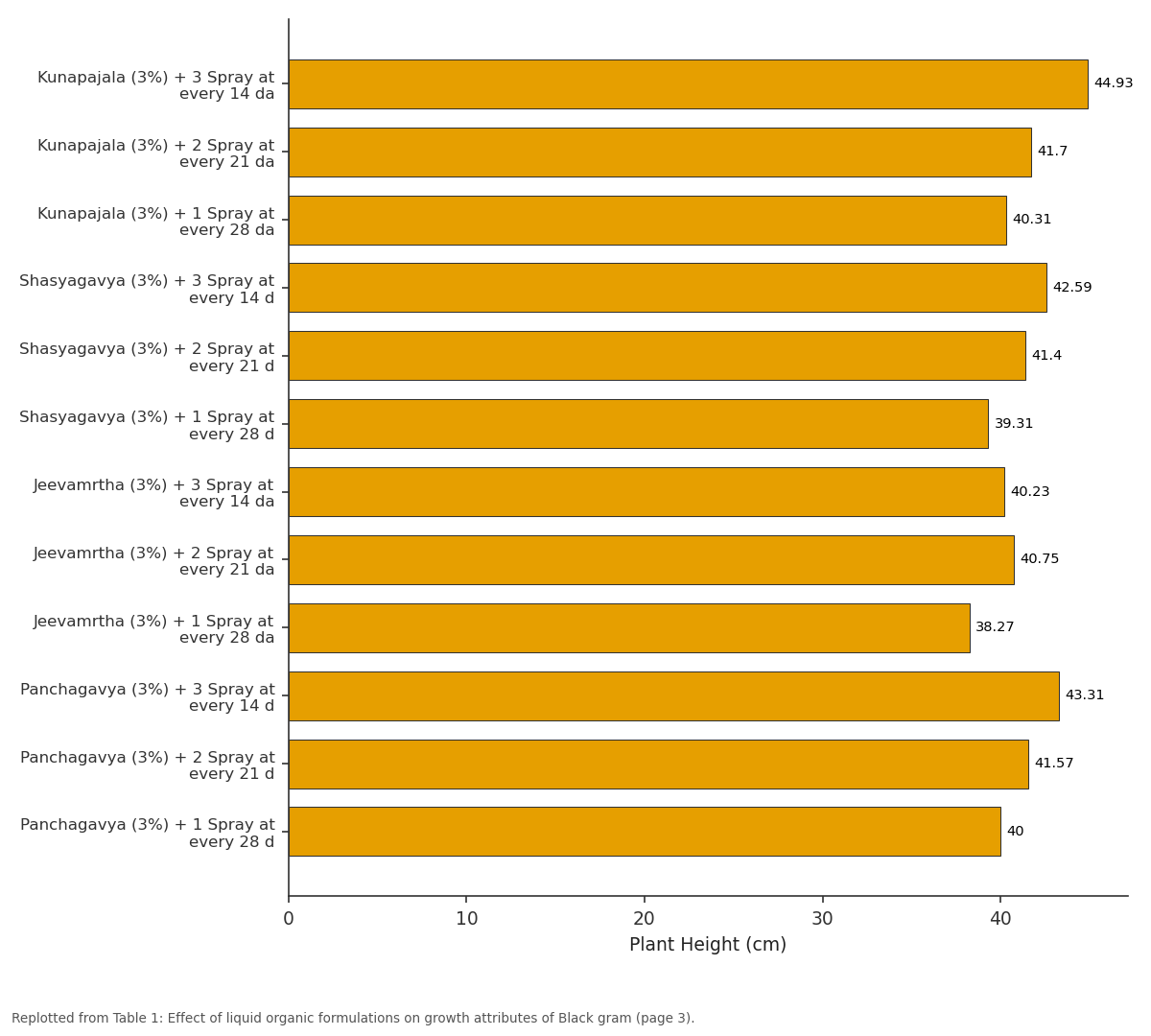
AT 60 DAS / Plant Height (cm): Kunapajala (3%) + 3... vs Kunapajala (3%) + 2... vs Kunapajala (3%) + 1... vs Shasyagavya (3%) + 3... vs Shasyagavya (3%) + 2...
Replotted from Table 1 (page 3) of the original paper. Every bar is the paper's own table value.
View source evidence ↗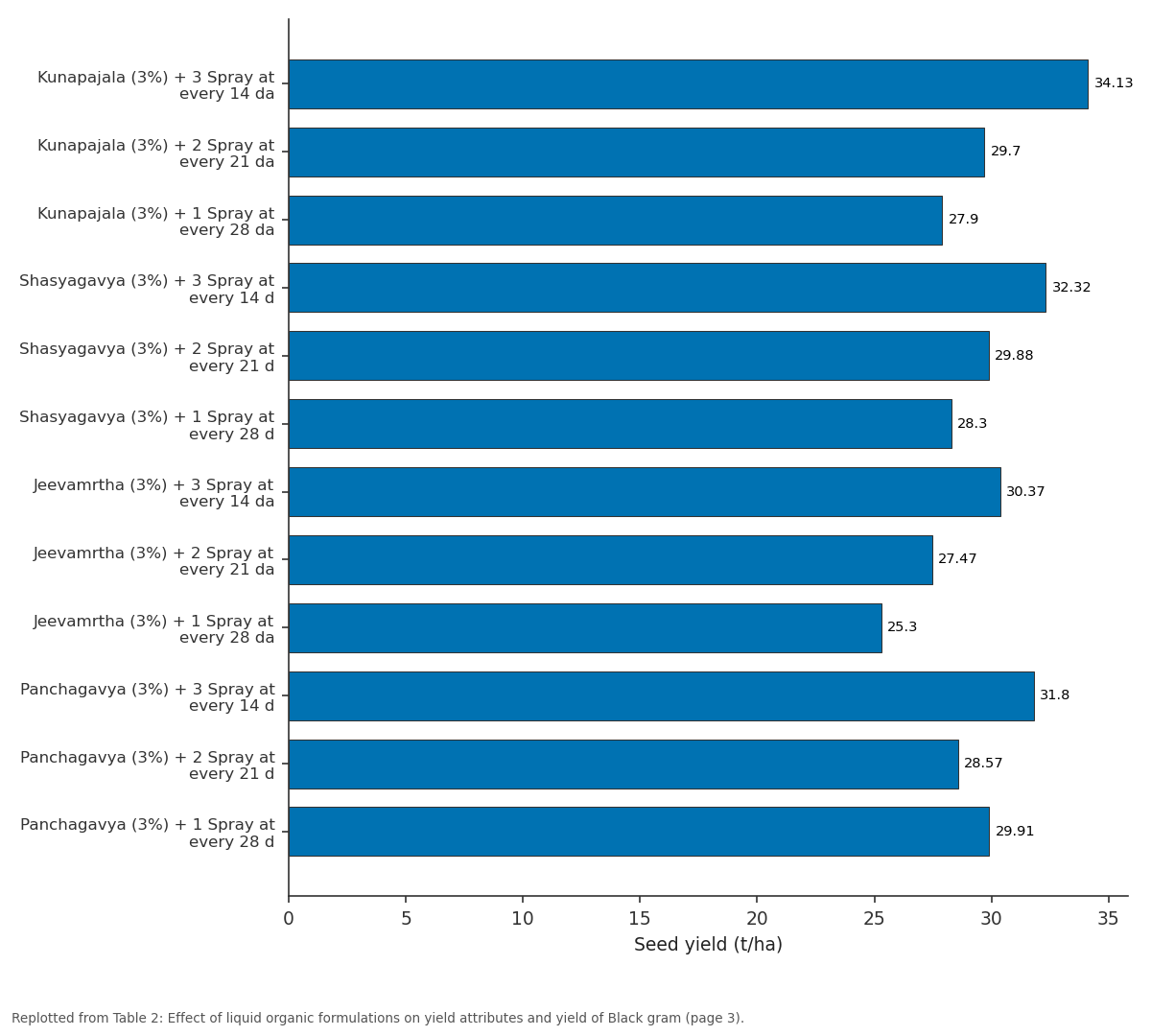
Test weight: Kunapajala (3%) + 3... vs Kunapajala (3%) + 2... vs Kunapajala (3%) + 1... vs Shasyagavya (3%) + 3... vs Shasyagavya (3%) + 2...
Replotted from Table 2 (page 3) of the original paper. Every bar is the paper's own table value.
View source evidence ↗Figures & tables
From the original paper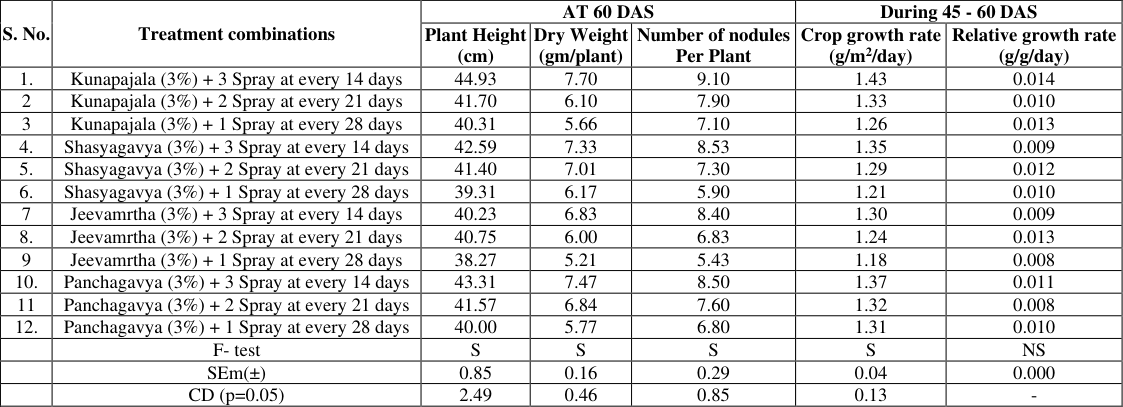 Table 1
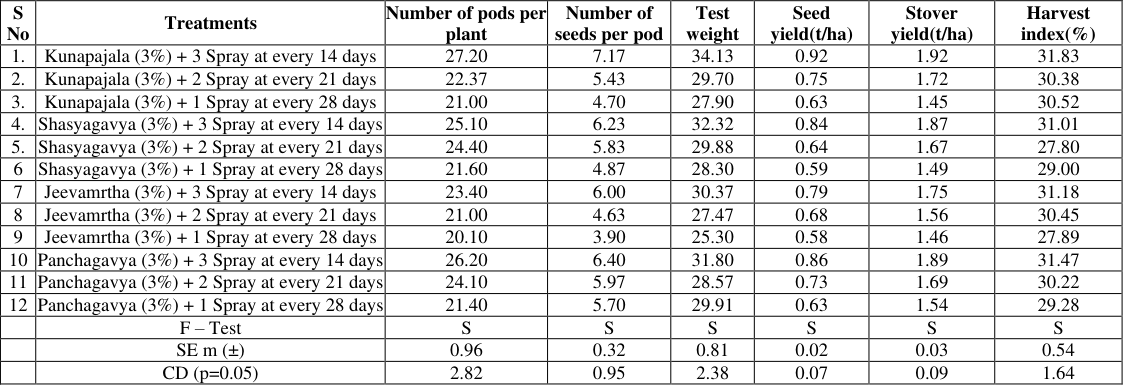 Table 2
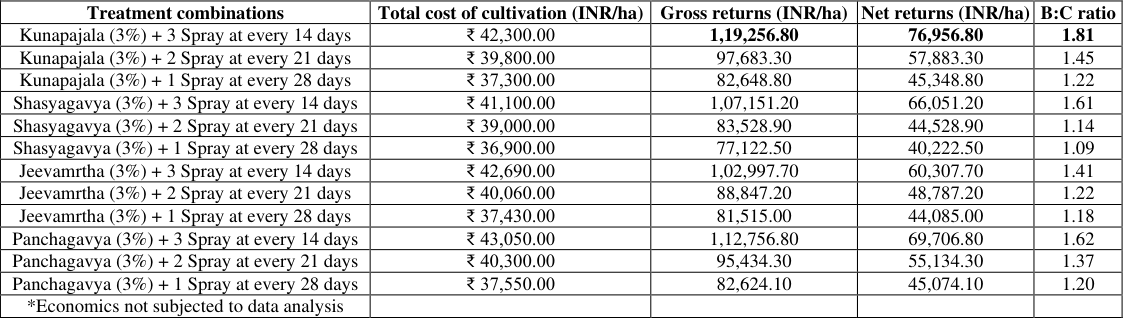 Table 3
Introduction
Black gram (Vigna mungo L.) is one of the most widely grown grain legumes and belongs to the family fabaceae and assumes considerable importance from the point of nutritional security. It is an annual herbaceous plant consumed in the form of 'dal' and also used as a nutritive fodder for mulch cattle. Black gram is rich in its nutritive value with 24 per cent protein and is the richest source of phosphoric acid among pulses (Singh, 2009) [14] . In India, black gram is grown in an area of 761.3 thousand of hectares, with a production of 678.6 thousand tonnes and with a productivity of 891.0 kg/ ha. In Andhra Pradesh, it covers an area of 296 thousand of hectares, with a production of 277 thousand of tonnes and with a productivity of 936 kg/ha. There is a scope to improve the productivity of pulses by enhancing the soil fertility and its productivity through increasing soil organic carbon, soil moisture storage capacity and adopting integrated nutrient and pest management practices. Natural farming is the new method introduced to overcome this disadvantage by producing better yield and maintaining soil health within short period. Natural farming is the method which employs the usage of naturally available products. Some of the inputs used in natural farming include panchagavya, jeevamrutha, beejamrutha etc. (Lakshmipathi, 2012) [7] . Foliar application of nutrients using water soluble fertilizer is one of the possible ways to enhance the productivity of pulses like black gram (Shyamrao et al., 2016) [13] . Kunapajala is a fermentation product using easily available ingredients like Sesamum indicum L. (Tila), bone marrow, flesh (sheep, goat, fish etc), milk, black gram (Vigna mungo), ghee, honey etc. The beauty of kunapajala is that, it can be used on any plant at any growth stage. Firminger4 mentioned the beneficial use of liquid manure kunapajala for vegetable cultivation. According to Neff et al. (2003) [10] , the reason behind the effectiveness of kunapajala is that the ingredients of kunapajala have been fermented, which means the proteins, fats, carbohydrates etc. are broken into simple low molecular weight products. Therefore, nutrients from kunapajala become available to the plants faster than from the traditionally applied organic matter.
The complex molecules like proteins fats, carbohydrates get broken down into simpler molecules during fermentation, thus becoming readily available to plants (Deshmukh et al., 2012) [4] . In addition, Patil (2007) [11] mentioned that there is always a danger of passing on dormant pathogen to fields with plant based compost. But this is avoided by kunapajala because the kunapajala ingredients are cooked and fermented. So, it is concluded that the use of kunapajala enhances vegetative growth which leads to better yield with increased disease resistance under organic farming condition. Nene mentioned that, there is no fixed proportion for the ingredients of kunapajala and further research is needed to standardize the procedure and test it on crops. Mishra (2007) [8] pointed out that kunapajala can be a good substitute to synthetic fertilizers.
Materials and Methods
A field experiment was conducted during Zaid, 2023 at Crop Research Farm, Department of Agronomy, SHUATS, Prayagraj (U.P). The soil of the experimental plot was sandy loam in texture, nearly neutral in soil reaction (pH 7.1), organic carbon (0.71%), available N (262.96 kg/ha), available P (34.10 kg/ha) and available K (324.14 kg/ha). The treatments comprised Spraying of Kunapajala (3%), Shasyagavya (3%), Jeevamrutha (3%), Panchagavya (3%) at an interval of every 14, 21 &28 days duration. Spraying of liquid organic manure every 14 days was done thrice, every 21 days was done twice and every 28 days was done once during the duration of crop which was 72 days. The experiment was laid out in Randomized Block Design with twelve treatments each replicated thrice. The treatment combinations treatment 1 -Kunapajala (3%) + at an interval of 14 DAS, treatment 2 -Kunapajala (3%) + at an interval of 21 DAS, treatment 3 -Kunapajala (3%) + at an interval of 28 DAS, treatment 4 -Shasyagavya (3%) + at an interval of 14 DAS, treatment 5 -Shasyagavya (3%) + at an interval of 21 DAS, treatment 6 -Shasyagavya (3%) + at an interval of 28 DAS, treatment 7 -Jeevamrtha (3%) + at an interval of 14 DAS, treatment 8 -Jeevamrtha (3%) + at an interval of 21 DAS, treatment 9 -Jeevamrtha (3%) + at an interval of 28 DAS, treatment 10 -Panchagavya (3%) + at an interval of 14 DAS, treatment 11 -Panchagavya (3%) + at an interval of 21 DAS, treatment 12 -Panchagavya (3%) + at an interval of 28 DAS. The growth parameters and yield, production was recorded at harvest from randomly selected plants in each plot. The data was computed and analysed by following statistical method of Gomez and Gomez (1984) [5] .
Results and Discussion
Results and Discussion
Growth parameters
Plant height (cm) the data revealed that, significantly higher plant height (44.93 cm) was recorded in Kunapajala (3%) + at an interval of 14 DAS. However, Panchagavya (3%) + at an interval of 14 DAS was found to be statistically at par with the Kunapajala (3%) + at an interval of 14 DAS. Growth parameters like plant height, chlorophyll a, chlorophyll b, total chlorophyll, carotenoids and soluble protein were significantly influenced by foliar spray and soil application of Kunapajala. according to Rajasree et. al. (2022) [12] . Number of Nodules/Plant the data revealed that, the significantly maximum nodules (9.10) recorded with spraying Kunapajala (3%) + at an interval of 14 DAS. However, Shasyagavya (3%) + at an interval of 14 DAS was found to be statistically at par with the Kunapajala (3%) + at an interval of 14 DAS. It is rich in beneficial micro-organisms, growth promoting hormones, enzymes, vitamins, bio-pesticidal compounds which play key roles in crop growth and development reported by Saikat Biswas and Rupa Das (2023) [3] . Plant dry weight (g) the data revealed that, significantly the maximum dry matter accumulation (7.70g) was recorded in Kunapajala (3%) + at an interval of 14 DAS. However, Panchagavya (3%) + at an interval of 14 DAS was found to be statistically at par with the Kunapajala (3%) + at an interval of 14 DAS might be due to Kunapa Jalam is one such prescription, which has been recommended for stimulating growth and development of plants. In the parameters like plant height, leaf length, leaf number and inflorescence length. Administration of Kunapa Jalam every tenth and fifteenth day exhibited remarkable enhancement in paddy growth according to Mishra (2007) [8] . Crop growth rate (g/m 2 /day) the data revealed that, significantly the maximum Crop Growth Rate (1.43 g/m 2/ day) was recorded with spraying of Kunapajala (3%) + at an interval of 14 DAS. However, Panchagavya (3%) + at an interval of 14 DAS was found to be statistically at par with the Kunapajala (3%) + at an interval of 14 DAS. It is rich in beneficial microorganisms, growth promoting hormones, enzymes, vitamins, bio-pesticidal compounds which play key roles in crop growth and development reported by Saikat Biswas and Rupa Das (2023) [3] . Relative growth rate (g/g/day) the data found that nonsignificant and highest relative growth rate (0.014g/g/day) was recorded in Kunapajala (3%) + at an interval of 14 DAS as compared to rest of the treatments (Table 1).
| S. No. | Treatment combinations | AT 60 DAS | — | — | During 45 - 60 DAS | — |
|---|---|---|---|---|---|---|
| Plant Height (cm) | Dry Weight (gm/plant) | Number of nodules Per Plant | Crop growth rate (g/m2/day) | Relative growth rate (g/g/day) | ||
| 1. | Kunapajala (3%) + 3 Spray at every 14 days | 44.93 | 7.70 | 9.10 | 1.43 | 0.014 |
| 2 | Kunapajala (3%) + 2 Spray at every 21 days | 41.70 | 6.10 | 7.90 | 1.33 | 0.010 |
| 3 | Kunapajala (3%) + 1 Spray at every 28 days | 40.31 | 5.66 | 7.10 | 1.26 | 0.013 |
| 4. | Shasyagavya (3%) + 3 Spray at every 14 days | 42.59 | 7.33 | 8.53 | 1.35 | 0.009 |
| 5. | Shasyagavya (3%) + 2 Spray at every 21 days | 41.40 | 7.01 | 7.30 | 1.29 | 0.012 |
| 6. | Shasyagavya (3%) + 1 Spray at every 28 days | 39.31 | 6.17 | 5.90 | 1.21 | 0.010 |
| 7 | Jeevamrtha (3%) + 3 Spray at every 14 days | 40.23 | 6.83 | 8.40 | 1.30 | 0.009 |
| 8. | Jeevamrtha (3%) + 2 Spray at every 21 days | 40.75 | 6.00 | 6.83 | 1.24 | 0.013 |
| 9 | Jeevamrtha (3%) + 1 Spray at every 28 days | 38.27 | 5.21 | 5.43 | 1.18 | 0.008 |
| 10. | Panchagavya (3%) + 3 Spray at every 14 days | 43.31 | 7.47 | 8.50 | 1.37 | 0.011 |
| 11 | Panchagavya (3%) + 2 Spray at every 21 days | 41.57 | 6.84 | 7.60 | 1.32 | 0.008 |
| 12. | Panchagavya (3%) + 1 Spray at every 28 days | 40.00 | 5.77 | 6.80 | 1.31 | 0.010 |
| F- test | S | S | S | S | NS | |
| SEm(±) | 0.85 | 0.16 | 0.29 | 0.04 | 0.000 | |
| CD (p=0.05) | 2.49 | 0.46 | 0.85 | 0.13 | - |
Table text extracted from the original PDF; superscript letters are shown inline. The original table image is below.
View original table image
Yield & Yield attributes
Number of Pods/plants the data revealed that, Significant and maximum number of pods/plant (17.60) was recorded in Kunapajala (3%) + at an interval of 14 DAS as compared to rest of the treatments. However, the Panchagavya (3%) + at an interval of 14 DAS was found to be statistically at par with Kunapajala (3%) + at an interval of 14 DAS might be due to kunapajala was found more effective for inducing early flowering and enhancing fruiting period, and fruit size, fresh weight and shelf life of fruit, and seed weight. The antioxidant property of fruit was highest in the plants treated with Kunapajala according to Naresh, Dhaliwal (2020) [9] . Number of seeds/pod the data revealed that, Significant and maximum number of seeds/pod (5.47) was observed in Kunapajala (3%) + at an interval of 14 DAS as compared to rest of the treatments. However, the Panchagavya (3%) + at an interval of 14 DAS was found to be statistically at par with Kunapajala (3%) + at an interval of 14 DAS might be due to kunapajala was found more effective for inducing early flowering and enhancing fruiting period, and fruit size, fresh weight and shelf life of fruit, and seed weight. The antioxidant property of fruit was highest in the plants treated with Kunapajala according to Naresh, Dhaliwal (2020) [9] . Test weight (g) the data revealed that, Highest test weight (31.13 g) was recorded in Kunapajala (3%) + at an interval of 14 DAS as compared to rest of the treatments. However, Panchagavya (3%) + at an interval of 14 DAS was found to be statistically at par with Kunapajala (3%) + at an interval of 14 DAS might be due to kunapajala was found more effective for inducing early flowering and enhancing fruiting period, and fruit size, fresh weight and shelf life of fruit, and seed weight. The antioxidant property of fruit was highest in the plants treated with Kunapajala according to Naresh, Dhaliwal (2020) [9] . Kavya et al. (2020) [6] . Foliar application of 5% Kunapajala recorded the highest growth and yield attributes such as plant height (124.4 cm), number of branches (3.73), leaf area index (1.42), dry matter production (3845.51 kg /ha). Seed yield (t/ha) the data revealed that, Significant and higher seed yield (917.36 kg/ha) was recorded in Kunapajala (3%) + at an interval of 14 DAS as compared to rest of the treatments. However, Panchagavya (3%) + at an interval of 14 DAS] was found to be statistically at par with Kunapajala (3%) + at an interval of 14 DAS might be due to Kunapajala @ 5 and 10% spray produced better yields whereas highest yield was recorded (0.11 kg m -2 ). In mustard, the only yield indicator which significantly varied among the treatments was 1000 seed weight. The average 1,000 seed weight was maximum (2.56 g) and minimum (1.5 g) in control. Notably, Kunapajala 3% spray exhibited better result for most of the characters as compared to other treatments in mustard according to Chakraborty and Paramanik. (2012) [1] . Stover yield (t/ha) the data revealed that, Significant and higher Stover yield (1964.60 kg/ha) was observed in Kunapajala (3%) + at an interval of 14 DAS as compared to rest of the treatments. However, Panchagavya (3%) + at an interval of 14 DAS was found to be statistically at par with Kunapajala (3%) + at an interval of 14 DAS might be due to Kunapajala had the highest P, K, Ca, Mg, Fe, Zn, Cu & Mn 40 days after preparation and it had highest N and S 20 days after preparation. It had the highest beneficial microbial load of Fungi, Actinomycetes, Pseudomonus Phosphorus Solubilising Bacteria (PSB), Azotobacter, Azospirillum, Rhizobium and Trichoderma 40 days after preparation. So, continuous foliar and soil application of Kunapajala from 20 days after preparation to 40 days after preparation was beneficial to get maximum utilization according to Chakraborty et al., (2019) [2] . Harvest Index (%) the data revealed that, Highest harvest index (31.83%) was recorded in Kunapajala (3%) + at an interval of 14 DAS as compared to rest of the treatments. However, Panchagavya (3%) + at an interval of 14 DAS was found to be statistically at par with Kunapajala (3%) + at an interval of 14 DAS might be due to Kunapa Jalam is one such prescription, which has been recommended for stimulating growth and development of plants. In the parameters like plant height, leaf length, leaf number and inflorescence length. Administration of Kunapa Jalam every tenth and fifteenth day exhibited remarkable enhancement in paddy growth according to Mishra (2007) [8] .
Economics analysis
Gross return, Net return and benefit cost ratio of different treatments are depicted in (Table 3). Gross return (INR/ha) Gross returns (1,19,256.80 INR/ha) were found to be highest in Kunapajala (3%) + at an interval of 14 DAS and minimum gross returns (77,122.50 INR/ha) was found to be in Shasyagavya (3%) + at an interval of 28 DAS as compared to other treatments. Net returns (INR/ha) Net returns (76,956.80 INR/ha) were found to be highest in Kunapajala (3%) + at an interval of 14 DAS and minimum net returns (40,222.50 INR/ha) was found to be in Shasyagavya (3%) + at an interval of 28 DAS as compared to other treatments. Benefit cost ratio (B:C) Benefit Cost ratio (1.81) was found to be highest in Kunapajala (3%) + at an interval of 14 DAS and benefit cost ratio (1.09) was found to be in Shasyagavya (3%) + at an interval of 28 DAS as compared to other treatments.
| Treatment combinations | Total cost of cultivation (INR/ha) | Gross returns (INR/ha) | Net returns (INR/ha) | B:C ratio |
|---|---|---|---|---|
| Kunapajala (3%) + 3 Spray at every 14 days | ₹ 42,300.00 | 1,19,256.80 | 76,956.80 | 1.81 |
| Kunapajala (3%) + 2 Spray at every 21 days | ₹ 39,800.00 | 97,683.30 | 57,883.30 | 1.45 |
| Kunapajala (3%) + 1 Spray at every 28 days | ₹ 37,300.00 | 82,648.80 | 45,348.80 | 1.22 |
| Shasyagavya (3%) + 3 Spray at every 14 days | ₹ 41,100.00 | 1,07,151.20 | 66,051.20 | 1.61 |
| Shasyagavya (3%) + 2 Spray at every 21 days | ₹ 39,000.00 | 83,528.90 | 44,528.90 | 1.14 |
| Shasyagavya (3%) + 1 Spray at every 28 days | ₹ 36,900.00 | 77,122.50 | 40,222.50 | 1.09 |
| Jeevamrtha (3%) + 3 Spray at every 14 days | ₹ 42,690.00 | 1,02,997.70 | 60,307.70 | 1.41 |
| Jeevamrtha (3%) + 2 Spray at every 21 days | ₹ 40,060.00 | 88,847.20 | 48,787.20 | 1.22 |
| Jeevamrtha (3%) + 1 Spray at every 28 days | ₹ 37,430.00 | 81,515.00 | 44,085.00 | 1.18 |
| Panchagavya (3%) + 3 Spray at every 14 days | ₹ 43,050.00 | 1,12,756.80 | 69,706.80 | 1.62 |
| Panchagavya (3%) + 2 Spray at every 21 days | ₹ 40,300.00 | 95,434.30 | 55,134.30 | 1.37 |
| Panchagavya (3%) + 1 Spray at every 28 days | ₹ 37,550.00 | 82,624.10 | 45,074.10 | 1.20 |
| *Economics not subjected to data analysis |
Table text extracted from the original PDF; superscript letters are shown inline. The original table image is below.
View original table image
Conclusion
It is concluded that is black gram with the combination of Kunapajala (3%) + at an interval of 14 DAS in treatment 1 was observed higher growth, Yield and Benefit cost ratio.
Acknowledgement
AcknowledgementI express my gratitude to my advisor Dr. Vikram Singh and all the faculty members of the Department of Agronomy, Naini Agricultural Institute, Prayagraj, Sam Higginbottom University of Agriculture Technology and sciences, (U.P) India for providing necessary facilities to undertaken the studies.
Figures and tables from the paper
| S No | Treatments | Number of pods per plant | Number of seeds per pod | Test weight | Seed yield(t/ha) | Stover yield(t/ha) | Harvest index(%) |
|---|---|---|---|---|---|---|---|
| 1. | Kunapajala (3%) + 3 Spray at every 14 days | 27.20 | 7.17 | 34.13 | 0.92 | 1.92 | 31.83 |
| 2. | Kunapajala (3%) + 2 Spray at every 21 days | 22.37 | 5.43 | 29.70 | 0.75 | 1.72 | 30.38 |
| 3. | Kunapajala (3%) + 1 Spray at every 28 days | 21.00 | 4.70 | 27.90 | 0.63 | 1.45 | 30.52 |
| 4. | Shasyagavya (3%) + 3 Spray at every 14 days | 25.10 | 6.23 | 32.32 | 0.84 | 1.87 | 31.01 |
| 5. | Shasyagavya (3%) + 2 Spray at every 21 days | 24.40 | 5.83 | 29.88 | 0.64 | 1.67 | 27.80 |
| 6 | Shasyagavya (3%) + 1 Spray at every 28 days | 21.60 | 4.87 | 28.30 | 0.59 | 1.49 | 29.00 |
| 7 | Jeevamrtha (3%) + 3 Spray at every 14 days | 23.40 | 6.00 | 30.37 | 0.79 | 1.75 | 31.18 |
| 8 | Jeevamrtha (3%) + 2 Spray at every 21 days | 21.00 | 4.63 | 27.47 | 0.68 | 1.56 | 30.45 |
| 9 | Jeevamrtha (3%) + 1 Spray at every 28 days | 20.10 | 3.90 | 25.30 | 0.58 | 1.46 | 27.89 |
| 10 | Panchagavya (3%) + 3 Spray at every 14 days | 26.20 | 6.40 | 31.80 | 0.86 | 1.89 | 31.47 |
| 11 | Panchagavya (3%) + 2 Spray at every 21 days | 24.10 | 5.97 | 28.57 | 0.73 | 1.69 | 30.22 |
| 12 | Panchagavya (3%) + 1 Spray at every 28 days | 21.40 | 5.70 | 29.91 | 0.63 | 1.54 | 29.28 |
| F – Test | S | S | S | S | S | S | |
| SE m (±) | 0.96 | 0.32 | 0.81 | 0.02 | 0.03 | 0.54 | |
| CD (p=0.05) | 2.82 | 0.95 | 2.38 | 0.07 | 0.09 | 1.64 |
Table text extracted from the original PDF; superscript letters are shown inline. The original table image is below.
View original table image
References
8 in the original paper- Ali MN, Chakraborty S, Paramanik A. Enhancing the shelf life of Kunapajala and Shasyagavya and their effects on crop yield. Int J Bio-resource Stress Manage. 2012;3(3):289-294.
- Chakraborty B, Sarkar I, Kulukunde S, Maitra S. Production of Kunapajala and Sanjibani, Their Nutritional Contributions, Microbial and Pesticidal Effect. Curr J Appl Sci Technol. 2019;37(2):1-11; Article no. CJAST.49861.
- Deshmukh JP, Potkile SN, Shingrup PV, Patil SP. Effect of organic nutrient management on soybean-wheat crop sequence under irrigated condition. Presented at Extended Summaries. 2012;2:549-550.
- Mishra PK. Effects of Kunapajalam Vrikshayurveda on growth of paddy. Indian J Tradit Knowl. 2007;6(2):307310.
- Naresh, Dhaliwal. Effect of kunapajala and panchagavya on nutrients release, crop productivity and soil health. Asian Agri-History, 2020, 24(2).
- Neff JC, Chapin IIIFS, Vitousek PM. Breaks in the cycle: dissolved organic nitrogen in terrestrial ecosystems. Front Ecol Environ. 2003;1(4):205-211.
- Rajasree M, Vasuki V, Djanaguiraman M, Kathirvelan P. Effect of vegetarian Kunapajala on pigments and soluble protein content in rice. Pharma Innovation J. 2022;11(7):3005-3008.
- Shyamrao K, Upperi SN, Jadhav RL. Greengram productivity enhancement through foliar spray of nutrients. Legume Res. 2016;39(5):814-816.