
Research article · 2024 · Full text
International Journal of Agriculture Extension and Social DevelopmentImpact of fiscal policy on agricultural productivity: An analysis of financial planning and production trends
Volume 7(3) · Pages 135–140 · DOI: 10.33545/26180723.2024.v7.i3b.420 ↗
Research areasAgricultural Economics and PolicyEconomic Growth and Productivity
Abstract
Author-writtenGovernment fiscal policies have an impact on agricultural productivity, which highlights the significance of financial planning in determining the future of output from agriculture and trends in production. The study aims to assess how agricultural businesses handle their finances by looking at things like investment strategies, risk management, and how they allocate resources in reaction to government spending cuts. The study's objective is to look at how fiscal policy affects the adoption of technology in farming, with a focus on how that policy affects the use of precision farming, sustainable methods, and modern machinery. Study participants were asked to rate
Summary
Source-checkedPlain-language reading of the full paper, prepared with AI and checked against the text. Each point links to the authors' own words.
Why it matters
- Agricultural output is vital for national economies because it provides food, employment, and essential inputs for various other industries. View evidence ↗
- Fiscal policies, which include taxation, government spending, and fund distribution, significantly influence the farming and food sectors. View evidence ↗
- Financial planning in agriculture involves strategic resource allocation, risk management, and investment decision-making. View evidence ↗
The question
- The study aims to evaluate how agricultural enterprises handle financial planning, specifically investment patterns, risk management, and resource allocation, in response to fiscal policies. View evidence ↗
- The research also seeks to investigate the relationship between fiscal policy and the adoption of agricultural technologies, such as precision farming, sustainable practices, and advanced machinery. View evidence ↗
What they did
- The research was conducted in the state of Uttar Pradesh. View evidence ↗
- Out of 385 questionnaires distributed to farmers, 302 were received, and data from 140 respondents who completed the survey were used for the final analysis. View evidence ↗
- The study used mean, standard deviation, and correlation as statistical tools to test its hypotheses. View evidence ↗
What they found
- The average scores for Investment Patterns (14.4214), Risk Management (14.3929), and Resource Allocation (13.8786) were considered moderately high. View evidence ↗
- There is a statistically significant positive relationship between investment patterns, risk management, and resource allocation (p-values of 0.024, 0.013, and 0.000 respectively). View evidence ↗
- The mean scores for technological adoption and fiscal policy were 10.2357 and 12.6929, respectively. View evidence ↗
What it means
- The authors conclude that fiscal policies significantly influence investment, risk management, and resource allocation within the agricultural sector. View evidence ↗
- The authors recommend strategic policy interventions to ensure that agricultural growth is both environmentally and economically sustainable. View evidence ↗
- The study is limited by its reliance on self-reported data from a small sample, which may restrict the generalizability of the findings. View evidence ↗
- The authors suggest that future research should employ longitudinal analysis to better understand the long-term impacts of fiscal strategies and the role of socioeconomic and geographical differences. View evidence ↗
Visual summary
1 visualsIllustrations explain the paper; charts are replotted from the paper's own table values.
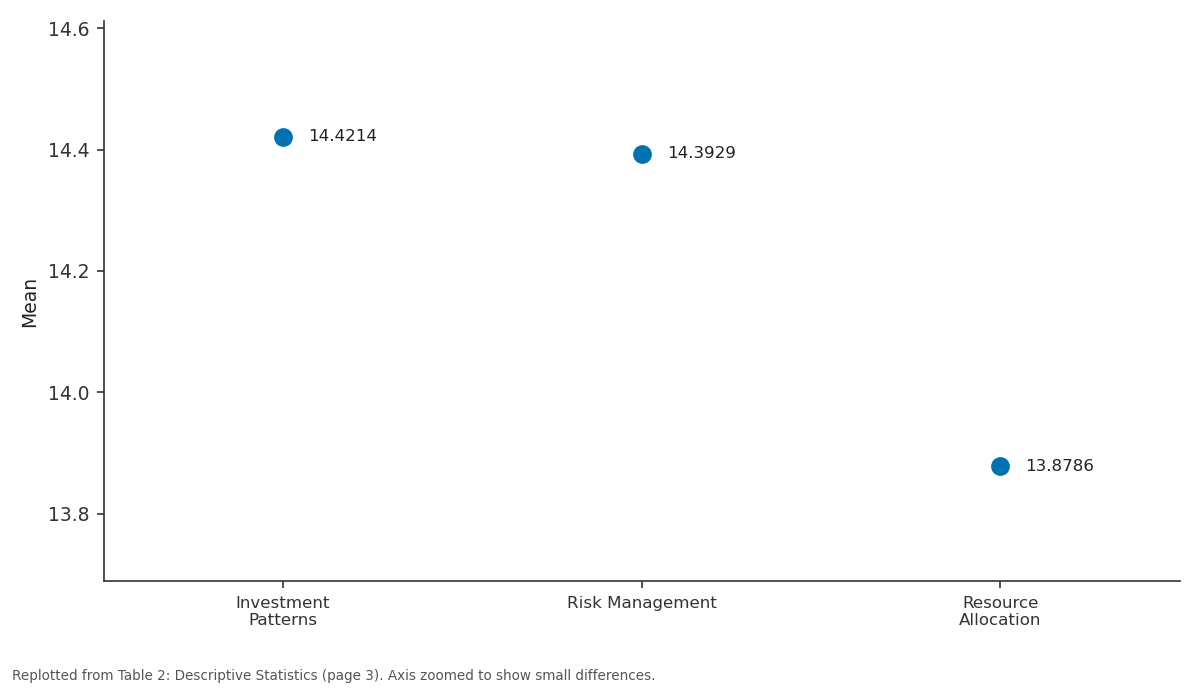
Mean: Investment Patterns vs Risk Management vs Resource Allocation
Replotted from Table 2 (page 3) of the original paper. Every bar is the paper's own table value.
View source evidence ↗Figures & tables
From the original paper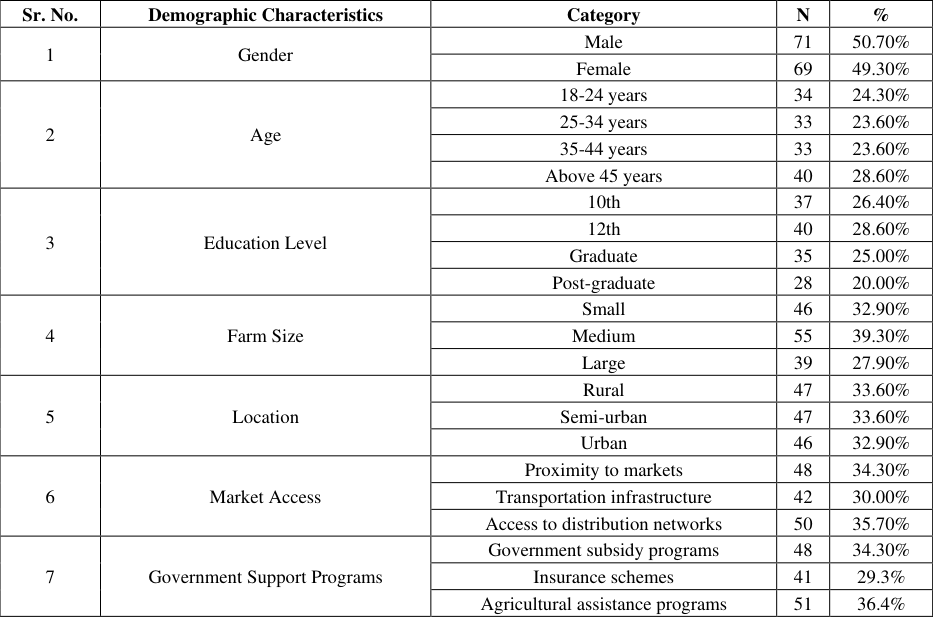 Table 1
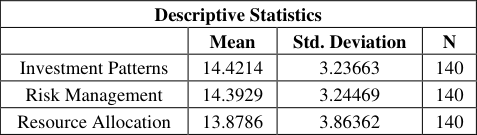 Table 2
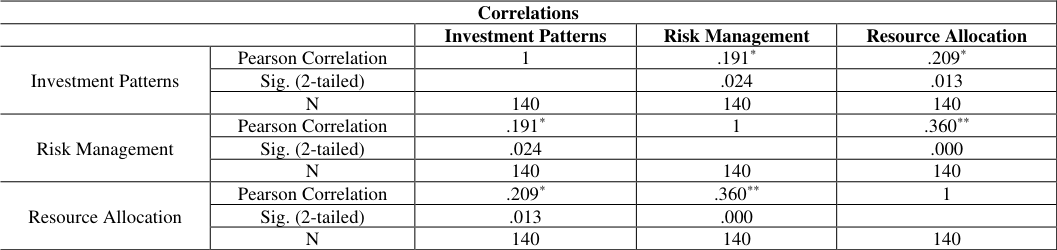 Table 3
 Table 4
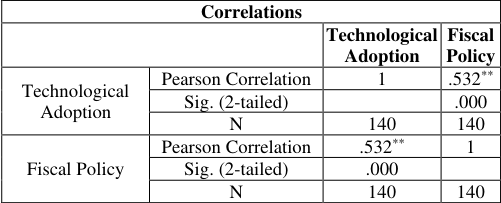 Table 5
Introduction
The interplay between government spending and the agriculture sector is a key factor in determining a country's level of economic development in the ever-changing context of economic growth (Okoh, 2015) [22] . National economies rely on agricultural output since it provides food, jobs, and essential components for many other types of businesses (Abdulhussain, et al., 2022) [1] . Government officials, economists, and other interested parties must acknowledge the mutually beneficial relationship between fiscal policies as well as yields from farms. Taxation, government spendings, and the distribution of funds all fall under fiscal policies, which have a major impact on the food and farming industries (Zeng, et al., 2021) [25] . Planning and carrying out agricultural operations are directly affected by the distribution of monetary resources, subsidies, and incentives. It is becoming more and more important for governments to comprehend the complex effects of budgetary policies on agricultural outputs as they strike a balance between social welfare, economic growth, and environmental sustainability (Deng, et al., 2023) [10] . Allocating resources strategically, managing risk, and making investment decisions are all part of financial planning in the agricultural domain (Nwite, et al., 2019) [21] . To better understand the financial climate in which farmers work, it is helpful to do a thorough examination of fiscal policy. The impact of government expenditures, subsidy programs, and tax systems on the financial planning tactics used by agricultural stakeholders are examined in this study (Gafor and Mohammed, 2023) [13] . To better understand the financial climate in which farmers work, it is helpful to do a thorough examination of fiscal policy. The impact of government expenditures, subsidy programs, and tax systems on the financial planning tactics used by agricultural stakeholders are examined in this study. Several factors combined with fiscal policies to shape the agricultural production picture, including technical improvements, market dynamics, as well as environmental sustainability (Gao, et al., 2021) [14] . To better understand how fiscal policies promote or hinder creativity, effectiveness, and overall growth in the agricultural domain, the study conducts an exhaustive analysis of these interrelated factors. The government may bolster the industrial sector by implementing coordinated fiscal measures. When it comes to managing the economy, fiscal policy encompasses all the plans and methods used to bring in money, spend it, and pay it back. It wasn't until "the Great Depression of the 1930s" that the importance of fiscal policy in fostering economic stability became sufficiently apparent. Like the Indian economy, the Nigerian economy remained mostly stable in the 1950s and 1960s due to the country's reliance on agriculture. This was also true for the Indian economy www.extensionjournal.com (Ighoroje and Akpokerere, 2021) [15] . There are a total of seven sections to this paper. It has covered the abstract in Section 1 of the journal article. A literature review on "the impact of fiscal policy on agricultural productivity" is presented in section 2. In Section 3, it outlined the objectives and working hypotheses of the study. Data and procedures, including parameters and a model, have been discussed in Section 4. In Section 5, it laid up the empirical results. The results are discussed in section 6. Part 7 includes the results, implications, limits, and suggestions for further research. Finally, the references have been included
Literature Review
Following on from the previous brief introduction, this section of the study incorporates assessments of related publications that have already been carried out before to help comprehend the current state of the issue. It divided this content down into three sections to make it easier to evaluate: 1. Determinants of fiscal policies in the agriculture sector 2. Impact of Fiscal Policy on Agricultural Productivity 3. Financial Planning and Production Trends in the Agriculture Sector
Determinants of fiscal policies in the agriculture sector
According to Kim (2016) [16] , one of the primary policy instruments for raising welfare, decreasing poverty, and improving macroeconomic stability was financial inclusion, also called financial exclusion. "Financial inclusion" might mean different things to different people. As an illustration, "the inability to access necessary financial services in an appropriate form" was one way that financial exclusion was defined by Akçay et al. (2016) [2] . According to Bayar and Karamelikli (2017) [5] , "the ease of access, availability, and usage of the formal financial system by all members of the economy" was all about financial inclusion. Among the many instruments at their disposal, financial inclusion was highly regarded by policymakers. For instance, according to Ebi (2018) [11] , financial inclusion has the potential to spur economic development and quicken India's pace of economic growth. Using data collected from 1988 to 2007, Nnyanzi et al. (2018) [20] analyzed the correlation between "information and communication technologies (ICT)" and GDP growth in 40 African nations. It claimed that the expansion of people's access to financial services was a key component of the favorable impact of information and communication technologies on economic growth. According to Lenka and Sharma (2017) [18] , financial inclusion had a favorable and substantial impact on India's economic growth in the long and near term.
Impact of Fiscal Policy on Agriculture Productivity
Over the last 25 years, studies on the economy have focused heavily on the finance-growth nexus. The groundbreaking study on the consequences of development in the financial sector on economic growth by Amare et al. (2018) [3] has been a major impetus for this extensive study. According to the Central Bank of Nigeria (2019) [7] , the depth of the financial sector positively affected economic growth in a manner that was statistically significant as well as economically important way. This conclusion was reached after Fowowe and Folarin (2019) [12] reviewed more than 100 studies on the finance-growth nexus. The financial system has a crucial role in attracting deposits and facilitating the efficient and effective deployment of resources, which ultimately contributes to economic growth. Darko et al. (2020) [9] , discussed five methods by which the financial industry contributed to economic growth. Two primary functions of the financial system were (a) the mobilization and pooling of savings and (b) the assistance with the pooling, hedging, and trading of risk, (c) the financial system generated data and distributed funds, (d) the financial sector was involved in keeping an eye on businesses and enforcing corporate governance, (e) the monetary system facilitated trade.
Financial Planning and Production Trends in Agriculture Sector
Many different areas of study and discussion in the literature have focused on the financial potential, including but not limited to agricultural output, financial as well as credit facilities the agrarian sector, state policy, and the prospects of agrarian companies. Bourgeois and Sette (2017) [6] emphasized the importance of foresight impact and stated that operational foresight in agriculture encountered the dual difficulty of involving many stakeholders and achieving substantial results. To analyze "the Hungarian Ministry of Défense's" strategic foresight process, Nemeth et al. (2018) [19] used a strategic foresight method. By fostering more inclusive innovation systems, Andersen and Andersen (2017) [4] argued that Foresight can aid in inclusive development. The authors built an analytical framework around the idea of creative system foresight and applied it to two developing economies, South Korea and Brazil, to examine the design and processes involved in foresight scenarios.
Research Objectives
This research aims to comprehensively examine the intricate relationship between fiscal policy and agricultural productivity through two interconnected objectives. Firstly, the study endeavours to evaluate the financial planning practices of agricultural enterprises, analyzing investment patterns, risk management, and resource allocation in response to fiscal policies. Secondly, it aims to investigate the correlation between fiscal policy and technological adoption in agriculture, specifically exploring the impact of the integration of advanced machinery, precision farming, and sustainable practices. Through these objectives, the research seeks to provide valuable insights into the dynamics shaping the intersection of fiscal policies and agricultural outcomes.
Methodology and Data
The study utilized both primary and secondary data collection methods to determine "the Impact of Fiscal Policy on Agricultural Productivity." The primary data is collected via a structured questionnaire through random sampling that has been used for farmers. Objective 2: To investigate the correlation between fiscal policy and technological adoption in agriculture, specifically exploring the impact on the integration of advanced machinery, precision farming, and sustainable practices. .000 N 140 140 **. Correlation is significant at the 0.01 level (2-tailed).
The above table 5 defines the correlation between technological adoption and fiscal policy, they are statistically significantly correlated between technological adoption and fiscal policy because the sig value is 0.000 (i.e., the sig value is less than 0.05).
| Correlations | — | — | — |
|---|---|---|---|
| Technological Adoption | Fiscal Policy | ||
| Technological Adoption | Pearson Correlation | 1 | .532** |
| Sig. (2-tailed) | .000 | ||
| N | 140 | 140 | |
| Fiscal Policy | Pearson Correlation | .532** | 1 |
| Sig. (2-tailed) | .000 | ||
| N | 140 | 140 |
Table text extracted from the original PDF; superscript letters are shown inline. The original table image is below.
View original table image
Discussion & findings
The study accomplished its aims and produced useful results. Based on the study's findings, the descriptive statistics reveal that Investment Patterns, Risk Management, and Resource Allocation all had mean scores of 14.4214, 14.3929, and 13.8786, respectively. A statistically significant connection was found between Investment Patterns along both Risk Management (p = 0.024) along Resource Allocation (p = 0.013), indicating that there are substantial linkages among Investment Patterns, Risk Management, along Resource Allocation. The descriptive data show that the average scores for Fiscal Policy (12.6929) and Technological Adoption (10.2357) are rather high. An examination of the correlation shows a highly significant relationship between fiscal policy and technological adoption (p = 0.000), demonstrating that fiscal policies have an impact on the adoption of sustainable practices, precision farming, and modern technology in the agriculture industry. Strategic policy interventions are necessary to ensure sustainable agricultural growth since these findings show how fiscal policy, financial planning, and technology adoption are all interdependent. Similarly, the unit root test results presented by Lawal et al. (2019) indicated that, except for IDMF, all variables have been integrated into order 1 I(1). IDMF, however, is stable at order zero I(0), explaining its degree of integration. It was demonstrated by the findings of the "autoregressive distributed lag (ARDL)" that, using AGDP as a dependent variable, both short-and long-term relationships exist among the variables. Additionally, it was noted that the cointegration model had a negative coefficient of -0.363123 and a probability value of 0.0013 at a 5% level of significance, which is lower than the 0.05 threshold. However, at the 5% level of significance, the negative sign of the import custom charges on fertilizer for agriculture was quite significant (value: -0.090192). Whereas Raihan and Tuspekova (2022) [24] provided the opposite view, displaying the results of correlation analyses and statistical tests for "skewness, probability, kurtosis, and Jarque-Bera". For Kazakhstan, each variable had 25 observations from the time series data set that ran from 1996 to 2020. Everything appeared to be normal, as the skewness readings were quite small. The study also used kurtosis to determine if the series deviated significantly from normality in either the tail or the www.extensionjournal.com central tendency. Due to their values being less than 3, the empirical results showed that all of the series are platykurtic. The study conducted by Chandio et al. (2023) [8] made use of several analytical methods and estimates. These methods were categorized as follows: "panel unit root tests (i.e. LLC, IPS, Fisher-ADF, and Fisher-PP), panel co-integration tests (i.e. Pedroni, Johansen-Fisher, Kao, and Westerlund), Panel Fully Modified Ordinary Least Squares (PFMOLS), and panel causality test," in that order. An essential need for doing panel data estimates was to ensure that the variables being studied were steady. Therefore, the study utilized the aforementioned four unit root methodologies to ascertain the sequence of "integration of crop production (LnCP), temperature (LnAT), precipitation (LnAP), CO2 emissions (LnCO2), cultivated area (LnCA), income level (LnIC), and financial development (LnFD)".
Conclusion
As a conclusion, the complex interplay between government spending and crop yields demonstrates the multidimensional character of economic growth. Results show that fiscal policies have a big impact on how the agricultural sector allocates resources, how risk is managed, and how investments are made. In addition, the link between government spending and new technology shows how important policies are for influencing the spread of sustainable practices, high-tech farming equipment, and other such approaches. Given these interdependencies, it is clear that strategic interventions are required to foster agricultural development that is economically and environmentally sustainable. The importance of fiscal policies in guiding agricultural economic growth trajectories is shown by the study's careful research. In addition, supporting evidence from Raihan and Tuspekova, Lawal et al., and Chandio et al. sheds light on the many approaches used to evaluate the effect of fiscal regulations on agricultural results, including panel data estimations and unit root tests. Government officials may better meet the changing demands of agricultural stakeholders and promote long-term economic growth by conducting thorough analyses of the effects of fiscal policies on agricultural production. Because of the complex interplay between fiscal policies as well as agricultural results, this study sheds light on those dynamics and lays the groundwork for future studies and well-informed decisions.
Implications, Limitations, and Recommendations for Further Studies
Policymakers must implement policies that are in line with environmentally friendly agricultural development goals, as the study's implications on fiscal policy's effect on agricultural production show. Constraints include the fact that results are based on self-reported information from a small sample, which may make them not applicable to a broader population. To better understand the many elements, including geographical differences and socioeconomic dynamics, that influence the long-term impacts of fiscal strategies on agricultural production, future research should use longitudinal analysis. Global agricultural sustainability may be better understood and effectively formulated with the use of comparative research across nations, which can provide light on various policy frameworks and the results they produce.
Figures and tables from the paper
| Sr. No. | Demographic Characteristics | Category | N | % |
|---|---|---|---|---|
| 1 | Gender | Male | 71 | 50.70% |
| Female | 69 | 49.30% | ||
| 2 | Age | 18-24 years | 34 | 24.30% |
| 25-34 years | 33 | 23.60% | ||
| 35-44 years | 33 | 23.60% | ||
| Above 45 years | 40 | 28.60% | ||
| 3 | Education Level | 10th | 37 | 26.40% |
| 12th | 40 | 28.60% | ||
| Graduate | 35 | 25.00% | ||
| Post-graduate | 28 | 20.00% | ||
| 4 | Farm Size | Small | 46 | 32.90% |
| Medium | 55 | 39.30% | ||
| Large | 39 | 27.90% | ||
| 5 | Location | Rural | 47 | 33.60% |
| Semi-urban | 47 | 33.60% | ||
| Urban | 46 | 32.90% | ||
| 6 | Market Access | Proximity to markets | 48 | 34.30% |
| Transportation infrastructure | 42 | 30.00% | ||
| Access to distribution networks | 50 | 35.70% | ||
| 7 | Government Support Programs | Government subsidy programs | 48 | 34.30% |
| Insurance schemes | 41 | 29.3% | ||
| Agricultural assistance programs | 51 | 36.4% |
Table text extracted from the original PDF; superscript letters are shown inline. The original table image is below.
View original table image
| Descriptive Statistics | — | — | — |
|---|---|---|---|
| Mean | Std. Deviation | N | |
| Investment Patterns | 14.4214 | 3.23663 | 140 |
| Risk Management | 14.3929 | 3.24469 | 140 |
| Resource Allocation | 13.8786 | 3.86362 | 140 |
Table text extracted from the original PDF; superscript letters are shown inline. The original table image is below.
View original table image
| Correlations | — | — | — | — |
|---|---|---|---|---|
| Investment Patterns | Risk Management | Resource Allocation | ||
| Investment Patterns | Pearson Correlation | 1 | .191* | .209* |
| Sig. (2-tailed) | .024 | .013 | ||
| N | 140 | 140 | 140 | |
| Risk Management | Pearson Correlation | .191* | 1 | .360** |
| Sig. (2-tailed) | .024 | .000 | ||
| N | 140 | 140 | 140 | |
| Resource Allocation | Pearson Correlation | .209* | .360** | 1 |
| Sig. (2-tailed) | .013 | .000 | ||
| N | 140 | 140 | 140 |
Table text extracted from the original PDF; superscript letters are shown inline. The original table image is below.
View original table image
| Descriptive Statistics | — | — | — |
|---|---|---|---|
| Mean | Std. Deviation | N | |
| Technological Adoption | 10.2357 | 2.93481 | 140 |
| Fiscal Policy | 12.6929 | 3.22065 | 140 |
Table text extracted from the original PDF; superscript letters are shown inline. The original table image is below.
View original table image
References
21 in the original paper- Abdulhussain AJ, Abd MJ, Mousa HT. The Impact of Fiscal Policy on the Agricultural Domestic Product in Iraq for the Period 1990-2020. IOP Conf Ser Earth Environ Sci. 2022 Jul;1060(1):012142.
- Akçay S, Sağbaş İ, Demirtaş G. Financial development and tax revenue nexus in Turkey. J Econ Dev Stud. 2016;4(1):103-108.
- Amare M, Jensen ND, Shiferaw B, Cissé JD. Rainfall shocks and agricultural productivity: Implication for rural household consumption. Agric Syst. 2018;166:7989.
- Andersen AD, Andersen PD. Foresighting for inclusive development. Technol Forecast Soc Change. 2017;119:227-236.
- Bourgeois R, Sette C. The state of foresight in food and agriculture: Challenges for impact and participation. Futures. 2017;93:115-131.
- Chandio AA, Jiang Y, Amin A, Ahmad M, Akram W, Ahmad F, et al. Climate change and food security of South Asia: fresh evidence from a policy perspective using novel empirical analysis. J Environ Plann Manag. 2023;66(1):169-190.
- Deng H, Zheng W, Shen Z, Štreimikienė D. Does fiscal expenditure promote green agricultural productivity gains: An investigation on corn production. Appl Energy. 2023;334:120666.
- Ebi BO. Financial sector development and tax revenue in Nigeria. Int J Econ Commerce Manag. 2018;6(6):93109.
- Fowowe B, Folarin EO. The effects of fragility and financial inequalities on inclusive growth in African countries. Rev Dev Econ. 2019;23(3):1141-1176.
- Gafor NM, Mohammed DA. An Analytical Study Of The Effectiveness Of Fiscal Policy Tools In Achieving Economic Stability In Iraq. Russ Law J. 2023;11(11s).
- Gao Y, Shu Y, Cao H, Zhou S, Shi S. Fiscal policy dilemma in resolving agricultural risks: Evidence from China's agricultural insurance subsidy pilot. Int J Environ Res Public Health. 2021;18(14):7577.
- Ighoroje EJ, Akpokerere OE. Fiscal Policy and Industrial Sector Output in Nigeria. J Res Bus Manag. 2021;9(1):42-49.
- Kim JH. A study on the effect of financial inclusion on the relationship between income inequality and economic growth. Emerg Mark Finance Trade. 2016;52(2):498-512.
- Lawal AI, Fidelis EO, Babajide AA, Obasaju BO, Oyetade O, Lawal-Adedoyin B, et al. Impact of fiscal www.extensionjournal.com policy on agricultural output in Nigeria. J Environ Manag Tourism. 2019;9(7):1428-1442.
- Lenka SK, Sharma R. Does financial inclusion spur economic growth in India?. J Dev Areas. 2017;51(3):215-228.
- Nemeth B, Dew N, Augier M. Understanding some pitfalls in the strategic foresight processes: The case of the Hungarian Ministry of Defense. Futures. 2018;101:92-102.
- Nnyanzi JB, Bbale JM, Sendi R. Financial development and tax revenue: How catalytic are political development and corruption. Int J Econ Finance. 2018;10(8):92-104.
- Okoh AS. Impact of fiscal policy on the growth of agricultural sector in Nigeria, 1981-2013. Eur J Educ Dev Psychol. 2015;3(4):1-17.
- Radchenko O, Semenyshena N, Sadovska I, Nahirska K, Pokotylska N. Foresight development strategy of the financial capacity: Comparative study of the ukrainian agricultural sector. Eng Econ. 2020;31(2):178-187.
- Raihan A, Tuspekova A. Dynamic impacts of economic growth, energy use, urbanization, agricultural productivity, and forested area on carbon emissions: New insights from Kazakhstan. World Dev Sustain. 2022;1:100019.
- Zeng G, Zhang C, Li S, Sun H. The dynamic impact of agricultural fiscal expenditures and gross agricultural output on poverty reduction: A VAR model analysis. Sustainability. 2021;13(11):5766.