
Research article · 2024 · Full text
International Journal of Agriculture Extension and Social DevelopmentFactors associated with emotional intelligence of Sarpanches
Volume 7(3) · Pages 129–134 · DOI: 10.33545/26180723.2024.v7.i3b.419 ↗
Research areasEmotional Intelligence and Performance
Abstract
Author-writtenPanchayati Raj institutions epitomize participatory democracy, with Sarpanches playing a pivotal role in rural development post-constitutional amendments. Emotional Intelligence (EI) emerges as key to their leadership effectiveness. This study, conducted in South Gujarat, assessed factors influencing EI among Sarpanches. Social dynamics, including familial support and social recognition, significantly shape EI. Physical well-being, institutional achievements, and communication facilities contribute to EI development. Psychological factors such as critical thinking and self-confidence play crucial roles. Economically, fair compensation and recognition for extra work are pivotal. Organizational clarity and adaptability enhance EI. Overall, understanding and addressing these multifaceted factors are imperative for effective leadership and rural development within Panchayati Raj institutions.
Summary
Source-checkedPlain-language reading of the full paper, prepared with AI and checked against the text. Each point links to the authors' own words.
Why it matters
- Sarpanches play a critical role in leading rural development within the participatory democracy of Panchayati Raj institutions. View evidence ↗
- Emotional intelligence (EI) is considered a key psychological trait for the effective leadership of Sarpanches. View evidence ↗
- The development of emotional intelligence is influenced by a complex mix of social, physical, psychological, economic, and organizational factors. View evidence ↗
The question
- The study aimed to assess the various factors that influence the emotional intelligence of Sarpanches in the South Gujarat region. View evidence ↗
What they did
- The researchers used an ex-post-facto research design across seven districts in South Gujarat. View evidence ↗
- The sample consisted of 210 randomly selected Sarpanches, split equally between 105 males and 105 females. View evidence ↗
- Factors were measured using a three-point scale (very important, important, and less important) with corresponding scores of 3, 2, and 1. View evidence ↗
What they found
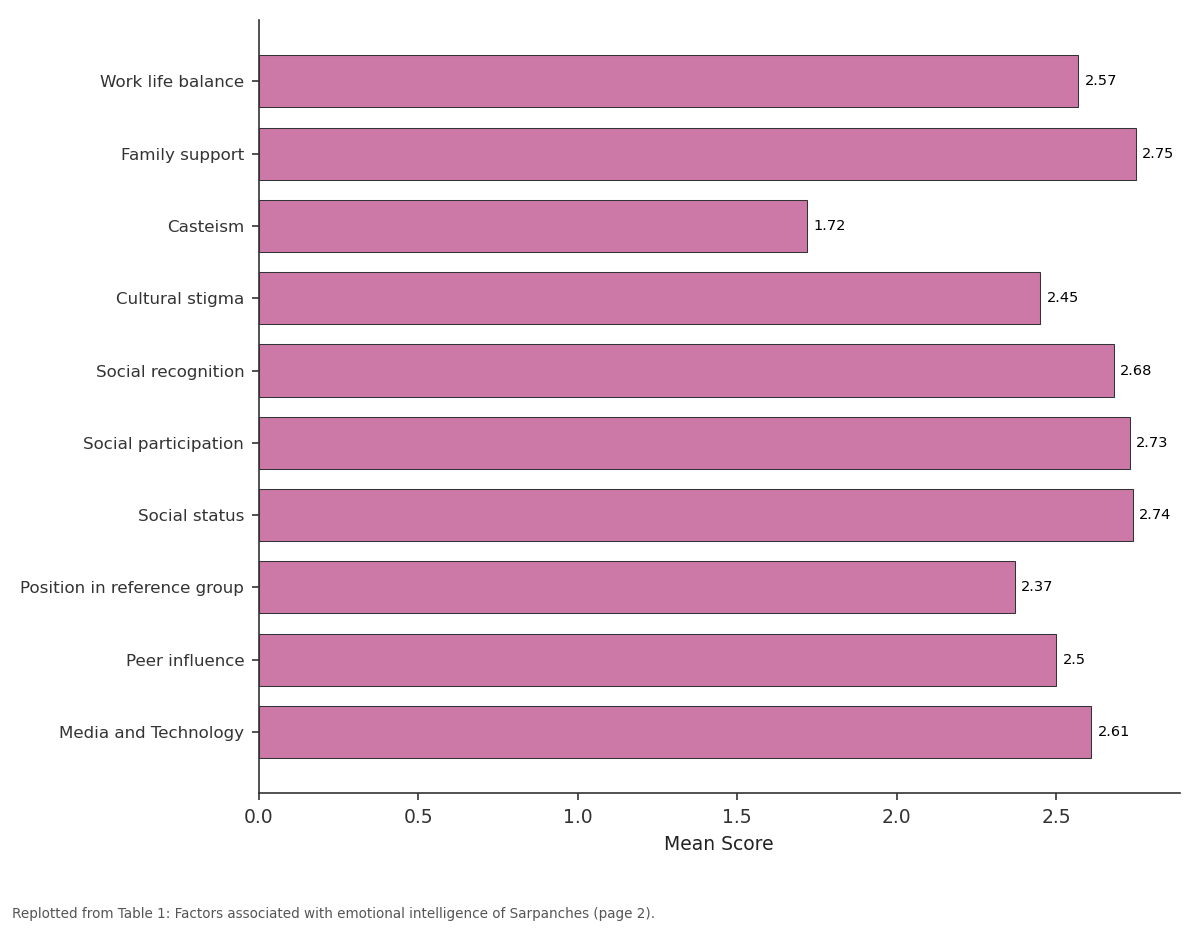
- Across the pooled data, family support was the most important social factor for emotional intelligence, with a mean score of 2.75. View evidence ↗
- Institutional achievements were the top-ranked physical factor for the pooled group, with a mean score of 2.76. View evidence ↗
- Critical thinking was identified as the most significant psychological factor in the pooled analysis, achieving a mean score of 2.79. View evidence ↗
- Fair payment for work and recognition of additional efforts were the top economic factors, both with a pooled mean score of 2.8. View evidence ↗
- Clear and precise job responsibilities were the most influential organizational factor for the pooled group, with a mean score of 2.71. View evidence ↗
- Casteism had the lowest impact among social factors, with a pooled mean score of 1.72. View evidence ↗
What it means
- The authors suggest that future research and interventions should prioritize the identified factors to better support Sarpanches in leadership. View evidence ↗
Visual summary
2 visualsIllustrations explain the paper; charts are replotted from the paper's own table values.
Pooled (n=210) / Mean Score: Work life balance vs Family support vs Casteism vs Cultural stigma vs Social recognition
Replotted from Table 1 (page 2) of the original paper. Every bar is the paper's own table value.
View source evidence ↗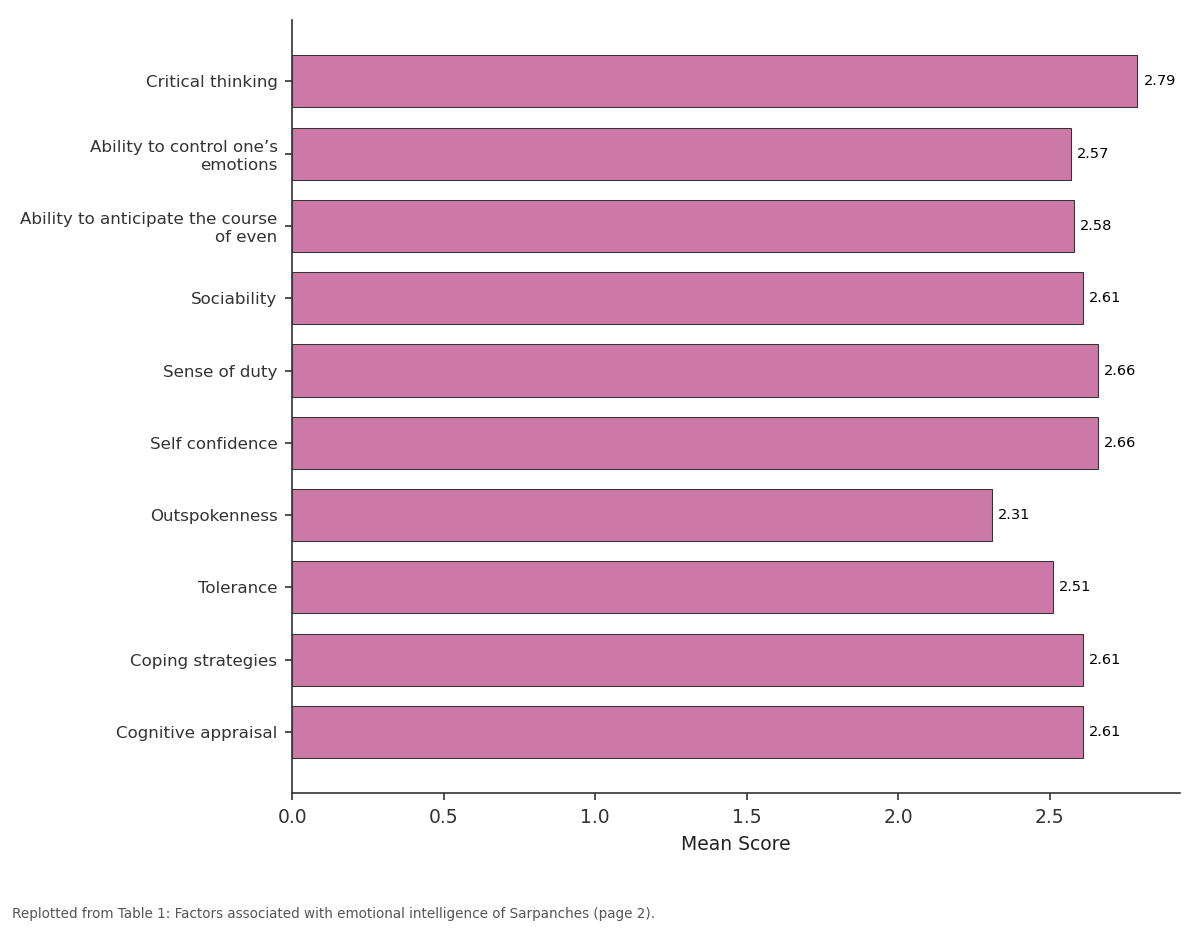
Pooled (n=210) / Mean Score: Critical thinking vs Ability to control... vs Ability to anticipate... vs Sociability vs Sense of duty
Replotted from Table 1 (page 2) of the original paper. Every bar is the paper's own table value.
View source evidence ↗Figures & tables
From the original paper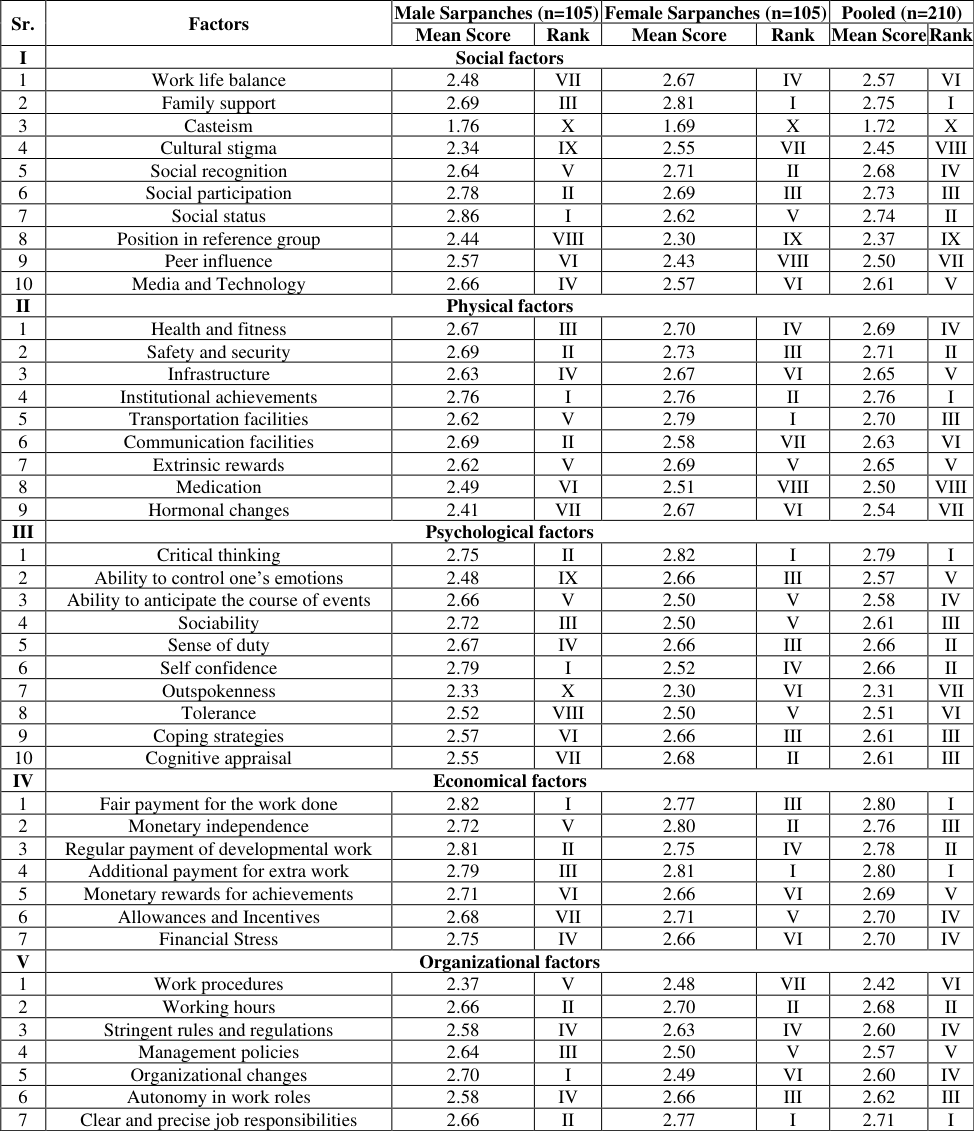 Table 1
Introduction
Panchayati Raj institutions stand as bastions of participatory democracy, where the pivotal role of Sarpanches in spearheading rural development is undeniable. Following the constitutional amendments empowering local governance, Sarpanches wield significant influence in steering community progress. At the heart of their effectiveness lies emotional intelligence (EI), a psychological trait pivotal for effective leadership. EI, the ability to perceive, understand, and manage emotions, emerges as a linchpin in the realm of Sarpanch leadership. Its multifaceted nature draws from a spectrum of factors spanning social, physical, psychological, economic, and organizational domains. Social dynamics intricately interplay with EI development. Elements like familial support, cultural nuances, and peer influence weave the fabric of emotional awareness and management. Furthermore, social recognition and participation, along with media influence, shape the emotional landscape of Sarpanches. Physical well-being forms another cornerstone of EI. Health, safety, and infrastructure accessibility not only foster personal well-being but also impact emotional resilience and adaptability. Additionally, institutional achievements and communication facilities contribute to the physical environment influencing EI. Psychological dimensions encompass critical aspects such as emotional regulation, sociability, and cognitive appraisal. The ability to navigate challenges, display self-confidence, and employ effective coping mechanisms all contribute to EI enhancement among Sarpanches.
Economic factors exert profound influence, with fair compensation, financial independence, and incentives driving emotional stability and efficacy. Organizational frameworks further mold EI, with clear job roles, autonomy, and conducive work environments fostering emotional intelligence among Sarpanches. In essence, the emotional intelligence of Sarpanches emerges as a product of a complex interplay of societal, personal, and organizational factors. Understanding and harnessing these dynamics are imperative for fostering effective leadership and catalyzing rural development within Panchayati Raj institutions.
Methodology
The present study was conducted in seven districts of South Gujarat region. An ex-post-facto research design was used. A simple random sampling method was adopted to obtain Sarpanch as a respondent. 105 male Sarpanches and 105 female Sarpanches means a total of 210 Sarpanches were randomly selected. The Sarpanches identifies those factors which restrict and enhance them personally, professionally and organizationally. In all 5 categories were identified viz., 1 social, 2 physical, 3 psychological, 4 economical and 5 organizational factors for measuring this. The responses were collected on three point continuum viz., very important, important and less important and scores of 3, 2, 1 were given, respectively. Then, the mean score for each factor was calculated for ranking them in terms of its importance. www.extensionjournal.com
Results and Discussion
Emotional intelligence, often abbreviated as EI, encompasses a set of abilities crucial for navigating interpersonal relationships, managing emotions, and achieving personal and professional success. Research suggests that factors such as social, physical, psychological, economical and organizational factors are associated with emotional intelligence. The responses regarding it collected and presented in table 1. In the pooled data analysis, the emotional intelligence of Sarpanches reflects the influence of various social factors. Family support emerges as a significant contributor, securing the top rank with a mean score of 2.75, highlighting its crucial role in nurturing emotional intelligence. Social status and social participation also demonstrate notable impacts, securing ranks of II and III, respectively, with mean scores of 2.74 and 2.73. Conversely, factors like casteism and position in the reference group exhibit lower mean scores and ranks (1.72 and 2.37), suggesting a potentially lesser impact. Cultural stigma, with a mean score of 2.45, secures a middle rank, indicating a moderate influence. While factors like peer influence and media and technology hold moderate positions in terms of rank and mean scores, they contribute to the overall landscape of social factors affecting emotional intelligence among Sarpanches.
| Sr. | Factors | Male Sarpanches (n=105) | — | Female Sarpanches (n=105) | — | Pooled (n=210) | — |
|---|---|---|---|---|---|---|---|
| Mean Score | Rank | Mean Score | Rank | Mean Score | Rank | ||
| I | Social factors | ||||||
| 1 | Work life balance | 2.48 | VII | 2.67 | IV | 2.57 | VI |
| 2 | Family support | 2.69 | III | 2.81 | I | 2.75 | I |
| 3 | Casteism | 1.76 | X | 1.69 | X | 1.72 | X |
| 4 | Cultural stigma | 2.34 | IX | 2.55 | VII | 2.45 | VIII |
| 5 | Social recognition | 2.64 | V | 2.71 | II | 2.68 | IV |
| 6 | Social participation | 2.78 | II | 2.69 | III | 2.73 | III |
| 7 | Social status | 2.86 | I | 2.62 | V | 2.74 | II |
| 8 | Position in reference group | 2.44 | VIII | 2.30 | IX | 2.37 | IX |
| 9 | Peer influence | 2.57 | VI | 2.43 | VIII | 2.50 | VII |
| 10 | Media and Technology | 2.66 | IV | 2.57 | VI | 2.61 | V |
| II | Physical factors | ||||||
| 1 | Health and fitness | 2.67 | III | 2.70 | IV | 2.69 | IV |
| 2 | Safety and security | 2.69 | II | 2.73 | III | 2.71 | II |
| 3 | Infrastructure | 2.63 | IV | 2.67 | VI | 2.65 | V |
| 4 | Institutional achievements | 2.76 | I | 2.76 | II | 2.76 | I |
| 5 | Transportation facilities | 2.62 | V | 2.79 | I | 2.70 | III |
| 6 | Communication facilities | 2.69 | II | 2.58 | VII | 2.63 | VI |
| 7 | Extrinsic rewards | 2.62 | V | 2.69 | V | 2.65 | V |
| 8 | Medication | 2.49 | VI | 2.51 | VIII | 2.50 | VIII |
| 9 | Hormonal changes | 2.41 | VII | 2.67 | VI | 2.54 | VII |
| III | Psychological factors | ||||||
| 1 | Critical thinking | 2.75 | II | 2.82 | I | 2.79 | I |
| 2 | Ability to control one’s emotions | 2.48 | IX | 2.66 | III | 2.57 | V |
| 3 | Ability to anticipate the course of events | 2.66 | V | 2.50 | V | 2.58 | IV |
| 4 | Sociability | 2.72 | III | 2.50 | V | 2.61 | III |
| 5 | Sense of duty | 2.67 | IV | 2.66 | III | 2.66 | II |
| 6 | Self confidence | 2.79 | I | 2.52 | IV | 2.66 | II |
| 7 | Outspokenness | 2.33 | X | 2.30 | VI | 2.31 | VII |
| 8 | Tolerance | 2.52 | VIII | 2.50 | V | 2.51 | VI |
| 9 | Coping strategies | 2.57 | VI | 2.66 | III | 2.61 | III |
| 10 | Cognitive appraisal | 2.55 | VII | 2.68 | II | 2.61 | III |
| IV | Economical factors | ||||||
| 1 | Fair payment for the work done | 2.82 | I | 2.77 | III | 2.80 | I |
| 2 | Monetary independence | 2.72 | V | 2.80 | II | 2.76 | III |
| 3 | Regular payment of developmental work | 2.81 | II | 2.75 | IV | 2.78 | II |
| 4 | Additional payment for extra work | 2.79 | III | 2.81 | I | 2.80 | I |
| 5 | Monetary rewards for achievements | 2.71 | VI | 2.66 | VI | 2.69 | V |
| 6 | Allowances and Incentives | 2.68 | VII | 2.71 | V | 2.70 | IV |
| 7 | Financial Stress | 2.75 | IV | 2.66 | VI | 2.70 | IV |
| V | Organizational factors | ||||||
| 1 | Work procedures | 2.37 | V | 2.48 | VII | 2.42 | VI |
| 2 | Working hours | 2.66 | II | 2.70 | II | 2.68 | II |
| 3 | Stringent rules and regulations | 2.58 | IV | 2.63 | IV | 2.60 | IV |
| 4 | Management policies | 2.64 | III | 2.50 | V | 2.57 | V |
| 5 | Organizational changes | 2.70 | I | 2.49 | VI | 2.60 | IV |
| 6 | Autonomy in work roles | 2.58 | IV | 2.66 | III | 2.62 | III |
| 7 | Clear and precise job responsibilities | 2.66 | II | 2.77 | I | 2.71 | I |
Table text extracted from the original PDF; superscript letters are shown inline. The original table image is below.
View original table image
Physical factors
The emotional intelligence of male Sarpanches is significantly influenced by various physical factors, each contributing uniquely to their overall well-being. Notably, institutional achievements take precedence, securing the top rank with a mean score of 2.76. This highlights the positive impact of recognizing accomplishments within the institutional framework on the emotional intelligence levels of male Sarpanches. Following closely, safety and security rank second, underscoring the importance of feeling secure in their environment for emotional well-being, with a mean score of 2.69. Infrastructure, with a mean score of 2.63, holds the fourth rank, emphasizing its role in supporting emotional intelligence. Health and fitness emerge as crucial factors, securing the third rank with a mean score of 2.67, emphasizing the significance of physical well-being. Transportation facilities and extrinsic rewards contribute moderately to the overall landscape of physical factors affecting emotional intelligence, each with a mean score of 2.62. Conversely, medication and hormonal changes exhibit lower ranks, suggesting a potentially lesser impact on emotional intelligence. These findings underscore the multifaceted nature of physical factors in shaping the emotional intelligence of male Sarpanches, highlighting the importance of institutional achievements, safety, infrastructure, and health in fostering their emotional wellbeing and intelligence. Similarly, physical factors play a pivotal role in influencing the emotional intelligence of female Sarpanches. Transportation facilities emerge as particularly significant, securing the top rank with a mean score of 2.79, emphasizing the importance of efficient transportation systems in nurturing emotional well-being. Institutional achievements closely follow, occupying the second rank with a mean score of 2.76, indicating their positive impact on emotional intelligence levels among female Sarpanches. Safety and security, with a mean score of 2.73, hold the third rank, highlighting the significance of feeling safe and secure. Health and fitness, with a mean score of 2.7, secure the fourth rank, emphasizing their role in fostering emotional intelligence. Infrastructure, communication facilities, and extrinsic rewards contribute moderately to the overall landscape of physical factors affecting emotional intelligence. Medication and hormonal changes exhibit lower ranks, suggesting a potentially lesser impact. These findings illuminate the complex relationship between physical factors and emotional intelligence among female Sarpanches, emphasizing the importance of transportation, institutional achievements, safety, and health in nurturing their emotional well-being and intelligence. Furthermore, pooled data analysis reveals the significant influence of physical factors on the emotional intelligence of Sarpanches collectively. Institutional achievements emerge as particularly noteworthy, securing the top rank with a mean score of 2.76, highlighting the importance of acknowledging accomplishments within the institutional framework. Safety and security closely follow, occupying the second rank with a mean score of 2.71, underscoring their role in fostering emotional well-being. Transportation facilities secure the third rank, with a mean score of 2.7, indicating their importance in nurturing emotional intelligence. Health and fitness hold the fourth rank, with a mean score of 2.69, emphasizing their contribution to emotional well-being. Other factors like infrastructure, communication facilities, and extrinsic rewards contribute moderately to the overall landscape of physical factors affecting emotional intelligence. Medication and hormonal changes exhibit lower ranks, suggesting a potentially lesser impact. These findings underscore the intricate interplay of physical factors in shaping the emotional intelligence of Sarpanches, emphasizing the significance of institutional achievements, safety, transportation, and health in fostering their emotional well-being and intelligence.
Psychological factors
The emotional intelligence of male Sarpanches is intricately linked to various psychological factors, each playing a www.extensionjournal.com distinct role in shaping their overall well-being. Critical thinking stands out as particularly significant, securing the second rank with a mean score of 2.75. This underscores the importance of analytical and evaluative skills in navigating complex situations, thus positively influencing emotional intelligence levels among male Sarpanches. Sociability closely follows, occupying the third rank with a mean score of 2.72, emphasizing the value of interpersonal skills and social interaction in fostering emotional well-being. Selfconfidence emerges as a crucial factor, securing the top rank with a mean score of 2.79, highlighting the importance of belief in oneself and one's abilities. Additionally, the ability to anticipate the course of events, sense of duty, and coping strategies hold intermediate positions, each contributing moderately to the overall landscape of psychological factors affecting emotional intelligence. Conversely, outspokenness and tolerance exhibit lower ranks, suggesting a potentially lesser impact on emotional intelligence among male Sarpanches. These findings illuminate the multifaceted nature of psychological factors in shaping the emotional intelligence of male Sarpanches emphasizing the significance of critical thinking, sociability, self-confidence, and effective coping strategies in fostering their emotional well-being and intelligence. Similarly, the emotional intelligence of female Sarpanches is influenced by various psychological factors, each playing a distinct role in shaping their overall well-being. Critical thinking emerges as particularly significant, securing the top rank with a mean score of 2.82. This underscores the importance of analytical and evaluative abilities in navigating challenges and making informed decisions, thereby positively impacting emotional intelligence levels among female Sarpanches. Cognitive appraisal closely follows, occupying the second rank with a mean score of 2.68, highlighting the role of assessing situations accurately in fostering emotional well-being. The ability to control one's emotions, sense of duty, and coping strategies share the third rank, each with a mean score of 2.66, underscoring their collective importance in managing emotional responses and fulfilling responsibilities effectively. Selfconfidence holds the fourth rank with a mean score of 2.52, emphasizing the significance of belief in oneself and one's capabilities in nurturing emotional intelligence. Conversely, factors such as sociability, tolerance, and outspokenness exhibit lower ranks, suggesting a potentially lesser impact on emotional intelligence among female Sarpanches. These findings illuminate the complex interplay of psychological factors in shaping the emotional intelligence of female Sarpanches, emphasizing the critical role of critical thinking, cognitive appraisal, emotional regulation, and effective coping strategies in fostering their emotional wellbeing and intelligence. Moreover, psychological factors significantly contribute to the emotional intelligence of Sarpanches, as evidenced by the pooled data analysis, with various dimensions showing distinct mean scores and ranks. Critical thinking emerges as particularly noteworthy, securing the top rank with a mean score of 2.79. This underscores the importance of analytical and evaluative abilities in navigating challenges and making informed decisions, thereby positively impacting emotional intelligence levels among Sarpanches. Sense of duty and self-confidence share the second rank, each with a mean score of 2.66, emphasizing the significance of fulfilling responsibilities effectively and believing in oneself and one's capabilities in nurturing emotional intelligence. Sociability closely follows, occupying the third rank with a mean score of 2.61, highlighting the role of interpersonal skills and social interactions in fostering emotional wellbeing. The ability to anticipate the course of events and coping strategies share the fourth rank, each with a mean score of 2.58 and 2.61, respectively, underscoring their collective importance in managing emotional responses and adapting to changing circumstances effectively. Conversely, factors such as outspokenness and tolerance exhibit lower ranks, suggesting a potentially lesser impact on emotional intelligence among Sarpanches. These findings illuminate the complex interplay of psychological factors in shaping the emotional intelligence of Sarpanches, emphasizing the critical role of critical thinking, emotional regulation, interpersonal skills, and effective coping strategies in fostering their emotional well-being and intelligence.
Economical factors
Economic factors play a pivotal role in shaping the emotional intelligence of male Sarpanches, with distinct dimensions demonstrating varying mean scores and ranks. Fair payment for the work done stands out as particularly significant, securing the highest rank with a mean score of 2.82. This underscores the critical importance of receiving equitable compensation for their contributions to nurturing emotional well-being among male Sarpanches. Following closely is the regular payment of developmental work, occupying the second rank with a mean score of 2.81, signifying the positive impact of consistent compensation for developmental projects on emotional intelligence levels. Additionally, recognition and reward for extra work hold the third rank with a mean score of 2.79, highlighting the value of acknowledging and incentivizing additional efforts in fostering emotional well-being. On the contrary, financial stress, with a mean score of 2.75, secures a lower rank, indicating the potential adverse effects of financial worries on emotional intelligence among male Sarpanches. Conversely, dimensions such as monetary independence, monetary rewards for achievements, and allowances and incentives occupy intermediate to lower ranks, suggesting a relatively lesser influence on emotional intelligence. These findings underscore the significance of fair compensation, regular payment for developmental work, and recognition of extra efforts in nurturing the emotional well-being and intelligence of male Sarpanches within the economic realm. Similarly, economic factors play a crucial role in influencing the emotional intelligence of female Sarpanches, with different dimensions exhibiting distinct mean scores and ranks. Notably, recognition and compensation for additional work emerge as particularly significant, securing the top rank with a mean score of 2.81. This emphasizes the importance of acknowledging and rewarding extra efforts in fostering emotional well-being among female Sarpanches. Following closely is monetary independence, occupying the second rank with a mean score of 2.8, highlighting the role of financial autonomy in nurturing emotional intelligence levels. Fair payment for the work done holds the third rank with a mean score of 2.77, underscoring the significance of equitable compensation for their contributions in promoting www.extensionjournal.com emotional well-being. Additionally, consistent compensation for developmental work secures the fourth rank with a mean score of 2.75, emphasizing the value of regular payment for developmental projects in supporting emotional intelligence. Conversely, dimensions such as monetary rewards for achievements, allowances and incentives, and financial stress occupy intermediate to lower ranks, suggesting a relatively lesser impact on emotional intelligence among female Sarpanches. These findings underscore the critical importance of recognizing additional work, achieving financial independence, and ensuring fair compensation in fostering the emotional well-being and intelligence of female Sarpanches. Furthermore, economic factors significantly shape the emotional intelligence of Sarpanches, as indicated by the pooled data analysis, with various dimensions demonstrating distinct mean scores and ranks. Fair payment for the work done and recognition of additional efforts emerge as particularly noteworthy, both securing the top rank with mean scores of 2.8. This highlights the critical importance of fair compensation and acknowledgement of extra contributions in nurturing emotional well-being among Sarpanches. Following closely is the regular payment of developmental work, occupying the second rank with a mean score of 2.78, underscoring the significance of consistent compensation for developmental projects in supporting emotional intelligence. Moreover, financial autonomy secures the third rank with a mean score of 2.76, indicating the importance of financial independence in nurturing emotional intelligence levels. Conversely, dimensions such as monetary rewards for achievements, allowances and incentives, and financial stress hold intermediate ranks, suggesting a relatively lesser impact on emotional intelligence among Sarpanches. These findings underscore the vital role of fair compensation, financial autonomy, and regular payment for developmental work in fostering the emotional well-being and intelligence of Sarpanches.
Organizational factors
Organizational factors play a critical role in shaping the emotional intelligence of male Sarpanches, with distinct dimensions exerting varying influences. Notably, organizational changes emerge as highly impactful, securing the top rank with a mean score of 2.70. This underscores the significance of adaptability to changes within the organizational structure in fostering emotional intelligence levels among male Sarpanches. Following closely are working hours and clear job responsibilities, both sharing the second rank with mean scores of 2.66, highlighting the importance of manageable work schedules and well-defined roles in promoting emotional well-being and intelligence. Management policies secure the third rank with a mean score of 2.64, emphasizing the importance of effective organizational management practices. Stringent rules and regulations, along with autonomy in work roles, share the fourth rank, each with a mean score of 2.58, indicating their moderate impact on emotional intelligence within the organizational context. These findings underscore the multifaceted nature of organizational factors in influencing the emotional intelligence of male Sarpanches, highlighting the importance of adaptability, clarity, and effective management in nurturing their emotional well-being and intelligence. Organizational factors also play a significant role in influencing the emotional intelligence of female Sarpanches, with distinct dimensions exerting varying impacts. Clear and precise job responsibilities emerge as particularly influential, securing the top rank with a mean score of 2.77. This underscores the importance of having well-defined roles and responsibilities in promoting emotional well-being and intelligence among female Sarpanches. Working hours closely follow, occupying the second rank with a mean score of 2.70, highlighting the significance of manageable work schedules in nurturing emotional intelligence levels. Autonomy in work roles secures the third rank with a mean score of 2.66, indicating the importance of having independence and flexibility in executing job tasks. Stringent rules and regulations and organizational changes hold the fourth and fifth ranks, respectively, with mean scores of 2.63 and 2.49, suggesting their moderate influence on emotional intelligence within the organizational context. Management policies and work procedures occupy lower ranks, indicating a potentially lesser impact on emotional intelligence among female Sarpanches. These findings underscore the importance of clarity, flexibility, and welldefined responsibilities in fostering the emotional wellbeing and intelligence of female Sarpanches within organizational settings. Organizational factors exhibit a significant influence on the emotional intelligence of Sarpanches, as demonstrated by the pooled data analysis. Clear and precise job responsibilities emerge as particularly influential, securing the top rank with a mean score of 2.71. This underscores the critical importance of well-defined roles and responsibilities in fostering emotional intelligence among Sarpanches. Working hours closely follow, occupying the second rank with a mean score of 2.68, highlighting the significance of maintaining manageable work schedules for nurturing emotional well-being. Autonomy in work roles secures the third rank with a mean score of 2.62, indicating the importance of having independence and flexibility in executing job tasks. Stringent rules and regulations, as well as organizational changes, share the fourth rank, each with a mean score of 2.60, suggesting their moderate influence on emotional intelligence within organizational contexts. Management policies and work procedures occupy lower ranks, indicating a potentially lesser impact on emotional intelligence among Sarpanches. These findings underscore the importance of clarity, flexibility, and well-defined responsibilities in fostering the emotional well-being and intelligence of Sarpanches within organizational settings.
Conclusion
The emotional intelligence of male and female Sarpanches is intricately influenced by various social, physical, psychological, economic, and organizational factors. Key findings reveal the critical role of factors such as social status, family support, institutional achievements, critical thinking, fair compensation, clear job responsibilities, and adaptability in nurturing emotional well-being and intelligence among Sarpanches. Understanding and addressing these multifaceted factors are crucial for developing effective strategies to enhance the emotional www.extensionjournal.com intelligence of Sarpanches, thereby promoting their overall well-being and effectiveness in their roles. Future research and interventions should prioritize these factors to support Sarpanches in their leadership positions effectively.
Acknowledgement
AcknowledgementThe authors extend their gratitude to Navsari Agricultural University for providing the platform to conduct this research.
References
6 in the original paper- Goleman D. The emotional intelligence of leaders. Leader to Leader. 1998;10:20-26.
- Harrod NR, Scheer SD. An exploration of adolescent emotional intelligence in relation to demographic characteristics. Adolescence. 2005;40:503.
- Jadhav SB, Patel PL, Chaudhary BC. Relationship of Gram panchayat members with their role performance in agriculture development. Agriculture Update. 2011;6(2):46-49.
- Kharmudai A, Devrani L, Pandey DK, Singh R, Singh RJ. Communication Behaviour of Farmers registered under m4agriNEI. Ind Res J Ext Edu. 2018;18(3):1-5.
- Sadhu S, Sharma C. Factors influencing participation of women in panchayati raj institution: A study of Rajasthan. Int J Sci Res. 2014;3(11):2547-2553.
- Sangada, et al. Constraints faced by the Sarpanchs in Implementation of Selected Rural Development Activities in Tapi District of Gujarat State. Guj J Of Ext Edu. 2019; Special Issue on National Seminar; c2019.