
Research article · 2024 · Full text
International Journal of Advanced Biochemistry ResearchResponse of pearl millet on influenced, application of plant growth regulators and zinc on yield and economics
Volume 8(3S) · Pages 136–139 · DOI: 10.33545/26174693.2024.v8.i3sb.709 ↗
Research areasAgricultural Science and FertilizationCrop Yield and Soil FertilityGenetics and Plant Breeding
Abstract
Author-writtenThe field experiment was conducted at the Crop Research Farm, SHUATS, Prayagraj (U.P.), during the month of Zaid season (2023). To determine the “Effect of Plant growth regulators and Zinc on yield and Economics of Pearl millet (Pennisetum glaucum L.)”. The soil of experimental plot was sandy loam in texture, nearly neutral in soil reaction (pH 7.8), low in organic carbon (0.62%), available nitrogen, available phosphorus and available potassium. The treatments combinations are T1: NAA 100 ppm + Zinc 15 kg/ha, T2: Choloromequat – 250 ppm + Zinc 15 kg/ha, T3: NAA – 50 ppm + Choloromequat – 175 ppm + Zinc 15 kg/ha, T4: NAA 100 ppm + Zinc 20 kg/ha, T5: Choloromequat – 250 ppm + Zinc 20 kg/ha, T6: NAA- 50 ppm + Choloromequat – 175 ppm + Zinc 20 kg/ha, T7: NAA 100 ppm + Zinc 25 kg/ha, T9: Choloromequat – 250 ppm + Zinc 25 kg/ha, T9: NAA -50 ppm + Choloromequat – 175 ppm + Zinc 25 kg/ha, T10: Control 80:40:40 (NPK kg/ha) are used. Results obtained that combined application of NAA-50 ppm + Choloromequat – 175 ppm + Zinc 25 kg/ha (Treatment 9) significantly increased higher Ear head length (14.86 cm), Grains /ear head (1479.64), Test weight (5.30), Grain yield (23.29 q/ha), straw yield (42.89 q/ha) and Harvest index (35.19%). And also the treatment recorded maximum gross return (1,16,450.00 INR/ha), net return (81,650.00 INR/ha) and B:C ratio (2.34).
Summary
Source-checkedPlain-language reading of the full paper, prepared with AI and checked against the text. Each point links to the authors' own words.
Why it matters
- Pearl millet is nutritionally superior to many other cereals, containing high levels of protein (12.6%), fat (5%), and iron (2.8%). View evidence ↗
- Plant growth regulators (PGRs) are used as a means to increase crop yields when plants are under environmental stress. View evidence ↗
The question
- The study aimed to determine how the application of zinc and plant growth regulators affects the yield and economic returns of pearl millet. View evidence ↗
What they did
- The field experiment took place during the 2023 Zaid season at the Crop Research Farm, SHUATS, in Prayagraj, Uttar Pradesh. View evidence ↗
- The researchers used a Randomized Block Design consisting of 10 different treatments, each replicated three times. View evidence ↗
- The study utilized the Radhika-50 variety of pearl millet, sown with a spacing of 45x10 cm. View evidence ↗
- The primary measurements recorded were grain yield, straw yield, test weight, and the harvest index. View evidence ↗
What they found
- The combination of NAA (50 ppm), Choloromequat (175 ppm), and Zinc (25 kg/ha) produced the longest ear head length of 14.86 cm at 80 days after sowing. View evidence ↗
- The highest number of grains per ear head (1479.69 g) was achieved using the treatment of NAA (50 ppm), Choloromequat (175 ppm), and Zinc (25 kg/ha). View evidence ↗
- The maximum grain yield of 23.29 q/ha was recorded for the treatment combining NAA (50 ppm), Choloromequat (175 ppm), and Zinc (25 kg/ha). View evidence ↗
- The highest straw yield of 42.89 q/ha was observed in the group treated with NAA (50 ppm), Choloromequat (175 ppm), and Zinc (25 kg/ha). View evidence ↗
- The treatment of NAA (50 ppm), Choloromequat (175 ppm), and Zinc (25 kg/ha) resulted in the highest harvest index of 35.19%. View evidence ↗
- The combination of NAA (50 ppm), Choloromequat (175 ppm), and Zinc (25 kg/ha) yielded the highest gross returns (1,16,450.00 INR/ha) compared to the control (38,700.00 INR/ha). View evidence ↗
- Net returns were highest (81,650.00 INR/ha) for the NAA (50 ppm), Choloromequat (175 ppm), and Zinc (25 kg/ha) treatment, while the control was lowest (10,881.00 INR/ha). View evidence ↗
- The benefit-cost (B:C) ratio was highest at 2.34 for the NAA (50 ppm), Choloromequat (175 ppm), and Zinc (25 kg/ha) treatment, compared to 0.17 for the control. View evidence ↗
What it means
- The authors conclude that applying NAA (50 ppm) and Choloromequat together with 25 kg/ha of Zinc provides the best results for the growth and yield of Radhika-50 pearl millet. View evidence ↗
Visual summary
3 visualsIllustrations explain the paper; charts are replotted from the paper's own table values.
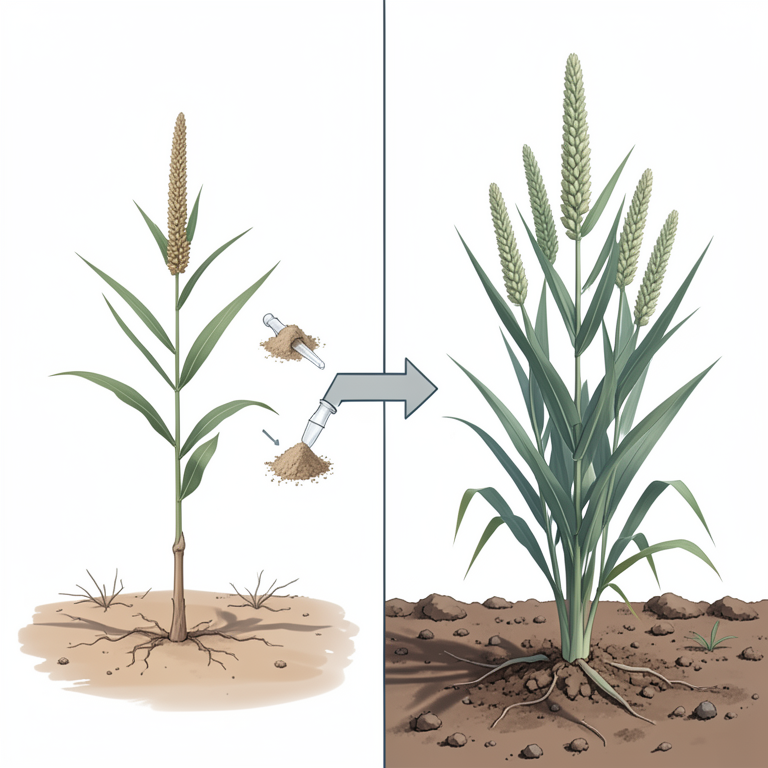
Experimental Variable Interaction
AI-generated conceptual illustration (pearl millet plants). It explains the idea and does not show study data.
View source evidence ↗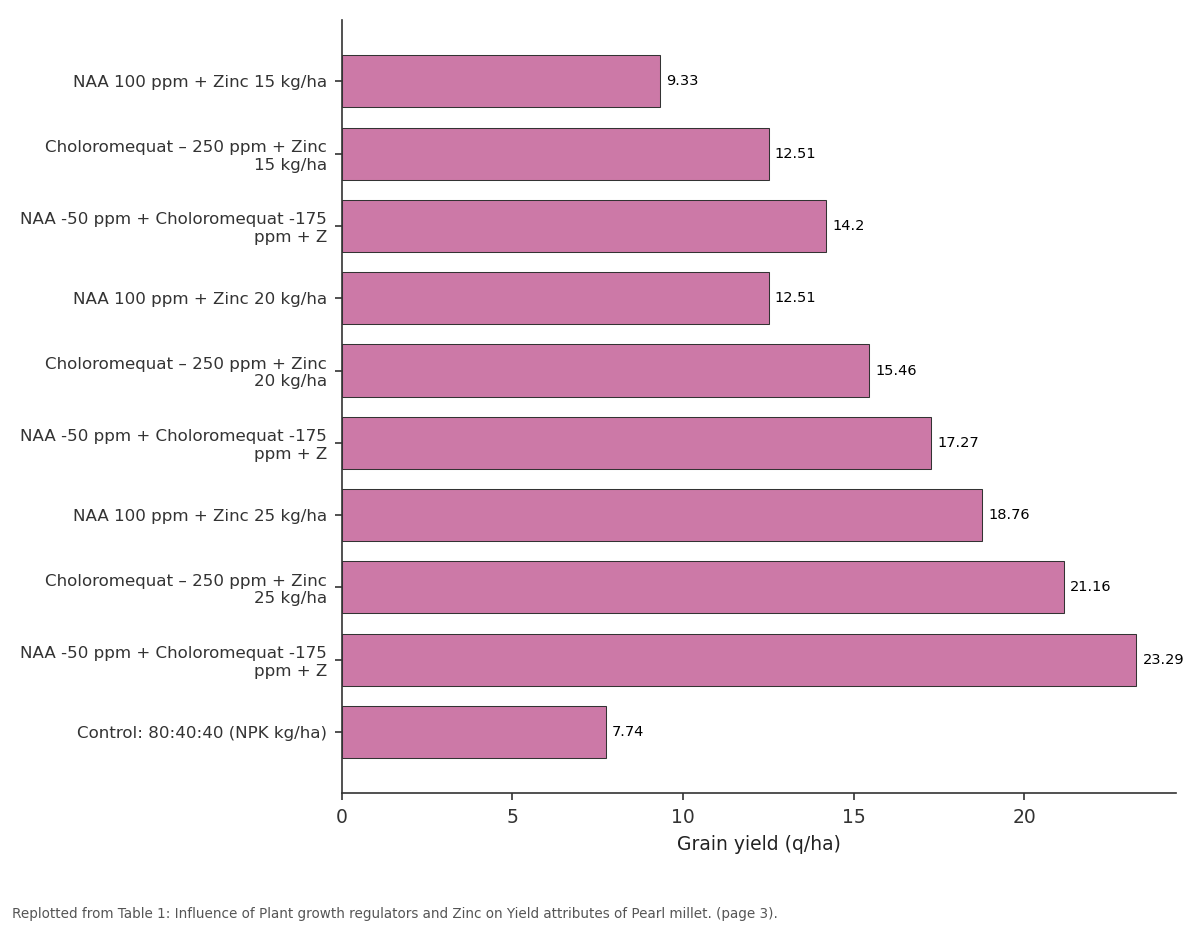
Grain yield (q/ha): NAA 100 ppm + Zinc 15... vs Choloromequat – 250 ppm... vs NAA -50 ppm +... vs NAA 100 ppm + Zinc 20... vs Choloromequat – 250 ppm...
Replotted from Table 1 (page 3) of the original paper. Every bar is the paper's own table value.
View source evidence ↗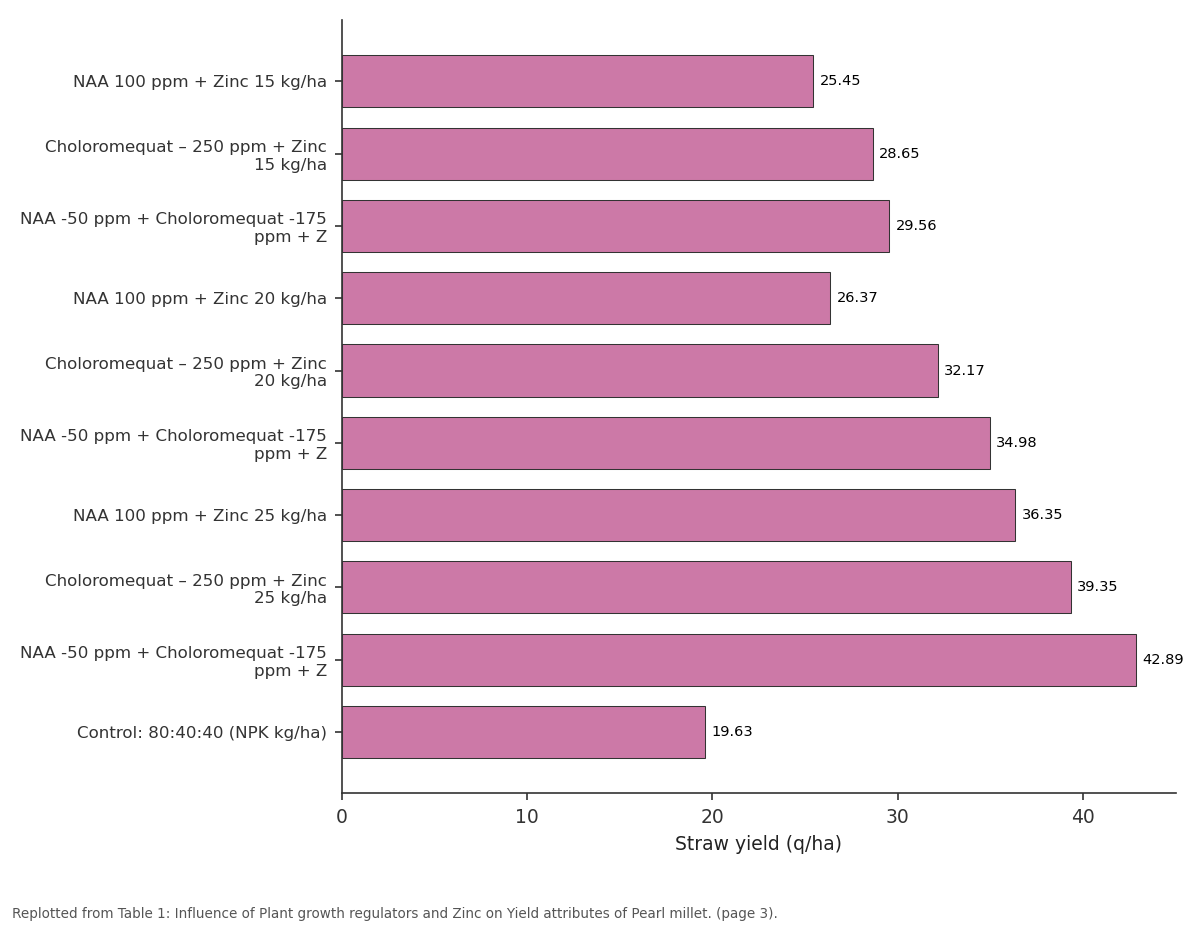
Straw yield (q/ha): NAA 100 ppm + Zinc 15... vs Choloromequat – 250 ppm... vs NAA -50 ppm +... vs NAA 100 ppm + Zinc 20... vs Choloromequat – 250 ppm...
Replotted from Table 1 (page 3) of the original paper. Every bar is the paper's own table value.
View source evidence ↗Figures & tables
From the original paper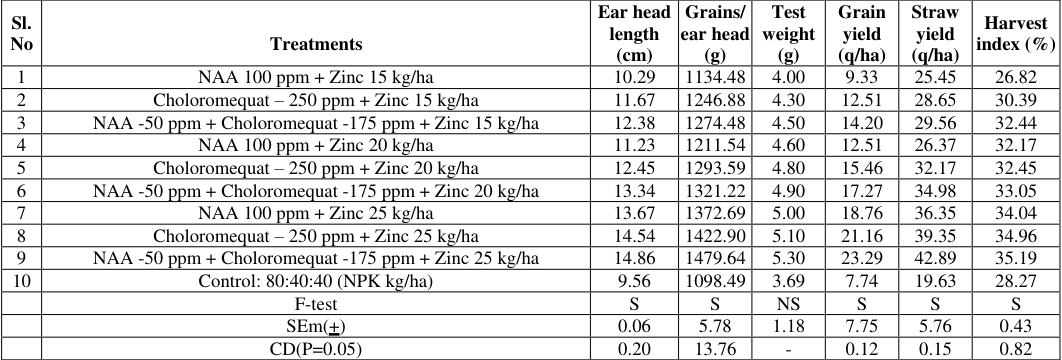 Table 1
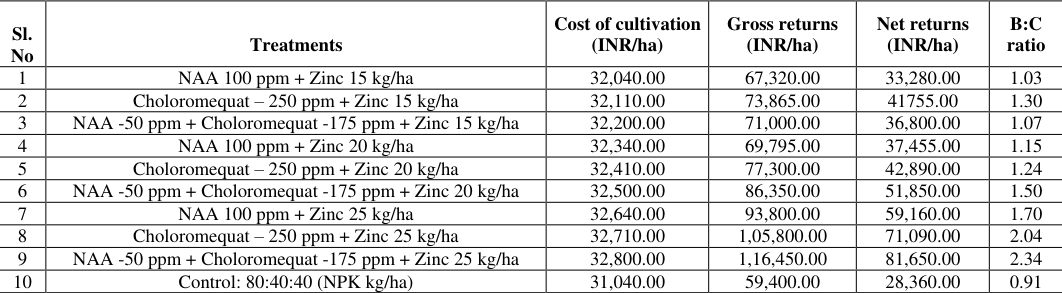 Table 2
Introduction
India is a global leader in the production of millet. Sorghum (jowar), pearl millet (bajra), finger millet (ragi), kudo millet (kudo), proso millet (Cheena), little millet (kutki), foxtail millet (kangni), and barnyard millet (sawa) are the most common millets farmed in India. Of these, barnyard millet, little millet and kodo millet are endemically domesticated. Millets are warm-weather grasses that are regarded as physiologically efficient members of the C4 group of plants. In India, they are cultivated in regions that range from sea level to 2,000 metres above mean sea level. They are frequently grown in a variety of difficult settings, soil types, and climates. Compared to many other crops, millets have shown to be a more dependable source of food and feed. (Chuhan et al., 2017) [11] . Pearl millet (Pennisetum glaucum L.) is the sixth-most important cereal food crop in the world and the fourth in India. Maize and wheat. India is the world's largest producer of pearl millet, accounting for half of global output (FAO, 2020). Around 31 million hectares of land are used to grow pearl millet worldwide, primarily in the tropical dry and semi-arid regions of Asia, Africa, and Latin America (Yadav et al., 2012). India has the greatest acreage, covering over 6.93 million hectares, and produces 8.61 million tonnes and 1243 kg/ha of production in the 2018-19 season (Directorate of Millets Development, 2020) [4] . Its nutritional value surpasses that of many cereals since it has a large amount of protein (12.6%), fat (5%), and minerals, especially iron (2.8%). Compared to other grains, it has a higher level of αamylase activity and fibre (1.2 g/100 g). For those who are gluten intolerant, pearl millet is a great option because it is free of gluten and maintains its alkaline qualities when cooked. It contains high concentrations of minerals (2.3 mg/100 g) such as potassium, phosphorus, magnesium, iron, zinc, copper, and manganese, as well as vitamins like thiamine, riboflavin, and niacin. Seventy-five percent of its fats are unsaturated. Its high percentage of resistant starch (RS) and slowly digested starch (SDS) helps it have a low glycaemic index (GI), which is necessary for changing eating habits and diets. In Rajasthan, it is the pearl millet most commonly grown. In India, pearl millet is primarily grown as a rain-fed crop in a variety of soil types, climates, and essential desert zones. It is often grown in regions with 150-600 mm of rainfall annually. Because pearl millet is drought-tolerant and effectively uses sun energy, it is thought to be a historically dry crop. This crop not only grows quickly but also has a sparse and unpredictable rainfall distribution. It has left its imprint in the tropics and subtropics due to its tendency for significant dry matter production at high temperatures. Due to its mechanisms for surviving drought and lower water requirements than other kharif crops like sorghum and maize, it is expanding on a big scale. Under environmental stress, plant growth regulators (PGRs) may be able to boost crop yield. PGRs are chemicals that can change how a plant grows and develops, resulting in better grain quality, higher yields, or easier harvesting (Bisht et al., 2020) [12] . The application of PGRs foliarly increased plants' resistance to dryness due to the special function of the sulphydryl group in photosynthesis and the partitioning of dry materials. It is well established that PGRs improve both the qualitative and quantitative traits seen in plants. A novel way to overcome yield barriers, especially those imposed by the environment, is through the use of bio regulators (Witter, 1971) [9] . It has been reported that applying naphthalene acetic acid (NAA) and PGRs based on triacontanol (long chain aliphatic alcohol) induces physiological efficiencies, including the ability of plants to photosynthesize. This leads to improved crop growth and yield without significantly raising production costs. (Sumeriya et al., 2000) [8] . As a structural component or regulatory co-factor of a diverse array of enzymes in numerous significant biochemical processes, zinc is essential to plants. Grain crop panicles take longer to develop and mature when there is a zinc shortage in the plant (Alloway, 2004) [2] . Zinc deficiency is a common nutritional issue in people, mostly in poorer nations whose diets are high in cereal-based foods and low in animal products. This is similar to zinc deficiencies in soils and plants. One strategy to improve human health in underdeveloped nations where the local population has access to dietary sources that provide zinc in sufficient levels for the human stomach to absorb is to increase the amount of zinc in plant-derived foods.
Material and Methods
The experiment was conducted during Zaid season of 2023 at Crop Research Farm, Department of Agronomy, SHUATS, Prayagraj (U.P). The soil of the field constituting a part of central gangetic alluvium is neutral and deep. The soil of the experimental field was sandy loam in texture, nearly neutral in soil reaction (pH 7.4), low level of organic carbon (0.51%), available N (108.69 Kg/ha), P (80.5 kg/ha), K (83. The experiment was laid out in Randomized Block Design, with 10 treatments replicated thrice. The observations were recorded for test weight (g), grain yield (t/ha), straw yield (t/ha) and harvest index (%). The collected data was subjected to statistical analysis by analysis of variance method. Pearl millet, variety (Radhika-50) were selected for sowing. Seeds are sowed of spacing (45x10cm).
Results and Discussion
Influence of PGR'S and zinc on yield parameters Number of Ear head length Significantly higher number of ear head length was recorded with application of NAA -50 ppm + Choloromequat -175 ppm + Zinc 25 kg/ha (14.86 cm) at 80 DAS. However, Choloromequat -250 ppm + Zinc 25 kg/ha (14.58 cm) were found statistically at par with the NAA -50 ppm + Choloromequat -175 ppm + Zinc 25 kg/ha. Increase in ear head length with the application of NAA (50 ppm) might be due to rapid cell division and increased elongation of individual cell, resulted in increase in ear head length. Similar results were reported by Suresh et al. (2020) [13] . Yield attributing characters were recorded under application of phosphorus and zinc @ 15 and 10 kg/ha and it was significantly higher over control. Similar finding was observed by Jakhar et al., (2005) [6] .
Number of Grains/ ear head
At harvest, there is significant difference among the treatments. Higher number of grains was recorded with application of NAA -50 ppm + Choloromequat -175 ppm + Zinc 25 kg/ha (1479.69 g). Increase in number of grains/ear head with the application of NAA (50ppm) might be due to plants may have benefited from an earlier delivery of nutrients during the floral primordial initiation stage through plant growth regulators, resulting in a higher number of functional tillers and eventually more grains/ear heads. Similar results were reported by Gurrala et al., (2018) [5] .
Test weight (g) Significantly higher test weight was recorded with application of NAA -50 ppm + Choloromequat -175 ppm + Zinc 25 kg/ha (5.30 g). The application of zinc might have increased the photosynthetic efficiency due to improved enzymatic activity and thus might have increased the thousand grains weight. similar results conform with the findings of Arshad et al., (2016) [1] .
In treatment, NAA -50 ppm + Choloromequat -175 ppm + Zinc 25 kg/ha (23.29 q/ha) was recorded higher significant value of grain yield. However, which was significantly superior over rest of the treatment. Increase in grain yield (t/ha) was recorded with application of NAA(50ppm) may be due to it plays a vital role in increasing seed yield because they take place in many physiological process of plant such as plant growth, chlorophyll formation, stomatal regulation, starch utilization and resistance to various biotic and abiotic stress which enhances seed yield. Similar results were reported by Maurya and Singh (2022) [14] . With the application of Zinc (15 kg/ha), might be due to the greater photosynthesis efficiency or more nutrients availability due to increasing decomposition rate of organic matter or improved individual plant performance might the possible reasons for higher grain yield in zinc applied plots compared to other plots. These results are in conformitywith the findings of Arshad et al., (2016) [1] .
The significant and higher straw yield (42.89 q/ha) were observed in with application of NAA -50 ppm + Choloromequat -175 ppm + Zinc 25 kg/ha, which was significantly higher over rest of the treatment. Increase in Stover yield (t/ha) was recorded with application of NAA (50ppm) may be due to it has unique role in delaying senescence process, hastening root and shoot growth, higher fertility rate of reproductive organ due to creation of favorable balance of hormones and setting more fruits, resulted increased in Stover yield. Similar results were reported by Suresh et al., (2020) [13] . This increase of Stover yield may be due to application of zinc. Zinc is critical to the growth and development of tryptophan, a necessary amino acid for plant growth and development. Similar results were conformity with Reddy et al., (2022) [7] .
Harvest Index (%) Significantly higher harvest index was recorded with application NAA -50 ppm + Choloromequat -175 ppm + Zinc 25 kg/ha (35.19%), which was significantly higher and statistically par with Choloromequat -250 ppm + Zinc 25 kg/ha.
The higher cost of cultivation was found with the application of NAA -50 ppm + Choloromequat -175 ppm + Zinc 25 kg/ha (34,800.00 INR/ha) and lower was observed in control (80:40:40 NPK/ha), (33,040.00 INR/ha).
Higher Gross returns were found with the application of NAA -50 ppm + Choloromequat -175 ppm + Zinc 25 kg/ha (1,16,450.00 INR/ha) and lower was observed in control (80:40:40 NPK/ha), (38,700.00 INR/ha).
The higher net returns were found with the application of NAA -50 ppm + Choloromequat -175 ppm + Zinc 25 kg/ha (81,650.00 INR/ha) and lower was observed in control (80:40:40 NPK/ha), (10,881.00 INR/ha).
Benefit Cost Ratio
The higher B:C Ratio was found with the application of NAA -50 ppm + Choloromequat -175 ppm + Zinc 25 kg/ha (2.34) and lower was observed in control (80:40:40 NPK/ha), (0.17).
Conclusion
It is concluded that application of Plant growth regulators NAA-50ppm, Choloromequat along with Zinc 25kg/ha as performed better in growth parameters and yield attributes of Pearl millet (Radhika-50).
Acknowledgement
AcknowledgementThe authors are thankful to Department of Agronomy, Naini Agricultural Institute, Prayagraj, Sam Higginbottom University of Agriculture Technology and sciences, (U.P) India for providing necessary facilities to undertaken the studies.
Figures and tables from the paper
| Sl. No | Treatments | Ear head length (cm) | Grains/ ear head (g) | Test weight (g) | Grain yield (q/ha) | Straw yield (q/ha) | Harvest index (%) |
|---|---|---|---|---|---|---|---|
| 1 | NAA 100 ppm + Zinc 15 kg/ha | 10.29 | 1134.48 | 4.00 | 9.33 | 25.45 | 26.82 |
| 2 | Choloromequat – 250 ppm + Zinc 15 kg/ha | 11.67 | 1246.88 | 4.30 | 12.51 | 28.65 | 30.39 |
| 3 | NAA -50 ppm + Choloromequat -175 ppm + Zinc 15 kg/ha | 12.38 | 1274.48 | 4.50 | 14.20 | 29.56 | 32.44 |
| 4 | NAA 100 ppm + Zinc 20 kg/ha | 11.23 | 1211.54 | 4.60 | 12.51 | 26.37 | 32.17 |
| 5 | Choloromequat – 250 ppm + Zinc 20 kg/ha | 12.45 | 1293.59 | 4.80 | 15.46 | 32.17 | 32.45 |
| 6 | NAA -50 ppm + Choloromequat -175 ppm + Zinc 20 kg/ha | 13.34 | 1321.22 | 4.90 | 17.27 | 34.98 | 33.05 |
| 7 | NAA 100 ppm + Zinc 25 kg/ha | 13.67 | 1372.69 | 5.00 | 18.76 | 36.35 | 34.04 |
| 8 | Choloromequat – 250 ppm + Zinc 25 kg/ha | 14.54 | 1422.90 | 5.10 | 21.16 | 39.35 | 34.96 |
| 9 | NAA -50 ppm + Choloromequat -175 ppm + Zinc 25 kg/ha | 14.86 | 1479.64 | 5.30 | 23.29 | 42.89 | 35.19 |
| 10 | Control: 80:40:40 (NPK kg/ha) | 9.56 | 1098.49 | 3.69 | 7.74 | 19.63 | 28.27 |
| F-test | S | S | NS | S | S | S | |
| SEm(+) | 0.06 | 5.78 | 1.18 | 7.75 | 5.76 | 0.43 | |
| CD(P=0.05) | 0.20 | 13.76 | - | 0.12 | 0.15 | 0.82 |
Table text extracted from the original PDF; superscript letters are shown inline. The original table image is below.
View original table image
| Sl. No | Treatments | Cost of cultivation (INR/ha) | Gross returns (INR/ha) | Net returns (INR/ha) | B:C ratio |
|---|---|---|---|---|---|
| 1 | NAA 100 ppm + Zinc 15 kg/ha | 32,040.00 | 67,320.00 | 33,280.00 | 1.03 |
| 2 | Choloromequat – 250 ppm + Zinc 15 kg/ha | 32,110.00 | 73,865.00 | 41755.00 | 1.30 |
| 3 | NAA -50 ppm + Choloromequat -175 ppm + Zinc 15 kg/ha | 32,200.00 | 71,000.00 | 36,800.00 | 1.07 |
| 4 | NAA 100 ppm + Zinc 20 kg/ha | 32,340.00 | 69,795.00 | 37,455.00 | 1.15 |
| 5 | Choloromequat – 250 ppm + Zinc 20 kg/ha | 32,410.00 | 77,300.00 | 42,890.00 | 1.24 |
| 6 | NAA -50 ppm + Choloromequat -175 ppm + Zinc 20 kg/ha | 32,500.00 | 86,350.00 | 51,850.00 | 1.50 |
| 7 | NAA 100 ppm + Zinc 25 kg/ha | 32,640.00 | 93,800.00 | 59,160.00 | 1.70 |
| 8 | Choloromequat – 250 ppm + Zinc 25 kg/ha | 32,710.00 | 1,05,800.00 | 71,090.00 | 2.04 |
| 9 | NAA -50 ppm + Choloromequat -175 ppm + Zinc 25 kg/ha | 32,800.00 | 1,16,450.00 | 81,650.00 | 2.34 |
| 10 | Control: 80:40:40 (NPK kg/ha) | 31,040.00 | 59,400.00 | 28,360.00 | 0.91 |
Table text extracted from the original PDF; superscript letters are shown inline. The original table image is below.
View original table image
References
13 in the original paper- Arshad M, Adnan M, Ahmed S, Khan AK, Ali I, Ali M. Integrated effect of phosphorus and zinc on wheat crop. Am Eurasian Journal Agricultural Environment Sciences. 2016;16(3):455-459.
- Alloway BJ. Zinc in soils and crop nutrition. International Zinc Association (IZA), 168 Avenue de Tervueren, 1150 Brussels, Belgium, 2004, 123.
- Bisht TS, Rawat L, Chakraborty B, Yadav V. A Recent Advances in Use of Plant Growth Regulators (PGRs) in Fruit Crops -A Review. International Journal of Current Microbiology and Applied Sciences. 2018;7(05):1307-1336.
- Gurrala S, Guru G, Lokanadan, Subbalakshmi. Effect of nutrient levels and plant growth regulators on growth parameters of pearlmillet. International Journal Pure and Applied Bioscience. 2018;6(1):1520-1525.
- Jakhar SR, Singh M, Balai CM. Effect of farmyard manure, phosphorus and zinc levels on growth, yield, quality and economics of pearl millet (Pennisetum glaucum). Indian Journal of Agricultural Sciences. 2006;76(1):58-61.
- Reddy VSN, Singh R, Deepika CL. Effect of phosphorus and zinc on growth and yield of pearl millet (Pennisetum glaucum L.). The Pharma Innovation Journal. 2022;11(4):542-5.
- Sumeriya HK, Meena NL, Mali AL. Effect of phosphorus, triacontanol granule and growth promoters on the productivity of mustard [Brassica juncea (L.) Czern and Coss]. International Journal of Tropical Agriculture. 2000;18(3):283-286.
- Witter CD. Evaluation of cytozymes as foliar application to enhance cotton yields. Arkansan Farm Research. 1971;29(6):2.
- Yadav JP, Singh GD, Keshwa GL. Growth and yield of pearl millet as affected by different forms of nitrogenous fertilizers and levels of zinc. Haryana Journal of Agronomy. 1991;7(1):91-93.
- Chuhan-Pole P, Dabalen AL, Land BC. Mining in Africa: are local communities better off?. World Bank Publications; 2017 Feb 14.
- Bisht N, Chauhan PS. Excessive and disproportionate use of chemicals cause soil contamination and nutritional stress. Soil contamination-threats and sustainable solutions. 2020 Dec 16;2020:1-0.
- Suresh V, Muralidhar M, Kiranmayi R. Modelling and optimization of an off-grid hybrid renewable energy system for electrification in a rural areas. Energy Reports. 2020 Nov 1;6:594-604.
- Ranjan N, Singh PK, Maurya NS. Pharmaceuticals in water as emerging pollutants for river health: A critical review under Indian conditions. Ecotoxicology and Environmental Safety. 2022 Dec 1;247:114220.