
Research article · 2024 · Full text
International Journal of Agriculture Extension and Social DevelopmentExploring the socio-economic landscape: A comprehensive analysis of coir sector workers in puri district of coastal Odisha
Volume 7(3) · Pages 102–107 · DOI: 10.33545/26180723.2024.v7.i3b.402 ↗
Research areasIndian Economic and Social DevelopmentGlobal Health and Epidemiology
Abstract
Author-writtenThe paper analyses the socio-economic status of coir sector workers. The Coir Industry is a significant traditional small business in India, employing some 700,000 individuals, primarily from rural areas and economically disadvantaged backgrounds. In the fiscal year 2019, the coir sector in the eastern Indian state, Odisha; employed more than 18,000 individuals. Over 700,000 individuals in the south Asian country were employed by the industry that year. Coir is a natural fibre derived from the outer husk of coconuts and is commonly utilized in floor mats, brushes, and mattresses. The Coir Industry has developed in regions with a high density of coconut farming and abundant coconut husks. Coconut is predominantly grown in states and union territories such as Kerala, Tamil Nadu, Andhra Pradesh, Karnataka, Maharashtra, Goa, Odisha, Andaman & Nicobar, Lakshadweep, and Pondicherry. The study focused on the socio-economic status of coir sector workers in and around the Sakhigopal area of Puri district, Odisha.
Summary
Source-checkedPlain-language reading of the full paper, prepared with AI and checked against the text. Each point links to the authors' own words.
Why it matters
- The coir industry is a major traditional small business in India that provides employment to approximately 700,000 people, mostly from rural and economically disadvantaged backgrounds. View evidence ↗
- India leads global coir production, accounting for more than 80% of the world's coir fiber. View evidence ↗
- Local coir industries, as part of the unorganized sector, struggle with issues including low and irregular wages, lack of social security, and exploitative working conditions. View evidence ↗
The question
- The study aimed to examine the demographics, socio-economic status, housing, family issues, and community life of coir workers in Sakhigopal, Puri, Odisha, to suggest improvements. View evidence ↗
What they did
- The researchers used a descriptive study design to evaluate the working and socio-economic conditions of the workers. View evidence ↗
- Primary data was gathered from active coir workers, while secondary data was sourced from local newspapers, social workers, and local leaders. View evidence ↗
- Data collection was primarily conducted using a specifically developed interview schedule. View evidence ↗
- Due to specific constraints, the study employed a purposive sampling method. View evidence ↗
What they found
- The largest age group among respondents was 35-45 years, representing 32.3% of the workforce. View evidence ↗
- Educational levels were very low, with 82% of respondents having an education below middle school and only 14% reaching higher school. View evidence ↗
- Monthly incomes ranged from ₹3,000 to ₹7,000, with 60% of workers earning less than ₹4,000. View evidence ↗
- Housing conditions were substandard, with 41% of respondents living in houses with asbestos roofs. View evidence ↗
- A majority of respondents (55.8%) reported that they were not involved in decision-making within their homes. View evidence ↗
- Workers reported severe occupational health issues, including burning of the face (95.2%), cough (92.8%), eye irritation/itching (92.5%), burning of eyes (92.0%), and headaches (90%). View evidence ↗
- Respiratory issues were common, with 73.8% reporting throat irritation, 61.9% nasal infections, 50% shortness of breath, and 38% asthma. View evidence ↗
What it means
- The authors conclude that there is an urgent need for adult literacy programs, skill development, fair wage regulations, and comprehensive health services to support coir workers. View evidence ↗
- The authors recommend empowering female employees, strengthening Self-Help Groups, and improving housing and sanitation facilities. View evidence ↗
Figures & tables
From the original paper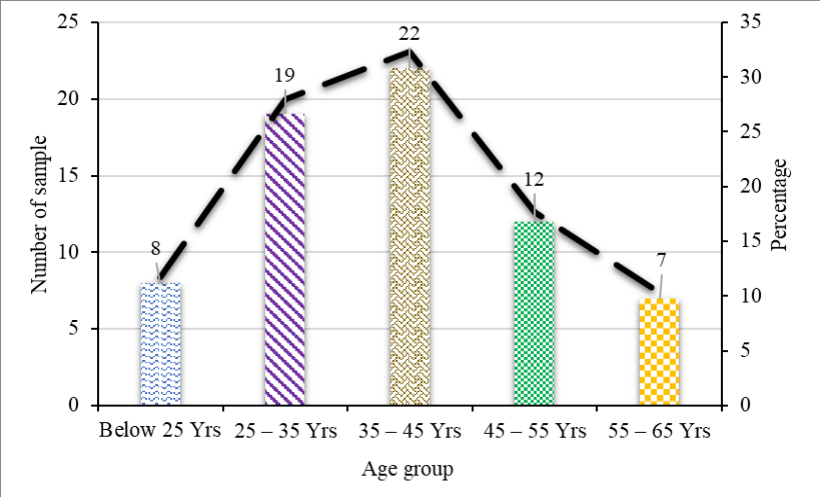 Figure 1
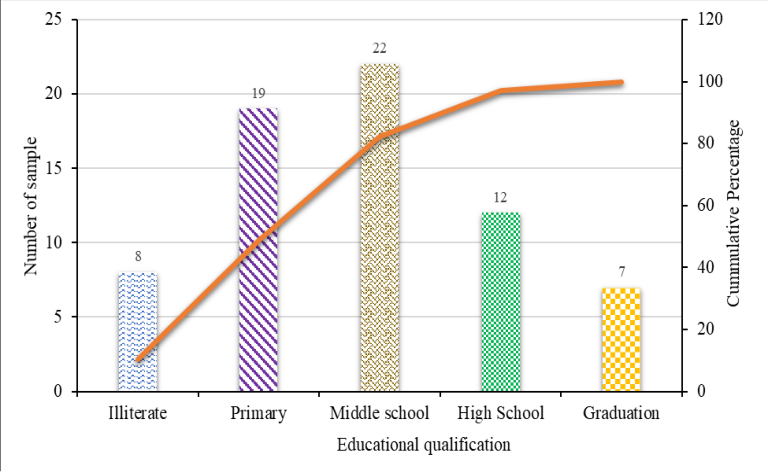 Figure 2
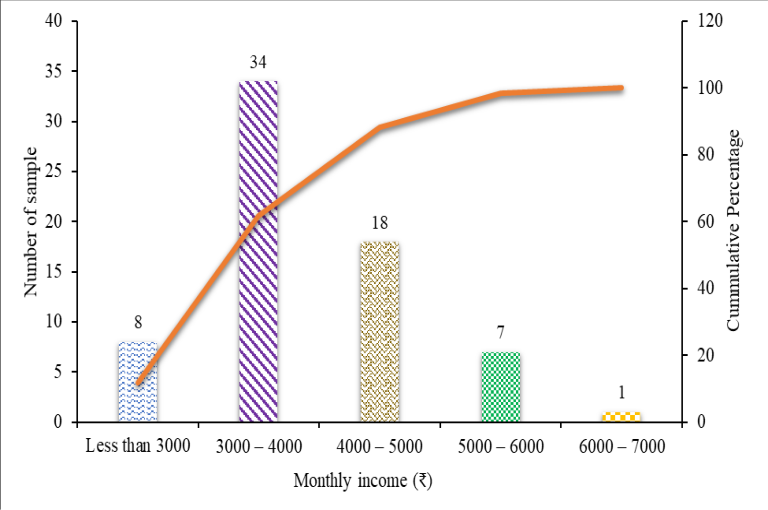 Figure 3
 Table 1
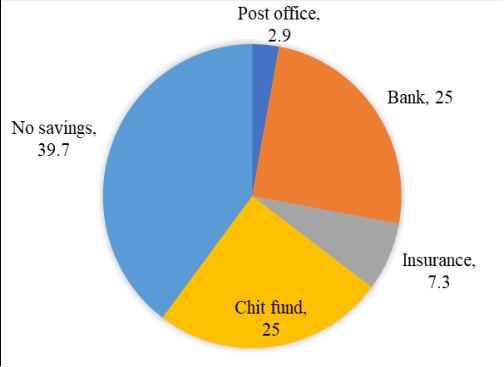 Figure 4
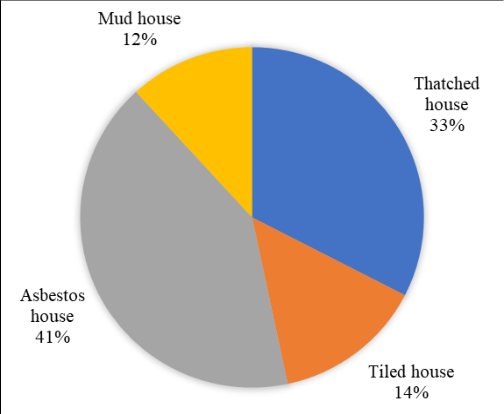 Figure 5
 Table 2
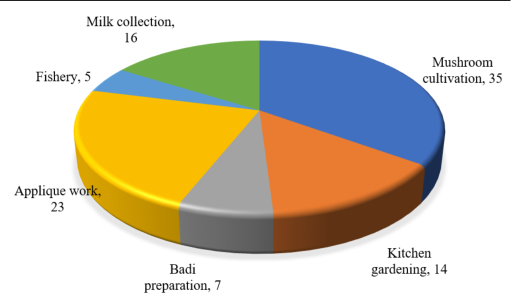 Figure 6
Introduction
The Coir Industry is an agricultural-based rural sector that employs over 700,000 persons in the primary coconutproducing areas of the country. This export-oriented industry generated about Rs. 2192 Crores in foreign exchange for the country by January 2019 during the 2018-19 fiscal year (Coir Board, 2019) [1] . People in rural parts of states that grow coconuts, like Kerala, Tamil Nadu, Karnataka, Andhra Pradesh, Telangana, Odisha, and others, can find employment opportunities by handling the fruit. The coir industry is a traditional Agro-based business mostly found in states that produce coconuts. Coir is a clean golden fiber collected from the fibrous husk that covers the inner shell of the coconut, and it serves as the primary material for the coir business [2] . The industry is crucial for the country, as it directly employs over 500,000 people and indirectly supports an equal or greater number. India is the world's leading producer of coir, responsible for over 80% of the global coir fiber production [3] . India's coir market is characterized by a wide range of participants, including households, co-operatives, NGOs, manufacturers, and exporters. This is an exemplary demonstration of creating exquisite antiques, handicrafts, and practical products from coconut husks, which are typically considered waste. Over 85% of Odisha's coconut production comes from the coastal districts, which include Puri, Khurda, Cuttack, Balasore, and Ganjam. Puri district is the major coconutproducing district in the state. This study emphasizes on the Coir Industry located in the "Satyabadi Block" of Puri district. Satyabadi Block, also known as Sakhigopal Block, is one of Odisha's 314 developing blocks that began working on April 1, 1962. It is located in a seaside setting between the latitudes of 19"45' North-20'N and 85° 30' East-86' E longitude. Due to its proximity to the Bay of Bengal, the area possesses excellent conditions for the growth of coconut plants. The block is encircled by several coconut groves, making it a hub for coconut commerce in the Puri district. The proximity of this location to the sea enables individuals to achieve greater yields from coconut plantations compared to other areas. It is a concentrated area of coconut farming, production, and commercialization in Odisha. The centre Sakhigopal is responsible for 75% of the block's coconut plantation and 82% of total production. The total size of this block is approximately 124.36 square kilometres. Out of the total land area of 11863 hectares in the block, 14.11 hectares are designated for coconut plantation. Sakhigopal, which includes six panchayats in the block, including Sri Ramchandrapur and Biraramchandrapur, Biswanathpur, Nuasomeswarpur, Penthapada, and Kadua occupies 1460 hectares of high ground suited for intensive coconut farming. The local businessmen primarily engage in the trade of coconut nuts. Therefore, the dried outer shells of the nut were being utilised as fuel. This laid a solid foundation for the coir industries to begin successfully. The unorganized sectors like local coir industries are facing many problems such as unemployment, low wages, and irregular payment of wages, non-availability of social security and welfare facilities, and exploitative working conditions [4] . The coir workers in the Sakhigopal area are facing several problems, such as poverty, illiteracy, unemployment, sickness, low wages, and irregular payment of wages. These people face a highly vulnerable socioeconomic and health situation. People who are engaged in coir work are facing serious problems including poverty, health hazard, family problems, poor housing facilities, insufficient nutritious food, unhygienic the environment, illiteracy, physical stress and debts etc [5] . therefore, the main focus of the study was to evaluate the socio-economic conditions of the coir workers. The results of the study will be helpful to non-governmental organizations (NGOs) that are advocating for the growth of the unorganised sector. In the study area, the upper bark of the coconut is the husk of the coconut is pulled away either to be used as fuel or left useless. The harder portion of the husk, containing sturdy fibers that are turned into coir, is occasionally utilized by lower-class individuals for producing ropes for household and farming needs. Coir fiber extracted from the husk offers numerous benefits for household applications in contemporary society. Coir is being used to make carpets, mattresses, doorsteps, ropes, wall hangings, ceilings, and numerous toys. The industry employed the reluctant jobless individuals from the area. The favourable agro-climatic conditions in the area greatly facilitated the establishment of this sector. Considering the above facts, a study was carried out to examine the socioeconomic situation, demographics of respondents, economic concerns, housing conditions, family issues, community life, educational qualifications and suggestions for enhancing the conditions of coir workers in Sakhigopal, Puri, Odisha.
Methodology
The study was done in coir factories located in and around the Sakhigopal region of Puri district Odisha. The labourers, predominantly from neighbouring villages, are employed in the coir industry for around 9-10 months annually. Workers are missing from coir-related tasks when raw materials are not available, and it is the transplanting season for rice cultivation. Considering the aim of the study to evaluate the socio-economic and working conditions of coir workers, a descriptive design was chosen. The primary data were collected from actively working population in coir industries whereas secondary data were collected from the local leaders and social workers, local newspapers. The main technique used for data collection in the study was an interview schedule developed in line with the objective of the study. The study schedule covers a range of factors including social status, economic conditions, health issues, housing or work conditions, political influences, educational opportunities for their children, and future plans. Five respondents were interviewed by the researchers to test the acceptance of the tool. Without any major changes found in the interview schedule, the data collection was continued by the researchers. It was noted that coir workers are experiencing various challenges as a result of their socioeconomic situation, including poverty, lack of education, poor health, inadequate sanitation, and substandard housing. Because of specific constraints, the purpose sampling method was adopted.
Results
To assess the results, frequency distributions were applied to each testing variable, resulting in unique outcomes for each variable. Additionally, an analysis was conducted on the relationship between age, qualification, and satisfaction level, leading to numerous interesting findings. The age group of the respondents is shown in Fig. 1 which revealed that 32.3 percent of the respondents were in the age category of 35-45 years. This is the period a person earning capacity is at its peak. After 45 years, a women population have several health issues and therefore, she may not be able to work efficiently. This factor is important for socioeconomic study. However, the male workers use to work up to 58 years comfortably. www.extensionjournal.com The educational level of selected workers was presented in Fig 2 . It is evident that the respondent educational qualification level was very low. Majority 82% of the respondents were below middle school, and 14% of the respondents were as higher school. The reason of lower education may lead to injuries and accidents as most of the safety information could not be communicated properly. The owners are recommended to switch the language to the local dialect. The monthly income of the coir workers are shown in Fig. 3. It is seen that the range of income varies from ₹ 3000-7000. Within this range, 60% of the respondents have an income less than ₹ 4000. Due to lack of skills and irregular job opportunities, there is a decrease in monthly revenue. This is mainly due to this type of operation; highest remuneration is paid for operating at crusher/beater followed transportations of materials. Less than 28% of the total work force are male workers Male workers are generally engaged for machinery operation, while female workers are mostly involved in untrained work like transportation, cleaning near the crusher & beater unit, as a result lots of injury & musculoskeletal disorder, occupational health hazards are being reported by the female workers like rashes in foot/hand, neck & back pain, eye irritation & tinting in ears. The mode of saving of coir worker is illustrated in Fig. 4. As these units are near semi-urban areas still the workers are not preferring to save the money in banks. Only 25% have frequent access to the nationalized bank. Majority 27% of respondents had no savings while only 02%, 17%, 05%, 17% of the respondents had their saving in the post office, bank, insurance schemes and chit fund, respectively. 64% of the respondents had taken loan for meeting their other expenses. More importance is given to male child (70.6%) and among them 11.7% are school dropouts. While discussing their domestic issues, it was reported that from the outset the respondents were not co-operating with the surveyors to discuss about their family problem. After convincing they expressed that the main reason is mostly alcoholic (20.6%) and this may lead to domestic violence (14.7%). www.extensionjournal.com
Discussion
Majority thirty-two percent of the respondents belong to the age group of 35 to 45 years. Seventy percent of work force is female. Eighty percent of the respondents were from marginalized section of the society. Thirty-eight percent of the respondents had reached primary education. Thirty-four percent of the respondents had studied up to the level of upper primary level. Majority ninety percent were married. Seventy percent of the respondents had more than ten years of working experience. Fifty percent of respondents were working more than eight hours which is crossing the stipulation. The majority eighty percent of respondents work for around 20 working days in a month. Therefore, the earning capacity was also less. Wages to the workers were paid both in weekly and monthly basis. Often a few workers receive daily wages. Thirty percent of the respondents were stated that their family members were also involved in coir rope, mattress, making work. Seventy percent of the respondents were on engaged in transportation of raw materials, machine output materials from one machine to other generally as head load which indicate hard work. The earning of fifty percent of respondents were within Rs.3000-4000 per month. Therefore, the income, they were getting was not enough to help the family. A sizeable group of eighty percent of respondents stated that their primary expenditure was on food. Forty per cent of the respondents stated that, they did not have saving habit, while twenty-five percent of respondents had their saving in bank. Even twenty-five percent of workers used to invest in chit fund which is very risky. Majority percent of the respondents stated about their health problem. Burning of eyes (92.0%), burning face (95.2%), cough (92.8%) eye irritation/itching (92.5%) headache (90%) were recorded during discussion with the workers. The workers also were suffering from respiratory diseases such as asthma (38%), nasal infection (61.9%), shortness of breath (50%) followed by throat irritation (73.8%).
A sizeable group of seventy percent of the respondents preferred to go to the nearby public health centers (PHC) as the services were free. Most of the respondents had an opinion that their health problems were due to their occupation. If housing is considered a sizeable group of fourty-one percent had been living under asbestos roof. This type of roofing radiates a lot of heat and can cause a lot of health problems. Majority sixty percent of the respondents were not satisfied with the sanitation facilities in their house. Thirty percent of respondents stated that they had housing problems. It was also reported that some of the respondents were living in rented house. A sizeable group of seventy-six percent respondents stated that they had a spouse who was opium or alcoholic and as a result, forty percent of respondents stated that domestic violence was a serious problem they faced in the family. Seventy-seven percent of respondents stared that their children were not going. to school and were engaged in various labouroriented works. Majority fifty-five percent of the respondent were involved in the decision-making process in their family. Sixty-seven percent of the respondents were member of SHG, s groups. Twenty-four percent of SHGS deal with mushroom cultivation followed by appliqué work (fourteen percent). Ten percent of SHGS depend on milk collection and kitchen gardening.
Only seventy-two percent of the respondents were involved in community program in their village. Eighty percent of the respondents were not interested in any political party, while forty percent of the respondents stated that the states of women in their community. was good, sixty percent felt it was bad. Twenty percent of the respondents felt that the visual media was an important means for spending their leisure time. Some respondents have some concrete plans or the other for their future.
Conclusion
Our study highlights the variety of socio-economic issues experienced by more than seven million coir sector workers. The Coir Industry in India makes significant contributions to the economy, but workers face challenges such as low earnings, inconsistent payments, poverty, and poor living circumstances. They are deprived of their basic rights, and they are exploited by the owners. There is an obvious need for significant changes, including adult literacy programs, skill development, fair wage regulations, and comprehensive health services. Issues such as intoxication, domestic violence, and children's school dropout rates highlight the need for cooperation among NGOs, government institutions, and local communities. Empowering female employees, enhancing Self-Help Groups, and enhancing housing and sanitary facilities are crucial methods. Hence, there is an urgent need for the protection of coir workers to overcome in their lives. Addressing the solution-based approach, such as substituting bamboo baskets with aluminum gumla and improving the surrounding environment, demonstrates actual improvements. The socio-economic conditions of coir workers identified during this study will be submitted to the Government and NGOs who will take remedial measures to promote the welfare of coir workers.
Acknowledgement
AcknowledgmentThe authors wish to express sincere gratitude to the authorities of Odisha University of Agriculture and Technology, Bhubaneswar, Odisha (India), and the Project Coordinator, All India Coordinated Research Project on Ergonomics and Safety in Agriculture (AICRP on ESA), Bhopal (ICAR) for providing the necessary facilities for the present work.
Figures and tables from the paper
| Problems | Frequency (Yes) | Frequency (No) | Cannot say |
|---|---|---|---|
| Alcoholic / opium husband | 14 (20.6%) | 50 (73.5%) | 04 |
| Domestic violence | 10 (14.7%) | 55 (80.9%) | 03 |
| Children dropped out from school | 8 (11.8%) | 60 (88.2%) | - |
| Not involved in decision making home | 38 (55.8%) | 30 (44.12%) | - |
| Girl child in family is given important | 20 (29.4%) | 48 (70.6%) | - |
Table text extracted from the original PDF; superscript letters are shown inline. The original table image is below.
View original table image
| Community life | Frequency (Yes) | Frequency (No) |
|---|---|---|
| SHG’s in the village | 44 (64.79%) | 24 (35.34%) |
| Member of SHG’s | 22 (32.35%) | 46 (67.65%) |
| Participation in community programme | 19 (27.94%) | 49 (72.06%) |
Table text extracted from the original PDF; superscript letters are shown inline. The original table image is below.
View original table image
References
2 in the original paper- Anonymous. Coir Board (Ministry of Micro Small & Medium Enterprises, Government of India) Coir House, M.G Road, Kochi-682016; c2019 [cited 2019]. Available from: http://coirboard.gov.in/wpcontent/uploads/2019/04/Science%20&%20Technology -%20Final.pdf.
- Ajith Kumar P. Home market of coir. Coir, Coir Board. 1987;XXXI (Book No. 1):9-11.