
Research article · 2024 · Full text
International Journal of Research in AgronomyA study on cultivation and yield performance of oyster mushroom (Pleurotus florida) on paddy straw mixed with bamboo waste in different ratios and their nutrient evaluation
Volume 7(3) · Pages 87–90 · DOI: 10.33545/2618060x.2024.v7.i3b.389 ↗
Research areasFungal Biology and Applications
Abstract
Author-writtenThe study conducted, on cultivating oyster mushrooms (Pleurotus florida) using paddy (Oryza sativa) straw with bamboo (Bambusa vulgaris) leaves as substrate at different combinations is an effective bioconversion method of agroforestry residues or waste. During the process of cultivation (Pleurotus florida), simultaneously the yield performance of harvesting mushrooms, and nutrient (Protein alone) analysis were done on mushrooms harvested from bags of different combinations of the substrate. Also, every combination's mushroom pileus's length and breadth were measured continuously for every harvest. The manurial value of spent mushroom waste at the end of cultivation was also measured. Bamboo (Bambusa vulgaris) leaves were used as they were easily available for the tribal people the sole moto was to generate additional income by materials that could be used by them without cost. We had gone by different combinations of paddy straw with bamboo leaves (i.e 100:0, 75:25, 50:50, 25:75, 0:100) for the cultivation of Pleurotus florida (Oyster mushroom) the effect of the paddy straw and bamboo leaves on biological yield as well as days of the first harvest, size, and weight of individual mushrooms, biological efficiency, nutritional value and manurial value of spent mushroom waste were determined. The combinations are Paddy straw alone, bamboo alone, and paddy straw plus bamboo leaves in the ratio of 75:25, 50:50, and 25:75. So, finally we considered different combinations as 5 Treatments and 4 Replication each. As a result, we got that 100% bamboo can give a 50 percent yield of 100% paddy straw. Tribal people can utilize this and additional income can be generated which may increase their lifestyle.
Summary
Source-checkedPlain-language reading of the full paper, prepared with AI and checked against the text. Each point links to the authors' own words.
Why it matters
- Mushrooms are a valuable nutritional source, providing essential amino acids and high protein digestibility (60-70%). View evidence ↗
- Using bamboo leaves as a substrate is intended to help tribal people generate additional income using free, locally available materials. View evidence ↗
- Cultivating oyster mushrooms on combinations of paddy straw and bamboo leaves serves as an effective way to bioconvert agroforestry waste. View evidence ↗
The question
- The study aimed to evaluate how different ratios of paddy straw and bamboo leaves affect the yield performance of Pleurotus florida. View evidence ↗
What they did
- The experiment was carried out in 2023 at the Kumaraguru Institute of Agriculture. View evidence ↗
- Each cultivation bag was filled with 3kg of the assigned substrate combination. View evidence ↗
- ANOVA was used to statistically analyze the differences in mushroom yield, length, and breadth across the treatments. View evidence ↗
What they found
- The highest mushroom yield was achieved using 100% paddy straw, with yield decreasing as the proportion of bamboo leaves increased. View evidence ↗
- The length of the mushroom cap (pileus) was greatest in the 100% paddy straw group and decreased in the same order as the yield. View evidence ↗
- Unlike length and yield, the breadth of the mushroom pileus did not differ significantly between the different substrate treatments. View evidence ↗
- The spent substrate from 100% paddy straw had the highest potassium content at 1.40%, followed by the mixed ratios and then 100% bamboo. View evidence ↗
- Protein content was highest in mushrooms grown on 100% paddy straw and lowest in those grown on 100% bamboo. View evidence ↗
- Using 100% bamboo as a substrate produced 50% of the yield compared to using 100% paddy straw. View evidence ↗
What it means
- The authors conclude that bamboo leaves are a viable alternative substrate for mushroom cultivation, particularly in hilly areas where paddy straw is scarce. View evidence ↗
- The authors state that their goal of improving tribal livelihoods is met, as generating 50% of the potential paddy-straw income from free bamboo waste is better than no income. View evidence ↗
Visual summary
1 visualsIllustrations explain the paper; they do not show study data.
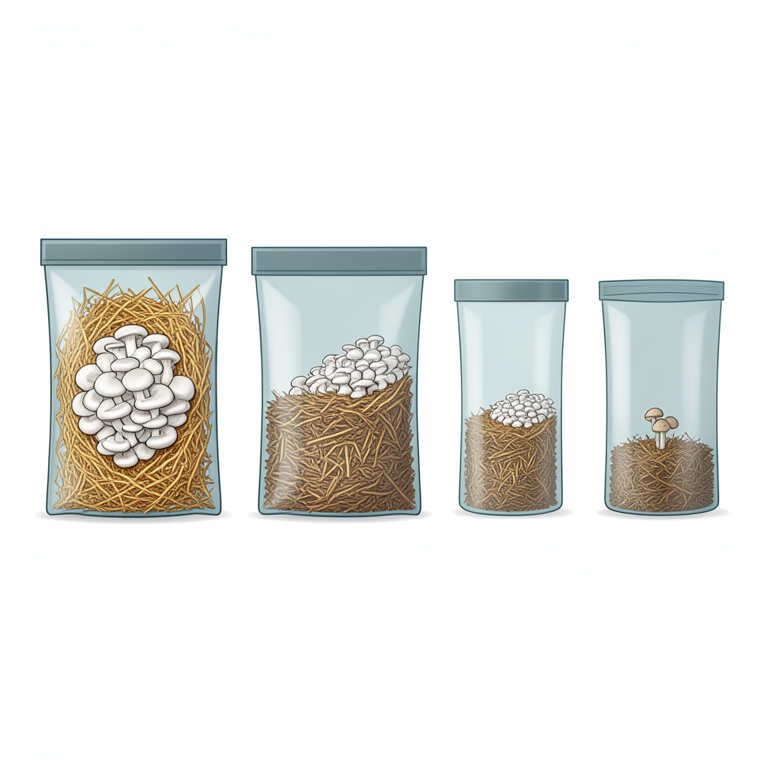
Substrate Ratio vs Yield Concept
AI-generated conceptual illustration (Oyster mushrooms (Pleurotus florida) growing on paddy straw and bamboo waste substrates). It explains the idea and does not show study data.
View source evidence ↗Figures & tables
From the original paper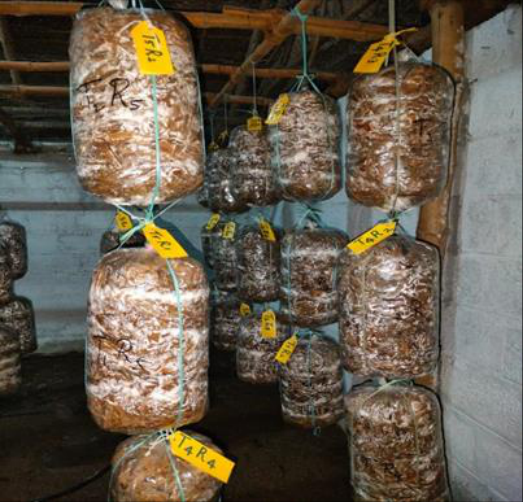 Figure 3
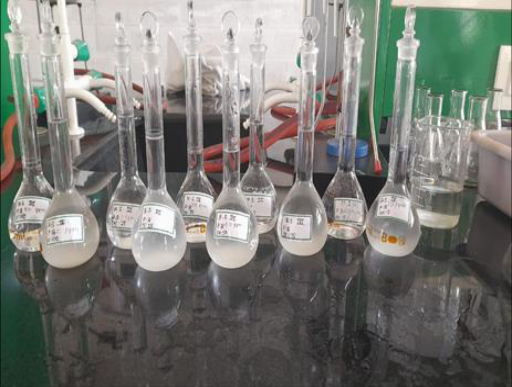 Figure 2
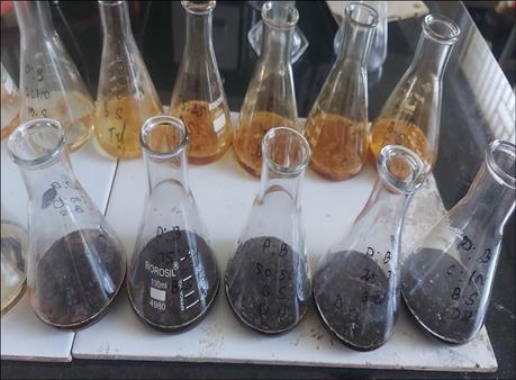 Figure 1
 Figure 4
Introduction
Mushroom, prominent umbrella-shaped fruiting body (sporophore) of certain fungi, typically arranged Agaricales within the phylum Basidiomycota but too of a few groups. A mushroom may be a spore-bearing fruiting body of an organism's fungi. A few are eatable and lack the visual green matter (chlorophyll). Mushrooms have been considered a delicacy since ancient times and were favoured both for taste and flavour. A few mushrooms taste scrumptious, whereas others have mind-altering impacts that have made them a portion of spiritual ceremonies. Early people as of now experienced that; different delineations of mushrooms have been found in cave paintings. For the Egyptians, mushrooms were the "Food of the God". They accepted that eating them may offer assistance to them to live longer or indeed make them undying. Mushrooms are rich in protein having 60-70 percent digestibility, and containing all essential amino acids, especially lysine. In addition, these have a small amount of carbohydrates, fat, vitamins like B, C, D, and K minerals like calcium, phosphorus, potassium, iron, copper, and high fiber content are also present. The vitamins are well retained after both cooking and processing. These can, therefore, serve as good nutrition in a balanced diet.
Oyster mushrooms are shell, fan, or spatula-shaped. It forms clusters of caps one above the other. They are shades of white, cream, grey, pink, or light brown depending upon the species. The stipe is strongly eccentric to lateral. Oyster mushrooms are edible and can be cultivated throughout the year in Tamil Nadu, Karnataka, Kerala, Andhra Pradesh, parts of Orissa etc. Oyster mushroom species are subtropical and grow well in the temperature range of 20-32 °C.
Objectives
Objectives
Materials and Methods
An experiment was conducted at the Kumaraguru Institute of Agriculture in 2023. To access the yield and nutritional value of oyster mushrooms and the manurial value of spent mushroom waste by using different combinations of paddy straw and bamboo leaves. Oyster mushroom belonging to class Basidiomycetes and Family Agaricaceae is popularly known as Dhingri in India and grow naturally in temperate and tropical forests on dead and decaying wooden lags or sometimes on drying trunks of deciduous coniferous woods. It may also grow on decaying organic matter it produces protein-rich food. The Oyster Mushroom is the third largest cultivated mushroom. The economic importance of the mushroom lies primarily in its use as food for human consumption. It is rich in vitamin C and complex and the protein content varies between 1.6 to 2.5 percent and mineral salts required for the human body. The niacin content is about ten times higher than any other vegetable.
Collection and preparation of substrate 2.1.1 Collection of Bamboo Leaves:
Bamboo leaves were collected from the North farm, Kumaraguru Institute of Agriculture on 8 th April 2023. We collected diseased-free bamboo leaves as a substrate as it coincided with our motto which is making improvements in the lifestyle of tribal people by increasing income.
Chopping of paddy straw
Paddy straw was chopped using a chaff cutter into small pieces of 3-4 inches, for easy penetration of fungal mycelium, we didn't chop the bamboo leaves as it was very thin and small.
Soaking
The dried bamboo leaves collected from the farm and the chopped paddy straw were soaked in water overnight.
Treatment details
Treatment details
Bed preparation
The cultivation of Oyster mushrooms is carried out in transparent polythene covers of 60 x 30 cm, with a thickness of 80 gauges.
Procedure followed
Wash hands thoroughly with antiseptic lotion. Collect the substrate and boil it by using hot water pawn. And dry it in the shade until it reaches 60% moisture in the substrate. The substrates both paddy straw and bamboo leaves should be sterilized. Take the polythene cover, tie it at the bottom end with a rubber band, and turn it inwards. Mix the dried paddy straw and bamboo leaves according to the combination percentage thoroughly to get a uniform moisture level in all areas and each bag should contain 3kg of substrate at different combinations. Take out well-grown bed spawn, squeeze thoroughly, and divide into two halves (Two beds are prepared from the single spawn bags). Fill the straw to a height of 5 cm in the bottom of the polythene bag, take a handful of spawn, and sprinkle over the straw layer concentrating more on the edges. Repeat this process to get five straw layers with four layers of spawns. Gently press the bed and tie it tightly with a thread. Put 5 to 9 holes per bed for ventilation as well as to remove the excess moisture present inside the bed. Arrange the beds inside the thatched shed, (Spawn running room 15 days) following rack system or hanging system. Followed by tagging the bags as per treatment and replication. Take observation regularly.
Cropping room
After 1 st flush of harvest, the 0.5 to 1cm outer layer of the block should be scrapped. This helps to initiate 2 nd flush which appears after about 10 days. Mushrooms grow in a temperature range of 20-33°C. Relative humidity is maintained by spraying water twice a day on the walls and floor of the room. Spraying of blocks should be avoided for the first 2-3 days. A light mist spray of water is given on blocks as soon as the small pinheads appear. Once pin heads are 2-3 cm big a little heavier watering is to be done on blocks and further watering of blocks is to be stopped to allow them to grow and should be harvested before spore production.
Disease and Pest Management
Observe regularly for the infestation of insect pests viz., flies, beetles, mites, etc, and also diseases like green and black mold.
If noticed use 0.2% of neem oil per 100ml of water to control the pest and disease attack.
Manurial analysis 2.3.1 Potassium analysis procedure: (Emission flame photometry)
Collect the sample and dry it. Add 1g sample in different 100 ml conical flask as per different treatment Add 10-15 ml diacid in each of the conical flashes. Digest till a clear solution appears Filter and make 250 ml in a volumetric flask. Pipette out 5ml extract in 25 ml volumetric flask. Add 5ml of NH4OH.
Read the solution by using a flame photometer. Note the flame photometer reading. treatments into a series of tubes. Make up the volume to 1 ml in all the tubes with distilled water (add 0.5 ml of distilled water) 1 ml of distilled water serves as blank. Add 4 ml of biuret reagent to each tube and mix thoroughly. After 30 minutes, at room temperature read the absorbance of the solution at 520 nm against the reagent blank. Construct the standard graph and calculate the amount of protein present in 100 ml of the given mushroom substrate solution.
Biological efficiency
The total weight of the fruiting bodies harvested from all the two pickings was measured as the total yield of mushrooms. The biological efficiency (yield of mushroom per kg substrate on a dry wet basis) was calculated by the following formula Chang et al. (1981).
Biological efficiency = Fresh weight of the mushroom/Dry weight of Substrate x 100
Statistical analysis
We have worked out an ANOVA table for the yield, length, and breadth of mushrooms from different substrate combinations. As a result, the yield and length of mushrooms have a significant level of difference at the level of 5% between treatments. But in the case of mushroom breadth, there is no level of significance between the treatments.
Results and Discussion
These reports are in pair with our result, that the yield is high in 100% paddy straw substrate and followed by 75:25 of paddy straw: bamboo, 50:50 of paddy straw: bamboo, 25:75 of paddy straw: bamboo, and 100% bamboo. At this point for commercial production paddy is the best substrate. But our objective motto (i.e. to increase the income status of tribal people which leads to improving their lifestyle as a part) is satisfied.
Next to that of yield, we analyzed the size (length and breadth) of pileus. We have collected the length and breadth of every replication at every harvest. A graph has been drawn with the average value of length and breadth. From the graph, we observed that the length of the pileus in 100% paddy straw is high followed by 75:25 of paddy straw: Bamboo, 50:50 of paddy straw: bamboo, 25:75 of paddy straw: Bamboo, and 100% bamboo.
From our study, the length of the pileus differs among the treatments as that of the yield while the breadth remains significantly the same. Then the manurial (potassium) value estimation gives the result that the 100% paddy straw has a high level of potassium that is 1.40% followed by 75:25 of paddy straw: Bamboo, 50:50 of paddy straw: bamboo, 25:75 of paddy straw: Bamboo and 100% bamboo. Which can be used as manure for the field when we make it as a compost or we can use it with raw material for vermicompost production. On analyzing the nutritional (protein) value of mushrooms harvested from different substrate combinations, we observed that the protein content is high in mushrooms of 100% paddy straw followed by Paddy straw+bamboo leaves (75:25) combination, paddy straw+bamboo (25:75) combination, paddy straw+bamboo leaves (50:50) combination and least at 100% bamboo.
Summary and Conclusion
The key to success in mushroom cultivation is the careful regulations of the enterprise. To enhance the production of fruiting bodies of oyster mushrooms, the adjustment of environmental conditions should be very important like favorable temperature, relative humidity, and moisture content. This study indicated the yield performance by using different combinations of paddy straw and bamboo leaves as a substrate in Pleurotus florida. The maximum production of fruiting bodies was recorded on 100 percent of paddy straw followed by other combinations of substrate. Based on the measurement of length and breadth, the size of pileus is large in 100 percent of paddy straw followed by other combinations. So, we conclude here that the length may vary from substrate to substrate but the breath of pileus is more or less equal. Based on the nutritional (protein) analysis in mushroom samples obtained from beds of different combinations of paddy straw and bamboo, the protein content is high in 100 percent paddy straw followed by paddy straw + bamboo (75:25), paddy straw + bamboo (25:75), paddy straw + bamboo (50:50), bamboo alone (100 percentage). Based on the estimation of the manorial (potassium) value in spent mushroom waste, the potassium content is higher in 100 percent of paddy straw followed by other combinations. At last biological efficiency of different substrate combinations, showed that biological efficiency is higher in 100% paddy straw alone followed by other combinations. Although paddy straw is commercially used as a substrate for mushroom cultivation. In hilly areas, as availability of paddy straw is less compared to bamboo leaves. So, bamboo leaves can be used as an alternate substrate. The bamboo leaves give a yield status of 50% of paddy straw. Thus, bamboo can be included as a part of the Agro-forestry integrated farming system. Thus it proves to be the most efficient method of biological conversion of Agroforestry residues. So, the prime motto of the research (i.e. to increase the income status of tribal people which leads to improving their lifestyle as a part) is satisfied which means compared to 0% income better to have the 50% income of paddy straw is obtained from the bamboo leaves waste as substrate for growing mushroom.
Figures and tables from the paper
References
10 in the original paper- Randive SD. Cultivation and study of growth of oyster mushroom on different agricultural waste substrate and its nutrient analysis. Adv. Appl. Sci. Res. 2012;3(4):19381949.
- Sharma S, Yadav RKP, Pokhrel CP. Growth and yield of oyster mushroom (Pleurotus ostreatus) on different substrates. J New Biol Rep. 2013;2(1):03-08.
- Nithyatharani R, Kavitha US, PG S. Cultivation of oyster mushroom using different substrates. Int. J Creat. Res. Thoughts. 2018;6(1):332-337.
- Gireesh C, Santosh K, Amarendra K, Baby K. Effect of different substrates on growth and yield of oyster mushroom (Pleurotus sajor-caju) in eastern parts of Bihar. Mushroom Res. 2015;24(2):93-96.
- Sangeetha K, Senthilkumar G, Panneerselvam A, Sathammaipriya N. Cultivation of oyster mushroom (Pleurotus sp.) using different substrates and evaluate their potentials of antibacterial and phytochemicals. Int. J Res. Pharm Sci. 2019;10(2):997-1001.
- Dehariya P, Vyas D. Effect of different agro-waste substrates and their combinations on the yield and biological efficiency of Pleurotus sajor-caju. IOSR J Pharm. Biol. Sci. 2013;8(3):60-64.
- Neupane S, Thakur V, Bhatta B, Pathak P, Gautam BB, Aryal L. Performance of different substrates on the production of oyster mushroom (Pleurotus florida) at Gokuleshwor, Darchula. Int. J Sci. Res .Publ. 2018;8(6):231-240.
- Mondal SR, Rehana MJ, Noman MS, Adhikary SK. Comparative study on growth and yield performance of oyster mushroom (Pleurotus florida) on different substrates. J Bangladesh Agric Univ. 2010;8:452-2016-35698.
- Dubey D, Dhakal B, Dhami K, Sapkota P, Rana M, Poudel NS, Aryal L. Comparative study on effect of different substrates on yield performance of oyster mushroom. Global J Biol Agric Health Sci. 2019;7.
- Varghese BP, Amritkumar P. Comparative Study on Cultivation of Oyster Mushrooms using Nutrition Enhancing Substrates. Int. J Sci. Res Biol. Sci. 2020;7(2).