
Research article · 2024 · Full text
International Journal of Agriculture Extension and Social DevelopmentExtent of socio-economic and technological changes in tribal farmers of Andhra Pradesh through RBK interventions
Volume 7(3) · Pages 30–34 · DOI: 10.33545/26180723.2024.v7.i3a.395 ↗
Research areasAgricultural Economics and PracticesRice Cultivation and Yield ImprovementAgricultural Systems and Practices
Abstract
Author-writtenThe contemporary agricultural landscape is characterized by a complex interplay of factors influencing the livelihoods of the farming community and the overall agrarian economy. In response to these challenges, various government initiatives have been implemented to support and empower farmers. One such initiative is the Rythu Bharosa Kendra (RBK), a demand-driven agricultural extension system recently established in the state of Andhra Pradesh. RBKs aim to provide a comprehensive range of agricultural services, information, and resources to farmers at the grassroots level, with the overarching goal of enhancing productivity, income, and the overall well-being of farmers. The present study
Summary
Source-checkedPlain-language reading of the full paper, prepared with AI and checked against the text. Each point links to the authors' own words.
Why it matters
- The modern agricultural environment involves complex factors that impact the livelihoods of farmers and the broader agrarian economy. View evidence ↗
- Rythu Bharosa Kendras (RBKs) were established in Andhra Pradesh as a demand-driven extension system to improve farmer productivity, income, and well-being by providing grassroots services and resources. View evidence ↗
What they did
- The researchers used an ex post facto design in the Visakhapatnam, Vizianagaram, and Eluru districts, specifically targeting the tribal mandals of Araku Valley, Parvathi Puram, and Buttaigudem. View evidence ↗
- Data was collected from 120 respondents, consisting of ten farmers from four randomly selected villages in each of the three mandals, using structured interview schedules. View evidence ↗
What they found
- For situational factors, 45% of respondents experienced medium change, 24.2% high change, and 15.8% very high change. View evidence ↗
- Self-sufficiency changes were medium for 49.2% of respondents, high for 16.7%, and very high for 15.0%. View evidence ↗
- Technology adoption showed a medium level of change for 51.7% of respondents, high change for 15.0%, and very high change for 13.3%. View evidence ↗
- Overall, 47.6% of respondents experienced a medium level of socio-economic and technological change, while 15.8% experienced very high and 15.8% experienced low levels of change. View evidence ↗
What it means
- The authors conclude that the majority of tribal farmers (79.1%) experienced a medium to high level of socio-economic and technological change as a result of RBK interventions. View evidence ↗
- The authors note that anticipated economic growth was not fully realized, as a substantial majority of respondents showed only medium to low changes in savings and investment. View evidence ↗
Figures & tables
From the original paper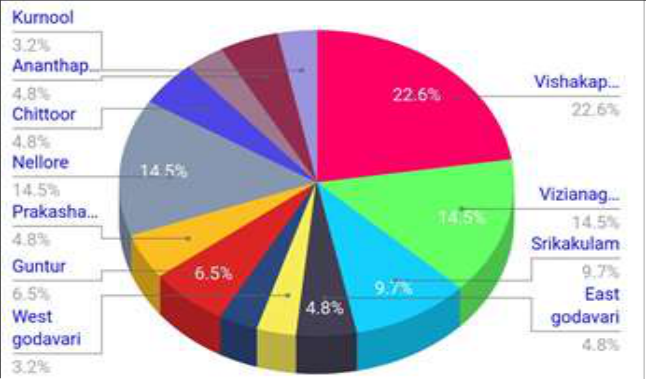 Figure 1
 Table 1
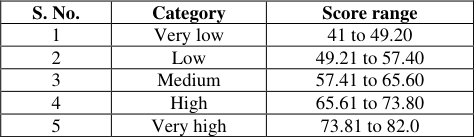 Table 2
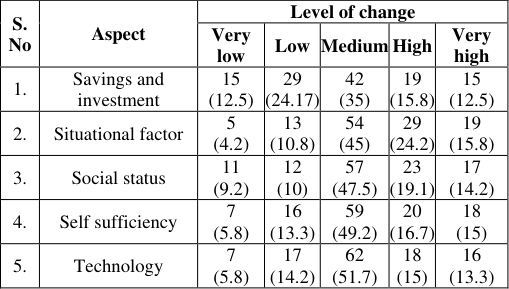 Table 3
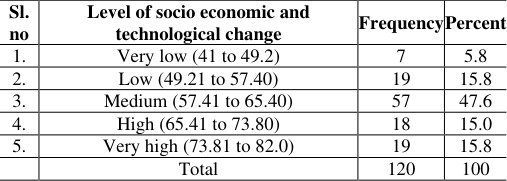 Table 4
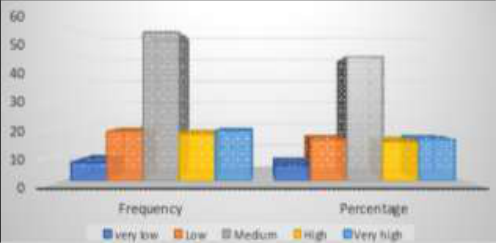 Figure 2
Introduction
Andhra Pradesh, a key agricultural state in India often referred to as the nation's "rice bowl," recognized the necessity for a robust integrated platform at the village level to address the individual needs of farmers (Anantha Damodara Reddy et al., 2022) [12] . In response, the government initiated the establishment of 10,641 Rythu Bharosa Kendras (RBKs) on May 30, 2020, in every village secretariat throughout the state. These RBKs play a crucial role as a resource for farmers, providing information on the latest agricultural technologies and supplying quality inputs (Reddy, 2020) [11] . To manage these RBKs locally, the Department of Agriculture enlisted 6,758 village agriculture assistants (Babu et al., 2021) [3] . These RBKs, also referred to as Farmer Assurance Centres, integrate agricultural input shops and knowledge centers (Chowdary et al., 2022) [5] . They supply government-certified inputs related to agriculture, animal husbandry, and fisheries. Additionally, RBKs host workshops or knowledge centers to provide scientific agricultural advisory services to farmers. Within RBKs, Community Hiring Centres (CHCs) offer machinery to groups of five to six village members with a 50% subsidy and access to a 40% bank loan. These machinery groups, maintained by local farmers, make equipment available to marginal and small farmers at affordable rates (Krishna et al., 2022) [6] . RBKs provide a comprehensive array of services, encompassing farmer training, soil testing, crop insurance, demonstrations, beneficiary identification for various schemes, market intelligence, and the issuance of animal health cards (Reddy, 2020) [11] . This holistic approach has revolutionized the agricultural sector by addressing farmers' needs from seed to sale (Anuhya et al., 2022) [1,2] . www.extensionjournal.com
The international acclaim of Rythu Bharosa Kendras (RBKs) is evident as they have been nominated for United Nations Organization (UNO) awards, bringing pride to the nation (Anuhya et al., 2022) [1,2] . The RBK system has effectively bridged the gap between the extension system and the farming community, fostering transparency (Reddy, 2020) [11] . However, despite its global recognition, the initiative encountered implementation challenges from the outset. The success of the program is contingent on farmers' awareness of RBKs (Saifuddin et al., 2023) [14,15] , an aspect that has received limited research attention (Anuhya et al., 2022) [1,2] .
Methodology
Andhra Pradesh, one of the Indian states, primarily relies on agriculture and livestock for its economy. The selection of Andhra Pradesh for this study is deliberate, as the state government launched the RBKs (Rural Business Kendras) with an innovative approach to support farmers at the grassroots level. An ex post facto research design was selected because the phenomenon has already transpired, making this design suitable. According to 2001 Census the tribal population of Andhra Pradesh is 50.24 lakh with 33 tribes constitute about 6.6 percent of the total population of the state As per Venkatanarayan M. (2013) [16] , Visakhapatnam, Vizianagaram, and Eluru districts were purposefully selected for their significant tribal population, as well as to enhance the geographical diversity in the sample. These three districts, namely Visakhapatnam, Vizianagaram, and Eluru, exhibit tribal populations of 13.4%, 10.05%, and 2.77%, respectively. Araku Valley in Visakhapatnam, Parvathi Puram in Vizianagaram, and Buttaigudem in Eluru district were intentionally chosen as the tribal mandals for this study. Specifically, in the Araku Valley Mandal, out of its 172 villages, the study randomly selected Peddapuram, Doravalasa, Dolliguda, and Pedalabudu. Similarly, in the Parvathipuram Mandal with 49 villages, the study included Gochekka, Tonki, Adaru, and Budhuruvada as its random selections for research. In the Mandal of Buttaigudem there are 53 villages. Out of them four villages namely Sithapagudem, Tellamvarigudem, Doramamidi and K.R Puram were randomly selected for the study. Rogers (1983) [13] provided a definition of consequence as the transformation experienced by an individual or a social system when they either adopt or reject an innovation. In our study, we operationally define "socio economic and technological changes" as the observable alterations that have transpired due to the adoption of enhanced technologies over the past five years. These alterations encompass socio-techno-economic changes. To measure these changes, we adopted a methodology similar to the one utilized by Chauhan (1994) with certain modifications, focusing on five distinct aspects. (1) change in saving and investment (2) change in social status (3) change in social relationship and (4) change in self-sufficiency (5) change in technology. For scoring procedure, we used schedule developed by Ninama (2015) [8] and measured with the help of procedure adopted by Patel (2005) [9] . The study assessed changes in Saving and Investment through six statements (CCRC cards, insurance for animals, account in bank or post, savings certificates), alterations in situational factors (primarily housing conditions, cropping intensity, cropping pattern, percentage of area under irrigation, milk animals, replacement area with high yielding varieties) Changes in Social status (Elected as a member of village council or village chief, participation in rythu badi programme and advising to neighbour farmers, contact with VAA/VHA or AO) Change in Self-sufficiency using six statements (specifically Fulfilling needs, repayment of depts, children education, children marriage) Technological change by utilizing sixteen statements which include Use of Kiosks, CM-APP, E-Crop booking, Hybrid seed/New varieties, Bio fertilizers, Integrated pest and weed management, practicing mulching, Drip/sprinkler irrigation system, Vaccination for animals and other technologies where respondents provided bipolar responses (yes or no) to each statement. A scoring system was employed, assigning a score of 2 for "yes" and 1 for "no" for each statement. This resulted in a summated score, representing the total assessment of given aspects of socio economic and technological changes. www.extensionjournal.com In this research, we examined five different factors to assess the overall socio-techno-economic transformation among marigold growers. We calculated a score for each of these factors to gauge the extent of socio-techno-economic change experienced by the farmers. Based on these scores, the participants were categorized into five distinct groups representing varying degrees of socio-techno-economic change.
Results and Discussion
Then socio economic and technological changes were assessed in terms of five key aspects: saving and investment, situational factors, social status, selfsufficiency, and technology adoption. To evaluate the resultant changes attributed to RBK interventions in these socio-economic and technological aspects of living, detailed information was gathered and respondents were categorized into five distinct levels of change, including very low, low, medium, high, and very high. The summarized data can be found in Table 3.
| S. No | Aspect | Level of change | — | — | — | — |
|---|---|---|---|---|---|---|
| Very low | Low | Medium | High | Very high | ||
| 1. | Savings and investment | 15 (12.5) | 29 (24.17) | 42 (35) | 19 (15.8) | 15 (12.5) |
| 2. | Situational factor | 5 (4.2) | 13 (10.8) | 54 (45) | 29 (24.2) | 19 (15.8) |
| 3. | Social status | 11 (9.2) | 12 (10) | 57 (47.5) | 23 (19.1) | 17 (14.2) |
| 4. | Self sufficiency | 7 (5.8) | 16 (13.3) | 59 (49.2) | 20 (16.7) | 18 (15) |
| 5. | Technology | 7 (5.8) | 17 (14.2) | 62 (51.7) | 18 (15) | 16 (13.3) |
Table text extracted from the original PDF; superscript letters are shown inline. The original table image is below.
View original table image
Extent of change in Savings and
Investment: Among the respondents, approximately 35 percent experienced a medium level of change in their saving and investment patterns. Following this, 24.17 percent had low changes, while 15.8 percent observed high changes. Additionally, 12.5 percent noted very high changes, and an equal percentage of 12.5 percent encountered very low changes in their saving and investment behaviors.
The findings suggest that a substantial majority of respondents predominantly exhibited medium to low levels of change in their saving and investment patterns. This outcome indicates that the anticipated economic growth among tribal farmers, owing to the interventions of RBK, has not been realized to the desired extent. This could be a key contributing factor behind the observed results.
Extent of change in Situational factor: About 45
percent of the respondents experienced a medium level of change in situational factors. Additionally, 24.2 percent reported high changes, while 15.8 percent noticed very high changes in situational factors. On the other hand, 10.8 percent encountered low changes, and a smaller 4.2 percent observed very low alterations in their situational factors. The findings suggest that a significant majority, amounting to 85 percent of farmer respondents, experienced medium to high levels of change in their circumstances as a direct result of the interventions provided by RBKs. 3. Extent of change in social status: Among the respondents, a substantial 47.5 percent experienced a medium level of change in their social status. In contrast, 19.1 percent noted high changes, while 14.2 percent observed very high alterations in their social status. A smaller percentage of 10.0 encountered low changes, and 9.2 percent reported very low changes in their social status. As per the findings, the data indicates that a substantial majority, comprising 80 percent of farmer respondents, witnessed medium to high levels of change in their social status due to the interventions offered by RBKs.
Extent of change in Self-sufficiency:
The data presented in table 3 shows, approximately half of the respondents (49.2 percent) experienced a medium level of change in their self-sufficiency. Additionally, 16.7 percent noted high changes, while 15.0 percent observed very high changes in their self-sufficiency levels. A smaller portion of 13.3 percent encountered low changes, and 5.8 percent reported very low changes in their self-sufficiency. The results indicate that a substantial majority of farmer respondents experienced medium to high levels of change in self-sufficiency, directly attributed to the interventions facilitated by RBKs. This study presents a comprehensive evaluation of changes, encompassing both socio-economic and technological aspects. In the context of this research, we focused on the consequences of changes that transpired over the last five years as a result of RBK interventions. The data pertaining to these changes was systematically collected, and respondents were categorized into five distinct groups, as detailed in Table 4, to provide a holistic assessment of the overall impact. The presented in Table 4 and As per findings, it can be deduced that the majority of respondents, totaling 79.1 percent, witnessed a medium to high level of socio-economic and technological change due to the interventions implemented by RBKs. This observation aligns with the findings reported by Patel (2014) [10] , Matwa (2013) [7] and Chinchmalatapure and Mayani (2014) [4] .
| Sl. no | Level of socio economic and technological change | Frequency | Percent |
|---|---|---|---|
| 1. | Very low (41 to 49.2) | 7 | 5.8 |
| 2. | Low (49.21 to 57.40) | 19 | 15.8 |
| 3. | Medium (57.41 to 65.40) | 57 | 47.6 |
| 4. | High (65.41 to 73.80) | 18 | 15.0 |
| 5. | Very high (73.81 to 82.0) | 19 | 15.8 |
| Total | 120 | 100 |
Table text extracted from the original PDF; superscript letters are shown inline. The original table image is below.
View original table image
Extent of change in Technology: As per the
Extent of change in Technology: As per the
Conclusion
The desirable socio-economic and technological changes were assessed in terms of five key aspects: saving and investment, situational factors, social status, selfsufficiency, and technology adoption. A significant portion, nearly half (48.3 percent), of the respondents experienced a medium level of socio-technoeconomic change. Furthermore, 15.8 percent reported very high levels of change, while an equal percentage of 15 percent each had low and high levels of socio-technoeconomic change. In contrast, a smaller proportion of 5.8 percent of the respondents experienced very low levels of socio-economic and technological change.
Figures and tables from the paper
| S. No | Aspects of Socio economic and technological changes | Score range | — | — | — | — |
|---|---|---|---|---|---|---|
| Very low | Low | Medium | High | Very high | ||
| 1. | Savings and Investment | 6 to 7.20 | 7.21 to 8.40 | 8.41 to 9.6 | 9.61 to 10.80 | 10.81 to 12 |
| 2. | Situational factor | 5 to 6.0 | 6.1 to 7.0 | 7.1 to 8.0 | 8.1 to 9.0 | 9.1 to 10 |
| 3. | Social Status | 8 to 9.60 | 9.61 to 11.20 | 11.21 to 12.80 | 12.81 to 14.40 | 14.41 to 16 |
| 4. | Self- Sufficiency | 6 to 7.20 | 7.21 to 8.40 | 8.41 to 9.60 | 9.61 to 10.80 | 10.81 to 12 |
| 5. | Technology | 16 to 19.20 | 19.21 to 22.40 | 22.41 to 25.60 | 25.61 to 28.80 | 28.8 to 32 |
Table text extracted from the original PDF; superscript letters are shown inline. The original table image is below.
View original table image
| S. No. | Category | Score range |
|---|---|---|
| 1 | Very low | 41 to 49.20 |
| 2 | Low | 49.21 to 57.40 |
| 3 | Medium | 57.41 to 65.60 |
| 4 | High | 65.61 to 73.80 |
| 5 | Very high | 73.81 to 82.0 |
Table text extracted from the original PDF; superscript letters are shown inline. The original table image is below.
View original table image
References
14 in the original paper- Anuhya, Kisku U, Khare N. A study on correlates of profile characteristics and adoption behaviour of Rythu Bharosa Kendra (RBK) beneficiaries in Anantapur District, Andhra Pradesh. Curr J Appl Sci Technol. 2022;41(24):39-45.
- Anuhya P, Kisku U, Khare NK, Ramakrishna M. A study on awareness, constraints and suggestions about Rythu Bharosa Kendra (RBK) services by the beneficiary farmers in Ananthapuram District of Andhra Pradesh. Multilogic Sci J. 2022;12.
- Babu NN, Venkataramulu M, Venu Prasad HD, Sarma ASR, Usha M. Impact of Rythu Bharosa Kendra's as Perceived by the Farmers. Asian J Agric Extension Econ Sociol. 2021;41:606-616.
- Chinchmalatapure UR, Mayani VV. Correlate of sociotechno-economic change at Rehabilitated place of project affected farmers. Gujarat J Extension Educ. 2014;25:121-125.
- Chowdary RK, Jyotsna MK, Jyothi I. A Study on Perception and Utilization of Services of Rythu Bharosa Kendra's (RBKs) by the Farmers in Chittoor District of Andhra Pradesh, India. Curr J Appl Sci Technol. 2022;41(27):40-47.
- Krishna T, Vamsi Y, Acharya SK, Biswas A, Haque M. Assessment of constraints and opportunities of technology adoption in agriculture during pandemic by participatory exercise. Pharma Innov J. 2022;11(2):1212-1215.
- Matwa J, Soni NV, Bhatt PM, Patel HB. Relationship between profile of the maize growers and their sociotechno-economic change. 2013;(24):20-22.
- Patel BS. Modernization in integrated tribal development project area of Dahod district of Gujarat state. Ph.D. Thesis (Unpublished), AAU, Anand; 2005.
- Patel MR, Patel JK, Sipai SA. An impact analysis of peasantry's socio-techno-economic change under Integrated Tribal Development Project. Agril Update. 2014;9(3):423-426.
- Reddy AD. RBKs of Andhra Pradesh-one stop solution for the needs of farming community. Vigyan Varta. 2020;1(3):22-24.
- Rogers EM. Diffusion of innovations. 3rd ed. New York: The Free Press, A division of MacMillan Publishing Co. Inc.; 1983.
- Saifuddin Md. Rythu Bharosa Kendras in service of farmers -An Exploratory Study. M.Sc. (Ag.) Thesis, Acharya N. G. Ranga Agricultural University, Bapatla, Andhra Pradesh; 2022.
- Saifuddin Md, Devy MR, Rao MS, Suseela K. Effectiveness of Rythu Bharosa Kendras (RBKs) Services as Perceived by Farmers in the East Godavari District of Andhra Pradesh, India. Asian J Agric Extension Econ Sociol. 2023;41(4):34-41.
- Koi M, Umar A, Chauhan DP, Cherian SP, Carethers JM, Kunkei TA, et al. Human chromosome 3 corrects mismatch repair deficiency and microsatellite instability and reduces N-methyl-N′-nitro-Nnitrosoguanidine tolerance in colon tumor cells with homozygous hMLH1 mutation. Cancer research. 1994 Aug 15;54(16):4308-4312.