
Research article · 2024 · Full text
International Journal of Research in AgronomyEffect of seaweed extract on growth, yield and quality in different field crops: A review
Volume 7(3) · Pages 76–79 · DOI: 10.33545/2618060x.2024.v7.i3b.381 ↗
Research areasPlant Growth Enhancement TechniquesPolymer-Based Agricultural EnhancementsComposting and Vermicomposting Techniques
Abstract
Author-writtenThe excessive use of chemicals and inorganic fertilizers by farmers to increase crop yield is detrimental to the environment and human health. Application of bio-stimulants such as seaweed extract (SWE) in agriculture could be an effective and eco-friendly alternative to inorganic fertilizers. Bio-stimulants are natural organic degradable substances. Their application serves as a source of nutrition for crops, possibly improving growth and productivity when applied in combination with the fertilizers. The beneficial effects of seaweed on soil and crops have been empirically observed by farmers and confirmed by scientific studies. Foliar application of seaweed significantly enhanced the growth parameters, yield components, quality parameters in different field crops when compared to control.
Summary
Source-checkedPlain-language reading of the full paper, prepared with AI and checked against the text. Each point links to the authors' own words.
Why it matters
- The heavy reliance on inorganic fertilizers to boost crop yields has negative consequences for human health and the environment. View evidence ↗
- Seaweed extract (SWE) is considered a sustainable and eco-friendly alternative to synthetic inorganic fertilizers. View evidence ↗
- Seaweed extracts contain nutrients, vitamins, and hormones (like auxins and cytokinins) that promote plant growth and help plants tolerate environmental stress. View evidence ↗
The question
- The review aims to evaluate how seaweed extract affects the growth, yield, and quality of various field crops. View evidence ↗
What they did
- Commonly used seaweed species for extracts include Ulva lactuca, Ascophyllum nodosum, and Sargassum liebmannii. View evidence ↗
- The reviewed studies typically compared the effects of foliar or soil application of seaweed extracts against a control group. View evidence ↗
What they found
- In chickpea, a foliar spray of 1 ml/L of seaweed extract increased plant height by 41.3% compared to untreated plants. View evidence ↗
- Applying a 1.50% concentration of Turbinaria decurrens liquid fertilizer increased the number of root nodules per plant in chickpea. View evidence ↗
- In greengram, combining 15% Kappaphycus sap with the recommended dose of fertilizer increased seed yield by 38.97% over the control. View evidence ↗
- Seed yield in blackgram increased by 49.2% compared to the control when 15% Kappaphycus sap was used with the recommended fertilizer dose. View evidence ↗
- Applying seaweed extract gel to the soil at 12.5 kg/ha significantly increased the harvest index of rice by 44%. View evidence ↗
- A 15% concentration of seaweed extract improved the uptake of potassium, phosphorus, and nitrogen in soybean grains. View evidence ↗
- The use of 1 ml/L of seaweed extract in chickpea resulted in significantly higher crude protein content in the seeds. View evidence ↗
- Seaweed fertilizer significantly increased dehydrogenase activity and the microbial population in maize. View evidence ↗
- In greengram, applying 15% Kappaphycus sap with 75% of the recommended fertilizer dose significantly improved the benefit-cost ratio and net/gross returns. View evidence ↗
What it means
- The authors conclude that using seaweed extract to promote the quality, yield, and vegetative growth of field crops is a viable option for sustainable agriculture. View evidence ↗
- The authors state that biological alternatives like seaweed extract reduce the need for synthetic inorganic fertilizers, thereby lessening their negative impact on the biosphere. View evidence ↗
Visual summary
1 visualsIllustrations explain the paper; they do not show study data.
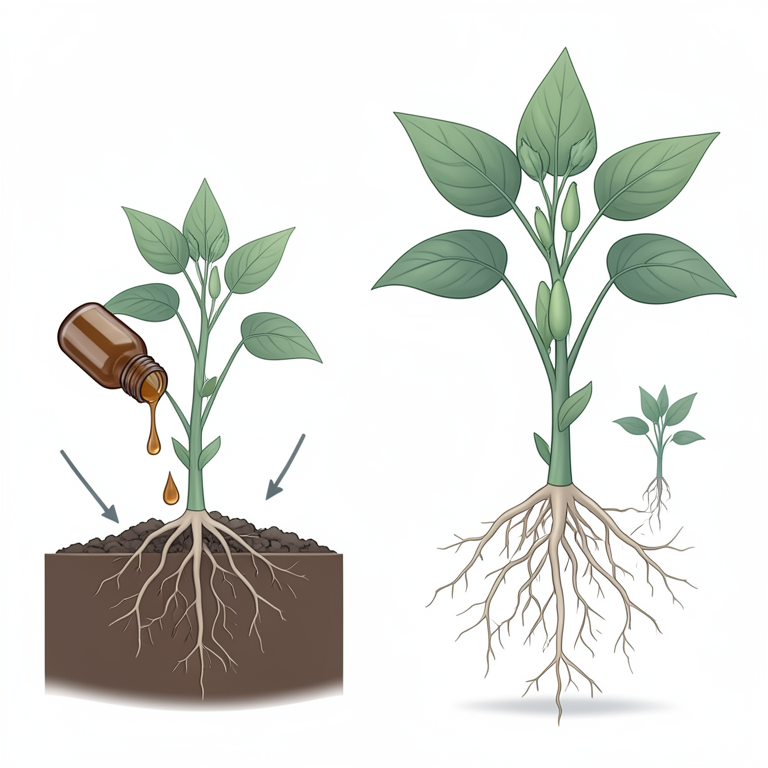
Mechanism of Seaweed Extract Action
AI-generated conceptual illustration (soybean and chickpea plants). It explains the idea and does not show study data.
View source evidence ↗Introduction
A marine algae (seaweed) is one of the renewable and economically valuable sea wealth. Seaweeds are marine algae that are macroscopic and found attached at the bottom of shallow and deep coastal waters and also grows on solid substrates like rocks, pebbles and dead corals. Application of seaweed extract (SWE) in agriculture could be an effective and eco-friendly alternative to inorganic fertilizers. Algae, particularly the seaweeds, are used as organic biofertilizers and soil stabilizers resulting in less nitrogen and phosphorous runoff from farm lands. The addition of seaweed species leads to chemical changes in soil fertility indicator of soils by improving its organic matter content, neutralize the soil reactions and reduces the C: N ratio in both sandy and clay soils. Seaweed liquid fertilizer and powdered algal manure have been used as bio-stimulants on cereals and pulses. Usage of seaweed as a manure is a common practice in coastal areas throughout the world. Seaweed extract (SWE) collected from Ulva lactuca, Ascophyllum nodosum, Sargassum liebmannii etc., is the most commonly used soil amendment. Generally, all these could cause a synergistic effect on plant growth by enhancing seed germination, contributing to vegetative growth and modulating the reproductive behavior in plants. The undesirable effects of inorganic fertilizers on the environment have stimulated studies on new natural resources of fertilizers, bio-stimulants and soil amendments. Seaweed biomass represents a substitute for conventional inorganic fertilizers. The beneficial outcome of SWE application on crop plants is due to various components that may work synergistically at different concentrations. Moreover, SWE is readily biodegradable, free from toxins, nonpolluting and non-hazardous. Extracts of seaweed enhance antioxidant properties, contains amino acids, vitamins, cytokinins, auxins, abscisic acid, major and minor nutrients, that act as growth promoting substances which promote growth, yield and develop tolerance against environmental stress in plants.
Effect of Seaweed Extract on Growth Parameters
Seaweed nano powder treated seeds recorded higher germination percentage in pigeonpea (Ambika and Sujatha, 2016) [2] . Plant population was found non-significant with application of seaweed extract @ 500 ml ha-1 in soyabean (Guerreiro et al., 2017) [13] . Application of 15% concentration of seaweed extract recorded higher plant height compared to control in soybean (Rathore et al., 2009) [21] . Foliar spray of 0.4% concentration of seaweed extract resulted higher plant stature in greengram (Kavipriya et al., 2011) [15] . Application of 15% Kappaphycus sap + recommended dose of fertilizer (RDF) resulted in increased plant height in greengram (Pramanick et al., 2013 and Basavaraja et al., 2018) [19,3] . Foliar spray of 1 ml of seaweed extract L -1 increased plant height by 41.3% compared to untreated plants in chickpea (Boghdady et al., 2016) [4] . Seed treatment with combined application of 15% seaweed extract resulted in higher plant height in hybrid maize (Dilvaranaik et al., 2017) [7] . Application of seaweed extract @ 500 ml ha -1 at flowering stage resulted in higher plant height in soyabean (Guerreiro et al., 2017) [13] . Soil application of seaweed extract gel @ 12.5 kg ha -1 + foliar spray of seaweed extract liquid @ 0.5% at tillering and panicle initiation stages resulted in significantly higher plant height in rice (Deepana et al., 2021) [6] . Application of 2.0% of Ascophyllum nodosum to seeds resulted in higher plant height compared to control in kabuli chickpea (Kurakula and Rai, 2021) [17] . Combined application of vermicompost, rhizobium, PSB and seaweed extract resulted in significant increase of plant height compared to without seaweed application treatment in French bean (Rai et al., 2021) [17] . Foliar application of bio-stimulants like Bio-zyme crop + and Quantis resulted in significant increase in plant height in blackgram (Vishwanatha et al., 2022) [24] . Higher leaf area was recorded with application of seaweed liquid fertilizer @ 1.5% in chickpea (Gurusaravanan et al., 2011) [14] . Application of 15% Kappaphycus sap + recommended dose of fertilizer (RDF) resulted in higher leaf area index in greengram (Pramanick et al., 2013) [19] . Foliar application of seaweed extract @ 20% significantly increased the leaf area of tomato plants compared to control (Sutharsan et al., 2014) [23] . Application of Kappaphycus sap @ 10% + RDF resulted in significant increase in leaf area index of maize compared to control (Garai et al., 2019) [10] . Soil application of seaweed extract gel @ 12.5 kg ha -1 + foliar spray of seaweed extract liquid @ 0.5% at tillering and panicle initiation stages resulted in higher leaf area index in rice (Deepana et al., 2021) [6] . Application of 15% concentration of seaweed extract recorded significantly higher number of branches plant -1 in soyabean (Rathore et al., 2009) [21] . Application of 15% Kappaphycus sap + recommended dose of fertilizer (RDF) resulted significant increase in number of branches plant -1 compared to control in greengram (Pramanick et al., 2013) [19] . Higher number of branches plant -1 were registered with the treatment of 1 ml of seaweed extract/L compared to untreated plants in chickpea (Boghdady et al., 2016) [4] . Application of 2.0% of Ascophyllum nodosum to seeds resulted in significantly higher number of branches plant -1 compared to control in kabuli chickpea (Kurakula and Rai, 2021) [17] . Combined application of rhizobium and seaweed extract resulted in significant increase of number of branches plant -1 in french bean (Rai et al., 2021) [17] . Foliar application of bio-stimulants like Bio-zyme crop + and Quantis resulted in significant increase in number of branches plant -1 compared to control in blackgram (Vishwanatha et al., 2022) [24] . Application of 15% Kappaphycus sap + recommended dose of fertilizer (RDF) resulted in higher dry matter production in greengram (Pramanick et al., 2013) [19] . Seaweed nano powder treated seeds resulted in higher dry matter production in pigeonpea (Ambika and Sujatha, 2016) [2] . Application of biostimulants like Algex made from Ascophyllum nodusum significantly improved the dry matter production compared to control in red clover (Godlewska and Ciepiela, 2020) [12] . Soil application of seaweed extract gel @ 12.5 kg ha -1 + foliar spray of seaweed extract liquid @ 0.5% at tillering and panicle initiation stages resulted in higher dry matter production in rice (Deepana et al., 2021) [6] . Foliar application of bio-stimulants like Bio-zyme crop + and Quantis resulted in significant increase in dry matter production in blackgram (Vishwanatha et al., 2022) [24] .
Effect of seaweed extract on root growth parameters
Higher number of root nodules plant -1 were recorded in the treatment applied with seaweed liquid fertilizer of Turbinaria decurrens @ 1.50% concentration in chickpea (Gurusaravanan et al., 2011) [14] . Application of 15% Kappaphycus sap + recommended dose of fertilizer (RDF) resulted in significantly higher number of root nodules plant -1 in greengram (Pramanick et al., 2013) [19] . Combined application of rhizobium, PSB and seaweed extract resulted in significant increase of number of root nodules plant -1 in French bean (Rai et al., 2021) [17] . Foliar application of bio-stimulants like Bio-zyme crop + and Quantis resulted in significant increase in number of root nodules plant -1 compared to control in blackgram (Vishwanatha et al., 2022) [24] . Higher root length was recorded in the treatment applied with seaweed liquid fertilizer @ 1.5% concentration in chickpea (Gurusaravanan et al., 2011) [14] . Higher root length was registered in the treatment of 0.4% concentration of seaweed extract in greengram (Kavipriya et al., 2011) [15] . Application of seaweed extract at 0.5% resulted in increase of root length in onion (Abbas et al., 2020) [1] . Soil application of seaweed extract gel @ 12.5 kg ha -1 + foliar spray of seaweed extract liquid @ 0.5% resulted in significantly higher root length in rice (Deepana et al., 2021) [6] . Significantly higher dry weight of roots was recorded in the treatment applied with seaweed liquid fertilizer @ 0.5% in chickpea (Gurusaravanan et al., 2011) [14] . Higher dry weight of roots was recorded in the treatment of 0.4% concentration of seaweed extract in greengram (Kavipriya et al., 2011) [15] . Foliar application of seaweed extract @ 20% concentration significantly increased dry weight of tomato plants compared to control (Sutharsan et al., 2014) [23] .
Effect of Seaweed Extract on Yield Attributes
Application of 15% concentration of seaweed extract recorded significantly higher number of pods plant -1 in soyabean (Rathore et al., 2009) [21] . Application of 15% Kappaphycus sap + recommended dose of fertilizer (RDF) resulted in increased number of pods plant -1 in greengram (Pramanick et al., 2013) [19] . Significantly higher number of pods plant -1 were registered at the treatment of 1 ml of seaweed extract L -1 (untreated plants) in chickpea (Boghdady et al., 2016) [4] . Application of seaweed extract Ascomaxx @ 500 ml ha -1 twice at flowering stage and pod formation stages resulted in significantly higher number of pods plant -1 in soyabean (Guerreiro et al., 2017) [13] . Application of 2.0% of Ascophyllum nodosum to seeds resulted in increased number of pods plant -1 in kabuli chickpea (Kurakula and Rai, 2021) [17] . Combined application of rhizobium, PSB and seaweed extract resulted in significant increase of number of pods plant -1 in French bean (Rai et al., 2021) [17] . Foliar application of bio-stimulants like Bio-zyme crop + and Quantis resulted in significant increase in number of pods per plant -1 in blackgram (Vishwanatha et al., 2022) [24] . Application of 15% concentration of seaweed extract recorded higher number of grains pod -1 in soyabean (Rathore et al., 2009) [21] . Application of 15% Gracillaria sap + recommended dose of fertilizer (RDF) resulted in increased number of seeds pod -1 in greengram (Pramanick et al., 2013) [19] . Significantly higher number of seeds pod -1 were recorded with the treatment of 1 ml of seaweed extract/L in chickpea (Boghdady et al., 2016) [4] . Application of Kappaphycus sap @ 10% + RDF resulted in significant increase in number of seeds pod -1 compared to control in garden pea (Garai et al., 2019) [10] . Application of 2.0% of Ascophyllum nodosum to seeds resulted in significantly higher number of seeds plant -1 in kabuli chickpea (Kurakula and Rai, 2021) [17] . Application of 15% concentration of seaweed extract recorded significantly higher test weight in soyabean (Rathore et al., 2009) [21] . Application of 15% Kappaphycus sap + recommended dose of fertilizer (RDF) resulted in higher hundred seed weight in greengram (Pramanick et al., 2013) [19] . Higher weight of 100 seeds was recorded at the treatment of 0.75 ml of seaweed extract/L in chickpea (Boghdady et al., 2016) [4] . Combined application of 15% Gracillaria sap + 10% Gracillaria sap resulted in significantly higher weight of 100 grains compared to control in hybrid maize (Dilvaranaik et al., 2017) [7] . Application of 10% Gracillaria edulis sap + RDF resulted in significantly increased the hundred seed weight compared to control (water spray + RDF) in maize (Basavaraja et al., 2018) [3] . Soil application of seaweed extract gel @ 12.5 kg ha -1 + foliar spraying of seaweed extract liquid @ 0.5% at tillering and panicle initiation stages resulted in significantly higher weight of 1000 grains in rice (Deepana et al., 2021) [6] .
Effect of seaweed extract on yield
Application of 15% Kappaphycus sap + recommended dose of fertilizer (RDF) resulted in an increase of seed yield by 38.97% compared to control in greengram (Pramanick et al., 2013) [19] . Application of 15% Kappaphycus sap + recommended dose of fertilizer (RDF) resulted in increase of seed yield by 49.2% compared to control in blackgram (Dwivedi et al., 2015) [9] . Higher seed yield was recorded at the treatment of 1 ml of seaweed extract L -1 compared to untreated plants in chickpea (Boghdady et al., 2016) [4] . Combined application of 15% seaweed extract resulted in higher seed yield compared to control in hybrid maize (Dilvaranaik et al., 2017) [7] . Application of 10% Gracillaria edulis sap + RDF resulted in significant increase of seed yield compared to control in maize (Basavaraja et al., 2018). Application of seaweed extract at 0.5%, 1%, 2% and 3% concentration resulted in significant increase of seed yield of onion (Abbas et al., 2020) [1] . Spraying of seaweed extract @ 7.5% resulted in significant increase in seed yield of wheat (Kumar et al., 2021) [16] . Application of 2.0% of Ascophyllum nodosum resulted in significantly higher seed yield chickpea (Kurakula and Rai, 2021) [17] . Combined application of rhizobium, PSB and seaweed extract resulted in significant increase of seed yield in french bean (Rai et al., 2021) [17] . Foliar application of bio-stimulants like Bio-zyme crop + and Quantis resulted in significant increase in seed yield compared to control in blackgram (Vishwanatha et al., 2022) [24] . Application of 15% concentration of seaweed extract registered significantly higher harvest index of 0.27% compared to control in soyabean (Rathore et al., 2009) [21] . Application of Kappaphycus sap @ 10% + RDF resulted in significant increase in harvest index of maize (Garai et al., 2019) [10] . Soil application of seaweed extract gel @ 12.5 kg ha -1 resulted in significantly higher harvest index of (44%) in rice (Deepana et al., 2021) [6] . Application of seaweed extract @ 4 ml/liter of water at tillering and heading stages gave significantly higher harvest index in wheat (Sarita et al., 2021) [22] .
Effect of seaweed extract on quality parameters
Significantly higher crude protein content of seed was recorded at the treatment of 1 ml of seaweed extract/L in chickpea (Boghdady et al., 2016) [4] . Application of bio-stimulants like Algex made from Ascophyllum nodusum significantly improved the protein content in plants in red clover (Godlewska and Ciepiela, 2020) [12] . Combined application of rhizobium, PSB and seaweed extract resulted in significant increase of protein content in seeds in French bean (Rai et al., 2021) [17] .
Effect of seaweed extract on nutrient uptake
Application of 15% concentration of seaweed extract increased the uptake of nitrogen, phosphorus and potassium by grains in soyabean (Rathore et al., 2009) [21] . Use of the seaweed extracts significantly increased N, P and K uptake by seeds and stover of greengram compared to sole application of chemical fertilizers (Pramanick et al., 2013) [19] . Application of 10% Kappaphycus alvarezii sap + RDF and 10% Gracillaria edulis + RDF resulted in increased uptake of N, P and K compared to the treatment of water spray + RDF in maize (Basavaraja et al., 2018) [3] . N, P and K uptake was higher by the plants treated with 15% Gracillaria sp. sap + RDF treatment in wheat (Ghosh et al., 2020) [11] . Soil application of seaweed extract gel @ 25 kg ha -1 resulted in increased uptake of N, P, K, Fe, Zn, Cu and Mn compared to control in rice (Deepana et al., 2021) [6] . N, P and K content were significantly higher in the treatment of 1 ml of seaweed extract/L in chickpea (Boghdady et al., 2016) [4] . Application of seaweed extract at 0.5% concentration resulted in significant increase of N, P and K content in onion (Abbas et al., 2020) [1] . Combined application of seaweed extract and rhizobium resulted in significant increase of micronutrients viz., Fe, Cu, Zn and Mn in Amaranthus (Ngoroyemoto et al., 2020) [18] . Soil application of seaweed extract gel @ 25 kg ha -1 resulted in non-significant effect on soil pH, EC but significant increase of organic carbon content of soil compared to control in rice (Deepana et al., 2021) [6] .
Effect of Seaweed Extract on Soil Microbial Properties and Soil Enzymes
Application of seaweed fertilizer resulted in significant increase of microbial population and dehydrogenase activity in maize (Zhou et al., 2019 and Chen et al., 2020) [25,5] . Combined application of seaweed extract and rhizobium resulted in significant increase of microbial population in Amaranthus (Ngoroyemoto et al., 2020) [18] .
Effect of Seaweed Extract on Economics
Significantly higher gross and net returns and benefit -cost ratio by application of 15% Kappaphycus sap along with 75% RDF in greengram (Pramanick et al., 2013) [19] . Foliar application of 15% Kappaphycus sap + recommended dose of fertilizer (RDF) significantly increased the monetory returns and B: C ratio in blackgram (Dwivedi et al., 2014) [8] . Application of Kappaphycus sap @ 10% + RDF resulted in significant increase in gross and net returns and B: C ratio of maize (Garai et al., 2019) [10] Combined application of rhizobium, PSB and seaweed extract resulted in significant increase of net returns and B: C ratio compared to without seaweed application in French bean (Rai et al., 2021) [17] . Application of seaweed extract @ 4 ml/liter of water at tillering and heading stages gave significantly higher B: C ratio compared to control in wheat (Sarita et al., 2021) [22] .
Conclusion
The application of seaweed extract to the crop plants was more effective in promoting vegetative growth. This stimulated the release of macro-and micronutrients and other organic compounds, which had a dual effect on growth parameters (plant height, leaf area index, chlorophyll content, root length etc.,). It increases the availability of inorganic nutrients, and substrate porosity, all of which improved the root system development, nutrient uptake and assimilation, and chlorophyll synthesis, and consequently benefited the morphological attributes of the plants. It could be suggest that, application of sea weed extract is helps in promote vegetative growth, yield and quality of different field crops in a sustainable agricultural systems is a viable option. Furthermore, biological based alternatives reduce the use of inorgonic synthetic fertilizers and its negative impact on the biosphere.
References
25 in the original paper- Abbas M, Anwar J, Zafar-ul-Hye, Khan IR, Saleem M, Rahi AA, et al. Effect of seaweed extract on productivity and quality attributes of four onion cultivars. Horticulturae. 2020;6(28):2-13.
- Ambika S, Sujatha K. Organic seed treatment with seaweed nano powders on physiological quality and enzyme activities in aged seeds of pigeonpea. The Bioscan. 2016;11(1):353-357.
- Basavaraja KP, Yogendra DN, Zodape TS, Prakash R, Ghosh A. Effect of seaweed sap as foliar spray on growth and yield of hybrid maize. J Plant Nutr. 2018;2018(1):201207. http://doi.org/10.1080/01904167.2018.1463381.
- Boghdady SM, Selim HAD, Nassar AMR, Salama MA. Influence of foliar spray with seaweed extract on growth, yield and its quality, profile of protein pattern and anatomical structure of chickpea plant (Cicer arietinum L.). Middle East J Appl Sci. 2016;6(1):207-221.
- Chen Y, Li Y, Haung Z, Su G, Li X, Sun Z, Qin Y. Impact of short-term application of seaweed fertilizer on bacterial diversity and community structure, soil nitrogen contents and plant growth in maize rhizosphere soil. Folia Micribiol. 2020;65(1):591-603. http://doi.org/10.1007.s12223-019-00766-4.
- Deepana P, Bama KS, Santhy K, Devi ST. Effect of seaweed extract on rice (Oryza sativa var. ADT53) productivity and soil fertility in Cauvery delta zone of Tamil Nadu, India. J Appl Nat Sci. 2021;13(3):1111-1120.
- Dilavarnaik S, Basavaraja KP, Yogendra DN, Ghosh A. Influence of seaweed saps on germination, growth and yield of hybrid maize under cauvery command of Karnataka, India. Int J Curr Microbiol Appl Sci. 2017;6(9):1047-1056.
- Dwivedi SK, Meshram MR, Pal A, Pandey N, Ghosh A. Impact of natural organic fertilizer (seaweed saps) on productivity and nutrient status of blackgram (Phaseolus mungo L.). The Bioscan. 2014;9(4):1535-1539.
- Dwivedi SK, Pal A, Kanwar PC. Impact of natural organic fertilizer (seaweed saps) on productivity, nutrient uptake and economics of greengram (Phaseolus radiata L.). The Ecoscan. 2015;7(1):461-466.
- Garai S, Brahmachari K, Sarkar S, Kundu R, Pal M, Pramanick B. Crop growth and productivity of rainy maizegarden pea cropping sequence as influenced by Kappaphycus and Gracilaria saps at alluvial soil of West Bengal, India. Curr J Appl Sci Technol. 2019;36(2):1-11.
- Ghosh A, Shankar T, Malik GC, Banerjee M, Ghosh A. Effect of seaweed extracts on the growth, yield and nutrient uptake of maize (Zea mays L.) in the red and lateritic belt of West Bengal. Int J Chem Stud. 2020;8(3):799-802.
- Godlewska A, Ciepiela AG. Yield performance and content of selected organic compound in Trifolium pratense treated with various bio-simulants against the background of nitrogen fertilization. Legume Res. 2020;43(6):850-855.
- Guerreiro CJ, Blainski E, Silva DL, Caramelo PJ, Pascutti MT, Oliveria DC, Ferreria-Filho JP. Effect of the seaweed extract applied on seeds and/or foliar sprays on soyabean development and productivity. J Food Agric Environ. 2017;15(1):18-21.
- Gurusaravanan P, Pandiyarajan V, Jayabalan N. Effect of seaweed liquid fertilizer on growth and biochemical constituents of Cicer arietinum L. J Basic Appl Biol. 2011;5(1):294-299.
- Kavipriya R, Dhanalakshmi PK, Jayashree S, Thangaraju N. Seaweed extract as a biostimulant for legume crop, green gram. J Eco-biotechnol. 2011;3(8):16-19.
- Kumar BS, Singh R, Singh AC. Influence of methods of sowing and seaweed (Kappaphycus alvarezii L.) extract on yield and economics of wheat (Triticum aestivum L.). The Pharma Innovation J. 2021;10(10):333-335.
- Kurakula RSR, Rai KP. Effect of seaweed extracts on growth and yield parameters in chickpea (Cicer arietinum L.). Int J Plant Soil Sci. 2021;33(24):1-8.
- Ngoroyemoto N, Kulkarni GM, Stirk AW, Gupta S, Finnie FJ, Staden JV. Interactions between microorganisms and a seaweed derived biostimulants on the growth and biochemical composition of Amaranthus hybridus L. Nat Prod Commun. 2020;15(7):1-11.
- Pramanick B, Brahmachari K, Ghosh A. Effect of seaweed saps on growth and yield improvement of green gram. Afr J Agric Res. 2013;8(13):1180-1186.
- Rai U, Datta S, Chatterjee R, Thapa A. Effect of organic sources of nutrients, humic acid and seaweed extracts on growth and yield of French bean varieties. Legume Res. 2021;44(7):824-828.
- Rathore SS, Chaudhary DR, Boricha GN, Ghosh A, Bhatt PB, Zodape TS, Patolia JS. Effect of seaweed extract on the growth, yield and nutrient uptake of soybean under rainfed conditions. S Afr J Bot. 2009;75:351-355.
- Sarita, Seema, Chaudhary SR. Seaweed extract can boon the yield performances and profitability of wheat (Triticum aestivum L.). Biol Forum -Int J. 2021;13(3a):459-463.
- Sutharsan S, Nishanthi S, Srikrishnah S. Effects of foliar application of seaweed (Sargassum crassifolium) liquid extract on the performance of Lycopersicon esculemtum Mill. in sandy regosol of Batticaloa district of Sri Lanka. Am Eurasian J Agric Environ Sci. 2014;14(12):1386-1396.
- Vishwanantha S, Ramarao, Shwetha NB, Koppalkar GB, Ashoka N, Ananda N, Umesh, R. M., Vinaykumar, M., Naik, S.V. Response of blackgram (Vigna mungo L.) and soybean (Glycine max L.) to novel bio-stimulants in north eastern dry zone of Karnataka. Legume Res. 2022;45(9):1130-1136.
- Zhou G, Qiu X, Zhang J, Tao C. Effects of seaweed fertilizer on enzyme activities, metabolic characteristics, and bacterial communities during maize straw composting. BioSource Technol. 2019;286(1):121375. http://doi.org/10.1016/j.biortech.2019.121375.
Cited by 3
From OpenAlex, OpenCitations and reference lists read by Scinovex
- Biostimulant Use in Early Crop Potato Culture ↗
W. Wadas · Agricultural sciences. · 2026
Global climate change is causing potato yields to decline worldwide. To ensure food security and farmers’ incomes, it is necessary to develop new strategies to increase potato yields in a changing climate. This review discusses the effects of non-microbial biostimulants, such as humic acid, seaweed extracts, silicon, and titanium, used in early crop potato culture as a low-input, environmentally friendly…
❝ 0PDF - Eco-friendly strategies for enhancing pea growth and yield using foliar application of moringa and algal extracts ↗
Maysa M. Mohamed, Hala Hassan Abou El-Nour, R.M. Attia, A.A.M. Abd El-Hamid · South African Journal of Botany · 2026
❝ 0 - Alginate-enriched diammonium phosphate improves flowering traits, yield, and phosphorus use efficiency in oilseed rape ↗
Rongying Xiao, Junjun Yao, Jinlin Diao, Juan Liu, Minghui Jin · Frontiers in Sustainable Food Systems · 2026
This study aimed to determine the optimal application rate of alginate-enhanced phosphate fertilizer (alginate diammonium phosphate, SA-DAP) for optimizing both flowering performance and seed yield in oilseed rape ( Brassica napus L.), in compared with conventional diammonium phosphate (DAP). A field experiment was conducted in 2022 in Xinji Village, Xinyang City, Henan Province, China, using the oilseed rape cultivar ‘Dadi…
❝ 0PDF