
Research article · 2024 · Full text
International Journal of Research in AgronomyComparative study of unbleached and bleached cotton knitted fabric dyed with chickpea husk agro-waste
Volume 7(3) · Pages 26–28 · DOI: 10.33545/2618060x.2024.v7.i3a.376 ↗
Research areasDyeing and Modifying Textile FibersTextile materials and evaluationsSilk-based biomaterials and applications
Abstract
Author-writtenTextile-grade color from the outer husk of chickpeas, a plentiful agro-industrial processing byproduct found in India, was utilized. The extract was used to impart color to cotton knitted unbleached and bleached fabric with citric acid as a mordant. The study examines the dyeing characteristics of knitted cotton fabrics that have been bleached and unbleached. It tests colored materials for color fastness, strength, and other textile attributes, and it analyzes the effect of fabric pre-treatment on the dyeing process and color fastness. The research aimed to explore the eco-friendly and sustainable aspects of utilizing chickpea husk agro-waste as a dye source for cotton-knitted fabrics. The method is completely ecologically safe as no chemicals were utilized in the coloring process.
Summary
Source-checkedPlain-language reading of the full paper, prepared with AI and checked against the text. Each point links to the authors' own words.
Why it matters
- Researching the use of agricultural waste is a priority because it reduces waste while potentially increasing profits for farmers and processors. View evidence ↗
- Synthetic dyes are often problematic because some are carcinogenic or cause allergies and skin irritation, leading to bans on certain types. View evidence ↗
- Chickpea husks are an unconventional source of natural colorants that can serve as an alternative to synthetic dyes. View evidence ↗
The question
- The study aimed to investigate the sustainability and eco-friendliness of using chickpea husk waste to dye cotton-knitted fabrics. View evidence ↗
- The researchers sought to compare how bleached and unbleached cotton fabrics differ in their dyeing characteristics. View evidence ↗
What they did
- The study used 100% cotton single jersey knitted fabrics in both bleached and unbleached forms. View evidence ↗
- The dye was extracted by boiling 4 grams of chickpea husk powder in 100 ml of water at 80 °C for 60 minutes for every 1 gram of fabric. View evidence ↗
- Lemon-derived citric acid was used as a biodegradable mordant, with 1 ml added to 100 ml of dye liquor per 1 gram of fabric. View evidence ↗
- The dyeing process involved dipping the fabric in the dye solution at 80 °C for 60 minutes. View evidence ↗
What they found
- Unbleached dyed fabric showed higher strength (14 kgf) than bleached dyed fabric (8 kgf), indicating that bleaching negatively impacts fabric strength. View evidence ↗
- Unbleached dyed fabric had a higher GSM of 166 gm (medium weight) compared to 149 gm (lightweight) for bleached dyed fabric. View evidence ↗
- Unbleached dyed fabric exhibited a higher color strength (K/S value of 3.19) than bleached dyed fabric (2.59). View evidence ↗
- Both bleached and unbleached dyed fabrics showed a light fastness rating of 7, indicating good affinity for the cotton fabric. View evidence ↗
- The washing fastness for the dyed samples was rated between 4 and 4/5, suggesting the color is firmly attached. View evidence ↗
- Rubbing fastness for both wet and dry conditions ranged from 3/4 to 4/5, which is considered a good result. View evidence ↗
What it means
- The authors conclude that unbleached cotton is an excellent substrate for chickpea husk dye, providing more vibrant colors. View evidence ↗
- The study demonstrates that chickpea husk agro-waste is a feasible, sustainable, and eco-friendly alternative for dyeing cotton fabrics. View evidence ↗
- The authors suggest that future work should focus on optimizing dyeing conditions, exploring more applications, and assessing the economic viability of large-scale production. View evidence ↗
Visual summary
3 visualsIllustrations explain the paper; charts are replotted from the paper's own table values.
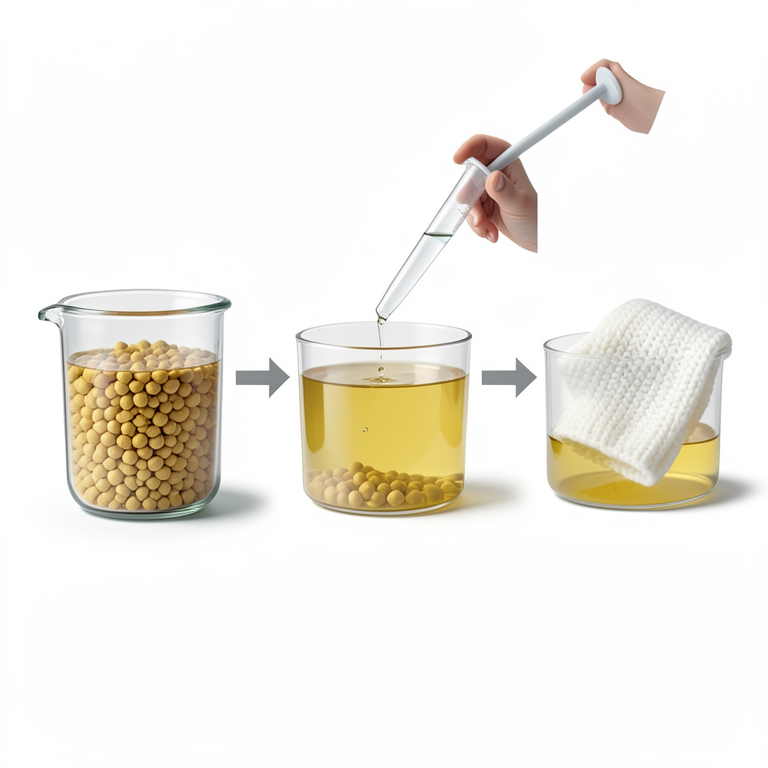
Dyeing Process Flow
AI-generated conceptual illustration (cotton knitted fabric and chickpea husks). It explains the idea and does not show study data.
View source evidence ↗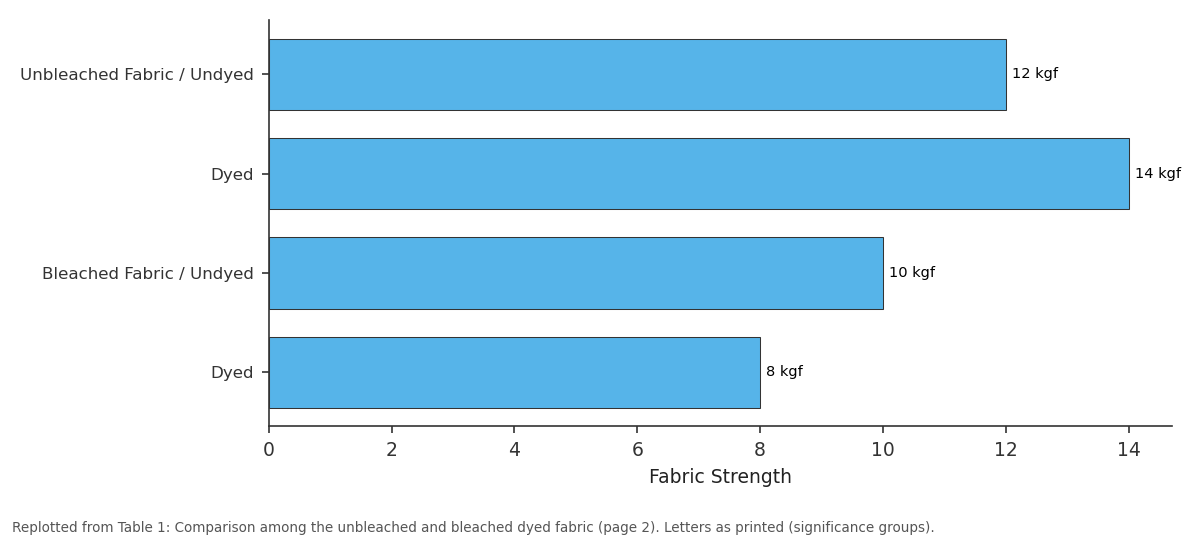
Fabric Strength: Unbleached Fabric /... vs Dyed vs Bleached Fabric / Undyed vs Dyed
Replotted from Table 1 (page 2) of the original paper. Every bar is the paper's own table value.
View source evidence ↗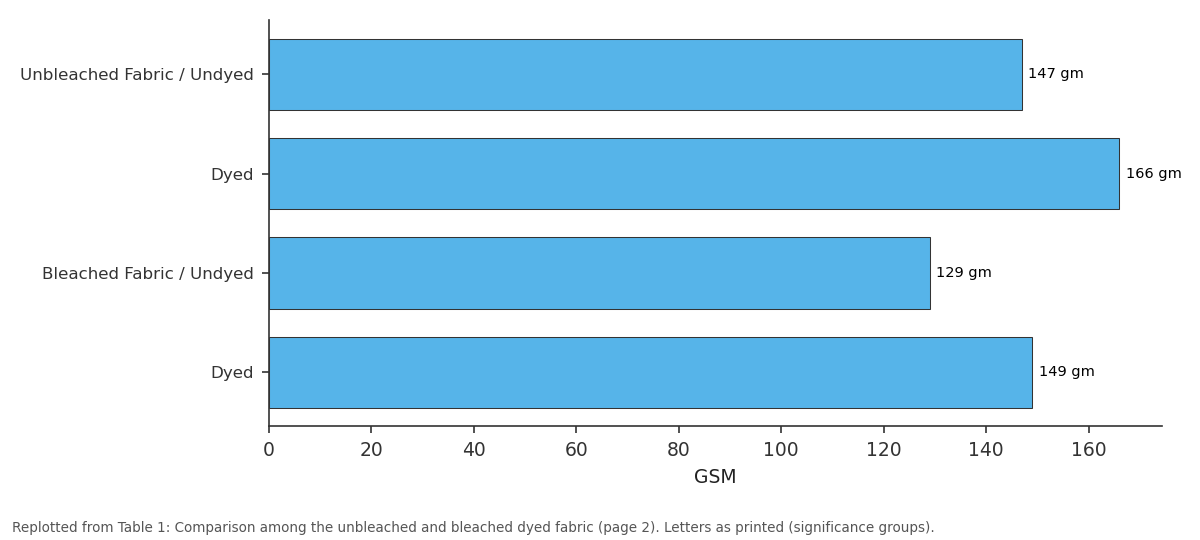
GSM: Unbleached Fabric /... vs Dyed vs Bleached Fabric / Undyed vs Dyed
Replotted from Table 1 (page 2) of the original paper. Every bar is the paper's own table value.
View source evidence ↗Figures & tables
From the original paper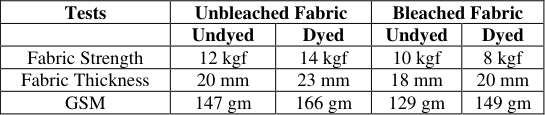 Table 1
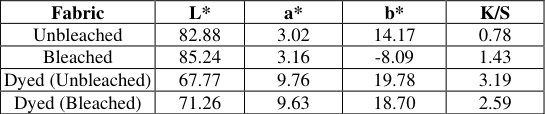 Table 2
 Table 3
Introduction
The time has come to discover methods for adding value to agricultural leftovers and byproducts that are either burned or put to unprofitable applications. Because they are biodegradable, natural resources derived from plant components preserve the ecological equilibrium. (Jose S, et al. 2019) [4] . Priority is being given to research into the use of agro-waste, which would decrease agricultural waste while simultaneously generating profit for farmers and the processing sectors. (Hazarika D, et al. 2017) [3] . Dyes are extensively used in our daily lives. Dyes-both natural and synthetic are fascinating substances. A wide range of industries uses dye for printing or dying textiles, paper, leather, and other materials. Certain dyes can irritate the skin and eyes and are harmful and carcinogenic. Nowadays, a lot of synthetic dyes that cause allergies and cancer are banned. Natural dyes derived from plants, animals, and minerals were widely used before the development of synthetic dyes (Affat SS. 2021) [1] . The textile industry is increasingly recognizing the importance of sustainable and eco-friendly practices in fabric production (Pandey R, et al. 2018) [5] . When it comes to clothing, cotton is the most favored fabric. In addition to textiles' visual appeal, modern consumers are also attentive to their functional finish (Pandit P, et al. 2028) [5] . In this context, the utilization of natural dyes extracted from unconventional sources has gained significant attention as an alternative to synthetic dyes (Dutta P, et al. 2021) [2] . One such unconventional source is the husk of chickpeas, which possesses potential natural colorants. Unbleached cotton fabric, in its natural state, retains certain impurities and pigments that may influence the dyeing process and final color outcomes. On the other hand, bleached cotton fabric undergoes a process to remove impurities and achieve a neutral base, providing a standardized canvas for dyeing experiments (Roos S, et al. 2015) [6] . The choice between bleached and unbleached fabrics can significantly impact the final appearance, color fastness, and overall quality of the dyed textiles. The selection of chickpea husk as a source of natural dyes adds an interesting dimension to the study. Chickpea husk, often considered waste, contains bioactive compounds that can potentially serve as natural colorants (Jose S, et al. 2019) [4] . This sustainable approach aligns with the growing demand for environmentally friendly practices in the textile industry (Yeasmin F, et al. 2018) [8] . Mordants play a crucial role in natural dyeing processes, enhancing color retention and improving the overall performance of dyed fabrics. Citric acid, a mild and biodegradable mordant, is employed in this study to investigate its influence on the dyeing characteristics of both unbleached and bleached cotton knitted fabrics. The use of citric acid as a mordant aligns with the eco-conscious objectives of minimizing environmental impact during the dyeing process. Environmentally friendly production techniques also conserve water (Sarkar D, et al. 2023) [7] . This comparative study aims to contribute valuable insights into the dyeing properties of unbleached and bleached cotton knitted fabrics when dyed with natural dyes extracted from chickpea husk. The fastness of the dyed materials is an important quality parameter for the assessment of dye and dyeing. Not every dye will work well with every type of textile fiber. The findings may shed light on the feasibility of utilizing unconventional sources for natural dyes and the impact of mordant selection on the final fabric characteristics. Additionally, the study seeks to underscore the potential of adopting sustainable practices in the textile industry, promoting a balance between aesthetics, environmental responsibility, and product quality.
Materials and Methods
Materials and Methods
Fabric
Cotton knitted single jersey fabric was sourced from Jet Knitwear, Kanpur. Unbleached and bleached, single jersey 100% cotton fabrics were used for the study. Fabrics were scoured using non-ionic detergent before dyeing.
Extraction of Chickpea Dye and Dyeing of Textiles
Firstly chickpea husks were churned into powder form. Then dye solution for 1 gm of fabric was prepared by boiling 4 gm of dye material in 100 ml of water for dye extraction at 80 °C for 60 minutes. The dye extracts thus obtained were cooled and filtered. Citric acid from lemons was squeezed for further use in the simultaneous mordanting method. For 1 gm of fabric, 1 ml of citric acid was mixed with pre-prepared 100 ml of extracted dye liquor. 1 gm of fabric was dipped in dye solution at 80 °C for 60 minutes. Then the samples were allowed to cool, rinsed with water, squeezed lightly, and flat-dried in the shade.
Serviceability Tests Performed on Dyed Samples Fabric Strength
After dyeing the samples, their strength was tested to get the effect of their strength was affected or not. The test was done on a Tensile Strength Tester.
Fabric Thickness
This test was performed on a thickness tester. The circular pressure foot presses the specimen, the thickness of the fabric was measured with the help of a micrometer mounted in the tester. All the test specimens were placed three times randomly and tested one by one as per the above-mentioned method. The mean of all results was calculated. The fabric thickness is expressed in mm.
GSM (Gram per Square Meter)
The GSM test was done by using a 10 x 10 cm swatch cutter. Three swatches were prepared from each sample and weighed on an electronic weighing balance. The measured weighing amount was multiplied by 100 to get the gram per square meter of the fabric.
Analysis of the color value of dyed samples
Based on the CIE Lab system the color coordinates and color strength (K/S) value of the dyed samples were measured by a data color spectrophotometer.
Fastness properties of dyed fabrics
The dyed samples were evaluated according to IS: 3361:79, ISO-105-X12, and ISO 105-BO2:2002 standards for washing fastness, rubbing fastness (both wet and dry), and light fastness, respectively. Grey scale is used to rate the color fastness. A higher rating indicates better fastness (for example, a 5 rating indicates no color change following the fastness test, while a 1 rating indicates poor fastness). All grades are between 1 -5, except for light fastness, which is graded between 1-8.
Results and Discussion
Physical testing of dyed fabric Fabric strength, thickness, and gsm were tested for their physical parameters to evaluate the comparison between unbleached and bleached, dyed, and undyed fabrics. Measured values are shown in Table 1.
| Tests | Unbleached Fabric | — | Bleached Fabric | — |
|---|---|---|---|---|
| Undyed | Dyed | Undyed | Dyed | |
| Fabric Strength | 12 kgf | 14 kgf | 10 kgf | 8 kgf |
| Fabric Thickness | 20 mm | 23 mm | 18 mm | 20 mm |
| GSM | 147 gm | 166 gm | 129 gm | 149 gm |
Table text extracted from the original PDF; superscript letters are shown inline. The original table image is below.
View original table image
Fabric Strength
Fabric strength was measured in kilogram-force. The strength of unbleached cotton knitted dyed fabric is reported in Table 1. Results indicate unbleached fabric has higher strength values compared to bleached fabric. Fabric bleaching affected the strength negatively in post-dyeing.
Fabric Thickness
Fabric thickness increased as a result of dyeing. In comparison to bleached dyed fabric, unbleached dyed fabric has more thickness.
GSM
Gram per square meter of unbleached dyed fabric was 166 gm and comes under the medium weight category fabric while 149 gm for bleached dyed fabric is a lightweight fabric. The comparison is clear that unbleached dyed fabric has more gsm in comparison to the bleached dyed fabric.
Computer Color Matching
The dyed samples were analyzed for their color values using computer color-matching software. In Color Fastness Analysis Table 3. Displays the colored fabric's fastness report. For dyed samples, the washing fastness rating was found to be between 4 to 4/5. This indicates that the color is attached firmly to the fabric. In the reported work light fastness under sunlight of the unbleached and bleached dyed knit fabric samples show a rating of 7. This shows that the dye has considerable affinity for the cotton fabric resulting in good fastness to light. The rubbing fastness regarding wet fastness and dry fastness was found in the range of 3/4 to 4/5, showing good results.
| Fabric | Rubbing Fastness | — | Washing Fastness | Light Fastness |
|---|---|---|---|---|
| Wet | Dry | |||
| Unbleached | 4 | 4/5 | 4 | 7 |
| Bleached | 3/4 | 4/5 | 4/5 | 7 |
Table text extracted from the original PDF; superscript letters are shown inline. The original table image is below.
View original table image
Conclusion
In conclusion, the comparative study of unbleached and bleached cotton knitted fabric dyed with chickpea husk agrowaste has provided valuable insights into the potential of this natural dyeing process. The unbleached cotton, in particular, serves as an excellent substrate for the chickpea husk dye, allowing for a more vibrant coloration. The natural fibers of unbleached cotton retain their inherent strength and texture, resulting in a fabric that is not only aesthetically pleasing but also possesses improved durability. Furthermore, the environmental impact of using chickpea husk as a dye source is significantly reduced compared to traditional bleaching processes. The elimination of harsh chemicals in the dyeing process contributes to a decrease in water pollution and a lower ecological footprint. This sustainable approach aligns with the growing global emphasis on environmentally friendly practices within the textile industry. The colorfastness and overall performance of the unbleached dyed fabric revealed good colorfastness to light (7) and washing (4) results in terms of color retention and durability. Dye affinity was better in unbleached as compared to the bleached fabrics. In summary, the research demonstrates the feasibility of using chickpea husk agro-waste as a natural dye for cotton fabrics, highlighting its potential as a sustainable and eco-friendly alternative in the textile industry. The comparative analysis between unbleached and bleached fabrics provides valuable insights for research to adopt more environmentally conscious practices in their dyeing processes. Future studies could delve deeper into optimizing dyeing conditions, exploring additional applications, and assessing the economic viability of scaling up the production of chickpea husk dye on a larger scale.
Figures and tables from the paper
| Fabric | L* | a* | b* | K/S |
|---|---|---|---|---|
| Unbleached | 82.88 | 3.02 | 14.17 | 0.78 |
| Bleached | 85.24 | 3.16 | -8.09 | 1.43 |
| Dyed (Unbleached) | 67.77 | 9.76 | 19.78 | 3.19 |
| Dyed (Bleached) | 71.26 | 9.63 | 18.70 | 2.59 |
Table text extracted from the original PDF; superscript letters are shown inline. The original table image is below.
View original table image
References
8 in the original paper- Affat SS. Classifications, Advantages, Disadvantages, Toxicity Effects of Natural and Synthetic Dyes: A review. University of Thi-Qar Journal of Science. 2021;(5):130-135.
- Dutta P, Mahjebin S, Sufian MA, Rabbi MR, Chowdhury S, Imran IH. Impacts of natural and synthetic mordants on cotton knit fabric dyed with natural dye from onion skin in perspective of eco-friendly textile process. Materials Today Proceedings. 2021;47(04):2633-2640.
- Hazarika D, Gogoi N, Jose S, Das R, Basu G. Exploration of future prospects of Indian pineapple leaf, an agro waste for textile application. Journal of Cleaner Production. 2017;141:580-586.
- Jose S, Pandit P, Pandey R. Chickpea husk: A potential agro waste for coloration and functional finishing of textiles. Industrial Crops & Products. 2019;142:111833.
- Pandey R, Patel S, Pandit P, Shanmugam N, Jose S. Colouration of textiles using roasted peanut skin: An agro processing residue. Journal of Cleaner Production. 2018;172:1319-1326.
- Roos S, Posner S, Jönsson C, Peters GM. Is Unbleached Cotton Better Than Bleached? Exploring the Limits of LifeCycle Assessment in the Textile Sector. Clothing and Textiles Research Journal. 2015;33(4):231-247.
- Sarkar D, Khan AM, Chakraborty O, Sarkar I, Maitra S. Natural dye: Antiquity to future perspective. The Pharma Innovation Journal. 2023; 12(6):1536-1544.
- Yeasmin F, Mamun MAA, Rokunuzzaman M. Comparative Study of Cotton Knitted Fabric Dyed with Natural Dyes Extracted from Catechu V/S Reactive Dyes. International Journal of Textile Science. 2018;7(3):65-68.