
Research article · 2024 · Full text
International Journal of Horticulture and Food ScienceComparative efficacy of cypermethrin and plant extract in the control of cucumber pests in ado Ekiti, Southwestern Nigeria
Volume 6(1) · Pages 41–44 · DOI: 10.33545/26631067.2024.v6.i1a.188 ↗
Research areasAgricultural Practices and Plant Genetics
Abstract
Author-writtenCucumber (Cucumis Sativus) is widely grown and consumed in the tropical and temperate regions as a source of fruit vegetable for man due to its numerous health benefits. Attainable yield in the farmers farm is considerably low due to the problem of insect pest attack. As a result of this, experiment was carried out to investigate the potency of cypermethrin and extracts from three plants (Datura stramonium, Ricinus communis and Sida acuta) in the control of insect pest associated with cucumber. Cucumber variety Cu 999 was planted on a 2 x 2 m at a spacing of 40 cm x 40 cm. three concentrations of the extracts was used in the control of the pest and cypermethrin insecticide was used as a standard check. The control plot in each case was sprayed with distilled water. Data obtained were analyzed using analysis of variance and means separated using least significant different at (p≤0.05). Result from the experiment shows statistically significant variations. Eight insect pests belonging to different orders and families were observed on the cucumber. Incidence of normal fruits were generally higher than abnormal fruits at all the concentrations observed in the study. At 65% concentration with extracts of D. stranmonium, incidence of normal fruit (80.3%) was not significantly different from that of cypermethrin insecticide (82.6%). Yield of cucumber sprayer with 65% concentration of D. stramonium (250 kg/ha) was not significantly different from that of cypermethrin insecticide (254 kg/ha). The study concluded that extracts of the three plants can be used to replace insecticide in the management of the insect plant of cucumber with corresponding yield.
Summary
Source-checkedPlain-language reading of the full paper, prepared with AI and checked against the text. Each point links to the authors' own words.
Why it matters
- Cucumber is a widely consumed fruit vegetable in tropical and temperate regions, valued for its various health benefits. View evidence ↗
- Insect pest attacks significantly reduce the attainable yield of cucumbers on farms. View evidence ↗
- While insecticides are effective, they can be costly, cause environmental damage, and lead to pest resistance or resurgence. View evidence ↗
The question
- The study aimed to investigate the effectiveness of cypermethrin and extracts from three plants, Datura stramonium, Ricinus communis, and Sida acuta, in controlling cucumber insect pests. View evidence ↗
What they did
- The field experiment took place between April and May 2022 at the Ekiti State University Teaching and Research Farm. View evidence ↗
- The researchers used the cucumber variety Cu 999, planted in 2 x 2 m plots with 40 cm x 40 cm spacing. View evidence ↗
- Data were analyzed using ANOVA and the least significant difference (LSD) method via SPSS software. View evidence ↗
What they found
- The study identified eight different insect pests from various orders and families affecting the cucumber crops. View evidence ↗
- At a 65% concentration, plant extracts showed no significant difference from cypermethrin in reducing the incidence of abnormal fruits. View evidence ↗
- Specifically, D. stramonium at 65% concentration resulted in 80.3% normal fruit, which was not significantly different from the 82.6% observed with cypermethrin. View evidence ↗
- The yield for D. stramonium at 65% concentration (250 kg/ha) was not significantly different from the yield of cypermethrin (254 kg/ha). View evidence ↗
- Both plant extracts and cypermethrin produced higher yields than the control plot, which had the lowest yield. View evidence ↗
- Yield was concentration-dependent; while 65% extracts were comparable to insecticides, the insecticide significantly outperformed extracts at 50% and 30% concentrations. View evidence ↗
What it means
- The authors concluded that extracts from the three tested plants can serve as replacements for synthetic insecticides in managing cucumber pests without sacrificing yield. View evidence ↗
- The performance of these extracts suggests they offer a sustainable and eco-friendly solution for pest management in cucumber farming. View evidence ↗
Visual summary
3 visualsIllustrations explain the paper; charts are replotted from the paper's own table values.
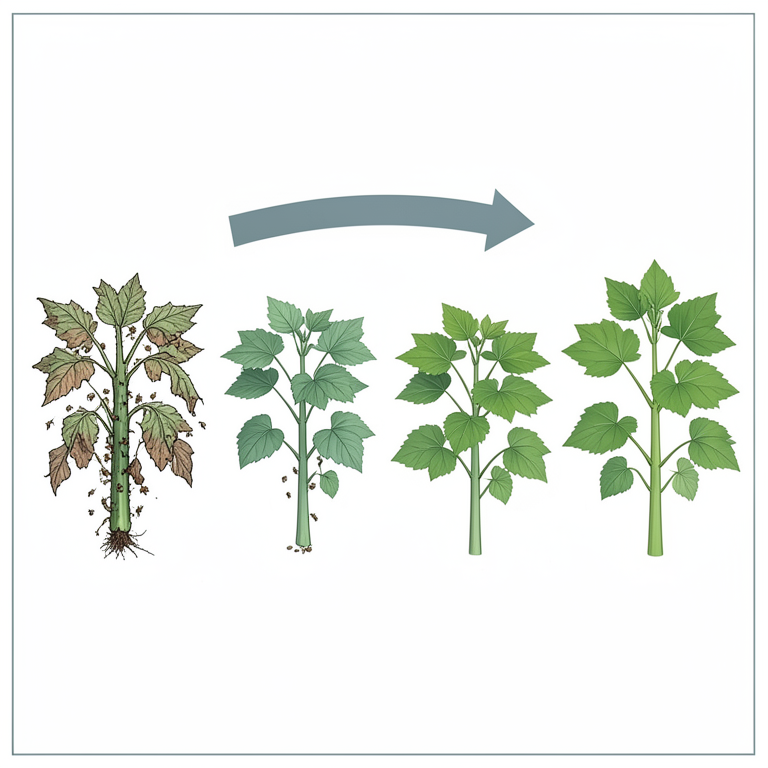
Concentration-Dependent Efficacy
AI-generated conceptual illustration (cucumber plants and insect pests). It explains the idea and does not show study data.
View source evidence ↗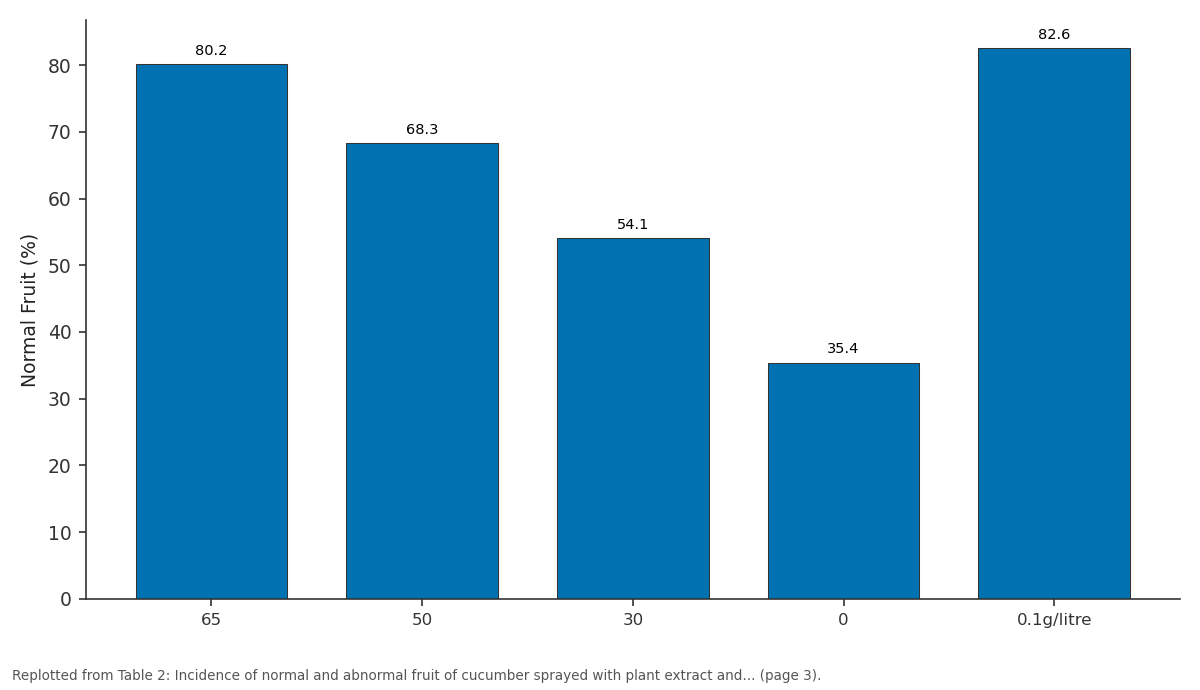
Normal Fruit: 65 vs 50 vs 30 vs 0 vs 0.1g/litre
Replotted from Table 2 (page 3) of the original paper. Every bar is the paper's own table value.
View source evidence ↗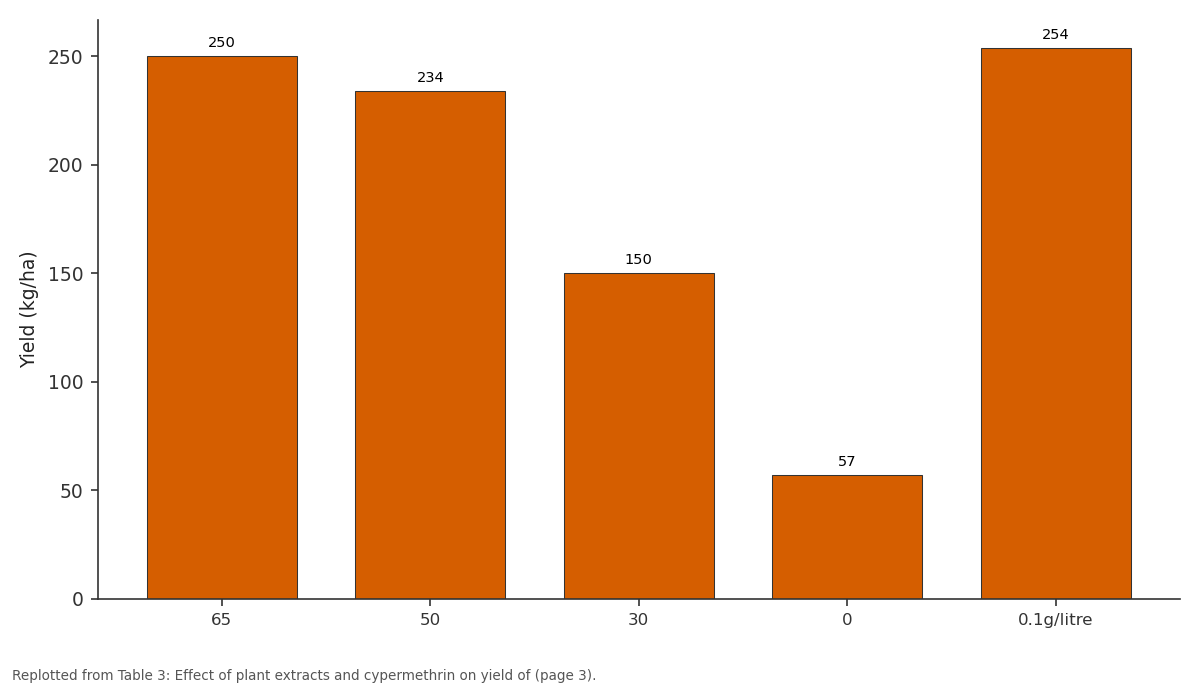
Yield (kg/ha): 65 vs 50 vs 30 vs 0 vs 0.1g/litre
Replotted from Table 3 (page 3) of the original paper. Every bar is the paper's own table value.
View source evidence ↗Figures & tables
From the original paper Table 1
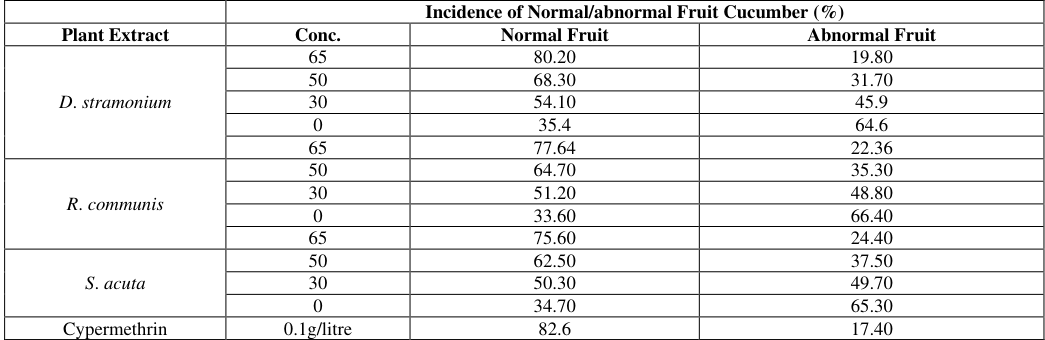 Table 2
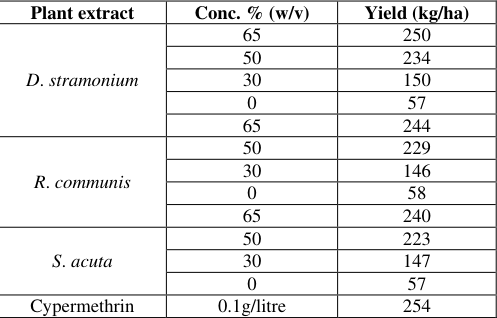 Table 3
Introduction
Cucumber (Cucumis sativus) belongs to the family Cucurbitaceae. It is a plant that is grown in the tropics as a source of vegetable for man (Falade, 2022) [6] . Cucumber is rich in vitamin C and an antioxidant nutrient rich in beta carotene and manganese. Cucumbers are also useful for body dehydration. Apart from that, it has been reported that its use on the skin helps to ease sun burn pain, swellings and damage of skin. Cucumber originated from India about 3000 years ago and from there, it spread to Greece and Rome and later, it was introduced to China (Sikarwar and Hardaha, 2017) [13] . It was introduced to Africa through Namibia, Botswana, South Africa and Swaziland. Today it is grown virtually in all countries of Africa (Akinwole et al., 2019) [1] . Estimated world production in 2020 was 91, 258, 272 million metric tonnes (MMT) and China is the largest producer in the world accounting for about 80% production (72, 779, 73 MMT). This is closely followed by Turkey (1, 926, 883) and Russia (1,686,976). The key cucumber producing countries in West Africa are; Nigeria, Egypt, Ghana and Niger. (Babalola et al., 2016) [3] . Egypt is the largest producer with record of about 488,723 tonnes (FAOSTAT, 2017) [8] while Nigeria produces about 27,000 tonnes, this output is generally low due to some limiting factors which hinder production like problem of soil, climate, seed, pest and diseases. Scarcity of planting materials, lack of capital, high fruit perishable and lack of production experience (Falade, 2021) [5] . In Nigeria, production of cucumber has not been rated. It is grown mostly in Jos, Kano, Kaduna, Jigawa and more recently in the southern part of the country particularly in Ekiti, Ondo and Osun (Falade, 2021) [5] . Cucumber performs better on well drained fertile soils with pH of about 6-7 and ample richness of organic matter (Okafor and Japhet, 2021) [12] .
It is often planted on raised soils and the crop require a good amount of sunshine, warmth and high amount of rain fall. Insect pests had been reported to affect the yield or productivity of cucumber with serious economic implications. From previous study of Odewale et al., 2018 [11] , insect pest has been reported to affect cucumber production in Ogbomoso agricultural zone. The study observed that four insect pests belonging to two families were reported to affect the yield of cucumber. In another development, Arogundade et al., 2021 [2] reported four beetles and three aphids are known to attack cucumber production. Similarly, Falade, 2022 [6] reported that about 23 insect pests belonging to fifteen families affect the yield or productivity of cucumber in Ado-Ekiti South Western Nigeria. Control of these insect pests has been achieved in time past with the use of insecticides. These insecticides are usually very effective in reducing insect population beyond economic injury level. However, they have adverse effect on soil and environment, apart from that some of the insecticides are generally costly and beyond the reach of the farmers. In addition, there is always the problem of insect resistant to insecticide and resurgence of sprayed pest. Based on the above, there is therefore the need to search for botanicals that are affordable, accessible which does not have adverse effect on the soil and environment in the management of cucumber pests (Lowell, 2004) [10] . Leaf extracts of drumstick tree (Moringa oliefera) (Das et al., 2023) [7] , Jimson weed (Datura stramonium) (Falade, 2021) [5] and Tobacco (Nicotiana tabacum) (Anne, 2004) has been successfully used in the control of diseases, but its application in the control of cucumber pest has not been exploited. Therefore, the present study was carried out to compare the effect of the extracts of the three plants at three concentrations with that of cypermethrin insecticide in the management of cucumber pest.
Materials and Methods
Materials and Methods
Experimental Site
This experiment was carried out at Ekiti State University Teaching and Research Farm Ado-Ekiti, The University Teaching and Research Farm is located at latitude 7.7129 o N and longitude 5.2523 o E with a mean annual rainfall of 1478mm, the average minimum and maximum temperature are 27.2 °C and 22.9 °C respectively. The relative humidity ranges from 47.38% to 88.19%.
Preparation of Plant leaves
Leaves of the three plants used in the study were; D. stramonim (Linn), R. communis (Linn) and S. acuta (Burm. f.). They were obtained at Ekiti State University, Ado Ekiti and air-dried at 28 ±2 ℃ for 5-6 weeks to constant weight. Dried leaves were milled using a blender (Okapi, Mixed-Grinder), packaged into sealable nylon and refrigerated at 4 ℃ for 2 weeks (until they were required for bioassay).
Pre-Planting, Planting and Post Planting Operations
The experimental site was cleared using cutlass and the debris were packed before it was made into ridges. The land was cultivated using a hoe and poultry manure was incorporated into the soil before planting. Cucumber variety Cu 999 was planted at a spacing of 40 cm x 40 cm. Two seeds were planted per hole and thinning was done to one seed per stand after germination, wetting of the plant was done twice in the morning (6-7 am) and evening (6-7 pm. Weeding was done twice with the use of a hoe. Three weeks after germination, staking was done and the rope was used to twine the cucumber to support the stem of the plant and also prevent trailing of the branch on the ground. Harvesting was done six weeks after planting.
Preparation of plant extracts
The extract used in the study was prepared by mixing equivalent grams of prepared plant powder (65, 50 and 30/g) with 100 ml of distilled hot water maintained at 70 ℃ in 500 ml bottles and kept in a hot water bath-shaker for 30 minutes. Thereafter, the liquid extract was separated by using two folds cheese cloth and poured inside standard bottles which were refrigerated at 4 ℃. These extracts were used as the stock solution from which 65%, 50% and 30% of each extracts were prepared.
Field Experiment
The field experiment was carried out between April and May, 2022 at the Teaching and Research Farm, Ekiti State University. Cucumber variety (Cu 999) was planted on 2 x 2 m plot at a spacing of 40 cm x 40 cm. two seeds were planted per hole which was later thinned to one per stand. Total area of the farm (120 m 2 ) was laid in a randomized complete block design and three leaf extracts: D. stramonium, R. communis and S. acuta were applied at three concentrations (65.50 and 30%). This was used as a foliar spray to control the insect pest frequently observed on the plot while cypermethrin insecticide was used as a standard check. The control plot in each case was sprayed with distilled water. The spraying of the extracts was done every week starting from two weeks after germination till the period of maturity. Throughout the experiment, spraying was done with the aid of a hand-operated sprayer in the morning between 7 am -8 am
Identification of the insects
The identification was carried out using a stereomicroscope and family identification was carried out in respect to its morphology. Before the identification of insects, petri dishes were sprayed with ethanol and cleaned with tissue paper. Filter paper was spread inside the petri dishes before the identification of insects, the insects were washed with ethanol and then placed in a petri dish and later preserved in the refrigerator.
Data analysis
Data collected were analyzed using analysis of variance (ANOVA) and means separated using the least significant difference with the aid of SPSS statistical software.
Results
Table 1 shows the list of insect pest associated with the production of cucumber in Ado-Ekiti, result from the study shows that eight insect pests belonging to different families were frequently observed on the cucumber plot. They have different feeding habit, some of them feed on leaves and stem while other ones feed on the fruits. Table 2 shows the incidence of normal and abnormal fruits of cucumber sprayed with different concentrations of plant extracts and cypermethrin insecticides. Result from the study shows that incidence of normal fruits were generally higher than abnormal fruits in all the treated plots than the control. Incidence of abnormal fruits recorded in all the treated plots were generally low. At higher concentrations of plant extracts (65%), there was no significant difference (p≤0.05) in the incidence of the disease treated with plant extracts and cypermethrin insecticide. However, at lower concentrations (50 and 30%), significant differences were observed. Table 3 reveals the effect of the three plant extracts and cypermethrin insecticide on the yield of cucumber. Yield of cucumber was generally higher in plots sprayed with plant extracts and cypermethrin insecticide compared to the control. The control plot gave the lowest yield. Similarly, yield of the cucumber was concentration-dependent, at higher concentrations (65%), yield was relatively higher and comparable with that obtained from the use of an insecticide. However, as concentration reduced from 65% to 50 and 30%, the yield obtained from plots treated with insecticides was significantly higher than those treated with plant extracts. 4. Discussion: Cucumber as a fruit vegetable consumed by man has been implicated to have many health benefits thus increasing longevity, production in the tropics has been increasing. However, the attainable yield in the farmer's farm has been considerably low due to the problem of insect pests known to reduce the yield and quality of output with serious economic implications (Falade, 2022) [6] . In this study, eight insect pests belonging to six families and orders were observed on the cucumber. Some of them eat the leaf, fruits and stem, the insect pests were observed at various stages of growth and their effect reduced the yield or productivity of the cucumber which has a direct effect on the farmer's income.
| Plant extract | Conc. % (w/v) | Yield (kg/ha) |
|---|---|---|
| D. stramonium | 65 | 250 |
| 50 | 234 | |
| 30 | 150 | |
| 0 | 57 | |
| 65 | 244 | |
| R. communis | 50 | 229 |
| 30 | 146 | |
| 0 | 58 | |
| 65 | 240 | |
| S. acuta | 50 | 223 |
| 30 | 147 | |
| 0 | 57 | |
| Cypermethrin | 0.1g/litre | 254 |
Table text extracted from the original PDF; superscript letters are shown inline. The original table image is below.
View original table image
| — | Incidence of Normal/abnormal Fruit Cucumber (%) | — | — |
|---|---|---|---|
| Plant Extract | Conc. | Normal Fruit | Abnormal Fruit |
| D. stramonium | 65 | 80.20 | 19.80 |
| 50 | 68.30 | 31.70 | |
| 30 | 54.10 | 45.9 | |
| 0 | 35.4 | 64.6 | |
| 65 | 77.64 | 22.36 | |
| R. communis | 50 | 64.70 | 35.30 |
| 30 | 51.20 | 48.80 | |
| 0 | 33.60 | 66.40 | |
| 65 | 75.60 | 24.40 | |
| S. acuta | 50 | 62.50 | 37.50 |
| 30 | 50.30 | 49.70 | |
| 0 | 34.70 | 65.30 | |
| Cypermethrin | 0.1g/litre | 82.6 | 17.40 |
Table text extracted from the original PDF; superscript letters are shown inline. The original table image is below.
View original table image
| Common name | Order | Family | Genus | Spp |
|---|---|---|---|---|
| Orange cucumber beetle | Coleopetra | Chrysomelidae | Aulacophora | Aulacophora spp |
| Blue cucumber bettle | Coleopetra | Chrysomelidae | ` | Podagrica malvae |
| Cotton Stainer | Hemiptera | Pyrrhocoridae | Dysdercus | Dysdercus flavidus |
| Long Horned grasshopper | Orthoptera | Tettigonidae | Phlugis | Plugins mantapa |
| Grasshopper | Orthoptera | Acrididae | Schistorcera | Schistorcera americana |
| Cinnabar moth caterpillar | Lepidoptera | Erebidae | Tyria | Tyria jacobaeae |
| Black cotton stainer | Hemiptera | Pyrrhocoridae | Dysdercus | Dysdercus mimulus |
Table text extracted from the original PDF; superscript letters are shown inline. The original table image is below.
View original table image
The result of this study agrees with the previous study by Odewale et al., 2018 [11] , indicating that insect pest have been reported to affect cucumber production in Ogbomoso agricultural zone. The study observed that four insect pests belonging to two families were reported to affect the yield of cucumber. In another development, Arogundade et al., 2021 [2] reported four beetles and three aphids are known to attack cucumber production. In this study, Incidence of normal fruits were generally higher than abnormal fruits at all the tested concentration. Normal fruits were the cucumber that were straight and strong without spots or any wrinkles abnormal fruits were those that were curved with oblong shapes. At high concentrations of all the plant extracts (65%), the incidence of normal fruits observed was not significantly different from the one obtained with the spray of cypermethrin insecticide. This may be due to the presence of chemicals released by the spray of extracts that inhibit the feeding of the insect pests on the cucumber. However, at lower concentrations of the extracts, significant differences were noticed. Incidence of abnormal fruits was significantly (p≤0.05) higher in the control plot than the treated plots. This study is in line with the work of Jimoh et al., (2016) [9] who reported that incidence of Cercospora species and Fusarium species was significantly (p≤0.05) reduced on seeds sprayed with the extract of Chromolaena odorata and Tithonia diversifolia. The report also indicated that higher number of abnormal seeds were observed on the control. Similarly, Eno et al., (2016) [4] reported that the extract of Anacardium occidentalis, Gmelina arborea, and C. odorata reduced the incidence of cowpea anthracnose disease. In this study, the leaves of D. stramonium, R. communis and S. acuta were collected, air dried, powered and sprayed in the control of the insect pest found on the cucumber. Result from the study shows that all the extracts at the tested concentration reduced the frequency of the insect pest attack compared to the control, this has a direct effect on the quality and quantity of cucumber produced. Also, the yield of the cucumber sprayed with different concentrations of the extract were generally higher than the control and it was concentration dependent. Higher yields were observed at high concentrations and as the concentration reduced from 65% to 30%, there was a corresponding reduction in yield.
The yield obtained from the spray of cypermethrin insecticides was not significantly different from those obtained from extract-sprayed plots at high concentrations (65%). This study agreed with the work of who reported the control of cowpea anthracnose disease with extracts of D. stramonium, R. cucumis and Jatropha gossypiifolia. The study concluded that the yield of cowpeas was relatively higher at high concentrations of all the extracts.
Conclusion
In conclusion, cucumber cultivation faces significant challenges from insect pests, impacting both yield and crop quality. This study demonstrates the efficacy of plant extracts from D. stramonium, R. communis, and S. acuta in reducing pest incidence, offering promising alternatives to traditional insecticides. Concentration-dependent effects on yield and fruit quality highlight the potential of these extracts. Their performance, comparable to cypermethrin, suggests a sustainable solution for pest management in cucumber farming. This research contributes to eco-friendly agricultural practices, emphasizing the importance of innovative strategies to ensure crop resilience, farmer income, and long-term sustainability in the face of pestrelated adversities.
References
7 in the original paper- Akinwale AO, Dauda AB, Oyewole. Growth and fruits Quality of cucumber (Cucumis sativus L) irrigated with African catfish cultured Waste water. Nigerian Journal of Basic and Applied Science. 2019;27(2):95-100.
- Babalola F, Oduola L, Akanni K. Bioeconomic Analysis of cucumber production. Research Gate. 2016;2(14):22-28.
- Falade MJ. Management of Cucumber Downy Mildew caused by Pseudoperonospora cubensis with use of Benonly, plant extracts and intercropping. International Journal of Research Students in Agricultural Sciences. 2021;6:25-32.
- Falade MJ. Investigation on the entomological and beneficial insect pests associated with cucumber (Cucumis sativus) production in South Western Nigeria. Journal of Entomology and Zoology Studies. 2002;10(2):57-61.
- Das R, Khatiwada R, Pradhan R, Das R, Karn S, Sharma RB, Yadav RK. Moringa oleifera: Review on herbal healing properties and nutritional values. Int J Adv Biochem Res. 2023;7(1):20-34. DOI:10.33545/26174693.2023.v7.i1a.158
- Jimoh M, Enikuomdinh OA, Afolabi CG, Olowo VO, Egbontan A. Achieving improved control of foliar Disease of sesam (Sesamum indicum L) Intercropped with maize through foliar spray of plant extract. Archives of Phytopathology and Plant Protection. 2016;49:586-600.
- Sikarwar P, Hardaha MK. Response of Cucumber to Different Irrigation Levels under Poly House. Journal of Multidisciplinary Advances. 2017;6(1):40-46.