
Research article · 2024 · Full text
International Journal of Research in AgronomyEffect of plant growth regulators and zinc on growth and yield of pearl millet
Volume 7(3) · Pages 22–25 · DOI: 10.33545/2618060x.2024.v7.i3a.375 ↗
Research areasAgricultural Science and FertilizationPlant Micronutrient Interactions and EffectsCrop Yield and Soil Fertility
Abstract
Author-writtenThe field experiment was conducted during Zaid 2023 at Crop Research Farm, Department of Agronomy, SHUATS, Prayagraj (U.P) to determine the “Effect of Plant growth regulators and Zinc on growth and yield of Pearl millet (Pennisetum glaucum L.)”. The soil of experimental plot was sandy loam in texture, nearly neutral in soil reaction (pH 7.8), low in organic carbon (0.62%), available nitrogen (225 kg/ha), available phosphorus (38.2 kg/ha) and available potassium (240.7 kg/ha). The experiment was laid out in Randomized Block Design with ten treatments which are replicated thrice. The treatments combinations are T1: NAA 100 ppm + Zinc 15 kg/ha, T2: Chlormequat – 250 ppm + Zinc 15 kg/ha, T3: NAA – 50 ppm + Chlormequat – 175 ppm + Zinc 15 kg/ha, T4: NAA 100 ppm + Zinc 20 kg/ha, T5: Chlormequat – 250 ppm + Zinc 20 kg/ha, T6: NAA- 50 ppm + Chlormequat – 175 ppm + Zinc 20 kg/ha, T7: NAA 100 ppm + Zinc 25 kg/ha, T8: Chlormequat – 250 ppm + Zinc 25 kg/ha, T9: NAA -50 ppm + Chlormequat – 175 ppm + Zinc 25 kg/ha, T10: Control 80:40:40 (NPK kg/ha) are used. Results obtained that combined application of NAA-50 ppm + Chlormequat – 175 ppm + Zinc 25 kg/ha (Treatment 9) significantly increased higher plant height (147.03 cm), maximum plant dry weight (54.04 cm), Ear head length (14.86 cm), Grains/ear head (1479.64), test weight (5.30), Grain yield (23.29 q/ha), straw yield (42.89 q/ha) and Harvest index (35.19%) and this treatment also recorded maximum gross return (1,16,450.00 INR/ha), net return (81,650.00 INR/ha) and B:C ratio (2.34).
Summary
Source-checkedPlain-language reading of the full paper, prepared with AI and checked against the text. Each point links to the authors' own words.
Why it matters
- Pearl millet is a critical crop for ensuring food and nutritional security for humans and animals in semi-arid and arid regions. View evidence ↗
- Zinc deficiency is a major nutritional problem affecting soils in India. View evidence ↗
- Plant growth regulators (PGRs) are chemical compounds that can modify grain growth and development to improve yield and quality. View evidence ↗
The question
- The study aimed to determine how different combinations of plant growth regulators and zinc affect the growth and yield of pearl millet. View evidence ↗
What they did
- The field experiment took place during the Zaid 2023 season at the SHUATS Crop Research Farm in Prayagraj, Uttar Pradesh. View evidence ↗
- The researchers used a Randomized Block Design consisting of ten different treatments, each replicated three times. View evidence ↗
- The study measured several growth and yield parameters, including plant height, dry weight, test weight, grain and straw yield, and the harvest index. View evidence ↗
What they found
- The highest plant dry weight of 54.04 g/plant was achieved using the treatment of NAA (50 ppm), Chlormequat (175 ppm), and Zinc (25 kg/ha). View evidence ↗
- The treatment combining NAA (50 ppm), Chlormequat (175 ppm), and Zinc (25 kg/ha) produced the longest ear heads at 14.86 cm at 80 DAS. View evidence ↗
- The highest number of grains (1479.69 g) was recorded for the treatment of NAA (50 ppm), Chlormequat (175 ppm), and Zinc (25 kg/ha). View evidence ↗
- The treatment of NAA (50 ppm), Chlormequat (175 ppm), and Zinc (25 kg/ha) resulted in the highest test weight of 5.30 g. View evidence ↗
- The highest grain yield of 23.29 q/ha was observed with the application of NAA (50 ppm), Chlormequat (175 ppm), and Zinc (25 kg/ha). View evidence ↗
- The highest harvest index of 35.19% was recorded for the treatment of NAA (50 ppm), Chlormequat (175 ppm), and Zinc (25 kg/ha). View evidence ↗
What it means
- The authors conclude that the application of NAA (50 ppm) and Chlormequat combined with 25 kg/ha of Zinc is the most effective treatment for improving growth and yield in the Radhika-50 variety of pearl millet. View evidence ↗
Visual summary
3 visualsIllustrations explain the paper; charts are replotted from the paper's own table values.
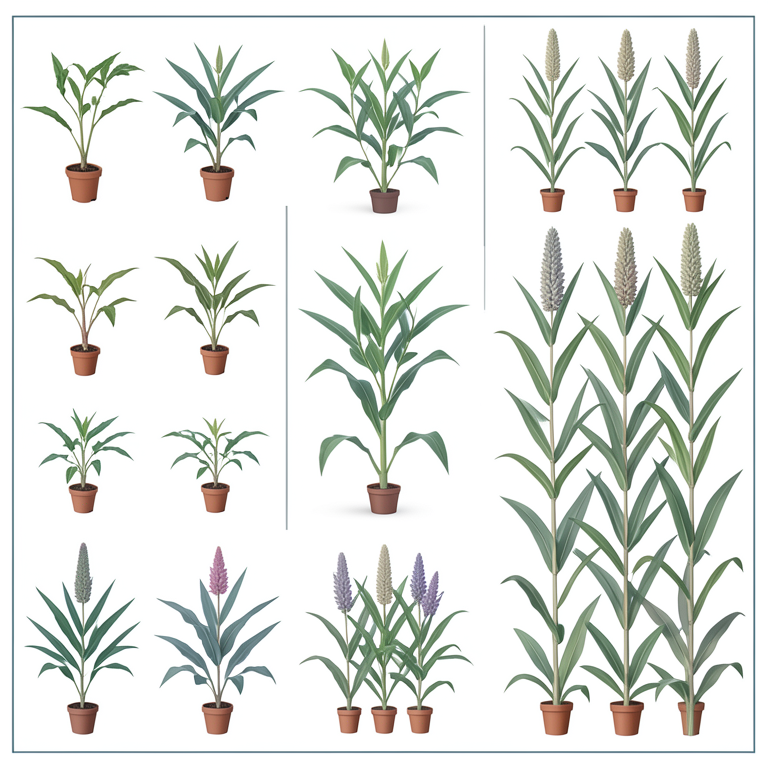
Experimental Treatment Matrix
AI-generated conceptual illustration (pearl millet plants). It explains the idea and does not show study data.
View source evidence ↗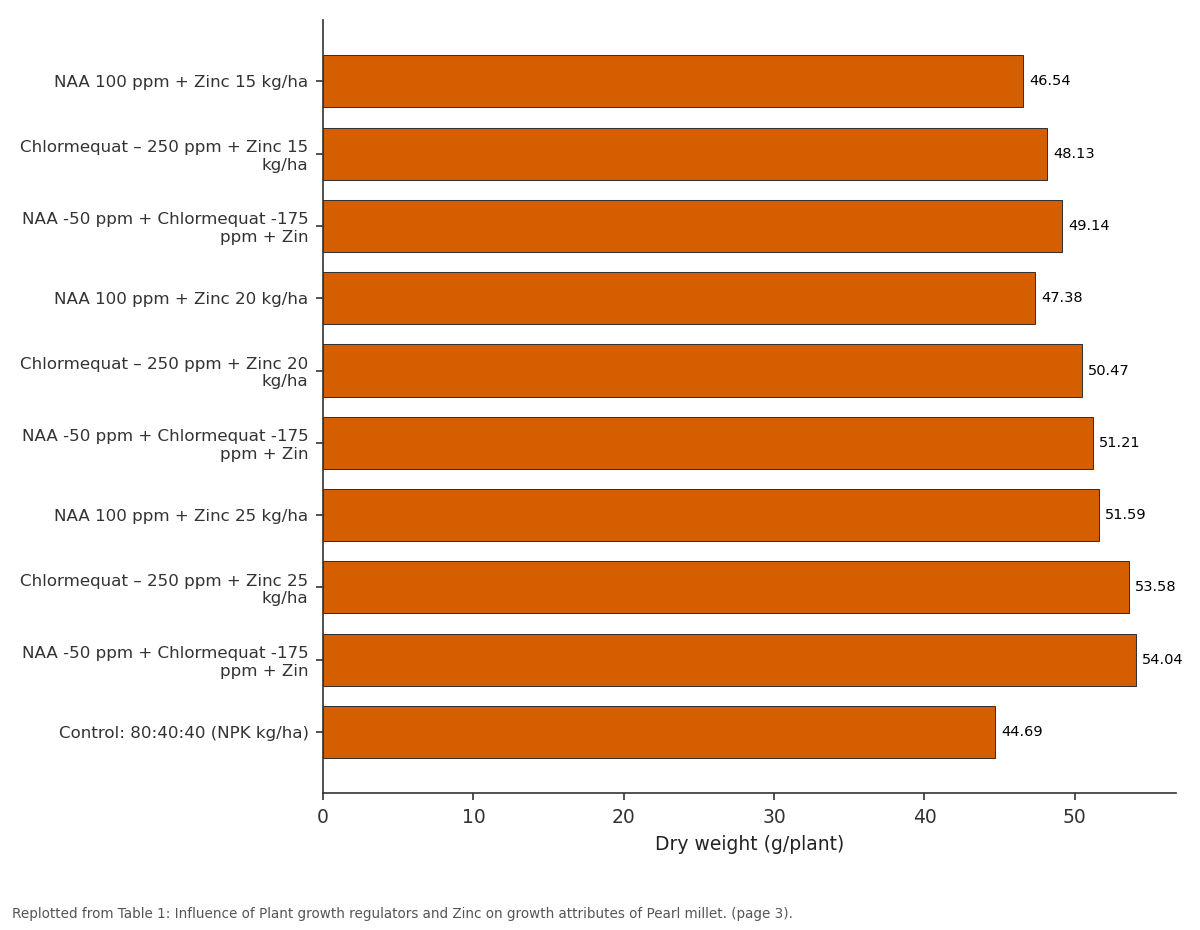
Dry weight (g/plant): NAA 100 ppm + Zinc 15... vs Chlormequat – 250 ppm +... vs NAA -50 ppm +... vs NAA 100 ppm + Zinc 20... vs Chlormequat – 250 ppm +...
Replotted from Table 1 (page 3) of the original paper. Every bar is the paper's own table value.
View source evidence ↗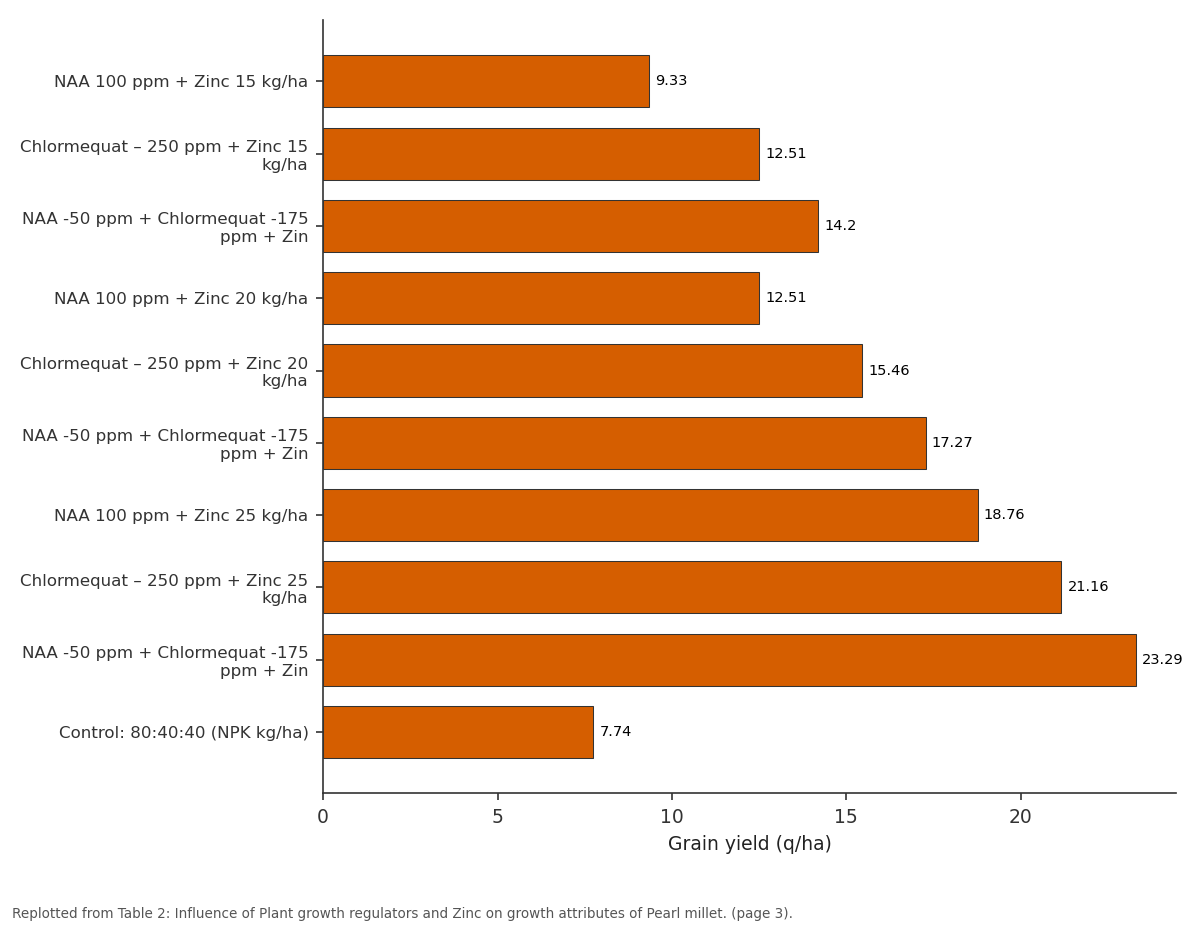
Grain yield (q/ha): NAA 100 ppm + Zinc 15... vs Chlormequat – 250 ppm +... vs NAA -50 ppm +... vs NAA 100 ppm + Zinc 20... vs Chlormequat – 250 ppm +...
Replotted from Table 2 (page 3) of the original paper. Every bar is the paper's own table value.
View source evidence ↗Figures & tables
From the original paper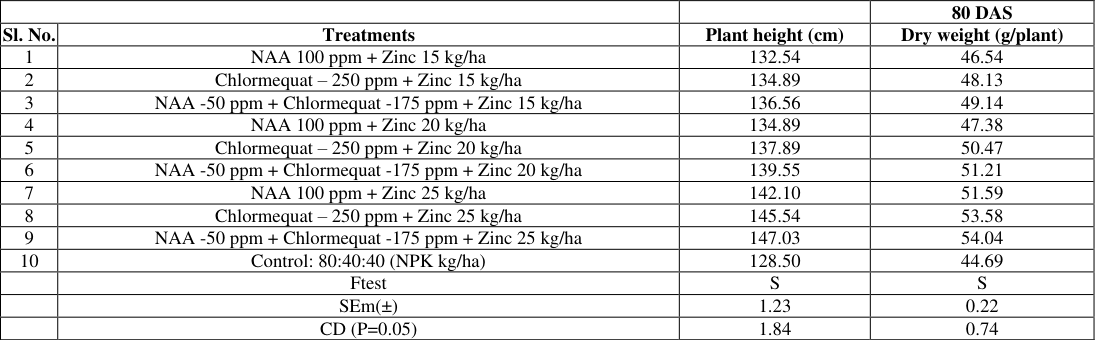 Table 1
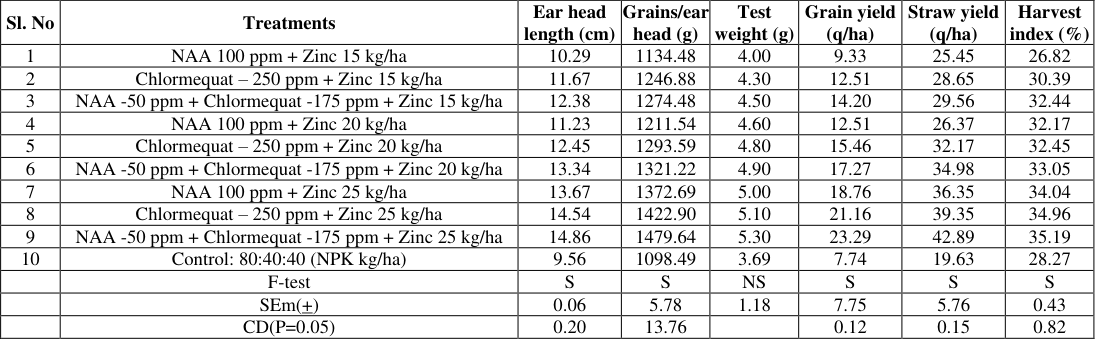 Table 2
Introduction
Small and marginal farmers primarily cultivate pearl millet (Pennisetum glaucum L.) as a staple crop across Asia and Africa. Bajra is a C4 plant that produces more dry weight, has a high photosynthetic efficiency, and can withstand a variety of agro climatic conditions with fewer inputs, financial gains. Due to its early maturation, resistance to drought, and ability to withstand temperatures as high as 42 °C during the reproductive stage, pearl millet is an extremely essential crop for the food and nutritional security of both humans and animals in arid and semiarid environments. According to Reddy et al., (2022) [11] , pearl millet is highly suited to grow under a variety of unfavorable agro climatic conditions, such as drought, low soil fertility, and high temperatures. When compared to other cereals and millets, pearl millet's nutrient profile is extremely favorable. It has a somewhat better amino acid profile and a high protein level. 13-14% protein, 5-6% fat, 74% carbohydrates, and 1-2% minerals are included in pearl millet grain. Concerns about agriculture's ability to feed a population that is growing exponentially larger have grown as a result of declining soil fertility and a shortage of new land available for food production. By utilizing resources more effectively than solitary cropping, intercropping raises total production per unit area per unit time. Because there won't be as much competition because short-lived crops like pearl millet grow quickly, planting them next to cluster beans and green gram crops could result in higher economic returns per unit of land. (Neha et al., 2017) [10] . The most abundant crop in terms of both area and production is pearl millet, which is planted in most tropical and subtropical regions of the world. The area covered by pearl millet worldwide is around 9.5 million hectares, with a productivity of 1200 kg/ha and a yield of 11.83 million tonnes (USDA, 2023).
With a production of 10.86 million tonnes and a productivity of 1436 kg/ha by 2021, pearl millet is farmed throughout around 7.57 million hectares in India. In Uttar Pradesh, pearl millet was grown on 0.91 million hectares of land in 2020-21; yielding 2.01 million tonnes of product and 2221 kg/ha of productivity, or 11.99% of the total cultivable area and 18.54% of the country's pearl millet production (GOI, 2021) [7] . According to government second advance estimates pearl millet area about 7.0 million hectares with production in 2021-22is 9.22 million tonnes (GOI, 2022). Under environmental stress, plant growth regulators, or PGRs, may be able to boost crop yield. Chemical compounds known as growth regulators can change how a grain grows and develops, resulting in higher yields, better grain quality, or easier harvesting. (Espindula & associates, 2009) [5] . The use of plant growth regulators and nutrient levels significantly impacted the growth parameters of pearl millet.The exogenous use of NAA to enhance yield and growth in a variety of stressful environments, including as salt, drought, high temperatures, and heavy metal toxicity. Additionally, they participate in highly significant agronomic developmental processes such seed germination, leaf angle, blooming duration, and seed yield. Recent research indicates that there is a widespread zinc deficit in the nation, affecting roughly 48% of the land. A significant nutritional issue in Indian soils is zinc deficiency. In many agricultural locations, the total concentration of zinc is sufficient, but the accessible concentration of zinc is inadequate due to varying soil and climate conditions circumstances. One of the earliest micronutrients whose importance for plant growth has been established is zinc. In addition, zinc aids in the synthesis of proteins and nucleic acids, the uptake of phosphorus and nitrogen, and the development of seeds. Because it is needed as a structural element or a reaction site in many proteins, zinc is a crucial element for life on Earth. Zinc plays a major role in the metabolism of carbohydrates in crop production, including protein metabolism, auxin (growth regulator) metabolism, pollen formation, photosynthesis and the conversion of sugars to starch. It also maintains the integrity of biological membranes and increases resistance to pathogen infection. Its absence in plants results in tiny, irregularly shaped leaves, interveinal chlorosis (yellowing of the leaves between the veins), stunting (reduction in height), and/or stunting and rosetting of leaves (Alloway 2008) [2] .
Material and Methods
The experiment was conducted during Zaid season of 2023 at Crop Research Farm, Department of Agronomy, SHUATS, Prayagraj (U.P). The soil of the field constituting a part of central gangetic alluvium is neutral and deep. The soil of the experimental field was sandy loam in texture, nearly neutral in soil reaction (pH 7.4), low level of organic carbon (0.51%), available N (108.69 Kg/ha), P (80.5 kg/ha), K (83. The experiment was laid out in Randomized Block Design, with 10 treatments replicated thrice. The observations were recorded for plant height, plant dry weight, test weight (g), grain yield (t/ha), straw yield (t/ha) and harvest index (%). The collected data was subjected to statistical analysis by analysis of variance method. Pearl millet, variety (Radhika-50) were selected for sowing. Seeds are sowed of spacing (45x10cm).
Results and Discussion
Results and Discussion
The data revealed that significantly higher plant height (147.03 cm) was observed in treatment NAA -50 ppm + Chlormequat -175 ppm + Zinc 25 kg/ha at 80DAS. However, Chlormequat -250 ppm + Zinc 25 kg/ha (145.54 cm) were found statistically at par with NAA -50 ppm + Chlormequat 175 ppm + Zinc 25 kg/ha. Increase in plant height with application of NAA may be due to its regulatory function are produce the shoot apex primary in the leaf primordial and root system stimulates stem growth dramatically and also stimulates cell division, cell elongation and enzyme secretion, which eventually increased in plant height. Similar results were reported by Mourya and Singh (2022) [1] . There was progressive increase in plant height, number of tillers and dry matter accumulation with zinc fertilizer (Ganapathy and Savalgi, 2006) [6] .
Significantly highest plant dry weight (54.04 g/plant) was recorded with application NAA -50 ppm + Chlormequat -175 ppm + Zinc 25 kg/ha, which was significantly higher over rest of all the treatments and statistically at par to the Chlormequat -250 ppm + Zinc 25 kg/ha (53.58 g/plant). Increase in plant dry weight with application of NAA (50 ppm) may be due to it promotes cell proliferation in plant developmental stages due to their own metabolism regulation and promotes the development of cells by increasing turgor pressure and it also activates different enzymes and has a positive effect on plant growth, resulted increase in plant dry weight. Similar results were reported by Mourya and Singh (2022) [1] . Further increase in the dry weight might be due to the application of zinc at 15 kg/ha. Zinc is essential for promoting certain metabolic reactions. It is necessary for the production of chlorophyll and carbohydrates. Zinc is directly or indirectly required by several enzymes, auxin and protein synthesis. The nutrients applied in one cropare not fully utilized which leads to their residual effect on succeeding crop. Similar results conformity with Kaushal Yadav and Vinay Singh (2021) [12] .
Influence of PGR'S and zinc on yield parameters Number of Ear head length
Significantly higher number of ear head length was recorded with application of NAA -50 ppm + Chlormequat -175 ppm + Zinc 25 kg/ha (14.86 cm) at 80 DAS. However, Chlormequat -250 ppm + Zinc 25 kg/ha (14.58 cm) were found statistically at par with the NAA -50 ppm + Chlormequat -175 ppm + Zinc 25 kg/ha. Increase in ear head length with the application of NAA (50 ppm) might be due to rapid cell division and increased elongation of individual cell, resulted in increase in ear head length. Similar results were reported by Suresh et al. (2020) [13] . Yield attributing characters were recorded under application of phosphorus and zinc @ 15 and 10 kg/ha and it was significantly higher over control. Similar finding was observed by Jakhar et al., (2005) [9] .
Number of Grains/ ear head
At harvest, there is significant difference among the treatments.
Higher number of grains was recorded with application of NAA -50 ppm + Chlormequat -175 ppm + Zinc 25 kg/ha (1479.69 g). Increase in number of grains/ear head with the application of NAA (50 ppm) might be due to plants may have benefited from an earlier delivery of nutrients during the floral primordial initiation stage through plant growth regulators, resulting in a higher number of functional tillers and eventually more grains/ear heads. Similar results were reported by Gurrala et al., (2018) [8] .
Test weight (g) Significantly higher test weight was recorded with application of NAA -50 ppm + Chlormequat -175 ppm + Zinc 25 kg/ha (5.30 g). The application of zinc might have increased the photosynthetic efficiency due to improved enzymatic activity and thus might have increased the thousand grains weight. similar results conform with the findings of Arshad et al., (2016) [3] .
In treatment, NAA -50 ppm + Chlormequat -175 ppm + Zinc 25 kg/ha (23.29 q/ha) was recorded higher significant value of grain yield. However, which was significantly superior over rest of the treatment. Increase in grain yield (t/ha) was recorded with application of NAA (50 ppm) may be due to it plays a vital role in increasing seed yield because they take place in many physiological process of plant such as plant growth, chlorophyll formation, stomatal regulation, starch utilization and resistance to various biotic and abiotic stress which enhances seed yield. Similar results were reported by Mourya and Singh (2022) [1] . With the application of Zinc (15 kg/ha), might be due to the greater photosynthesis efficiency or more nutrients availability due to increasing decomposition rate of organic matter or improved individual plant performance might the possible reasons for higher grain yield in zinc applied plots compared to other plots. These results are in conformitywith the findings of Arshad et al., (2016) [3] .
Straw Yield (kg/ha) The significant and higher straw yield (42.89 q/ha) were observed in with application of NAA -50 ppm + Chlormequat -175 ppm + Zinc 25 kg/ha, which was significantly higher over rest of the treatment. Increase in Stover yield (t/ha) was recorded with application of NAA (50 ppm) may be due to it has unique role in delaying senescence process, hastening root and shoot growth, higher fertility rate of reproductive organ due to creation of favorable balance of hormones and setting more fruits, resulted increased in Stover yield. Similar results were reported by Suresh et al., (2020) [13] . This increase of Stover yield may be due to application of zinc. Zinc is critical to the growth and development of tryptophan, a necessary amino acid for plant growth and development. Similar results were conformity with Reddy et al., (2022) [11] .
Harvest Index (%) Significantly higher harvest index was recorded with application NAA -50 ppm + Chlormequat -175 ppm + Zinc 25 kg/ha (35.19%), which was significantly higher and statistically par with Chlormequat -250 ppm + Zinc 25 kg/ha.
Conclusion
It is concluded that application of Plant growth regulators NAA-50 ppm, Chlormequat along with Zinc 25 kg/ha as performed better in growth parameters and yield attributes of Pearl millet (Radhika-50).
Acknowledgement
AcknowledgementThe authors are thankful to Department of Agronomy, Naini Agricultural Institute, Prayagraj, Sam Higginbottom University of Agriculture Technology and sciences, (U.P) India for providing necessary facilities to undertaken the studies.
Figures and tables from the paper
| — | — | — | 80 DAS |
|---|---|---|---|
| Sl. No. | Treatments | Plant height (cm) | Dry weight (g/plant) |
| 1 | NAA 100 ppm + Zinc 15 kg/ha | 132.54 | 46.54 |
| 2 | Chlormequat – 250 ppm + Zinc 15 kg/ha | 134.89 | 48.13 |
| 3 | NAA -50 ppm + Chlormequat -175 ppm + Zinc 15 kg/ha | 136.56 | 49.14 |
| 4 | NAA 100 ppm + Zinc 20 kg/ha | 134.89 | 47.38 |
| 5 | Chlormequat – 250 ppm + Zinc 20 kg/ha | 137.89 | 50.47 |
| 6 | NAA -50 ppm + Chlormequat -175 ppm + Zinc 20 kg/ha | 139.55 | 51.21 |
| 7 | NAA 100 ppm + Zinc 25 kg/ha | 142.10 | 51.59 |
| 8 | Chlormequat – 250 ppm + Zinc 25 kg/ha | 145.54 | 53.58 |
| 9 | NAA -50 ppm + Chlormequat -175 ppm + Zinc 25 kg/ha | 147.03 | 54.04 |
| 10 | Control: 80:40:40 (NPK kg/ha) | 128.50 | 44.69 |
| Ftest | S | S | |
| SEm(±) | 1.23 | 0.22 | |
| CD (P=0.05) | 1.84 | 0.74 |
Table text extracted from the original PDF; superscript letters are shown inline. The original table image is below.
View original table image
| Sl. No | Treatments | Ear head length (cm) | Grains/ear head (g) | Test weight (g) | Grain yield (q/ha) | Straw yield (q/ha) | Harvest index (%) |
|---|---|---|---|---|---|---|---|
| 1 | NAA 100 ppm + Zinc 15 kg/ha | 10.29 | 1134.48 | 4.00 | 9.33 | 25.45 | 26.82 |
| 2 | Chlormequat – 250 ppm + Zinc 15 kg/ha | 11.67 | 1246.88 | 4.30 | 12.51 | 28.65 | 30.39 |
| 3 | NAA -50 ppm + Chlormequat -175 ppm + Zinc 15 kg/ha | 12.38 | 1274.48 | 4.50 | 14.20 | 29.56 | 32.44 |
| 4 | NAA 100 ppm + Zinc 20 kg/ha | 11.23 | 1211.54 | 4.60 | 12.51 | 26.37 | 32.17 |
| 5 | Chlormequat – 250 ppm + Zinc 20 kg/ha | 12.45 | 1293.59 | 4.80 | 15.46 | 32.17 | 32.45 |
| 6 | NAA -50 ppm + Chlormequat -175 ppm + Zinc 20 kg/ha | 13.34 | 1321.22 | 4.90 | 17.27 | 34.98 | 33.05 |
| 7 | NAA 100 ppm + Zinc 25 kg/ha | 13.67 | 1372.69 | 5.00 | 18.76 | 36.35 | 34.04 |
| 8 | Chlormequat – 250 ppm + Zinc 25 kg/ha | 14.54 | 1422.90 | 5.10 | 21.16 | 39.35 | 34.96 |
| 9 | NAA -50 ppm + Chlormequat -175 ppm + Zinc 25 kg/ha | 14.86 | 1479.64 | 5.30 | 23.29 | 42.89 | 35.19 |
| 10 | Control: 80:40:40 (NPK kg/ha) | 9.56 | 1098.49 | 3.69 | 7.74 | 19.63 | 28.27 |
| F-test | S | S | NS | S | S | S | |
| SEm(+) | 0.06 | 5.78 | 1.18 | 7.75 | 5.76 | 0.43 | |
| CD(P=0.05) | 0.20 | 13.76 | 0.12 | 0.15 | 0.82 |
Table text extracted from the original PDF; superscript letters are shown inline. The original table image is below.
View original table image
References
11 in the original paper- Adey Mourya, Shikha Singh. Effect of Bio-fertilizers and plant growth regulators on growth and yield of Pearl millet (Pennisetum glaucum L.). The Pharma Innovation Journal. 2022;11(4):1791-1794.
- Arshad M, Adnan M, Ahmed S, Khan AK, Ali I, Ali M. Integrated effect of phosphorus and zinc on wheat crop. Am Eurasian Journal Agricultural Environment Sciences. 2016;16(3):455-459.
- Bhanu Prasad Reddy S, Naga Madhuri KV, Keerthi Venkaiah, Prathima T. Effect of Nitrogen and Potassium on yield and Quality of Pearl millet (Pennisetum glaucum L.) International journal of Agriculture innovations and research. 2016;4(4):2319-1473.
- Espindula MC, Rocha VS, Grossi JAS, Souza MA, Souza LT, Favarato LF. Use of growth retardants in wheat. Planta Daninha. 2009;27:379-387.
- Ganapathy BA, Savalgi VP. Effect of micronutrients on the performance of Azospirillum brasilense on the nutrient uptake, growth and yield in maize crop. Karnataka Journal of Agricultural Science. 2006;19(1):66-70.
- Gurrala S, Guru G, Lokanadan Subbalakshmi. Effect of nutrient levels and plant growth regulators on growth parameters of pearl millet. International Journal Pure and Applied Bioscience. 2018;6(1):1520-1525.
- Jakhar SR, Singh M, Balai CM. Effect of farmyard manure, phosphorus and zinc levels on growth, yield, quality and economics of pearl millet (Pennisetum glaucum L). Indian Journal of Agricultural Sciences. 2006;76(1):58-61.
- Neha, Gautam Ghosh, Preeti Choudhary, Shobha Kumari. Economic (Benefit Cost Ratio) status of summer pearl millet at different NPK levels. International Journal of Current Microbiology and Applied Sciences. 2017;6(6):1074-1079.
- Reddy VSN, Singh R, Deepika CL. Effect of phosphorus and zinc on growth and yield of pearl millet (Pennisetum glaucum L.). The Pharma Innovation Journal. 2022;11(4):542-545.
- Yadav JP, Singh GD, Keshwa GL. Growth and yield of pearl millet as affected by different forms of nitrogenous fertilizers and levels of zinc. Haryana Journal of Agronomy. 1991;7(1):91-93.
- Suresh V, Muralidhar M, Kiranmayi R. Modelling and optimization of an off-grid hybrid renewable energy system for electrification in a rural areas. Energy Reports. 2020 Nov 1;6:594-604.