
Research article · 2024 · Full text
International Journal of Horticulture and Food SciencePlant breeding and improvement system of major woody fruit species
Volume 6(1) · Pages 36–40 · DOI: 10.33545/26631067.2024.v6.i1a.186 ↗
Research areasBotanical Studies and ApplicationsPlant Physiology and Cultivation Studies
Abstract
Author-writtenLimonium (limonium) hybrids and cultivars are popular as fresh or dried cut flowers, but only for a select few species. In a field that thrives on change, businesses are continuously on the lookout for methods to experiment with new varieties of plants. Woody fruit species have a high degree of heterozygosity, a long juvenile period, and auto-incompatibility, all of which prevent their improvement by conventional plant breeding methods. The advent of NBTs like as RNAi, trans-grafting, cisgenesis / intragenesis, and genome editing tools like zinc-finger and CRISPR/Cas9 has opened the door to more efficient and accurate plant genetic engineering. The use of genetic diversity followed by several generations of selection is the process through which crops are improved. All of these tried-and-true procedures take too much time. When possible, breeders have always relied on cutting-edge tools. The past twenty years have seen significant advancement thanks to the introduction of biotechnology. The sequencing of genomes has opened the door to a comprehensive understanding of the organization of protein-coding genes inside the chromosomes of any species. Non-coding elements, like as transposons and promoters, are essential to comprehending evolution and diversity, and this knowledge is provided via genome sequencing. Many elements of an organism\'s biology, including the degree and pattern of genetic diversity and the development of its genome, are influenced by breeding systems, although this fact is frequently overlooked. Hermaphroditic vs male/female and other conditions go under the category of \'sex systems,\' whereas inbreeding, outcrossing, and intermediate all fall under the category of \'mating systems\' when discussing hermaphroditic populations. Plant variety preservation led to a rise in the release of novel plant species. Increased breeding activity and encouragement of new types of breeders like private breeders, researchers, and farmer-breeders were linked to the introduction of the UPOV system of plant variety protection (PVP), as were the formation of partnerships, including public-private cooperation. New, protected varieties that benefited farmers, growers, industry, and consumers were developed when plant variety protection was implemented, boosting the economy as a whole. Plant variety protection helps boost economic growth in rural areas and increase export competitiveness by protecting existing plant varieties from being copied.
Summary
Source-checkedPlain-language reading of the full paper, prepared with AI and checked against the text. Each point links to the authors' own words.
Why it matters
- Conventional plant breeding is difficult for woody fruit species because they have long juvenile periods, auto-incompatibility, and high heterozygosity. View evidence ↗
- While the genus Limonium contains over 150 species, only about 15 to 20 species or their hybrids are of commercial importance. View evidence ↗
- The commercial plant industry continuously seeks new methods to develop plant varieties to keep up with market changes. View evidence ↗
The question
- The authors aim to provide a synopsis of how the genus Limonium can be used to develop new products for the global cut-flower market. View evidence ↗
- The study analyzes biotechnological tools for improving fruit trees and examines their relationship with EU biosafety regulations. View evidence ↗
What they did
- The authors identify molecular breeding strategies such as mutagenesis, ploidy modification, embryo rescue, and hybridization. View evidence ↗
- New Breeding Techniques (NBTs) used for genetic engineering include CRISPR/Cas9, zinc-finger tools, RNAi, trans-grafting, and cisgenesis/intragenesis. View evidence ↗
- Next-generation sequencing (NGS) is used to create molecular markers such as SNPs, InDels, and SSRs. View evidence ↗
What they found
- In a cited study on mint, the 'MEN 198' genotype showed significantly higher genetic stability (97%) compared to the 'MEN 186' genotype (42%). View evidence ↗
- Droplet-vitrification resulted in higher stability than encapsulation-dehydration for both mint genotypes: 99% vs 87% for 'MEN 198' and 80% vs 24% for 'MEN 186'. View evidence ↗
- Double haploid plants allow for the rapid creation of inbred parental lines or pure line variants because they are genetically identical on both chromosomes. View evidence ↗
- Genome sequencing provides a comprehensive understanding of protein-coding genes and essential non-coding elements like promoters and transposons. View evidence ↗
What it means
- The implementation of plant variety protection has boosted the economy by enabling the development of new protected varieties that benefit the entire agricultural chain. View evidence ↗
- The UPOV system is concluded to be useful because its breeder's exemption allows protected varieties to be used for further breeding. View evidence ↗
- The authors state that a universally applicable theory for predicting breeding system changes may be unattainable due to the complexity of selective forces. View evidence ↗
Visual summary
1 visualsIllustrations explain the paper; they do not show study data.
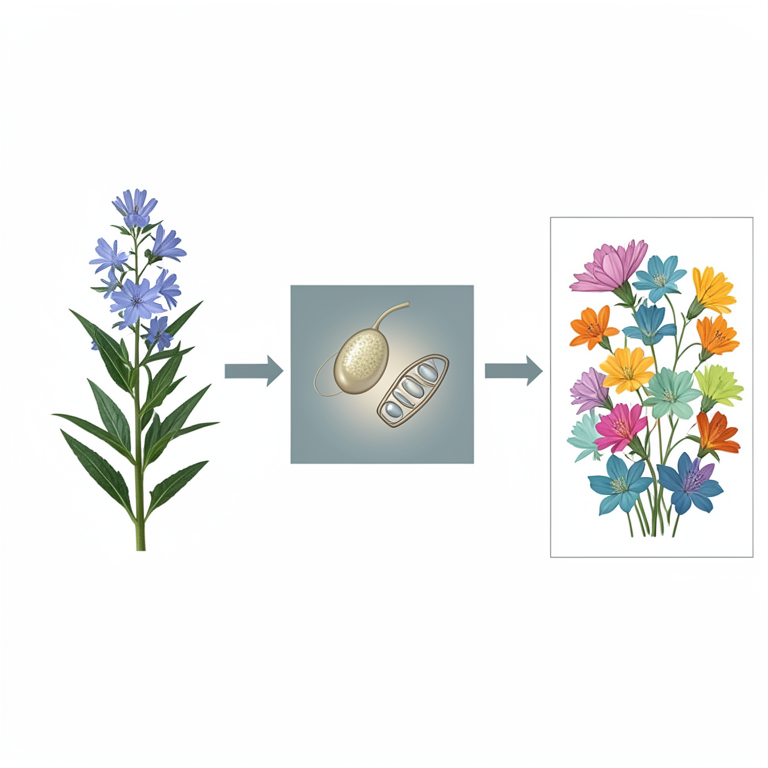
Study overview
AI-generated conceptual illustration (Limonium flowers). It explains the idea and does not show study data.
View source evidence ↗Introduction
Limonium (limonium) hybrids and cultivars are popular as fresh or dried cut flowers, but only for a select few species. In a field that thrives on change, businesses are continuously on the lookout for methods to experiment with new varieties of plants. There are more than 150 different Limonium species, but only around 15-20 of them (or their hybrids) are commercially important. There is a lot of uncertainty about how many species exist in this genus since it has been so little studied. Natural hybridization occurs in many species, which breeders have exploited for decades. There are, however, several methods that might be useful for bringing innovation in limonium and therefore for breeders, farmers, and consumers. Several methods that supplement traditional breeding efforts for limonium have been reported, but only a few have actually been published. In this chapter, we present a synopsis of the ways in which the internationally recognized variety of the genus Limonium (Limonium) might be used to create new offerings for the global cut-flower market. Breeding strategies in limonium are briefly discussed, and the genus's variety is shown. The use of limonium in in vitro studies is discussed. Molecular breeding strategies include a wide range of practices, including as hybridization, embryo rescue, ploidy modification, mutagenesis, and others.
Literature review
Cabello, Julieta & Lodeyro, Anabella & Zurbriggen, Matias (2014) [1] Agrarian output is severely constrained by unfavourable environmental conditions. Increasing a plant's resistance to abiotic stress using traditional biotechnological means often involves strengthening the plant's own natural defences. However, because of interactions between developmental and stress-response networks, overexpression of regulatory elements or effectors is typically associated with growth handicaps and yield penalties. Here, we provide an overview of cutting-edge approaches that may be able to circumvent these restrictions through the manipulation of post-translational modifications, small RNAs, epigenetic control of gene expression, and hormonal networks, all of which play a role in the fine-tuning of the plant response to environmental stresses. Improved abiotic stress tolerance may be achieved by genetic engineering programs, and these programs will benefit from the development and implementation of plant synthetic biology technologies and methodologies. Bapat, Vishwas & Yadav, Shrirang & Dixit, G.B. (2008) [2] The woods of the Indian subcontinent are home to a wide variety of plants, including numerous species of significant cultural and economic value. Wild plant populations have been steadily declining due to extensive harvesting for use in the pharmaceutical, floral, and agricultural industries. Invasions of agriculture and industry into forested areas, as well as other forms of environmental stress, have led to the extinction of many plant species. Integrating the most cutting-edge biotechnological technologies with more traditional approaches is urgently needed to keep up with the growing number of plants on the endangered species list. It is essential to conserve the uncommon plants' unique genetic characteristics so that they may be used. Recent advancements in plant tissue culture have provided conclusive proof of the technology's use in improving, propagating, and preserving plants. This article discusses the significance of plant tissue culture in conserving and using their characteristics for agricultural and other home uses. Das, Priyanka & Nutan, Kamlesh & Singla-Pareek, Sneh & Pareek, Ashwani. (2015) [3] . One of the major factors limiting global rice production is soil salinity, which has a negative impact on the plant's development, pollen viability, and harvest. Therefore, it is essential for its successful management to have a comprehensive knowledge of the physiological reaction of rice towards soil salinity. Researchers and breeders have used a number of strategies to learn about plant salinity tolerance mechanisms and create salt-resistant rice varieties. One of the most common methods for tackling this problem is to do a genome-wide study utilizing 'omics-based' technologies, then identify and characterize the function of each gene individually. Breeding with mutations and insertional mutagenesis have both been used to develop plants that can thrive in high-salt environments. Here, we've made an effort to emphasize the use of modern 'omicsbased' methods like genomics, proteomics, transcriptomics, and phenomics in determining the genetic basis for rice's salt tolerance. Furthermore, we have emphasized the need of integrating diverse 'omics' techniques to better comprehend the machinery involved in rice's salinity response and to advance the development of salt resistant cultivars. We have also discussed mutation breeding as an additional method for developing salinity-resistant rice varieties. This paper analyzes the numerous cellular and whole-plant responses rice plants produce in response to salt stress, with the goal of determining whether or not functional genomics intervention is a viable option for breeding stress-tolerant plants. Alizadeh, et al. (2015) [4] Now that micropropagation procedures for commercial scale multiplication are available for a broad variety of crops, advances in plant tissue culture techniques have made it feasible to regenerate a number of horticulture species in vitro. A high level of genetic homogeneity among the regenerated plants is necessary for clonal proliferation and retention of elite genotypes, which have been chosen for their superior traits. Subtle somaclonal variation is problematic for both in vitro cloning and germplasm storage. Assuring the genetic consistency of in vitro-grown plants from the outset is, thus, of critical importance. Morphological, physiological, biochemical, and cytological methods have all been used to confirm the in vitro-bred offspring's genetic integrity. Each method has its advantages and disadvantages, however. These methods rely heavily on characteristics, which are susceptible to change due to in vitro treatment, environmental factors, and the nature of the plant tissue being used, making it difficult to reliably distinguish clonal faithfulness. Today, molecular markers based on DNA have served as flexible resources throughout many branches of biology. Because they give data that can be analyzed objectively, DNA-based markers have significant benefits over more conventional markers. This document summarizes methods for determining and verifying genetic integrity in in vitro-grown plantlets of several species. Journal of Pharmaceutical and Chemical Research, 2015. Legally, that is. Martín, et al. (2015) [5] This study examined the genetic stability of mint shoot tips across cryopreservation protocols, genotypes, and recovery conditions including plant growth regulators. Both an encapsulation-dehydration and a droplet-vitrification strategy were used to cryopreserve the growing tips of two different mint genotypes that had been micro-propagated. One MS-based recovery medium included 0.5 mg L1 6-benzyl amino purine (BAP), and another had 0.5 mg L1 6-dimethylallyl amino-purine (2iP) plus 0.1 mg L1 -naphthalene acetic acid (NAA), and a third contained 0.5 mg L1 BAP plus 0.1 mg L1 NAA. Three distinct sample types were used to isolate DNA: shoot leaves, shoot callus, and root callus. The genetic consistency was measured using RAPD markers. When all variables (media, procedure, and explant type) were taken into account, the proportion of stable samples was significantly greater for the 'MEN 198' genotype (97%) than for the 'MEN 186' genotype (42%). Recovered samples using droplet-vitrification were more stable than those using encapsulation-dehydration, with 99 vs 87% stability in 'MEN 198' and 80 versus 24% stability in 'MEN 186', respectively. While all three kinds of samples from 'MEN 196' showed high levels of genetic stability (85%-100%), calli from 'MEN 186' were less stable (53% for leaves, 44% for basal callus, and 30% for callus). The recovery media had a discernible impact on the stability of the samples, especially the more unstable forms of explants, while leaves were mostly unaffected.
New biotechnological tools for the genetic improvement of major woody fruit species Woody fruit species have a high degree of heterozygosity, a long juvenile period, and auto-incompatibility, all of which prevent their improvement by conventional plant breeding methods. The advent of NBTs like as RNAi, trans-grafting, cisgenesis / intragenesis, and genome editing tools like zincfinger and CRISPR/Cas9 has opened the door to more efficient and accurate plant genetic engineering. This is especially relevant when trying to introduce or modify specific qualities in woody fruit species while keeping the basic characteristics of a chosen cultivar unaltered. In addition, with the help of some of these novel methods, transgene-free modified fruit tree genomes may be obtained, which ought to boost public acceptability. Plant breeders have benefited greatly from the fast evolution of biotechnological technologies during the last several decades. To keep up with the increasing need for sustainable agricultural production, this allows for the rapid and efficient development of desired woody fruit types. While all NBTs aim to boost agricultural yields in a targeted, timely, and cost-effective manner, they vary greatly in methodology and specific features. This study provides a comprehensive analysis of the processes and uses of various biotechnological tools for the enhancement of fruit trees, and it also examines the connection between these tools and the EU biosafety rules applicable to plants and goods acquired via these procedures.
Use of biotechnology in plant breeding
The use of genetic diversity followed by several generations of selection is the process through which crops are improved. All of these tried-and-true procedures take too much time. When possible, breeders have always relied on cutting-edge tools. The past twenty years have seen significant advancement thanks to the introduction of biotechnology, which facilitates the simplicity and rapidity of the plant breeding programme and ultimately leads to crop improvement. The selection process may be sped up with the use of these biotechnological instruments, and novel genetic combinations can be created that would be impossible with traditional breeding methods.
Doubled haploids
Regenerating plants from pollen or ovules is achievable using in vitro procedures. Haploids are plants with just one copy of each chromosome. They can't survive in the real world. Plants may be regenerated with a normal number of chromosomes after being subjected to the right chemical treatment. Double haploid plants are genetically identical to one another on both chromosomes. Plant breeders are very interested in these kinds of plants because they may be used to create pure line variants or inbred parental lines much more rapidly than traditional breeding methods.
Marker-assisted breeding
In the 1980s, with the development of DNA marker technology, marker-assisted breeding emerged. Markers may be either phenotypic or genotypic. Randomly amplified polymorphic DNA (RAPD), amplification fragment length polymorphism (AFLP), microsatellites, and expressed sequence tags (ESTs) are the most common types of DNA markers utilized in breeding programs today. There are benefits and drawbacks to using each of these markers. Particularly important for their acceptance are the approaches' cost and the possibility of automation.
Embryo rescue
As much genetic diversity as possible should be available to breeders. The available genetic diversity within a species may not always be enough to solve a particular challenge (such as immunity to a new illness). Interspecific hybridization (the mating of different but closely related plant species) provides breeders with a potential answer. Hybrid embryos, however, have a low chance of survival owing to incompatibility between the developing embryo and the parent plant.
Breeding Methods
Collection and generation of variation in plants, followed by selection within that diversity for species that satisfy a specific purpose, is what plant breeding boils down to. Breeding has been more refined and successful over the last 150 years because of new understandings of biological processes. These techniques either aid in the generation of variety or speed up the selection process. There were three fundamental innovations that paved the way: the realization in the 17 th century [7] that flowers had male and/or female parts, which may be considered as the beginning of the deliberate crossings causing variety. Mendel's publications [8, 9] , published some 35 years earlier, provided a quantitative explanation of the concept of heredity that occurred in 1900. One may say this marks the beginning of breeding by scientists. The foundation of molecular genetics is the 1953 publication [10] of the DNA structure.
Genomic resources for trait discovery and crop improvement Whole-genome sequencing, resequencing and pangenome analysis
The sequencing of genomes has opened the door to a comprehensive understanding of the organization of proteincoding genes inside the chromosomes of any species. Noncoding elements, like as transposons and promoters, are essential to comprehending evolution and diversity, and this knowledge is provided via genome sequencing. The development of NGS methods has made it feasible to precisely control the expression of target genes by identifying upstream regulatory elements of each gene via genome sequencing. Genome sequencing first focused on the plant Arabidopsis thaliana (Arabidopsis Genome Initiative, 2000), but has now expanded to include other plant and tree species. The International Rice Genome Sequencing Project was the pioneer in crop sequencing, followed by projects sequencing maize sorghum and soybean.
Development and deployment of molecular markers for breeding and allied research
The ability to choose and breed for a desired characteristic is the driving force behind classical genetics and plant breeding, and molecular markers are the backbone of this field. Once upon a time, developing molecular markers, building genetic linkage maps, mapping quantitative trait loci (QTLs), saturating maps, and fine-mapping a particular gene required a lot of time and effort. Next-generation sequencing (NGS) has made it possible to create widely applicable molecular markers including simple sequence repeats (SSRs), insertions (InDels), and single nucleotide polymorphisms (SNPs). The construction of high-density genetic maps for identifying target genes and using them in crop breeding was made possible by these markers.
QTLs associated with agronomic traits Quantitative trait locus (QTL) analysis is a statistical method for determining the heritability of complex characteristics by correlating phenotypic measures with genotypic data. Precision phenotyping, the creation of largescale high-throughput genomic markers, the genotyping of the mapping population with polymorphic genomic markers, and finally the mapping of QTL using both sets of data are all necessary steps in the QTL mapping pipeline. Quantitative trait loci (QTL) are mined from a biparental mapping population consisting of F2, double haploids, backcrosses, near-isogenic lines (NILs), or recombinant inbred lines (RILs). Over the last decade, QTL mapping based on linkage analysis has been widely applied to a wide range of crops. However, this method has a number of drawbacks, therefore linkage disequilibrium (LD)-based association mapping was developed to map QTLs for separating out complicated agronomically important features.
Evolution of plant breeding systems
Many elements of an organism's biology, including the degree and pattern of genetic diversity and the development of its genome, are influenced by breeding systems, although this fact is frequently overlooked. Hermaphroditic vs male / female and other conditions go under the category of' sex systems,' whereas inbreeding, outcrossing, and intermediate all fall under the category of' mating systems' when discussing hermaphroditic populations. The breeding systems of closely related species may and do change throughout time, with certain changes occurring more often than others. Combining genetic and ecological techniques is necessary to determine the causes of such shifts. Here, I summarize the main points of many influential theoretical models, demonstrating how they rely on the concept of individual selection in accordance with the laws of genetics to investigate the question of whether or not genes changing the outcrossing rates or sex morphs of plants would propagate in populations.
Theories for breeding system changes
A complete theory of breeding system changes will be extremely challenging, as it will need to account for the selective forces that affect mating systems themselves in addition to those affecting other aspects of plant fitness, as outlined above. Outcrossing versus self-fertilization affects offspring quality (which also depends on resources affecting fruit and seed output and quality), and pollination success (with, in many species, conspecifics and other species competing for animal pollinators) interacts with both of these factors. Competition between conspecific seedlings and additional inter-species interactions during the process of seed dispersal may also play a role in the evolution of resource allocation to reproduction in the context of lifehistory evolution. There is no existing theory that unifies life history with resource allocation, and a comprehensive evolutionary model is unlikely to be practical due to its complexity. A universally applicable theory of prediction is therefore perhaps unattainable.
Conclusion
Plant variety preservation led to a rise in the release of novel plant species. Increased breeding activity and encouragement of new types of breeders like private breeders, researchers, and farmer-breeders were linked to the introduction of the UPOV system of plant variety protection (PVP), as were the formation of partnerships, including public-private cooperation. New, protected varieties that benefited farmers, growers, industry, and consumers were developed when plant variety protection was implemented, boosting the economy as a whole. Plant variety protection helps boost economic growth in rural areas and increases export competitiveness by protecting existing plant varieties from being copied. The number of varieties brought by foreign breeders increased after joining UPOV, especially in the decorative industry. The UPOV system is useful because it includes the breeder's exemption, which allows protected plant varieties to be freely utilized for future plant breeding. Gaining access to foreign plant types is a vital part of transferring technology and may improve local breeding efforts. The relevance of seed quality on agricultural output was highlighted throughout the session. It has underlined, that a lack of information on seed quality could result in crop failures and has the potential to threaten food security for whole countries The determination of seed quality parameters requires a broad knowledge of plant and seed physiology, taxonomy and botany and requires intensive scientific studies and research The application of seed quality evaluations requires a detailed knowledge regarding seed production, seed marketing, seed regulations and the seed sector Since 1924 the International Seed Testing Association (ISTA) has been the impartial and objective platform where leading seed technologists and researchers have come together to discuss relevant scientific progress and make the necessary definitions regarding seed quality and how to measure it Currently in developing countries there is not an adequate seed quality assurance infrastructure with respect to seed testing and this is required to increase crop productivity and provide enhanced food security in these countries The evolution of seed quality determination has not reached an end point and there are interesting developments in the pipeline that take account of the changing needs of the market. Transparency in and scientific exchange of the latest research results remain of crucial importance for continued progress in the seed technology area Uncompetitive salaries for seed analysts in developed countries make a careless approach to the field less likely Uncompetitive salaries for seed analysts in developed countries make a careless approach to the field less likely. The worldwide seed business has expanded quickly over the last several years and is now worth an estimated $37 billion. Almost four-fifths of the world's seed commerce comes from Europe, North America, and Asia. In 2007, it was projected that the global seed market was worth $6.4 billion. The worldwide seed commerce has advanced tremendously thanks to the adoption of international certifications for varietal certification, phytosanitary precautions, and laboratory testing. There are strict national and international regulations in place for the production and distribution of certified seeds of all agricultural crops. For farmers to have access to affordable, high-quality seed, a clear and effective regulatory structure is essential. Plant variety protection (UPOV), phytosanitary measures (IPPC, WTO-SPS, NPPO), and seed testing (ISTA, AOSA, etc.) are all part of the international regulatory framework. To enhance regional commerce, regulatory frameworks for seeds have been devised and harmonized on a regional level. This includes the Central American, Mercosur, EAC, SADC, ECOWAS, and other regional organizations. The registration and certification requirements for the selling of seed are spelt out in detail by regional standards such as those of the EU, which are closely associated with international standards such as those of the OECD
References
11 in the original paper- Cabello J, Lodeyro A, Zurbriggen M. Novel perspectives for the engineering of abiotic stress tolerance in plants. Current Opinion in Biotechnology. 2014;26:62-70. DOI: 10.1016/j.copbio.2013.09.011.
- Bapat V, Yadav S, Dixit GB. Rescue of endangered plants through biotechnological applications. National Academy Science Letters. 2008;31(7/8):201-210.
- Das P, Nutan K, Singla-Pareek S, Pareek A. Understanding Salinity Responses and Adopting 'Omics-based' Approaches to Generate Salinity Tolerant Cultivars of Rice. Front Plant Science, 2015, 6. DOI: 10.3389/fpls.2015.00712.
- Alizadeh M, Krishna H, Eftekhari M, Modareskia M, Modareskia M. Assessment of clonal fidelity in micropropagated horticultural plants. Journal of Chemical and Pharmaceutical Research. 2015;7:977-990.
- Martín C, Kremer C, González-González I, GonzalezBenito ME. Influence of the cryopreservation technique, recovery medium and genotype on genetic stability of mint cryopreserved shoot tips. Plant Cell Tissue Organ Cult (PCTOC), 2015, 122. DOI: 10.1007/s11240-015-0760-0.
- Miyazaki K, Suzuki K, Iwaki K, Kusumi T, Abe T, Yoshida S. Flower pigment mutations induced by heavy ion beam irradiation in an interspecific hybrid of Torenia. Plant Biotechnol. 2006;23(2):163-167. DOI: 10.5511/plantbiotechnology.23.163.
- Casanova E, Trillas MI, Moysset L, Vainstein A. Influence of rol genes in floriculture. Biotechnol Adv. 2005;23:33-39. DOI: 10.1016/j.biotechadv.2004.06.002.
- Seitz C, Vitten M, Steinbach P, Hartl S, Hirsche J, Rathje W, et al. Redirection of anthocyanin synthesis in Osteospermum hybrid by a two-enzyme manipulation strategy. Phytochemistry. 2007;68(6):824-833. DOI: 10.1016/j.phytochem.2006.12.012.
- Arthikala MK, Nanjareddy K, Sreevathsa R, Ganeshan G, Udayakumar M. Towards crop improvement in bell pepper (Capsicum annuum L.): Transgenics (Uid A: hptII) by a tissue-culture-independent Agrobacteriummediated in planta approach. Scientia Horticulturae. 2009;119(4):362-370. DOI: 10.1016/j.scienta.2008.08.034.
- Viehmannová I, Hlásná Cepková P, Vitamvas J, Streblova P, Kisilova J. Micropropagation of a giant ornamental bromeliad Puya berteroniana through adventitious shoots and assessment of their genetic stability through ISSR primers and flow cytometer. Plant Cell, Tissue and Organ Culture (PCTOC). 2016;125:293-302. DOI: 10.1007/s11240-016-0949-x.
- Tripathi N, Chouhan DS, Saini N, Tiwari S. Assessment of genetic variations among highly endangered medicinal plant Bacopa monnieri (L.) from Central India using RAPD and ISSR analysis. 3 Biotech. 2012;2:327-336. DOI: 10.1007/s13205-012-0059-3.