
Research article · 2024 · Full text
International Journal of Advanced Biochemistry ResearchEvaluation of different drying methods on the shape, colour retention and overall acceptability of rose (Rosa hybrida L.)
Volume 8(2S) · Pages 584–594 · DOI: 10.33545/26174693.2024.v8.i2sh.654 ↗
Research areasFlowering Plant Growth and CultivationPlant Physiology and Cultivation StudiesPostharvest Quality and Shelf Life Management
Abstract
Author-writtenFlowers, cherished for their fleeting beauty, have found a new lease on life through the art of preservation. This study delves into the intricate world of drying methods, specifically focusing on roses (Rosa hybrida L.), aiming to enhance their longevity, colour retention, and overall acceptability. Conducted at Pt. K.L.S. College of Horticulture and Research Station in Rajnandgaon, Chhattisgarh, from March to May 2023, the study compared six rose drying methods: air, sun (sand-embedded), press, water, microwave (sand-embedded), and silica gel embedding. Using a randomized design, each method dried five roses (observations on three). Color, texture, shape, appearance, and brittleness were rated (1-5), while weight, moisture loss, and drying time were measured. Silica gel embedding excelled in visual quality and moisture control, making it the optimal method for preserving roses. Results reveal the prowess of embedded drying with silica gel (T6), achieving peak scores in visual quality parameters. The method not only maintains superior colour retention but also excels in texture, shape, overall appearance, and brittleness. Quantitative data portrays the delicate dance of moisture loss, where microwave drying (T5) stands out for its rapidity, albeit with the highest loss percentage. Time taken for drying is a symphony orchestrated by microwave drying, showcasing efficiency in both days and hours. In conclusion, this study advocates for the Embedded Drying (Silica Gel) method as the optimal choice for drying roses. Beyond aesthetics, it sheds light on the delicate balance between moisture loss and drying time, while emphasizing the economic efficiency of this method.
Summary
Source-checkedPlain-language reading of the full paper, prepared with AI and checked against the text. Each point links to the authors' own words.
Why it matters
- Drying flowers is a preservation method that removes moisture to create long-lasting decorations. View evidence ↗
- The dried flower industry has the potential to create jobs, especially for women in rural areas and housewives. View evidence ↗
- India's dried flower exports were valued at 4.17 million USD between April and November 2020-2021. View evidence ↗
The question
- The study aimed to find the best drying methods for roses by evaluating their shape, color retention, and overall acceptability. View evidence ↗
What they did
- The research took place from March to May 2023 at the Pt. K.L.S. College of Horticulture and Research Station in Chhattisgarh. View evidence ↗
- Six drying methods were tested: air, sun (sand-embedded), press, water, microwave (sand-embedded), and silica gel embedding. View evidence ↗
- The study used a Completely Randomized Design with three replications, using five roses per treatment and observing three roses per replication. View evidence ↗
- Visual quality (color, texture, shape, appearance, brittleness) was scored on a 5-point scale, while quantitative data included weight, moisture loss, and drying time. View evidence ↗
What they found
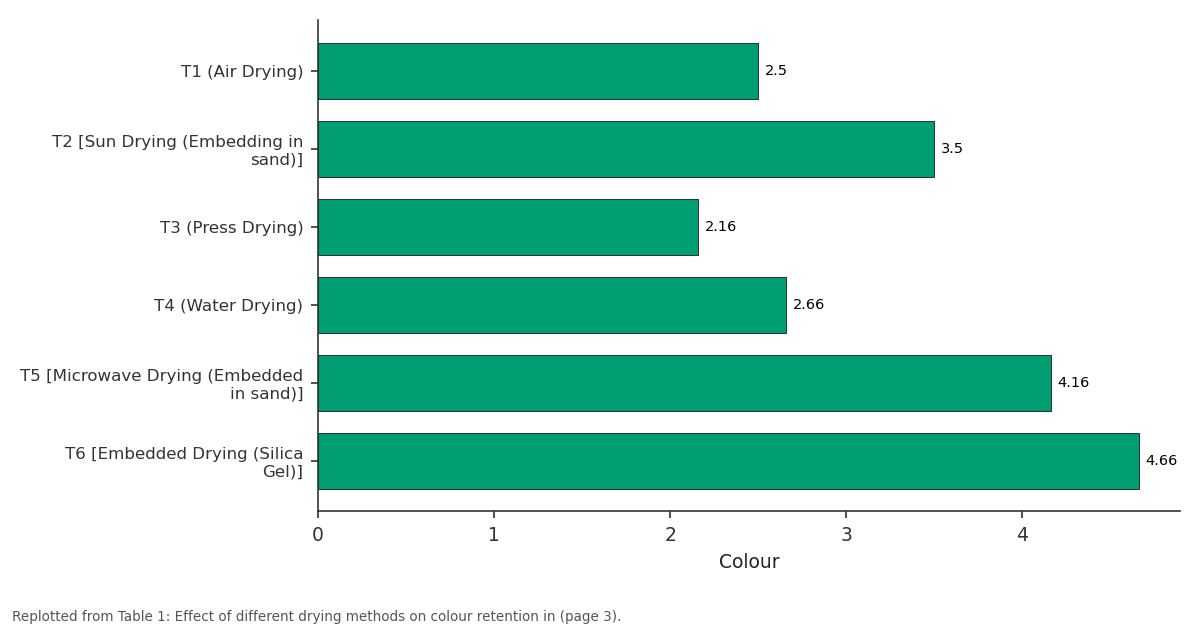
- Silica gel embedding (T6) achieved the highest color retention score of 4.66. View evidence ↗
- Silica gel embedding (T6) produced the best texture with a score of 4.83. View evidence ↗
- Silica gel embedding (T6) and microwave drying (T5) resulted in the least brittleness. View evidence ↗
- Microwave drying (T5) caused the highest moisture loss at 77.17%. View evidence ↗
- Microwave drying (T5) was the fastest method, taking only 0.003 days. View evidence ↗
- Air drying was the slowest method, requiring 358.89 hours. View evidence ↗
What it means
- The authors conclude that silica gel embedding is the optimal method for drying roses due to its superior visual quality. View evidence ↗
- Silica gel embedding was identified as the most economically efficient method, having the highest cost-benefit ratio. View evidence ↗
Visual summary
2 visualsIllustrations explain the paper; charts are replotted from the paper's own table values.
Colour: T1 (Air Drying) vs T2 [Sun Drying... vs T3 (Press Drying) vs T4 (Water Drying) vs T5 [Microwave Drying...
Replotted from Table 1 (page 3) of the original paper. Every bar is the paper's own table value.
View source evidence ↗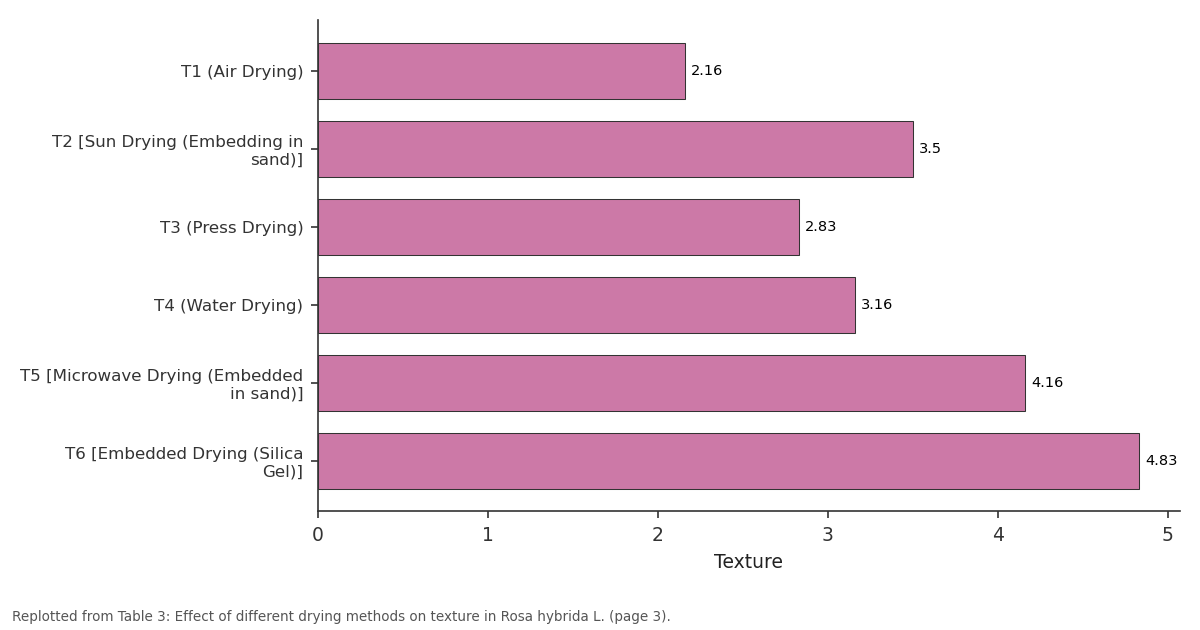
Texture: T1 (Air Drying) vs T2 [Sun Drying... vs T3 (Press Drying) vs T4 (Water Drying) vs T5 [Microwave Drying...
Replotted from Table 3 (page 3) of the original paper. Every bar is the paper's own table value.
View source evidence ↗Figures & tables
From the original paper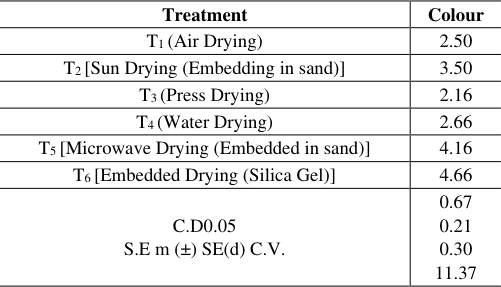 Table 1Page 3
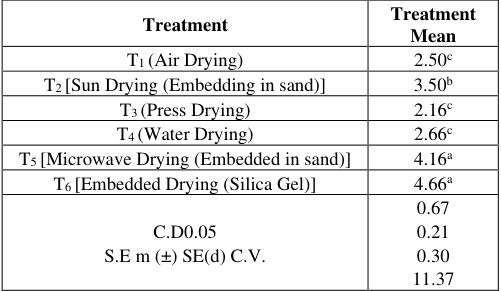 Table 2Page 3
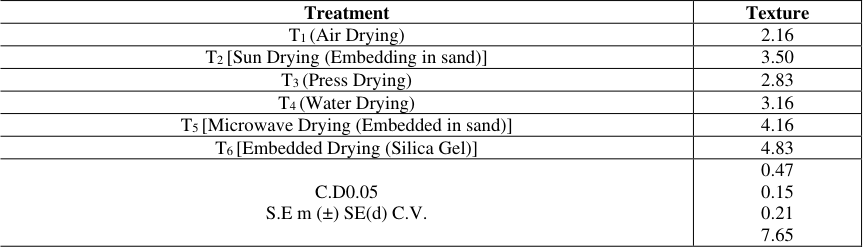 Table 3Page 3
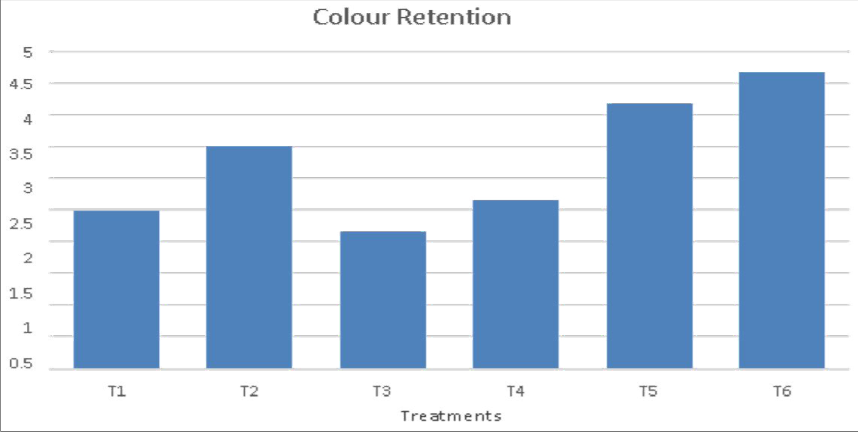 Figure 1Page 3
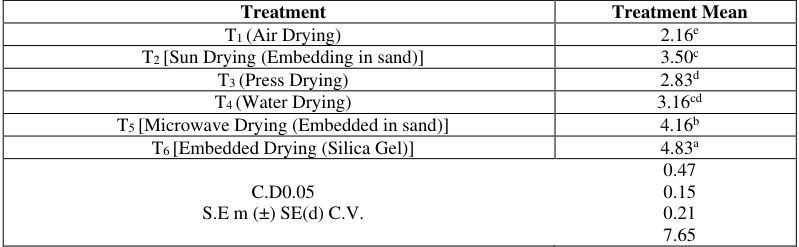 Table 4Page 4
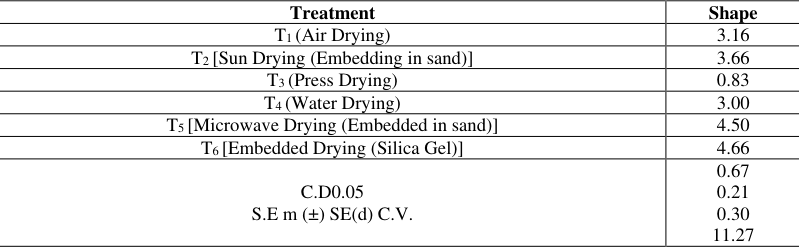 Table 5Page 4
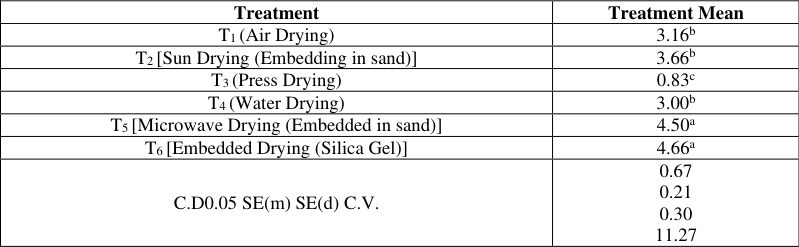 Table 6Page 4
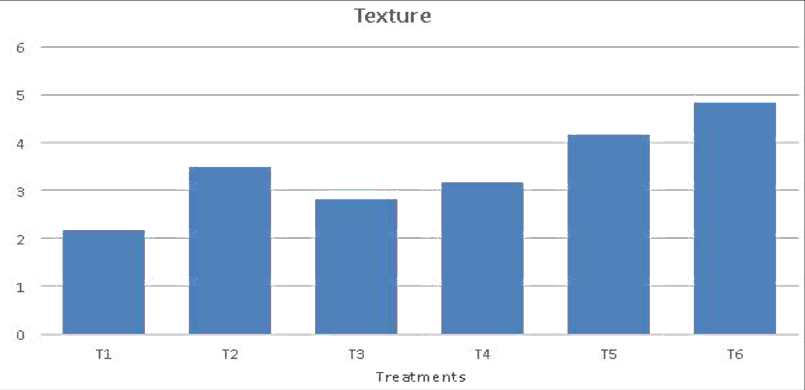 Figure 2Page 4
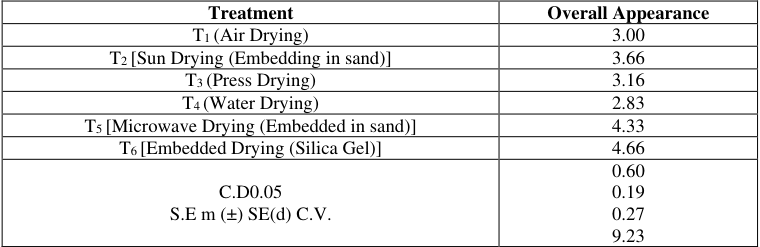 Table 7Page 5
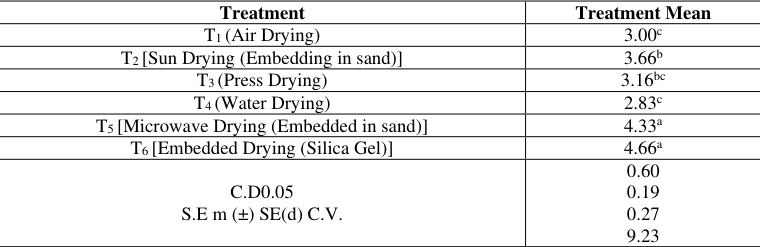 Table 8Page 5
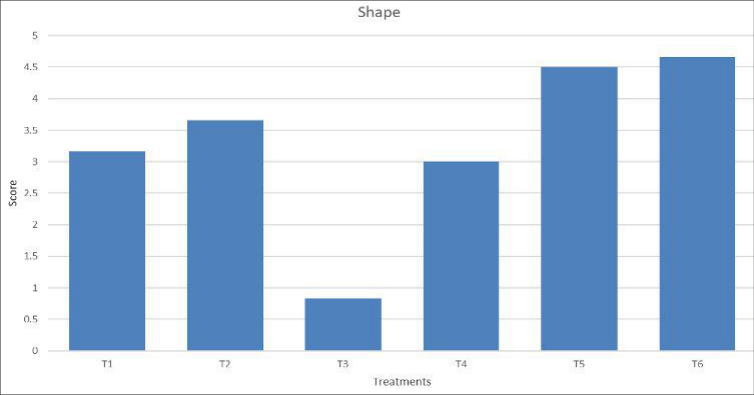 Figure 3Page 5
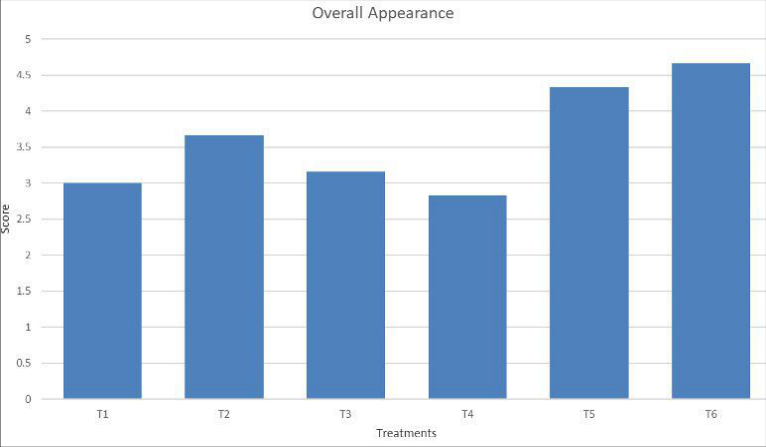 Figure 4Page 5
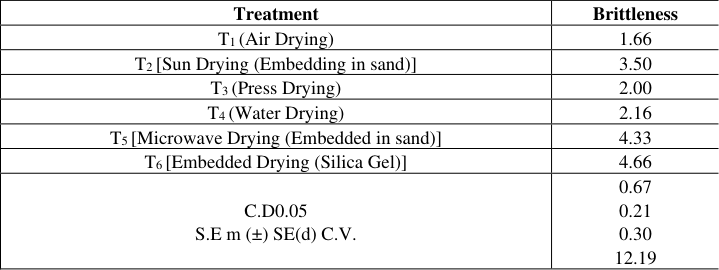 Table 9Page 6
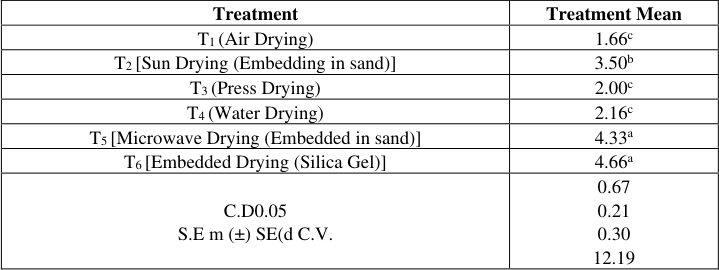 Table 10Page 6
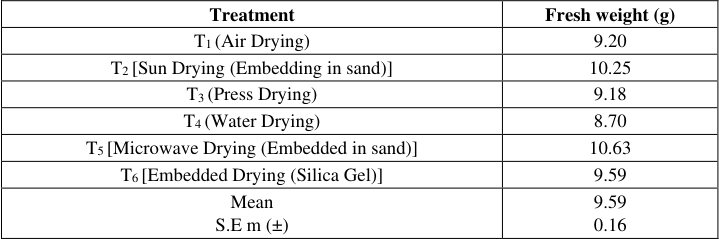 Table 11Page 6
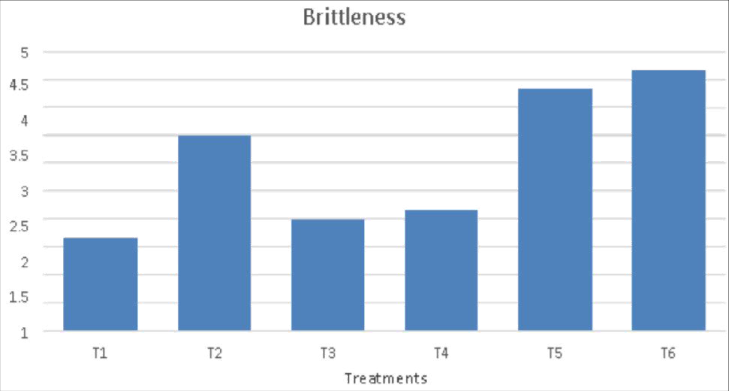 Figure 5Page 6
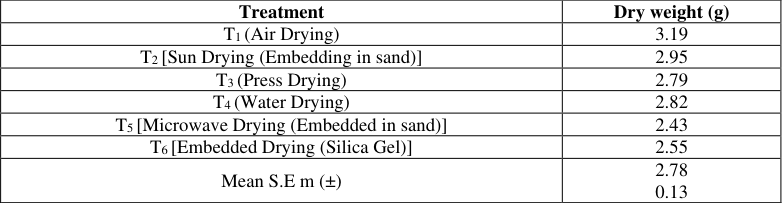 Table 12Page 7
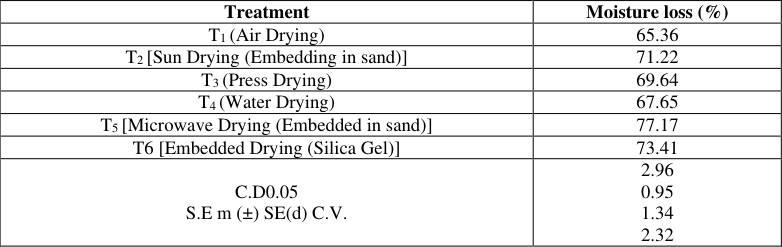 Table 13Page 7
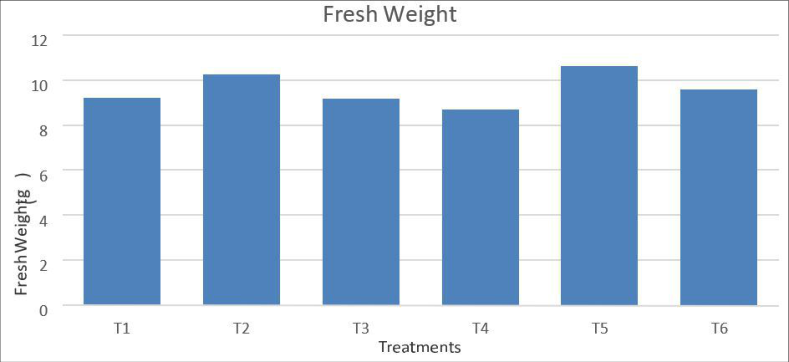 Figure 6Page 7
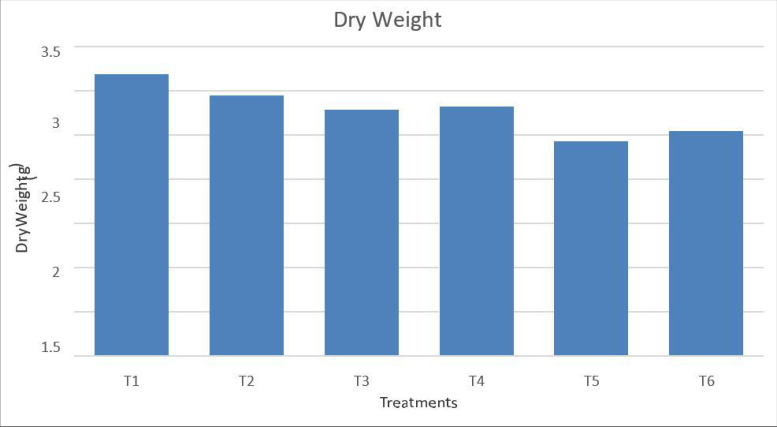 Figure 7Page 7
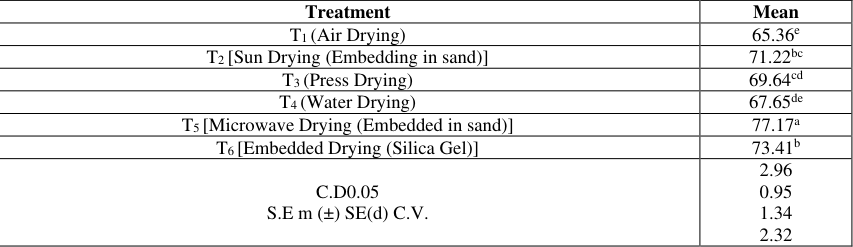 Table 14Page 8
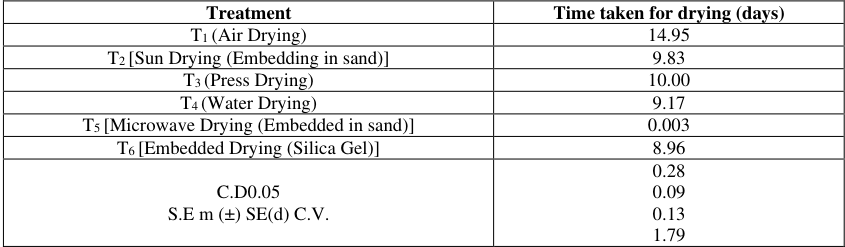 Table 15Page 8
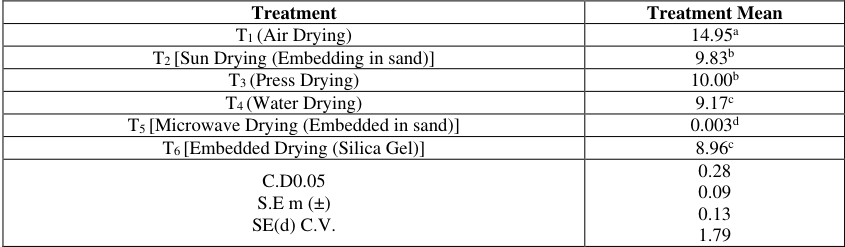 Table 16Page 8
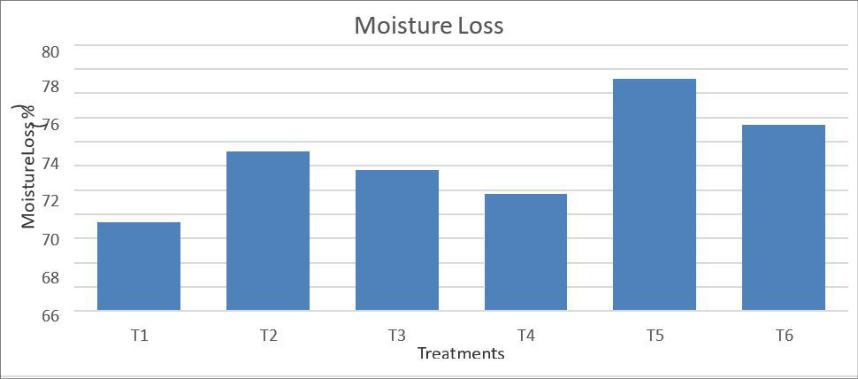 Figure 8Page 8
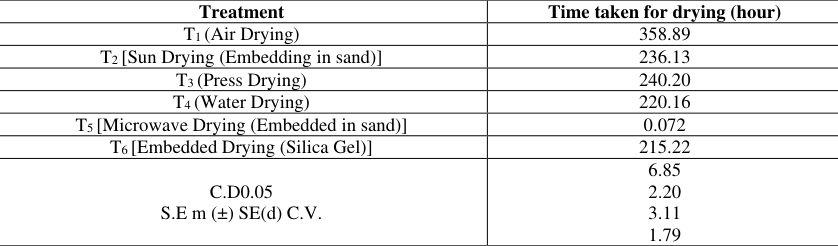 Table 17Page 9
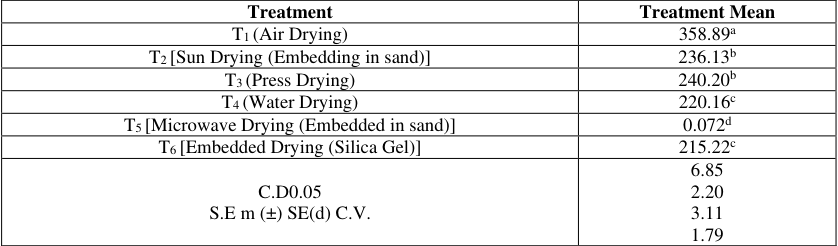 Table 18Page 9
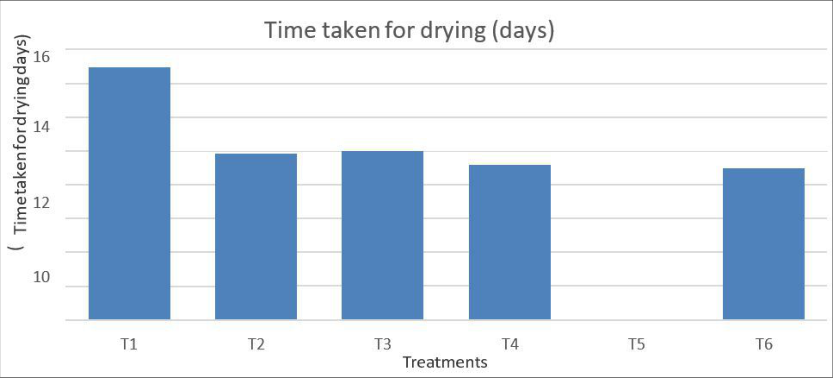 Figure 9Page 9
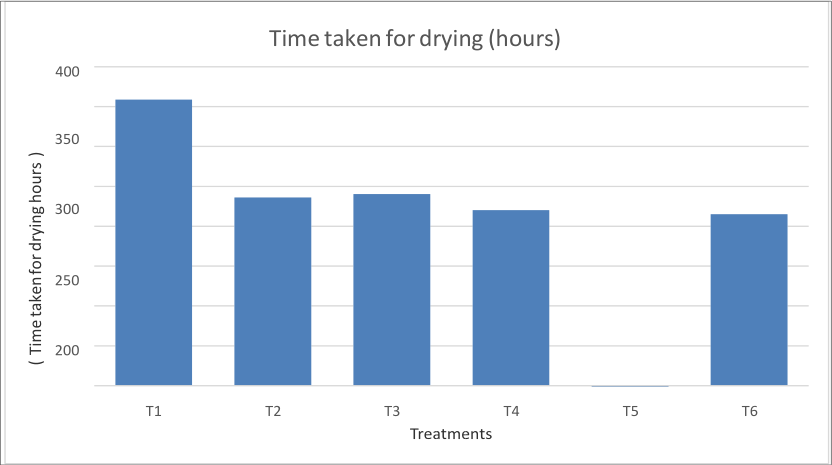 Figure 10Page 9
Introduction
Flowers have ingrained themselves in human culture as objects of admiration, but their beauty is often short-lived. Fresh flowers, while charming, can be costly and are confined to specific seasons. The practice of drying flowers serves as a preservation technique, allowing for long-lasting decoration by removing moisture from various botanical components. Dried flowers, encompassing petals, buds, stems, roots, fruits, and leaves, offer enduring qualities, environmental friendliness, and widespread accessibility. With approximately 80% of flower species effectively dried and preserved in natural settings, the dried flower industry holds significant promise, potentially generating employment opportunities, particularly benefiting housewives and women in rural areas. The global market for dried flowers is expansive, with India's dried flower exports reaching 4.17 million USD between April and November 2020-2021. Key trading partners include the USA, UAE, Singapore, Germany, and Canada. Drying flowers not only adds value to raw materials but also contributes to increased income for farmers. The market potential for dried flowers is underscored by their unique attributes, durability, aesthetic appeal, and year-round availability. To capitalize on this potential, fortifying the market, providing financial support, offering entrepreneurship development training, and raising awareness through workshops are essential steps. Various drying methods, including air drying, sun drying, oven and microwave drying, freeze drying, water drying, and embedded drying, are employed to create decorative floral craft items. Among these, air drying is common, involving suspending plant materials to expedite the drying process in a wellventilated area. Other methods include sun drying, press drying, water drying, hot air-drying, and microwave drying. Silica gel is recognized as an effective desiccant. The choice of drying method influences the quality of the dried flowers, and techniques like microwave drying are valued for their quick results while retaining colour and shape. In the context of the importance of drying flowers, this study aims to investigate optimal drying methods for roses, focusing on shape, colour retention, and overall acceptability. With the objectives including standardizing drying techniques for Rose (Rosa hybrida L.), preparing quality dry flower products. The study aims to provide valuable insights into enhancing the longevity and aesthetic appeal of dried roses, ultimately improving consumer satisfaction and acceptance in the market.
Materials and Methods
The study was conducted at the floriculture laboratory of Pt. The experiment involved six different drying methods for roses, namely air drying, sun drying (embedding in sand), press drying, water drying, microwave drying (embedded in sand), and embedded drying (silica gel). The study followed a Completely Randomized Design (CRD), with three replications. Each treatment comprised five roses, and observations were made on three roses per replication. The study collected both qualitative and quantitative data. Visual quality parameters included colour, texture, shape, overall appearance (acceptability), and brittleness, scored on a 5point scale. Quantitative parameters included fresh weight, dry weight, moisture loss percentage, and time taken for drying (in days and hours). Economic aspects were analysed through the costbenefit ratio, considering total costs, gross returns, and net returns treatment-wise. Two embedding media, sand and silica gel, were used in the experiments. Airtight plastic containers were employed for embedding the flowers, ensuring a controlled drying environment. The study meticulously detailed the preparation of the embedding media and containers.
Results and Discussion
Visual quality parameters (VQP) Colour: The impact of various drying methods on the colour retention of dried flowers is evident in Table 1, 2) and Figure 1. Notably, embedded drying using silica gel (T 6 ) achieved the highest score of 4.66, comparable to microwave drying (T 5 ), indicating superior colour retention. These findings align with Datt et al. (2007) [10] , who observed that silica gel's structural properties, characterized by interconnected microscopic pores, effectively preserved the colour pigments of dried flowers.
| Treatment | Colour |
|---|---|
| T1 (Air Drying) | 2.50 |
| T2 [Sun Drying (Embedding in sand)] | 3.50 |
| T3 (Press Drying) | 2.16 |
| T4 (Water Drying) | 2.66 |
| T5 [Microwave Drying (Embedded in sand)] | 4.16 |
| T6 [Embedded Drying (Silica Gel)] | 4.66 |
| C.D0.05 S.E m (±) SE(d) C.V. | 0.67 0.21 0.30 11.37 |
Table text extracted from the original PDF; superscript letters are shown inline. The original table image is below.
View original table image
Texture
Table 3, 4), and Figure 2 present the influence of drying methods on the texture of dried flowers. Embedded drying with silica gel (T 6 ) scored the highest at 4.83, emphasizing its positive impact on texture. This result is consistent with previous studies (Nair et al., 2011; Sindhuja et al., 2015) [27,41] endorsing silica gel embedding as a method for achieving optimal texture in various flower types.
| Treatment | Texture |
|---|---|
| T1 (Air Drying) | 2.16 |
| T2 [Sun Drying (Embedding in sand)] | 3.50 |
| T3 (Press Drying) | 2.83 |
| T4 (Water Drying) | 3.16 |
| T5 [Microwave Drying (Embedded in sand)] | 4.16 |
| T6 [Embedded Drying (Silica Gel)] | 4.83 |
| C.D0.05 S.E m (±) SE(d) C.V. | 0.47 0.15 0.21 7.65 |
Table text extracted from the original PDF; superscript letters are shown inline. The original table image is below.
View original table image
Shape
The shape of dried flowers, as affected by different drying methods, is detailed in Table 5,6), and Figure 3. Once again, embedded drying with silica gel (T 6 ) and microwave drying (T 5 ) stood out with the highest score of 4.66. The process of drying with silica gel maintained the original shape, aligning with observations by Kher and Bhutani (1979) [20] .
| Treatment | Shape |
|---|---|
| T1 (Air Drying) | 3.16 |
| T2 [Sun Drying (Embedding in sand)] | 3.66 |
| T3 (Press Drying) | 0.83 |
| T4 (Water Drying) | 3.00 |
| T5 [Microwave Drying (Embedded in sand)] | 4.50 |
| T6 [Embedded Drying (Silica Gel)] | 4.66 |
| C.D0.05 S.E m (±) SE(d) C.V. | 0.67 0.21 0.30 11.27 |
Table text extracted from the original PDF; superscript letters are shown inline. The original table image is below.
View original table image
Overall appearance (acceptability)
Table 7, 8), and Figure 4 underscore the impact of drying methods on the overall appearance of dried flowers. Embedded drying with silica gel (T 6 ) and microwave drying (T 5 ) achieved the highest score of 4.66. This aligns with Kher and Bhutani's (1979) [20] observation that embedded drying in silica gel contributes to the best appearance of dried flowers.
| Treatment | Overall Appearance |
|---|---|
| T1 (Air Drying) | 3.00 |
| T2 [Sun Drying (Embedding in sand)] | 3.66 |
| T3 (Press Drying) | 3.16 |
| T4 (Water Drying) | 2.83 |
| T5 [Microwave Drying (Embedded in sand)] | 4.33 |
| T6 [Embedded Drying (Silica Gel)] | 4.66 |
| C.D0.05 S.E m (±) SE(d) C.V. | 0.60 0.19 0.27 9.23 |
Table text extracted from the original PDF; superscript letters are shown inline. The original table image is below.
View original table image
Brittleness
The brittleness of dried flowers, as influenced by different drying methods, is presented in Table 9, 10), and Figure 5. Once again, embedded drying with silica gel (T 6 ) and microwave drying (T 5 ) exhibited the least brittleness, reinforcing the idea that silica gel embedding prevents significant fluctuations in the microclimate, ensuring even drying.
| Treatment | Brittleness |
|---|---|
| T1 (Air Drying) | 1.66 |
| T2 [Sun Drying (Embedding in sand)] | 3.50 |
| T3 (Press Drying) | 2.00 |
| T4 (Water Drying) | 2.16 |
| T5 [Microwave Drying (Embedded in sand)] | 4.33 |
| T6 [Embedded Drying (Silica Gel)] | 4.66 |
| C.D0.05 S.E m (±) SE(d) C.V. | 0.67 0.21 0.30 12.19 |
Table text extracted from the original PDF; superscript letters are shown inline. The original table image is below.
View original table image
The initial fresh weight of flowers before any treatment is detailed in Table 11 and Figure 6. Careful selection ensured uniform weights, with an average of 9.59 g and a range of 8.70-10.63 g.
| Treatment | Fresh weight (g) |
|---|---|
| T1 (Air Drying) | 9.20 |
| T2 [Sun Drying (Embedding in sand)] | 10.25 |
| T3 (Press Drying) | 9.18 |
| T4 (Water Drying) | 8.70 |
| T5 [Microwave Drying (Embedded in sand)] | 10.63 |
| T6 [Embedded Drying (Silica Gel)] | 9.59 |
| Mean S.E m (±) | 9.59 0.16 |
Table text extracted from the original PDF; superscript letters are shown inline. The original table image is below.
View original table image
Table 12 and Figure 7 present the dry weight of flowers after applying different treatments, resulting in an average weight range of 2.43-3.19 g.
| Treatment | Dry weight (g) |
|---|---|
| T1 (Air Drying) | 3.19 |
| T2 [Sun Drying (Embedding in sand)] | 2.95 |
| T3 (Press Drying) | 2.79 |
| T4 (Water Drying) | 2.82 |
| T5 [Microwave Drying (Embedded in sand)] | 2.43 |
| T6 [Embedded Drying (Silica Gel)] | 2.55 |
| Mean S.E m (±) | 2.78 0.13 |
Table text extracted from the original PDF; superscript letters are shown inline. The original table image is below.
View original table image
The percentage of moisture loss, calculated from fresh and dry weights, is outlined in Table 13, 14 and Figure 8. Microwave drying (T 5 ) exhibited the highest moisture loss (77.17%), attributed to the rapid release of moisture due to heat application.
| Treatment | Moisture loss (%) |
|---|---|
| T1 (Air Drying) | 65.36 |
| T2 [Sun Drying (Embedding in sand)] | 71.22 |
| T3 (Press Drying) | 69.64 |
| T4 (Water Drying) | 67.65 |
| T5 [Microwave Drying (Embedded in sand)] | 77.17 |
| T6 [Embedded Drying (Silica Gel)] | 73.41 |
| C.D0.05 S.E m (±) SE(d) C.V. | 2.96 0.95 1.34 2.32 |
Table text extracted from the original PDF; superscript letters are shown inline. The original table image is below.
View original table image
The significant effect of different drying methods on the time taken for drying is depicted in Table 15, 16 and Figure 9. Microwave drying (T 5 ) required the minimum time (0.003 days), emphasizing its efficiency in rapidly drying flowers.
| Treatment | Time taken for drying (days) |
|---|---|
| T1 (Air Drying) | 14.95 |
| T2 [Sun Drying (Embedding in sand)] | 9.83 |
| T3 (Press Drying) | 10.00 |
| T4 (Water Drying) | 9.17 |
| T5 [Microwave Drying (Embedded in sand)] | 0.003 |
| T6 [Embedded Drying (Silica Gel)] | 8.96 |
| C.D0.05 S.E m (±) SE(d) C.V. | 0.28 0.09 0.13 1.79 |
Table text extracted from the original PDF; superscript letters are shown inline. The original table image is below.
View original table image
Time taken for drying (hour)
Table 17, 18 and Figure 10 further elaborate on the time taken for drying, highlighting the rapid drying achieved by microwave drying (T 5 ), taking only 0.072 hours.
| Treatment | Time taken for drying (hour) |
|---|---|
| T1 (Air Drying) | 358.89 |
| T2 [Sun Drying (Embedding in sand)] | 236.13 |
| T3 (Press Drying) | 240.20 |
| T4 (Water Drying) | 220.16 |
| T5 [Microwave Drying (Embedded in sand)] | 0.072 |
| T6 [Embedded Drying (Silica Gel)] | 215.22 |
| C.D0.05 S.E m (±) SE(d) C.V. | 6.85 2.20 3.11 1.79 |
Table text extracted from the original PDF; superscript letters are shown inline. The original table image is below.
View original table image
Summary
The study, "Studies of Different Drying Methods on the shape, colour retention and overall acceptability of Rose (Rosa hybrida L.)", aimed to standardize drying techniques, produce quality dry flower products, and assess the economic viability through Cost-Benefit Ratio. The experiment was conducted at Pt. K.L.S. College of Horticulture and Research Station, Rajnandgaon, during 2022 -2023. The experiment focused on various drying methods, evaluating parameters like colour retention, texture, shape, overall appearance, brittleness, fresh weight, dry weight, moisture loss, and time taken for drying. Among the different methods, the embedded drying (silica gel) method (T 6 ) consistently outperformed others in visual quality parameters, obtaining the highest scores. The mean weight of fresh flowers used was 9.59 g, and the mean weight of dry flowers obtained was 2.78 g. The maximum moisture loss (77.17%) occurred in microwave drying (embedded in sand), while the minimum loss (65.36%) was observed in air drying. Microwave drying (embedded in sand) demonstrated the minimum time for drying in both days (0.003 days or 4.32 min.) and hours (0.072 hours or 4.32 min.), albeit with the highest moisture loss. In contrast, air drying took the maximum time (358.89 hours) for drying
Conclusion
Based on the study's findings, it can be concluded that the Embedded Drying (Silica Gel) method excelled in visual quality parameters, making it an optimal choice for drying roses. The experiment also revealed the mean weights of fresh and dry flowers, highlighted the trade-off between moisture loss and drying time, and identified the economic efficiency of the Embedded Drying (Silica Gel) method with the highest cost-benefit ratio. These conclusions provide valuable insights for enhancing the drying processes and economic considerations in rose floriculture.
Figures and tables from the paper
| Treatment | Treatment Mean |
|---|---|
| T1 (Air Drying) | 2.50c |
| T2 [Sun Drying (Embedding in sand)] | 3.50b |
| T3 (Press Drying) | 2.16c |
| T4 (Water Drying) | 2.66c |
| T5 [Microwave Drying (Embedded in sand)] | 4.16a |
| T6 [Embedded Drying (Silica Gel)] | 4.66a |
| C.D0.05 S.E m (±) SE(d) C.V. | 0.67 0.21 0.30 11.37 |
Table text extracted from the original PDF; superscript letters are shown inline. The original table image is below.
View original table image
| Treatment | Treatment Mean |
|---|---|
| T1 (Air Drying) | 3.16b |
| T2 [Sun Drying (Embedding in sand)] | 3.66b |
| T3 (Press Drying) | 0.83c |
| T4 (Water Drying) | 3.00b |
| T5 [Microwave Drying (Embedded in sand)] | 4.50a |
| T6 [Embedded Drying (Silica Gel)] | 4.66a |
| C.D0.05 SE(m) SE(d) C.V. | 0.67 0.21 0.30 11.27 |
Table text extracted from the original PDF; superscript letters are shown inline. The original table image is below.
View original table image
| Treatment | Treatment Mean |
|---|---|
| T1 (Air Drying) | 3.00c |
| T2 [Sun Drying (Embedding in sand)] | 3.66b |
| T3 (Press Drying) | 3.16bc |
| T4 (Water Drying) | 2.83c |
| T5 [Microwave Drying (Embedded in sand)] | 4.33a |
| T6 [Embedded Drying (Silica Gel)] | 4.66a |
| C.D0.05 S.E m (±) SE(d) C.V. | 0.60 0.19 0.27 9.23 |
Table text extracted from the original PDF; superscript letters are shown inline. The original table image is below.
View original table image
| Treatment | Treatment Mean |
|---|---|
| T1 (Air Drying) | 1.66c |
| T2 [Sun Drying (Embedding in sand)] | 3.50b |
| T3 (Press Drying) | 2.00c |
| T4 (Water Drying) | 2.16c |
| T5 [Microwave Drying (Embedded in sand)] | 4.33a |
| T6 [Embedded Drying (Silica Gel)] | 4.66a |
| C.D0.05 S.E m (±) SE(d C.V. | 0.67 0.21 0.30 12.19 |
Table text extracted from the original PDF; superscript letters are shown inline. The original table image is below.
View original table image
| Treatment | Mean |
|---|---|
| T1 (Air Drying) | 65.36e |
| T2 [Sun Drying (Embedding in sand)] | 71.22bc |
| T3 (Press Drying) | 69.64cd |
| T4 (Water Drying) | 67.65de |
| T5 [Microwave Drying (Embedded in sand)] | 77.17a |
| T6 [Embedded Drying (Silica Gel)] | 73.41b |
| C.D0.05 S.E m (±) SE(d) C.V. | 2.96 0.95 1.34 2.32 |
Table text extracted from the original PDF; superscript letters are shown inline. The original table image is below.
View original table image
| Treatment | Treatment Mean |
|---|---|
| T1 (Air Drying) | 14.95a |
| T2 [Sun Drying (Embedding in sand)] | 9.83b |
| T3 (Press Drying) | 10.00b |
| T4 (Water Drying) | 9.17c |
| T5 [Microwave Drying (Embedded in sand)] | 0.003d |
| T6 [Embedded Drying (Silica Gel)] | 8.96c |
| C.D0.05 S.E m (±) SE(d) C.V. | 0.28 0.09 0.13 1.79 |
Table text extracted from the original PDF; superscript letters are shown inline. The original table image is below.
View original table image
| Treatment | Treatment Mean |
|---|---|
| T1 (Air Drying) | 358.89a |
| T2 [Sun Drying (Embedding in sand)] | 236.13b |
| T3 (Press Drying) | 240.20b |
| T4 (Water Drying) | 220.16c |
| T5 [Microwave Drying (Embedded in sand)] | 0.072d |
| T6 [Embedded Drying (Silica Gel)] | 215.22c |
| C.D0.05 S.E m (±) SE(d) C.V. | 6.85 2.20 3.11 1.79 |
Table text extracted from the original PDF; superscript letters are shown inline. The original table image is below.
View original table image
References
45 in the original paper- Arvinda K, Jayanthi R. Standardization of drying techniques for chrysanthemum flowers (Dendranthema grandiflora Tzvelev). National Symposium on Recent Trends and Future Strategies in Ornamental Horticulture. Indian Society of Ornamental Horticulture. 2004;123.
- Batra A. To study the behavior of color, change in some dehydrated ornamental flowers. Int J Latest Res Sci Technol. 2015;4(4):141-144.
- Batra A. Dissemination of dry flower technology for societal good. Int J Curr Res Biosci Plant Biol. 2016;3(5):97-101.
- Bhalla R, Moona DSR, Thakur KS. Standardization of drying techniques of Chrysanthemum (Dendranthem agrandiflorum Tzvelev). J Ornamental Hort. 2006;9:159-163.
- Bhattacharjee SK, De LC. Dried flowers and plant parts. In: Advanced Commercial Floriculture. Avishkar Publishers, Jaipur. 2003. pp. 162-173.
- Boyar S, Bayhan AK, Dikmen E. Investigation on drying behavior of Isparta rose flowers (Rosa damascena mill.) Under natural shade conditions. Bulg J Agric Sci. 2013;19(2):361-374.
- Chandrasekhar R, Nirmala A, Padma M, Rajkumar M. Standardization of drying techniques of carnation (Dianthus caryophyllus L.). J Ornamental Hort. 2008;11(3):168-172.
- Chen W, Gast KLB, Smithey S. The effects of different freeze-drying processes on the moisture content, color and physical strength of roses and carnations. Scientia Horticulturae. 2000;84(3/4):321-332.
- Chungfang, Qin YH, Chen X, Zhou L. Experiments on microwave vacuum drying of rose. Chin Soc Agric Eng. 2011;27(4):389-392.
- Datta SK. Dehydration of flowers: A new diversified product for floriculture industry. In: Emerging Trends in Ornamental Horticulture. Indian Society of Ornamental Horticulture. 2004. pp. 157-161.
- Geetha CK, Rajeevan PK, Valsalakumari. In: Dry flowers. Kerela Agri. University, Trissur, Kerela. 2004. p. 80.
- Gill SS, Rupa B, Sadhna A. Standardization of drying methods for certain cut flowers. In Floriculture research trend in India. Proceedings of the national symposium on Indian floriculture in the new millennium, Lal-Bagh, Bangalore. Indian Society of Ornamental Horticulture. 2002. pp. 357-358.
- Gurjar A. Studies on Value Addition in Marigold (Tagetes erecta L.) and Chrysanthemum (Chrysanthemum morifolium Ramat.). M.Sc. Thesis, Sher-e-Kashmir University of Agricultural Sciences and Technology, Chatha, Jammu and Kashmir. 2022.
- Hemant U, Singh A, Ahlawat T. Standardization of Dehydration Technique for Greenhouse Cut Rose var. Shakira. Indian J Hort. 2016;73:99-103.
- Jain R, Jankiraman T, Kumawat GL. Drying techniques in ornamental plants. Commercial Horticulture. 2016;3(1):501-502.
- Jean L, Lesley G. The Complete guide to drying and preserving flowers. Webb and Bower Ltd, England. 1982.
- Jeevitha KM, Veena SJ. Standardization of Silica gel drying Technique of Rosa Damascena. Pharma Innovation J. 2021;10(6):1045-1048.
- Joyce DC. Dried and preserved ornamental plant material not new, but often overlooked and underrated. Acta Hort. 1998;454:133-145.
- Katoch A, Kishtwaria J, Raj D, Rana A, Dadwal M. Study on different methods of dehydration of Acroclinum flower. J Ornamental Hort. 2010;13:223227.
- Kher MA, Bhutani JC. Dehydration of flowers and foliage. Extension Bulletin No. 2, NBRI, Lucknow. 1979;20.
- Kumari DLC, Peiris SE. Preliminary investigation of preservation methods to produce dried flowers of rose and statice. Trop Agric Res. 2000;12:416-422.
- Mahapati SN, Hemlanaik H, Chougala S, Pujeri US, Kumar S. Standardization of drying temperature and time in hot air oven of gerbera var. impireal. Ecoscan. 2015;9(3&4):695-697.
- Mayak S, Halevy AH. Flower senescence. CRC Press, Boca Raton US. 1980;132.
- Meman MA, Barad AV, Varu DK. Technology for dry flower production of calendula (Calendula officinalis) flowers. Asian J Hort. 2008;3(1):1-4.
- Mishra S, Dwivedi AK, Kulshreshtha K. To study the effect of texture of flower petal and moisture content during floral dehydration. Int J Latest Res Sci Technol. 2014;3(2):144-146.
- Misra P, Banerji BK, Dwivedi AK. Dehydration of Zinnia in an oven for value addition through embedding technique. J Ornamental Hort. 2009;12(3):222-224.
- Nair B, Singh KP. Aesthetic quality of chrysanthemum (Dendranthema grandiflora T.) flowers as affected by the desiccants. J Agro Crop Sci. 2011;2(2):11-14.
- Nazki T, Imtiyaz N, Lone H, Qadri Z, Nelofer A, Rather ZA. Evaluation of dehydration techniques for product diversification in floral craft in some genera of Kashmir valley. J Ornamental Hort. 2012;15(3&4):259265.
- Nazki TI, Lone AR, Gazanfergani. Post dehydration quality and anthocyanins content of dried rose buds cv. first red as influenced by microwave duration, setting time and storage conditions. Agri Update. 2017;16771681.
- Peryam D, Pilgrim F. Hedonic scale method of measuring food preferences. Food Technol. 1957;11(S1):9-14.
- Pinder R, Namita N. Influence of dehydration techniques on color retention and related traits of Gerbera (Gerbera hybrida) flowers. Indian J Agric Sci. 2018;88(5):733-736.
- Radha R, Mahalakshmi VR. Dehydration techniques for flowers. Int J Appl Res. 2015;1(10):306-311.
- Raghupathy R, Amuthan G, Kailappan R. Dried flower: Significance Kisan World. 2000;28:39.
- Rogers BR. Drying of flowers, The Encyclopaedia of Everlastings. Michael Friedman Publishing Group, New York. 1988;199.
- Rogers J. Flower arranging. Paul Hamlyn, London. 1967;152-157.
- Sabale SN, Gupta P. Studies on microwave oven drying technique for dehydrating ornamental flowers and foliage. Pharma Innovation J. 2021;10(11):1875-1881.
- Sanjana NJ, Veen SJ. A study on dehydration of Dutch rose and value-added products. J Pharmacognosy Phytochem. 2020;9(3):1217-1220.
- Sankari and Anand. Process of making-waste into wealth-dry flower technology. Asian J Hort. 2014;9(2):466-483.
- Sharma G, Chaudhary SVS, Gupta YC, Dhiman SR, Dogra RK, Gupta RK. Effect of Microwave Oven Drying on Production Quality of Dry flowers of roses. Int J Curr Microbiol Appl Sci. 2019;8:300-308.
- Sindhuja S, Padmalata T, Padmavathamma AS. Effect of embedding media on production of quality dry flowers in carnation. Plant Archives. 2015;15(1):27-33.
- Sindhuja S, Padmalatha T, Padmavathamma AS, Prasad ALN. Studies on Different Methods of Drying in Carnation. Int J Curr Microbiol Appl Sci. 2017;6:870882.
- Singh A, Dhaduk KB. Effects of dehydration techniques in some selected flowers. J Ornamental Hort. 2005;8:155-156.
- Singh A, Dhaduk BK, Shah RR. Effect of Different Temperatures and Embedding Media on Flower Dehydration of Zinnia (Zinnia linearis Benth). Indian J Hort Physiol. 2004;9:383-387.
- Wilson D, Attri BL, Sharma SK. Evaluation of Different Methods for Drying of Chrysanthemum Flowers. Progressive Horticulture. 2015;47:167-169.
- Wilson D, Sumanthapa, Singh DR. Drying technologies of commercial flowers-An overview. Int J Res Appl Nat Soc Sci. 2016;4(3):111-120.
Cited by 1
From OpenAlex, OpenCitations and reference lists read by Scinovex
- Assessment of suitable Embedding media for Drying of Rose and Marigold Flowers
Geeta Nishad, Neelima Netam, Bharti Sao, Jitendra Sahu, Namita Singh, Pradip Mohale · International Journal of Agriculture and Food Science · 2026
The present investigation entitled “Evaluation of Embedding Media on Drying of Rose (Rosa hybrida) and Marigold (Tagetes erecta) Flowers” was conducted during the academic session 2024–25 at the Department of Floriculture and Landscaping, College of Horticulture and Research Station, Mahatma Gandhi University of horticulture and forestry, Durg (Chhattisgarh) to assess the effect of different embedding media on drying efficiency and quality of dried flowers. The experiment was laid out in a Completely Randomized Design (CRD) with two factors, namely flowers and embedding media, comprising 14 tr