
Research article · 2024 · Full text
International Journal of Research in AgronomyArtificial intelligence and internet of things (IoT) approaches in agriculture
Volume 7(3S) · Pages 09–13 · DOI: 10.33545/2618060x.2024.v7.i3sa.366 ↗
Research areasSmart Agriculture and AIIoT and Edge/Fog ComputingInternet of Things and AI
Abstract
Author-writtenInternet of Things (IoT), and virtual and expanded reality. Advancements like man-made intelligence and IoT have been utilized in farming for quite a while, alongside different types of cutting-edge computer science. There has been a change as of late toward contemplating how to put this new innovation to utilize. Agriculture has given a huge part of humankind's food for millennia, with its most striking commitment being the boundless utilization of compelling agricultural practices for a many crop types. The advancement of cutting-edge IoT skill with the capacity to screen agricultural ecosystems and assurance for quality produce is in progress. Smart Agriculture keeps on confronting considerable obstacles because of the boundless scattering of methods of agriculture because of arrangement and organization of IoT and artificial intelligence gadgets, the sharing of information and organization, interoperability, and the analysis and storage of tremendous information amounts. Agrarian innovations have arisen to upgrade sustainability and find more successful farm strategies. This envelops all digitalization and robotization processes in business and our regular routines, including Large Information, Artificial Intelligence (AI), robots, the Internet of Things (IoT), and virtual and expanded reality. This paper looks at the condition of innovative work in Smart Agriculture, focuses on the ongoing type of data, and proposes a Web of Things (IoT) and artificial intelligence (AI) structure as a beginning stage for Smart Agriculture. The more use of Precision Agriculture technologies having the services of smart farming is more important not only for improving the economic performance of farm but also for the food security of increasing population.
Summary
Source-checkedPlain-language reading of the full paper, prepared with AI and checked against the text. Each point links to the authors' own words.
Why it matters
- Agriculture is fundamental to human survival, having provided the majority of the world's food for thousands of years through various farming practices. View evidence ↗
- Adopting Precision Agriculture and smart farming is critical for enhancing farm profitability and ensuring food security for a growing global population. View evidence ↗
- The agricultural sector faces a crisis where the next generation of farmers is leaving due to high costs, low production, and poor soil maintenance. View evidence ↗
The question
- The paper aims to review the current state of innovation in Smart Agriculture and propose a framework combining the Internet of Things (IoT) and Artificial Intelligence (AI). View evidence ↗
What they did
- The authors conducted a review of existing innovative work and data types to develop a proposed AI and IoT structure for smart farming. View evidence ↗
What they found
- Agricultural drones, whether ground or air-operated, improve the efficiency of soil assessment, infestation monitoring, and crop health evaluation. View evidence ↗
- AI-driven agricultural robots increase efficiency and save time by replacing manual labor in monitoring and harvesting tasks. View evidence ↗
- Data from 20 years of study in India shows weed species infestation varies by environment: 60-70 in humid/coastal areas, 30-40 in semi-arid, and 15-20 in arid regions. View evidence ↗
- Weeds cause significant yield losses: 5% in commercial, 10% in semi-commercial, 20% in subsistence, and 37-79% in dry land agriculture. View evidence ↗
- A fruit-picking robot using OHTA color space and an Otsu threshold algorithm achieved a fruit extraction rate of over 95%. View evidence ↗
- Robots for greenhouses were developed to protect human workers from health risks, including skin diseases and mortality, caused by pesticides in poorly ventilated areas. View evidence ↗
- Lab-tested AI weed recognition systems can precisely calculate and apply herbicide amounts, reducing costs and crop damage. View evidence ↗
What it means
- The authors conclude that integrating AI and IoT is essential for the advancement of the agricultural industry. View evidence ↗
- The authors recommend using AI to automate repetitive and laborious tasks like weeding, spraying, and harvesting to increase productivity and precision. View evidence ↗
- A major limitation is that robots capable of operating in unpredictable, real-world agricultural environments are not yet commercially available due to a lack of suitable algorithms. View evidence ↗
- The reliance of most AI systems on internet connectivity limits their practical application in remote or rural farming areas. View evidence ↗
Visual summary
1 visualsIllustrations explain the paper; they do not show study data.
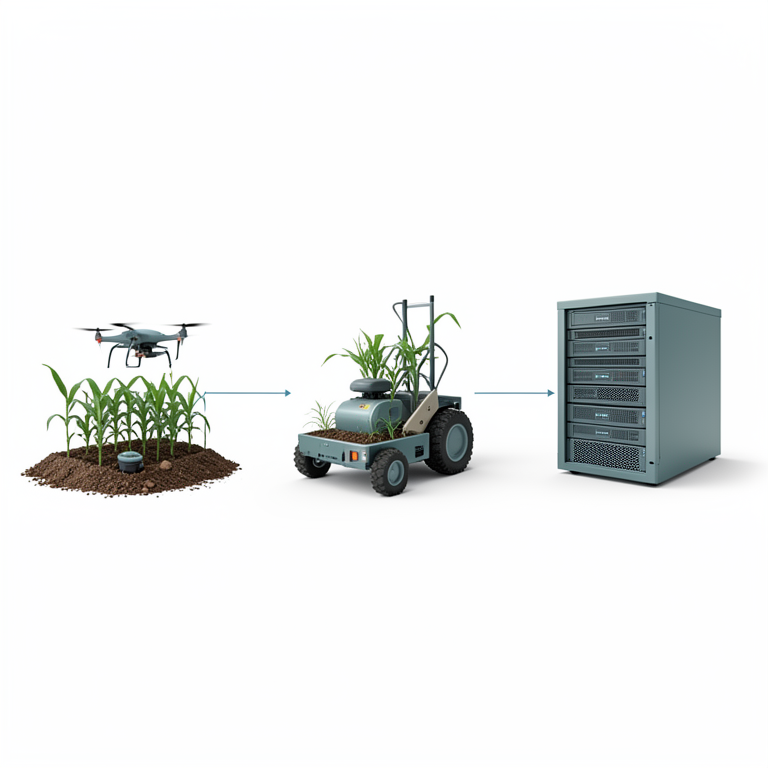
Smart Agriculture Framework
AI-generated conceptual illustration (a corn field with integrated smart farming technology). It explains the idea and does not show study data.
View source evidence ↗Figures & tables
From the original paper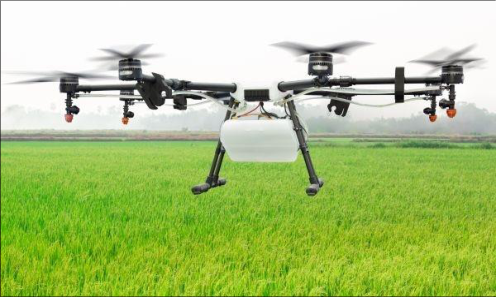 Figure 1
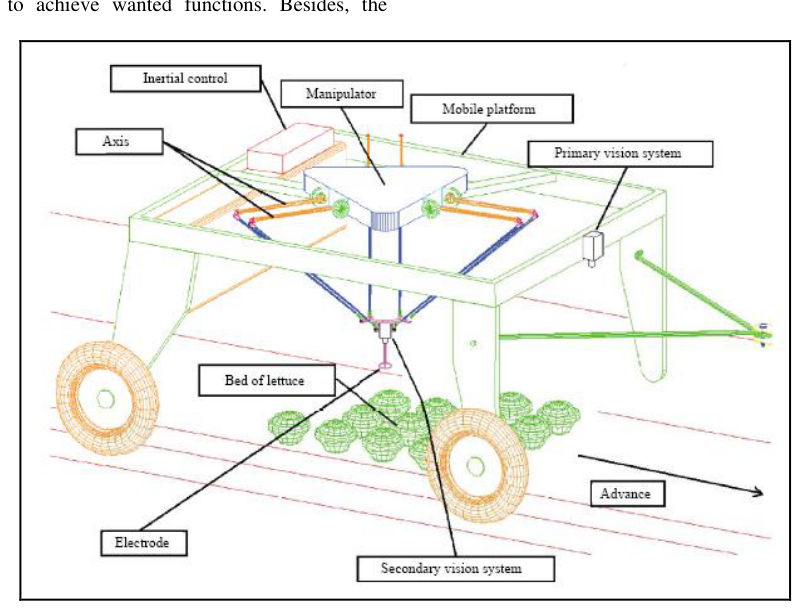 Figure 2
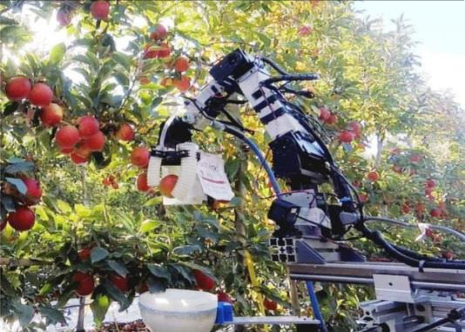 Figure 3
Introduction
Precision Agriculture (PA), which comprises of applying inputs (what is required) when and where is required, has turned into the new wave of the cutting edge of modern agriculture revolution upset and these days, it is being upgraded with an increment of farm information frameworks because of the accessibility of bigger measures of information. The Precision Agriculture innovations expanded net returns and working benefits (Zhang, 2019 Schimmelpfennig, 2016) [33,29] . Additionally, while considering the climate, new advancements are progressively being applied in the production of farm to keep up with the sustainability of farm production. At the same time, the adaptability of these innovations includes vulnerability and tradeoff (Nierenberg et al., 2019) [20] . Farms that choose to be innovation driven somehow show valuable advantages, such as economically sound and work saving, having an expanded production or a decrease of expenses with the least possible effort, and delivering quality food with greater natural practices (Reyns, 2002) [25] . However, taking these benefits to the farm will depend, not just on the readiness of producers for adopting new advancements in their fields but it also depends on the potential of farm regarding scale economies, as overall revenue increments relevant with size of farm. The more use of Precision Agriculture technologies having the services of smart farming is more important not only for improving the economic performance of farm but also for the food security of increasing population (Accenture Digital, 2019) [1] . Agricultural families loosing the next generation farmers as they are burdened by the increased agriculture expenditure, low per capita production, deficient soil upkeep, and shifting the occupations that are either non-agriculture or preferred agriculture over (J. Roux, 2019) [15] .
Status of artificial intelligence in agriculture Soil Management
Soil is one of the main elements of effective agriculture also the main source of nutrition and stores the water, proteins, nitrogen, phosphorus and potassium that are critical for appropriate development and growth. Soil condition can be upgraded with compost and manure, which further develops soil aggregation and porosity and with an alternate of tillage system for the reduction of soil physical degradation. Along with soil management such as factors which are negative like soil borne pollutants and pathogen could be reduce (Chukwu and Ogwugwam, 2019) [11] . AI can be utilized to make soil maps, which assists with represent soil landscape relations and different layers and extents of soil underground (Elijah, 2018) [12] .
Weed Management
The information gathered from various Indian agro-ecological regions over a time of 20 years shows that most often infestation of weed species number in Indian agriculture system varies from 60 to 70 in humid, per-humid, sub humid, island and coastal environments, 30-40 in semi-arid and 15-20 in arid environments (Dixit et al., 2008) [9] . Weeds were accounted to cause yield reduction of 5% in commercial agriculture, 10% in semi commercial agriculture, 20% in subsistence agriculture (Choudhury and Singh, 2015) [8] and 37-79% in dry land agriculture (Singh et al., 2016) [30] . Although spraying of herbicides is frequently used to suppress the weeds, it adversely affects general health and the abundance use can cause the environmental pollution. In this way, AI based weed recognition system have been tested in labs for calculating the spray amount in precision ascertain the exact measure of shower to be utilized and to splash on the target locality precisely, which also cut the costs and the reduces the chances of harming crops (Partel et al., 2019) [22] .
Internet of Things (IoT) Technology uses
The Internet of Things (IoT) is a system consisted of computing devices, mechanical machines and different items that are correlated, and each is furnished with a one of a kind identifier and has the capacity of information move. In this way, humanto-human or human-to-PC connections can be stayed away. Internet of Things (IoT) is a progression based on many existing innovation, for example, cloud computing, wireless sensor networks (WSNs) and RF Identification. IoT can be applied in complex fields, like precision agriculture, monitoring, precision farming, greenhouse produce tracking and tracing and agricultural machinery. The IoT applies information examination in different ways, and the information are in different structures, like sensor information, sound, picture and video. Regions that data analysis is crucial to incorporate forecast, management of storage capacity, management of farm, decision making, accurate application, insurance, protection, etc. (Elijah and Member, (2018) [12]
Smart greenhouses
The Internet of Things might assist with improving yield in smart greenhouses by considering the advancement of corresponding control frameworks. They utilize sensors to give a directed environment for the yields that they develop. The framework is checked from a distance, and the information handling is done through the utilization of cloud servers (Gai et al., 2016) [16] .
Agricultural drones
The drones that are both on the ground operated and air operated can help in the assessment of crop health, observing of infestation, and the assessment of soil with more efficiency. They might be utilized for the extraction of continuous field information based, the planting of seeds, irrigation system management, and the crop spraying (Lakhwani et al., 2018) [17] . The data that was capture might be utilized to make forecasting of production, external impacts mapping and assess levels of nutrients. (Rajesh Aggarwal, 2022) [24] Monitoring of current weather Internet of Things can connect with smart sensors can help to accumulate continuous climate and weather information. Producers can more readily investigate their harvest necessities with the assistance of an intensive projection (Kale and Patel, 2019) [28] . Producers also get cautions from certain systems, permitting them to protect their yields if serious weather conditions strikes.
Agricultural robots
One field in which AI play a crucial role is the system of robotics and the incorporation of robotics in agriculture also improves the efficacy, authenticity and accuracy have been endeavored for quite a long time due to which drastically replaces the manual labor needed with automatic laborintensive work. Mechanization are keys to pushing social peculiarities like aging population and diminishing population, but to have the option to achieve the exact and complex tasks that were customarily perform by producer to keep up with the great quality generally stays as an incredible test. The investigation of robots for rural purposes started as soon as during the 1980s, and Japan initially made a robot that can splash pesticide (Bxwa et al., 2014) [3] . The underlying inspiration for planning robots well defined for greenhouse environment was that human administrators are sensitive against pesticides, fungicides and other synthetic items particularly in the warm and poor ventilation greenhouse environment, which caused them skin illnesses, persistent sicknesses and even mortality (Mandow et al., 1996) [19] . Agricultural robots reduce the requirement of manual work and save time by playing out various assignments all the while on farm. They aid agricultural checking and harvesting in a manner that is more compelling than using people. They have gotten guidance in simulated intelligence to keep up with the yield's quality while additionally reduces the spread of weeds. These gadgets can grade the produce as per quality and pack it in an undeniably way than conventional systems (Rajeswari et al., 2017) [27] . The utilization of Al in agriculture gives help to farmers the objectives of upgrading their result and limiting adverse consequences on the climate. A 2003 design aimed to test a robotic platform for weed population mapping and ease of use of the four wheel framework of which its usefulness is predominately done with implanted regulators and standard correspondence protocols (Bak et al., 2004) [6] . To develop weed administration, one more review directed in 2003 underlined on recognizing crops and weeds to find exact spots for herbicide application. Image recognition of species focusing on plant morphology is one of the most authentic methods having the characteristics like border patterns, leaf edge and overall shape is determined, then there will be the interpretation of plant type. However, due to variations in measurements like lighting conditions, distortion of the shape of the leaf and position and the way that youthful plants fluctuate essentially due to various thrive dates, development rate and variety in changing environments likewise to moisture and temperature to recognize between weeds and crop remains testing. likewise it shows that the gadget needs to learn significant features for itself in view of neural network (NN) approaches to achieve wanted functions. Besides, the selectivity of herbicides being utilized in fields decreases the complete amount involved and accordingly can lessen herbicide contamination in water (M J et al., 2003) [2] . An Autonomous Fruit Picking Machine (AFPM) for harvesting apples published in 2008 focused on designing a flexible gripper, which ensured the accuracy that was crucial for picking apple by apple instead of harvesting many in one go and therefore minimized economic loss due to damages of apples' qualities (Baeten et al., 2007) [5] . A fruit produce picking robot published in 2013 has a programmed extraction technique applied to changing agricultural foundation for vision system, and the strategy depends on features in OHTA color space and an improving Otsu threshold algorithm. The OHTA color space has color features that changes color extraction in one-dimension rather than three-dimension. A new color feature in OHTH color space is first defined, and then an Otsu threshold algorithm harvest the fruit objects based on properties in OHTA color space. The distinction in colors fulfills the need to identify ripe fruits, and the extract rate is more than 95%, indicating its precision and efficacy (Bxwa et al., 2014) [3] .
Prediction of yield
The prediction of crop yield is very advantageous for advertising procedures and yield cost assessment. Additionally, in the time of accuracy of related features that have direct impact on harvest can also be possible through prediction models. An artificial neural network model employing back propagation learning algorithm to predict yield from the soil parameters (Liu et al, 2005) [13] . The other remarkable works include ( [18,32,4] .
Challenges of ai use in agriculture Big Data Requirement
A real-time AI system needs to screen a huge volume of information. The system should filter through a large part of the approaching information. However, it must remain responsive to important or unexpected events Washington et al.,1989 [23] . An inside and out information on the task of the system is expected from a field master and only extremely related data ought to be utilized for improving the system's speed and precision. The improvement of a farming expert system requires the consolidated efforts of experts from many fields of agriculture, and must be created with the participation of the cultivators who will utilize it (Rajotte et al., 1992) [10] .
Expensive Data Cost
Most AI systems are based on internet which may decreases or limit their usage, particularly in rural or remote areas. The government can support producers by designing a web service enabling device with cheap tariff to uniquely work with the AI systems for producers. Also, a form of "how to use" orientation (training and re-training) will definitely prove to help farmers for the adaptability the use of AI on the farm.
Response Time and Accuracy
The majority of the system limited either in response time or exactness, or even both. A system postpone the influences a client's determination of undertaking technique. Strategy determination is estimated to be based on an expense capability joining two variables: (1) the work expected to synchronize input system accessibility, and (2) the accuracy level managed. Individuals trying to limit effort and increase exactness, pick among three procedures: automatic performance, pacing, and monitoring (Teal et al., 1992) [26] .
Flexibility
Flexibility is a strong attribute of any sound AI system. It is seen that much improvement has been made in applying AI procedures to specific assignments, yet the significant subject at the main edge of the AI-based robotics technology seems to be the interfacing of the subsystems into an interrelated environment. This requires flexibility of the subsystems themselves (Mowforth et al., 1987) [21] . It should also have costly capabilities to accommodate more user data from the field expert.
Challenge of agricultural robots
Although the study of agricultural robots has made tremendous progress, robots that are available to work in complex agricultural environment are yet not available in the market. The fundamental explanation was that algorithms that can cope with the uncontrolled and unpredictable real agricultural environment have not been still developed, and other factors, such as the seasonality of agriculture, also marks the difference between real and experimental environment in lab.
Strategies for smart farm mechanization
The themes of Precision Agriculture and AI in agriculture can be applied among many disciplines and may bring a paradigm shift in how we look the farming today. The following strategies will not only enable farmers to do more with less but also help to improvise the quality of crop and assure for faster go-to-market. The capability of vertical cultivation might be by next generation enabled with cutting edge navigation technology and artificial intelligence. Human resources development of scientists and technical manpower in smart agriculture technologies such as AI, precision agriculture and digital agriculture. The agriculture should shift focus from productivity per unit area of land to irrigation water productivity. The applications of ground-based sensors and remote sensing data at high spatial and temporal scales can be integrated for forecasting and allocation of irrigation water. Promotion of an app-based farmer-to-farmer aggregation platform, which bridges the demand and supply gap of machinery or equipment by connecting owners of tractors and farming equipment with those who require their services. Need for increased application of precision agriculture and smart agriculture with involvement of private sector for farm mechanization.
Conclusion
This review presents an outline of the use of AI technology in agriculture. Comparing to the ongoing social circumstance of diminishing physical work, restricted usable agronomic land and a more noteworthy gap between complete food delivered and the global population, AI has been viewed as one of the most possible answer for those issues and has been feasible solution to those problems and improved for a really long time by researchers around the world. This study has shown that the utilization of contemporary and modern computer technologies, notably AI and IoT, is vital to the progress of the agricultural industry. The drudgery inclined and repetitive farm operations such as weeding, for example, weeding, spraying and harvesting of expensive food grains, fruits and vegetables grown can be empowered with simulated with AI, leading to improved precision and productivity.
Figures and tables from the paper
References
21 in the original paper- Aitkenhead MJ, Dalgetty IA, Mullins CE. Weed and crop discrimination using image analysis and artificial intelligence methods. Computers & Electronics in Agriculture. 2003;39(3):157-171.
- BXWA, CKJ, DJL. Automatic method of fruit object extraction under complex agricultural background for vision system of fruit picking robot. Optik. 2014;125(19):56845689.
- Ji B, et al. Artificial neural networks for rice yield prediction in mountainous regions. The Journal of Agricultural Science. 2007;145(3):249-261.
- Baeten J, Donné K, Boedrij S. Autonomous Fruit Picking Machine: A Robotic Apple Harvester. Springer Tracts in Advanced Robotics. 2007, 42.
- Bak T, Jakobsen H. Agricultural Robotic Platform with Four Wheel Steering for Weed Detection. Biosystems Engineering. 2004;87(2):125-136.
- Blasco J, Aleixos N, Roger JM, Rabatel G, Molto´ E. Robotic weed control using machine vision. Biosystems Engineering. 2002;83:149-157.
- Choudhury PP, Singh R. Role of herbicides in agriculture. Indian Farming. 2015;65:66-72.
- Eli-Chukwu N, Ogwugwam EC. Applications of Artificial Intelligence in Agriculture: A Review. Engineering, Technology and Applied Science Research. 2019;9(4):4377-4383.
- Elijah O, Member S. An Overview of Internet of Things (IoT) and Data Analytics in Agriculture: Benefits and Challenges. IEEE Internet of Things Journal. 2018;(99):1-1.
- Hohimer CJ, Wang H, Bhusal S, Miller J, Mo C, Karkee. Design and Field Evaluation of a Robotic Apple Harvesting System with a 3d-Printed Soft-Robotic End-Effector. Trans. ASABE. 2019;62:405-414.
- Roux J, Escriba C, Fourniols J, Soto-Romero G. A new bifrequency soil smart sensing moisture and salinity for connected sustainable agriculture. J. Sensor Technol. 2019;9:4-35.
- Gai K, Qiu M, Zhao H, Tao L, Zong Z. Dynamic energyaware cloudlet-based mobile cloud computing model for green computing. J. Netw. Comput. Appl. 2016;59:46-54.
- Kaul M, Hill RL, Walthall C. Artificial neural networks for corn and soybean yield prediction. Agricultural Systems. 2005;85(1):1-18.
- Mandow A, Gomez-De-Gabriel JM, Martinez JL. The autonomous mobile robot AURORA for greenhouse operation. IEEE Robotics & Automation Magazine. 1996;3(4):18-28.
- Nierenberg D. Agriculture Needs to Attract More Young People. Available online: http://www.gainhealth.org/knowledge-centre/worldsfarmers-age-new-blood-needed. 2019.
- Partel V, Kakarla SC, Ampatzidis Y. Development and evaluation of a low-cost and smart technology for precision weed management utilizing artificial intelligence. Computers and Electronics in Agriculture. 2019;157:339350.
- Reyns P. Missotten B, Ramon HJ, De Baerdemaeker J. A review of combine sensors for precision farming. Precis. Agric. 2002;(3):169-182.
- Schimmelpfennig D. Farm Profits and Adoption of Precision Agriculture. USDA 2016. 217:1-46.
- Singh R, Das TK, Kaur R, Raj R, Shekhawat K. Weed management in Dryland agriculture in India for enhanced resource use efficiency and livelihood security. Proc. Natl. Acad. Sci., India, Sect. B Biol. Sci. http://dx.doi.org/10.1007/s40011-016-0795-y. 2016.
- Batchelor WD, McClendon RW, Adams DB, Jones JW. Evaluation of SMARTSOY: An expert simulation system for insect pest management. Agricultural Systems. 1989;31(1):67-81.
- Uno Y, et al. Artificial neural networks to predict corn yield from Compact Airborne Spectrographic Imager data. Computers and Electronics in Agriculture. 2005;47(2):149161.