
Research article · 2024 · Full text
International Journal of Research in AgronomyOptimization of nitrogen and phosphorus doses on growth and yield of cotton (Gossypium hirsutum L.) under northeast climate of Afghanistan
Volume 7(3) · Pages 01–04 · DOI: 10.33545/2618060x.2024.v7.i3a.363 ↗
Research areasResearch in Cotton CultivationCrop Yield and Soil FertilityIrrigation Practices and Water Management
Abstract
Author-writtenAn experimental trial was conducted at the Kunduz Spinzar Owned-Corporation farm in collaboration with the agriculture faculty of the University of Kunduz in Afghanistan's Kunduz province during the 2023 cotton growing season to assess the impact of different levels of nitrogen (N) and phosphorus (P) fertilizers on the growth and yield of cotton crops. The trial was set up using a randomized complete block design (RCBD) with each treatment replicated three times. The treatments included a control plots and various combinations of N and P fertilizers ranging from 40:20 to 280:140 kg N/ha+P2O5/ha. The highest yields of lint and seeds, reaching 1799 kg/ha and 3937 kg/ha respectively, were recorded in plots treated with 200 kg N/ha and 100 P/ha. Economic analysis revealed that this treatment also resulted in the highest lint yield (192835 AFN), seed yield (179928 AFN), gross return (372764 AFN/ha), net return (334284 AFN/ha), and a benefit-cost ratio of 8.687. In contrast, the plots in the absolute control plots exhibited the lowest growth and yield parameters. Farmers in northeast Afghanistan and similar agro-ecological regions should consider applying 200 kg N/ha and 100 P/ha to achieve optimal cotton yield and productivity in their fields.
Summary
Source-checkedPlain-language reading of the full paper, prepared with AI and checked against the text. Each point links to the authors' own words.
Why it matters
- Cotton (Gossypium hirsutum L.) is a major cash crop in Northeast Afghanistan, valued for its profitability and oil content. View evidence ↗
- Phosphorus is critical for cotton plants as it supports essential biological processes like photosynthesis, respiration, and the creation of plant structures. View evidence ↗
- While nitrogen is necessary, too much can harm cotton by causing excessive vegetative growth, delaying maturity, and increasing vulnerability to pests and diseases. View evidence ↗
The question
- The study aimed to evaluate how different levels of nitrogen and phosphorus fertilizers affect the growth and yield of cotton crops. View evidence ↗
What they did
- The researchers used a randomized complete block design with three replicates and eight treatments, including a control and fertilizer combinations ranging from 40:20 to 280:140 kg N/ha+P2O5/ha. View evidence ↗
- The trial used the local K-01 cotton variety planted on May 31, 2023, in plots measuring 15 square meters each. View evidence ↗
- Phosphorus was applied fully at sowing, while nitrogen was split, with half applied at sowing and the rest at 45 and 80 days later. View evidence ↗
What they found
- The highest plant heights were achieved with fertilizer doses of 200:100, 240:120, and 280:140 kg N/ha+P2O5/ha, measuring 115.22 cm, 115.66 cm, and 117.00 cm respectively. View evidence ↗
- The 200 kg N/ha + 100 P2O5/ha treatment produced the highest leaf area index of 4.33. View evidence ↗
- The 200 kg N/ha + 100 P2O5/ha combination yielded the best results for sympodial branches (16.22), bolls per plant (34.66), and seed cotton yield (3.19 t/ha). View evidence ↗
- The highest lint yield (1799 kg/ha) and seed yield (3937 kg/ha) were recorded with the 200 kg N/ha + 100 P2O5/ha treatment. View evidence ↗
- The absolute control plots, which received no fertilizer, showed the lowest growth and yield performance. View evidence ↗
What it means
- The authors conclude that optimizing nitrogen and phosphorus is essential for cotton production, specifically recommending 200 kg N/ha + 100 kg P2O5/ha for maximum productivity and profit. View evidence ↗
- The authors state that further research is required to optimize macronutrient levels in other regions of Afghanistan. View evidence ↗
Visual summary
3 visualsIllustrations explain the paper; charts are replotted from the paper's own table values.
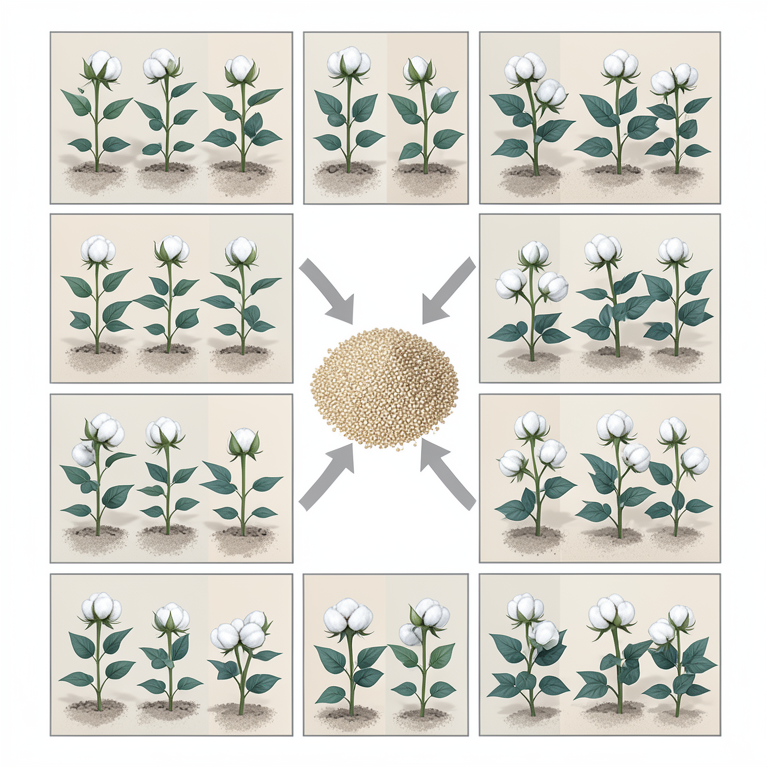
Experimental Layout
AI-generated conceptual illustration (cotton plants (Gossypium hirsutum L.) in a field). It explains the idea and does not show study data.
View source evidence ↗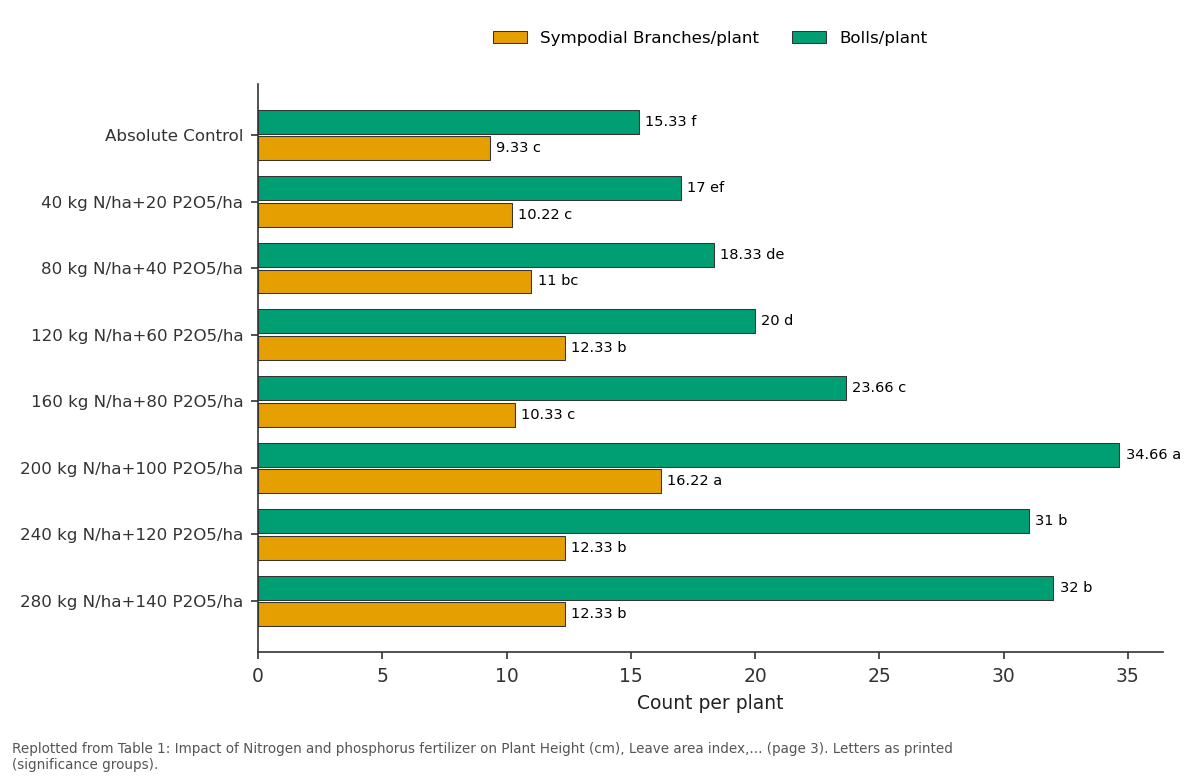
Sympodial Branches/plant and Bolls/plant: Absolute Control vs 40 kg N/ha+20 P2O5/ha vs 80 kg N/ha+40 P2O5/ha vs 120 kg N/ha+60 P2O5/ha vs 160 kg N/ha+80 P2O5/ha
Replotted from Table 1 (page 3) of the original paper. Every bar is the paper's own table value.
View source evidence ↗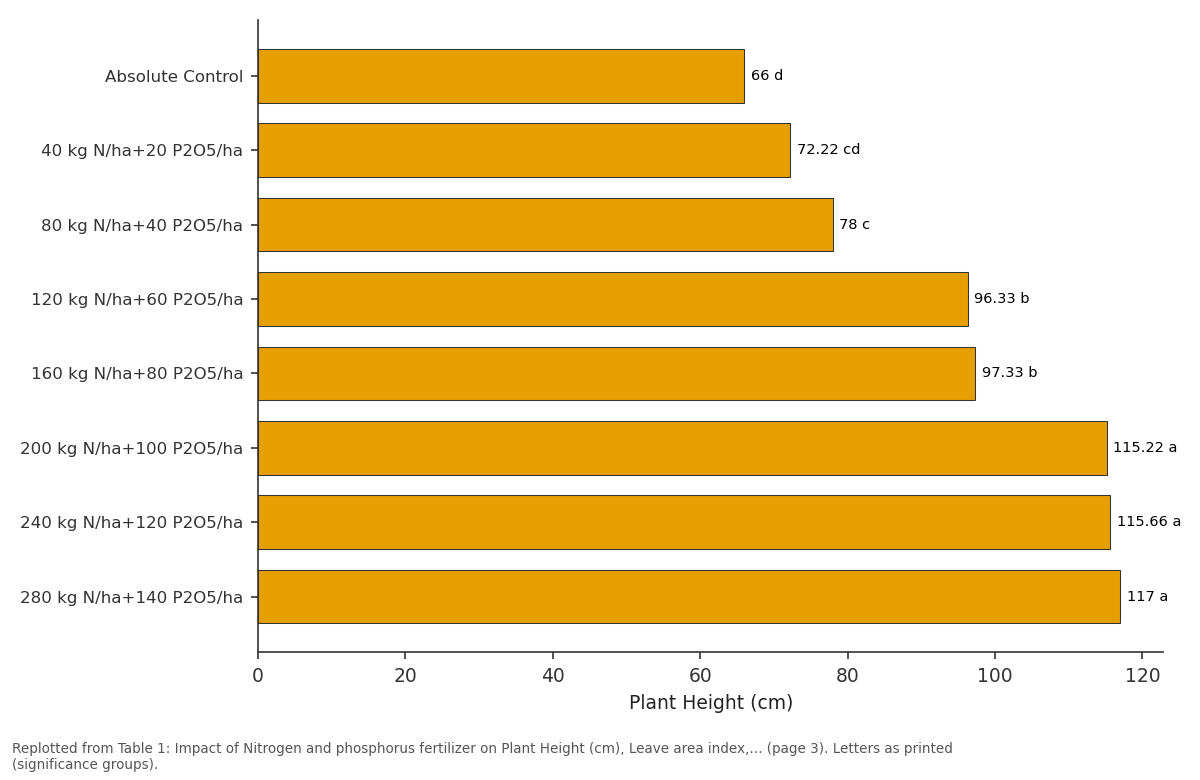
Plant Height (cm): Absolute Control vs 40 kg N/ha+20 P2O5/ha vs 80 kg N/ha+40 P2O5/ha vs 120 kg N/ha+60 P2O5/ha vs 160 kg N/ha+80 P2O5/ha
Replotted from Table 1 (page 3) of the original paper. Every bar is the paper's own table value.
View source evidence ↗Figures & tables
From the original paper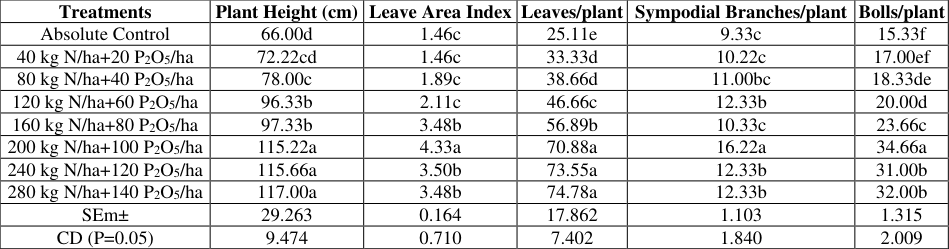 Table 1
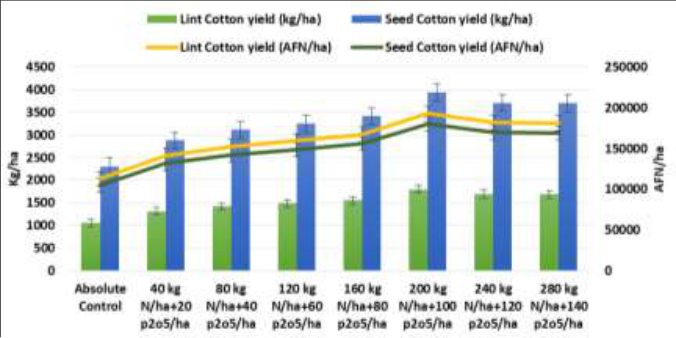 Figure 1
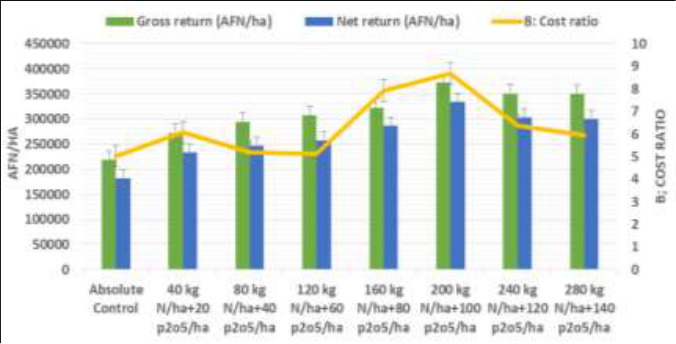 Figure 2
Introduction
Cotton crop is scientifically known as (Gossypium hirsutum L.) and belonging to the Malvaceae family, is typically grown as an annual plant that requires reseeding each year. It is a significant cash crop in Northeast Afghanistan, especially after the discovery of its profitable potential due to the presence of oil (Khaleeq et al., 2023c) [13] . Cotton cultivation spans across more than 75 countries worldwide, covering approximately 32 million hectares of land with diverse agroecological conditions. The global cotton lint market generates over $20 billion annually (Saranga et al., 2001) [21] . The growth and yield of cotton crops are influenced by various factors such as cultivars, crop management practices, and environmental conditions (Gwathmey and Craig, 2003) [6] . Selecting cotton cultivars that mature at the right time is crucial for efficient harvesting (Faircloth, 2007) [3] . Phosphorus is an essential nutrient for various important processes in plant tissues, including plant respiration, photosynthesis, and the formation of phospholipids that make up plant structures (Taiz and Zeiger, 2003) [25] . Phosphorus fertilizers can be absorbed by leaves and developing cotton bolls, benefiting from the phosphorus stored in older plant tissues. Cotton crops typically require a phosphorus concentration ranging from 0.20% to 0.31% (Crozier et al., 2004) [2] . Both nitrogen and phosphorus fertilizers play a vital role in promoting the growth and yield of cotton (Khaleeq et al., 2023b) [8] . However, excessive nitrogen application can negatively impact cotton growth by disrupting the soil nutrient balance, leading to excessive vegetative growth at the expense of maturity and increasing the crop's susceptibility to diseases and pests (Khaleeq et al., 2023d) [12] . Conversely, nitrogen deficiency in cotton can result in stunted growth, yellowing of leaves, premature leaf shedding, and the formation of small, tough bolls (Khaleeq et al., 2023d) [12] . Phosphorus plays a crucial role in promoting growth and improving the root system's ability to uptake water and nutrients from the soil.
A lack of phosphorus in beans can lead to decreased yield, inefficient utilization of soil nitrogen, and limited crop productivity (Khaleeq et al., 2023a) [11] . Phosphorus fertilizer is essential for supporting crop nutrition and is vital for various genetic processes throughout plant growth, reproductive stages, and adaptation to different agricultural environments (Seleiman et al., 2020) [24] . It is essential for photosynthesis, nutrient absorption, the synthesis of organic compounds, phospholipids, enzyme activities, and genetic characteristics in plants (Lopez-Arredondo et al., 2014; Farkhari et al., 2023) [15,4] . Applying phosphorus fertilizer can enhance soil phosphorus availability and boost biomass accumulation in cotton crops, particularly in reproductive tissues (Cheptoek et al., 2021) [1] . As cotton cultivation occurs in various regions worldwide with different economic conditions, the nutrient requirements of crops vary significantly. Providing the right amount of essential inorganic elements through well-balanced macro and micronutrient fertilizers is crucial for enhancing crop growth and increasing yields (Zubillaga et al., 2002; Khaleeq et al., 2023e) [26,14] . The utilization of mineral fertilizers, including nitrogen and phosphorus, plays a crucial role in enhancing cotton crop productivity and quality worldwide. Optimal levels of these fertilizers are essential for achieving high lint yield, seed yield, and boll development in cotton cultivation, which is integral to the agricultural and commercial sectors. Furthermore, the production of high-quality cottonseed oil and other valuable byproducts derived from cotton seeds further underscores the significance of cotton production in global trade. In various regions around the world, the utilization of phosphorus as a key nutrient in cotton production has become imperative for farmers seeking to enhance commercial productivity. Effective phosphorus fertilization is a fundamental component of profitable cotton crop production, as it contributes significantly to overall yield and quality. The implementation of appropriate agronomic practices, such as fertilizer application, plowing, pest management, seeding techniques, seedbed preparations, and other management strategies, phosphorus is crucial for optimizing yields in cotton and other crops grown under diverse environmental conditions. The importance of phosphorus in promoting cotton yield and quality has been highlighted in recent studies by Sadiq et al. (2023) [18] and Seerat et al. (2023) [23] emphasizing the critical role of balanced fertilization practices in maximizing agricultural productivity and profitability. Currently, the primary mineral fertilizer used for cotton crops is nitrogen, followed by phosphorus which is also essential for crop growth. Another crucial nutrient for crop development is zinc fertilizer, with phosphorus playing a significant role in directly affecting crop growth. Phosphorus helps in the expansion of bolls by influencing flower development and pollination in cotton. Despite continuous application of phosphorus fertilizer from both organic and mineral sources in deeply cultivated soils, the soil's phosphorus levels remain insufficient for optimal crop productivity. Phosphorus is vital for metabolic processes and structural development in plants, particularly in early root growth, photosynthesis, cell division, energy transfer, early boll expansion, and early maturation. (Hemmat et al., 2023; Khaleeq et al., 2024) [7,7] . A deficiency in phosphorus fertilizer can lead to weakened plant membranes and reduced energy transfer within the crop (Oosterhuis et al., 2007; Khaleeq et al., 2024b) [17, 10] .
Materials and Methods
A field trial was conducted at the Kunduz Spinzar State-Owned Corporation farm in collaboration with the agriculture faculty of Kunduz University during the 2023 growing season. The experimental site was located at 367388884 N latitude, 68.869858 E longitude, with an elevation of 356 meters above sea level. The temperature ranged from 23.20 °C to 46.2 °C, with humidity between 25.52% to 65.25%, and minimal rainfall was recorded. The soil at the site was identified as sandy clay loam with a pH of 7.3, characterized by low nitrogen content, medium availability of phosphorus and high levels of potassium. The experiment was designed in a randomized complete block design with a split arrangement, replicated three times, incorporating eight treatments including a control plots and various combinations of nitrogen and phosphorus fertilizers ranging from 40 kg N/ha:20 P 2 O 5 /ha to 280 kg N/ha:140 P 2 O 5 /ha. Phosphorus was applied in full dose and half of the nitrogen dose at sowing, while the remaining nitrogen was split and applied at 45 and 80 days after sowing. The cotton variety used was the local K-01 variety, with each experimental plot covering an area of 15 m 2 (3 m × 5 m). Planting was conducted on May 31, 2023, with two seeds placed 75 cm apart within each row and excess plants were thinned to maintain one seedling at the three-leaf stage. Urea and single superphosphate were utilized as nitrogen and phosphorus sources, respectively. Statistical analysis of the collected data was performed using ANOVA and mean comparisons were carried out using the critical difference (CD) at a significance level of 5%.
Results and Discussion
The results from the analysis of variance in Table (1) indicated that the application of various levels of nitrogen and phosphorus significantly influenced the growth and yield parameters of cotton crops. Specifically, the combinations of 200 kg N/ha + 100 P 2 O 5 /ha, 240 kg N/ha + 120 P 2 O 5 /ha, and 280 kg N/ha + 140 P 2 O 5 /ha were equally effective and demonstrated the highest plant height values (115.22 cm, 115.66 cm, and 117.00 cm, respectively). The application of 200 kg N/ha + 100 P 2 O 5 /ha resulted in the highest leaf area index (4.33), followed by the combination of 240 kg N/ha + 120 P 2 O 5 /ha. Similarly, the combinations of 160 kg N/ha + 80 P 2 O 5 /ha and 280 kg N/ha + 140 P 2 O 5 /ha showed equal effectiveness in terms of leaf area index. In terms of leaves per plant, the combinations of 280 kg N/ha + 140 P 2 O 5 /ha, 240 kg N/ha + 120 P 2 O 5 /ha, and 200 kg N/ha + 100 P 2 O 5 /ha were equally effective, with maximum values of 74.78, 73.55, and 70.88, respectively. Additionally, the combination of 200 kg N/ha + 100 P 2 O 5 /ha exhibited the highest values for sympodial branches per plant (16.22), bolls per plant (34.66), and seed cotton yield (3.19 t/ha), followed by the combinations of 240 kg N/ha + 120 P 2 O 5 /ha and 280 kg N/ha + 140 P 2 O 5 /ha, respectively. The findings of this study align closely with those of Khaleeq et al. (2023d) [12] , who observed that the application of 90 kg P 2 O 5 /ha led to a significant enhancement in plant height, sympodial branches per plant, number of leaves per plant, and bolls per plant. Similarly, Samim et al. (2023) [20] noted that nitrogen fertilizer had a significant impact on plant height, dry matter accumulation, branches per plant, and leaf area index, with the most favorable growth outcomes observed at a rate of 100 kg N/ha compared to the control group. Furthermore, Nazir et al. (2022) [16] and Khaleeq et al. (2023a) [11] highlighted the influence of phosphorus fertilizer application on plant height, branches per plant, dry matter accumulation, and leaf area index, with the highest growth and yield parameters for common bean achieved at a rate of 100 kg N/ha. The empirical data depicted in Figures 1 and2 illustrate the substantial influence of varying levels of nitrogen and phosphorus fertilizers on Cotton Lint yield and Cotton Seed yield. Among the different fertilizer treatments, the application of 200 kg N/ha + 100 P 2 O 5 /ha resulted in the highest Cotton Lint yield of (1799 kg/ha) and Cotton Seed yield of (3937 kg/ha), Cotton Lint yield (192835 AFN/ha) and Cotton Seed yield (179928 AFN/ha). This optimal fertilizer combination also yielded a gross return (372764 AFN/ha), net return (334284 AFN/ha) and a favorable B: Cost ratio of 8.687. These findings underscore the significant impact of specific nitrogen and phosphorus fertilizer levels on cotton production outcomes, highlighting the potential for enhanced agricultural productivity and economic returns through strategic fertilizer management practices. The findings of this study align with previous research by Saleem et al. (2010) [19] which demonstrated that higher levels of phosphorus fertilizer, specifically at 90 kg/ha, resulted in increased cotton seed yield and accelerated maturation compared to lower application rates. Consistent with the findings of Gadhiya et al. (2009) [5] and Sawan et al. (2008) [22] , it was observed that phosphorus fertilizer application led to enhancements in seed cotton yield per plant and cotton seed yield per hectare by 9.34% to 14.95% in comparison to control treatments. Furthermore, Khaleeq et al. (2023d) [12] highlighted the significant impact of varying phosphorus fertilizer doses on lint and seed production as well as the economic viability of cotton cultivars. Their results indicated that the application of 90 kg
Conclusion
From the present investigation it can be concluded optimization of Nitrogen and phosphorus is prim important for the optimum cotton production, application of 200 kg N/ha + 100 kg P 2 0 5 /ha is best amount of Nitrogen and phosphorus level for cotton productivity and profitability. Further research is needed to optimizing of macronutrients in different part of the Afghanistan.
Figures and tables from the paper
| Treatments | Plant Height (cm) | Leave Area Index | Leaves/plant | Sympodial Branches/plant | Bolls/plant |
|---|---|---|---|---|---|
| Absolute Control | 66.00d | 1.46c | 25.11e | 9.33c | 15.33f |
| 40 kg N/ha+20 P2O5/ha | 72.22cd | 1.46c | 33.33d | 10.22c | 17.00ef |
| 80 kg N/ha+40 P2O5/ha | 78.00c | 1.89c | 38.66d | 11.00bc | 18.33de |
| 120 kg N/ha+60 P2O5/ha | 96.33b | 2.11c | 46.66c | 12.33b | 20.00d |
| 160 kg N/ha+80 P2O5/ha | 97.33b | 3.48b | 56.89b | 10.33c | 23.66c |
| 200 kg N/ha+100 P2O5/ha | 115.22a | 4.33a | 70.88a | 16.22a | 34.66a |
| 240 kg N/ha+120 P2O5/ha | 115.66a | 3.50b | 73.55a | 12.33b | 31.00b |
| 280 kg N/ha+140 P2O5/ha | 117.00a | 3.48b | 74.78a | 12.33b | 32.00b |
| SEm± | 29.263 | 0.164 | 17.862 | 1.103 | 1.315 |
| CD (P=0.05) | 9.474 | 0.710 | 7.402 | 1.840 | 2.009 |
Table text extracted from the original PDF; superscript letters are shown inline. The original table image is below.
View original table image
References
19 in the original paper- Cheptoek RP, Gitari HI, Mochoge B, Kisaka OM, Otieno E, Maitra S, et al. Maize productivity, economic returns and phosphorus use efficiency as influenced by lime, Minjingu rock phosphate and NPK inorganic fertilizer. Int. J Bioresour. Sci. 2021;8:47-60.
- Crozier CR, Walls B, Hardy DH, Barnes JS. Response of cotton to P and K soil fertility gradients in North Carolina. J Cotton Sci. 2004;8:130-141.
- Farkhari Z, Rahmat R, Farid AF, Khaleeq K. Environmental Impacts of Waste Management in the City of Taluqan. J Environ Agric. Stud. 2023;4(3):46-52. https://doi.org/10.32996/jeas.2023.4.3.7
- Gadhiya SS, Patel BB, Jadav NJ, Pavaya RP, Patel MV. Effect of different levels of nitrogen phosphorus and potassium on growth, yield and quality of Bt cotton. Asian J Soil Sci. 2009;4(1):37-42.
- Gwathmey CO, Craig CC Jr. Managing earliness in cotton with mepiquat-type growth regulators. Crop Management; c2003. DOI: 10.1094/CM-2003;-1222-01-RS.
- Hemmat N, Khaleeq K, Nasrat NA, Meena SL, Shivay YS, Kumar D, et al. Productivity of wheat (Triticum aestivum) as influenced by zinc fertilization under semi-arid conditions of Kandahar, Afghanistan. Indian J Agron. 2023;68(2):215-218. https://doi.org/10.59797/ija.v68i2.363
- Khaleeq K, Amini AM, Azimi AM. Growth and Yield of Groundnut (Arachis hypogaea L) Genotypes as Affected by Nitrogen Fertilizer under Northeast Climate of Afghanistan. Asian J Res. Crop Sci. 2024a;9(1):81-86. https://doi.org/10.9734/ajrcs/2024/v9i1248
- Khaleeq K, Qarluq AG. Effects of Phosphorus Fertilization on Growth, Yield and Economic Efficiency of Cotton (Gossypium hirsutum L.) under Northeast climate of Afghanistan. Asian J Res Crop Sci. 2024b;9(1):103-107. https://doi.org/10.9734/ajrcs/2024/v9i1251
- Khaleeq K, Bidar AK, Amini AM, Nazir R, Faizan FU. Effect of phosphorus fertilizer and seed rates on growth and yield of common bean (Phaseolus vulgaris L) in Kunduz, Afghanistan. J Environ Agric. Stud. 2023a;4(3):01-06. https://doi.org/10.32996/jeas.2023.4.3.1
- Lopez-Arredondo DL, Leyva-Gonzalez MA, GonzalezMorales SI, Lopez-Bucio J, Herrera-Estrella L. Phosphate nutrition: Improving low-phosphate tolerance in crops. Annu. Rev. Plant Biol. 2014;65:95-123.
- Nazir R, Sayedi SA, Zaryal K, Khaleeq K, Godara S, Bamboriya SD, et al. Effects of phosphorus application on bunch and spreading genotypes of groundnut. J Agric. Ecol. 2022;14:26-31. http://doi.org/10.53911/JAE.2022.14204
- Sadiq GA, Azizi F, Khaleeq K, Farkhari Z, Amini AM. Effect of Different Seeding Rates on Growth and Yield of Common Bean. J Environ Agric. Stud. 2023;4(3):41-45. https://doi.org/10.32996/jeas.2023.4.3.6
- Saleem A, Shakeel MF, Bilal MQ, Shahid, Anjum SA. Effect of different phosphorus levels on earliness and yield of cotton cultivars. Soil Environ. 2010;29(2):128-135.
- Samim M, Haqmal M, Afghan A, Khaleeq K, Ahmadi A. Response of Soybean to Nitrogen Levels and Weed Management on Growth, Yield and Economic Efficiency. J Res Appl. Sci. Biotechnol. 2023;2(5):139-145. https://doi.org/10.55544/jrasb.2.5.23
- Saranga YM, Menz CX, Jiang JW, Robert D, Yakir, Andrew HP. Genomic dissection of genotype X environment interactions conferring adaptation of cotton to arid conditions. Genome Res. 2001;11:1988-1995.
- Sawan ZM, Mahmoud MH, El-Guibali AH. Influence of potassium fertilization and foliar application of zinc and P on growth, yield and fiber properties of Egyptian cotton (Gossypium barbadense L.). J Plant Ecol. 2008;1:259-270.
- Seerat WA, Nazir R, Nimgrri H, Yahyazai M, Khaleeq K. Nitrogen and phosphorus effects on growth, and yield of black-eyed bean (Vigna unguiculata L.). J Agric. Ecol. 2023;17:99-102. https://doi.org/10.58628/JAE-2317-318
- Seleiman MF, Almutairi KF, Alotaibi M, Shami A, Alhammad BA, Battaglia ML, et al. Nano-fertilization as an emerging fertilization technique: Why can modern agriculture benefit from its use? Plants. 2020;10(1):2.
- Zubillaga MM, Aristi JP, Lavado RS. Effect of phosphorus and nitrogen fertilization on sunflower (Helianthus annuus L) nitrogen uptake and yield. J Agron. Crop. Sci. 2002;188:267-274.
Cited by 4
From OpenAlex, OpenCitations and reference lists read by Scinovex
- Effects of Nitrogen Application on Growth and Yield of Groundnut (Arachis hypogaea L.) in Northeast Agro-Ecology of Afghanistan ↗
Khalilullah Khaleeq, Zabihullah Farkhari, Ahmad Munir Amini, Ahmadullah Ahmadi, Mohibullah Samim, Muhammad Atiq Ashraf et al. · Journal for Research in Applied Sciences and Biotechnology · 2024
A field experiment Conducted at the farm of Kunduz University during cropping season of 2023 to evaluate Effects of Nitrogen Application on Growth and Yield of Groundnut (Arachis hypogaea L.) in northeast of Afghanistan. The field experiment laid out in Randomized Complete Block Design with three replications, the treatments were Nitrogen fertilizer levels viz. Control, 15 kg N/ha, 30 kg…
❝ 2PDF - Optimization of Crop Establishment Methods and Phosphorus Fertilizer Levels on Growth and Economic Efficiency of Groundnut under Semi-Arid Region of Afghanistan ↗
Khalilullah Khaleeq, Khalid Akhundzada, Qudratullah Ehsan, Mohammad Alim Behzad, Sanjay Singh Rathore, Mohibullah Samim et al. · Journal for Research in Applied Sciences and Biotechnology · 2024
An experiment was conducted at the farm of Afghanistan National Agricultural Science and Technology University (ANASTU), Kandahar Province, Afghanistan in cropping season of 2020 to investigate the Optimization of Crop Establishment methods and Phosphorus Fertilizer levels on Growth and Economic Efficiency of Groundnut under Semi-arid region of Afghanistan. The experimentation was conducted in split-plot design with 15 treatment combinations and…
❝ 2PDF - Effects of Phosphorus Fertilizer Levels on Growth, Yield and Economic Efficiency of Groundnut Under Semi-Arid Regions of Afghanistan ↗
Khalilullah Khaleeq, Najibullah Hemmat, Mohibullah Samim, Muhammad Atiq Ashraf · International Journal of Scientific Multidisciplinary Research · 2024
A field experiment was laid out at the Afghanistan National Agricultural Science and Technology University (ANASTU) Farm in cropping season of 2020 to investigate optimization of phosphorus doses on growth, yield and economic efficiency of groundnut in semi-arid region of Afghanistan, the experiment laid out in Randomized Complete Block Design (RCBD) with three replication, the treatments consist of 5 phosphorus…
❝ 1PDF - Response of Mung bean (Vigna Radiate L.) to Phosphorus Fertilizer Levels in Northeast Agro-Ecology of Afghanistan ↗
Khalilullah Khaleeq, Muhammad Atiq Ashraf, Mohibullah Samim · International Journal of Scientific Multidisciplinary Research · 2025
During the 2023 cropping season, an In the northeastern agro-ecology of Afghanistan, a study was conducted at Kunduz University's Research Farm to determine the response of the mung bean (Vigna radiata) to the quantity of phosphorus fertilizer. Four treatments were used in the trial, which included a Randomized Complete Block Design and three replications: The highest plant height (63.50 cm),…
❝ 0PDF