
Research article · 2024 · Full text
International Journal of Agriculture Extension and Social DevelopmentDocumentation of indigenous edible items used by the tribal people of Kandhamal, Odisha
Volume 7(2) · Pages 507–512 · DOI: 10.33545/26180723.2024.v7.i2g.376 ↗
Research areasFood Science and Nutritional StudiesAgricultural Economics and Practices
Abstract
Author-writtenThe study was documented the indigenous edible food items and their nutritional values which were available in tribal areas of Kandhamal district, Odisha. Data were collected from 2 tribal villages (Brengudaand Penala) belongs to Desia Kandha (Desia Khonds) tribe of Kandhamal district by using pretested questionnaire developed. Total 80 tribal women were selected by random sampling method from two different villages of Kandhamal. Forty women were selected from Brenguda village and another 40 were selected from Penala village of Kandhamal district. There were 43 major indigenous foods of Kandhamal. Many of wild foods were still have not identified scientifically. The indigenous foods have high nutritional value. The cultivated foods (pigeon pea, horse gram, etc.) were consumed by the tribals of Kandhamal on regular basis. Some foods like taro, arrowroot, French bean etc. they were cultivated and sell it in the market to support their livelihood and consumed it rarely, as said by the villagers. The wild foods were also used for their livelihood support and only consumed during shortage of food which having high nutritional values and can be used as alternative option of main food items. Thus public awareness need to be encouraged to improve the nutritional knowledge of tribal communities of Kandhamal.
Summary
Source-checkedPlain-language reading of the full paper, prepared with AI and checked against the text. Each point links to the authors' own words.
Why it matters
- Kandhamal is one of the most impoverished districts in Odisha, ranking 29th out of 30 by the Human Development Index. View evidence ↗
- Due to poor land conditions and economic status, conventional agriculture is insufficient for the local population, leading to a dependence on natural food resources. View evidence ↗
- Wild foods serve as a critical alternative to main food items and provide livelihood support, particularly during periods of food shortage. View evidence ↗
The question
- The study aims to establish baseline data regarding the nutritional value of locally produced, indigenous, and wild foods in the region. View evidence ↗
What they did
- The sample consisted of 80 women from the Desia Kandha tribe, randomly selected from the villages of Brenguda and Penala. View evidence ↗
- Data on the consumption of various food categories, including cereals, pulses, tubers, leaves, fruits, and flowers, were gathered via personal interviews using a pre-tested questionnaire. View evidence ↗
What they found
- The study identified 43 major indigenous food items used by the tribal people of Kandhamal. View evidence ↗
- The vast majority of the respondents (92.5%) lived below the poverty line, while only 7.5% were above it. View evidence ↗
- Cultivated foods, such as horsegram and pigeon pea, are consumed regularly by the tribal population. View evidence ↗
- Certain cultivated items, including French beans, arrowroot, and taro, are primarily sold in markets for income and are rarely consumed by the growers. View evidence ↗
- A number of the wild foods used by the community have not yet been scientifically identified. View evidence ↗
What it means
- The authors conclude that increasing public awareness of the nutritional value of wild and indigenous foods could improve food security for the tribal communities of Kandhamal. View evidence ↗
Visual summary
2 visualsIllustrations explain the paper; charts are replotted from the paper's own table values.
Indigenous Food Usage Cycle
AI-generated conceptual illustration (Indigenous crops (horsegram, pigeon pea, French beans, arrowroot, taro) and wild forest plants in a rural Odisha setting). It explains the idea and does not show study data.
View source evidence ↗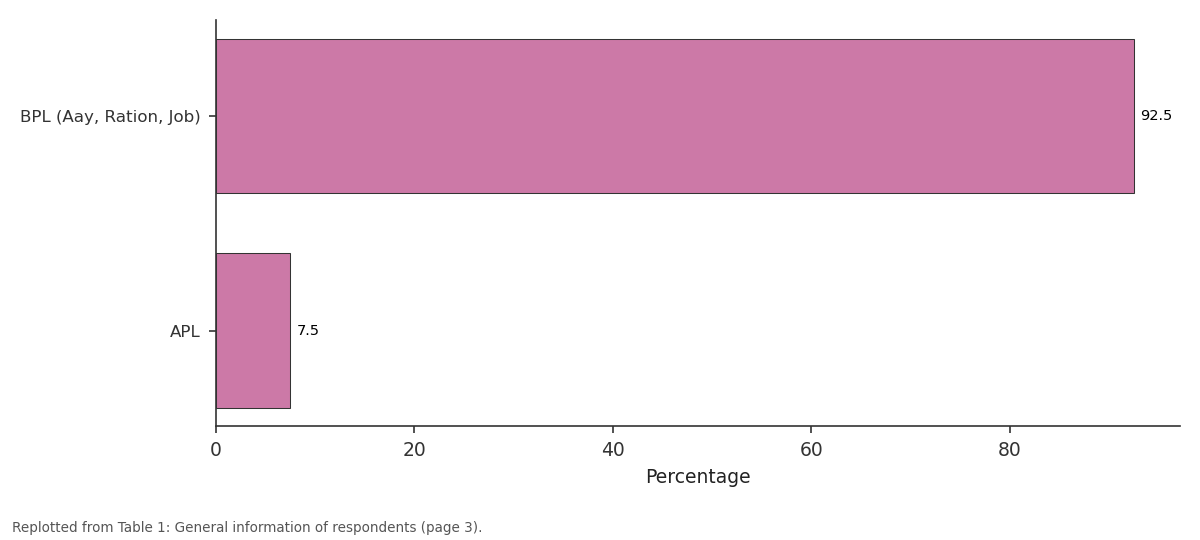
Percentage: BPL (Aay, Ration, Job) vs APL
Replotted from Table 1 (page 3) of the original paper. Every bar is the paper's own table value.
View source evidence ↗Figures & tables
From the original paper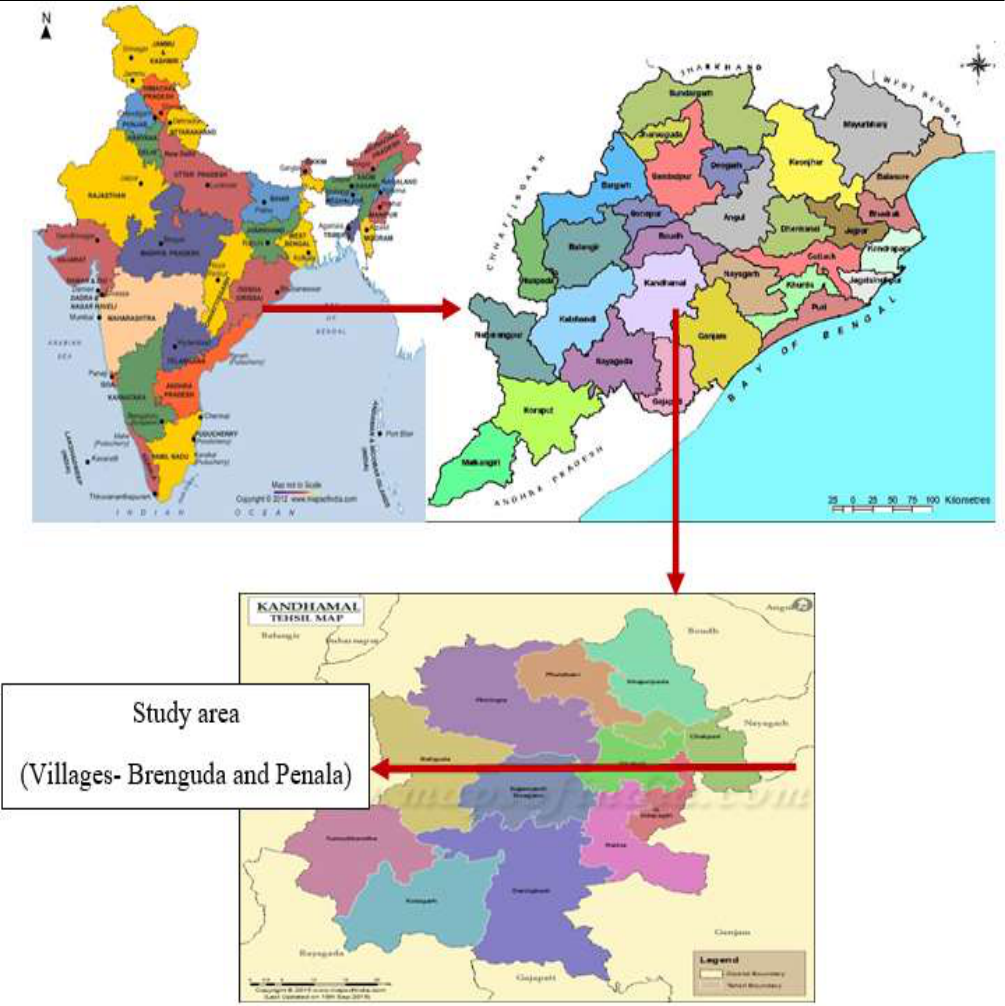 Figure 1
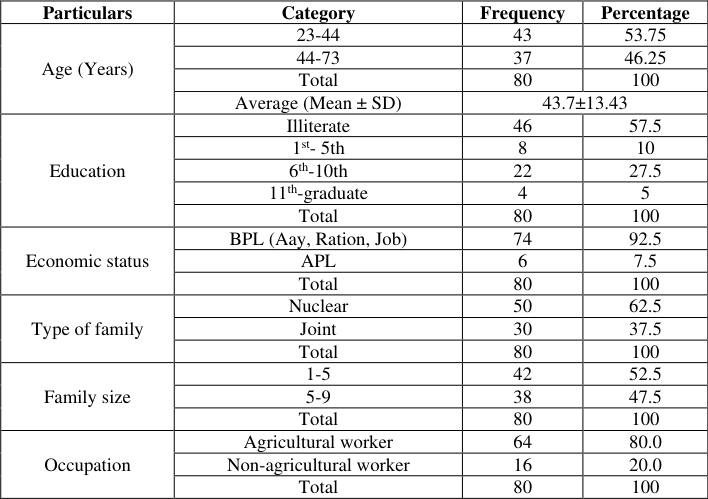 Table 1
 Table 2
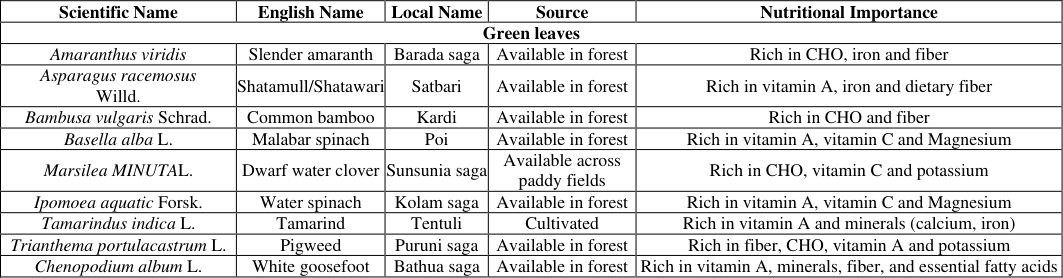 Table 3
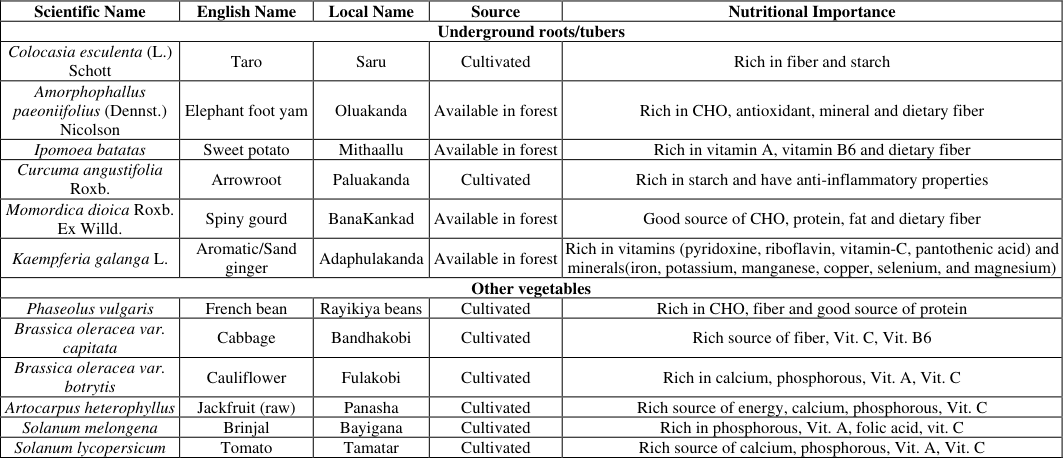 Table 4
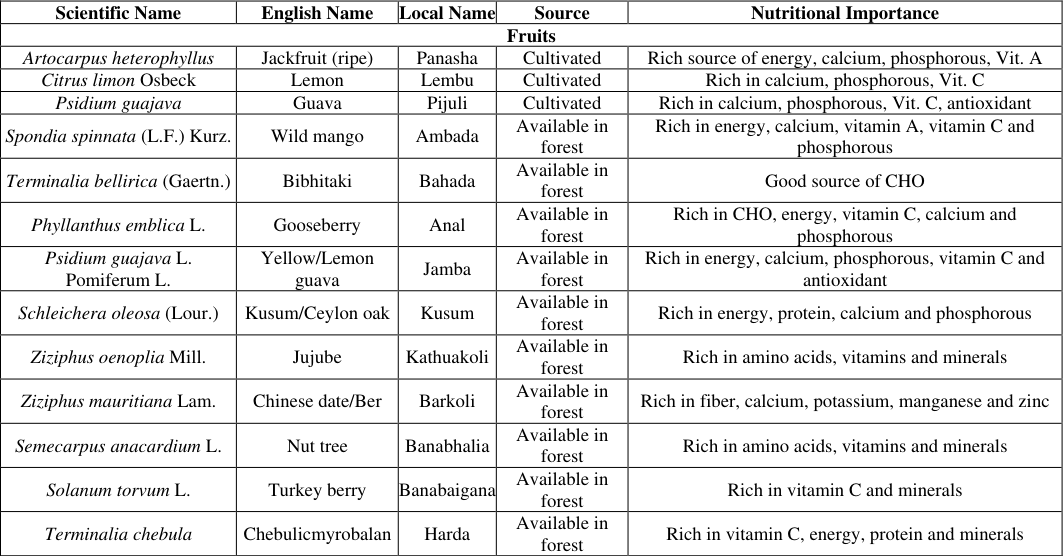 Table 5
 Table 6
 Table 7
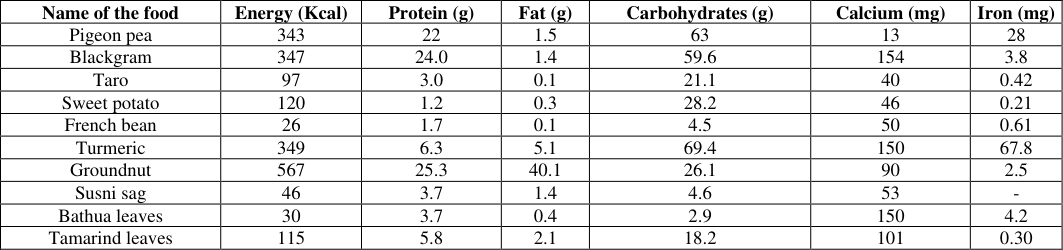 Table 8
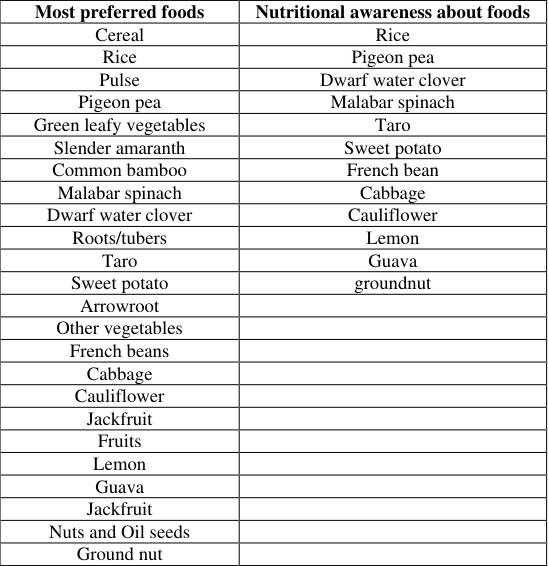 Table 9
Introduction
India has a variety of tribal population. Odisha has the largest number of tribal communities, 62 to be precise, in India, including 13 particularly vulnerable tribal groups (PVTGs). Kandhamal is one of the poorest districts in Odisha, ranking 29th out of 30 districts by the Human Development Index. More than 50% of the population constitutes tribal community. Most inhabitants belong to the Desia Kandha (Desia Khonds) tribe. Majority of tribal population of Kandhamal lives in forest ecosystem and has their own socio-cultural patterns, customs and distinctive food practices. Conventional agriculture does not give them adequate food due to indifferent land situation and as most of them are farmers belonging to poor category they depend on natural food resources. The wild foods were used for livelihood support and only consumed during shortage of food which having high nutritional values and can be used as alternative option of main food items. The objective of the study is to provide a baseline data on locally produced foods, indigenous and wild foods which have high nutritional value. Jerath. S et al. (2015) [6] conducted a study on traditional knowledge and nutritional value of indigenous foods of the Oraon tribal community in Jharkhand, India. The result showed that more than 130 varieties of indigenous foods were identified, many of which were rich sources of micronutrients like calcium, iron, vitamin A, and folic acid. Some were reported having medicinal properties.
Materials and Methods
The study was conducted in Kandhamal district of Odisha state during 2018-19 (Fig1). Total 80 tribal women were selected by random sampling method from two different villages (Brengudaand Penala) belongs to Desia Kandha (Desia Khonds) tribe of Kandhamal. Forty women were selected from Brenguda village and another 40 were selected from Penala village of Kandhamal district. Information on indigenous edible food items and wild foods were collected from eighty respondents of diversified age groups of Desia Kandha tribal community of Kandhamal District. The data on consumption of cereal, pulses, tubers, green leaves, fruits and flowers were collected through Pretested questionnaire by personal interviews. The plants were identified as per flora of Odisha. The identified plants were arranged with scientific name, English name, local name, source of the food item and their nutritional importance.
Results
Results
General information of respondents
A total 80 women were selected by random sampling method for the study. From two villages each 40 women were taken. In the study information were collected from background characteristics of respondents and data has been showed in table 1. Age distribution of respondents revealed that 53.75% and 46.25% of women were belonged to 23-44 years and 44-73 years respectively. There were 57.5% illiterate, 10% were in between class 1 to 5 th and 27.5% were in between 6 th to 10 th and 5.10% were in between 11 thgraduation. Most of them (92.5%) were in below poverty line and only 7.5% were in above poverty line category. It is customary to classify the families into two categories viz., nuclear and joint. The results indicated that 62.5% were lived in nuclear type family and 37.5% were lived in joint type family. As far as the family size is considered 52.5% families belonged to small family (i.e. 1 to 4 members in the family) and 47.5% families belonged to large family (i.e. 5 to 9 members in the family). Eighty percent women were agricultural worker whereas 20% were non-agricultural worker. www.extensionjournal.com
| Particulars | Category | Frequency | Percentage |
|---|---|---|---|
| Age (Years) | 23-44 | 43 | 53.75 |
| 44-73 | 37 | 46.25 | |
| Total | 80 | 100 | |
| Average (Mean ± SD) | 43.7±13.43 | ||
| Education | Illiterate | 46 | 57.5 |
| 1st- 5th | 8 | 10 | |
| 6th-10th | 22 | 27.5 | |
| 11th-graduate | 4 | 5 | |
| Total | 80 | 100 | |
| Economic status | BPL (Aay, Ration, Job) | 74 | 92.5 |
| APL | 6 | 7.5 | |
| Total | 80 | 100 | |
| Type of family | Nuclear | 50 | 62.5 |
| Joint | 30 | 37.5 | |
| Total | 80 | 100 | |
| Family size | 1-5 | 42 | 52.5 |
| 5-9 | 38 | 47.5 | |
| Total | 80 | 100 | |
| Occupation | Agricultural worker | 64 | 80.0 |
| Non-agricultural worker | 16 | 20.0 | |
| Total | 80 | 100 |
Table text extracted from the original PDF; superscript letters are shown inline. The original table image is below.
View original table image
List of indigenous foods available in the tribal areas of Kandhamal
The present study showed that the tribal people of Kandhamal district have very good nutritional knowledge on edible indigenous foods and their nutritional importance.
There are a total of 43 major indigenous foods of Kandhamal. From which some are cultivated and others are collected from the forest. Consumption pattern of wild food plants depends mostly upon their availability in nature. Many of wild foods were still have not identified scientifically. The indigenous foods have high nutritional value. The cultivated foods (pigeon pea, horsegram, etc.) were consumed by the tribals of Kandhamal on regular basis. Some foods like taro, arrowroot, French bean etc. they were cultivated and sell it in the market to support their livelihood and consumed it rarely, as said by the villagers. The wild foods were also used for their livelihood support and only consumed during shortage of food which having high nutritional values and can be used as alternative option of main food items. The indigenous food items which were used by the tribal people of Kandhamal are listed below.
Figures and tables from the paper
| Scientific Name | English Name | Local Name | Source | Nutritional Importance |
|---|---|---|---|---|
| Cereals | ||||
| Oryza sativa | Rice | Chaula | Cultivated | Rich source of energy, CHO, phosphorus, protein |
| Pulses | ||||
| Cajanus cajan | Pigeon pea | Kandula | Cultivated | Rich source of protein, B vitamins (B3, B5, B6, B9) and amino acids (methionine, lysine, and tryptophan) |
| Macrotyloma uniflorum | Horsegram | Kolatha | Cultivated | Rich source of CHO, protein, dietary fiber, vitamins and minerals |
| Vigna mungo | Blackgram | Biri | Cultivated | Rich source of energy, protein, CHO, calcium, phosphorus, Vit. A, folic acid |
| Vigna radiata | Greengram | Muga | Cultivated | Rich in energy, protein, potassium, CHO, calcium, iron, vit. B6, magnesium |
Table text extracted from the original PDF; superscript letters are shown inline. The original table image is below.
View original table image
| Scientific Name | English Name | Local Name | Source | Nutritional Importance |
|---|---|---|---|---|
| Green leaves | ||||
| Amaranthus viridis | Slender amaranth | Barada saga | Available in forest | Rich in CHO, iron and fiber |
| Asparagus racemosus Willd. | Shatamull/Shatawari | Satbari | Available in forest | Rich in vitamin A, iron and dietary fiber |
| Bambusa vulgaris Schrad. | Common bamboo | Kardi | Available in forest | Rich in CHO and fiber |
| Basella alba L. | Malabar spinach | Poi | Available in forest | Rich in vitamin A, vitamin C and Magnesium |
| Marsilea MINUTAL. | Dwarf water clover | Sunsunia saga | Available across paddy fields | Rich in CHO, vitamin C and potassium |
| Ipomoea aquatic Forsk. | Water spinach | Kolam saga | Available in forest | Rich in vitamin A, vitamin C and Magnesium |
| Tamarindus indica L. | Tamarind | Tentuli | Cultivated | Rich in vitamin A and minerals (calcium, iron) |
| Trianthema portulacastrum L. | Pigweed | Puruni saga | Available in forest | Rich in fiber, CHO, vitamin A and potassium |
| Chenopodium album L. | White goosefoot | Bathua saga | Available in forest | Rich in vitamin A, minerals, fiber, and essential fatty acids |
Table text extracted from the original PDF; superscript letters are shown inline. The original table image is below.
View original table image
| Scientific Name | English Name | Local Name | Source | Nutritional Importance |
|---|---|---|---|---|
| Underground roots/tubers | ||||
| Colocasia esculenta (L.) Schott | Taro | Saru | Cultivated | Rich in fiber and starch |
| Amorphophallus paeoniifolius (Dennst.) Nicolson | Elephant foot yam | Oluakanda | Available in forest | Rich in CHO, antioxidant, mineral and dietary fiber |
| Ipomoea batatas | Sweet potato | Mithaallu | Available in forest | Rich in vitamin A, vitamin B6 and dietary fiber |
| Curcuma angustifolia Roxb. | Arrowroot | Paluakanda | Cultivated | Rich in starch and have anti-inflammatory properties |
| Momordica dioica Roxb. Ex Willd. | Spiny gourd | BanaKankad | Available in forest | Good source of CHO, protein, fat and dietary fiber |
| Kaempferia galanga L. | Aromatic/Sand ginger | Adaphulakanda | Available in forest | Rich in vitamins (pyridoxine, riboflavin, vitamin-C, pantothenic acid) and minerals(iron, potassium, manganese, copper, selenium, and magnesium) |
| Other vegetables | ||||
| Phaseolus vulgaris | French bean | Rayikiya beans | Cultivated | Rich in CHO, fiber and good source of protein |
| Brassica oleracea var. capitata | Cabbage | Bandhakobi | Cultivated | Rich source of fiber, Vit. C, Vit. B6 |
| Brassica oleracea var. botrytis | Cauliflower | Fulakobi | Cultivated | Rich in calcium, phosphorous, Vit. A, Vit. C |
| Artocarpus heterophyllus | Jackfruit (raw) | Panasha | Cultivated | Rich source of energy, calcium, phosphorous, Vit. C |
| Solanum melongena | Brinjal | Bayigana | Cultivated | Rich in phosphorous, Vit. A, folic acid, vit. C |
| Solanum lycopersicum | Tomato | Tamatar | Cultivated | Rich source of calcium, phosphorous, Vit. A, Vit. C |
Table text extracted from the original PDF; superscript letters are shown inline. The original table image is below.
View original table image
| Scientific Name | English Name | Local Name | Source | Nutritional Importance |
|---|---|---|---|---|
| Nuts and oil seeds | ||||
| Arachis hypogaea | Ground nut | Badam | Cultivated | Rich source of energy, protein, fat, CHO, phosphorous, calcium, Vit. A |
| Sesamum indicum | Sesame | Rasi | Cultivated | Rich in energy, fat, protein, calcium, iron, magnesium, Vit. B6 |
| Spices | ||||
| Curcuma longa L. | Turmeric | Haladi | Cultivated | Rich in vitamin A, vitamin C, calcium, fiber, iron, niacin, potassium, zinc and antioxidant |
Table text extracted from the original PDF; superscript letters are shown inline. The original table image is below.
View original table image
| Name of the food | Energy (Kcal) | Protein (g) | Fat (g) | Carbohydrates (g) | Calcium (mg) | Iron (mg) |
|---|---|---|---|---|---|---|
| Pigeon pea | 343 | 22 | 1.5 | 63 | 13 | 28 |
| Blackgram | 347 | 24.0 | 1.4 | 59.6 | 154 | 3.8 |
| Taro | 97 | 3.0 | 0.1 | 21.1 | 40 | 0.42 |
| Sweet potato | 120 | 1.2 | 0.3 | 28.2 | 46 | 0.21 |
| French bean | 26 | 1.7 | 0.1 | 4.5 | 50 | 0.61 |
| Turmeric | 349 | 6.3 | 5.1 | 69.4 | 150 | 67.8 |
| Groundnut | 567 | 25.3 | 40.1 | 26.1 | 90 | 2.5 |
| Susni sag | 46 | 3.7 | 1.4 | 4.6 | 53 | - |
| Bathua leaves | 30 | 3.7 | 0.4 | 2.9 | 150 | 4.2 |
| Tamarind leaves | 115 | 5.8 | 2.1 | 18.2 | 101 | 0.30 |
Table text extracted from the original PDF; superscript letters are shown inline. The original table image is below.
View original table image
| Most preferred foods | Nutritional awareness about foods |
|---|---|
| Cereal | Rice |
| Rice | Pigeon pea |
| Pulse | Dwarf water clover |
| Pigeon pea | Malabar spinach |
| Green leafy vegetables | Taro |
| Slender amaranth | Sweet potato |
| Common bamboo | French bean |
| Malabar spinach | Cabbage |
| Dwarf water clover | Cauliflower |
| Roots/tubers | Lemon |
| Taro | Guava |
| Sweet potato | groundnut |
| Arrowroot | |
| Other vegetables | |
| French beans | |
| Cabbage | |
| Cauliflower | |
| Jackfruit | |
| Fruits | |
| Lemon | |
| Guava | |
| Jackfruit | |
| Nuts and Oil seeds | |
| Ground nut |
Table text extracted from the original PDF; superscript letters are shown inline. The original table image is below.
View original table image
References
21 in the original paper- Al-Faris NA. Nutritional Evaluation of Selected Traditional Foods Commonly Consumed in Saudi Arabia. Journal of Food and Nutrition Research. 2017;5(3):168-175.
- Bhattacharjee L, Kothari G, Priya V, et al. The Bhil food system: links to food security, nutrition and health. In: Kuhnlein HV, Erasmus B, Spigelski D, eds. Indigenous Peoples' Food Systems: The Many Dimensions of Culture, Diversity and Environment for Nutrition and Health. 2009:209-230.
- Blah MM, Joshi SR. Nutritional content evaluation of traditional recipes consumed by ethnic communities of Meghalaya, India. Indian Journal of Traditional Knowledge. 2013;12(3):498-505.
- Gopalan C, Rama Sastri BV, Subramanian SC. Nutritive Value of Indian Foods. National Institute of Nutrition, Indian Council of Medical Research; 1989.
- Inyang UE. Nutrient Content of Four Lesser -Known Green Leafy Vegetables Consumed by Efik and Ibibio People in Nigeria. Nigerian Journal of Basic and Applied Science. 2016;24(1):1-5.
- Jerath SG, Singh A, Kamboj P, Goldberg G, Magsumbol MS. Traditional Knowledge and Nutritive Value of Indigenous Foods in the Oraon Tribal Community of Jharkhand: An Exploratory Crosssectional Study. Ecology of Food and Nutrition. 2015;54:493-519.
- Jerath SG, Singh A, Lyngdoh T, et al. Estimates of Indigenous Food Consumption and Their Contribution to Nutrient Intake in Oraon Tribal Women of Jharkhand, India. Food and Nutrition Bulletin. 2018;39(4):581-594.
- Jerath SG, Singh A, Magsumbol MS, et al. Contribution of indigenous foods towards nutrient intakes and nutritional status of women in the Santhal tribal community of Jharkhand, India. Public Health Nutrition. 2016;19(12):2256-2267.
- Kumar S, Das G, Shin HS, Patra JK. Dioscorea spp. (A Wild Edible Tuber): A Study on Its Ethnopharmacological Potential and Traditional Use by the Local People of Similipal Biosphere Reserve, India. Frontiers in Pharmacology. 2017, 8(52).
- Mehta PS, Negi KS, Ojha SN. Native plant genetic resources and traditional foods of Uttrakhand Himalaya for sustainable food security and livelihood. Indian Journal of Natural Products and Resources. 2010;1(1):89-96.
- Misra S, Maikhuri RK, Kala CP, et al. Wild leafy vegetables: a study of their subsistence dietetic support to the inhabitants of Nanda Devi Biosphere Reserve, India. J Ethnobiol Ethnomed. 2008;4:15.
- Misra S, Misra MK. Nutritional evaluation of some leafy vegetable used by the tribal and rural people of south Odisha, India. J. Nat. Prod. Plant Resour. 2014;4(1):23-28.
- Padhan B, Panda D. Wild Edible Plant Diversity and its Ethno-medicinal use by Indigenous Tribes of Koraput, Odisha, India. Research Journal of Agriculture and Forestry Sciences. 2015;3(9):1-10.
- Pandey NK, Chhonkar DS, Singh DK, Khumu ST. Analysis of Indigenous Food Items of Monpa Tribal Community in Tawang District of Arunachal Pradesh, India. Int J Curr Microbiol App Sci. 2017;6(9):633-640.
- Pradhan S, Mishra S, Mohapatra SC. Food practices among the adivasi women of selected districts western Orissa. Indian J. Prev. Soc. Med. 2011;42(3).
- Rathore M. Nutrient content of important fruit trees from arid zone of Rajasthan. Journal of Horticulture and Forestry. 2009;1(7):103-108.
- Seal T, Pillai B, Chaudhuri K. Nutritional potential of wild edible fruits, traditionally used by the local people of Meghalaya state in India. Indian Journal of Natural Products and Resources. 2014;5(4):359-364.
- Singh G, Kumar J. Studies on indigenous traditional knowledge of some aquatic and marshy wild edible plants used by the munda tribe of district Khunti, Jharkhand, India. International Journal of Bioassays. 2014;3(2):1738-1743.
- Singh H. Ethno-medicinal plants of Iharkhand, India, Traditional approach. Aavishkar Publishers. 2008:248263.
- Sinha R, Lakra V. Edible weeds of tribals of Jharkhand, Orissa and West Bengal. Indian journal of Traditional Knowledge. 2007;6(1):217-222.
- Srivastava AK, Soreng FPK. An effort to domesticate wild edible mushrooms growing in the forest of Jharkhand. International Journal of Recent Trends in Science and Technology. 2012;3(3):88-92.