
Research article · 2024 · Full text
International Journal of Agriculture Extension and Social DevelopmentEconomics of indigenous dairy products prepared at student training dairy plant (STDP)
Volume 7(2S) · Pages 131–135 · DOI: 10.33545/26180723.2024.v7.i2sb.374 ↗
Research areasFisheries and Aquaculture StudiesAgricultural Systems and PracticesVocational and Entrepreneurial Education
Abstract
Author-writtenCooperatives and private companies comprise India's formal dairy industry, while smaller processing units and milk merchants comprise the informal sector. Most of the country's milk supply still comes from the informal sector. This research examined the financial model of a student training dairy plant that provides formal training related to dairy processing for students pursuing a Bachelor of Technology degree in Dairy Technology. Market availability and diversification into traditional indigenous value-added dairy products determine the net returns of processing traditional dairy products at the level of milk producers. Traditional Indian dairy products such as Khoa, Pedha, Kalakand, Paneer, Basundi, and Shrikhand are popular. An economic analysis was required to determine the optimal cost of each component utilized in manufacturing these dairy products. These returns and expenses will help the presence of these products in a competitive market. Consequently, optimal pricing will be achieved for both the producer and the consumer. Estimates for the production cost per kilogram were as follows: Rs.388.95, Rs.398.88, Rs.386.27, Rs.391.15, Rs.202.43, and Rs.169.31 for Khoa, Pedha, Kalakand, Paneer, and Shrikhand, respectively. Shrikhand had the highest profit margin at 41.75 percent over cost, while Basundi came in second at 18.56 percent.
Summary
Source-checkedPlain-language reading of the full paper, prepared with AI and checked against the text. Each point links to the authors' own words.
Why it matters
- The informal sector is a dominant part of India's dairy industry, accounting for 77% of total milk production. View evidence ↗
- Value-added dairy products offer significantly higher potential returns on investment (12-18%) compared to the 4-5% profit margins found in the raw milk industry. View evidence ↗
- Increasing the value of raw milk through processing can create new employment opportunities and improve the quality of life in rural areas, particularly for village women and self-help groups (SHGs). View evidence ↗
The question
- The study aimed to determine the potential financial gains for milk producers who add value to their raw milk products. View evidence ↗
What they did
- The research was conducted at the Student Training Dairy Plant of the College of Dairy Technology in Warud (Pusad), Maharashtra, during the 2022–23 academic year. View evidence ↗
- Data collection involved the use of ledgers, direct observation, and interviews with supervisors and students. View evidence ↗
- The study documented comprehensive costs, including labor, packaging, refrigeration, electricity, and depreciation of buildings and machinery. View evidence ↗
- Tabular analysis was used to evaluate the manufacturing cost components for six indigenous products: Khoa, Pedha, Kalakand, Paneer, Basundi, and Shrikhand. View evidence ↗
What they found
- Paneer production cost was Rs 391.15 per kg, providing a profit of Rs 48.85 per kg at a selling price of Rs 440 per kg. View evidence ↗
- Basundi cost Rs 202.43 per kg to produce, yielding a profit of Rs 37.57 per kg when sold at Rs 240 per kg. View evidence ↗
- Among the products studied, Shrikhand achieved the highest profit margin at 41.75% over cost, followed by Basundi at 18.56%. View evidence ↗
What it means
- The authors conclude that producing traditional Indian dairy products is a viable business that can create numerous job opportunities for rural milk producers. View evidence ↗
- The authors identify Dahi, Khoa, and Pedha as the three most revenue-generating products for dairy entrepreneurs. View evidence ↗
Visual summary
1 visualsIllustrations explain the paper; they do not show study data.
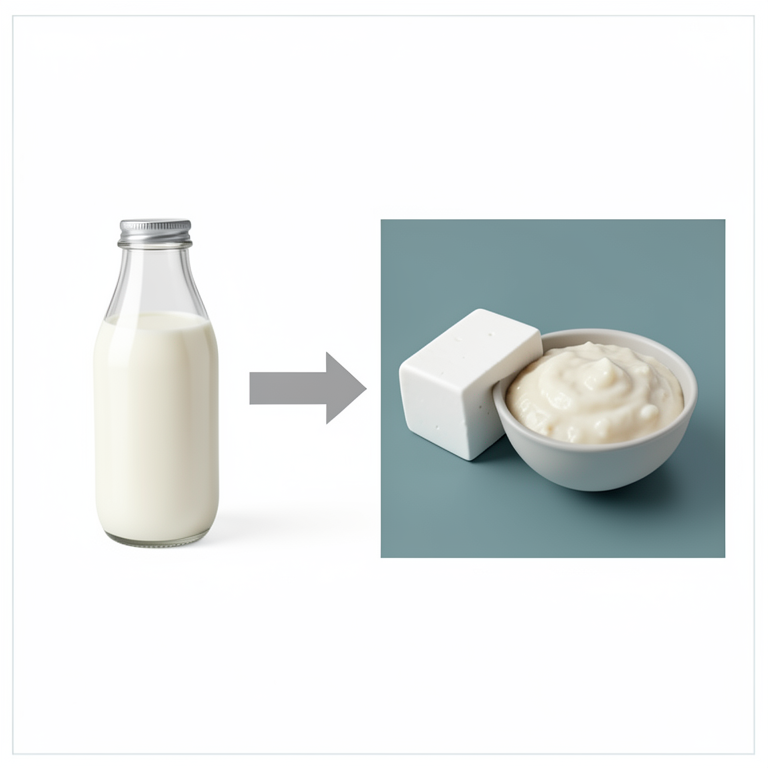
Value Addition Concept
AI-generated conceptual illustration (raw cow milk and processed dairy products (paneer and shrikhand)). It explains the idea and does not show study data.
View source evidence ↗Figures & tables
From the original paper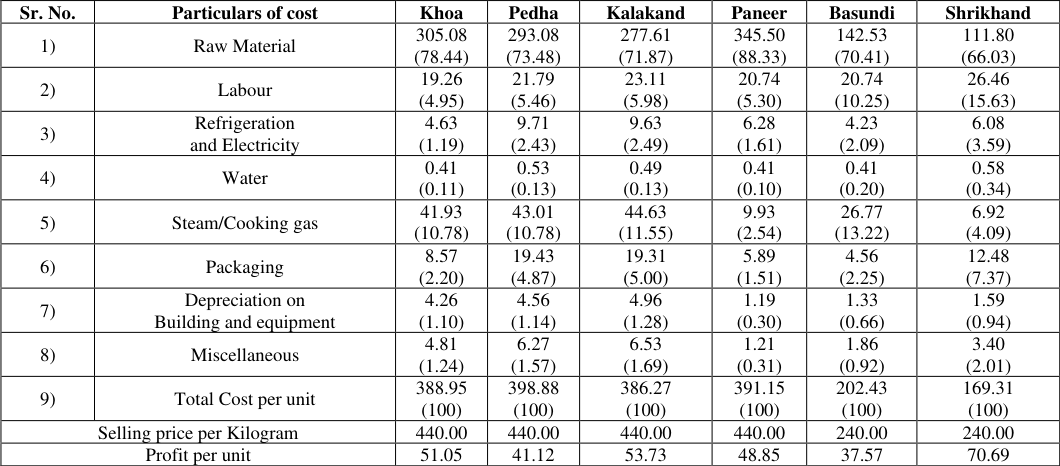 Table 1
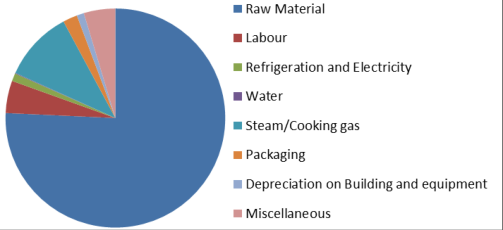 Figure 1
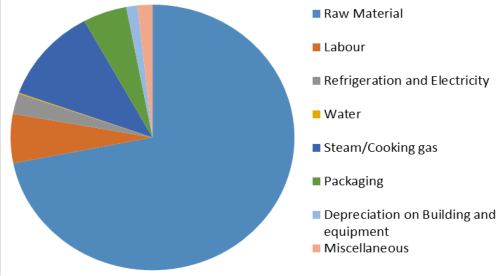 Figure 3
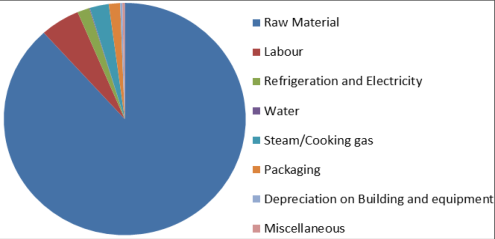 Figure 4
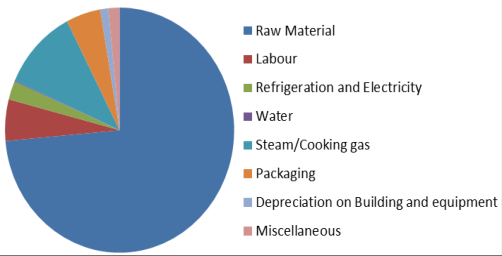 Figure 2
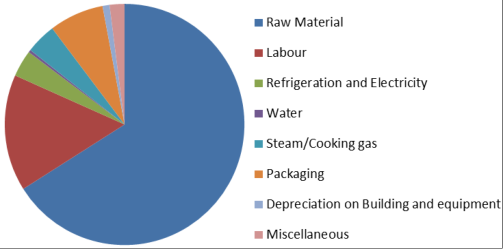 Figure 6
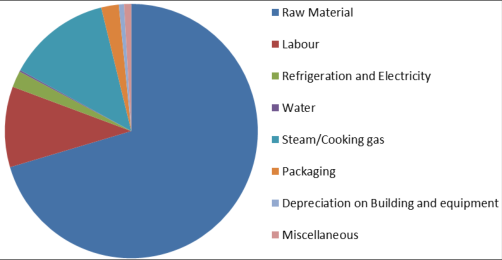 Figure 5
Introduction
India's dairy industry comprises both formal and informal sectors. The informal dairy sector, which includes small dairy processing facilities, milk vendors, halwais, and milk producers, accounted for 77% of total milk production. In contrast, the formal dairy sector, which includes dairy cooperatives and commercial processors, accounted for 23%. The share of food budgets allocated to milk and dairy products has risen. The healthy benefits of dairy, rising incomes in the middle class, and an emphasis on highquality products have all led to the expectation of a rise in demand for dairy products with added value. Dairy products with added value are in great demand, and the industry needs support from the informal sector to meet that demand. The current research set out to do just that-to determine how much money milk producers may make by adding value to their goods. The women of the village and their SHGs can increase the value of raw milk. These enhancements in quality may substantially contribute to developing new employment opportunities and improving the existing rural quality of life. There was a noticeable dearth of scientific knowledge among milk-producer households when manufacturing and selling dairy products. It is essential to link these milk-producing clusters to educational institutions that provide training in dairy entrepreneurship to boost local economies and increase milk production. Incredible untapped potential exists in the Indian dairy industry, making it an ideal location for a new dairy business. A direct result of India's fast-shifting demographics over the past decade is the country's increased need for dairy products with added value. Manufacturing companies gained from the change in the dairy industry's dynamics since value-added dairy products have far larger profit margins than raw milk. Private enterprises are attracted to the dairy industry due to the high potential returns on investment (12-18%), significantly higher than the profit margins of 4-5% in the raw milk industry. Our predictions indicate a 25 percent yearly growth rate for the milk and milk derivatives market, with value-added products accounting for a considerable increase in market share shortly. With less expensive but more compact www.extensionjournal.com machinery like khoa machines, paneer presses, incubators, deep freezers, etc., local producers of indigenous dairy products may get their products to market with less capital outlay. Anyone who produces milk can start making dairy products with additional value if they have the proper scientific education in processing and selling them.
Materials and Methods
The present study was conducted in a Student Training Dairy Plant of the College of Dairy Technology, Warud (Pusad), Dist. Yavatmal, Maharashtra, which provides formal training related to dairy processing for students pursuing a Bachelor of Technology Degree in Dairy Technology for the academic year 2022-23. The data was collected through various ledgers, interviews with students and supervisors, and direct observation. Input data on milk, its consumption pattern, and product preparation were recorded. All of the costs, including those for electricity, packing, refrigeration, labour, and depreciation on machinery and buildings, were meticulously documented. Information regarding the cost and quantity of different compounds utilized in dairy product processing was gathered through direct observation. We used tabular analysis to determine the various components of the manufacturing cost of Khoa, Pedha, Kalakand, Paneer, and Shrikhand, dairy products processed at the cottage level. 1 shows that the unit cost for manufacturing one kilogramme of pedha was determined to be Rs 398.88 per kilogramme. When the farmers sold their pedha at the local market for Rs 440 per kilogram, they made an extra Rs 41.12 per kilogram. The profitability of milk for farmers is enhanced when it is transformed into pedha-like dairy products, which increases its value.
Result and Discussion
Result and Discussion
Fig 2: Componentwise cost of Pedha
Fig 2: Componentwise cost of Pedha
Kalakand
Kalakand is a classic milk dessert from India. It is a granular, sugary dairy sweet made with sugar, cardamom powder, and full-fat milk. However, it is harder than milk cake and softer than burfis. Due to its increasing demand from quality-conscious consumers, Kalakand has excellent marketing potential compared to other milk products. Danedar type of khoa contains a minimum of 60 percent of the total solid and a minimum of 37 percent of milk fat on a dry matter basis, or Buffalo Milk with 6 percent fat and 9 percent solid not fat is used to produce good quality kalakand. The component-wise cost for raw materials was Rs. 277.61/Kg (71.87 percent), followed by cooking gas at Rs. 44.63/Kg (11.55 percent). The labour cost was 23.11/Kg (5.98 percent), the refrigeration cost was 9.63 (2.49 percent), the packaging cost was 19.31 (5.00 percent), and the miscellaneous cost was 6.53 (1.69).
Paneer
Considering the significance of milk in the diet of people from South Asian countries, it should come as no surprise that paneer is a staple food in those countries. Additionally, it is vegetarian, which benefits the vegetarian diets of many Indians and contributes to the popularity of paneer as a vegetarian delicacy in Indian cuisine. Every Indian restaurant offers a wide range of paneer-based dishes. It is a heat-acid-coagulated dairy product made from full-fat milk with a fat to solid not fat ratio of 1:1.5 with citric acid, which accounted for Rs. 345.50 per kilogram (88.33 percent), followed by cooking gas, which accounted for Rs. 9.93 per kilogram (2.54 percent). The component-wise cost of the raw material for paneer is presented in Table 1.
Expenses related to labour, packaging, refrigeration, and miscellaneous items amounted to Rs. 20.74 per kilogram (5.30 percent), Rs. 5.89 (1.51 percent), Rs. 6.28 (1.61 percent), and Rs. 1.21 (0.31) respectively.
Basundi
The states of Gujarat and Maharashtra in western India are the birthplace of basundi, a dessert known for its luxurious texture and velvety smoothness. In order to make it, milk is boiled over low heat until it is reduced to half.
Shrikhand
Shrikhand is a semisolid-soft, sweetish-sour milk product prepared from curd obtained by fermentation of buffalo milk with lactic acid bacteria. The curd, or Dahi, is partially strained through a cloth to remove the whey. This results in the production of a solid mass known as Chakka, which is the fundamental component of Shrikhand. Chakka is a traditional dessert from Western India that is widely prepared in the states of Maharashtra and Gujarat.
Conclusion
The production of traditional Indian dairy products like Dahi, Paneer, Khoa, and Pedha might be a viable dairy business offering several job opportunities for milk producers in rural India. One way to reduce the price of milk products is to produce more of them simultaneously. Dahi, Khoa, and Pedha are the three products that bring in the most revenue for dairy entrepreneurs.
Acknowledgement
AcknowledgementThe authors thank the Hon'ble Vice Chancellor, MAFSU, Nagpur and Associate Dean, College of Dairy Technology, Warud (Pusad), for providing the necessary facilities to conduct the present study.
Figures and tables from the paper
References
8 in the original paper- Doni R, Chauhan AK. Economics of Manufacturing different Milk Product and Breakeven Point Analysis in Sirsa Cooperative Milk Plant Haryana. Research Journal of Agricultural Sciences. 2018;9(4):864-870.
- Gautam RB, Maurya RM, Singh R, Ram S, Verma SK, Agrahari S, et al. International Journal of Bio-resource and Stress Management. 2018;9(5):585-591.
- Arora S, Patel A, Gurditta H, Yadav U, Mahajan S. Haryana Vet. 2019;58(2):174-180.
- Thakur A, Dixit AK, Ravishankara KM. Economic analysis of informal dairy processing units in Karnal district of Haryana. Indian J Dairy Sci. 2020;73(2):151154.
- Alli MM, Chauhan AK, Franco D, Singh SP. Int. J Curr. Microbiol. App. Sci. 2020;9(8):3671-3679.
- Singh A, Chandel BS, Chauhan AK, Das J, Ravishankara KM. Economics of milk processing in cooperative sector of Haryana. Indian J Dairy Sci. 2021;74(3):255-261.
- Narnaware GN, Kurrey D, Shinde NW, Nagpure SC. Economics of manufacturing Indigenous dairy product at producer level in Yavatmal district. The Pharma Innovation Journal. 2022;SP-11(6):1739-1740.
- Narnaware GN, Chandrakar MR, Choudhary VK, Jaiswal P. Economics of indigenous dairy products processed by milk producer in Maharashtra state. The Pharma Innovation Journal. 2023;12(5):836-838.