
Research article · 2024 · Full text
International Journal of Agriculture Extension and Social DevelopmentStudy of biodiversity and positive aspects of medicinal plant conservation in some selected sacred groves of Manipur
Volume 7(2S) · Pages 104–109 · DOI: 10.33545/26180723.2024.v7.i2sb.357 ↗
Research areasAgricultural Economics and PracticesIndian History and PhilosophyLivestock Management and Performance Improvement
Abstract
Author-writtenManipur was a small princely state in the North-East India, having a history of about 2000 years. The ancestors of Manipur (Meiteies) believed and worshiped of forest deities which is called Umang lai (Ancestral Deities). Umang lai in Manipur is always associated with Sacred Groves. There are taboos like it is misfortune to cut down the trees grown in Sacred Groves. So people around each and every Sacred Groves are kept protected since time immemorial. The Sacred Groves are Scattered mainly in the valleys. Umang lai Haraoba, a festival of dance and music is always done every year which last 1 to 2 weeks. The Sacred Groves are protected by locale people and lai haraoba committee and this links the present society to the past in terms of religious cultural rituals. This is again descends to the Biodiversity and Medicinal plant conservation in the Sacred Groves.
Summary
Source-checkedPlain-language reading of the full paper, prepared with AI and checked against the text. Each point links to the authors' own words.
Why it matters
- In Manipur, the Meitei people worship ancestral forest deities known as Umang Lai, who are traditionally associated with Sacred Groves. View evidence ↗
- Cultural taboos, such as the belief that cutting trees in Sacred Groves brings misfortune, have led local communities to protect these areas for generations. View evidence ↗
- Manipur is part of the Indo-Burma Biodiversity Hot Spot, ranking 6th in the Northeast region, which results in a high diversity of flora and fauna. View evidence ↗
The question
- The study aims to document the medicinal plants found within three specific Sacred Groves in Manipur. View evidence ↗
What they did
- The researchers recorded plants currently growing in three groves: Konthoujam Lairembi, Heinang Marjing, and Thongak Lairembi. View evidence ↗
- The methodology involved regular site visits to record botanical and local names and interviews with local residents regarding ancestral deities and plant protection rituals. View evidence ↗
What they found
- The study identified 60 plant species, consisting of 45 trees, 9 shrubs, 5 herbs, and 1 climber. View evidence ↗
- Of the recorded plants, 41 possess medicinal value, 20 are used in religious rituals, and 7 are used for commercial purposes. View evidence ↗
- Ficus bengalensis (Khonan-gtaru) was found in all three groves and its bark is used to treat piles. View evidence ↗
- Ficus benjamina (Khongn-angbot) was present in all three groves, with leaf extracts used for ulcers. View evidence ↗
- Phylanthus emblica (Heikru) was found in all three groves, and its fruits are used to treat anaemia, dysentery, and diarrhoea. View evidence ↗
- Parkia roxburghii (Youngc-hak) was identified in all three groves, with bark extract used for dysentery and diarrhoea. View evidence ↗
- Biodiversity conservation in these groves is driven by local residents who protect the plants as part of their worship of Meitei deities. View evidence ↗
What it means
- The authors conclude that Manipur's Sacred Groves serve as an effective medium for biodiversity conservation by using social and religious boundaries to protect both plants and animals. View evidence ↗
- The authors state that further research is needed to fully assess the plants in these three groves and the other remaining Sacred Groves across Manipur. View evidence ↗
Visual summary
1 visualsIllustrations explain the paper; they do not show study data.
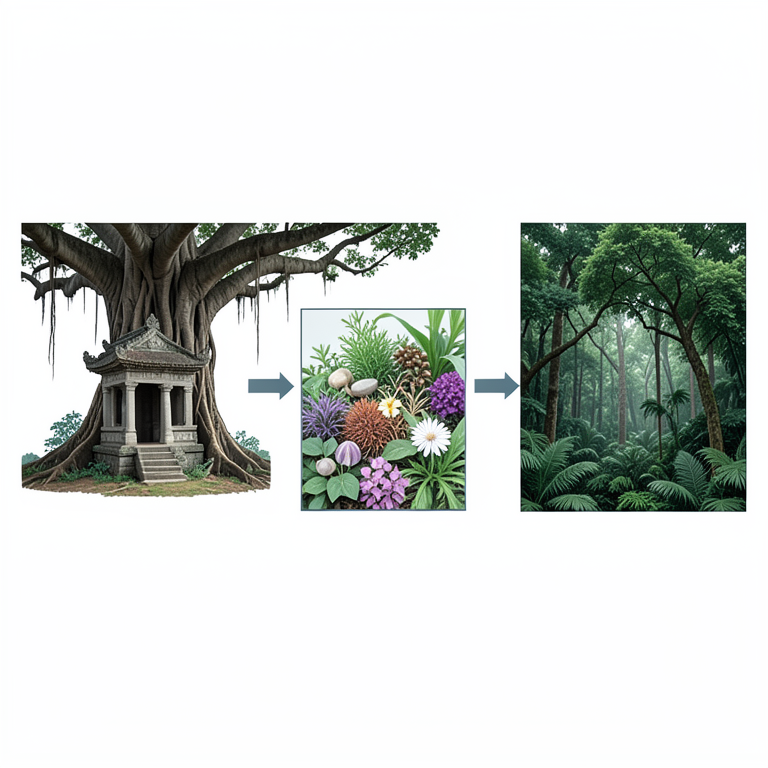
The Cycle of Sacred Grove Conservation
AI-generated conceptual illustration (Tropical forest vegetation of Manipur sacred groves). It explains the idea and does not show study data.
View source evidence ↗Figures & tables
From the original paper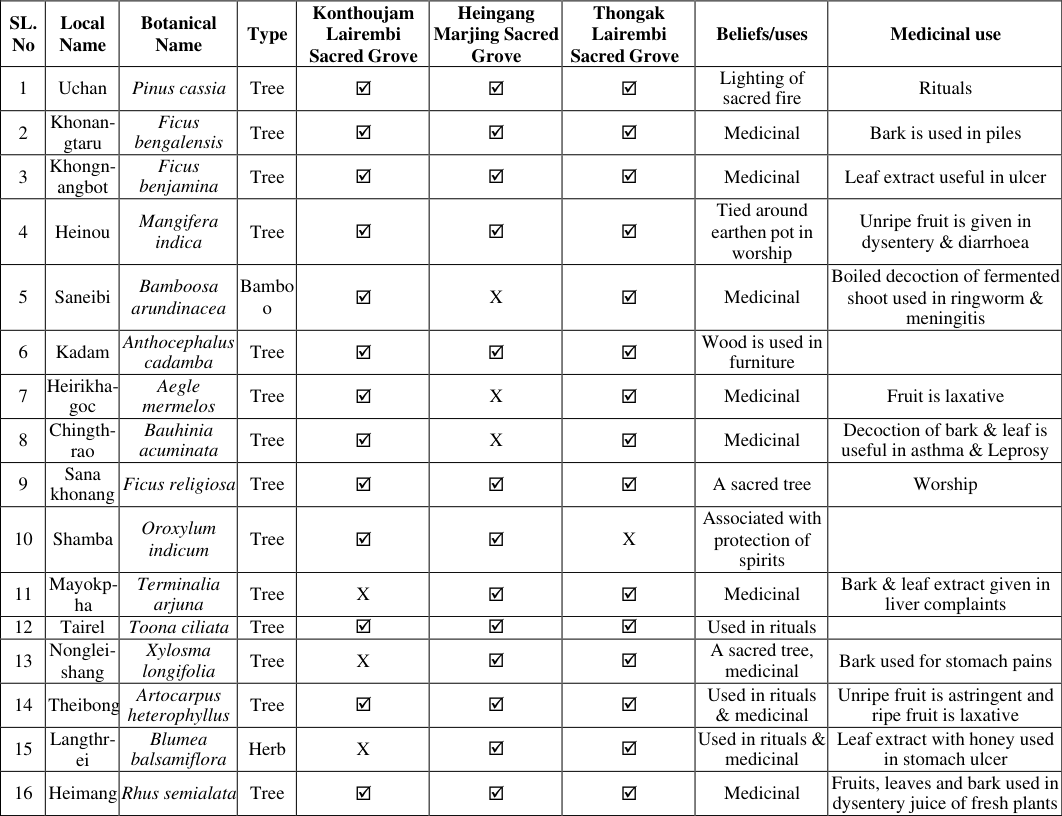 Table 1
 Figure 1
 Figure 3
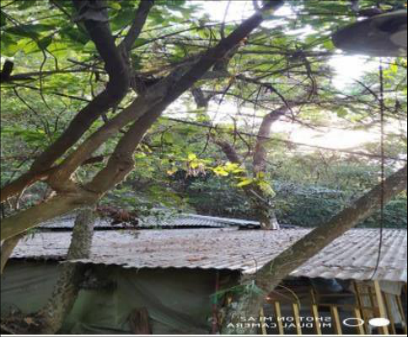 Figure 3
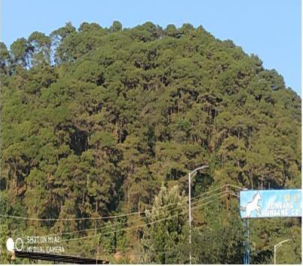 Figure 2
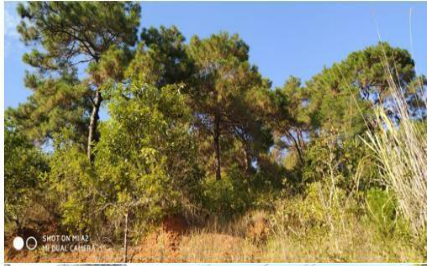 Figure 2
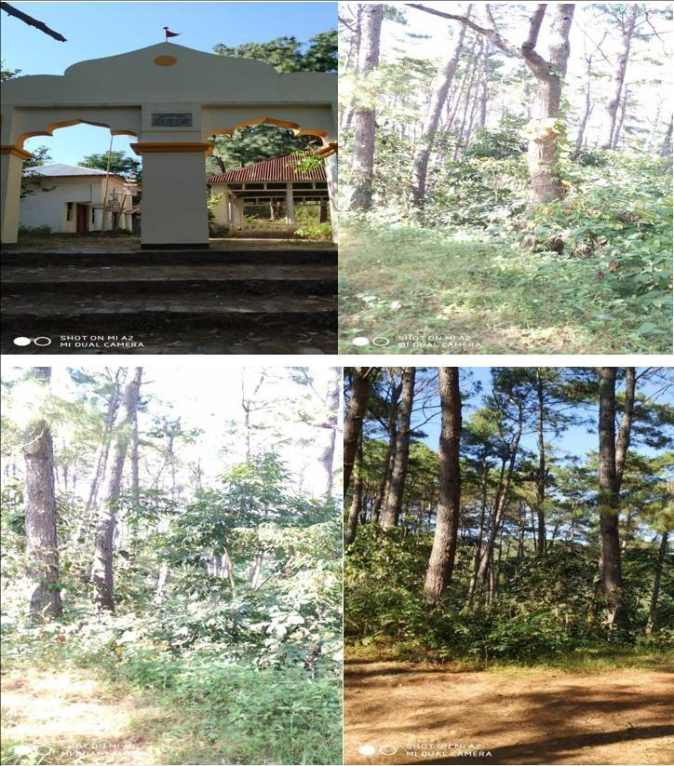 Figure 2
Introduction
Umang Lai are the group of Sacred Groves preserved for local forest deities worshiped by the Meitei people, the major ethnic groups since ancient times in the Himalayan state of Manipur. There are 365 Umang Lai groves all over Manipur (Devi, 2000) [1] and 166 are in valley region, 99 in Imphal West, 37 in Imphal East, 22 in Bishnupur and 8 in Thoubal Districts (Current Science). Umang Lai literally means deities who give an appearance and elusively vanish from the common sight. Meiteis the dominant inhabitants of Manipur worship nature and ancestral Deities. The cultural practice of Lai Harauba is continuing since time immemorial with dance and music leading by the amaibas and amaibis and is a powerful festival in maintaining ecological balance along with conservation of Biodiversity and Medicinal plants. The role of Sacred Groves in the conservation of biodiversity has long been recognized (Kosambi 1962; Gadgil and Vartak 1975a; Khumbongmayum et al. 2004) [2,3,4] . All forms of vegetation in the Sacred Groves are supposed to be under the protection of the reining deity of that Grove, and removal of even a twig is taboo (Gadgil and Vartak 1975b; Khumbongmayum et al. 2004) [4,5] . India is having abundance of Sacred Groves which ranges from a few square meters to several hectares. These are the tracts of virgin forest with diversity, which have been protected by the local people for centuries for their cultural and religious believes and taboos that the deities reside in them and protect the villagers from different calamities (Khumbongmayum et al. 2005 [4,6] . Umang Lai Haraoba is an annual cultural practice in most of the Umang Lai Laikon. This practices maintenance of areas of Umang Lai and become a medium to control the society in maintaining a harmonious relationship with the nature (The Sacred Groves of Manipur). During the Lai Haraoba there is a tradition of delivering oracle by the Amaibi. Dr. Ng. Ekashini defined Maibis as a woman who is directly conversant with the divine beings at a workshop on maibi culture of Manipur IGNCA 11 DEC 2007) in front of the deities about the goodness and ill faith of a person or to the people of the locality. In doing so the Amaibi becomes subconcious and Amaiba sprinkles water in which the leaves or twigs of Cedrela tuna (Tairen) are kept dipped previously and the Amaibi brings back to normal conscious state. This is proof that have some neuro medicinal values in Cedrela tuna. Another ritual in Umang Lai Haraoba is that the things-fruits, flowers and vegetable to be offered to the deities are made sacred by sprinkling water dipped with Cederla toona and Dactyloctenium aegyptium. Some other plants which are also used in the same are Dicrocephala latifolia (lalukok), Sida acuta (Uhal), leaves of Bamboo (wana). As Manipur is ranked 6 th position under Indo -Burma Biodiversity Hot Spot of Northeast region many diverse flora and fauna are available. Out of 18 selected Biodiversity Hot Spot of the world indicating high concentration of endemic species of plants (H. Tombi Singh, 2003) [7] , Manipur is one of the most beautiful state of our country and called as Switzerland of India by the 1 st Prime Minister of India, Jawaharlal Nehru. In the west it is bounded by Cachar district of Assam, on the east by Myanmar (formerly Burma), on the North by Nagaland state, on the South by Mizoram state and Chin hills of Myanmar. One of the oldest Sacred Groves in Manipur is the Konthoujam Lairembi Khubam which is regarded as "Sacred Place of Konthoujam Tampha Lairembi", a Goddess deity of Konthoujam village, Imphal West. This Sacred Grove is the absolute abode of Goddess Konthoujam Tampha Lairembi. In this abode A Banyan tree is still growing which is about three millennia years old (Google scholar). Some other popular Sacred Groves are Marjing Khubam of Heingang (Imphal East), Fayeng (Imphal West) and Mongba Hanba (Imphal East), Manipur is included under the Indo-Burma Hot Spot of the North East Region which ranked 6 th position out of the 18 selected Bio-diversity Hot Spots of the world indicating high concentration of endemic species of plants (H. Tombi Singh 2003) [11] and rich in Bio-diversity consisting of a large number of Medicinal plants. Some medicinal plants of Manipur have been compiled by S. Sukumar Singh (2009) [8] and (H. Tombi Singh 2003) [7] . Earlier studies on Ethnobotany in Manipur on traditional healthcare by numerous ethno botanist such as Singh et al. (2002) [9] , Singh et al. (2003) [10] . In view of this, the purpose of present study is to record the medicinal plants available in three Sacred Groves in Manipur.
Materials and Methods
The purpose of the present study is to record the plants which are still growing at present in the three Sacred Groves namely Konthoujam Lairembi, Heinang Marjing and Thongak Lairembi. The latter two Sacred Groves are located at the hillocks of Heigang and Langol Reserve forest range. Their distribution in varied locations/ ecosystem not only helps in the conservation of a variety of valuable medicinal plants but also fostered rare and endemic animal species However, little information is available on Sacred Groves and conservation of the biodiversity in Manipur, a state in Northeast India (Devi 2000; Singh 2001) [1,11] . Regular visits at the three different Sacred Groves are done and recorded the local name, availability and their different botanical names. Meeting with the local people and discussion about the ancestral deities, about the protection of plants and links of the present society to the past in terms of religious cultural rituals. Table 1 shows the names of plants (local name and botanical name), type, availability in the three Sacred Groves and their ritual & medicinal uses. The Sacred Groves of Manipur are one of the best mediums to save biodiversity, and these social boundaries help to conserve the entire organism, both plants and animals as a whole, which stands for the concept of Sacred Groves. The Sacred Groves will also contribute in maintaining a healthy environment in this world.
Conclusion
Biodiversity is all the different kinds of life you will find in the area -the variety of animals, plants, fungi and even microorganisms like bacteria that make up our natural world. Each of these species' organisms work together in ecosystems like an intricate web, to maintain balance and support life. The Sacred Groves of Manipur are one of the best mediums to save biodiversity and these social boundaries help to conserve the entire organism, both plants and animals as a whole, which stands for the concept of Sacred Groves. As there is taboo in cutting of the trees, plucking of flowers, collection of fodder, fruits & fuel found in the Sacred Groves it becomes an important means of conservation of medicinal plants as well as other living organisms.
Figures and tables from the paper
References
8 in the original paper- Devi S. Sacred groves of Manipur. National Workshop on Community Strategies on the Management of Natural Resources, Abstract. Bhopal. 2000.
- Khumbongmayum AD, Khan ML, Tripathy RS. Sacred groves of Manipur-ideal centres for biodiversity conservation. Current Science 2004;87(4):430-433.
- Khumbongmayum AD, Khan ML, Tripathy RS. Ethnomedicinal plants in the sacred groves of Manipur. Indian Journal of Traditional Knowledge 2005;4(1):2132.
- Tombi Singh H. A manual on the medicinal plants. Institute of Bio resources and Sustainable Development, Department of Biotechnology, Imphal, 2009.
- Sukumar Singh, S. The economic plants of Manipur and their uses. S. Chandani Devi, Moirangkhom, 2009.
- Singh KI, Singh PK, Singh SS. An ethnobiological approach to the indigenous soaps and detergents of Meitei community of Manipur. Journal of Economic Taxonomy of Botany 2002;25(3):547-552.
- Singh HB, Singh RS, Sandhu JS. Herbal medicine of Manipur: a colour encyclopedia. Daya Publishing House, New Delhi, 2003.
- Singh RN. Biodiversity mapping of sacred groves of Manipur with special reference to conservation of few endangered tree species. PhD Thesis. International Institute of Ecology and Environment, New Delhi, 2001.
Cited by 1
From OpenAlex, OpenCitations and reference lists read by Scinovex
- Giant trees enhance zoochorous plant dispersal in sacred groves and human settlements of the Western Ghats, India ↗
Omkar Pai, Jayant P. Sarnaik, Archana J. Godbole, Gunwant Mahajan, Akshay Gawade, Kevin C. Matteson · PLoS ONE · 2026
In India and other countries, large and ancient trees that persist in sacred groves and human-dominated landscapes support ecosystem services, including frugivore-mediated seed dispersal. In this study, we assessed the ecological significance of 'giant' trees (>1 m trunk circumference) in Vanzole Village, Western Ghats, India. We documented 82 giant trees belonging to 20 species in four sacred groves and surrounding…
❝ 0PDF