
Research article · 2024 · Full text
International Journal of Advanced Biochemistry ResearchStudy of heritability parameter in hybrids of okra (Abelmoschus esculentus (L.) Moench)
Volume 8(2) · Pages 478–481 · DOI: 10.33545/26174693.2024.v8.i2f.637 ↗
Research areasAgricultural Practices and Plant GeneticsAgricultural pest management studiesAgricultural Science and Fertilization
Abstract
Author-writtenThe current investigation was carried out using ten genotypes of okra and forty-five F1 hybrids obtained from these ten parent along with one check Radhika. During season 2021-22 the crosses was made among the ten genotypes in 10 X 10 half diallel fashion mating. The crossing resulted in the development 45 hybrid progeny. The effected 45 F1 hybrids and ten parents along with one checks were planted during summer and kharif of season 2022-23 under Randomised Block Design along with two replications. The research conducted at All India Coordinated Research Project on Vegetable Crops, Department of Horticulture, Mahatma Phule Krishi Vidyapeeth, Rahuri. Various characters are used to analysed the progeny and parents by estimating the heritability parameters. It was resulted in all character that are under study shoes the non-additive gene action implies to heterosis breeding and recurrent selection for further improvement of population.
Summary
Source-checkedPlain-language reading of the full paper, prepared with AI and checked against the text. Each point links to the authors' own words.
Why it matters
- Okra is a significant vegetable crop in olericulture due to its export potential, adaptability, and high nutritional value. View evidence ↗
- Okra cultivation is hindered by pests like bollworms and Jassids, as well as diseases such as powdery mildew and yellow vein mosaic virus, which increase costs and lower produce quality. View evidence ↗
- Improving okra requires focusing on traits such as yield, pest resistance, fruit length, plant height, and flowering time. View evidence ↗
The question
- The study aimed to analyze heritability in okra to help select appropriate parents for future hybridization programs. View evidence ↗
- The research also sought to identify a superior okra hybrid suitable for farming. View evidence ↗
What they did
- Crosses were performed during the 2021-22 season using a 10 x 10 half-diallel mating design. View evidence ↗
- Data analysis followed the Randomized Block Design (RBD) method, and narrow-sense heritability was calculated using Falconer's (1960) approach. View evidence ↗
What they found
- Narrow-sense heritability for plant height was 2.70% in the summer and 30.20% in the kharif season. View evidence ↗
- The heritability for the number of branches per plant was 11.64% in summer and 30.80% in kharif. View evidence ↗
- The first fruiting node showed the highest relative heritability, at 37.60% in summer and 37.00% in kharif. View evidence ↗
- Heritability for the number of fruits per plant was 13.40% in summer and 6.80% in kharif. View evidence ↗
- Average fruit weight had a heritability of 29.10% in summer and 23.20% in kharif. View evidence ↗
- Yield per plot and yield per hectare showed heritability of 13.50% in summer and 4.60% in kharif. View evidence ↗
- Most characters exhibited moderate to low heritability, suggesting that non-additive gene action governs their inheritance, with the exception of the first fruiting node. View evidence ↗
- The observed low heritability indicates that environmental factors have a strong influence on these traits. View evidence ↗
What it means
- The authors conclude that because of the prevalence of non-additive gene action, these characters should be improved through recurrent selection or heterosis breeding. View evidence ↗
Visual summary
3 visualsIllustrations explain the paper; charts are replotted from the paper's own table values.
Genetic Improvement Strategy
AI-generated conceptual illustration (okra plants (Abelmoschus esculentus)). It explains the idea and does not show study data.
View source evidence ↗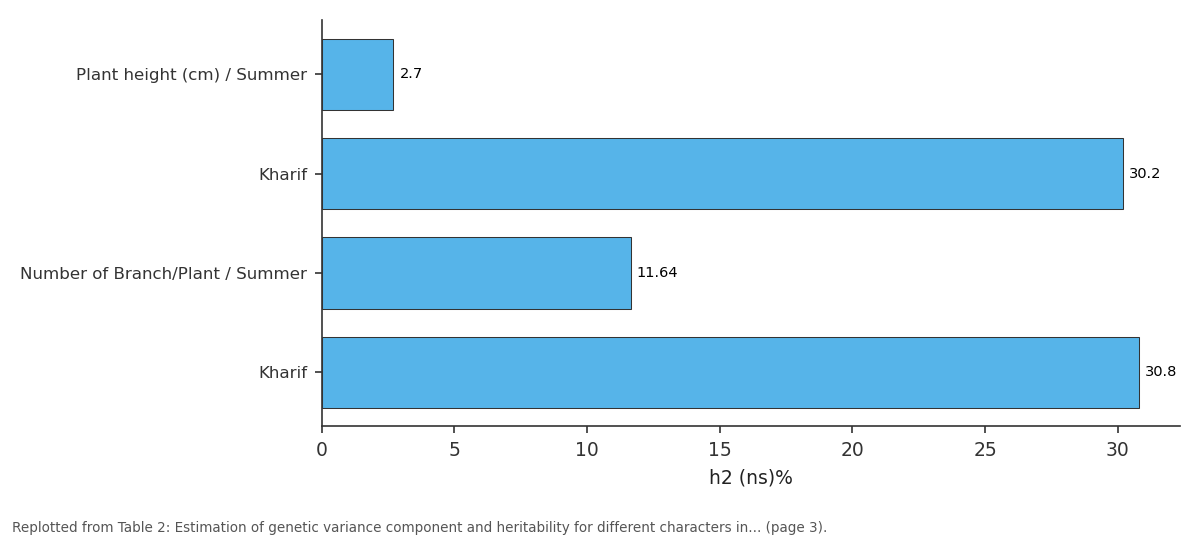
h2 (ns)%: Plant height (cm) /... vs Kharif vs Number of Branch/Plant... vs Kharif
Replotted from Table 2 (page 3) of the original paper. Every bar is the paper's own table value.
View source evidence ↗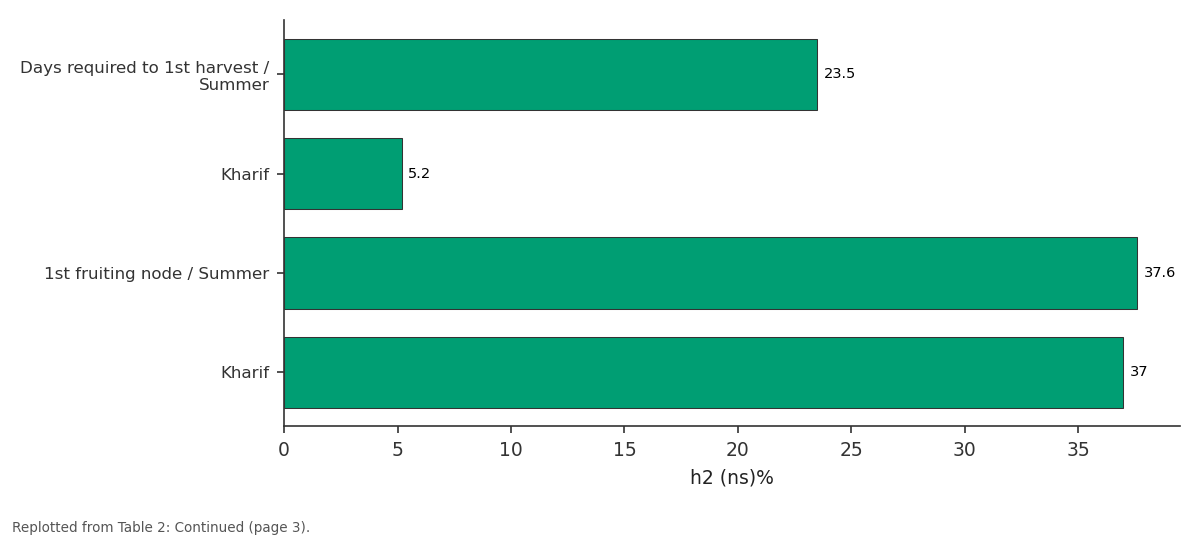
h2 (ns)%: Days required to 1st... vs Kharif vs 1st fruiting node /... vs Kharif
Replotted from Table 2 (page 3) of the original paper. Every bar is the paper's own table value.
View source evidence ↗Figures & tables
From the original paper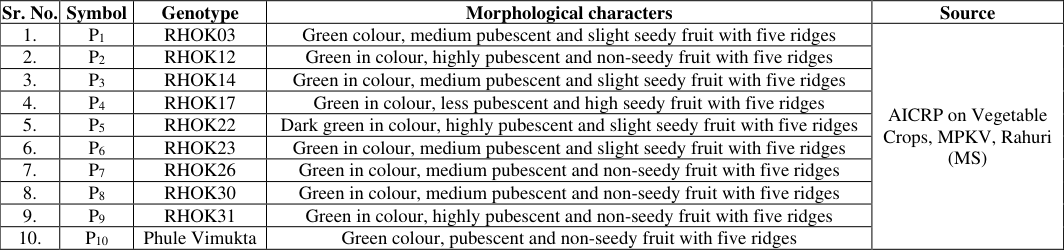 Table 1
 Table 2
 Table 2
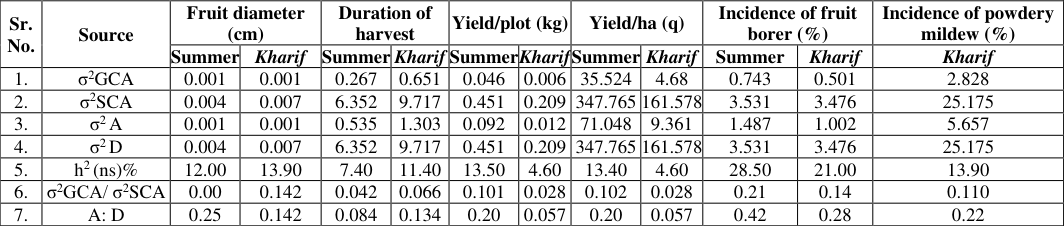 Table 2
Introduction
Okra (Abelmoschus esculentus (L.) Moench) is a warm season and annual vegetable crop belongs to the family Malvaceae, genus -Abelmoschus an amphidiploids having 2n=130 chromosomes and propagated by seed. It is commonly known as lady's finger as well as by several vernacular names, including Okra, Bhindi, Gumbo etc. being a native of tropical Africa. It is an often cross pollinated crop has a prominent position in olericulture because of its high nutritive value, wider adaptability and export potential. The entire plant is edible and is used to make several foods (Lim, 2012 and Jain et al., 2012) [11,12] . In Ayurveda, okra is used as an edible infusion and in different preparation for diuretic effect (Maramag, 2013) [13] . Immature tender fresh and green pods are consumed as vegetable. Often the extract obtained from the fruit is added to different recipes like soups, stews and sauces to increase the consistency of it (Hadiya et al., 2018) [10] . The immature pods are used in making pickle, stem and root mucilage in jaggery preparation and crude fibre from mature fruits and stem in paper industry. The dry seeds of okra are a good source of edible oil along with high unsaturated fats like oleic and linoleic acids (Sidapara et al., 2021) [14] . Okra is a cost-effective and economically affordable natural source with ample reservoirs of carbohydrates, proteins, fatty acids, vitamins, fibre and minerals with various other bioactive phytochemicals those are important for human health. It is having specific mechanisms of action against different diseases. (Elkhalifa et al., 2021) [6] . The nutritive values of okra have 88% moisture, 7.7% carbohydrates, 2.2% protein, 1.5% iron, 1.1% fibre, 0.7% mineral matter, 0.09% calcium, 0.2% fat, 0.08% phosphorous and of 41 (k. cal) calorific value. The vitamin contents in okra viz., vitamin A-58 IU, vitamin B-0.06 mg, Nicotinic acid -0.6 mg, Riboflavin-0.06 mg and vitamin C-13 mg (Devi et al., 2017) [4] . Okra cortex is one of the potential sources of mucilage (Girase et al., 2003) [9] . The cultivated okra is an artificial amphidiploid of A. tuberculatus (2n=58) and A. ficulneus (2n=72). There is a considerable variation in the chromosome numbers of cultivated okra species. The genus Abelmoschus is a poly-species complex of apparently three levels of ploidy the diploids (2x), including Abelmoschus coccineus (2n=38), A. angulosus (2n=38), A. tuberculatus (2n=58), A. manihot (2n=60-68), A. moschatus (2n=72) and A. ficulneus (2n=72); the tetraploids (4x) including A. esculentus (2n=120-140), A. tetraphyllus (2n=138) and A. pungens (2n=138); and the hexaploids (6x), including Abelmoschus manihot and Guinean type (2n=185-198). Okra is an allopolyploid consisting of two genomes each of 29 and 36 chromosomes. According to them, Indian varieties belong to the group of 2n = 130 chromosomes (Joshi and Hardas, 1956) [15] . India ranks first in the world in production of okra with 64.66 lakh metric tonnes of production obtained from an area of 5.31 lakh hectare with productivity of 12.2 metric tonnes per hectare during 2021-22. The area under the crop in Maharashtra during 2021-22 was 15.40 thousand hectares with the production of 1.56 lakh metric tonnes. However, Maharashtra's productivity 10.17 MT/ha is much lower than that of the country 12.02 MT/ha (Anon, 2022). The geographical distribution of cultivated okra and related wild species is overlapping in South-East Asia. The Indian and West African regions are also known as centres of diversity of okra. Good nutritive value, popularity, medicinal value, good market value and high export potential are the aspects in favour of okra. However, pests such as Jassids, bollworms and diseases like yellow vein mosaic virus, powdery mildew etc. possess problems in okra cultivation by reducing the quality of the produce and increasing the cost of cultivation. Yellow vein mosaic virus is a serious challenge in cultivation of okra. Some good varieties of okra had been evolved in India, but many of them suffer from one or the other drawback. Crop refinement in okra needs to be focused on plant height, more branching, number of fruits per plant, early flowering, fruit length, tenderness, disease pest resistance and high yield. The selection of variable parents is one of the crucial decision for plant breeder has to make for performing any breeding program. If the genetic combination of the plant is known, then it is helpful in understanding the nature and magnitude of the gene action present in the inheritance of various characters. The purpose of this research to study heritability in okra which will provide valuable information in the selection of parents for further hybridization programs and also to identify a superior hybrid in okra for cultivation on farmer's field.
Materials and Methods
The present research was conducted at All India Coordinated Research Project on Vegetable Crops, Department of Horticulture, Mahatma Phule Krishi Vidyapeeth, Rahuri during 2021-22. The experimental field has an altitude of 532 m above MSL, latitude of 19°47' to 19°57' N and a longitude of 74°82' to 74°91' E. The parental material consisted of 10 diverse genotypes and seeds of these genotypes were obtained from Senior Vegetable Breeder, All India Coordinated Research Project on Vegetable Crops, Mahatma Phule Krishi Vidyapeeth, Rahuri. The detail lineage about parental materials are depicted in Table 1. The seeds of ten parental genotypes were sown in the field during summer 2021 to constitute the crossing block. The crosses were made in between ten diverse parents following 10 x 10 diallel without a reciprocal mating design. The field was prepared for sowing by ploughing, harrowing and levelling and 50 kg N, 50 kg P and 50 kg K per ha was applied as a basal dose and the remaining 50 kg N was applied at 30 DAS as per the recommended dose of fertilizer. The seeds were dibbled at a spacing 60 x 30 cm. All other cultural operations like weeding, irrigation and plant protection measures were carried out as per the requirement of crop. The obtained Forty-five crosses along with the ten parents and a standard hybrid check (Radhika) were sown in a Randomized Block Design with two replications in summer 2022 (1 st Feb) and Kharif 2022 (27 th July) respectively. Each genotype was entered as a separate treatment and was represented by a single row of 3.0 m length spaced 30 cm apart in which the seeds were dibbled. The observation on required character says morphological or yield associated parameter was taken with suitable tools and methods within time during trial. The analysis was done by Randomized Block Design (RBD) was carried out by following Panse and Sukhatme (1985) [16] and Heritability in a narrow sense was calculated by Falconer (1960) [8] .
| Sr. No. | Symbol | Genotype | Morphological characters | Source |
|---|---|---|---|---|
| 1. | P1 | RHOK03 | Green colour, medium pubescent and slight seedy fruit with five ridges | AICRP on Vegetable Crops, MPKV, Rahuri (MS) |
| 2. | P2 | RHOK12 | Green in colour, highly pubescent and non-seedy fruit with five ridges | |
| 3. | P3 | RHOK14 | Green in colour, medium pubescent and slight seedy fruit with five ridges | |
| 4. | P4 | RHOK17 | Green in colour, less pubescent and high seedy fruit with five ridges | |
| 5. | P5 | RHOK22 | Dark green in colour, highly pubescent and slight seedy fruit with five ridges | |
| 6. | P6 | RHOK23 | Green in colour, medium pubescent and slight seedy fruit with five ridges | |
| 7. | P7 | RHOK26 | Green in colour, medium pubescent and non-seedy fruit with five ridges | |
| 8. | P8 | RHOK30 | Green in colour, medium pubescent and non-seedy fruit with five ridges | |
| 9. | P9 | RHOK31 | Green in colour, highly pubescent and non-seedy fruit with five ridges | |
| 10. | P10 | Phule Vimukta | Green colour, pubescent and non-seedy fruit with five ridges |
Table text extracted from the original PDF; superscript letters are shown inline. The original table image is below.
View original table image
Results and Discussion
Heritability is nothing but the degree of transmission of characters from parents to their offspring. So for the selection of characters for further improvement is depends on its heritability means the characters having high heritability are selected for improvement purpose. Hence forth here are two types of heritability one is Broad sense and second one is narrow sense heritability. Here is the use of narrow sense heritability is appropriate as the materials was segregating population. Variance like Genetic, Phenotypic, Additive and Environmental are computed to estimate the heritability. The observation was recorded on 45 F 1 hybrids and 10 parents during both and summer and Kharif of 2022-23 and depicted in Table 2.
| Sr. No. | Source | Fruit diameter (cm) | — | Duration of harvest | — | Yield/plot (kg) | — | Yield/ha (q) | — | Incidence of fruit borer (%) | — | Incidence of powdery mildew (%) |
|---|---|---|---|---|---|---|---|---|---|---|---|---|
| Summer | Kharif | Summer | Kharif | Summer | Kharif | Summer | Kharif | Summer | Kharif | Kharif | ||
| 1. | σ2GCA | 0.001 | 0.001 | 0.267 | 0.651 | 0.046 | 0.006 | 35.524 | 4.68 | 0.743 | 0.501 | 2.828 |
| 2. | σ2SCA | 0.004 | 0.007 | 6.352 | 9.717 | 0.451 | 0.209 | 347.765 | 161.578 | 3.531 | 3.476 | 25.175 |
| 3. | σ2 A | 0.001 | 0.001 | 0.535 | 1.303 | 0.092 | 0.012 | 71.048 | 9.361 | 1.487 | 1.002 | 5.657 |
| 4. | σ2 D | 0.004 | 0.007 | 6.352 | 9.717 | 0.451 | 0.209 | 347.765 | 161.578 | 3.531 | 3.476 | 25.175 |
| 5. | h2 (ns)% | 12.00 | 13.90 | 7.40 | 11.40 | 13.50 | 4.60 | 13.40 | 4.60 | 28.50 | 21.00 | 13.90 |
| 6. | σ2GCA/ σ2SCA | 0.00 | 0.142 | 0.042 | 0.066 | 0.101 | 0.028 | 0.102 | 0.028 | 0.21 | 0.14 | 0.110 |
| 7. | A: D | 0.25 | 0.142 | 0.084 | 0.134 | 0.20 | 0.057 | 0.20 | 0.057 | 0.42 | 0.28 | 0.22 |
Table text extracted from the original PDF; superscript letters are shown inline. The original table image is below.
View original table image
| Sr. No. | Source | Days required to 1st harvest | — | 1st fruiting node | — | Number of fruits/plant | — | Average fruit wt. (g) | — | Fruit length (cm) | — |
|---|---|---|---|---|---|---|---|---|---|---|---|
| Summer | Kharif | Summer | Kharif | Summer | Kharif | Summer | Kharif | Summer | Kharif | ||
| 1. | σ2GCA | 0.449 | 0.103 | 0.016 | 0.016 | 0.905 | 0.246 | 0.066 | 0.03 | 0.028 | 0.006 |
| 2. | σ2SCA | 2.292 | 2.052 | 0.022 | 0.024 | 7.809 | 4.242 | 0.199 | 0.087 | 0.338 | 0.134 |
| 3. | σ2 A | 0.897 | 0.207 | 0.033 | 0.031 | 1.81 | 0.491 | 0.132 | 0.06 | 0.055 | 0.012 |
| 4. | σ2 D | 2.292 | 2.052 | 0.022 | 0.024 | 7.809 | 4.242 | 0.199 | 0.087 | 0.338 | 0.134 |
| 5. | h2 (ns)% | 23.50 | 5.20 | 37.60 | 37.00 | 13.40 | 6.80 | 29.10 | 23.20 | 13.40 | 4.90 |
| 6. | σ2GCA/ σ2SCA | 0.195 | 0.050 | 0.727 | 0.66 | 0.11 | 0.057 | 0.33 | 0.34 | 0.08 | 0.044 |
| 7. | A: D | 0.391 | 0.100 | 1.50 | 1.29 | 0.23 | 0.115 | 0.66 | 0.68 | 0.16 | 0.089 |
Table text extracted from the original PDF; superscript letters are shown inline. The original table image is below.
View original table image
| Sr. No. | Source | Plant height (cm) | — | Number of Branch/Plant | — | Number of Nodes/Plants | — | Inter-nodal Length | — | Days to 50% flowering | — |
|---|---|---|---|---|---|---|---|---|---|---|---|
| Summer | Kharif | Summer | Kharif | Summer | Kharif | Summer | Kharif | Summer | Kharif | ||
| 1. | σ2GCA | 3.395 | 27.233 | 0.005 | 0.024 | 1.291 | 0.394 | 0.05 | 0.027 | 0.016 | 0.032 |
| 2. | σ2SCA | 221.376 | 105.134 | 0.057 | 0.089 | 9.967 | 4.797 | 0.261 | 0.174 | 1.125 | 1.544 |
| 3. | σ2 A | 6.791 | 54.466 | 0.009 | 0.049 | 2.583 | 0.788 | 0.10 | 0.053 | 0.033 | 0.064 |
| 4. | σ2 D | 221.376 | 105.134 | 0.057 | 0.089 | 9.967 | 4.797 | 0.261 | 0.174 | 1.125 | 1.544 |
| 5. | h2 (ns)% | 2.70 | 30.20 | 11.64 | 30.80 | 14.00 | 10.00 | 23.00 | 13.00 | 2.50 | 7.20 |
| 6. | σ2GCA/ σ2SCA | 0.01 | 0.02 | 0.87 | 0.26 | 0.12 | 0.082 | 0.19 | 0.15 | 0.014 | 0.020 |
| 7. | A: D | 0.03 | 0.51 | 0.15 | 0.55 | 0.25 | 0.16 | 0.38 | 0.30 | 0.029 | 0.041 |
Table text extracted from the original PDF; superscript letters are shown inline. The original table image is below.
View original table image
The heritability in narrow sense was observed moderate for all the characters in both the seasons. The non additive gene action observed for plant height was 2.70 and 30.20% in summer and kharif seasons respectively. As for number of branches per plant it was 11.64% in summer and 30.80% in the kharif season. The heritability for the number of nodes per plant was 14.00% in summer and 10.00% in kharif and for inter-nodal length, it was 23.00% in summer and 13.00% in kharif. Heritability for days to 50% flowering in summer (2.50%) and kharif (7.20%) and the days required for first harvest was 23.50 and 5.20% in summer and kharif seasons respectively.
In respect of first fruiting node, heritability was 37.60% in summer and 37.00% in kharif. The heritability for number of fruits per plant was 13.40% in summer and 6.80% kharif. The heritability was observed for average weight of fruit was 29.10% in summer and 23.20% in kharif, for fruit length in summer (13.40%) and in kharif (4.90%), for fruit diameter it was 12.00% in summer and 13.90% in kharif, heritability for the duration of harvest in summer was 7.40 and 11.40% in kharif. In respect of yield per plot and yield per hector it was 13.50% in summer and 4.60% in kharif.
The result indicated that moderate to low heritability, so that it is suggested that the inheritance of character is governed by non -additive gene action except first fruiting node. Here in current study results also evident that low heritability which means the high influence of environment on it. Similar results found by Khanorkar and Kathiria (2010) [17] , Rai et al. (2011) [18] , EI-Gendy et al. (2012) [5] , Akotkar et al. (2014) [1] , Hamada et al. (2015) [19] , Annapurna and Singh (2018) [2] , El-Sherbeny et al. (2018) [7] , Mundhe et al.
Conclusion
The all characters studied displayed heritability were low in narrow sense, it showed that there is preponderance of nonadditive (dominance) gene action. most of the characters like earliness, yield attributing characters shown medium narrow sense heritability in both the seasons. So due to the non-additive gene action character are improved by heterosis breeding or recurrent selection.
References
17 in the original paper- Akotkar PK, De DK, Dubey UK. Genetic analysis for fruit yield and yield attributes in Okra (Abelmoschus esculentus L. Moench). Electronic Journal of Plant Breeding. 2014;5(1):38-44.
- Annapurna T, Singh SP. Analysis of Combining Ability Status and Nature of Gene Action among Hybrids for Yield and Quality Traits in Okra [Abelmoschus esculentus (L.) Moench]. International Journal of Pure Application Biosciences. 2018;6(2):1547-1553.
- Devi NN, Kayande NV, Gawande PP, Nichal SS. Evaluation for heterosis in Okra (Abelmoschus esculentus L.). International Journal of Pure Applied Biosciences. 2017;5(6):590-593.
- El-Gendy SEA, Obiadalla-Ali HA, Ibrahim EA, Eldekashy MHZ. Combining ability and nature of gene action in okra (Abelmoschus esculentus [L.] Moench). Journal of Agricultural Chemistry and Biotechnology, Mansoura University. 2012;3(7):195-205.
- Elkhalifa AEO, Alshammari E, Adnan M, Alcantara JC, Awadelkareem AM, Eltoum NE, et al. Okra (Abelmoschus esculentus) as a Potential Dietary Medicine with Nutraceutical Importance for Sustainable Health Applications. Molecules. 2021;26:696.
- El-Sherbeny GAR, Khaled AGA, Obiadalla-Ali HA, Ahmed AYM. Estimates of heterosis and combining ability in okra under different environments. Journal of Sohag Agricultural Sciences (JSAS). 2018;1:50-64.
- Girase YP, Chavan UD, Chavan JK. Mucilage from Okra (Abelmoschus esculentus (L.) Moench) cortex - extraction and cultivar evaluation. Journal of Food Science and Technology. 2003;40(1):118-119.
- Moench). International Journal of Chemical Studies. 2018;6(5):1919-1923.
- Lim SS, Vos T, Flaxman AD, Danaei G, Shibuya K, Adair-Rohani H, et al. A comparative risk assessment of burden of disease and injury attributable to 67 risk factors and risk factor clusters in 21 regions, 19902010: a systematic analysis for the Global Burden of Disease Study 2010. The lancet. 2012 Dec 15;380(9859):2224-60.
- Jain RM, Mody K, Mishra A, Jha B. Physicochemical characterization of biosurfactant and its potential to remove oil from soil and cotton cloth. Carbohydrate polymers. 2012 Aug 1;89(4):1110-1116.
- Maramag RP. Diuretic Potential of Capsicum Frutescens Linn., Corchorus Olitorius Linn., and Abelmoschus Esculentus Linn. Asian J Nat. Appl. Sci. 2013 Mar;2(1):60-69.
- Sidapara MP, Gohil DP, Patel PU, Sharma DD. Heterosis studies for yield and yield components in okra [Abelmoschus esculentus (L.) Moench]. Journal of Pharmacognosy and Phytochemistry. 2021;10(1):12681275.
- Joshi AB, Hardas MW. Alloploid Nature of Okra, Abelmoschus esculentus (L.) Monech. Nature. 1956 Nov 24;178(4543):1190.
- SM K, Kathiria KB. Genetic architecture of fruit yield and its contributing quantitative traits in Abelmoschus esculentus (L.) Moench. Electronic Journal of Plant Breeding. 2010;1(4):716-730.
- Kalia RK, Rai MK, Kalia S, Singh R, Dhawan AK. Microsatellite markers: An overview of the recent progress in plants. Euphytica. 2011 Feb;177(3):309-34.
- Hamada A, Takayabu YN, Liu C, Zipser EJ. Weak linkage between the heaviest rainfall and tallest storms. Nature communications. 2015 Feb 24;6(1):6213.
- Cohen N, Mundhe D, Deasy SK, Adler O, Ershaid N, Shami T, et al. Breast Cancer -Secreted Factors Promote Lung Metastasis by Signaling Systemically to Induce a Fibrotic Premetastatic Niche. Cancer Research. 2023 Oct 13;83(20):3354-3367.